Black Forest Hostel
Hostel in an old factory on the edge of the old town, ten minutes on foot to the Minster, with garden, shared kitchen and bikes to borrow. Dorms and simple rooms, honest and uncomplicated. For hikers and solo travellers.
Germany · The Southwest · Travel guide
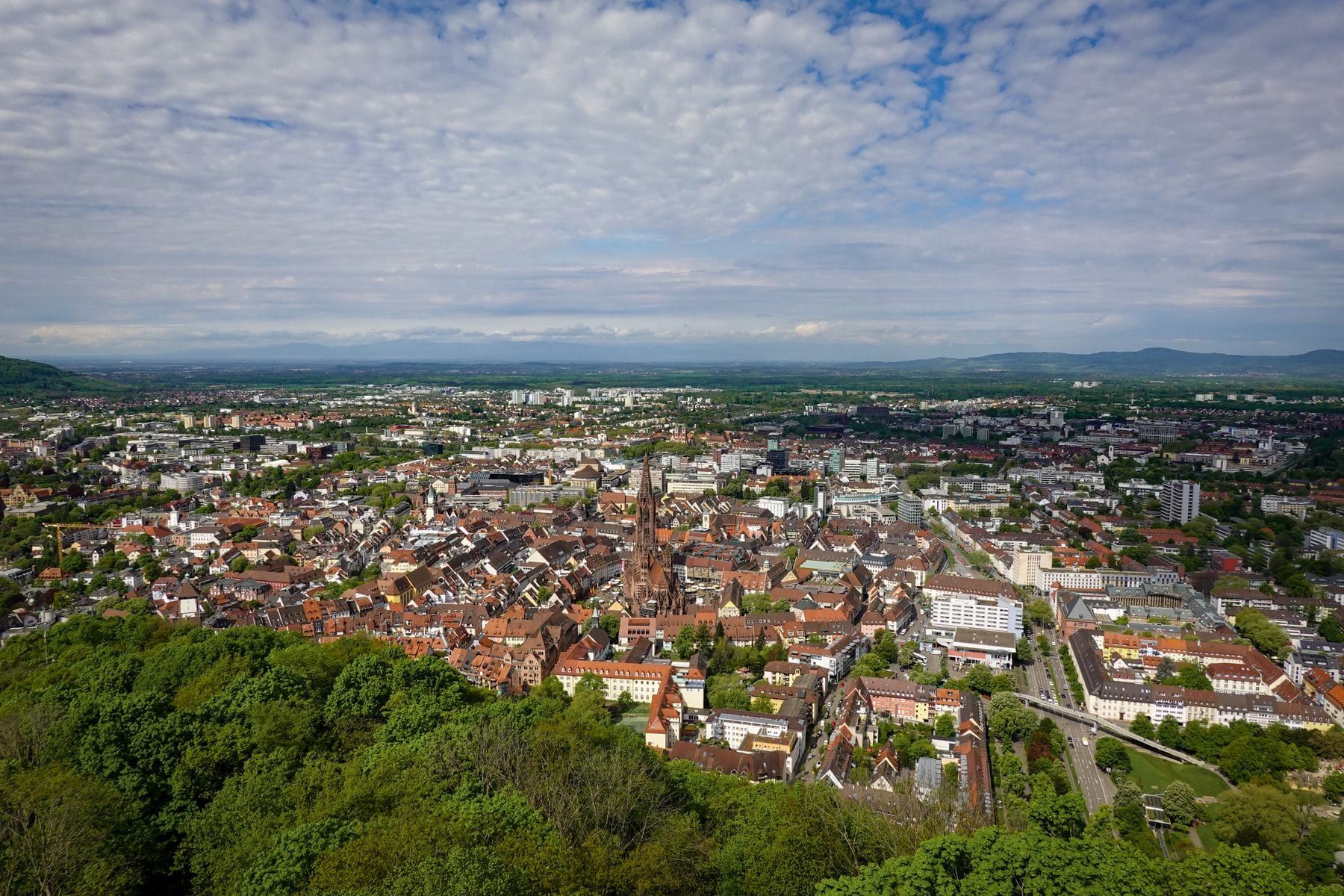
What a weekend or a week in the sunniest city in Germany and the low mountains behind it really cost, where the Black Forest is kitsch and where it is magnificent, and why you get from Basel to Freiburg faster than to Zurich.
Photo: Magda Ehlers / Pexels
Adjust the values to your trip: the calculator updates live (EUR, converted from CHF estimates).
Estimates for orientation, not booking prices. Getting there means train or car from Switzerland, return, per person. Hotels vary strongly by season: current prices are behind the links below.
Money & payment: You pay in euros (EUR). Germany is fonder of cash than Switzerland: bakeries, kiosks and small restaurants often say "cash only", though cards work almost everywhere from about EUR 10. Tip 5 to 10 percent by rounding up and naming the total when you pay. Getting there: By train (DB), car or plane, 1 to 8 hours depending on the destination.
Nine options in three price ranges, each among the best-rated on Booking.com.
Budget
Hostel in an old factory on the edge of the old town, ten minutes on foot to the Minster, with garden, shared kitchen and bikes to borrow. Dorms and simple rooms, honest and uncomplicated. For hikers and solo travellers.
The chain classic right next to the main station with Black Forest decor in the lobby, small, good rooms and a fair breakfast. Old town in five minutes on foot, Höllentalbahn on the doorstep. The best price-to-location combination in Freiburg.
Chain hotel on the Munzinger Strasse in the south-west of the city, tram into the old town in a good ten minutes, parking available, rooms functional and quiet. For anyone arriving by car from Basel who wants to head straight into the Black Forest in the morning.
Mid-range
Traditional house right on the Münsterplatz with a view of Minster and market from the front rooms, plus the well-known wine tavern on the ground floor. Rooms refined, some renovated, the bustle of the market beneath your window in the morning. The right address for a first visit to Freiburg.
Family-run hotel in the Herrenstrasse behind the Minster, with a Baden restaurant and quiet rooms facing the inner courtyard. No designer-hotel ambitions, but honest prices in the middle of the old town. Good for couples and families.
Late 19th-century hotel opposite the Colombipark, one of the first climate-neutral hotels in Europe thanks to solar panels, wood pellets and green electricity. Roof terrace with a view of Minster and Schlossberg, main station three minutes away. For anyone who wants Freiburg's green side in their hotel too.
Luxury
The only five-star house in the city, on the Colombipark between station and old town, with pool, spa and a kitchen that has ranked among the best in Baden for decades. Rooms classic, service personal. For Kaiserstuhl wine with dinner and a breakfast without hurry.
In the same family since 1446, with its own park, indoor pool, spa and horse-drawn carriage, at Hinterzarten station on the Höllentalbahn. Rooms between tradition and gentle modernity, half board with Baden cuisine. The Black Forest as the spa guests of the 19th century knew it.
Large spa hotel right on the shore of the Titisee with lake terrace, spa over two floors and its own bathing jetty. Rooms with a lake view are worth the surcharge; in the evening the promenade is empty and the lake belongs to the hotel. For relaxation with the full programme.
If you book through these links we earn a small commission, at no extra cost to you.
Two hours through the Münsterplatz, Kaufhaus, Gerberau and the gates, with the stories behind the Bächle, the cobblestone mosaics and the rebuilding. Guided from CHF 15 (about EUR 16); the Minster tower afterwards costs CHF 5 extra and is compulsory.
The longest circulating cable car in Germany takes you up to 1,284 metres for CHF 14 (about EUR 15) return, with a lookout tower and Alpine views at the top. The mine tour (CHF 10, two hours, 10 degrees) shows the silver galleries with which Freiburg paid for its Minster.
By Höllentalbahn through the gorge with the Hirschsprung and the Ravenna viaduct to the lake in 40 minutes, circular walk an hour and a half, boat CHF 8 (about EUR 9). Guided day tours from Freiburg with cuckoo clock and Black Forest gateau from CHF 60, on your own with a train ticket for CHF 12.
Highest mountain outside the Alps, cable car CHF 12 (about EUR 13) return, Feldbergsteig 12 kilometres in four hours with the Feldsee and mountain huts. In winter ski pass CHF 45, full equipment hire CHF 30, guided snowshoe tours from CHF 40.
The highest waterfalls in Germany (CHF 8, about EUR 9, one-hour circular trail), plus Black Forest gateau at the Café Schäfer and the House of 1000 Clocks. On the Schwarzwaldbahn in 1 hour 45 from Freiburg, a day with the train ride as the main attraction.
For anyone without a car: guided minibus round trip through the High Black Forest, Titisee, Feldberg or the Schwarzwaldhochstrasse, six to eight hours, from CHF 70 (about EUR 75) per person. You see more than by train, but spend less time in each place.
Five to six wines at a cooperative or a wine estate in Ihringen, Oberbergen or Bickensohl, CHF 10 to 20 (about EUR 11 to 21), with a walk through the sunken loess lanes from CHF 35. September is harvest time, when the Strausse are open.
The largest theme park in Germany with 13 roller coasters and country-themed areas, 40 minutes from Freiburg, day ticket CHF 60 to 70 (about EUR 64 to 75), children up to 3 free. Booking online is a must; midweek outside the school holidays the queues halve.
Caracalla Therme with outdoor pools for CHF 24 (about EUR 26, three hours) or the historic Friedrichsbad with 17 stations for CHF 35, no swimwear. An hour from Freiburg by train, easy to combine with the Schwarzwaldhochstrasse by car.
If you book through these links we earn a small commission, at no extra cost to you.
Baden cuisine is considered the finest regional cooking in Germany, with a French touch from Alsace and wine rather than beer with the meal. In the Black Forest you add ham, trout, Black Forest gateau and Käsespätzle, and at the Münstermarkt the Lange Rote. It is expensive nowhere, and the winegrowers pour their own wine more cheaply than any restaurant.
The "long red one": a 35-centimetre thin grilled sausage in a short roll, with or without onions ("mit" or "ohne" is the only question). Freiburg's lunch for generations, CHF 3.50 to 4 (about EUR 4).
Tip:The sausage is folded into the roll, otherwise it does not fit. Eat standing up, looking at the Minster.
Black Forest gateau: chocolate sponge, sour cherries, cream and a generous dose of kirsch, invented in 1915 by Josef Keller. The original is less sweet and more alcoholic than the supermarket version. CHF 4.50 to 6 (about EUR 5 to 6) a slice.
Tip:By regulation, genuine Kirschtorte may contain kirsch, so ask before ordering it for children.
Black Forest ham: raw, cold-smoked over fir wood, matured for at least three months, protected origin. On a cold platter with farmhouse bread, butter and gherkin CHF 10 to 14 (about EUR 11 to 15), by the piece CHF 25 to 35 a kilo.
Tip:Do not buy the vacuum pack from the supermarket but a piece from the butcher, the difference is huge.
Hand-scraped Spätzle layered with mountain cheese and topped with crispy fried onions, the mountain-hut meal of the Black Forest. A pan CHF 12 to 15 (about EUR 13 to 16), keeps you full all afternoon.
Tip:Order it with a small salad, then it is a complete lunch and you do not need a main course.
White asparagus from the Upper Rhine, April to June, with Kratzete (pancake torn up in the pan) instead of potatoes, plus ham and melted butter. CHF 20 to 26 (about EUR 21 to 28) in an inn.
Tip:Kratzete is Baden's answer to potatoes and exists nowhere else, so order it while the asparagus season lasts.
Black Forest trout from the breeding ponds of the High Black Forest, poached "blau" or fried meunière with almond butter, with boiled potatoes. CHF 18 to 24 (about EUR 19 to 26) in an inn, and many keep the fish in their own tank.
Tip:Forelle blau is the more honest version, with it you can taste whether the fish is fresh.
Thin bread dough with crème fraîche, bacon and onions, baked in three minutes in a wood-fired oven, brought to Baden from Alsace. CHF 9 to 13 (about EUR 10 to 14), one tray for one person, a little more with Munster cheese or smoked salmon.
Tip:In autumn with Neuer Süsser, the fermenting grape must, that is the Baden combination.
Pinot Noir from volcanic soil, fuller and warmer than from the Bündner Herrschaft and a third of the price: a quarter litre in a restaurant CHF 4 to 6 (about EUR 4 to 6), a bottle from the estate CHF 10 to 15. Grauburgunder (Pinot Gris) is the white alternative.
Tip:A Viertele is 0.25 litres; the Schoppen glass belongs to Baden wine culture like the Viertel in Basel.
Through markets and eateries with a guide, tastings included.
If you book through these links we earn a small commission, at no extra cost to you.
Freiburg was founded in 1120 by the Zähringer, the same ducal dynasty that laid out Bern, Fribourg and Burgdorf, and from the start it received market rights and a broad market square, where the Minster stands today. The money came out of the mountain: silver was mined on the Schauinsland, and with the silver the town built its Minster from 1200, whose tower was finished around 1330, long before the choir of 1513. The art historian Jacob Burckhardt from Basel called it the most beautiful tower in Christendom. In 1368 the town bought its freedom from its indebted counts and placed itself under the Habsburgs, with whom it remained for more than 400 years as part of Further Austria. In 1457 Archduke Albrecht VI founded the university. In the 17th century Freiburg changed hands several times between France and Austria, Vauban turned the town into a fortress in 1677, and in 1805 Napoleon assigned it to the new Grand Duchy of Baden. On 27 November 1944 a British air raid destroyed the old town in 20 minutes; the Minster, as if by a miracle, survived almost undamaged. The rebuilding followed the medieval ground plan, which is why Freiburg looks older than most of its houses are. Since the protests against the Wyhl nuclear power plant in 1975 the city has been regarded as the cradle of the German environmental movement, and the Vauban quarter is a showcase for low-car living. The Black Forest behind it lived from timber, glass and, from the 18th century, clocks: the cuckoo clock emerged around 1740 in the area of Furtwangen and Triberg. With the Höllentalbahn railway the first spa guests arrived in Titisee and Hinterzarten from 1887, and in 1864 the Schwarzwaldverein, the oldest hiking association in Germany, was founded in Freiburg. You still see its signposts with the red diamond today.
From Basel SBB the ICE or IC reaches Freiburg in 45 minutes, regional trains take an hour. The standard fare is around CHF 30 (about EUR 32) one way, SBB saver tickets from CHF 15, and the Half Fare Card is valid as far as Basel Badischer Bahnhof. From Zurich you are there in 1 hour 45, from Bern in 2 hours, always with a change in Basel. From Germany: Frankfurt 2 hours, Stuttgart 2 hours, Munich 4 hours 30. By car it is 70 kilometres from Basel on the A5, 50 minutes, from Zurich 1 hour 40. Important: Freiburg has a low-emission zone, so Swiss cars need the green particulate sticker for CHF 6 to 15, available from TÜV, DEKRA and online, otherwise you risk a CHF 90 fine. The old town is car-free, car parks cost CHF 2.50 an hour and CHF 20 a day. In the city you do not need a car, tram and bus cost CHF 2.60 a ride. In the Black Forest it is a different story: the Höllentalbahn takes you to Titisee in 40 minutes and to Neustadt in an hour, buses run to the Feldberg and the Schluchsee, but the Schwarzwaldhochstrasse, the farm shops and the remote inns can only be reached by car. If you stay overnight in the Black Forest, most municipalities give you the KONUS guest card, which makes bus and train free across the whole region.
Freiburg is small. Minster, Münstermarkt, Historisches Kaufhaus, Bächle, Schwabentor, Martinstor, Gerberau and the Schlossberg can be done on foot in one day, with a long lunch. The Minster is free, the tower costs CHF 5 (about EUR 5) and, with its 333 steps and the view of the scale model of the town and the Black Forest, it is the best thing you can get for the money. The Münstermarkt takes place Monday to Saturday from 7.30 am to 1.30 pm, on the south side farmers from the Kaiserstuhl, on the north side crafts and snack stalls; the market is the reason you should not come on a Sunday. The Bächle, 15 kilometres of narrow water channels running through the whole old town, are documented since the 13th century; whoever steps into one supposedly marries a Freiburger, and that happens daily. The little Schlossbergbahn takes you up the Schlossberg for CHF 3, the footpath from the Schwabentor takes 15 minutes, and the lookout tower at the top is free. The Augustinermuseum (CHF 7) shows the original Minster sculptures up close. What you can skip: the restaurants right on the Münsterplatz with waiters in traditional dress; the rest of the old town cooks just as well for a third less. If you like architecture, take tram 3 to the Vauban quarter: passive houses, solar roofs, children playing in the street, the model that Zurich and Basel keep talking about.
The Schauinsland is Freiburg's local mountain, reachable in 35 minutes with tram 2 to Günterstal and bus 21 to the valley station. The Schauinslandbahn, at 3.6 kilometres, is the longest circulating cable car in Germany, CHF 14 (about EUR 15) return; at the top, at 1,284 metres, a lookout tower, hiking trails and the museum mine (CHF 10, two-hour tour, bring a jacket). On clear days you can see the Alps from the Säntis to Mont Blanc, and in autumn the Rhine valley lies under fog while you stand in the sun. The Titisee is the most famous lake in the region and at midday the most disappointing: a lakeside promenade of cuckoo-clock shops and soft ice cream. Come before 10 am, walk the 7 kilometres around the lake (an hour and a half), take the boat (CHF 8) and be gone by 11. Prettier and quieter is the Schluchsee, 20 minutes further on, with a bathing beach and a circular trail. The Feldberg, at 1,493 metres, is the highest mountain in Germany outside the Alps: Feldbergbahn CHF 12 return, and the Feldbergsteig is a 12-kilometre loop with the Feldsee lake and the Zastler Hütte, four hours, no difficulty. In winter the Feldberg ski pass costs CHF 45 a day, half the price of Flims or Engelberg, with 60 kilometres of pistes, a 20-minute bus transfer from Feldberg-Bärental station, and reliable snow from January. All three mountains in one day does not work; Schauinsland and Feldberg on two days does.

You reach Triberg on the Schwarzwaldbahn in 1 hour 45 from Freiburg with a change in Offenburg, one of the most beautiful railway lines in Germany, with 39 tunnels. The Triberg waterfalls, at 163 metres, are the highest in Germany, admission CHF 8 (about EUR 9), one-hour circular trail, and anyone who knows the Rhine Falls or the Staubbach will find them pretty, not spectacular. The reason to go is the Café Schäfer, which bakes Black Forest gateau to the original 1915 recipe of Josef Keller (CHF 5 a slice), and the House of 1000 Clocks. On cuckoo clocks: they exist from CHF 60, but those are from the Far East. A genuine Black Forest clock with a mechanical movement carries the VdS certificate, costs CHF 200 to 400 for a simple model and from CHF 1,000 for a carved one, and you buy it in Triberg, Schonach or Furtwangen, where the German Clock Museum (CHF 7) tells the story. The Schwarzwaldhochstrasse is the B500 between Baden-Baden and Freudenstadt, 60 kilometres along the ridge, with the Mummelsee, the Hornisgrinde and views into the Rhine plain, only sensible by car or motorbike, a day trip from Freiburg with a two-hour approach. Combine it with Baden-Baden: the Caracalla Therme costs CHF 24 for three hours, the Friedrichsbad with its Roman-Irish bath CHF 35, after which the day is over and you are content.
Freiburg is a university city with scarce housing and correspondingly scarce hotel beds. Mid-range double rooms cost CHF 110 to 150 (about EUR 118 to 161), chain hotels CHF 80 to 100, plus the 5 per cent accommodation tax. In the High Black Forest you get half board in an inn for CHF 80 to 110 per person, more in Hinterzarten and Titisee, less in Todtnau, Bernau or St. Peter. High season is July to September, the Christmas market and Fasnet carnival, so book six weeks ahead. The honest sums for travellers from Switzerland: lunch costs CHF 12 to 18 instead of CHF 25, a beer CHF 4 instead of CHF 7, supermarket groceries are 30 to 40 per cent cheaper, meat and cheese about half the price. Hence the shopping tourism: thousands of Basel residents drive to Freiburg, Lörrach and Weil on Saturdays, and in the afternoon they queue for an hour at customs. The rules since 2025: the duty-free allowance at Swiss customs is CHF 150 per person per day (previously CHF 300), above that you pay VAT on everything. You can reclaim the German VAT of 19 per cent (7 on food) with the export form stamped by German customs, from CHF 47 spent per shop, but not every shop still takes part, and the queuing often eats up the saving. Our advice: shop because you are there, not as a reason to go.
The Kaiserstuhl is an extinct volcano 25 kilometres west of Freiburg and the warmest wine region in Germany: Pinot Noir, Pinot Gris, Pinot Blanc, on loess terraces with orchids and green lizards. With the Kaiserstuhlbahn from Freiburg you are in Ihringen or Endingen in 40 minutes, by car in 30. Wine tastings at the cooperatives in Oberbergen, Bickensohl or the Badischer Winzerkeller in Breisach cost CHF 10 to 20 (about EUR 11 to 21) for five to six wines, a bottle of good Pinot Noir CHF 10 to 15, half the price of comparable wine from the Bündner Herrschaft. The sunken loess lanes around Bickensohl and Oberrotweil are cut up to 10 metres deep and free, and the Kaiserstuhlpfad trail takes a day. From September to November and in spring the Straussenwirtschaften (Strausse, Besen) open, where winegrowers serve their own wine with a cold platter, recognisable by the broom or bunch above the door: a quarter litre CHF 3 to 4, a platter CHF 10 to 14. Breisach am Rhein with its Minster on the rock lies right on the French border, and Colmar is 25 minutes further. Two more day trips: Staufen with the Faust inn and the cracks in the houses from the failed geothermal drilling (30 minutes, Breisgau S-Bahn), and Europa-Park in Rust, the largest theme park in Germany, 40 minutes by car or train plus bus, day ticket CHF 60 to 70, with half the queues midweek in May or September.
One day is enough for Freiburg, two are more relaxed. For the High Black Forest with Schauinsland, Feldberg and a lake reckon on two more days, for the Kaiserstuhl one. A long weekend of three days is the classic, and a week is easily filled with Triberg, the Schwarzwaldhochstrasse and Baden-Baden. From Basel a day trip also makes sense, to Freiburg or straight to the Feldberg.
From Basel by ICE in 45 minutes, saver ticket from CHF 15 (about EUR 16), from Zurich in 1 hour 45. By car from Basel 50 minutes on the A5, do not forget the emission sticker. For Freiburg and the Höllentalbahn villages of Titisee, Hinterzarten and Feldberg you do not need a car, and guests travel free with the KONUS card. For the Schwarzwaldhochstrasse, the Kaiserstuhl villages and remote inns the car is the better choice, hire cars in Freiburg from CHF 50 a day.
Freiburg if you want to go out in the evening and take the mountains as day trips, everything is reachable by train and bus. Hinterzarten or Todtnau if you want to hike or ski and are looking for peace; there you get more room for your money and the guest card. The combination of two nights in town and two nights in the mountains works well, and the journey between them takes 40 minutes.
May, June, September and October: Freiburg is the sunniest large city in Germany, and in autumn the city often sits in fog while the heights above 1,000 metres are in the sun. July and August are hot in the Rhine valley (33 degrees) and pleasant on the Feldberg. From January winter brings snow on the Feldberg and one of the loveliest Christmas markets in southern Germany on the Rathausplatz. Fasnet carnival in February is a serious matter in Freiburg and the Black Forest villages.
Around a third for hotels and restaurants, 30 to 40 per cent for supermarket shopping. As a couple reckon on CHF 110 to 140 (about EUR 118 to 150) per person per day with a mid-range hotel, two restaurant meals and one cable car, on a budget CHF 60 to 80. For shopping, the duty-free allowance at Swiss customs has been CHF 150 per person per day since 2025, and you get the German VAT back with the export form if the shop takes part.
As a lake yes, as a resort only up to a point. The promenade is a souvenir strip that fills up with coach parties between 11 am and 4 pm. Come in the morning, walk the loop around the lake or take the boat, have a coffee and move on to the Feldberg or the Schluchsee. The Badeparadies Schwarzwald water park on the edge of the village (CHF 30 to 45, about EUR 32 to 48) is an option with children in the rain. The Höllentalbahn ride there is the nicer half of the trip.
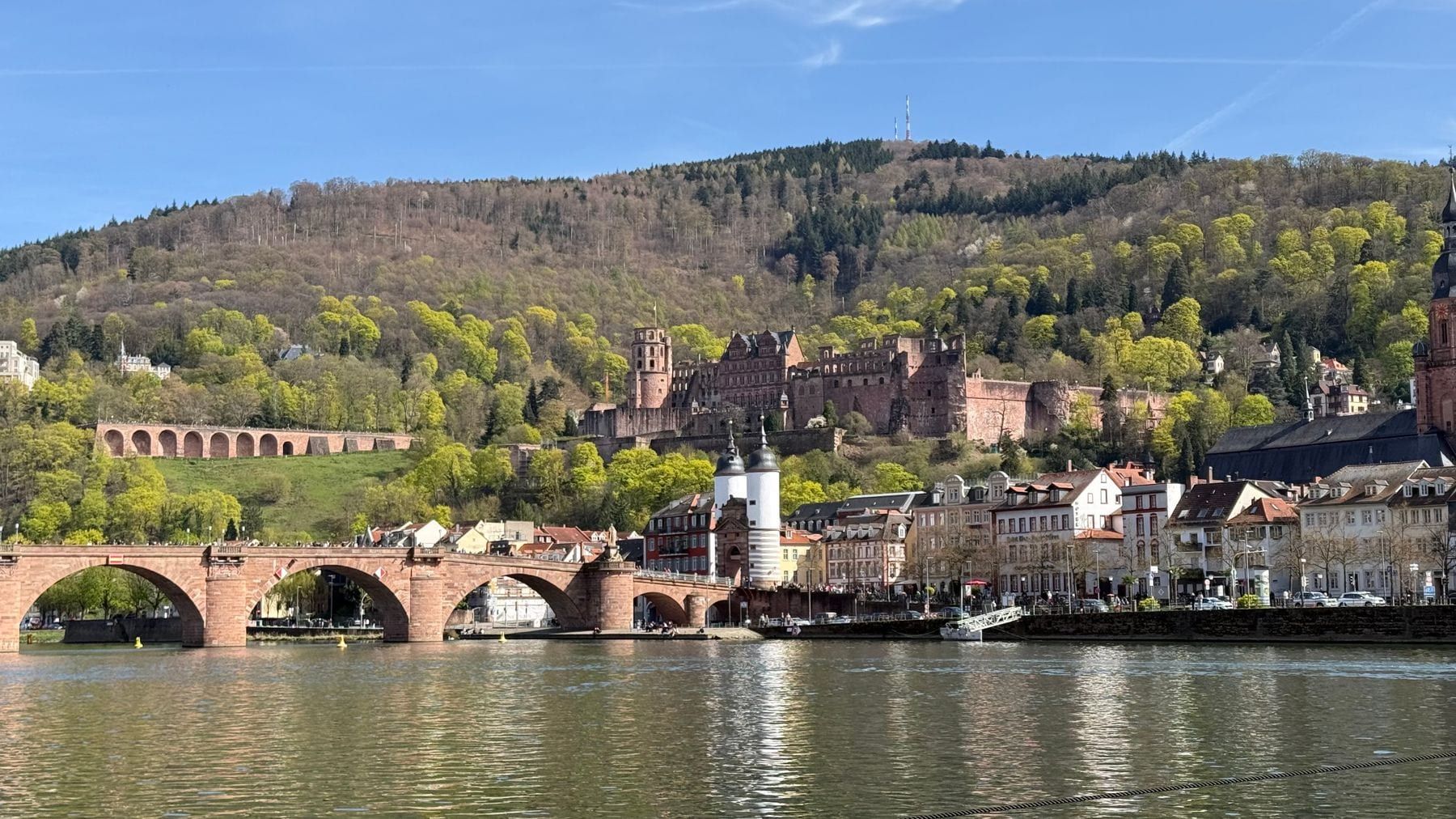
What two or three days in the city on the Neckar really cost, how you get there from Basel in an hour and a half, and why the castle at 8 am is a different place from the castle at noon.
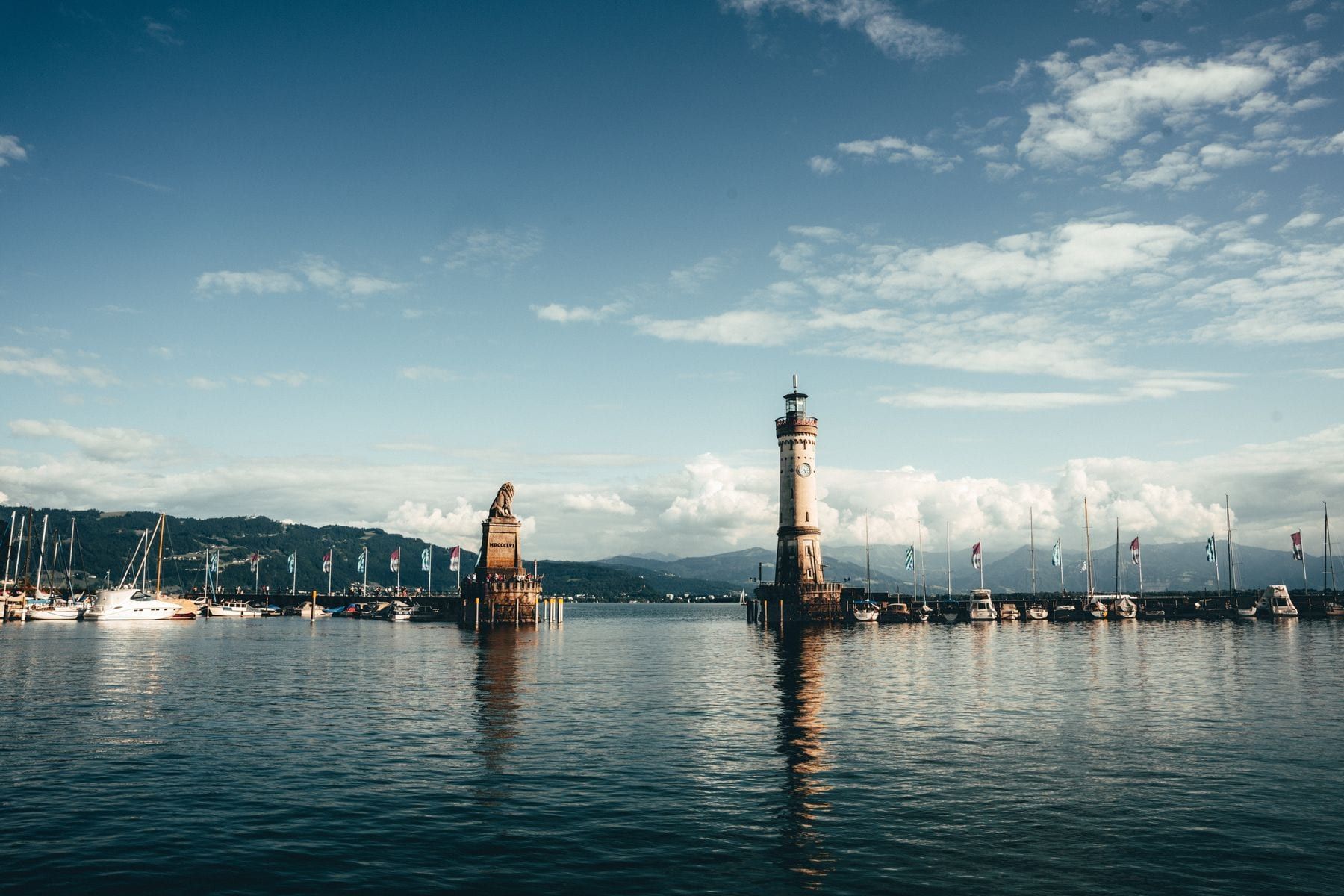
What a weekend or a week of cycling on the German shore of Lake Constance really costs, which ferry runs when, what shopping in Konstanz still saves you, and why you are in a different price bracket an hour from Zurich.