History & background
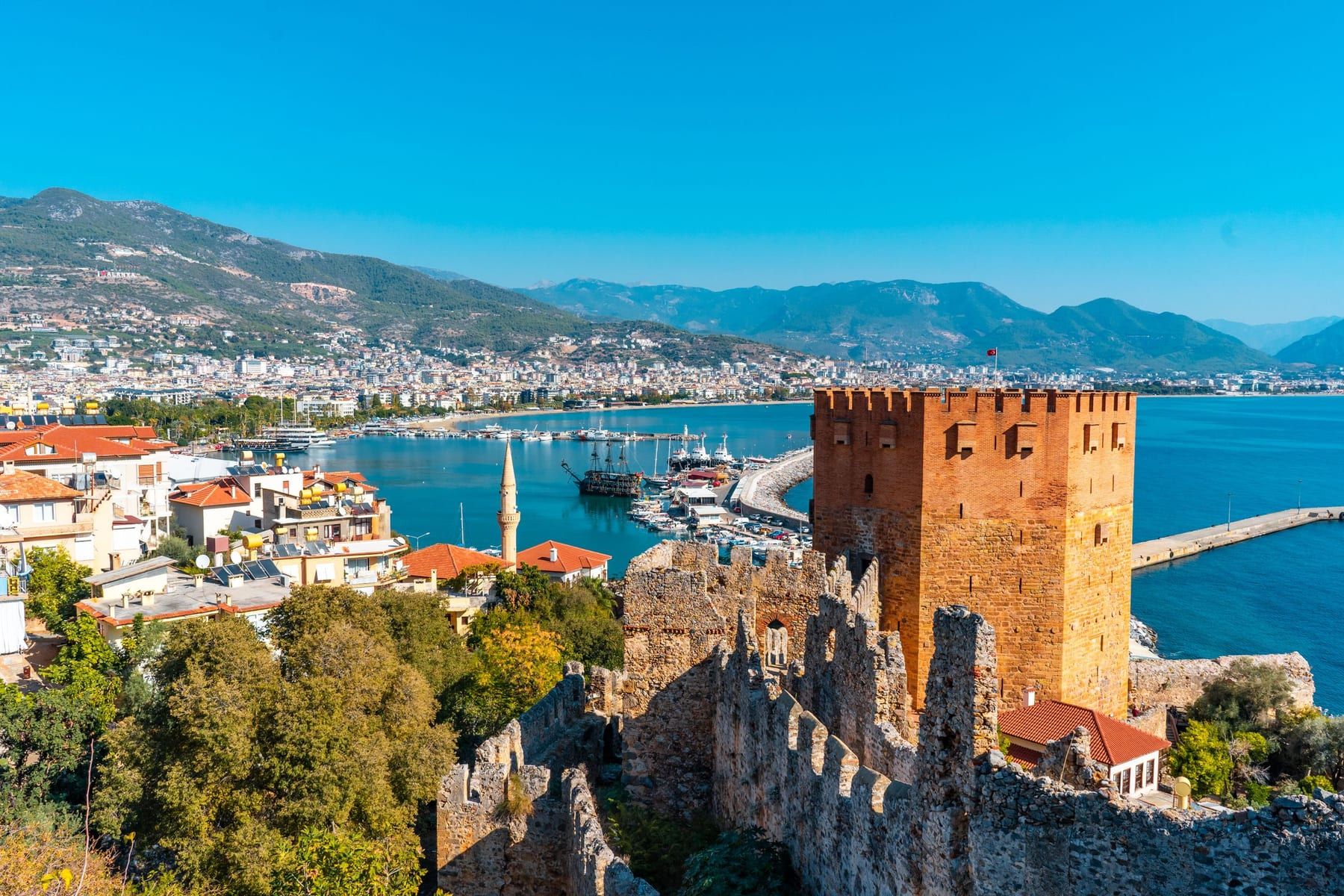
In antiquity Alanya was called Korakesion and was a pirate stronghold: from the rocky peninsula, sea raiders controlled the coast in the 2nd century BC until the Roman general Pompey crushed them in 67 BC. Later, Mark Antony supposedly gave the region to Cleopatra, hence the name of the famous beach. The real golden age began in 1221, when the Seljuk sultan Alaeddin Keykubad conquered the city and made it his winter residence. He had the castle walls built over six kilometres around the peninsula, the octagonal Red Tower raised at the harbour and a shipyard carved into the rock that still stands today. The name Alaiye, later Alanya, goes back to him. After the Seljuks came the Karamanids, the Mamluks and in 1471 the Ottomans; the city lost its importance and became a small trading town. The turning point came in the 1950s, when the Damlataş cave was discovered and promoted for its healing effect on asthma. The first guests came for the cure, then for the swimming. Today Alanya, with more than 300,000 inhabitants and hundreds of hotels, is one of the biggest holiday resorts in Turkey, with a strong German, Scandinavian and Russian community.