History & background
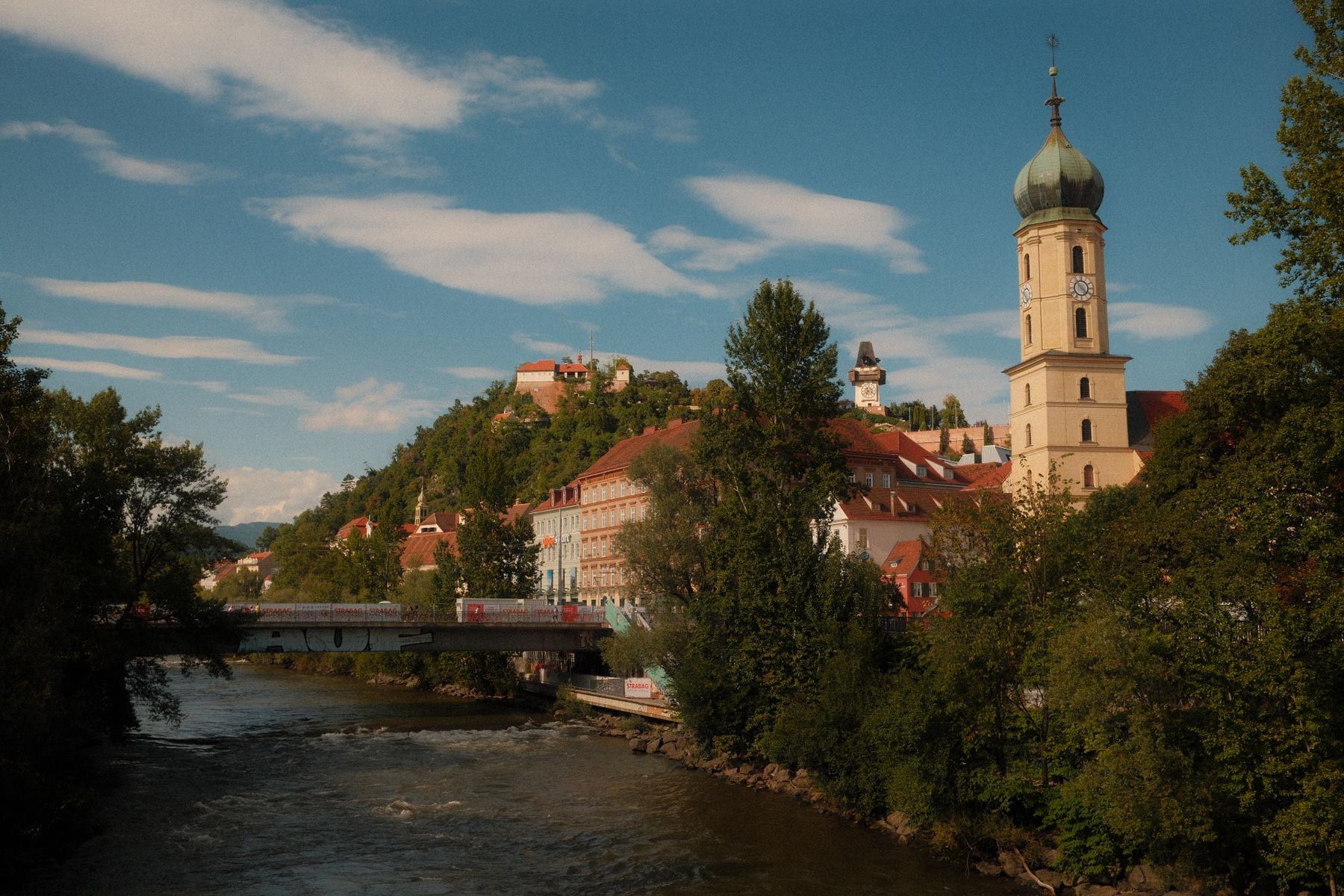
Graz lies where the river Mur leaves the Alps and enters the hill country, and the name comes from the Slavic "gradec", small castle. That castle stood on the Schlossberg, the dolomite rock in the middle of the city that still towers over everything today. In the 15th century Emperor Frederick III made Graz his residence, and from 1564 to 1619 the city was the capital of Inner Austria, responsible for Styria, Carinthia, Carniola and the military frontier against the Ottomans. From this period comes the Landeszeughaus with around 32,000 weapons and suits of armour, the largest surviving historical armoury in the world, and from the same period come the Italian master builders who gave the old town its Renaissance courtyards, above all the Landhaus. Emperor Ferdinand II, who grew up in Graz, moved to Vienna in 1619, and Graz became a provincial town, which did the old town good: very little was demolished. In 1809 Napoleon's troops blew up the fortress on the Schlossberg; the citizens of Graz bought the clock tower and the bell tower free for 2,987 guilders. In the 19th century the Southern Railway arrived, the university grew, and Graz became the "Pensionopolis" where the officers and civil servants of the monarchy retired. In 1999 the old town became a UNESCO World Heritage Site, and Schloss Eggenberg was added in 2010. In 2003 Graz was European Capital of Culture, and from that year come the two buildings that are now on every postcard: the Kunsthaus by Peter Cook and Colin Fournier, the blue bubble on the Lendkai, and the Murinsel by Vito Acconci. Today Graz has around 300,000 inhabitants, four universities and, with 60,000 students, a reputation as the youngest city in Austria.