Hallstatt and Salzkammergut

Austria · Salzburg & Salzkammergut · Travel guide

Hallstatt and Salzkammergut

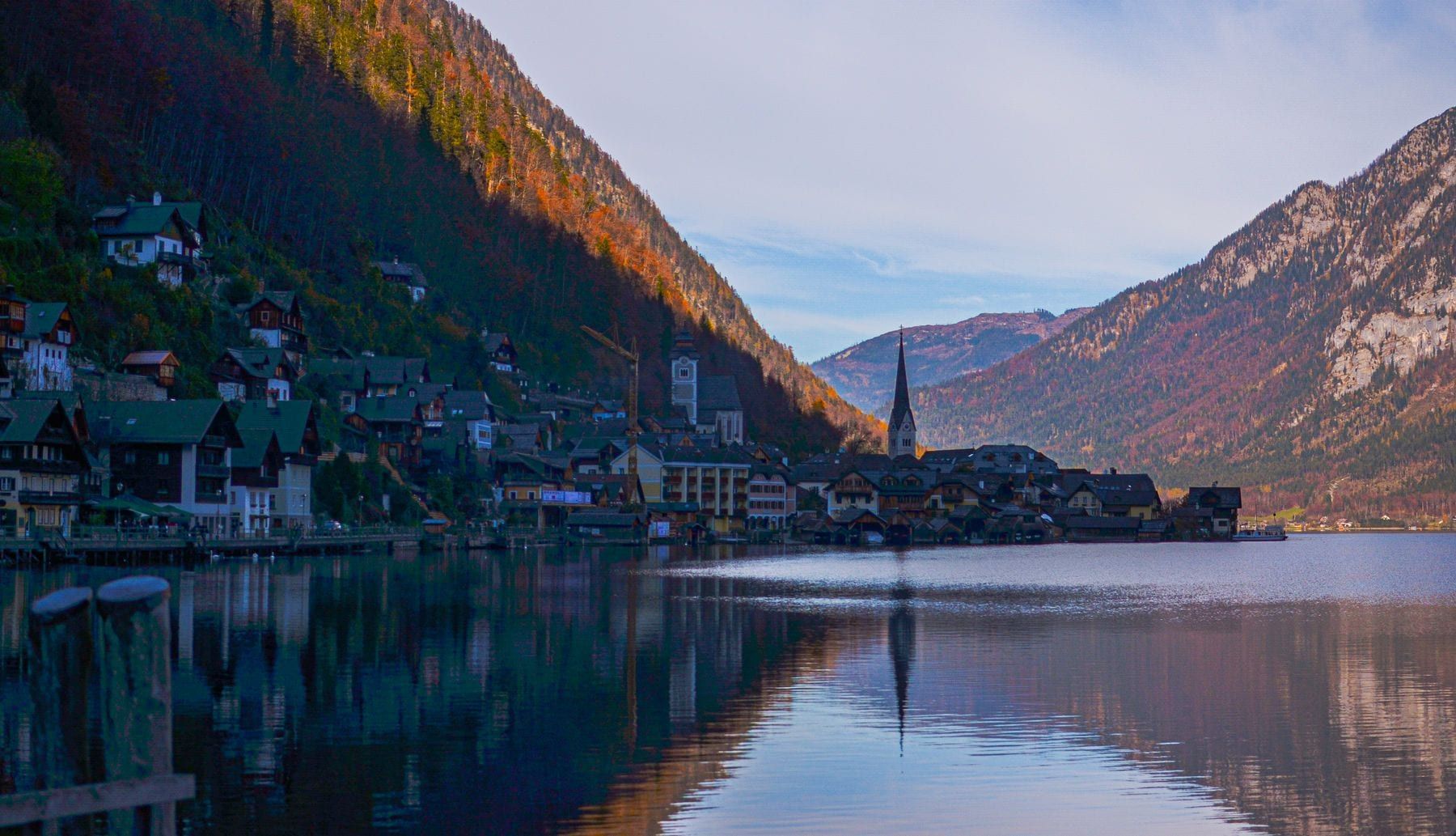
Between 10 am and 4 pm Hallstatt is a selfie corridor, and before and after that one of the most beautiful villages in the Alps. Here is how to do it right, what the surrounding lakes cost and why you do not have to sleep in Hallstatt itself.

Photo: John Netrebchuk / Pexels

What does a trip to Hallstatt and Salzkammergut cost?

Adjust the values to your trip: the calculator updates live (EUR, converted from CHF estimates).

1,792 EUR
≈ 896 EUR per person
  • Getting there 257 EUR
  • Accommodation 749 EUR
  • Food 535 EUR
  • Local transport 134 EUR
  • Dachstein cable car with ice cave and 5 Fingers 118 EUR

Estimates for orientation, not booking prices. Getting there means train or car from Switzerland, return, per person. Hotels vary strongly by season: current prices are behind the links below.

Money & payment: You pay in euros (EUR). Cards work almost everywhere; mountain huts and sausage stands often want cash. Tipping is expected: 5 to 10 percent, by naming the rounded total when you pay. In ski resorts a visitor tax of EUR 2 to 4 per night is added to the hotel price. Getting there: By train (ÖBB Railjet), car or a flight to Vienna, 2 to 8 hours.

Recommended hotels

Nine options in three price ranges, each among the best-rated on Booking.com.

Budget

Hallstatt Hideaway Adults only

Hallstatt centre, Hallstatt

Small adults-only house with a few suites and apartments 200 metres from the village centre, hot tub, lake views from some rooms. For couples who want to sleep in Hallstatt itself; book early, prices swing strongly with the season.

from CHF 160 / night (about EUR 171) View →

JUFA Hotel Hallstatt-Obertraun

Winkl, Obertraun

Family and youth hotel of the JUFA chain in Obertraun, ten minutes on foot from the lake, with multi-bed rooms, family rooms and half board. A base for the Dachstein and Hallstatt, bus and boat on the doorstep.

from CHF 85 / night (about EUR 91) View →

Seewirt Zauner

Marktplatz, Hallstatt

Adults-only inn on the Marktplatz with simple, wood-panelled rooms above the restaurant, which is known for fish from the lake. In the middle of the village, quiet in the evening, breakfast included. No lake-view rooms, but fairly priced.

from CHF 120 / night (about EUR 128) View →

Mid-range

Seehotel Grüner Baum

Marktplatz, Hallstatt

The traditional house on the Marktplatz right on the water, with a lake terrace, rooms facing the lake and one of the few hotels from whose windows you see the morning mist over Lake Hallstatt. Lake-view rooms cost considerably more, but are worth it.

from CHF 220 / night (about EUR 235) View →

Heritage Hotel Hallstatt

Landungsplatz, Hallstatt

Three historic houses in the village, the main house right at the boat landing with lake views, sauna and restaurant. Well organised, many rooms with balconies, for couples staying two nights.

from CHF 200 / night (about EUR 214) View →

Hotel Goldener Ochs

Centre, Bad Ischl

Four-star house with tradition since 1791 on Griesgasse in the centre of Bad Ischl, a few minutes to the station, the Kaiservilla and Konditorei Zauner, classic rooms and a good breakfast. Ideal base for anyone exploring the whole Salzkammergut by train and bus.

from CHF 150 / night (about EUR 161) View →

Luxury

Romantik Hotel Im Weissen Rössl

Lakeshore, St. Wolfgang

The hotel from the operetta, right on the Wolfgangsee with a heated lake pool, spa and several restaurants. Rooms between traditional and modern, lake side with views of the Schafberg. For the classic among lakeside hotels, prices to match.

from CHF 320 / night (about EUR 342) View →

Schloss Fuschl, a Rosewood Hotel

Fuschlsee, Hof bei Salzburg

Hunting lodge of the Salzburg prince-archbishops on a peninsula in the Fuschlsee, reopened as a Rosewood in 2024, with bathing beach, spa, boat trips and a Sisi past. 20 minutes to Salzburg, 40 to the Wolfgangsee. Luxury of the very top class.

from CHF 650 / night (about EUR 696) View →

Seehotel Das Traunsee

Seepromenade, Traunkirchen

Design hotel right on the Traunsee with a lake terrace, sauna above the water and the award-winning Bootshaus restaurant, 20 minutes by train from Bad Ischl. For anyone seeking the quieter eastern edge of the Salzkammergut, with the Traunstein as backdrop.

from CHF 260 / night (about EUR 278) View →

If you book through these links we earn a small commission, at no extra cost to you.

Experiences worth your time

Salzwelten Hallstatt with Welterbeblick

The oldest salt mine in the world: funicular, two miners' slides, a salt lake and the 7,000-year-old staircase, plus the viewing platform 350 metres above the lake. Combined ticket CHF 40, three hours, bring a jacket.

View & book →

Dachstein Giant Ice Cave and 5 Fingers

By the Krippenstein cable car from Obertraun to the ice cave, the Mammoth Cave and the 5 Fingers platform over a 400-metre drop. Panorama ticket CHF 55 to 60, a full day, only in clear weather. Mid-May to October.

View & book →

Boat trip on Lake Hallstatt

Round trip on the electric boat from Hallstatt Markt, 50 minutes for CHF 15, or simply the ferry from the station for CHF 4. From the water you see the village the way the painters of the 19th century saw it.

View & book →

Charnel house and parish church, Hallstatt

More than 600 painted skulls in St. Michael's Chapel, with names, dates and floral wreaths, a tradition born of lack of space. Admission CHF 2, 20 minutes, above the Catholic church with its terraced cemetery over the lake.

View & book →

Gosausee circular walk

Flat circular path around the Vorderer Gosausee with Dachstein views, 1 hour 30 minutes, free, parking CHF 8 or bus 542. The Gosaukamm cable car (CHF 25) takes you up to the Zwieselalm with a panorama of the glacier.

View & book →

Schafbergbahn from St. Wolfgang

The steepest rack railway in Austria, 35 minutes up to 1,732 metres with views of 14 lakes. Return CHF 50, online reservation essential in summer; walk one way and you pay half. Half a day.

View & book →

Kaiservilla Bad Ischl

Summer residence of Franz Joseph and Sisi with hunting trophies, the engagement salon and the desk where the 1914 declaration of war was signed. Guided tour CHF 20 including the park, 1 hour 30 minutes, then Konditorei Zauner. Daily April to October.

View & book →

Wolfgangsee boat trip

Between St. Gilgen, St. Wolfgang and Strobl with intermediate stops, day ticket CHF 25, single leg CHF 10 to 14. Combine it with the Schafbergbahn and the Zwölferhorn in St. Gilgen. In Advent the boat runs between the three markets.

View & book →

Guided Salzkammergut tour from Hallstatt or Bad Ischl

Small-group tours to the Gosausee, Bad Ischl, St. Wolfgang and Mondsee in one day for travellers without a car, from CHF 70 to 110. Saves bus changes and shows you the lakes in the right order. A full day.

View & book →

If you book through these links we earn a small commission, at no extra cost to you.

Food & drink

In the Salzkammergut the food comes from the lake and the alpine pasture: char, whitefish and trout, smoked or pan-fried, plus Kasnocken, Bauernkrapfen and the pastries from the days when the emperor summered here. In Hallstatt you pay village prices with a World Heritage surcharge; in Bad Goisern, Obertraun and Bad Ischl you eat the same for a quarter less.

Hallstätter Saibling

Gasthof Zauner and the lake terraces on the Marktplatz in Hallstatt, the fishermen on the east shore in Obertraun

The lake char from Lake Hallstatt is the finest fish in the region, delicate pink flesh, pan-fried with butter and parsley potatoes or poached "blau". CHF 26 to 34 (about EUR 28 to 36) in Hallstatt, CHF 20 to 26 in Obertraun and Bad Goisern. Smoked as a starter CHF 12 to 16.

Tip:Ask for fish from the lake rather than farmed; not every char on the menu has ever been in Lake Hallstatt. Smoked char from the fisherman survives the journey home.

Reinanke and trout

Inns on the Wolfgangsee and Attersee, for instance in Strobl and Unterach

The Reinanke (whitefish) is the everyday fish of the Salzkammergut lakes, slightly finer than trout, usually pan-fried whole. CHF 20 to 28, cheaper as a lunch menu. Trout comes "Müllerin" in butter or poached blau with horseradish.

Tip:Fish is often served whole; if you do not like that, ask for a fillet, which usually costs the same.

Kasnocken and Pressknödel

Mountain huts on the Krippenstein and the Zwieselalm, inns in Gosau

Kasnocken are spätzle with mountain cheese and fried onions in the pan; Pressknödel are flat, fried cheese dumplings in soup or with sauerkraut. Both CHF 12 to 16 and the cheapest way to fill up after the Dachstein.

Tip:Have cash ready on the alp; card payment has not yet arrived everywhere at 2,000 metres.

Bauernkrapfen

Inns in Bad Goisern and at the Kirtag fairs in the villages

Thinly stretched yeast dough, fried in fat, with sauerkraut or lingonberries and icing sugar. A pastry taken for granted at festivals and in the inns of the area, CHF 5 to 9.

Tip:Sauerkraut Krapfen as a main course; share the sweet version, it is bigger than the plate.

Zaunerstollen

Konditorei Zauner, Pfarrgasse in Bad Ischl, and the Zauner Esplanade on the Traun

Not a Christmas product but a chocolate, nut and wafer bar invented by Konditorei Zauner in Bad Ischl in 1905. A slice in the café CHF 5 to 6, the bar to take away CHF 8 to 12.

Tip:The Esplanade has the terrace on the river, the Pfarrgasse the imperial-era salon. Both are full in the afternoon, quiet in the morning.

Kaiserschmarrn with Zwetschkenröster

Huts and inns throughout the Salzkammergut, coffee houses in Bad Ischl

Thick, torn pancake with raisins and icing sugar, served with stewed plums. In Bad Ischl a tribute to the emperor, who supposedly loved it. CHF 11 to 15, enough for two as dessert or for one as a main course.

Tip:Made fresh it takes 15 to 20 minutes, so order it with your main course.

Beer from Schloss Eggenberg and the Mostschank

Inns in the inner Salzkammergut, Mostschänken around Bad Goisern and on the Attersee

The Schloss Eggenberg brewery in Vorchdorf brews one of the strongest beers in the world, the Samichlaus, and the Hopfenkönig as an everyday beer, CHF 4.50 to 5.50 a half litre. Then there is Most, fermented apple and pear juice, in Mostschänken (cider taverns) for CHF 3 to 4 a quarter litre.

Tip:Most is more sour than it sounds; "gespritzt" with mineral water it makes a good summer thirst quencher.

Book a food tour: Hallstatt and Salzkammergut

Through markets and eateries with a guide, tastings included.

View & book →

If you book through these links we earn a small commission, at no extra cost to you.

History & background

The Salzkammergut is so called because for centuries the salt here was the property of the Habsburgs, administered by the Hofkammer, the emperors' finance ministry. Until the 19th century the area between Salzburg, Upper Austria and Styria was a kind of restricted zone: outsiders needed a permit, and the inhabitants worked in the mine and the salt works. In Hallstatt it all began around 7,000 years ago. The salt mountain above the village is the oldest known salt mine in the world, and the burial ground that the mine manager Johann Georg Ramsauer began to excavate in 1846 was so rich that an entire era of the European Iron Age, the Hallstatt culture from around 800 to 450 BC, was named after the village. The miners of that time left behind leather shoes, wooden staircases and even a rucksack, preserved in the salt. The village itself clings to the slope between lake and rock because there was no other space; until 1890 it could only be reached by boat or mule track, and the road along the shore was blasted into the rock only later. Lack of space is also the reason for the charnel house in St. Michael's Chapel with its more than 600 painted skulls: graves were cleared after ten years. From 1800 painters and poets discovered the area, then Emperor Franz Joseph, who spent every summer in Bad Ischl from 1849 and became engaged to Elisabeth there in 1853. The Salzkammergut became the summer retreat of the aristocracy and the Viennese bourgeoisie, with villas, spa houses and operetta. Hallstatt and the Dachstein have been a UNESCO World Heritage Site since 1997. Since 2012 a copy of the village has stood in the Chinese province of Guangdong, which has further increased the flow of visitors from Asia.

Insider tips

Getting there: train to Hallstatt station and the boat, or car with caution

Hallstatt has a railway station, on the opposite shore of the lake: you take the Railjet from Zurich to Salzburg (5 hours 30 minutes) or to Attnang-Puchheim and continue on the regional train through the Salzkammergut to Hallstatt, 7 to 8 hours in all. The last few minutes are covered by the ferry Stefanie, which waits for every train and takes you across the lake in ten minutes for CHF 4 (about EUR 4); this arrival from the water is the finest view of the village there is. With ÖBB Sparschiene and the Half Fare Card, allow CHF 100 to 140 per person return. From Salzburg you can also take Postbus 150 via Bad Ischl, around 2 hours 30 minutes for CHF 15. By car you are there from Zurich in 5 to 6 hours (vignette CHF 12 for ten days), and in the Salzkammergut the car really is practical, because the lakes are far apart and the buses thin out in the evening. But: you are not allowed to drive into Hallstatt itself. Car parks P1 and P2 on the edge of the village cost CHF 10 to 15 a day and are full from 10 am in summer, at which point the police close the access road. Come before 9 am or after 4 pm, or leave the car in Obertraun and take the boat. Overnight guests receive a guest card that gives discounts on buses and often on boats.

Overtourism in Hallstatt: how to avoid the corridor

The honest description of a summer day: from 10 am the coaches roll in from Salzburg, Vienna and Munich, from 11 am the Seestrasse is a one-way street of selfie sticks, the classic photo spot on the Gosaumühlstrasse in the north is besieged, and the handful of restaurants have queues. At 4.30 pm the coaches leave, and by 6 pm the village belongs once more to the overnight guests, the ducks and the evening light on the lake. So if you stay the night in Hallstatt, you get two villages for the price of one: in the morning between 7 and 9.30 am, when the mist lies on the water and the Salzwelten are still closed, and in the evening. For day visitors the rule is: be there before 9 am, tick off the Marktplatz, the charnel house (CHF 2, about EUR 2) and the photo spot before 10 am, then head up to the Salzwelten, because the mountain is far emptier than the lane. Second trick: the bus and boat timetables are such that the groups all stand at the same three places at the same time. Go in the opposite direction, down to the bathing spot in the south or up to the Waldbachstrub waterfall in the Echerntal (an hour on foot, free, almost empty). And please: the village is inhabited. Do not walk into gardens, no drones, no photographing through windows; the people of Hallstatt have seen it all.

Salzwelten and Dachstein: the mountain is the real reason

The Salzwelten Hallstatt are the oldest salt mine in the world and an honest recommendation: up by funicular (return CHF 22, about EUR 24), a short walk to the tunnel entrance, then 70 minutes inside the mountain with two miners' slides, a salt lake, the 7,000-year-old wooden staircase and a mine train out. Combined ticket with funicular CHF 40, children about half. At the top the Welterbeblick awaits, a viewing platform 350 metres above the lake, included in the ticket and a better photo than any spot in the village. Allow three hours and bring a jacket; it is 8 degrees inside the mountain. The Dachstein on the other side in Obertraun is the second reason for the area: the Dachstein-Krippenstein cable car has three sections. The first section goes to the Schönbergalm with the Giant Ice Cave (tour 50 minutes, ice domes up to 8 metres high, 0 degrees, jacket essential) and the Mammoth Cave. The second section goes to the Krippenstein at 2,100 metres with the 5 Fingers viewing platform, which juts out like a hand over a 400-metre drop, free after the cable car ride, 20 minutes on foot from the top station. The panorama ticket with all cable cars and both caves costs CHF 55 to 60, cable car only to the Krippenstein CHF 40. May to October, caves often only from mid-May. Plan the whole day and go in clear weather; in fog all you see from the five fingers is five fingers.

Where to stay: Hallstatt itself, Obertraun or the lakes further north

Hallstatt has only a few hundred beds, and from May to October they are gone months in advance. A lake-view room in a mid-range hotel costs CHF 180 to 260 (about EUR 193 to 278), simple guesthouses on the slope CHF 100 to 140. If you want the village in the morning and evening, book six months ahead and stay two nights; one night is too tight. The honest alternative is Obertraun: five kilometres along the east shore, quiet, with a bathing beach, railway station and the Dachstein cable car, double rooms from CHF 90, and you are in Hallstatt in 15 minutes by bus or boat. Bad Goisern and Bad Ischl, 10 to 20 minutes by train, have far more beds, supermarkets and restaurants open in the evening. If you are spending a week in the Salzkammergut, better to split it: three nights in the south (Hallstatt or Obertraun) for the Dachstein and Gosau, three nights on the Wolfgangsee or Mondsee for the Schafberg, the lidos and the proximity to Salzburg. St. Wolfgang is the postcard village with the Weisses Rössl, pretty and full in the afternoon; St. Gilgen at the other end of the lake is quieter and 50 minutes from Salzburg by bus. The price trap everywhere: the visitor tax of CHF 3 to 4 per person per night, which only appears at reception, and minimum stays of three nights in July and August. When to book: Hallstatt and St. Wolfgang in January for the summer, the rest two months ahead.

Gosausee, Bad Ischl, Schafberg: the places that make the Salzkammergut

The Vorderer Gosausee, 30 minutes by bus 542 from Hallstatt or by car, is the place where you get the Hallstatt feeling without the Hallstatt crowds: a turquoise-green mountain lake with the Dachstein glacier as backdrop, flat circular walk of 1 hour 30 minutes, parking CHF 8 (about EUR 9). If you carry on, you reach the Hinterer Gosausee in an hour, where you are almost alone. Bad Ischl was the summer capital of the monarchy and European Capital of Culture in 2024: the Kaiservilla (CHF 20 including guided tour, Franz Joseph's hunting trophies and the writing desk at which he signed the declaration of war in 1914), Konditorei Zauner, the Lehár Villa, plus the Salzkammergut-Therme spa (3 hours CHF 25). To the Wolfgangsee: the Schafbergbahn, the steepest rack railway in Austria, runs from St. Wolfgang in 35 minutes up to 1,732 metres, from where you can count 14 lakes. Return CHF 50, online reservation strongly advised as the trains are sold out in summer; taking the train one way and walking the other (3 hours) saves half. The Wolfgangsee boats connect St. Gilgen, St. Wolfgang and Strobl (day ticket CHF 25). Mondsee has the basilica from the Sound of Music film, a warm lake for swimming (up to 26 degrees in August) and the Attersee next door, where Klimt painted and the water is so clear that divers come. For all the lakes: lidos cost CHF 4 to 7, wild bathing spots are free and signposted on the east side of the Attersee.

Timing and season: May, September and the winter hardly anyone knows

The high season runs from mid-June to mid-September, peaking in July and August, when even the off-peak tricks in Hallstatt only half work. May and the first half of June are the best time: cable cars open, meadows green, snow on the Dachstein, lakes still cold, but the villages are yours from 3 pm. September and early October are the second good time, with warm lakes, clear air and the Almabtrieb, when the cattle come down from the pastures. The Salzkammergut is wet: the northern weather front brings more rain than elsewhere in Austria, often as afternoon thunderstorms, so plan mountain days for the morning. At the end of October most cable cars and many hotels in Hallstatt close until Christmas. Advent in Hallstatt and above all in Bad Ischl, St. Wolfgang and St. Gilgen (Wolfgangsee Advent with a boat between the markets) is atmospheric and far emptier than Salzburg. January to March is the quietest time: Hallstatt in the snow with perhaps 200 visitors a day, the Salzwelten open, the Krippenstein as a freeride mountain with a ski pass of CHF 50 (about EUR 54), cross-country skiing in Gosau, ice skating on Lake Hallstatt in very cold winters. If you really want to see the village quiet, come in February during the week. Then, however, half the restaurants are closed and the ferry runs less often, so check the timetable beforehand.

Frequently asked questions about Hallstatt and Salzkammergut

How do I get from Switzerland to Hallstatt, and do I need a car?

By train from Zurich via Salzburg or Attnang-Puchheim to Hallstatt station in 7 to 8 hours, then by boat (CHF 4, about EUR 4) across the lake, CHF 100 to 140 return with Sparschiene. By car 5 to 6 hours. For Hallstatt and the Dachstein alone you do not need a car; train, bus and boat are enough. If you want to see the Gosausee, Wolfgangsee, Mondsee and Attersee in a week, you are much more flexible with a car, but you have to leave it on the edge of Hallstatt (CHF 10 to 15 a day).

Is Hallstatt worth it despite the tourist crowds?

Yes, if you come before 9 am or stay overnight, and if you take in the salt mountain and the Dachstein. Between 10 am and 4 pm in July it is, frankly, no pleasure; then you are better off at the Gosausee or in the Salzwelten. Hallstatt as a two-hour stop on a coach tour is what is ruining the village, and for you the worst possible experience. Two nights in Hallstatt or Obertraun is the right dose.

How many days do you need for the Salzkammergut?

One day for Hallstatt with the Salzwelten, one day for the Dachstein with the ice cave and 5 Fingers, half a day for the Gosausee. With Bad Ischl, the Schafberg and a swimming day on the Wolfgangsee or Attersee you are at five to seven days. As a day trip from Salzburg you only see Hallstatt and sit on a bus for four hours; better to stay a night.

What does a week in the Salzkammergut cost?

Allow CHF 100 to 130 (about EUR 107 to 139) per person per day: mid-range double room CHF 120 to 160 shared, food CHF 45 to 55, plus the cable cars, which add up: Dachstein panorama ticket CHF 55, Salzwelten CHF 40, Schafbergbahn CHF 50. With travel, around CHF 900 to 1,100 for a week. It gets cheaper in Obertraun or Bad Goisern instead of Hallstatt and with the guest card, which gives discounts on many buses and some cable cars.

Can you swim in Lake Hallstatt?

Yes, but it is a mountain lake and rarely gets warmer than 20 to 22 degrees in August. There are bathing spots at the southern end of Hallstatt (Badeinsel, free) and in Obertraun with a lido. Warmer are the Mondsee and Wolfgangsee at 23 to 26 degrees in high summer; the Attersee stays cooler but is the clearest. Lidos cost CHF 4 to 7 (about EUR 4 to 7); wild spots are allowed on all the lakes as long as you are not on private land.

When is the best time to visit Hallstatt and the lakes?

Mid-May to mid-June and September: cable cars and caves open, far fewer coaches, prices 20 to 30 per cent below high summer. July and August are warmest for the lakes, but fullest in Hallstatt. Winter between January and March is the insider tip for peace and snow, with restricted opening hours. Advent on the Wolfgangsee is one of the most beautiful in Austria.

Itineraries with this destination

Activities in the region

More destinations in Salzburg & Salzkammergut