Salzburg

Austria · Salzburg & Salzkammergut · Travel guide

Salzburg

What three days in Mozart's city really cost, why the Railjet beats the car here and which Festival tickets you can afford without blowing the holiday budget.

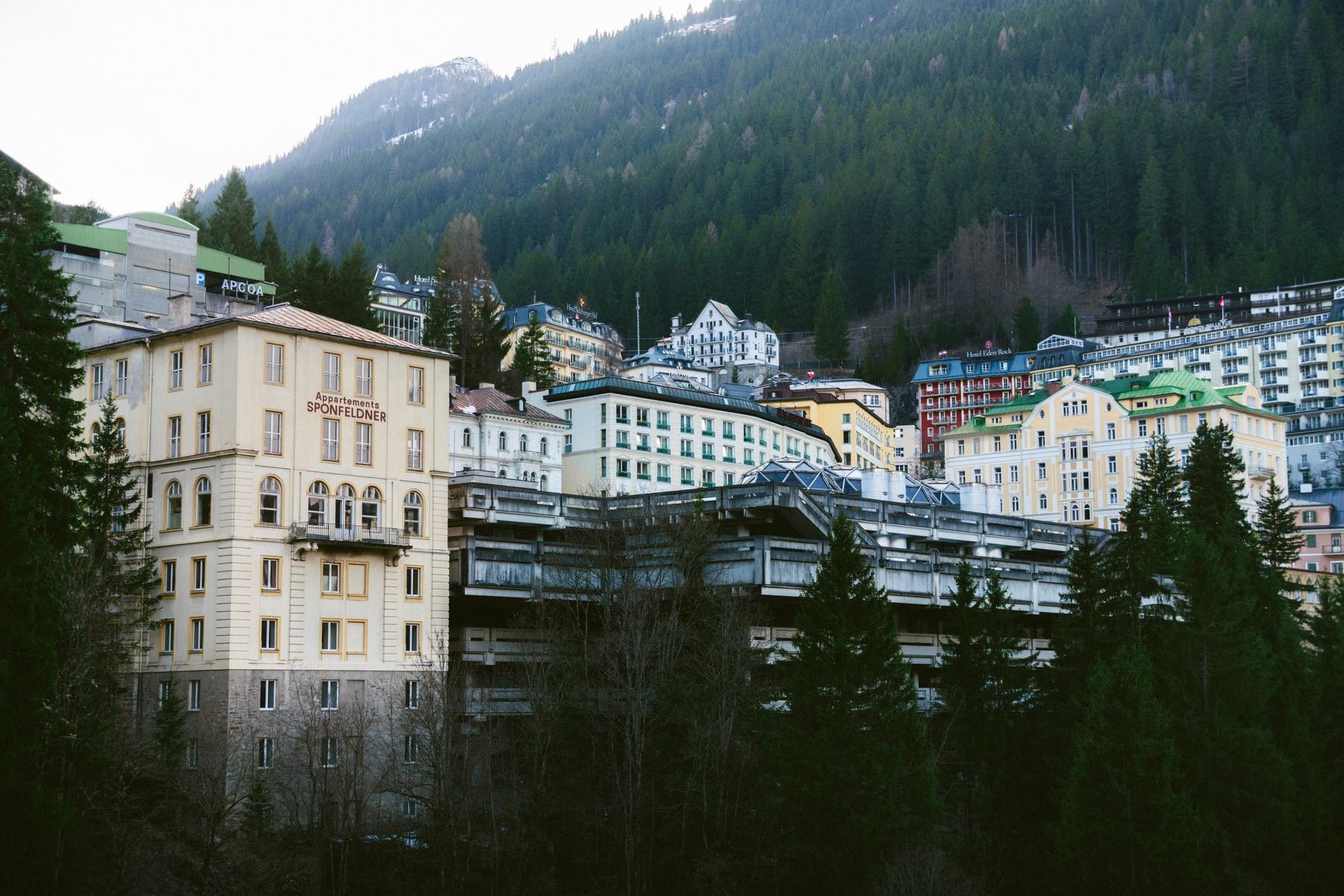
Photo: Laura Chouette / Pexels

What does a trip to Salzburg cost?

Adjust the values to your trip: the calculator updates live (EUR, converted from CHF estimates).

2,049 EUR
≈ 1,025 EUR per person
  • Getting there 235 EUR
  • Accommodation 803 EUR
  • Food 589 EUR
  • Local transport 80 EUR
  • Festival ticket (middle category) 342 EUR

Estimates for orientation, not booking prices. Getting there means train or car from Switzerland, return, per person. Hotels vary strongly by season: current prices are behind the links below.

Money & payment: You pay in euros (EUR). Cards work almost everywhere; mountain huts and sausage stands often want cash. Tipping is expected: 5 to 10 percent, by naming the rounded total when you pay. In ski resorts a visitor tax of EUR 2 to 4 per night is added to the hotel price. Getting there: By train (ÖBB Railjet), car or a flight to Vienna, 2 to 8 hours.

Recommended hotels

Nine options in three price ranges, each among the best-rated on Booking.com.

Budget

MEININGER Hotel Salzburg City Center

Elisabeth-Vorstadt, Salzburg

Large house with dorm beds and simple double rooms, five minutes from the main station and 20 minutes on foot to the old town. Guest kitchen and bar, ideal for solo travellers and families on a small budget.

from CHF 70 / night (about EUR 75) View →

Motel One Salzburg-Mirabell

Elisabethkai, Salzburg

Motel One on the Salzach, ten minutes on foot to the old town, with the familiar mix of small, well-designed rooms and a solid lounge. During the Festival the cheapest central address if you book early.

from CHF 95 / night (about EUR 102) View →

YOHO International Youth Hostel Salzburg

Andräviertel, Salzburg

The classic Salzburg hostel with dorms and private rooms, ten minutes from the station. "The Sound of Music" plays every evening, there is a bar and breakfast in the house, and you are guaranteed to meet other travellers.

from CHF 35 / night (about EUR 37) View →

Mid-range

Hotel Goldgasse

Old town, Salzburg

Small boutique hotel in a side lane between Residenzplatz and Mozartplatz, 16 rooms in a house from the 14th century, good restaurant on the ground floor. For anyone who wants to live in the heart of the old town without paying for a grand traditional house.

from CHF 190 / night (about EUR 203) View →

Hotel Stein

Giselakai, Salzburg

Right by the Staatsbrücke on the right bank, with the Seven Senses rooftop terrace, which has the best view of the fortress and old town. Rooms modern and quiet on the courtyard side, two minutes to the Getreidegasse.

from CHF 170 / night (about EUR 182) View →

Altstadthotel Wolf-Dietrich

Wolf-Dietrich-Strasse, Salzburg

Family-run house between Linzer Gasse and the Sebastian cemetery with a small indoor pool and sauna, breakfast with a view of the fortress. Quiet, personal and five minutes from the old town, for couples and families.

from CHF 150 / night (about EUR 161) View →

Luxury

Hotel Sacher Salzburg

Schwarzstrasse, Salzburg

The city's grand hotel on the Salzach, opposite the old town, with views of the fortress and cathedral from the river rooms. Original Sachertorte in the café, conductors and singers in the bar during the Festival. Classic luxury without experiments.

from CHF 450 / night (about EUR 482) View →

Hotel Goldener Hirsch

Getreidegasse, Salzburg

An inn since 1407 and today the Festival hotel par excellence, in the middle of the Getreidegasse, with painted farmhouse furniture and one of the best restaurants in the city. Rooms vary in size, location unbeatable, prices during the Festival to match.

from CHF 400 / night (about EUR 428) View →

Hotel Schloss Mönchstein

Mönchsberg, Salzburg

Small castle hotel in the park on the Mönchsberg, high above the old town, with 24 rooms, a Michelin-starred restaurant and a silence you do not get down below. The lift takes you to the Getreidegasse in five minutes. For special occasions.

from CHF 550 / night (about EUR 589) View →

If you book through these links we earn a small commission, at no extra cost to you.

Experiences worth your time

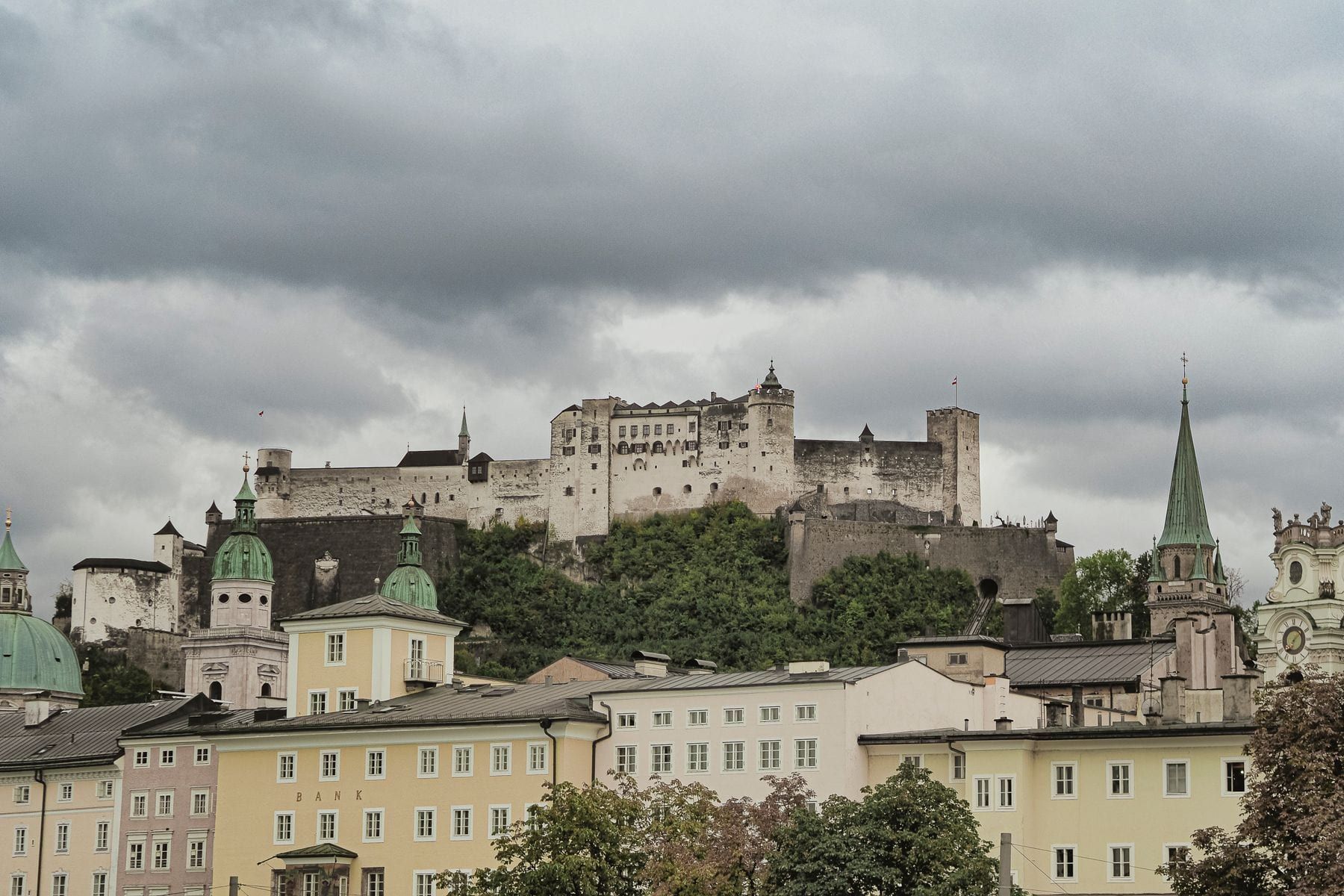
Hohensalzburg Fortress

The largest fully preserved castle in Central Europe with princely chambers, museum and panoramic views. Admission CHF 12 on foot, CHF 17 with the funicular, included in the Salzburg Card. Allow two hours; quietest in the morning before 10 am.

View & book →

Old town tour with Mozart and the cathedral

Two hours through the Getreidegasse, Domplatz, St. Peter and the Residenz with a guide who explains the prince-archbishops and Mozart's quarrel with Colloredo. From CHF 20 in a group, private from CHF 150. The best introduction on your first day.

View & book →

Mozart's birthplace and residence

The birthplace in the Getreidegasse with his child's violin and clavichord, the residence on Makartplatz with the better exhibition and fewer crowds. Combined ticket CHF 20, an hour each. If you only manage one, take the residence.

View & book →

Mozart dinner concert in St. Peter

Three courses from 18th-century recipes in the Stiftskeller St. Peter, with arias and chamber music in costume in between. CHF 70 to 90 per person, three hours. A tourist programme, but an atmospheric one, and the cellar is one of the oldest dining rooms in Europe.

View & book →

Hellbrunn Palace and trick fountains

Pleasure palace of Prince-Archbishop Markus Sittikus with trick fountains that are guaranteed to get you wet, a palace tour and a large park. Admission CHF 15, April to October only, 20 minutes by bus 25. Half a day, good for children too.

View & book →

Untersberg cable car

Nine minutes from St. Leonhard up to 1,776 metres with views of Salzburg, Berchtesgaden and the Dachstein. Return CHF 30, included in the Salzburg Card, easy walks and huts at the top. May to October and in winter; when the city is in fog it is often sunny up top.

View & book →

Salzwelten Hallein

The oldest show mine in the world on the Dürrnberg: mine train, two wooden slides, a raft across the salt lake and an underground border with Germany. CHF 30 including the Celtic village, two hours, an hour from Salzburg by S-Bahn and bus.

View & book →

Day trip to Königssee and Berchtesgaden

Half an hour across the German border to the fjord-like Königssee with the electric boat trip to St. Bartholomä (CHF 24) and the Kehlsteinhaus. Guided from CHF 60, on your own with bus 840 from Salzburg main station for CHF 12 return. A full day.

View & book →

Salzkammergut tour from Salzburg

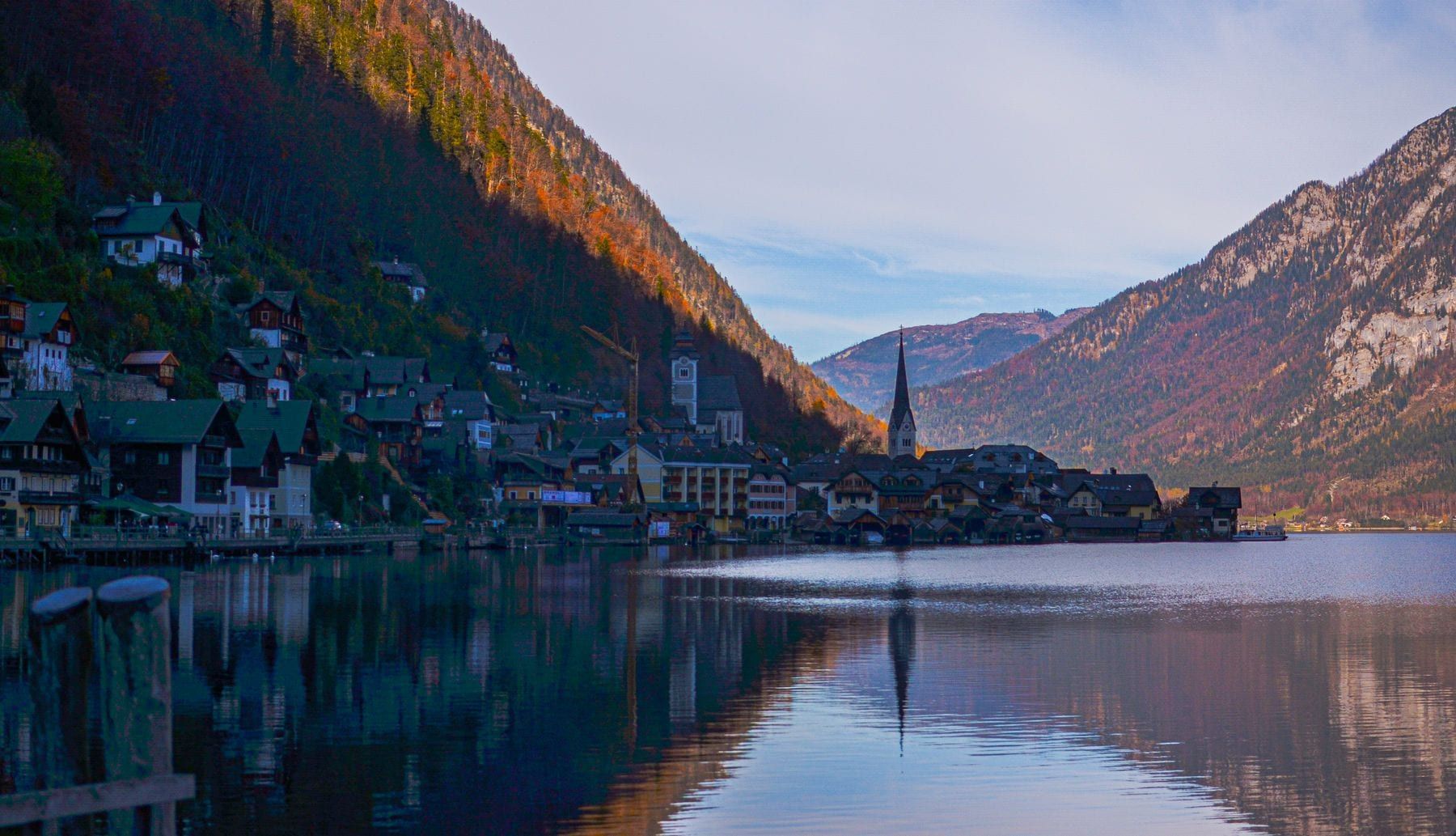
For anyone with only one day: bus to Fuschlsee, St. Gilgen, Wolfgangsee and Hallstatt, eight to nine hours, from CHF 60 to 90. More time on the bus than by the lake, but without a car the easiest way to see Hallstatt.

View & book →

If you book through these links we earn a small commission, at no extra cost to you.

Food & drink

Salzburg eats baroque and rustic at the same time: monastery beer from a stone mug, dumplings in every shape, brook trout from the lakes and, to finish, a mountain of meringue called Salzburger Nockerl. The coffee houses are older than those in Vienna and at least as proud. It only gets expensive in the Getreidegasse and on Mozartplatz; two lanes further on you pay inn prices.

Salzburger Nockerl

Stiftskeller St. Peter or Gasthaus Zwettler's, Kaigasse

Three golden mounds of sweet soufflé, said to represent the city hills Mönchsberg, Kapuzinerberg and Gaisberg, baked on lingonberries or raspberry sauce. Crisp outside, almost liquid inside, and meant for two to three people. CHF 16 to 22 (about EUR 17 to 24) per portion.

Tip:The Nockerl are baked fresh and take 20 minutes; order them with your main course and share them, you will not manage them alone.

Bosna

Balkan Grill Walter, in the passage at Getreidegasse 33

Salzburg's answer to the hot dog: two thin bratwurst in grilled white bread with onions, parsley, mustard and curry powder, invented in the Getreidegasse in 1949. CHF 5 to 6, handed to you through the window.

Tip:There are only four variants and often a queue, which moves quickly. Number 1 is the classic.

Kasnocken

Inns around the Kajetanerplatz and in Linzer Gasse

The Pinzgau version of cheese spätzle: spätzle with mountain cheese in an iron pan, fried onions on top, green salad on the side. Heavy, good and at CHF 13 to 17 one of the cheapest hot meals in the city.

Tip:Order it at lunchtime as a set menu with soup; in the evening the same pan costs CHF 4 to 5 more.

Beer at the Augustinerbräu

Augustinerbräu Kloster Mülln, Lindhofstrasse

The monastery brewery in Mulln has been the largest beer hall in Austria since 1621: rinse your stone mug at the fountain, have it filled from the barrel, pay, sit down. A Mass (one litre) CHF 5.50 to 6.50, a half litre CHF 3.50. You fetch food from the stalls in the Schmankerlgang or bring your own, which is allowed.

Tip:Open from 3 pm, at weekends from 2.30 pm. In summer into the beer garden under the chestnut trees, in winter into the wood-panelled halls.

Salzburger Bierfleisch and Bierbraten

Traditional inns in the old town, such as Sternbräu or Zum Mohren in the Judengasse

Beef braised slowly in dark beer, with bread dumplings and cabbage salad. A winter dish that the old inns serve all year round, CHF 18 to 24.

Tip:Stiegl Goldbräu goes well with the Bierbraten; it is the city's beer and on tap on every corner.

Mozartkugel from Fürst

Café Konditorei Fürst, Brodgasse on the Alter Markt

Pistachio marzipan, nougat, dark chocolate, invented in 1890 by the confectioner Paul Fürst and still made by hand today. CHF 1.50 to 2 per ball, only in the four Fürst shops in the city, not in the supermarket.

Tip:Only the silver-blue balls are the original; anything in gold paper is an industrial product. They keep for two weeks, store them cool.

Coffee and cake at Café Tomaselli

Café Tomaselli, Alter Markt

The oldest coffee house in Austria, on the Alter Markt since 1700, with the cake lady who brings the tray to your table. Melange CHF 5.50, a slice of cake CHF 5 to 7, and in the afternoon the newspapers on their wooden holders.

Tip:In summer head for the first-floor terrace, where you sit above the square. Café Bazar on the right bank is the quieter alternative with a view of the Salzach.

Char and trout from the lakes

Grünmarkt on Universitätsplatz (fish stalls in the morning) and inns in Nonntal

Whitefish, char and trout from the Fuschlsee and Wolfgangsee, pan-fried or poached "blau" with buttered potatoes. CHF 22 to 30 in an inn, CHF 16 to 20 as a lunch menu.

Tip:The Grünmarkt, Monday to Saturday, is in any case the best place for a quick lunch: Käsekrainer sausage, pretzels and farmhouse bread from CHF 4.

Book a food tour: Salzburg

Through markets and eateries with a guide, tastings included.

View & book →

If you book through these links we earn a small commission, at no extra cost to you.

History & background

Salzburg owes its name and its wealth to the salt from the Dürrnberg near Hallein, which was shipped down the Salzach and taxed at the city toll. The Celts were already mining it, the Romans founded Iuvavum here, and in 696 Bishop Rupert arrived and founded the monastery of St. Peter, the oldest surviving monastery in the German-speaking world. From 1278 the prince-archbishops ruled as spiritual and secular lords at the same time, and this double role explains why a small city of 155,000 people today has a fortress, a cathedral, three residences and a dozen baroque churches. Hohensalzburg Fortress was begun in 1077 during the Investiture Controversy and extended over 500 years; it was never captured. Around 1600 Wolf Dietrich von Raitenau had half of Salzburg demolished and rebuilt as an Italian baroque city; his successors completed the cathedral, Residenzplatz and Mirabell Palace, which he had actually built for his mistress Salome Alt. In 1756 Wolfgang Amadeus Mozart was born at Getreidegasse 9; he quarrelled so badly with Prince-Archbishop Colloredo that he left for Vienna in 1781 and never came back. The prince-archbishopric was dissolved in 1803, and in 1816 Salzburg became part of Austria as an impoverished provincial town. Its rise to a city of culture came only with Max Reinhardt and Hugo von Hofmannsthal, who founded the Festival in 1920 with "Jedermann" on the Domplatz. In 1965 Hollywood shot "The Sound of Music" here, a film hardly anyone in Austria knows and which brings hundreds of thousands of visitors every year. The old town has been a UNESCO World Heritage Site since 1996.

Insider tips

Getting there: Railjet from Zurich, and why the car is a nuisance here

The ÖBB Railjet runs direct from Zurich HB every two hours via Buchs, Innsbruck and Kufstein to Salzburg, journey time around 5 hours 30 minutes. The train runs for a stretch through the Deutsches Eck near Rosenheim; border checks practically never happen. ÖBB Sparschiene tickets start at CHF 30 to 40 (about EUR 32 to 43) one way if you book four to eight weeks ahead, and with a Half Fare Card via SBB you pay half for the Swiss section. Allow CHF 80 to 130 per person for the return trip. From Basel or Bern you change in Zurich; from Munich it is 90 minutes. By car you are there from Zurich in 4 to 5 hours (Austrian vignette for 10 days CHF 12, and you do not need a vignette for Germany), but in Salzburg itself the car is a ball and chain: the old town is pedestrianised, the car parks in the Mönchsberg and at Mirabellplatz cost CHF 20 to 28 a day, and many hotels in the old town have no parking at all. If you drive anyway, leave the car at a park-and-ride on the edge of town (Messe, Alpensiedlung, around CHF 6 a day including a bus ticket). In the city you do not need a ticket: from the main station to the old town it is 20 minutes on foot or five minutes by trolleybus (single CHF 2.50, 24-hour ticket CHF 6).

Where to stay: left or right bank of the Salzach, and when you have to book

The old town lies on the left bank of the Salzach below the fortress; this is where the hotels are the loveliest and the most expensive, and noisy in summer. The right bank around Linzer Gasse, Steingasse and Mirabellplatz is just as central, five minutes across the Staatsbrücke, and 20 to 30 per cent cheaper. That is also where the traditional houses are, the ones conductors stay in. If you want to save, look at Nonntal or the Andräviertel by the station: 15 minutes on foot, double rooms from CHF 110 (about EUR 118). The price traps: during the Festival from mid-July to the end of August the same rooms cost double, often with a minimum stay, and it is similar on Advent weekends. Then you should book four to six months ahead. In the low season from January to March and in November you pay CHF 120 to 150 for a good mid-range house, and the city is yours. A local tax of around CHF 3 per person per night is added everywhere. Breakfast in Austria is usually included and good; at the chains it costs CHF 15 to 20 extra, in which case go to a coffee house instead.

Cost traps and money savers: Salzburg Card, Mozart rip-offs and the fortress on foot

The Salzburg Card costs CHF 30 to 46 (about EUR 32 to 49) for 24 hours and CHF 40 to 58 for 48 hours (summer prices higher) and includes the fortress with the funicular, Mozart's birthplace, the Residenz, Hellbrunn Palace, the Mönchsberg lift, the Untersberg cable car and public transport. Do the sums: fortress with funicular CHF 17, birthplace CHF 14, Hellbrunn CHF 15, Untersberg cable car CHF 30, so the 48-hour card clearly pays off from the second museum onwards. If you only want to wander, you do not need it. You can reach the fortress on foot via the Festungsweg in 15 minutes, in which case admission costs only CHF 12 instead of CHF 17 with the funicular, and the view is the same. Mozartkugeln: the original with the silver-blue wrapper is only available at Konditorei Fürst, CHF 1.50 to 2 per ball. The red-and-gold ones from Mirabell and the supermarket ones are industrial products that sit on the shelf at Coop back home just the same. The "Sound of Music" tours for CHF 55 to 65 are a pilgrimage for American fans, and for you probably four hours on a bus. You can see the filming locations Mirabell Gardens, Leopoldskron Palace and Hellbrunn on your own. Lunch menus in the inns along the river and in Linzer Gasse cost CHF 13 to 17; in the evening you pay CHF 24 to 30 for the same schnitzel.

The Festival: honestly expensive, but not out of reach

The Salzburg Festival runs from around 20 July to the end of August and is the most expensive classical music festival in the world. Mid-range opera tickets cost CHF 200 to 450 (about EUR 214 to 482), the top categories go above CHF 500, and the sought-after premieres still sell out months ahead; ticket sales begin in January, with an order deadline. The honest alternatives: concerts in the Grosses Festspielhaus and the Felsenreitschule are available in the lower categories from CHF 25 to 60, "Jedermann" on the Domplatz has standing room and returned tickets from CHF 30, and the chamber concerts in the Mozarteum are CHF 40 to 90. Youth tickets for under-27s cost CHF 30 to 60 and are a gift. If you want to experience the Festival without a ticket: on the Kapitelplatz stands the Siemens Festival Nights screen with free opera broadcasts every evening, with deckchairs and beer. The dress code for operas is evening dress and dark suit; for concerts smart is enough. Outside the Festival season there is Mozart Week at the end of January (considerably cheaper, top-class casts) and the Easter Festival, which is back in Festival-league prices. And all year round: the Mozart dinner concerts in St. Peter for CHF 70 to 90 including the meal, pleasant, but more of a tourist programme.

Timing and season: Schnürlregen, Advent and quiet January

Salzburg has a word for its weather: Schnürlregen, the fine, steady rain that lasts for days and gets stuck on the edge of the Alps. The city gets around 1,200 millimetres of rain a year, almost twice as much as Zurich, with July and August the wettest months. So pack a jacket even in summer, and plan museum days flexibly. May, June and September are the best months: 18 to 25 degrees, beer gardens open, prices still or once again normal. Advent from the end of November to 24 December is beautiful, and the Christkindlmarkt on the Domplatz and Residenzplatz is one of the oldest in Europe, but at weekends the Getreidegasse is as full as in August and hotels are priced accordingly; come during the week. January to March is the quietest time: cold, often snow on the fortress, hotels 30 to 40 per cent cheaper, with Mozart Week as the highlight. For day trips to Hallstatt or up the Untersberg you need the months from May to October; the Untersberg cable car is closed for maintenance in April and November.

Underrated: Mönchsberg, Untersberg, Hallein and the Salzburg countryside

The Mönchsberg is the wooded hill right behind the Getreidegasse, reached by lift (CHF 4.50 return, about EUR 5) or on foot in ten minutes. At the top you have the Museum der Moderne (admission CHF 10), the Richterhöhe with the best fortress view in the city and two hours of walking paths as far as the Augustinerbräu in Mulln, where you fetch your beer in a stone mug straight from the barrel and sit in the beer garden under chestnut trees (a Mass, one litre, CHF 5 to 6). The Untersberg is the local mountain south of the city, 1,853 metres; the cable car from St. Leonhard (bus 25, 25 minutes from the centre) costs CHF 30 return and takes you in nine minutes to a plateau with views as far as the Dachstein and across to Berchtesgaden. At the top there are easy walks and the Zeppezauerhaus for dumplings. Hallein, 20 minutes by S-Bahn, has the Salzwelten salt mine on the Dürrnberg (CHF 30, two hours, with slides and a raft across the salt lake) and the Celtic Museum, plus a lovely, overlooked old town. For half a day: Hellbrunn Palace with its trick fountains (CHF 15, bus 25, summer only), where the prince-archbishop soaked his guests with hidden jets; it has worked for 400 years and is still funny.

Frequently asked questions about Salzburg

How do I get from Switzerland to Salzburg, and what does it cost?

Best by ÖBB Railjet direct from Zurich HB, around 5 hours 30 minutes, no changes. Sparschiene tickets from CHF 30 to 40 (about EUR 32 to 43) one way, with the Half Fare Card for the Swiss section; allow CHF 80 to 130 return. By car it is 4 to 5 hours and fuel plus vignette around CHF 60 to 80, plus CHF 20 to 28 a day for parking in the city. You do not need the car in Salzburg; it is only practical for trips into the Salzkammergut.

How many days do you need for Salzburg?

Two full days are enough for the old town, fortress, Mozart and Mirabell, with a third day for the Untersberg or Hellbrunn and the Augustinerbräu. If you use Salzburg as a base, stay four to five days and go to Hallstatt, the Königssee or Hallein. For the Festival, a long weekend with one or two performances and a free day for the city is enough.

Is the Salzburg Card worth it?

Yes, if you visit at least the fortress and two museums in one day or take the Untersberg cable car. The 48-hour card for CHF 40 to 58 (about EUR 43 to 62) has paid for itself after the fortress, the birthplace and the Untersberg. If you mainly want to stroll, eat and listen to concerts, skip it and walk up to the fortress, which costs CHF 12 admission.

What do tickets for the Salzburg Festival cost?

Operas in the middle categories CHF 200 to 450 (about EUR 214 to 482), top seats above CHF 500. Concerts and drama are available from CHF 25 to 60 in the back rows, and "Jedermann" has returned tickets from CHF 30. Under-27s pay CHF 30 to 60. Sales begin in January, premieres go quickly, and for weekday concerts there are often tickets until shortly before. The screen on the Kapitelplatz is free.

Is Salzburg more expensive than Switzerland?

No, cheaper, but it is the most expensive city in Austria. A lunch menu costs CHF 13 to 17 (about EUR 14 to 18), a schnitzel in the evening CHF 24 to 30, a beer CHF 5, a coffee in a coffee house CHF 5 to 6. Mid-range hotels are CHF 130 to 180, double that during the Festival. With CHF 110 to 140 per day per person including the hotel you will get by comfortably outside the Festival.

When is the best time to visit Salzburg?

May, June and September: mild weather, beer gardens, normal prices. The Festival season from mid-July to the end of August is the most expensive and the fullest, but then the whole city is one big concert. Advent is atmospheric but overrun at weekends. January to March is quiet and cheap, with Mozart Week at the end of January as the musical highlight at fair prices.

Itineraries with this destination

Activities in the region

Events

Jul 23

Salzburg Festival

Culture

23 July 2027 Late July to late August, around six weeks; 2027 expected 23 July to 30 August

The most important classical music festival in the world, since 1920: around 200 performances in six weeks, operas in the Grosses Festspielhaus and the Felsenreitschule, concerts by the Vienna Philharmonic, drama, and every summer "Jedermann" on the cathedral square. Tickets cost around CHF 15 to 480 (EUR 15 to 500); the expensive opera seats are allocated by ballot in January, while cheap standing places and youth tickets are available right up to the performance. During these weeks the city is at its most polished and its most expensive: hotels in the old town cost twice the usual rate and demand minimum stays, restaurants are booked out in the evening, and on top come the Mozart day-trippers who fill the Getreidegasse even without a festival. There is no official dress code, but in premiere week evening dress and dinner jackets are the norm. If you only want a taste of the festival, the free screenings on Kapitelplatz (Siemens Festival Nights) give you plenty of it.

For travellers: Stay in the Salzburg region (Hallein, Oberndorf) or in Bad Reichenhall across the border and take the suburban train in; tickets for weekday concerts and the Mozart matinees are easier to get than opera evenings.

More destinations in Salzburg & Salzkammergut