Hostel Marmota
Modern hostel in a new building south of the old town, ten minutes on foot from the station. Dorms and private rooms, shared kitchen, roof terrace with a view of the Nordkette. For solo travellers and skiers on a small budget.
Austria · Tyrol · Travel guide
What a weekend in the city with a cable car from the centre really costs, when the Innsbruck Card pays off and why you can have skiing and city life on the same day here.
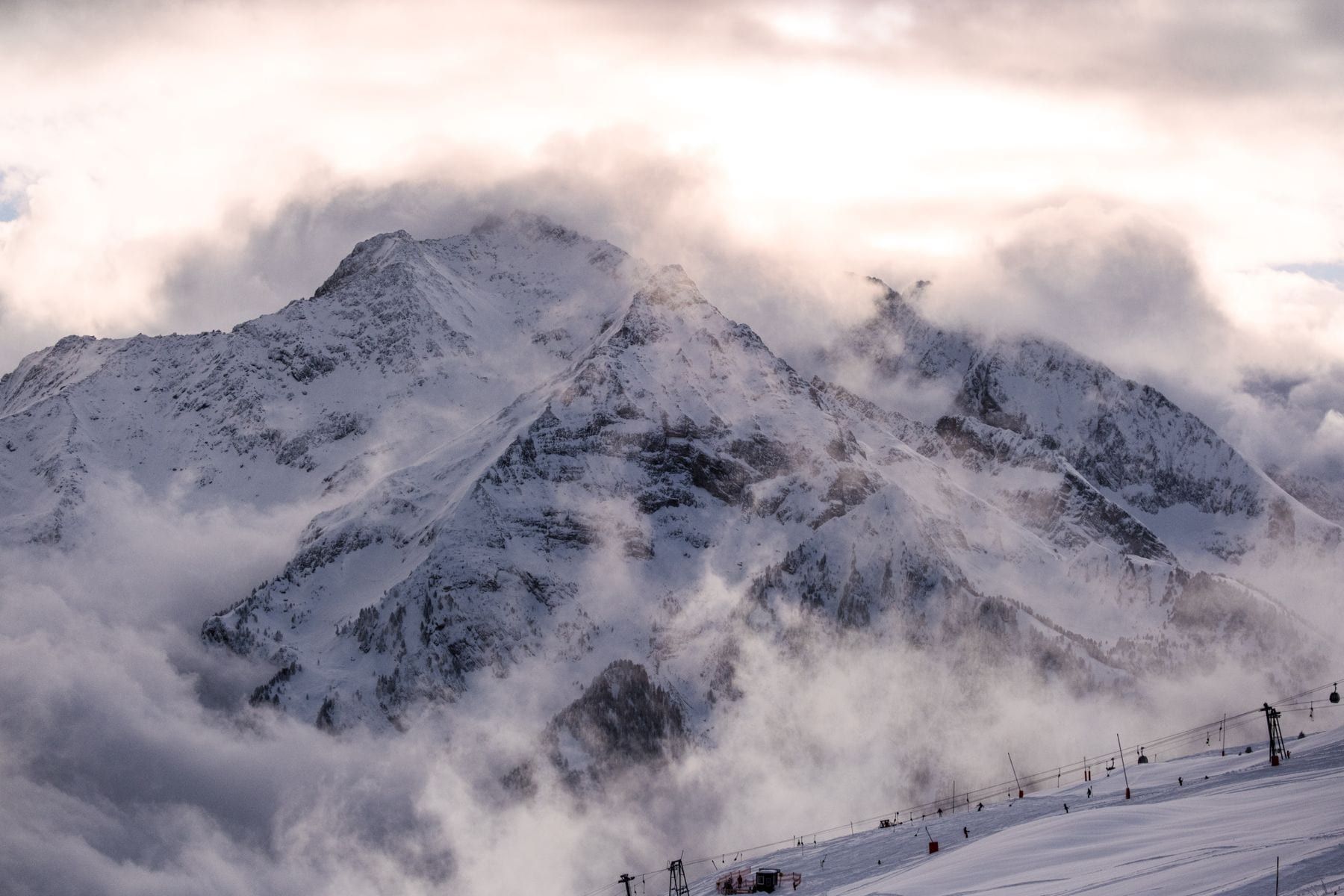
Photo: Wolfgang Weiser / Pexels
Adjust the values to your trip: the calculator updates live (EUR, converted from CHF estimates).
Estimates for orientation, not booking prices. Getting there means train or car from Switzerland, return, per person. Hotels vary strongly by season: current prices are behind the links below.
Money & payment: You pay in euros (EUR). Cards work almost everywhere; mountain huts and sausage stands often want cash. Tipping is expected: 5 to 10 percent, by naming the rounded total when you pay. In ski resorts a visitor tax of EUR 2 to 4 per night is added to the hotel price. Getting there: By train (ÖBB Railjet), car or a flight to Vienna, 2 to 8 hours.
Nine options in three price ranges, each among the best-rated on Booking.com.
Budget
Modern hostel in a new building south of the old town, ten minutes on foot from the station. Dorms and private rooms, shared kitchen, roof terrace with a view of the Nordkette. For solo travellers and skiers on a small budget.
Right at the main station, the old town ten minutes on foot. Small, clean standard rooms with no surprises, 24-hour reception. Practical if you arrive by Railjet and want an early ski bus.
Simple, family-run guesthouse in a side street near the station, an Innsbruck address for budget travellers for decades. Rooms with and without private bathroom, no breakfast, but prices you will hardly find elsewhere in the city.
Mid-range
The chain's well-known concept with Tyrolean touches in the lounge, between the station and the Triumphal Arch. Good beds, small rooms, no frills, breakfast extra. The most reliable mid-price choice for a city weekend.
Large city hotel right on the Inn with a view of the Nordkette and the Golden Roof around the corner. Indoor pool and sauna on the roof, rooms partly renovated, partly older. If you want to stay in the old town without boutique prices, this is the place.
Design hotel in the high-rise next to the station, 12 floors, floor-to-ceiling windows and a bar on the top floor with the best panorama in the city. Rooms modern and bright, sauna with mountain views. For couples who want the view.
Luxury
The city's grand old hotel since 1869, opposite the station, with stucco, chandeliers and the Europa Stüberl restaurant. State guests and Olympic delegations stayed here. Classic comfort without a spa complex.
Modern hotel between the old town and the Hungerburgbahn with a fitness area and sauna; rooms with mountain views are worth the extra. Good location for the Nordkette in the morning and the old town in the evening, parking available.
An inn since the 16th century, converted by the Ultsch family into a boutique hotel with a rooftop spa and infinity pool. Every room different, antiques next to design, restaurant with Tyrolean cuisine. The most personal of the expensive houses.
If you book through these links we earn a small commission, at no extra cost to you.
From the Congress in the city centre by Hungerburgbahn and two cable cars up to 2,256 metres, around CHF 48 (about EUR 51) return. Two to three hours with a short summit path; visibility is clearest in the morning. Check the webcam first when the föhn is blowing.
Golden Roof, Helblinghaus, city tower and cathedral in 90 minutes with a guide, from CHF 15 per person. The museum inside the Golden Roof itself costs CHF 6 and takes 30 minutes; the city tower (CHF 5) has the better view.
Zaha Hadid's ski jump with a panorama tower and restaurant at the top, admission around CHF 12, lift included. An hour is enough; in summer the jumpers train on mats. Next door is the Tirol Panorama with the giant circular painting of the 1809 battle (CHF 11).
The Imperial Palace with Maria Theresa's Giant Hall (CHF 11) and the Hofkirche with the 28 bronze figures at Maximilian's tomb (CHF 9, combined ticket with the Folk Art Museum). Two hours for both, both included in the Innsbruck Card.
Chambers of Wonder by artists beneath the Giant, a large park with a play tower, admission around CHF 22, shuttle from Innsbruck CHF 10 return. Two to three hours, a rainy-day programme for families, an expensive brand world for everyone else.
Renaissance castle with the Chamber of Art and Curiosities, armoury and Spanish Hall, admission around CHF 15, 20 minutes by tram 6 or bus. Two hours, the park is free. Most beautiful from April to October, closed in November.
The highest zoo in Europe on the slope below the Hungerburg, Alpine animals only: bear, wolf, ibex, bearded vulture. Admission around CHF 14, combined ticket with the Hungerburgbahn CHF 20. Two hours, longer with children.
One pass for 13 ski areas around Innsbruck plus the Stubai Glacier, ski buses and 22 attractions, from around CHF 150 for two days. By ski bus in 20 to 50 minutes to Axamer Lizum, Kühtai or the glacier; hire equipment at the valley stations.
Medieval old town with the Münze Hall mint (CHF 9) and the mint tower, 10 minutes by S-Bahn for CHF 3. Half a day on foot; market on the Oberer Stadtplatz on Wednesdays and Saturdays.
If you book through these links we earn a small commission, at no extra cost to you.
Innsbruck eats Tyrolean, which means hearty: dumplings in every form, Gröstl from the pan, farmhouse bacon and Kaiserschmarrn, which here is a main course. Alongside that, the university city has a young scene of coffee roasters, craft beer and Italian cooking, the Brenner is close. It gets expensive in the old town around the Golden Roof, cheap in Wilten and at the market.
Fried potatoes with beef, onions and bacon, topped with a fried egg, all served in the iron pan. The leftovers dish that became the national dish. CHF 14 to 18 (about EUR 15 to 19).
Tip:It comes with cabbage salad, not ketchup, and at lunchtime as the dish of the day it is often CHF 3 cheaper.
Bread dumplings with diced bacon, in beef broth or with sauerkraut as a main course. Three dumplings with sauerkraut CHF 12 to 15, in soup CHF 6 to 8.
Tip:As a Knödel-Tris (bacon, spinach, cheese) you get all three varieties on one plate.
Flattened cheese dumplings, fried crisp, with Graukäse or mountain cheese, in soup or with salad. The standard meal in the mountain huts, CHF 10 to 14.
Tip:The Graukäse version is strong in flavour, ask beforehand.
Shredded pancake with raisins, caramelised, with stewed plums or apple sauce. In Tyrol not a dessert but a lunch. CHF 12 to 16, similar in the huts.
Tip:One portion is enough for two if you have had a soup first.
Air-dried farmhouse bacon and the low-fat, pungent grey cheese with vinegar, oil and onions. As a Brettljause (cold platter) CHF 12 to 18, bacon to take away from CHF 4 per 100 grams.
Tip:Buy it vacuum-packed, then you can take it across the border without trouble.
Spiral-shaped batter fried in fat with icing sugar and cranberries, the Tyrolean fairground pastry. CHF 6 to 9.
Tip:Only good fresh from the fat, never take pre-fried ones.
Zillertal Bier from Zell, Starkenberger from Tarrenz and small breweries such as Bierol fill the student bars. A half litre CHF 4 to 5.50.
Tip:The Theresienbräu in Maria-Theresien-Strasse brews right in the middle of the city.
Through markets and eateries with a guide, tastings included.
If you book through these links we earn a small commission, at no extra cost to you.
Innsbruck means "bridge over the Inn", and that is exactly what the place was first: a crossing at the foot of the Brenner Pass, which has linked the north with Italy since Roman times. In 1180 the Counts of Andechs acquired the market rights, in 1239 Innsbruck became a town, and in 1420 Duke Frederick IV made it the residence of the Tyrolean line of the Habsburgs. His grandson Maximilian I brought the splendour: around 1500 he had the Golden Roof built, a ceremonial oriel with 2,657 fire-gilded copper tiles from which he watched the goings-on in the square below. For his tomb in the Hofkirche, 28 larger-than-life bronze figures were cast, the "Schwarze Mander" (black men), yet Maximilian lies buried in Wiener Neustadt. Maria Theresa converted the Hofburg into a Rococo residence in the 18th century and built the Triumphal Arch for the wedding of her son Leopold, which in 1765 coincided with the death of her husband Francis Stephen. That is why the arch shows joy on one side and mourning on the other. In 1809 the Tyroleans rose up under Andreas Hofer against the Bavarians and the French and beat them three times at Bergisel, before the uprising was crushed and Hofer was shot in Mantua. In the 20th century Innsbruck became a university and sports city: Winter Olympics in 1964 and 1976, the Bergisel ski jump by Zaha Hadid in 2002, the Hungerburgbahn with its glass stations in 2007. Today around 130,000 people live here, 30,000 of them students, and the Nordkette stands so close above the rooftops that you can see it from every window.
From Zurich main station the ÖBB Railjet runs every two hours directly via Sargans, Feldkirch and the Arlberg to Innsbruck, journey time 3 hours 30 minutes. The standard second-class fare is around CHF 75 (about EUR 80) each way, half that on the Swiss section with a Half Fare Card, and from CHF 30 to 40 as an SBB saver ticket or ÖBB Sparschiene if you book two to four weeks ahead. From Basel and Bern you change in Zurich, from Munich the train takes 1 hour 45 minutes, from Vienna around 4 hours 15 minutes. By car you are there from Zurich in 3 hours (A13 to Chur, via Landquart and Feldkirch onto the A14 and over the Arlberg), but you need the Austrian vignette (10 days around CHF 12) plus the Arlberg tunnel toll of around CHF 12 per direction, or you drive over the pass when it is open. In Innsbruck itself a car is a burden: car parks cost CHF 20 to 30 a day, the old town is pedestrianised, and with bus, tram and the Hungerburgbahn you get everywhere faster. A car only pays off if you want to reach the ski areas in the Stubaital, Kühtai or the Achensee; even those are served by ski buses and Postbus services.
The Nordkette cable cars start at the Congress, five minutes from the Golden Roof. First the Hungerburgbahn with its Zaha Hadid stations, then the cable car to the Seegrube at 1,905 metres and on to the Hafelekar at 2,256 metres. The return trip costs around CHF 48 (about EUR 51) per person, to the Seegrube CHF 40, and that is a lot of money for half an hour of riding. Still: nowhere else do you stand 20 minutes after your coffee on a rocky ridge with the Karwendel on one side and the city on the other. Saving tricks: the Innsbruck Card (24 hours around CHF 55) includes one trip, plus all museums, the Alpenzoo and public transport, which pays off from one museum visit onwards. The Hungerburgbahn alone costs CHF 11 and takes you to the Alpenzoo and a good view. If you only want to hike, take bus J to the Hungerburg and skip the railway entirely. In winter the Nordkette is a small, steep ski area for experts (the Hafelekar gully has a 70 per cent gradient); in summer you walk from the Seegrube along the Goetheweg to the Pfeishütte, 2 hours each way. In fog you are better off staying down below, as you will not see anything.
Innsbruck is expensive for a city of this size, because city and mountain tourism share the same beds. A mid-range double room costs CHF 130 to 180 (about EUR 139 to 193), noticeably more in December with the Christmas market and in the February holiday weeks, least in November and between Easter and Whitsun. The old town around Herzog-Friedrich-Strasse is compact and beautiful, but the few hotels there charge a premium for the location, and the lanes are full of tour groups during the day. Our recommendation is the area between the station and Maria-Theresien-Strasse (hotels such as Motel One, Adlers, Ibis): five minutes to everything, quiet in the side streets, close to the trains. Wilten in the south has the abbey church, the student pubs and is ten minutes on foot from the old town. Saggen north of the Inn is the villa district with guesthouses and is close to the Hungerburgbahn. Price trap number one is the local tax of around CHF 3 to 4 per person per night, which is often not included in the price on Booking. Number two is the breakfast charge in mid-range hotels (CHF 15 to 25 extra); a breakfast at the Ruetz bakery or at the market costs half that.
Innsbruck markets itself as a city with 13 ski areas, and that is true with one caveat: not a single one of them is big. The Ski plus City Pass (from CHF 150, about EUR 161, for two days, around CHF 400 for six days) covers all 13 areas, plus the Stubai Glacier, the cable cars and 22 museums, the Alpenzoo and swimming pools. It pays off if you ski every day and want the city in the evening. The areas in detail: Axamer Lizum (the Olympic slopes of 1964 and 1976, 40 kilometres of piste, 20 minutes by ski bus, day pass around CHF 60), Patscherkofel (the local mountain with the Olympic downhill, sunny, family-friendly), Kühtai at 2,020 metres (snow-sure, 45 minutes) and the Stubai Glacier, 50 minutes away, with a day pass of around CHF 70, the area where you ski from October to June. The ski buses from Innsbruck are free with a valid ski pass, otherwise they cost CHF 5 to 10. Not worth it: skiing on the Nordkette for normal skiers (too steep, too few pistes) and hiring equipment in the old town (CHF 40 to 50 a day, 20 per cent cheaper at the valley stations). If you do not ski, take the toboggan run from the Patscherkofel or the floodlit toboggan runs in Rinn and Birgitz.

Innsbruck has two high seasons and two gaps. The first high season is Advent: the Christmas markets in the old town, on the Marktplatz and in Maria-Theresien-Strasse run from mid-November to early January and draw coaches from all over Italy; weekends are extremely busy and hotel prices 30 to 50 per cent higher. The second is high summer from mid-July to the end of August, when hiking and cable cars beckon and the students are away. The best weeks for price and weather are September and the first half of October: stable high pressure, clear views from the Nordkette, hotels 20 per cent cheaper, and the Karwendel turning colour. In winter, January after the holidays is cheap and snow-sure. The dead periods are November until the Christmas market and April to mid-May: cable cars under maintenance, huts closed, but the lowest hotel prices of the year and free tables. The föhn is Innsbruck's peculiarity: it brings 20 degrees in February, headaches and often stationary cable cars, because the wind up top is too strong. Check the Nordkette webcam in the morning before you buy the ticket.
Most people leave Innsbruck after two days, yet the surroundings are the real reason to stay. Hall in Tirol, 10 minutes by S-Bahn (CHF 3, about EUR 3), has the largest preserved old town in western Austria and in the Middle Ages was richer than Innsbruck thanks to salt and coinage; the Münze Hall mint shows where the thaler was invented (admission CHF 9). Schloss Ambras on the edge of the city, reachable by tram 6 or bus, holds the Chamber of Art and Curiosities of Archduke Ferdinand II and a Renaissance Spanish Hall, admission around CHF 15, included in the Innsbruck Card. The Stubaital is 40 minutes away by the STB tram (CHF 4) to Fulpmes, from where you take the waterfall circuit or continue by bus to the glacier and the suspension bridge at the Stubai Glacier. The Achensee, Tyrol's largest lake, is an hour away: by train to Jenbach, then with the Achenseebahn, a cog steam railway from 1889, or by bus to the lake. Boat trips and swimming in summer, cross-country skiing in winter. And for the rainy day: the Swarovski Crystal Worlds in Wattens, 20 minutes by shuttle (CHF 10), admission around CHF 22. We will be honest: it is an expensive, well-made brand showcase with a big park; children love it, adults need patience with the shop at the exit.
By Railjet direct from Zurich main station in 3 hours 30 minutes, every two hours. Standard fare around CHF 75 (about EUR 80) each way, from CHF 30 to 40 with a Half Fare Card and saver ticket, book early. By car it is 3 hours via Chur, Feldkirch and the Arlberg, including the vignette (around CHF 12 for 10 days) and the Arlberg tunnel (around CHF 12 per direction). You do not need the car once there: car parks cost CHF 20 to 30 a day, and tram, bus and the Hungerburgbahn take you everywhere.
Two full days for the city and the Nordkette: one day for the old town, Golden Roof, Hofkirche, Bergisel and Ambras, one day on the Nordkette with a hike. With Hall, Stubaital, Achensee or the Crystal Worlds you get to four days. In winter as a ski base with the Ski plus City Pass, most people stay five to six days and ski a different area every day.
Yes, if you ride the Nordkette cable car and see at least one museum on the same day. The 24-hour card costs around CHF 55 (about EUR 59), the Nordkette alone CHF 48, and on top of that the Golden Roof, Hofburg, Hofkirche, Ambras, Alpenzoo, Bergisel, the Crystal Worlds shuttle and admission, public transport and the Sightseer bus are included. It comes in 24, 48 and 72-hour versions. If you only want to stroll, you are better off without it.
For city and mountains, September to mid-October: clear views, warm days, cheaper hotels than in summer. For skiing, January after the holidays and March, when the days get longer. Advent is atmospheric but busy and expensive, especially at weekends. November and April to mid-May are the quietest and cheapest weeks, but then many cable cars and huts are closed.
Yes, but with travel time. The ski areas are 20 to 50 minutes away by ski bus (Axamer Lizum, Patscherkofel, Kühtai, Stubai Glacier); the Nordkette directly above the city is for experts only. The Ski plus City Pass from around CHF 150 (about EUR 161) for two days covers all 13 areas, ski buses and 22 attractions. The areas are smaller than Kitzbühel or the Zillertal, but in the evening you have restaurants, museums and student bars instead of après-ski huts.
Around 20 to 30 per cent cheaper than Zurich or Lucerne. A lunch menu costs CHF 14 to 18 (about EUR 15 to 19), a Gröstl CHF 15 to 18, a beer CHF 4.50, a cappuccino CHF 4. Hotels at CHF 130 to 180 for mid-range are less of a bargain than you would expect, because the city is small and in demand. Cable cars cost about the same as in Switzerland, ski passes around a quarter less. Reckon on CHF 110 to 140 per person per day excluding travel.
St. Anton · Ischgl · Innsbruck · Kitzbühel · Mayrhofen
Five ski areas in ten days, a new mountain every second day, never more than two hours in the car: the winter route for anyone who finds a week at the same lift too little.
Innsbruck · Ötztal · Zillertal · Kitzbühel
Four valleys, day hikes instead of hut-to-hut marches, cable cars included with the guest card and a bed with a shower in the evening: the hiking route for anyone who wants Tyrol on foot and by train.
What a ski week in the most expensive town in Tyrol really costs, where you still save, why summer here is underrated and when you are better off just looking at the Streif.
What a week in the best-known ski valley in Tyrol really costs, which of the four valley sections suits you, when the glacier is the best choice and how the guest card lets you travel almost free in summer.
What a week in the loudest ski resort in the Zillertal really costs, where you can sleep despite the après-ski, when the Harakiri is a good idea and why summer here is another world.