Malatya

Turkey · Eastern Anatolia · Travel guide

Malatya

What a trip to Malatya really costs, how to reach Nemrut from the quiet northern side and why the apricots here are more than a souvenir.

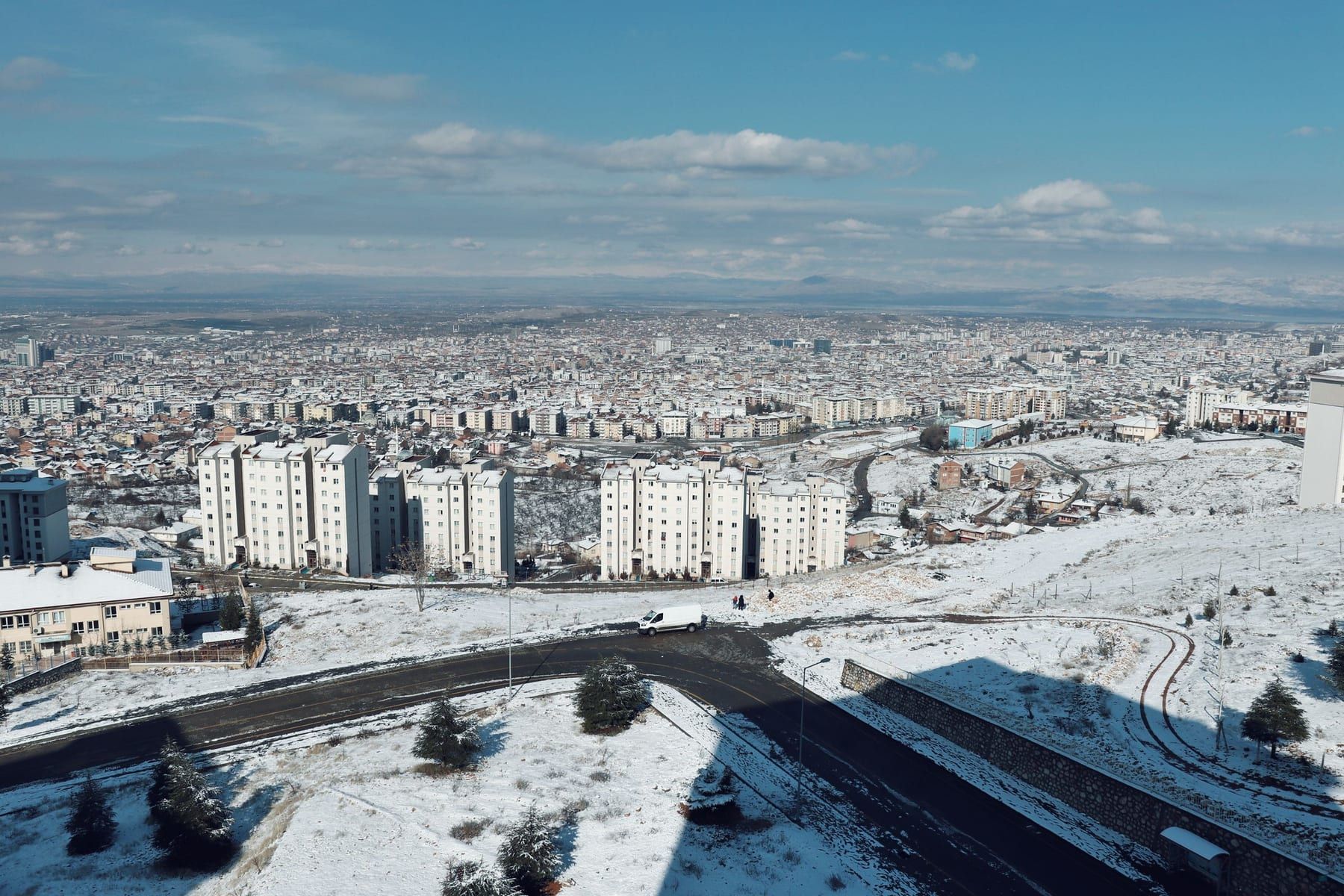
Photo: Serkan Gönültaş / Pexels

What does a trip to Malatya cost?

Adjust the values to your trip: the calculator updates live (EUR, converted from CHF estimates).

1,637 EUR
≈ 819 EUR per person
  • Flights 770 EUR
  • Accommodation 321 EUR
  • Food 268 EUR
  • Local transport 107 EUR
  • Nemrut tour from Malatya with overnight stay 171 EUR

Estimates for orientation, not booking prices. Flights and hotels vary strongly by season: current prices are behind the links below.

Money & payment: You pay in Turkish lira (TRY). The exchange rate moves a lot, which is why all prices here are given in francs and euros. Cards are accepted almost everywhere; you need cash for the dolmuş, markets and tips. Flight time: 3 to 4 hours.

Recommended hotels

Nine options in three price ranges, each among the best-rated on Booking.com.

Budget

Malatya Büyük Otel

Zentrum, Malatya

A long-established, simple hotel right in the centre next to the great mosque, a few steps from the apricot market. Rooms are plain and a little older, but clean, and the staff are helpful. For travellers who want to sleep centrally and cheaply and put their money into apricots.

from EUR 30 / night View →

City Kent Hotel

Zentrum, Malatya

An older, simple city hotel in the centre with small, clean rooms and a breakfast that comes with apricot jam and cheese from the region. Close to the market, the grill restaurants and the city buses to Arslantepe. Nothing for design ambitions, but cheap, central and perfectly adequate for one or two nights.

from EUR 25 / night View →

Yeni Kent Hotel

Zentrum, Malatya

A simple, central city hotel with small, functional rooms, a lift and breakfast included. Well placed for the apricot market and the grill restaurants, and the city buses to Arslantepe and Battalgazi leave nearby. No claims to design, but dependable, clean and cheap, with helpful staff.

from EUR 30 / night View →

Mid-range

Grand Sinan Hotel

Zentrum, Malatya

A decent three-star hotel in the centre with clean, modern rooms and a breakfast with apricot jam and regional cheese. Well rated on Booking for price and location, and the staff help with Nemrut tours. You can reach everything in the city core on foot, and the airport bus is a few minutes away.

from EUR 50 / night View →

Anemon Malatya

Zentrum, Malatya

A four-star hotel from a Turkish chain with modern rooms, hammam, gym and a restaurant with regional cuisine. Central location, reliable standard and staff with some English who arrange Nemrut tours and rental cars. Good breakfast buffet with apricots in every form, parking available, a bar serving alcohol in the building.

from EUR 70 / night View →

Hanem Hotel

Zentrumsnah, Malatya

A small, well-kept hotel with air-conditioned rooms, minibar, room service and a quiet lounge, among the better-rated hotels in town on Tripadvisor. Close to the centre, with Arslantepe around ten minutes away by car. Solid mid-range without frills, with friendly staff and good value for money for two or three nights.

from EUR 50 / night View →

Luxury

Ramada Plaza by Wyndham Malatya Altın Kayısı

Turgut Özal Bulvarı (Ostrand), Malatya

A large chain hotel on the eastern edge of town near Arslantepe with indoor pool, spa, gym and several restaurants, one of them serving alcohol. Rooms are modern and spacious, service is of international standard. For the price you get more facilities here than in most four-star hotels in Turkey. A good choice for families and for the night after Nemrut.

from EUR 90 / night View →

DoubleTree by Hilton Malatya

Zentrum, Malatya

Hilton standard right in the city with generous rooms, indoor pool, spa, gym and a rooftop restaurant with views over Malatya to the mountains. Breakfast buffet with apricots in every form, English-speaking staff, a bar serving alcohol. The top end for Eastern Anatolia, moderately priced compared with Switzerland.

from EUR 120 / night View →

Mövenpick Hotel Malatya

Zentrum, Malatya

The newest hotel in town, with the standard of the originally Swiss chain: modern rooms, spa, indoor pool, several restaurants and a bar. Centrally located, reliable service, English-speaking staff, a large breakfast buffet. If you want a night of comfort after the cold night on Nemrut, this is the best place to be.

from EUR 130 / night View →

If you book through these links we earn a small commission, at no extra cost to you.

Experiences worth your time

Nemrut Dağı from the northern side

Sunset and sunrise among the statue heads at 2,150 metres, via the quiet mountain road from Malatya with a night in the simple guesthouse below the summit. Around CHF 70 to 90 with dinner, far fewer people than from Kahta. Dress warmly.

View & book →

Arslantepe UNESCO World Heritage Site

A palace from around 3300 BC with the oldest known wall paintings and swords in the world, ten minutes from the centre in the Orduzu district. Circular path under a protective roof with good information boards; allow an hour, the finds are in the Archaeology Museum.

View & book →

Şire Pazarı apricot market

Dozens of shops with dried apricots of every kind, stuffed with walnuts, sulphured or sun-dried, plus roasted apricot kernels. Buy unsulphured gün kurusu; a kilo costs around CHF 6 to 10, and vacuum-packed everything is fit for the flight. Tasting is allowed everywhere.

View & book →

Battalgazi old town

Old Malatya 10 km to the north with remains of the city wall, the Seljuk Ulu Camii with its turquoise mihrab and the Ottoman caravanserai. A living town rather than a museum, reachable by city bus or taxi and easily combined with Arslantepe in one morning.

View & book →

Levent valley

A canyon with hundreds of cave dwellings spanning millennia and a glass platform over the gorge, 60 km north-west near Akçadağ. Free, hardly visited except at weekends, ideal as a half-day trip by rental car or by dolmuş and taxi from Akçadağ.

View & book →

Eating kağıt kebab

Lamb with tomatoes, peppers and parsley baked in paper, the city's signature dish, for CHF 6 to 9 in the grill restaurants of the centre. Add Malatya köfte, analı kızlı as a starter and apricots with clotted cream for dessert.

View & book →

Rafting in the Tohma gorge

Summer rafting on the Tohma near Darende, around 100 km west of Malatya. Short, easy trips for beginners and families for a few francs, often combined with the Günpınar waterfall and the Somuncu Baba mosque with its trout ponds.

View & book →

Karakaya reservoir on the Euphrates

A large reservoir on the Euphrates north of the city with fish restaurants on the shore, boat trips and swimming spots in summer. A relaxed afternoon after Battalgazi, looking out over a river most people know only from history books. Easiest by rental car.

View & book →

If you book through these links we earn a small commission, at no extra cost to you.

Food & drink

Malatya tastes of apricots, but not only: the cuisine is built on bulgur and minced meat, with dozens of köfte varieties, kebab from a paper parcel and breakfast with tahini and grape syrup. Cheap, hearty and, away from the apricot stalls, almost free of tourists.

Kağıt Kebabı

Grill restaurants around Kernek Square and on Kışla Caddesi

Lamb cubes with tomatoes, peppers, garlic and parsley wrapped in paper and cooked in the oven, served in the opened parcel with flatbread; juicy and mild. CHF 6 to 9 (about EUR 6.50 to 9.70).

Tip:With onion and sumac salad and ayran; freshest at lunchtime.

İçli Köfte

Köfte shops around the Şire Pazarı

Bulgur shell with a minced meat and walnut filling, boiled rather than fried in Malatya, which makes it pale and soft. CHF 1 to 1.50 (about EUR 1.10 to 1.60) apiece.

Tip:Two are a snack, five are lunch.

Analı Kızlı

Lokantas in the centre around the Yeni Cami

Soup with large stuffed bulgur dumplings (the mother) and small ones (the daughters), chickpeas and a tangy tomato broth. CHF 3 to 5 (about EUR 3.20 to 5.40).

Tip:Mostly a lunch dish, often the dish of the day.

Kuru Kayısı

Şire Pazarı, the apricot market in the centre

Dried apricots in two worlds: gün kurusu, dark and unsulphured, intense; kükürtlü, orange and mild. CHF 6 to 10 (about EUR 6.50 to 11) per kilo, plus walnut-stuffed apricots and roasted kernels.

Tip:Taste everywhere, buy vacuum-packed; the stuffed apricots are your dessert for the evening.

Kaymaklı Kayısı Tatlısı

Pastry shops on Atatürk Caddesi and the restaurants of the chain hotels

Dried apricots simmered soft in syrup, filled with clotted cream and sprinkled with walnuts; the dessert of the city. CHF 2 to 4 (about EUR 2.20 to 4.30) per portion.

Tip:After the kağıt kebab, with unsweetened tea.

Breakfast with tahini and pekmez

Breakfast places in the centre

Breakfast with apricot jam, village cheese, olives, eggs and tahini with grape syrup that you mix yourself. CHF 5 to 8 (about EUR 5.40 to 8.60) per person.

Tip:Mix tahini and pekmez two to one and mop it up with bread.

Malatya Köftesi

Grill restaurants on Kışla Caddesi

Thin, long skewers of minced meat from the grill with bulgur pilaf and grilled peppers; simple and everywhere. CHF 5 to 8 (about EUR 5.40 to 8.60).

Tip:In the evening, when the grills in the centre start smoking.

History & background

Malatya lies on the upper Euphrates in a fertile plain between the Taurus mountains and the highlands of Eastern Anatolia. Its history begins at the mound of Arslantepe, right on the edge of the city: more than 5,000 years ago one of the first palaces in human history stood here, with wall paintings, seals and the oldest known swords in the world. Arslantepe has been a UNESCO World Heritage Site since 2021. Later the city was Hittite, Assyrian, Roman and Byzantine, a legionary camp on the Euphrates under the name Melitene. The Seljuks, the Mamluks and, from the 16th century, the Ottomans turned today's Battalgazi, then Eski Malatya, into a city with a caravanserai, a great mosque and city walls. Modern Malatya only emerged in the 19th century a few kilometres further south and grew into an industrial city. Malatya is world-famous for apricots: around three quarters of the dried apricots on the world market come from this plain, thanks to a climate of cold winters and dry summers. The earthquake of February 2023 hit Malatya hard; the city has been rebuilding since, and the sights are largely accessible.

Insider tips

Nemrut from the north: the quiet way to the heads

The statue heads on Nemrut Dağı, 2,150 metres high, lie exactly between Malatya and Adıyaman. Almost all travellers come from the south via Kahta, where the hotels, buses and tourist coaches are. The northern side from Malatya is emptier and more beautiful: a mountain road via Tepehan climbs up in around three hours, and the last kilometres are steep but asphalted. From May to October, local travel agencies in Malatya and some hotels offer a tour with an afternoon departure, sunset on the summit, a night in the simple guesthouse below the summit and sunrise in the morning, for around CHF 70 to 90 (about EUR 75 to 95) per person including dinner. Honestly: the guesthouse is spartan and cold and the food is basic. In return you stand among the heads at sunrise with a few dozen people instead of several hundred. With a rental car you can also go on your own, and then drive back via the south with Arsameia and the Roman bridge. Dress warmly; even in July it is barely above zero up there at sunrise.

Arslantepe: 5,000 years, ten minutes from the centre

The mound of Arslantepe lies on the eastern edge of the city in the Orduzu district and is reached by bus or taxi in 10 to 15 minutes. What you see: the mud-brick walls of a palace from around 3300 BC under a protective roof, with remnants of the oldest known wall paintings in an administrative building and traces of a sacrificial site. The excavation is Italian-led, the information boards are good, and a circular path takes you over the dig in an hour. The Hittite lions that give the mound its name stand as copies at the entrance; the originals are in the Archaeological Museum in Ankara. Entry is cheap and covered by the museum pass. Without context the site looks unremarkable; with context it is one of the most important places in early history: a state emerged here before writing existed. The Archaeology Museum in the centre displays the finds, including the swords; after the earthquake you should check the opening hours beforehand.

Apricots: when, where and what you should really buy

Malatya without apricots is unthinkable. The harvest runs from mid-June to mid-July; then the fruit lies on cloths in the orchards around the city to dry in the sun, and fresh apricots cost almost nothing at the roadside. All year round you will find dried apricots in the Şire Pazarı, the apricot market in the centre: dozens of shops with sacks full of varieties, sorted by size and processing. Important to know: the orange, shiny apricots are sulphured (kükürtlü), while the dark brown, matt ones are unsulphured and sun-dried (gün kurusu) and taste more intense. A kilo of good gün kurusu costs around CHF 6 to 10 (about EUR 6 to 11); sulphured ones are slightly cheaper. Also try the apricots stuffed with walnuts and the apricot kernels, which are roasted like almonds. Haggling over the kilo price is not really done, but if you buy several kilos a discount comes by itself. Vacuum-packed, everything survives the flight and months afterwards.

Battalgazi: old Malatya with caravanserai and mosque

Today's Battalgazi, 10 km north of the centre, was Malatya itself until the 19th century. What remains are parts of the city wall, the 13th-century Ulu Camii with a turquoise-tiled mihrab, the 17th-century Silahtar Mustafa Pasha caravanserai and a few streets of old mud-brick houses. The whole place is not a museum but somewhere people live, sell vegetables and drink tea. Allow two hours; entry to the caravanserai is cheap or free. Getting there: city buses run regularly from the centre, and a taxi costs around CHF 6 to 8 (about EUR 6 to 9) each way. The 2023 earthquake left damage here too, and some buildings are scaffolded. Combine Battalgazi with Arslantepe in one morning; both lie in the north-east of the city. If you have time, continue to the Karakaya reservoir on the Euphrates, where fish restaurants line the shore and the water invites you to swim in summer.

Kağıt kebab and the cuisine of Malatya

The dish you have to try is called kağıt kebabı: lamb with tomatoes, peppers and parsley wrapped in paper and baked in the oven, served in the opened parcel. Almost every grill restaurant in the centre has it; expect CHF 6 to 9 (about EUR 6 to 10) per portion. Malatya köfte are thin, long minced-meat skewers, and analı kızlı is a bulgur and chickpea soup with small dumplings that comes as a starter. For dessert there are apricots in every form: as compote, stuffed with clotted cream (kaymaklı kayısı) or as jam at breakfast. The restaurants around the centre and along Kışla Caddesi are simple, cheap and full of locals; alcohol is only available in a few restaurants and the chain hotels. Breakfast in the city centre costs CHF 5 to 8 and comes with apricot jam, regional cheese and tahini with grape syrup. If you eat your way through the city, you will hardly spend more than CHF 20 a day.

Levent valley and the way further east

The Levent valley lies around 60 km north-west of Malatya near Akçadağ: a canyon with several hundred caves in its rock walls, where people lived for millennia, from the Stone Age to Byzantine times. A glass viewing platform hangs over the gorge, the visit is free, and apart from families from Malatya at the weekend hardly anyone is there. With a rental car it is a half-day trip; by dolmuş to Akçadağ and taxi from there it works too. On the same road lies the Tohma gorge, where you can go rafting in summer. For onward travel Malatya is well placed: the Güney Kurtalan Ekspresi train stops here on its way from Ankara to Diyarbakır, and buses run to Adıyaman, Gaziantep and Şanlıurfa in three to five hours. If you are planning a tour of south-eastern Anatolia, you will often start in Malatya, take in Nemrut from the north and continue via the southern side to Adıyaman and Şanlıurfa.

Frequently asked questions about Malatya

How many days should you plan for Malatya?

Two days for the city, Arslantepe, Battalgazi and the apricot market, plus one night for Nemrut with sunset and sunrise. With four days you can fit in the Levent valley and the Karakaya reservoir as well. As the starting point of a south-eastern road trip, three days are ideal.

When is the best time to visit Malatya?

Mid-June to mid-July for the apricot harvest and Nemrut in stable weather. May and September to October are more pleasant for the city at 20 to 28 degrees. Nemrut is usually inaccessible from November to April because of snow; in high summer it is over 35 degrees on the plain.

How do I get to Malatya from Western Europe?

With Turkish Airlines or Pegasus via Istanbul to Malatya (MLX), two to four flights a day, total travel time from Zurich around eight hours. Erhaç airport lies 35 km west of the city; the Havaş bus to the centre costs a few francs, taxis around CHF 25 (about EUR 27). Rental cars are available at the airport from the major providers.

Is Malatya safe for travellers?

Yes. Malatya is a major city of 800,000 inhabitants with a university, without particular security problems, and foreign ministries have no restrictions for the province. What you should bear in mind is the 2023 earthquake: some neighbourhoods are still being rebuilt and some historic buildings are scaffolded. Hotels and sights are working, but check museum opening hours before you travel.

Nemrut from Malatya or from Kahta?

From Kahta the infrastructure is better: more hotels, a shorter drive, tours every day, plus Arsameia and the Roman bridge on the way. From Malatya it is quieter and more scenic, and you are up there at sunrise with fewer people, but the overnight stay is spartan. The ideal is the combination: up from the north, down to the south by rental car.

How do I bring apricots home?

Dried apricots can be brought into most European countries without trouble as food for personal use; vacuum-packed, there are no problems with customs or smell. Buy unsulphured gün kurusu, which keep for months. Fresh apricots survive the flight badly and are trickier under customs rules. A few kilos in your suitcase are no problem; larger quantities are subject to duty-free limits.

More destinations in Eastern Anatolia