History & background
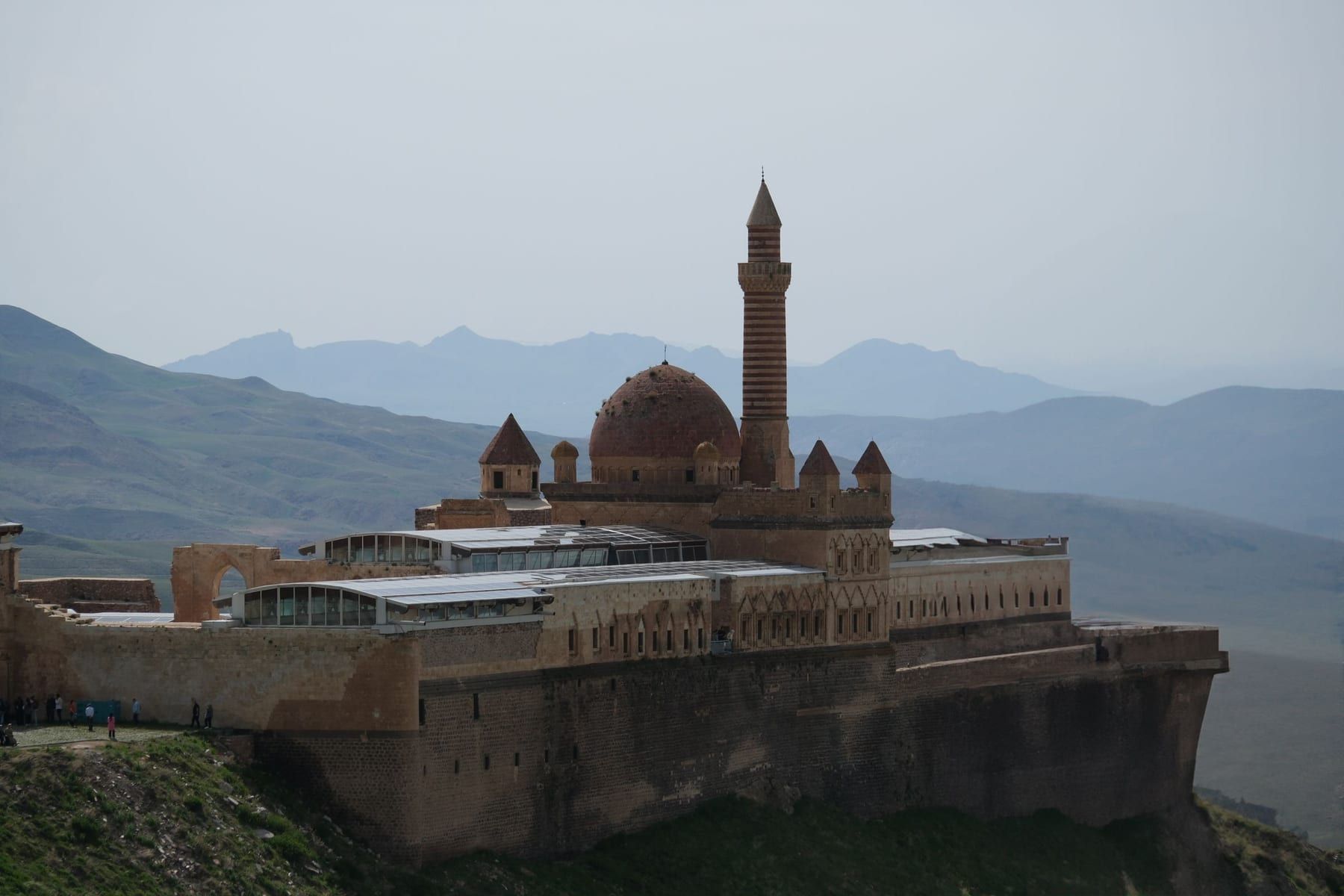
Doğubayazıt lies at 1,600 metres on a wide plain, 35 km from the Iranian border, and above everything stands Ararat: 5,137 metres high, an almost perfect volcanic cone that, together with its smaller brother to the east, defines the skyline of the town. The Bible names the mountain as the landing place of Noah's Ark, and Ararat is the national symbol of Armenia, even though it has stood on Turkish soil since 1921. The area has been settled since Urartian times; the old town of Bayazıt lay higher up the mountain, where İshak Pasha Palace stands today. This palace, built by Kurdish princes at the end of the 18th century, blends Ottoman, Persian, Armenian and Seljuk forms into a building that is unique in Turkey; it was one of the first palaces in the empire to have central heating. In the 19th century and the First World War Russian troops passed through several times, the old town fell into decay and the population moved down to the plain. Today's Doğubayazıt is an almost entirely Kurdish small town that lives from border trade with Iran, from agriculture and from mountain tourism. The lorry traffic towards Tehran and the mountaineers from all over the world shape its character.