Germany · Road trip · 7 days

German Alpine Road

Germany's oldest holiday road from west to east: from Zurich to Lindau in an hour and a half, then 450 kilometres along the edge of the Alps to the first boat across the Königssee.

The route, day by day

  1. Day 1 to 2

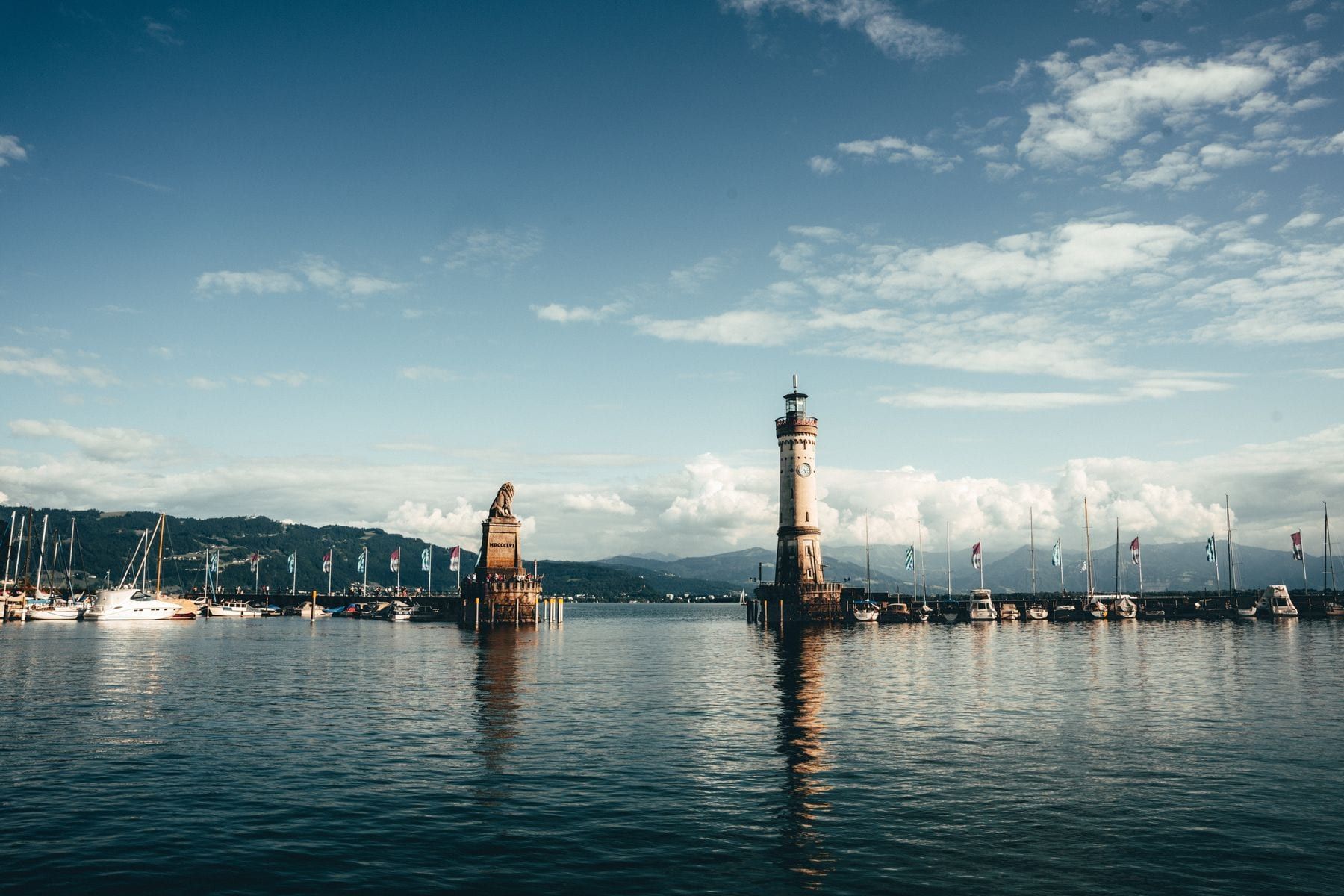
    Lindau: Start on the Lake, Harbour with Lion and Lighthouse

    From Zurich you reach Lindau in an hour and a half via the A1, St. Gallen and Bregenz; the Austrian stretch is the A14 motorway and needs a vignette, or drive via Konstanz and the German shore toll free in a good two hours. Lindau is kilometre zero of the German Alpine Road: the old town sits on an island, and the harbour with Bavarian lion and lighthouse is the picture you know, with the Swiss mountains opposite in the evening. Day 2 belongs to the lake: a boat to Bregenz or Mainau island, swimming at the Lindenhofbad, cycling the shore to Wasserburg and back. Stay on the island in an old town hotel, CHF 130 to 160 (about EUR 139 to 171) for a double; the car goes in the car park at the station, you do not drive on the island. On to Garmisch along the Alpine Road: 220 kilometres on the B308 to Oberstaufen and Immenstadt, the B310 over the Oberjochpass with its 106 bends to Füssen, then the B17 and B23 via Steingaden and Oberammergau, five to six hours with stops at the Wieskirche and Ettal Abbey.

    Tours at this stop: Lake Constance boat trip from Lindau ↗Guided walk of Lindau island ↗

    Open the Lake Constance travel guide →
  2. Day 3 to 5

    Garmisch-Partenkirchen: Zugspitze, Oberammergau and Three Nights as a Base

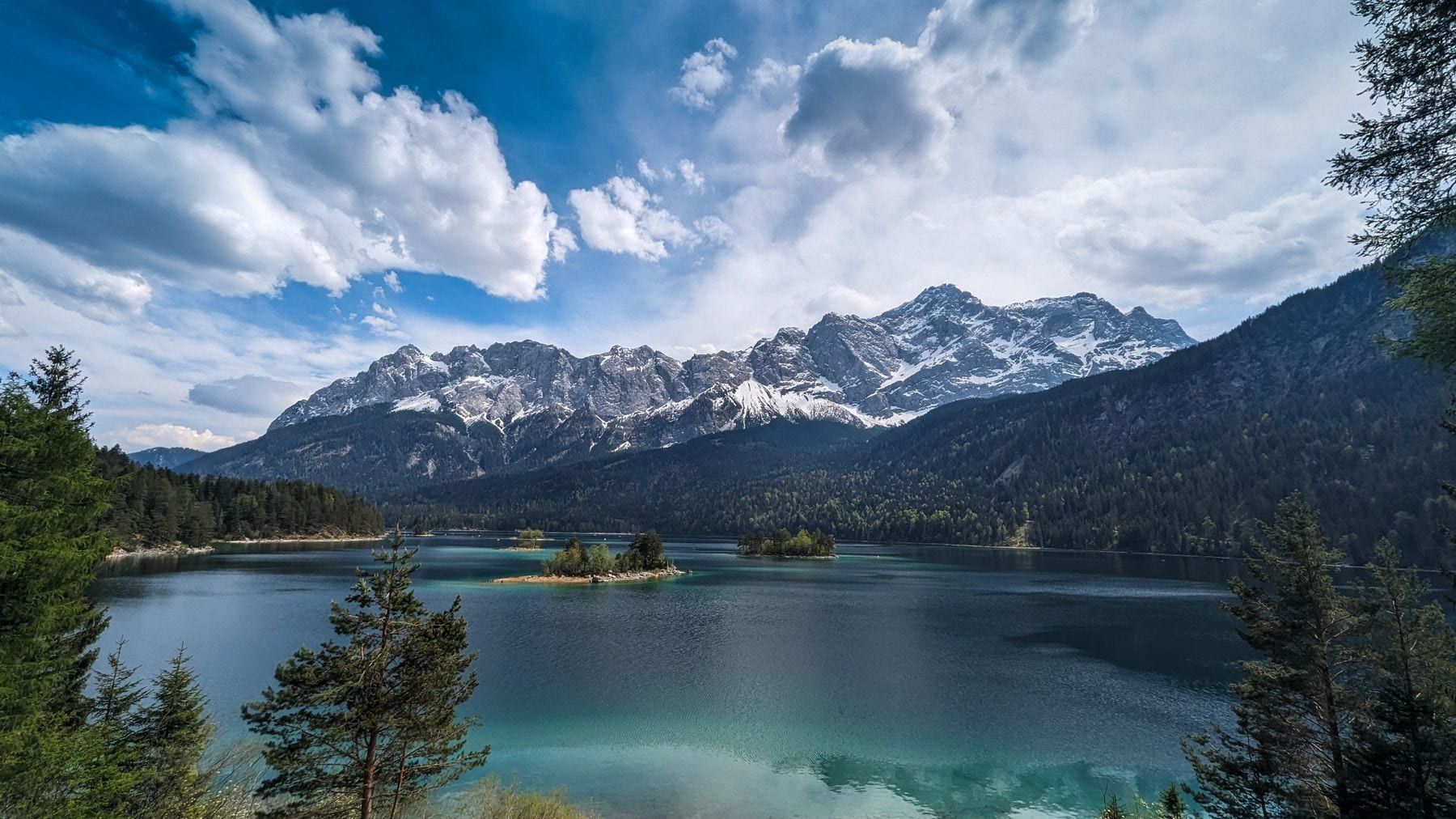
    Three nights in the same bed are the core of this week, because Garmisch needs the weather: one day for the Zugspitze with the cog railway up and the cable car down to the Eibsee, around CHF 75 (about EUR 80); a second for the Partnachklamm and the Wank or the Eibsee circuit; the third for the detour back to Oberammergau with its Lüftlmalerei frescoes and Schloss Linderhof, the smallest and best preserved of King Ludwig's palaces, 30 kilometres, 40 minutes, entry CHF 10. Choose the order by the forecast and you are almost certain to get the mountain with a view. Stay in Partenkirchen in an old inn or a guesthouse with the guest card, which covers the local buses, CHF 130 to 170 for a double, breakfast included. In the evening Käsespätzle or Schweinsbraten in a tavern for CHF 18 to 25. On to Berchtesgaden along the Alpine Road: 250 kilometres via Bad Tölz, Tegernsee (lunch stop at the Bräustüberl), Schliersee, Bayrischzell and the Sudelfeld, then the Inn valley, Chiemsee at Prien, Reit im Winkl, Ruhpolding and Bad Reichenhall, five to six hours with breaks, or three hours on the A8 without a single stop.

    Tours at this stop: Zugspitze ticket for cog railway and cable car ↗Schloss Linderhof and Oberammergau tour ↗Partnachklamm guided walk ↗

    Open the Garmisch-Partenkirchen and Zugspitze travel guide →
  3. Day 6 to 7

    Königssee: First Boat, Obersalzberg and the Long Drive Home

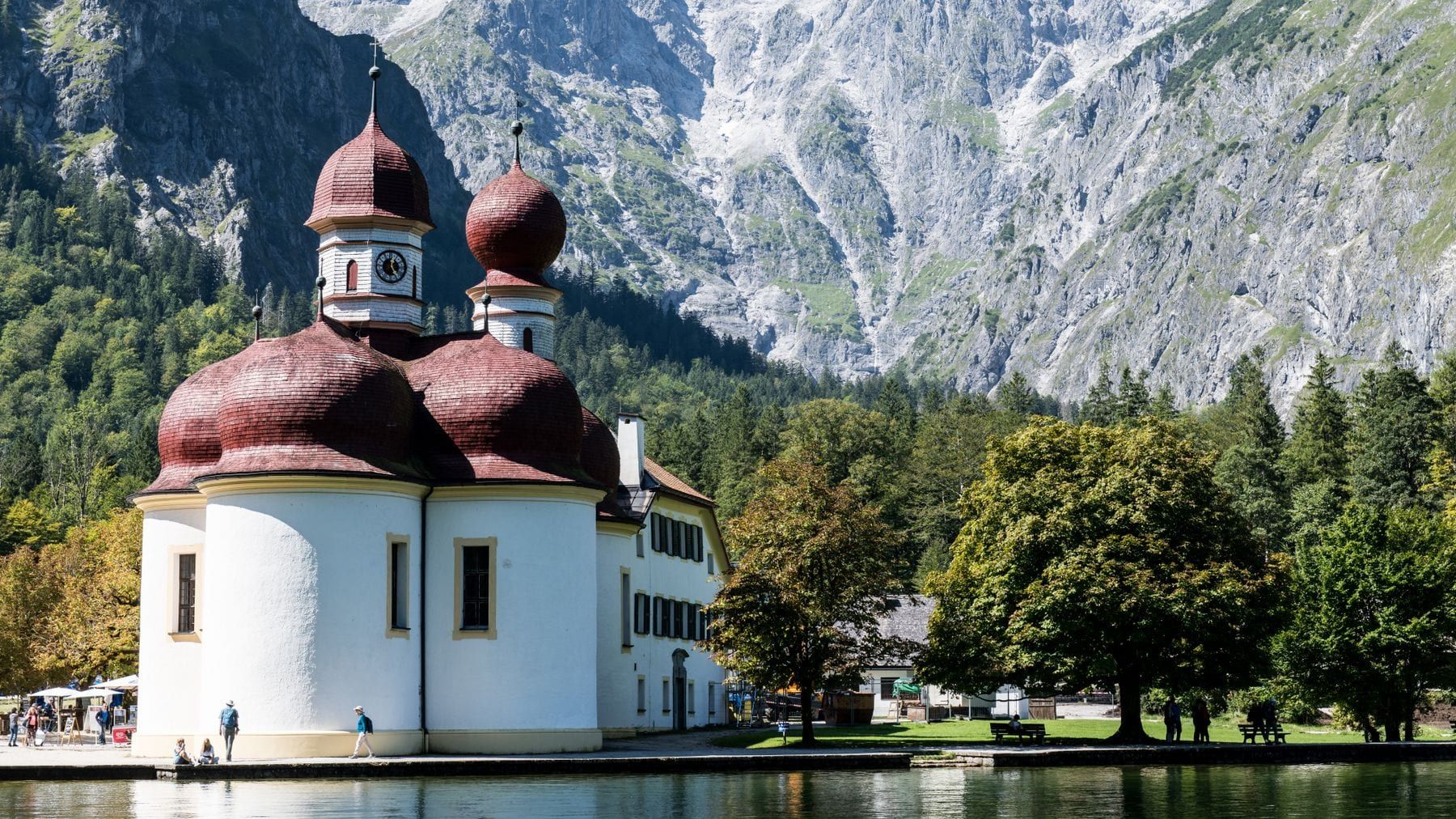
    Berchtesgaden is the end of the Alpine Road and its best part. On the evening of day 6 there is time for the market and a look at the Watzmann; on the morning of day 7 you are at the jetty in Schönau at 8 am for the first electric boat: 35 minutes to St. Bartholomä, on to Salet and on foot to the Obersee, around CHF 30 (about EUR 32) return. On the first boat you travel with thirty people; from 10 am you queue for an hour. In the afternoon the Kehlsteinhaus with the special bus from Obersalzberg, around CHF 32, or the Dokumentation Obersalzberg if history matters more to you than the view. Stay in Schönau am Königssee, two minutes from the jetty, in an inn with guest card, CHF 130 to 170 for a double. Return journey: 540 kilometres to Zurich via the A8 to Munich, the A96 to Lindau and via Bregenz to St. Gallen, six hours of pure driving, seven with breaks; via Bregenz you need the Austrian vignette, via Konstanz and Schaffhausen you do not. If you want to split it, sleep one more night in Lindau.

    Tours at this stop: Königssee boat to St. Bartholomä and Salet ↗Kehlsteinhaus and Obersalzberg tour ↗Berchtesgaden salt mine ↗

    Open the Berchtesgaden and Königssee travel guide →

If you book through these links we earn a small commission, at no extra cost to you.

What the route costs

Rough total per person for the whole route, mid-range, travelling as a pair. Flights and hotels vary by season; details are on the destination pages.

  • Getting there 96 EUR
  • Accommodation 471 EUR
  • Food 375 EUR
  • Local mobility 193 EUR
1,134 EUR
Total per person · 7 days

Money & payment: You pay in euros (EUR). Germany is fonder of cash than Switzerland: bakeries, kiosks and small restaurants often say "cash only", though cards work almost everywhere from about EUR 10. Tip 5 to 10 percent by rounding up and naming the total when you pay.

Rental car for this route

A rental comparison link will follow once the partner programme is live. Until then, compare directly with the rental companies or at your arrival airport.

Tips for the route

Reversing the direction makes sense for travellers from eastern Switzerland and Austria: Railjet to Salzburg, hire car there, Königssee first, then west to Lindau and home by train. For everyone else west to east is right, because the Königssee is the stronger finish and the drive home from Lindau takes only an hour and a half.

Germany has no motorway vignette, Austria does: if you drive from Zurich via Bregenz to Lindau, you need a ten day vignette for the twenty kilometres of A14, around CHF 12 (about EUR 13), available online as a digital vignette. Beware the 18 day waiting period for online purchases; the petrol station at the border sells it with immediate effect. Via Konstanz and the German shore you drive without one.

The Alpine Road is not one continuous panoramic road but a chain of B roads, B308, B310, B17, B23, B11, B307, B305, with village crossings and limits of 50 to 100. Plan five to six hours per driving day with stops, not the satnav's three. The Oberjochpass and the Sudelfeld are the only real mountain stretches, both harmless and open all year.

June and September are the best months: lakes warm enough to swim, mountain lifts running, hotels CHF 20 to 40 (about EUR 21 to 43) cheaper than in July and August. Between mid July and the end of August, Tegernsee, Chiemsee and Königssee are overcrowded at weekends, so do the driving days midweek. From mid October many lifts close until Christmas.

You only need to book two things: the three nights in Garmisch, because the town is full in summer, and the Zugspitze on a clear day, where you can buy a ticket online the evening before and go up early. There is no reservation for the first boat on the Königssee; you simply turn up at 8 am. The Kehlsteinhaus opens only in mid May.

Frequently asked questions about German Alpine Road

How long do you need for the German Alpine Road?

The road is 450 kilometres long and can be done in two driving days. With seven days and three bases, Lindau, Garmisch, Berchtesgaden, you see the highlights without packing every day: two days Lake Constance, three days Garmisch with the Zugspitze and Oberammergau, two days Königssee. With more time, add a night at the Tegernsee or Chiemsee.

When is the best time to go?

June, July, September and October. In June the meadows are in flower and the lakes empty, in September the light is at its finest and hotels get cheaper, and early October brings the Almabtrieb cattle drives and autumn colour. August is warm but full. From November to Christmas many lifts and inns close; in winter the road is open but winter tyres are compulsory.

Can you do the route by train and bus?

Partly. Lindau, Garmisch and Berchtesgaden are well served by rail, Garmisch via Munich or Innsbruck, Berchtesgaden via Salzburg and bus 840. What is missing are the stops in between: Wieskirche, Oberjoch, Tegernsee, Sudelfeld and Chiemsee are reached by regional trains only with long detours. The Alpine Road is a driving route; by train you are better off planning three separate destinations.

What does the route cost per person?

Around CHF 1,060 (about EUR 1,134) per person for two in your own car: CHF 90 for fuel and vignette on the way there and back, CHF 440 for six mid range hotel nights, CHF 350 for food and CHF 180 for fuel en route, parking, the Zugspitze and the Königssee boat. With a hire car from Zurich add CHF 250 to 350 per person; with guesthouses and Brotzeit snacks you save CHF 200.

Is the Alpine Road difficult to drive?

No. These are ordinary B roads with bends; the Oberjochpass is at 1,178 metres, the Sudelfeld at 1,097, both without hairpins or exposure, and motorhomes drive them too. More demanding are the village crossings with pedestrians and cyclists and the hunt for parking at lakes and lift stations at weekends. German motorways have no toll; hire cars need the emission sticker for Munich, not for the Alpine Road.

Is there a shorter or longer version?

Shorter in four days: one night Lindau, two nights Garmisch, drive back via the A96 to Zurich in three hours, the Königssee is dropped. Longer in ten days: an extra night each at the Tegernsee and the Chiemsee, with the boat to Herreninsel and Schloss Herrenchiemsee, and a third night in Berchtesgaden for the walk to the Hintersee and through the Zauberwald in Ramsau.

More itineraries through Germany