History & background
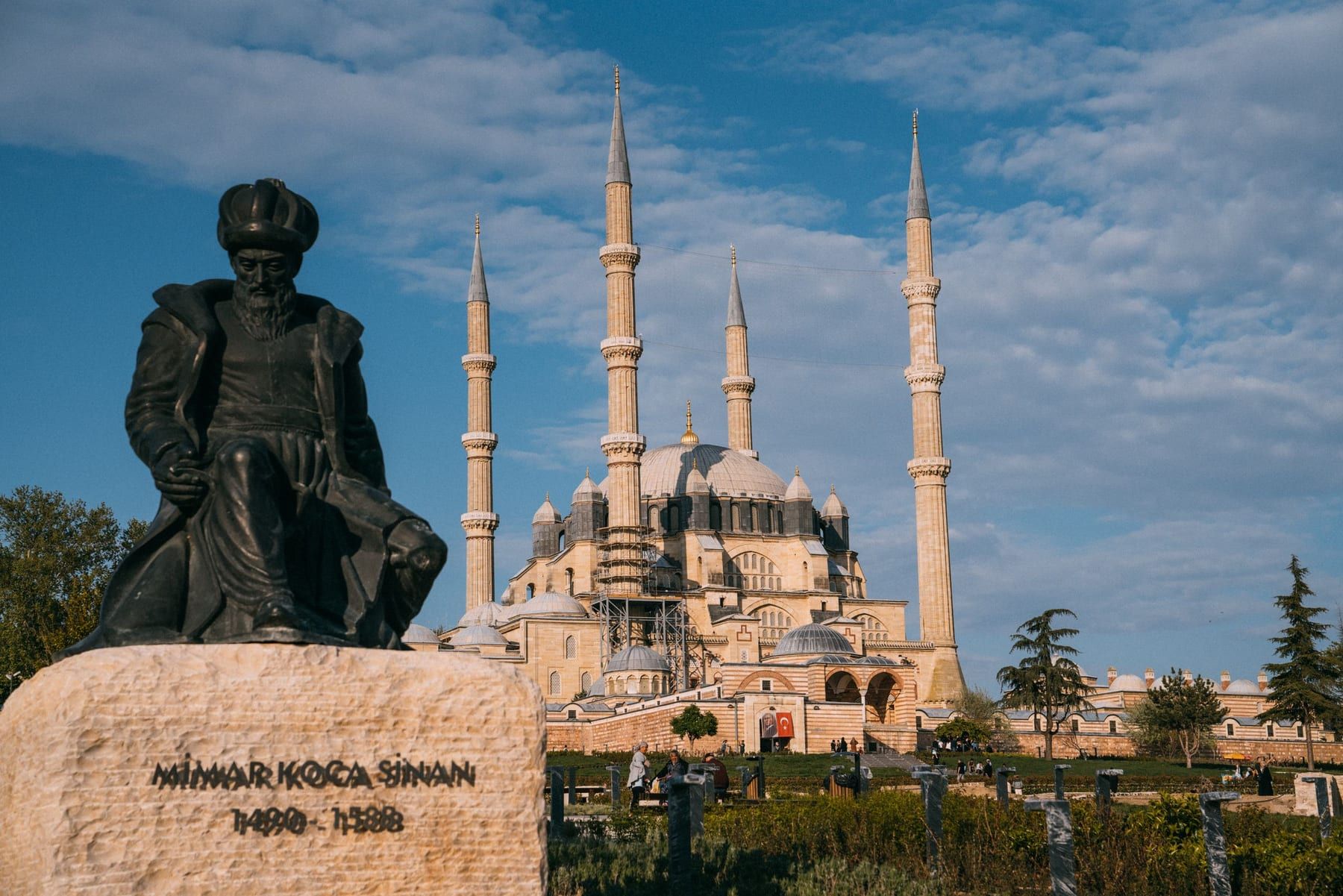
Edirne was founded around AD 125 by the Roman emperor Hadrian as Hadrianopolis, at the spot where the Tundzha, Arda and Maritsa rivers meet. Its position on the road from Constantinople to Belgrade made it the most fought-over place in Europe: Goths, Bulgars, Crusaders and Ottomans fought battles here, and in 378 Emperor Valens fell outside its gates. Around 1362 Sultan Murad I conquered the city and made it the capital of the Ottoman Empire, which it remained until the capture of Constantinople in 1453. Mehmed the Conqueror grew up here, and the campaign against Byzantium was planned here. Even afterwards, Edirne remained a sultans' residence with a huge palace on the Tundzha, of which only ruins survive today. In 1575 the architect Sinan built the Selimiye Mosque for Selim II, which he himself called his masterpiece; it has been a UNESCO World Heritage Site since 2011. In the 19th and 20th centuries Edirne was occupied several times by Russians and Bulgarians and shrank from a multi-ethnic hub to a border town. Today the city of 180,000 lies in the far northwest of Turkey, a few kilometres from Greece and Bulgaria, and is a quiet, green university town that lives from its Ottoman heritage.