History & background
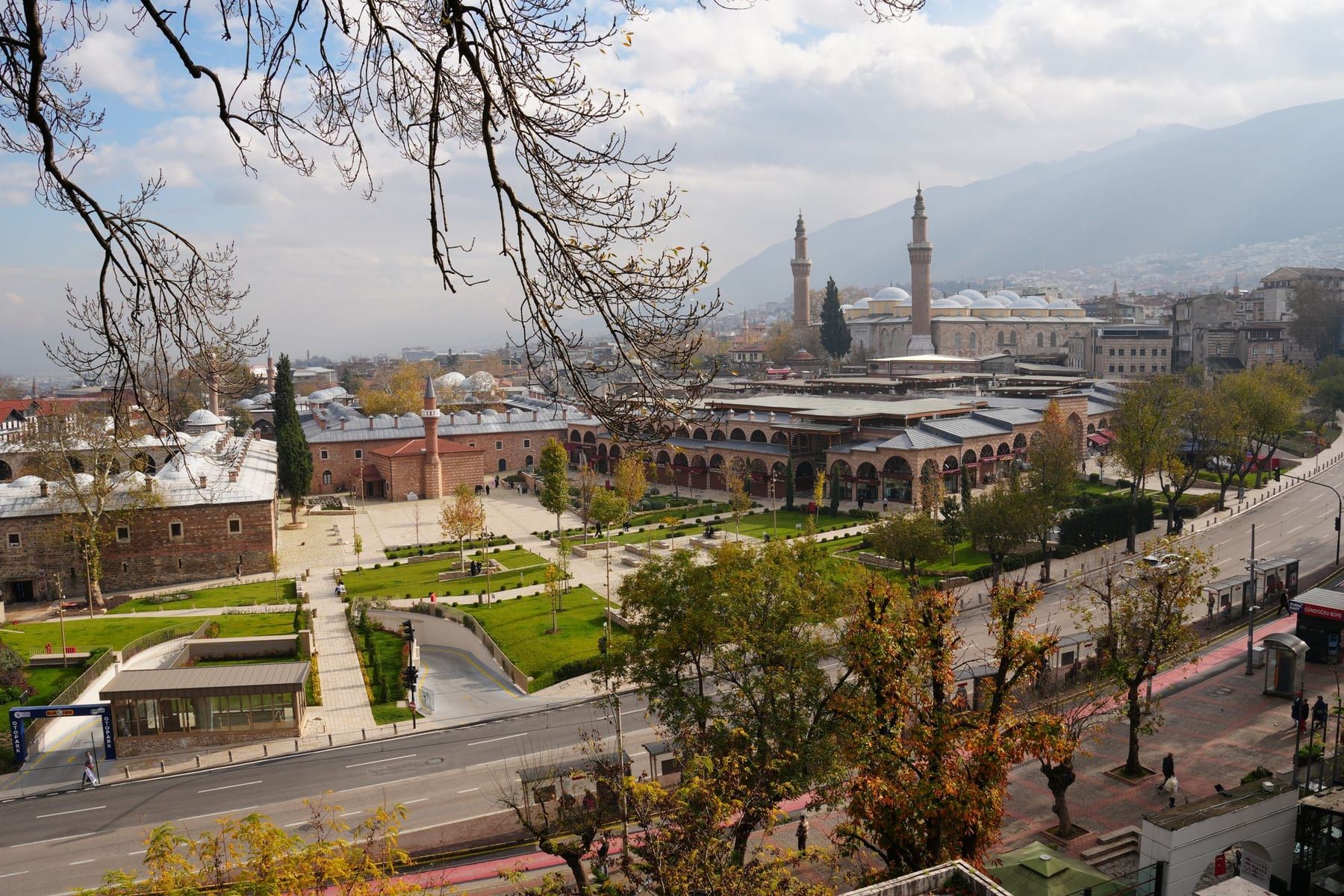
Bursa lies at the northern foot of Uludağ, the "great mountain" that antiquity knew as the Mysian Olympus. The city was founded around 200 BC by the Bithynian king Prusias, hence the name, and under the Romans and Byzantines it was a prosperous but second-tier provincial town. That changed in 1326: after years of siege, Orhan Gazi took the city and made it the first capital of the young Ottoman Empire. The buildings that defined the Ottoman style were born here: the Ulu Cami with its twenty domes, the Green Mosque and the Green Mausoleum of Mehmed I, the Bedesten and the caravanserais that made Bursa the western terminus of the Silk Road. Long after the capital moved to Edirne and then Istanbul, Bursa remained the city of the sultans' tombs and of silk. In the 19th century hundreds of silk mills ran here; today, with its car factories and textile industry, Bursa is the fourth-largest city in Turkey. The old town, the sultans' tombs and the village of Cumalıkızık have been a UNESCO World Heritage Site since 2014. Why Bursa is called "Yeşil Bursa", green Bursa, in Turkish becomes clear the moment you look down from the cable car over the plane trees and chestnut forests.