İznik

Turkey · Marmara · Travel guide

İznik

What a few quiet days on Lake İznik cost, why the city of the councils and the tiles deserves more than a side trip, and where to buy the genuine ceramics.

Photo: Efdal Yıldız / Pexels

What does a trip to İznik cost?

Adjust the values to your trip: the calculator updates live (EUR, converted from CHF estimates).

1,295 EUR
≈ 647 EUR per person
  • Flights 599 EUR
  • Accommodation 294 EUR
  • Food 268 EUR
  • Local transport 80 EUR
  • Tile workshop at a studio 54 EUR

Estimates for orientation, not booking prices. Flights and hotels vary strongly by season: current prices are behind the links below.

Money & payment: You pay in Turkish lira (TRY). The exchange rate moves a lot, which is why all prices here are given in francs and euros. Cards are accepted almost everywhere; you need cash for the dolmuş, markets and tips. Flight time: 3 to 4 hours.

Recommended hotels

Nine options in three price ranges, each among the best-rated on Booking.com.

Budget

Kaynarca Otel

Zentrum, İznik

The guesthouse where backpackers and archaeologists have stayed for decades, a two-minute walk from the Hagia Sophia. Simple rooms, shared kitchen, roof terrace and an owner who tells you everything about the town. In the middle of Nicaea for little money, no comfort, lots of heart.

from EUR 30 / night View →

Limnades Hotel İznik

Zentrum, İznik

Small hotel in İznik, listed on Booking.com and one of the few addresses in town above guesthouse standard. The Hagia Sophia, the tile workshops and the lakeshore are all walkable, the town is small. Facilities simple, price fair. Look at photos and current reviews before booking, the rooms vary.

from EUR 50 / night View →

Çamlık Motel Restaurant

Göl Sahili, İznik

A classic on the southern lakeshore under pine trees, with a garden down to the water and a fish restaurant that half of İznik visits at weekends. Simple rooms, some with lake views, parking available. Quiet, family-run and ideal if you are travelling by hire car and want fish for dinner.

from EUR 50 / night View →

Mid-range

İznik Seyir Otel

Göl Sahili, İznik

The friendliest hotel on the lake: a small boutique house on the promenade with modern rooms, big windows facing the water and a breakfast of olives, cheese and honey from the region. Bicycles for guests, a terrace for the sunset. The best choice for couples in İznik.

from EUR 70 / night View →

Iznik Askania

Keramet, Nordufer İznik-See

Medium-sized hotel on the northern lakeshore with a pool in the garden, a restaurant and rooms overlooking the lake. Named after the ancient name of the lake, Askania. On the shore road towards Orhangazi, around 18 kilometres from town, so only sensible with a car, but with space, peace and a swimming spot in front of the house.

from EUR 80 / night View →

Limak Thermal Boutique Hotel

Termal, Yalova

Historic Ottoman-era thermal hotel in the spa resort of Yalova-Termal, 50 kilometres from İznik, with thermal pools, hamam and spa in the forest. Practical as a stop between the ferry and İznik or as a finale. Classic rooms, good kitchen, fair prices for a thermal hotel of this class.

from EUR 120 / night View →

Luxury

Thermalium Wellness & Spa Hotel by Vima

Termal, Yalova

Large wellness hotel in the thermal resort of Yalova with several thermal baths, indoor pool, hamam and an extensive spa, one hour from İznik. For couples and families who want to relax in warm water after the ruins. Modern rooms, generous meals, half board available. Noticeably cheaper on weekdays than at weekends.

from EUR 150 / night View →

Black Bird Thermal Hotel & Spa

Termal, Yalova

Elegant thermal hotel in the forest of Yalova-Termal with private thermal baths in some suites, spa, indoor and outdoor pools. The quieter, smaller alternative to the Thermalium, good for couples. From here you reach İznik, Bursa and the ferry to Istanbul in an hour each.

from EUR 160 / night View →

Crowne Plaza Bursa

Nilüfer, Bursa

If you cannot find luxury in İznik (there is none), stay in Bursa, 90 minutes away. The Crowne Plaza in the west of the city has thermal pools, hamam, indoor pool and large rooms and sits on the main road out towards İznik. With a hire car the most convenient base for both towns.

from EUR 150 / night View →

If you book through these links we earn a small commission, at no extra cost to you.

Experiences worth your time

Hagia Sophia of Nicaea

The church of the seventh council of 787, now a mosque, with Byzantine walls, floor mosaic and apse fresco. In the middle of town, free entry, visit outside prayer times, far more rewarding with a guide.

View & book →

Tile workshop at a studio

Paint your own tile with 16th-century motifs under guidance in a family workshop. Around two hours, CHF 20 to 30 (about EUR 21 to 32) including the fired piece, which you can take with you or have shipped.

View & book →

City wall circuit with the İstanbul and Lefke Gates

Five kilometres of Roman and Byzantine wall with double archways and reliefs. The circuit takes two hours, and the Lefke Gate in the east is the finest. With a guide you understand the layers from Rome to Byzantium.

View & book →

İznik Museum (Nilüfer Hatun İmareti)

Ottoman soup kitchen from 1388 with Roman grave stelae, original tiles and finds from Nicaea, including a model of the sunken basilica. Small, good museum, an hour is enough, entry a few francs, near the Lefke Gate.

View & book →

Roman theatre

2nd-century excavation inside the walls near the Lake Gate, with a viewing platform. Long used as a quarry, so only partly preserved, but impressive in scale. Free to view from outside.

View & book →

Sunken basilica on the lakeshore

The 4th-century church discovered in the water in 2014 lies 20 metres off the shore. Recognisable as an outline from the lakeside path when the water is calm. Underwater museum in planning; until then the walk is still worth it.

View & book →

Sunset and fish on the lake

Evenings on the promenade west of the wall: tea, grilled fish from the lake and the sun sinking behind the mountains. The town's daily meeting point, not a tourist programme. Fishermen take you out on the boat for a tip.

View & book →

Day trip to Bursa

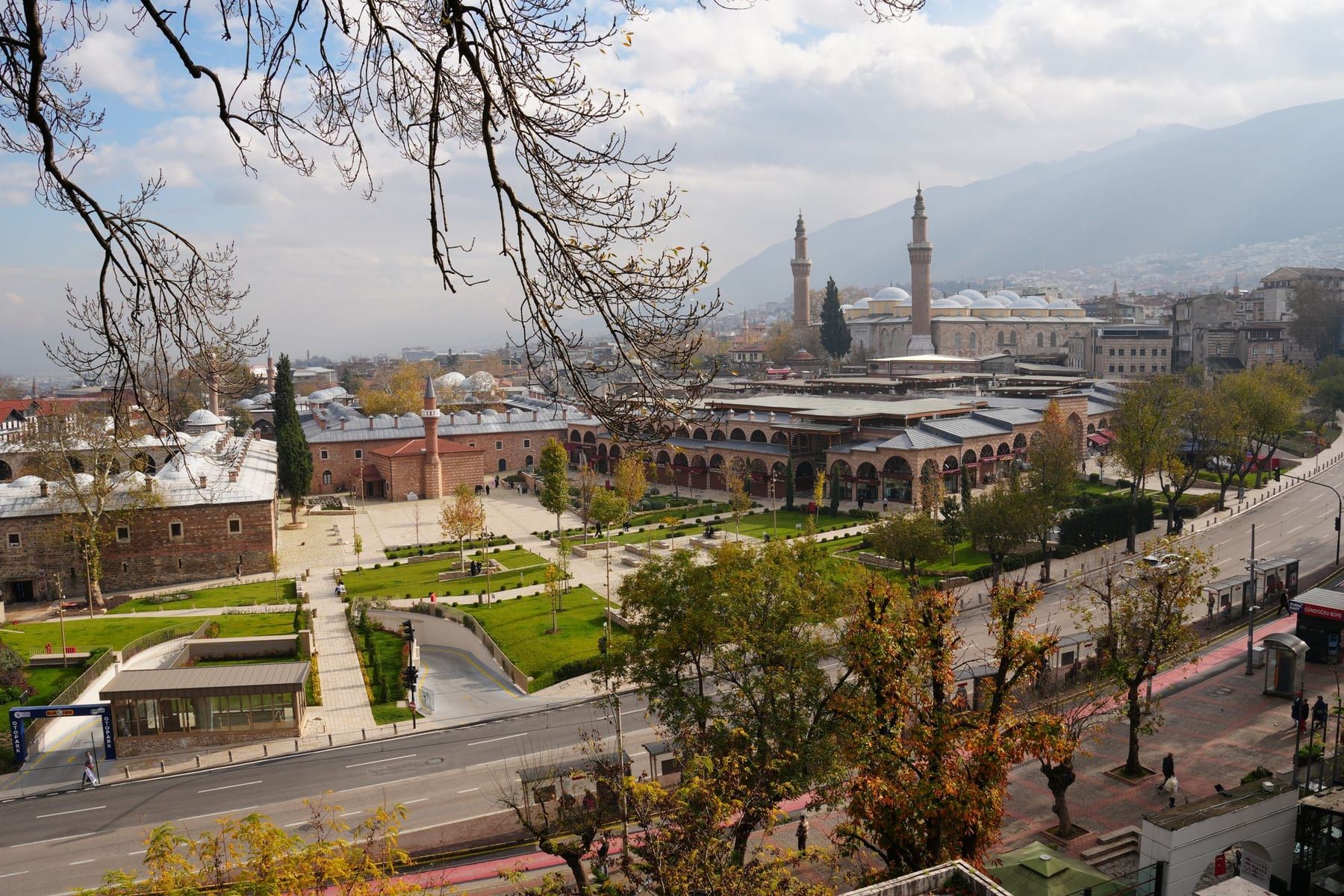
The first Ottoman capital with the Ulu Cami, the Green Mausoleum, the Koza Han and the Uludağ cable car is 90 minutes away by bus. The natural complement to İznik, best with an overnight stay and a village breakfast in Cumalıkızık.

View & book →

If you book through these links we earn a small commission, at no extra cost to you.

Food & drink

İznik eats what grows and swims around the lake: olives, olive oil, peaches, freshwater fish. The cooking is rural and modest, restaurants with menus are few, but there are lokantas, bakeries and farmers selling straight from the gate.

İznik Köftesi

Lokantas and köfte places in the centre around Kılıçaslan Caddesi

Small, flat beef meatballs grilled with onions, served with pide, grilled peppers and tomatoes. The everyday meal of the town. CHF 4 to 6 (about EUR 4.30 to 6.40).

Tip:Freshest at lunchtime; many places close early in the evening.

Göl Balığı

Çamlık Motel Restaurant on the southern shore or the fish restaurants on the promenade

Fish from Lake İznik, usually catfish (yayın) or carp (sazan), grilled or fried with salad and bread. CHF 8 to 12 (about EUR 8.50 to 13) a portion, CHF 12 to 18 for a dinner by the lake with the view.

Tip:Ask for the catch of the day and come at sunset, when half the town is sitting there.

İznik Zeytini

Farm stalls along the lakeside road and at the weekly market

Black table olives from the southern shore, fleshy and mild, which compete with Gemlik's for first place. CHF 5 to 8 (about EUR 5.30 to 8.50) a kilo at the farm gate, double in the shops.

Tip:After the harvest in November and December the choice is biggest; the wrinkled ones (sele) are the strongest.

Zeytinyağı

Oil mills and farm shops on the road towards Orhangazi

Cold-pressed olive oil from the groves by the lake, green, fruity and slightly bitter. CHF 8 to 12 (about EUR 8.50 to 13) a litre straight from the producer.

Tip:Buy it in tins, not plastic, and ask about the harvest year.

Wood-oven pide

Pide bakeries in the lanes behind the Hagia Sophia

Long pide with minced meat, cheese or egg, straight from the stone oven and cut into strips. The cheapest hot meal in İznik. CHF 3 to 5 (about EUR 3.20 to 5.30).

Tip:The ovens are hot between noon and two; after that it is only reheated.

Şeftali and tahin-pekmez

Fruit stalls on the edge of town and in every lokanta

Peaches from the orchards by the lake, by the kilo in season in July and August for CHF 1.50 to 3 (about EUR 1.60 to 3.20). Out of season the dessert is tahini with grape syrup, mopped up with bread.

Tip:Peaches straight from the tree are ripe and soft; they will not survive a day in a rucksack.

Çay by the lake

Tea gardens on the promenade west of the city wall

Tea in a tulip glass in the tea gardens on the promenade, looking at the water and the mountains behind. 40 to 60 centimes (about EUR 0.45 to 0.65) a glass, the cheapest pleasure in town.

Tip:After dinner, when the families come; backgammon boards are ready.

History & background

In antiquity İznik was Nicaea, and few cities of this size have written so much church history. Founded around 316 BC by Antigonus, one of Alexander's generals, the city became the capital of the kingdom of Bithynia and, under the Romans, a flourishing trading town on the lake. In 325 Emperor Constantine convened the first ecumenical council here, which with the Nicene Creed laid the foundation of Christian dogma; in 787 the seventh council followed in the Hagia Sophia and ended the iconoclasm dispute. After Constantinople fell to the Crusaders in 1204, Nicaea was the capital of the Byzantine empire in exile for fifty years. In 1331 Orhan Gazi conquered the city, the Hagia Sophia became a mosque, and İznik enjoyed its second golden age: in the 16th century the workshops here produced the famous tiles in cobalt blue, turquoise and luminous tomato red that adorn the mosques of Istanbul and the Topkapı Palace. With the decline of the empire the craft vanished, the secret of the glazes was lost and only rediscovered in the 20th century. Today İznik is a small town of 45,000, surrounded by five kilometres of Roman and Byzantine city walls, olive groves and the lake, and is on the UNESCO World Heritage tentative list.

Insider tips

The Hagia Sophia of İznik and the councils

In the middle of town, at the crossing of the two Roman main streets, stands the Hagia Sophia of Nicaea (Ayasofya Orhan Camii). The 4th-century church in which the seventh ecumenical council met in 787 was destroyed and rebuilt several times, became a mosque after the conquest of 1331, later a ruin and a museum, and since 2011 has been a mosque again. You see remains of the floor mosaic, a fresco in the apse and the Byzantine walls under the Ottoman roof. The visit is free and takes half an hour. The first council of 325 did not meet here but in the imperial palace on the lakeshore, whose foundations were discovered in the water in 2014 through aerial photographs: a basilica around 20 metres off the shore that is to be opened up as an underwater museum. From the lakeside path you can make out the outline when the water is calm. For Christian travellers this spot is often the reason for the journey; the creed spoken every Sunday was decided here.

The tiles: where to buy genuine İznik ceramics

The original 16th-century İznik tiles are priceless and hang in museums. What you can buy today is the revived tradition: since the 1990s a good two dozen workshops in İznik have been working again with quartz ceramics and the old glazes. The best known is the İznik Foundation (İznik Vakfı) on the lakeshore, whose tiles hang in mosques and museums worldwide, with prices from CHF 50 (about EUR 54) for a single tile up into the thousands. In the workshops around the Hagia Sophia and on the street to the Lefke Gate are family businesses such as Nicea Çini, Adil Can and the studios of the Nakkaş family, where you can watch the painting. A hand-painted plate of medium size costs CHF 20 to 60, small bowls from CHF 8. The hallmarks of genuine work: a quartz body (heavy, not clay), lines slightly raised, small irregularities. The cheap plates in Istanbul souvenir shops are mass-produced Kütahya ware. A workshop where you paint a tile yourself costs CHF 20 to 30.

City walls and gates: the circuit on foot

İznik lies entirely within a five-kilometre wall from Roman and Byzantine times with four main gates that still form the approaches today. The İstanbul Gate in the north and the Lefke Gate in the east are the best preserved, with double archways and Roman reliefs; the Yenişehir Gate in the south is simpler, and the Lake Gate in the west lies on the shore. The circuit on or along the wall takes two hours, best in the afternoon with the sun at your back. Inside the walls the town is a chessboard of Roman streets with the Hagia Sophia in the middle and orchards and olive groves in between, so loosely is İznik built today. Outside the Lefke Gate stand the Roman theatre (an excavation with a viewing platform) and the Lefke Bridge. The town museum is housed in the Nilüfer Hatun İmareti, a soup kitchen from 1388, with Roman grave stelae, tiles and finds from the town. Everything is reachable on foot, and some hotels lend bicycles for free.

The lake: swimming, fish and sunset

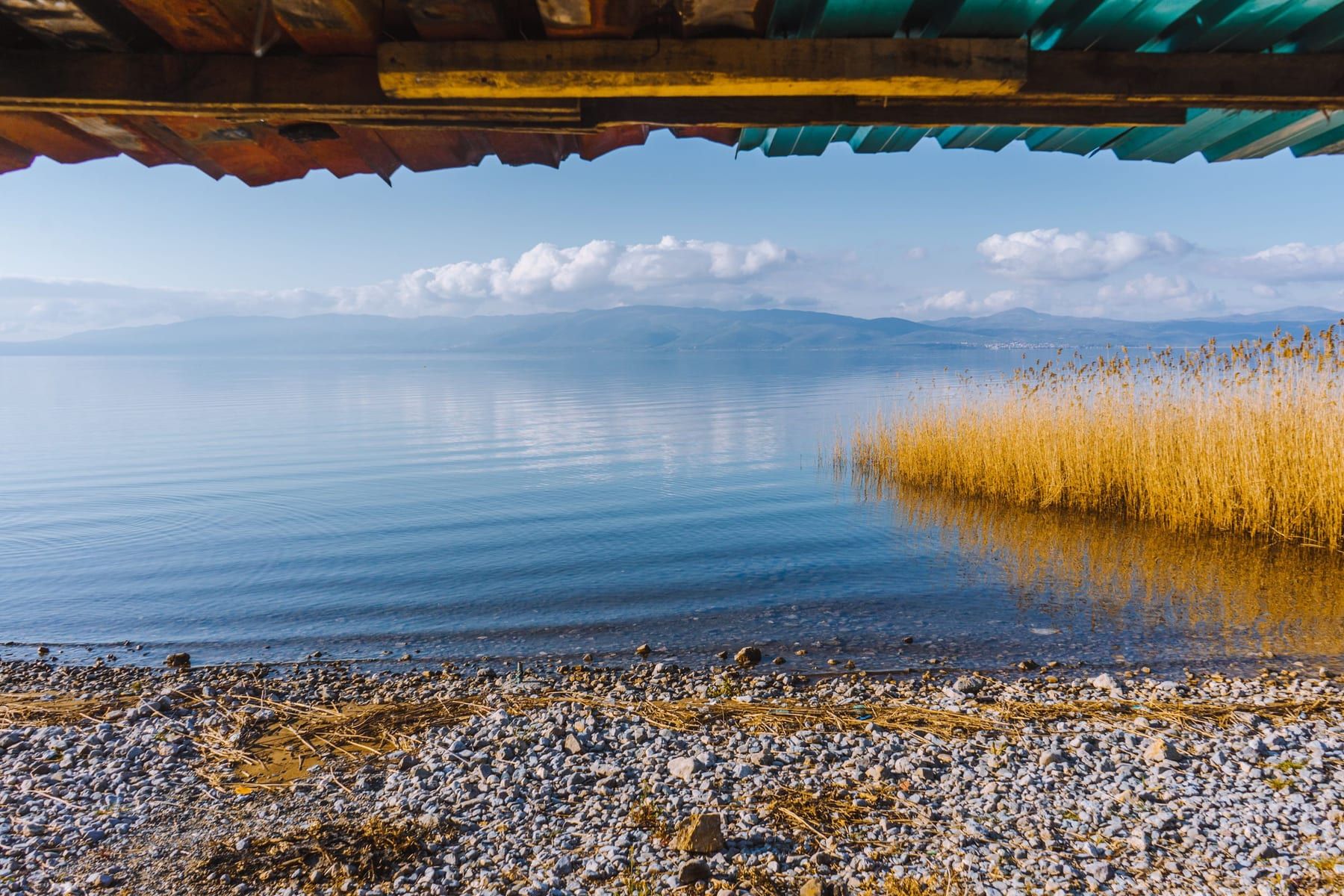
At 32 kilometres long, Lake İznik is the fifth-largest lake in Turkey, freshwater, 25 degrees in summer and clean enough for swimming. The lakeside promenade west of the city wall is the evening meeting point: tea gardens, fish restaurants and families waiting for the sunset, which here sinks behind the mountains over the water. The beaches right by the town are pebble; it gets finer to the north towards Orhangazi or to the south near Göllüce. The speciality is fish from the lake, mostly catfish and carp, grilled for CHF 8 to 12 (about EUR 9 to 13), with olives from İznik, which compete with those from Gemlik for the title of the best in Turkey. Along the shore road, farmers sell olives, olive oil, peaches and honey straight from the farm, noticeably cheaper than in the shops. There is no regular boat trip on the lake; ask in the restaurants on the shore, fishermen take guests along for a tip. In spring the fruit trees around the lake blossom, and that is the loveliest time.

Getting there and combining it with Bursa

İznik has no railway station and no airport. You fly to Istanbul, take the ferry from Yenikapı to Yalova (one hour, around CHF 8, about EUR 9) and from there the bus or dolmuş to İznik via Orhangazi in a good hour for a few francs. Or you come from Bursa: buses from the terminal run hourly, 80 kilometres, 90 minutes, around CHF 4. With a hire car from Istanbul you are there in two and a half hours via the Osman Gazi Bridge, and the drive along the north shore of the lake is beautiful. In town you walk everywhere. The most sensible combination for a trip from Western Europe: two nights in Bursa, one or two nights in İznik, then back to Istanbul or on to the Aegean. If you like thermal baths, you can stop at Yalova-Termal, 50 kilometres away, where even Atatürk knew the hot springs. For a day trip from Istanbul İznik is too far; you would have four hours of travel for three hours in town.

Pronunciation, food and what will surprise you

İznik is pronounced "IZ-nik", with the dotted İ as a normal I. Nicaea is Nikaia in Turkish or simply İznik; locals know both. The town is conservative and rural, quiet and very safe, and things wind down at ten in the evening. On food: İznik köftesi, flat minced-meat patties grilled with onions and pide, for CHF 4 to 6 (about EUR 4 to 6). Plus fish from the lake, olives and, for dessert, peaches or tahin-pekmez. A lokanta meal costs CHF 5 to 8, a dinner on the lake with fish CHF 12 to 18. Alcohol is served in a few restaurants on the shore, not in town, which is worth knowing. What surprises visitors from Western Europe: the hotels are simple but cheap, a room on the lake costs CHF 45 to 70. And nobody wants to sell you anything, apart from the ceramic workshops, and even they let you browse in peace. After Istanbul and Cappadocia, that is a relief.

Frequently asked questions about İznik

How many days should I plan for İznik?

One night is enough for the Hagia Sophia, the city walls, the museum and the tile workshops with a sunset on the lake. Two nights if you want to swim, do a workshop or simply unwind. As a half-day trip from Bursa you only see the centre, which is fine, but a shame for the lake.

When is the best time to visit?

April to June, when the fruit trees blossom and it is 20 to 28 degrees, and September to October for the olive harvest. July and August are hot, but the lake cools you down. Winter is cool and damp, but you have the town to yourself.

How do I get to İznik from Western Europe?

Fly to Istanbul (IST or Sabiha Gökçen), then take the ferry from Yenikapı to Yalova and the bus via Orhangazi to İznik, around three hours in total. Or from Bursa by bus in 90 minutes. With a hire car from Istanbul via the Osman Gazi Bridge in two and a half hours.

Can you see the sunken basilica in the lake?

From land only as an outline when the water is calm, around 20 metres off the shore west of town. The foundations lie two metres below the surface. An underwater museum is planned but not yet open. The town museum shows aerial photographs and models.

How do I recognise genuine İznik ceramics?

By the weight (quartz body, not light clay), by the slightly raised outlines, by the tomato red that only works with the right glaze, and by the price: under CHF 15 (about EUR 16) for a plate it is mass-produced ware from Kütahya. In the workshops in İznik you can watch the painting, and that is the best guarantee.

Can you swim in Lake İznik?

Yes, the water is clean and around 25 degrees in summer. The beaches near the town are pebble; north and south along the shore they get finer. There are hardly any changing facilities, swimwear is normal, but the area is rural, so more reserved than on the Mediterranean.

Itineraries with this destination

More destinations in Marmara