Hattuşa

Turkey · Central Anatolia · Travel guide

Hattuşa

How to reach the 3500-year-old Hittite capital, what the visit really costs and why you will walk through the Lion Gate and the rock sanctuary almost alone.

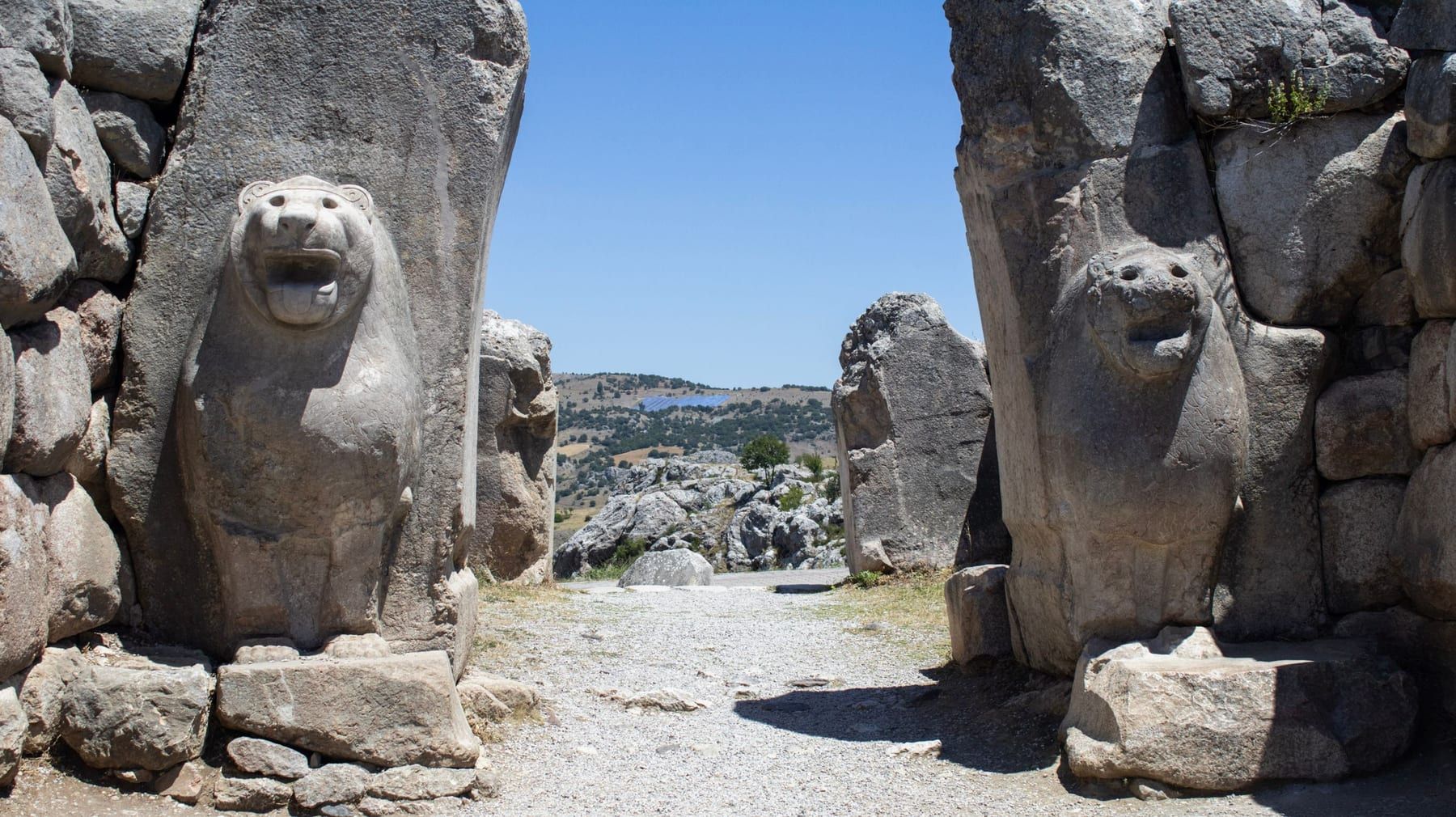
Photo: Kürşad Ç. / Pexels

What does a trip to Hattuşa cost?

Adjust the values to your trip: the calculator updates live (EUR, converted from CHF estimates).

1,696 EUR
≈ 848 EUR per person
  • Flights 642 EUR
  • Accommodation 268 EUR
  • Food 268 EUR
  • Local transport 241 EUR
  • Guided day tour from Ankara 278 EUR

Estimates for orientation, not booking prices. Flights and hotels vary strongly by season: current prices are behind the links below.

Money & payment: You pay in Turkish lira (TRY). The exchange rate moves a lot, which is why all prices here are given in francs and euros. Cards are accepted almost everywhere; you need cash for the dolmuş, markets and tips. Flight time: 3 to 4 hours.

Recommended hotels

Nine options in three price ranges, each among the best-rated on Booking.com.

Budget

Hotel Aşıkoğlu

Dorfzentrum, Boğazkale

The institution in Boğazkale, run by the same family for decades and known to archaeologists and travellers alike. Simple, clean rooms, a restaurant with home cooking, a garden and a shop with Hittite souvenirs. The owners arrange taxis and guides and know the site better than any guidebook. If you need a single address in the village, this is it.

from EUR 35 / night View →

Hotel Baykal

Dorfzentrum, Boğazkale

Small, warm-hearted guesthouse in the village with a few rooms, a shared terrace and breakfast made by the family. Rustic but clean and warm, even in autumn. Ideal for solo travellers who do not want to be alone in the evening: this is where you meet the others who found their way to Hattuşa and swap tips for the next day.

from EUR 30 / night View →

Başkent Demiralan Hotel

Ortsrand, Boğazkale

On the edge of the village towards the ruins, with views of the hills and a simple campsite alongside. The rooms are plain, the restaurant has a terrace, and it is quiet and close to the entrance of the site. Good choice if you are travelling with your own vehicle and want to be first at the gates in the morning.

from EUR 35 / night View →

Mid-range

Grandpark Hotel

Stadtzentrum, Çorum

Modern city hotel in the centre of Çorum with large rooms, decent breakfast and its own car park. Nothing spectacular, but reliable and clean, with restaurants, patisseries and the leblebi roasting houses within walking distance. About an hour's drive to Hattuşa, half an hour to Alacahöyük, so a good base for two nights with a hire car.

from EUR 60 / night View →

Corum Buyuk Hotel

Stadtzentrum, Çorum

Older but well-kept hotel in the middle of town that traditionally houses business travellers and archaeologists. The rooms are solid, the breakfast good, the staff helpful even if they speak little English. The Archaeological Museum and the clock tower pedestrian zone are a few minutes away. Value for money is right, and you should not expect more.

from EUR 55 / night View →

Hotel Dalgiclar

Stadtzentrum, Çorum

Four-star hotel in central Çorum with modern rooms, restaurant and gym. Quieter than the hotels on the through road, the breakfast is varied, and the car park is handy for hire-car drivers. By car you are in Boğazkale in a good hour and at the royal tombs of Alacahöyük in thirty minutes.

from EUR 65 / night View →

Luxury

Anitta Hotel

İnönü Caddesi, Çorum

The classic five-star hotel of Çorum, named after a Hittite king, with indoor pool, hamam, spa and panoramic restaurant. Honestly, it is the luxury of a provincial town, not Istanbul, but by far the most comfortable place in the region and ideal if you want a proper bath and a big breakfast after a dusty day in Hattuşa.

from EUR 85 / night View →

Anvatar Termal Hotel

Stadtrand, Çorum

Large thermal hotel on the edge of Çorum with its own healing water, thermal pools, hamam, sauna and spa. The rooms are spacious, the buffet generous and the staff geared to guests looking for rest. Popular with Turkish families at weekends, pleasantly quiet during the week. The warm thermal bath after a day among the ruins on the plateau is the real argument.

from EUR 90 / night View →

Hilton Garden Inn Ankara Gimat

Yenimahalle, Ankara

If you are doing Hattuşa as a day trip from Ankara, you need a hotel in the capital, ideally on the arterial road heading east rather than in the centre. Reliable international standard, car park, good breakfast, gym, and in the morning you are on the motorway towards Kırıkkale without city traffic. Back in the evening without having to cross half of Ankara.

from EUR 95 / night View →

If you book through these links we earn a small commission, at no extra cost to you.

Experiences worth your time

Hattuşa day tour from Ankara

For anyone without a hire car: transport, guide and admission for Hattuşa and Yazılıkaya in one long day, usually with a lunch stop in Boğazkale. Leave early, return late, but you understand what you are seeing. Alacahöyük is included depending on the operator, so ask beforehand.

View & book →

Guided walk through Hattuşa

Lion Gate, Yerkapı tunnel, Sphinx Gate, Great Temple and royal citadel with a local guide, on foot or using your own car as transport. Without explanation the ruins are remnants of walls; with a guide they become a capital with archive, temples and fortifications. Two to three hours.

View & book →

Yazılıkaya rock sanctuary

More than 90 gods carved into the rock as a procession; the twelve gods of the underworld in Chamber B are the most famous image of the Hittites. Go in the late afternoon when the light falls at an angle, at midday the reliefs are flat and barely visible. Included in the Hattuşa ticket, three kilometres from the site.

View & book →

Alacahöyük and the royal tombs

Older than Hattuşa: Sphinx Gate with reliefs, burial pits from around 2500 BC and a small museum with replicas of the famous sun discs. 35 kilometres north of Boğazkale, an hour's visit, doable in one day with Hattuşa if you have a car.

View & book →

Museum of Anatolian Civilizations, Ankara

This is where the originals are: cuneiform tablets, the sun discs from Alacahöyük, the gate reliefs from Hattuşa and finds from Çatalhöyük. The best archaeological museum in Turkey, in an old caravanserai below the citadel, and the ideal introduction before visiting Hattuşa.

View & book →

Çorum Archaeological Museum

Modern, superbly done museum with finds from Hattuşa, Alacahöyük and the surrounding area, housed in a historic hospital building in the centre of Çorum. Good explanations in English, reconstructed burial chambers, cuneiform tablets. Two hours, hardly any visitors, ideal before or after the site.

View & book →

Leblebi roasting houses in Çorum

Roasted chickpeas in dozens of varieties, with salt, sugar, cloves or chocolate, straight from the old roasting houses in the centre of Çorum. Tasting is free, a bag costs a few francs, and the roasters will gladly explain why theirs are better than the competition's. The souvenir of the region.

View & book →

Excursion to Amasya

Two hours to the east: Pontic royal tombs carved into the rock above the town, Ottoman timber houses on the Yeşilırmak river and one of the most beautiful small towns in Anatolia. The perfect next stop after Hattuşa, ideally with an overnight stay in one of the restored konaks on the water.

View & book →

If you book through these links we earn a small commission, at no extra cost to you.

Food & drink

Around Hattuşa you eat Anatolian village food: soup, pide, köfte and home cooking in the pensions of Boğazkale. For more, drive to Çorum, the city of roasted chickpeas, which also keeps up lamb in the copper cauldron and the wheat porridge keşkek.

Çorum Leblebisi

Old roasting houses in the centre of Çorum

Roasted chickpeas in dozens of varieties: white, yellow, salted, sugared, with cloves or chocolate. Light, crunchy, addictive. Half a kilo CHF 2 to 4 (about EUR 2.10 to 4.30).

Tip:The white ones (beyaz) are the classic; freshly roasted, you smell it down the whole lane.

İskilip Dolması

Restaurants in the centre of Çorum and in İskilip, often only on advance order

Lamb on the bone with spiced rice, steamed for hours in a big copper cauldron until the two melt into each other. A wedding and feast-day dish from the town of İskilip. CHF 6 to 9 (about EUR 6.40 to 9.50) a portion.

Tip:Ask or order the day before; the cauldron is not started for one person.

Keşkek

Lokantas in Çorum and pensions in Boğazkale on request

Wheat and lamb, boiled and beaten for hours until it becomes a creamy porridge, finished with hot butter and paprika. Anatolia's UNESCO-listed wedding dish. CHF 4 to 6 (about EUR 4.30 to 6.40).

Tip:With ayran, and do not plan too much afterwards; it is heavy and warming.

Home cooking at the pension

Hotel Aşıkoğlu and the other pensions in the centre of Boğazkale

Dinner at the pensions of Boğazkale: lentil soup, vegetable stew, köfte or chicken, rice, salad, yoghurt and tea. This is how the families cook for themselves. CHF 6 to 9 (about EUR 6.40 to 9.50) per person.

Tip:Sign up in the afternoon and they cook for you too; there are hardly any alternatives in the village in the evening.

Soup and pide at the lokanta

Lokantas and pide bakeries on the main street of Boğazkale

Lunch in the village: mercimek çorbası with bread and lemon, plus a pide with minced meat or cheese from the stone oven. CHF 4 to 7 (about EUR 4.30 to 7.50), enough for an afternoon on the site.

Tip:Eat before the walk; there is nothing on the sprawling site of Hattuşa itself.

Çay and ayran in the village

Teahouses on the village square of Boğazkale

Tea in the teahouse of Boğazkale, where the men of the village sit, 30 to 50 centimes (about EUR 0.30 to 0.55) a glass, and cold ayran after the march over the ruins for around one franc.

Tip:Sitting down is welcome and someone often treats you; buying a round back is the done thing.

History & background

Hattuşa was the capital of the Hittite Empire, a great power that stood on equal footing with Egypt and Babylon in the second millennium BC and that hardly anyone knows today. The city lies on a high plateau near the village of Boğazkale, about 200 kilometres east of Ankara, protected by gorges and rocks. Around 1650 BC King Hattušili I made the site his seat; at its peak the city covered more than 180 hectares, surrounded by a six-kilometre wall with monumental gates. Thousands of cuneiform clay tablets were found here, among them the Treaty of Kadesh with Ramesses II, the oldest surviving peace treaty in the world, a copy of which hangs at the UN headquarters in New York. Around 1180 BC Hattuşa was abandoned and went up in flames, and the reasons are still unclear. Until the 19th century almost nothing was known about the Hittites; only the excavations by the German Archaeological Institute from 1906 onwards brought the forgotten civilisation back. Hattuşa has been a UNESCO World Heritage Site since 1986, and the excavations continue to this day. The rock sanctuary of Yazılıkaya with its processions of gods and the royal tombs of Alacahöyük lie nearby and are part of the visit.

Insider tips

With or without a hire car: the most important decision

Hattuşa without your own vehicle is possible, but tiring. The ruins are spread over an area of several kilometres with 300 metres of elevation difference, plus Yazılıkaya (3 km) and Alacahöyük (35 km). With a hire car from Ankara everything is easy: two and a half to three hours of motorway and country road, around CHF 40 to 50 per day (about EUR 43 to 54) plus fuel, and you drive the ring road through the city at your own pace. Without a car you take the bus from Ankara to Sungurlu (about 3 hours, CHF 8 to 10) and from there a taxi to Boğazkale (30 km, around CHF 15 to 20). The guesthouses in the village arrange taxi drivers who will take you around the site and to Yazılıkaya for the whole day at a flat rate of about CHF 25 to 35. Alternative if you are short of time: a guided day tour from Ankara, which costs around CHF 120 to 150 and makes for a long day, but explains everything.

Walking the site properly: start at the bottom, end at the top

The site has a one-way ring road of about five kilometres. On foot you need three to four hours, by car with stops about two. Begin at the Great Temple in the lower city, the sanctuary of the Storm God, where you see the storerooms with the huge storage jars sunk into the ground. Then up to the Lion Gate, the most famous image of Hattuşa, on to Yerkapı, the artificial rampart with the 70-metre tunnel you can walk through. At the top, the Sphinx Gate and the view over the entire city. On the way back, the King's Gate and the Büyükkale citadel with the archive where the clay tablets lay. The reconstructed city wall with mudbrick towers at the entrance shows you what the whole thing once looked like. Sun hat, water and sturdy shoes are essential, there is practically no shade.

Yazılıkaya: do not skip the rock sanctuary

Three kilometres from the city lies Yazılıkaya, the most important religious monument of the Hittites. In two natural rock chambers more than 90 deities are carved into the stone as a procession: on the left the male gods, on the right the goddesses, striding towards each other, and in the middle the Storm God Teshub and the Sun Goddess Hepat meet. In the narrower Chamber B the twelve gods of the underworld stand in line, one of the most iconic images in Anatolian archaeology. Best to come in the late afternoon, when the light falls at an angle on the reliefs and the figures stand out; at midday they are flat and hard to make out. Admission is included in the Hattuşa ticket, together around CHF 10 to 12 (about EUR 11 to 13). Allow an hour. If you bring binoculars, you can see the hieroglyphs next to the figures.

Alacahöyük and the museum in Boğazkale

Alacahöyük lies 35 kilometres to the north and is older than Hattuşa: the royal tombs from around 2500 BC yielded the famous sun discs and stag standards that you can see today in the Museum of Anatolian Civilizations in Ankara and that have become the symbol of Ankara. On site are the Sphinx Gate with its reliefs (the originals are in Ankara, the copies in place are good), the burial pits and a small museum. An hour is enough. The museum in Boğazkale itself is small but important: it holds two of the original sphinxes from the Sphinx Gate, which returned from Berlin in 2011 after a decades-long legal dispute. Anyone seriously interested in the Hittites should plan half a day at the museum in Ankara before or after Hattuşa, as that is where most of the finds are, including the cuneiform tablets.

Where to stay: Boğazkale or Çorum?

Boğazkale is a village of about 1500 inhabitants with a handful of guesthouses that have lived off archaeologists and independent travellers for decades. The rooms are simple, the food is home cooking, and the owners know every corner of the site and arrange taxis and guides. For CHF 30 to 45 per night (about EUR 32 to 48) with breakfast you are the first on the site in the morning, and that pays off: standing alone at the Lion Gate at 9 am is a feeling you will never get in Ephesus. Çorum, 85 kilometres further on, is a provincial town with proper hotels, an indoor pool and restaurants with a choice, and makes sense as a base if you need comfort or are arriving from the east. The Archaeological Museum in Çorum is excellent and displays finds from Hattuşa and Alacahöyük. There is nothing in between, so plan fuel and cash in Sungurlu or Çorum; in Boğazkale there is no cash machine you should rely on.

Leblebi, food and how to combine the trip

Çorum is known throughout Turkey for leblebi: roasted chickpeas sold in dozens of varieties, with salt, with sugar, with cloves, with chocolate. Half a kilo costs a few francs, and a bag from one of the old roasting houses in the centre of Çorum is the most honest souvenir from the region. Food in Boğazkale is limited to the guesthouses and a few lokantas with dishes of the day, soup, pide and köfte for CHF 4 to 7 (about EUR 4 to 7). In Çorum you will find good kebab houses and patisseries. For planning: Hattuşa lies between Ankara and the Black Sea, which makes a combination with Amasya (rock tombs, Ottoman houses on the river, 2 hours) and Safranbolu the obvious choice. If you are continuing to Cappadocia, it takes about four hours by hire car. One day for Hattuşa plus Yazılıkaya, half a day for Alacahöyük and Çorum, and you do not need more.

Frequently asked questions about Hattuşa

How many days should you plan for Hattuşa?

One full day for the city and Yazılıkaya, with an overnight stay in Boğazkale so that you are on the site early in the morning and in the slanting evening light. Alacahöyük and the museum in Çorum fit into a second half day. As a day tour from Ankara it is all doable in one long day, but rushed.

When is the best time to visit Hattuşa?

May, June, September and October. The site lies at over 1000 metres, in summer it is hot and shadeless, in winter there is often snow and some of the guesthouses are closed. In May the plateau is green and full of wildflowers, which is the most beautiful time. Early morning and late afternoon give the best light on the reliefs.

How do I get to Hattuşa from Western Europe?

Fly from Zurich (or another Western European hub) to Ankara (ESB), direct with Turkish Airlines in about 3.5 hours or with a change in Istanbul, from around CHF 280 to 350 (about EUR 300 to 375). From Ankara by hire car 2.5 to 3 hours via Kırıkkale and Sungurlu to Boğazkale. Without a car: bus from Ankara to Sungurlu, then taxi. Alternatively fly to Istanbul and take the train to Ankara, which costs more time.

Can I visit Hattuşa without a hire car?

Yes, but with some effort. Bus from Ankara to Sungurlu, taxi to Boğazkale, and the guesthouse arranges a driver who takes you around the site and to Yazılıkaya for a flat rate. Walking the site itself is possible, but it is five kilometres with 300 metres of climbing and no shade. For Alacahöyük you will need a taxi or a tour in any case.

What does admission cost and what is included?

The Hattuşa ticket also covers Yazılıkaya and costs foreign visitors around CHF 10 to 12 (about EUR 11 to 13); Alacahöyük and the museum in Boğazkale cost a few francs each separately. Local guides charge around CHF 30 to 50 for a tour, which is worth it because the ruins are hard to read without explanation. With the Museum Pass Türkiye admission is included.

Is the Museum of Anatolian Civilizations in Ankara worth adding?

Absolutely, and ideally before the visit. That is where the most important finds from Hattuşa and Alacahöyük are: the cuneiform tablets, the sun discs, the original reliefs from the gates. Once you have seen them, you understand what you are looking at on site. The museum lies in the old town below the citadel and takes about two hours; admission is around CHF 12 (about EUR 13).

More destinations in Central Anatolia