History & background
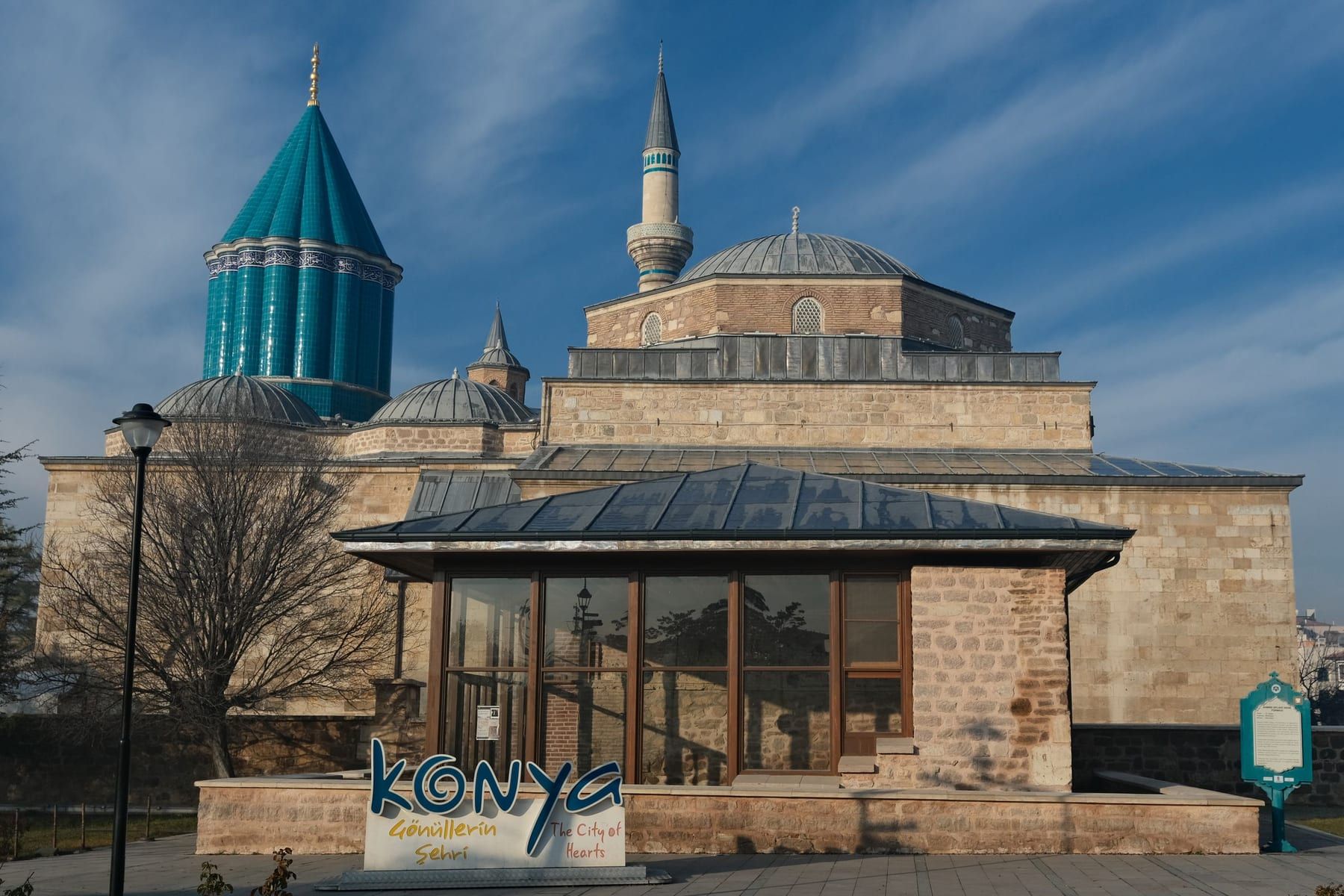
Konya is one of the oldest continuously inhabited cities in the world. About 40 kilometres to the southeast lies Çatalhöyük, a Neolithic settlement from around 7000 BC where several thousand people lived in mudbrick houses packed so tightly together that the roofs served as streets. In antiquity the city was called Iconium, and the Apostle Paul preached here. Its golden age came with the Seljuks: from 1097 into the 13th century Konya was the capital of the Sultanate of Rum, and Sultan Alaeddin Keykubad turned it into a centre of art, science and architecture. It was during this period that the Persian poet and mystic Jalal ad-Din Rumi, known in Turkey as Mevlana, arrived. He lived and taught in Konya until his death in 1273, and his followers founded the Mevlevi order, the whirling dervishes. His mausoleum with its turquoise dome remains the heart of the city and one of the most visited places in Turkey. The Ottomans took Konya in the 15th century, Atatürk banned the dervish orders in 1925, and the Sema ceremony survived as cultural heritage. Today Konya, with more than two million inhabitants, is an economically strong, deeply religious city and the breadbasket of Turkey.