Kelebek Special Cave Hotel
One of the best-rated budget cave hotels in Göreme. Family-run, real tuff rooms, homemade breakfast and a rooftop terrace looking straight at the fairy chimneys. Walking distance to everything.
from EUR 60 / night View →
Turkey · Central Anatolia · Travel guide
What a week among the fairy chimneys really costs, how to avoid the tourist traps once you are there, and which experiences are worth your money.
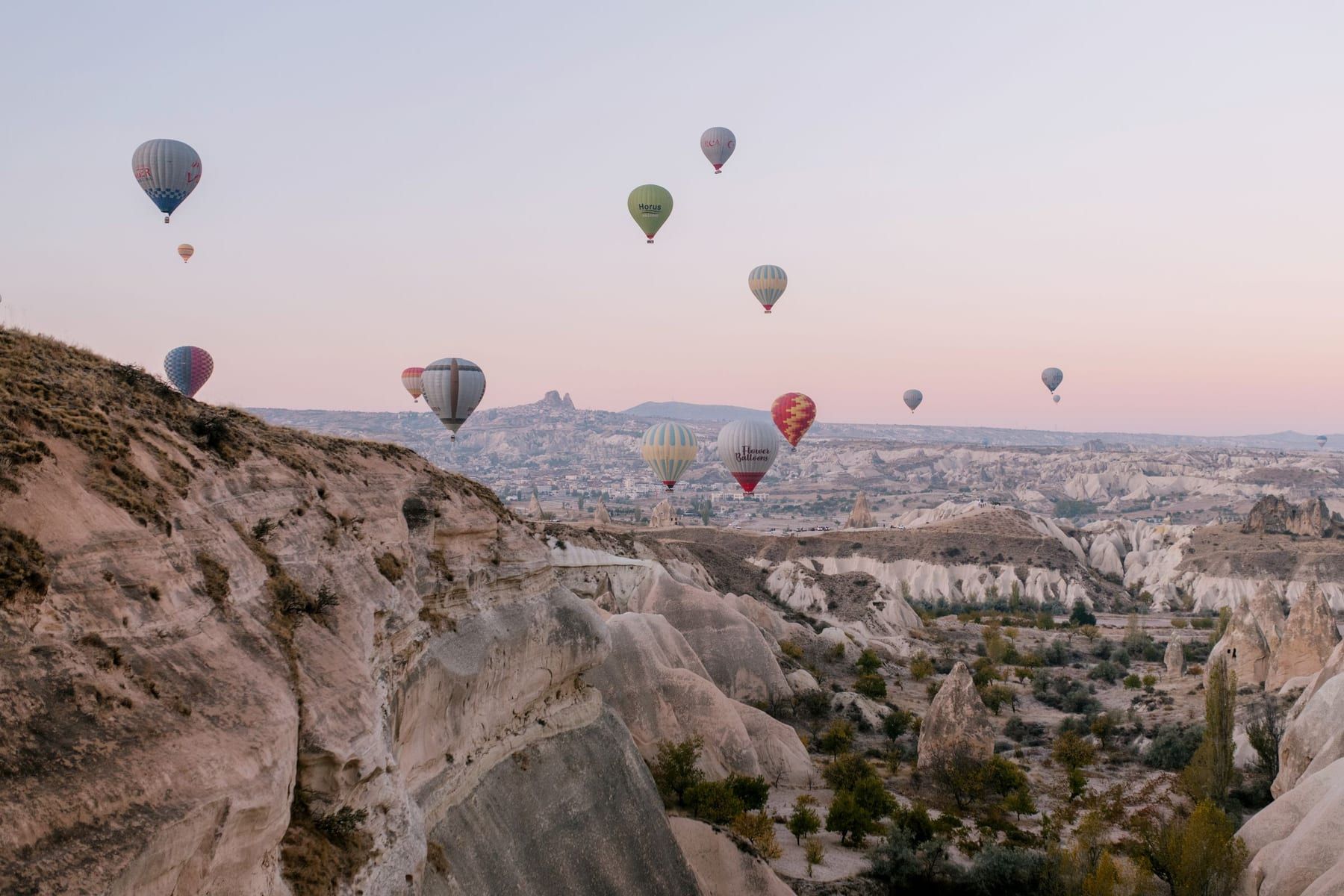
Photo: Julia Volk / Pexels
Adjust the values to your trip: the calculator updates live (EUR, converted from CHF estimates).
Estimates for orientation, not booking prices. Flights and hotels vary strongly by season: current prices are behind the links below.
Money & payment: You pay in Turkish lira (TRY). The exchange rate moves a lot, which is why all prices here are given in francs and euros. Cards are accepted almost everywhere; you need cash for the dolmuş, markets and tips. Flight time: 3 to 4 hours.
Nine options in three price ranges, each among the best-rated on Booking.com.
Budget
One of the best-rated budget cave hotels in Göreme. Family-run, real tuff rooms, homemade breakfast and a rooftop terrace looking straight at the fairy chimneys. Walking distance to everything.
Consistently top-rated on Booking. The terrace view of the fairy chimneys is among the best in Göreme, the rooms are clean and well kept. Breakfast on the terrace, with balloons in the sky when the weather plays along.
The cheapest option with genuine cave character. Simple, clean, very central in Göreme. Ideal for solo travellers and anyone who would rather spend the budget on experiences. Shared terrace with a panoramic view.
Mid-range
Spacious cave suites with private bathrooms, a courtyard pool and good food in the in-house restaurant. Very good Booking scores for cleanliness and service. Central in Göreme, in a quiet spot.
Several connected historic cave houses around a well-kept courtyard. Wine bar with wines from the hotel cellar, personal service, excellent breakfast. Quieter than Göreme, 10 minutes by scooter.
Small boutique hotel right at the foot of the Ortahisar rock, quieter, more authentic and less touristy than Göreme. Hand-picked rooms in genuine historic cave houses, personally run.
Luxury
The most decorated boutique hotel in Cappadocia. Antique artefacts in the corridors, an in-house wine cellar, an infinity pool with a 360-degree panorama over the whole region. Winner of multiple international awards.
An entire village converted into a luxury hotel: several connected historic buildings and caves on different levels, a wine cellar with its own wines, fine dining, spa. For those who want to experience Cappadocia in its fullest form.
A restored Ottoman village: dozens of historic stone houses and cave dwellings combined into one hotel complex. Private pools in some suites, a restaurant in a former mosque. Ideal for honeymoons.
If you book through these links we earn a small commission, at no extra cost to you.
The classic and the most expensive experience. Book early; low season is much cheaper. Plan at least one buffer day in case the flight is cancelled for weather.
Most beautiful at sunset and often underrated: few tourists, big impact. The trail is well marked and needs no special gear. Duration: 2 to 3 hours.
Eight storeys dug into the rock. Only with a guide do you really understand how people lived here: ventilation shafts, wells, churches and stables. If you are claustrophobic, be warned: the narrow passages are real.
Rock churches with centuries-old Byzantine frescoes, a UNESCO World Heritage Site. Go early (shortly after opening), before the coaches arrive. Allow about 1.5 hours.
A green canyon with rock churches and a river, the opposite of the moonscape. Easy to combine with Derinkuyu. One of the loveliest half-day trips in the region.
The highest point in Cappadocia, with a 360-degree view over all the valleys. Far fewer tourists than the famous viewpoints, and almost deserted at sunset.
Sit at the wheel and shape your own piece, an honest souvenir from Cappadocia. Workshops last about an hour and are great for children too.
Great fun at sunset and the perfect alternative if your balloon flight is cancelled for weather. No driving licence needed, briefing included.
Love Valley and its tall fairy chimneys on horseback: an impressive experience even for inexperienced riders. Guided tours from Göreme daily.
If you book through these links we earn a small commission, at no extra cost to you.
Cappadocia cooks Central Anatolian food: hearty, slow, out of clay pots and stone ovens. Add something many people do not expect: wine. Vines have grown on the volcanic soil around Ürgüp and Uçhisar for thousands of years, and the local wineries are honestly good. The best kitchens are not on the main street of Göreme but one lane over, or straight in Avanos.
Lamb or beef with tomatoes, peppers and garlic, braised for hours in a sealed clay jug. The jug is cracked open at your table and the meat falls apart. CHF 15 to 25 (about EUR 16 to 27) per jug depending on the place, usually meant for two.
Tip:Many places want the jug ordered one to two hours ahead, so reserve for the evening when you walk past at lunchtime.
Tiny dumplings filled with minced meat, topped with yoghurt, garlic and paprika butter. Often still folded by hand in Cappadocia, and the Kayseri version is the finest. A plate costs CHF 6 to 9 (about EUR 6.50 to 9.70).
Tip:Ask for Kayseri Mantısı: the smaller the dumplings, the better the kitchen.
Paper-thin flatbread cooked on a sac griddle, filled with potato, spinach or cheese. Honest street food at CHF 2 to 3 (about EUR 2.20 to 3.20) a piece.
Tip:Take ayran instead of cola, and go for the cheese and spinach mix rather than cheese alone.
Air-dried beef with a fenugreek crust and spicy garlic sausage, both from nearby Kayseri. A piece of pastırma to take home costs CHF 6 to 10 (about EUR 6.50 to 10.70) per 100 g; on the breakfast table it is usually included.
Tip:Order pastırma with eggs (Pastırmalı Yumurta) for breakfast; most cave hotels will make it on request.
Dried apricots, mulberries, walnuts and grape syrup (pekmez) are the souvenirs of the region. CHF 3 to 6 (about EUR 3.20 to 6.50) a bag, noticeably cheaper than in Göreme.
Tip:Tasting is allowed and expected; you do not have to buy because of it.
The volcanic soils give powerful reds (Öküzgözü, Boğazkere) and fresh whites (Emir). A tasting of three to five wines costs CHF 5 to 12 (about EUR 5.40 to 13), a bottle from CHF 10.
Tip:Go in the afternoon when there is time for questions, and take the bottle up to your hotel terrace for sunset.
Black tea in a tulip glass, bitter, sweetened to taste. A glass costs CHF 0.50 to 1 (about EUR 0.55 to 1.10), and the second one is often free.
Tip:A glass of tea after the meal is not a question in Cappadocia but part of the bill, usually at no extra charge.
Cappadocia lies in the heart of Central Anatolia and is one of the most extraordinary landscapes on earth. Millions of years ago the volcanoes Erciyes and Hasandağ erupted and buried the whole region under metres of soft tuff. Over thousands of years, wind and water carved that stone into the famous fairy chimneys: cone-shaped rocks that rise from the ground as if lifted from a storybook. People realised early on that tuff is easy to hollow out. Thousands of years before Christ they were already digging houses, storerooms and stables straight into the rock. During the Byzantine era, when Christian communities feared persecution, entire underground cities took shape here. Kaymaklı and Derinkuyu were driven up to eight storeys deep into the rock and sheltered tens of thousands of people, complete with ventilation shafts, wells, oil presses and churches. The rock churches of the Göreme valley were painted with elaborate Byzantine frescoes, many of which have survived the centuries. Hittites, Persians, Romans, Byzantines, Seljuks and Ottomans all left their mark. Today Cappadocia is a UNESCO World Heritage Site and one of the most photographed destinations in the world.
The sunrise balloon flight is the reason most people come, and it is also the single biggest expense. Booking platforms often mark up the price. Haggling rarely works for balloons (safety is regulated and reputable operators have fixed prices), but the low season (November, February) brings the price down noticeably, and comparing several operators almost always pays off. Important: balloon flights are cancelled at short notice in wind or bad weather. Always plan a buffer day.
The luxury cave hotels in Göreme look spectacular on Instagram and cost many times more. The honest truth: a well-reviewed mid-range cave hotel gives you the same experience, real tuff walls and a breakfast terrace with balloons drifting past, for a fraction of the price. Location beats luxury: stay in Göreme itself, within walking distance of everything, not on the edge of town. Below you will find three concrete recommendations for different budgets.
Cappadocia has no functioning public transport network. Taxis are expensive and often run on flat tourist rates. The best option is to rent a scooter for CHF 30 to 40 per day (about EUR 32 to 43). That gets you to every valley, viewpoint and village on your own schedule. For the underground cities (Derinkuyu, Kaymaklı) a rental car or an organised tour makes more sense, as they are about 40 km from Göreme. If you would rather not drive, book a minibus day trip for CHF 20 to 30, far cheaper than a private taxi.
The best-known viewpoint in Göreme is crowded and mediocre. If you actually want to see something, head to Uçhisar: a village about 5 km from Göreme, dominated by a huge tuff rock riddled with caves, the highest natural point in Cappadocia. The climb costs a few lira in admission and rewards you with a 360-degree view over the whole region. At sunset it is almost empty. The village itself is quieter and less touristy than Göreme, ideal for an overnight stay.
Most travellers only see the moon-like tuff landscapes. The Ihlara Valley, about 45 km southwest of Göreme, is the complete opposite: a 14-kilometre canyon with the Melendiz river running through it, lined with poplars and willows. More than 100 Byzantine churches are cut into the cliff walls, many with frescoes. The walk through the canyon takes 2 to 3 hours and is flat. Few tourists, lots of nature, one of the finest natural experiences in Turkey. Easy to combine with a visit to the underground city of Derinkuyu.
Avanos, on the Kızılırmak river, has been the pottery centre of Cappadocia for thousands of years; the red river clay is still worked by hand today. In many workshops you can sit at the wheel yourself for CHF 15 to 25 (about EUR 16 to 27), finished piece included. That is an honest souvenir from Cappadocia. If you want to buy pottery, buy straight from the craftsman, not in the tourist shop that sells the same pieces for three times the price.
Testi kebab (cooked in a clay pot that is cracked open at your table) is the regional speciality and a must. Avoid the restaurants right next to the main attraction with picture menus in five languages; one street further on, where the locals eat, it is better and cheaper. Gözleme (stuffed flatbread) from a street stall costs CHF 2 to 3 (about EUR 2 to 3) and fills you up properly. Çay (tea) is part of the ritual and almost free nearly everywhere.
Göreme is pronounced "Gö-re-me" (not "Go-reem"). Cappadocia in Turkish is Kapadokya. A "Merhaba" (hello) and "Teşekkürler" (thank you) open doors and often get you better prices too. Anyone who tries a few words is treated noticeably differently in Turkey, and that is no cliché.
Three full days is a good rule of thumb: one day for the balloon flight and Göreme, one day for the valleys (hiking), one day for the underground cities. If you want a weather buffer (balloon flights are cancelled in wind) or would like to add the Ihlara Valley and Avanos, plan four to five days.
April to June and September to October: pleasant temperatures (15 to 25 degrees), stable balloon conditions, green landscapes. High summer (July and August) is hot (up to 35 degrees) and expensive. Winter, with snow on the fairy chimneys, is beautiful and cheap, but balloon flights are cancelled more often.
Usually you connect in Istanbul and fly on to Kayseri (ASR) or Nevşehir (NAV). Both airports are about an hour from Göreme; many hotels organise the transfer. Kayseri has slightly more flights, Nevşehir is slightly closer to Göreme.
It depends on your nationality. Swiss nationals and travellers from many other countries need an e-visa, which is easy to apply for online (evisa.gov.tr); it currently costs around USD 50 and is issued within minutes. Citizens of many EU countries and the UK are currently visa-exempt for tourist stays. Check the official site before you travel, and apply in advance, not at the airport.
The Turkish lira (TRY). Cards are accepted almost everywhere in hotels, restaurants and tourist attractions. Cash is useful at markets, street stalls and small shops. Exchanging money locally (exchange offices in Göreme) is cheaper than at the airport or at home.
Yes. Cappadocia is one of the best-developed tourist regions in Turkey. Solo travellers, women included, consistently report positive experiences. Locals are used to tourism and helpful. The usual rules apply: stick to groups in the evening and leave valuables at the hotel.
Trail running through the valleys and fairy chimneys of Cappadocia: distances from around 38 to 119 kilometres, start and finish in Ürgüp, part of international ultra-trail series. The race runs through Rose Valley, Love Valley, cave villages and across high plateaus, with aid stations in villages. Entry fees CHF 80 to 200 (about EUR 86 to 215); registration usually opens in winter and fills up early.
For travellers: Accommodation in Ürgüp and Göreme is scarce on race weekend, and the valley trails are full of runners on Saturday.
The underrated capital: a world-class museum, Atatürk's mausoleum, hardly any tourists and prices that make Istanbul look expensive.
UNESCO World Heritage, meerschaum craftsmanship and canal boats beneath Ottoman timber houses: Eskişehir is the most interesting hidden gem in Turkey.
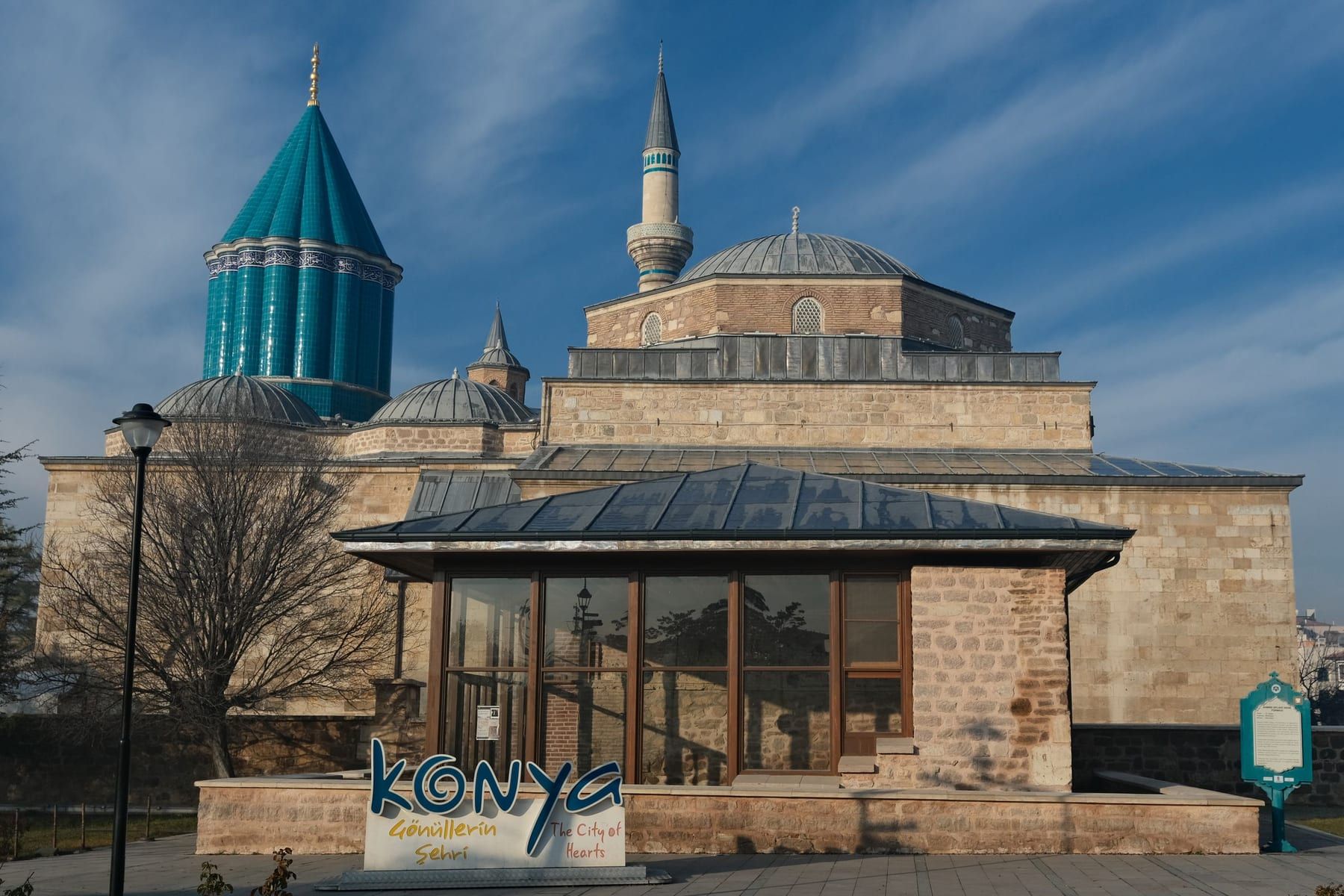
What Konya really costs, where you can see the whirling dervishes without the tourist-show feel, and why the city is more than a stop on the way to Cappadocia.
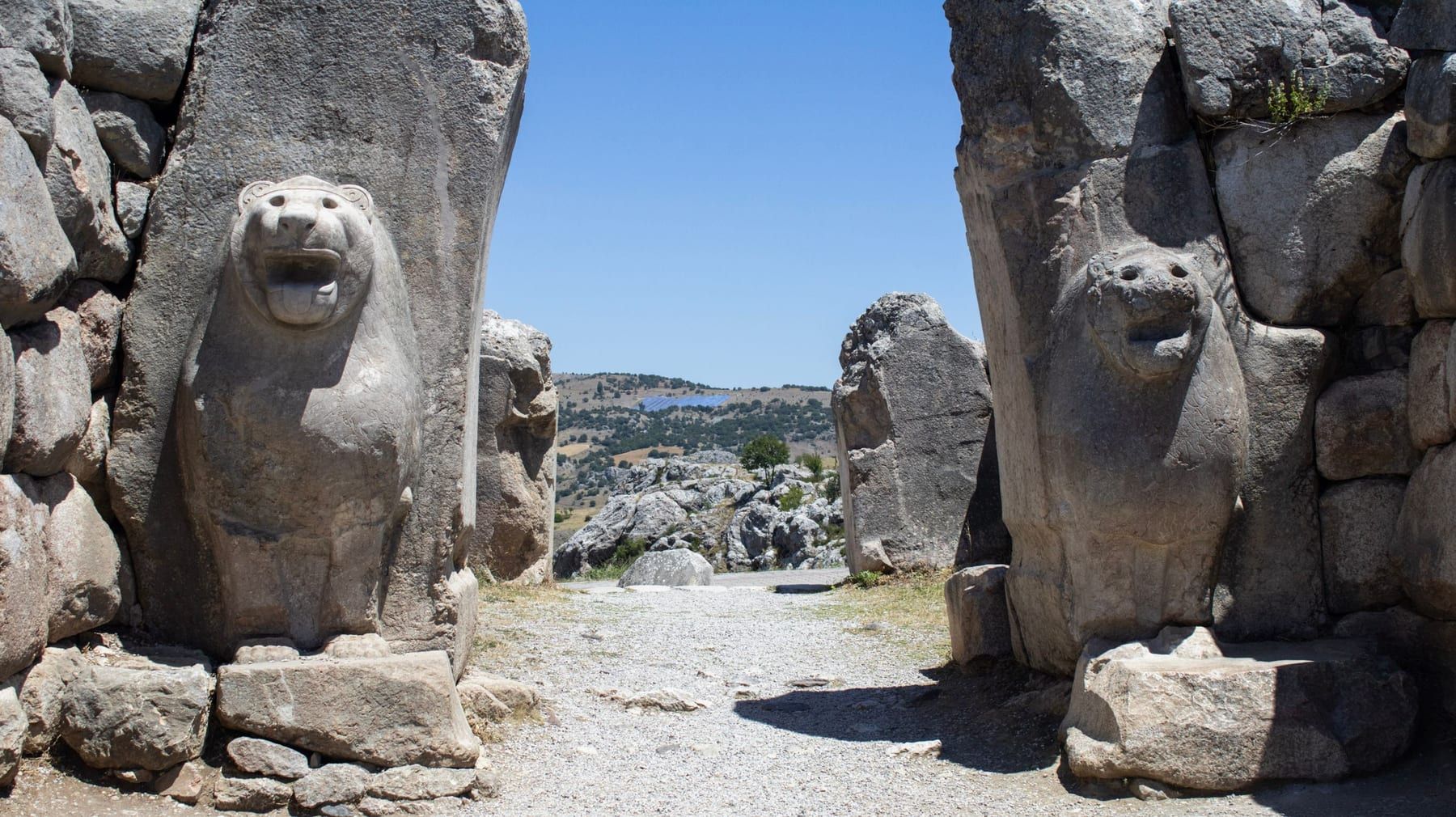
How to reach the 3500-year-old Hittite capital, what the visit really costs and why you will walk through the Lion Gate and the rock sanctuary almost alone.