Lech Zürs

Austria · Arlberg, Ötztal & Vorarlberg · Travel guide

Lech Zürs

What the most expensive ski resort in Austria really costs, why it is often worth its money all the same, and how Warth, Schröcken and summer on the Lech get you away far cheaper.

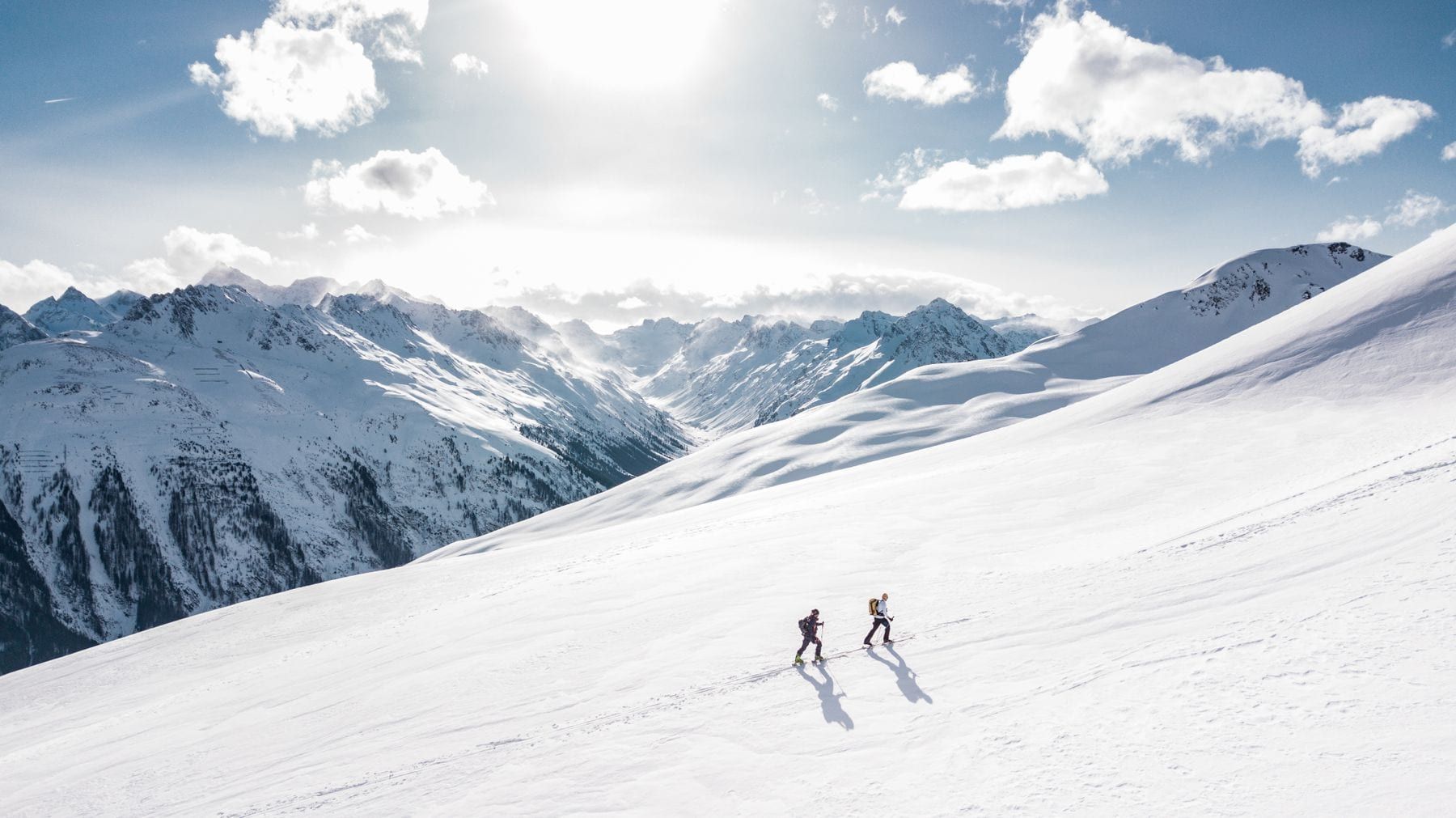
Photo: Tobi &Chris / Pexels

What does a trip to Lech Zürs cost?

Adjust the values to your trip: the calculator updates live (EUR, converted from CHF estimates).

2,868 EUR
≈ 1,434 EUR per person
  • Getting there 193 EUR
  • Accommodation 1,712 EUR
  • Food 749 EUR
  • Local transport 54 EUR
  • Ski Arlberg ski pass (day ticket) 161 EUR

Estimates for orientation, not booking prices. Getting there means train or car from Switzerland, return, per person. Hotels vary strongly by season: current prices are behind the links below.

Money & payment: You pay in euros (EUR). Cards work almost everywhere; mountain huts and sausage stands often want cash. Tipping is expected: 5 to 10 percent, by naming the rounded total when you pay. In ski resorts a visitor tax of EUR 2 to 4 per night is added to the hotel price. Getting there: By train (ÖBB Railjet), car or a flight to Vienna, 2 to 8 hours.

Recommended hotels

Nine options in three price ranges, each among the best-rated on Booking.com.

Budget

Wellnesshotel Warther Hof

Village centre, Warth am Arlberg

Four-star superior house in Warth with half board, pool and sauna, at prices that buy you a guesthouse in Lech. Ski bus and valley station in a few minutes, Auenfeldjet to Lech. For skiers who want the Lech area without Lech prices.

from CHF 230 / night (about EUR 246) View →

Hotel Mohnenfluh

Oberlech, Lech am Arlberg

Family-run three-star house in Oberlech with half board, spa and outdoor pool, ski-in and ski-out right on the piste, down to Lech by cable car. Quiet, warm-hearted and comparatively affordable for Oberlech. For families and couples who want to sleep up on the mountain.

from CHF 250 / night (about EUR 268) View →

Hotel Jägeralpe

Hochkrumbach, Warth am Arlberg

Family hotel with half board and childcare right on the piste in Hochkrumbach between Warth and the Hochtannberg pass. Large rooms, indoor pool, ski-in/ski-out. For families who visit Lech by lift on individual days.

from CHF 220 / night (about EUR 235) View →

Mid-range

Hotel Gotthard

Village centre, Lech am Arlberg

Four-star superior house in the middle of Lech, five minutes to the Rüfikopfbahn and the Schlegelkopfbahn, with spa, pool and half board. Rooms with mountain views, family-run for generations. For anyone who wants Lech at Lech's mid-range price.

from CHF 420 / night (about EUR 449) View →

Hotel Tannbergerhof

Village centre, Lech am Arlberg

Traditional house on the village street with the well-known ice bar in front, spa, pool and half board. Schlegelkopfbahn in two minutes, the village at the door. For guests who want Lech après-ski in its civilised form in the afternoon.

from CHF 450 / night (about EUR 482) View →

Hotel Montana Oberlech

Oberlech, Lech am Arlberg

Four-star superior house in car-free Oberlech, ski-in/ski-out, with sun terrace, spa and well-known cooking. Reached by cable car from Lech, luggage comes through the tunnel. For skiers who want to be straight on the piste in the morning.

from CHF 480 / night (about EUR 514) View →

Luxury

Hotel Arlberg Lech

Village centre, Lech am Arlberg

Five-star house of the Schneider family in the centre of Lech, with spa, outdoor pool, several restaurants and a service that has kept regulars for decades. Three minutes to the Rüfikopfbahn. For classic alpine luxury without design effects.

from CHF 900 / night (about EUR 963) View →

Almhof Schneider

Tannberg, Lech am Arlberg

Five-star house with restrained architecture on the Tannberg, ski-in/ski-out at the Schlegelkopfbahn, spa with pool and one of the best kitchens on the Arlberg. Discreet and very expensive. For guests who value quiet and perfection more than seeing and being seen.

from CHF 1,100 / night (about EUR 1,177) View →

Thurnhers Alpenhof

Village centre, Zürs am Arlberg

Five-star superior house in Zürs right on the piste, with spa, gourmet restaurant and a wine cellar that ranks among the best in Austria. Higher and quieter than Lech. For skiers who want guaranteed snow and haute cuisine in the same place.

from CHF 1,000 / night (about EUR 1,070) View →

If you book through these links we earn a small commission, at no extra cost to you.

Experiences worth your time

The Weisser Ring

Ski circuit over 22 kilometres of pistes and 5,500 vertical metres through Lech, Zürs, Zug and Oberlech, included in the ski pass. Four to five hours with breaks, for experienced skiers. Start early; the Madlochbahn closes in wind.

View & book →

Rüfikopfbahn

Aerial cable car from Lech to 2,350 metres with views of the village, the Rote Wand and as far as Lake Constance. Return trip around CHF 35, included with a ski pass or Lech Card. In summer a geology trail and panoramic restaurant, two hours.

View & book →

Ski week in Ski Arlberg from Lech

Wide, sunny pistes in Lech, Zürs and Warth, 305 kilometres of pistes with St. Anton, day ticket around CHF 75, six-day pass CHF 390 to 420. Group lessons from CHF 75 a day, private instructor from CHF 320. Book online in advance; a day ticket cap applies in the holidays.

View & book →

Skyspace Lech by James Turrell

Walk-in light room on the Tannegg above Oberlech, with a light programme at sunrise and sunset. Access free, 30 minutes on foot from Oberlech, guided light show around CHF 20 with registration. One hour, strongest at dusk.

View & book →

Formarinsee and Rote Wand

Mountain lake at 1,790 metres below the Rote Wand, in summer by hiking bus from Lech in 30 minutes, free with the Lech Card. Walk around the lake one hour, to the Freiburger Hütte 45 minutes, back to Lech on the Lechweg four hours.

View & book →

Lechweg first stage

From the Formarinsee along the young Lech to Lech, 14 kilometres, mostly downhill, four hours, the first of 15 stages to Füssen. Free, with the hiking bus up. Multi-day packages with luggage transport from CHF 500 for three days.

View & book →

The Grüner Ring

Three-day circular hike around Lech with art installations, huts and overnight stays in Zürs and Zug, stages of four to six hours, also doable individually with the lifts. Lifts free with the Lech Card, hut overnight from CHF 60.

View & book →

Horse-drawn sleigh ride to Zug

By horse-drawn sleigh from Lech through the snowy valley to Zug, dinner at the inn there, back by sleigh or local bus. Sleigh for two to four people around CHF 60 to 80 each way, dinner extra. Two to three hours.

View & book →

Day trip to the Bregenzerwald

Over the Hochtannberg pass to Schoppernau, Bezau and Schwarzenberg with timber architecture, the Lingenau cheese cellar and the Angelika Kauffmann Museum. By bus 40 and Landbus about an hour each way, cheese cellar tour around CHF 10. A full day, easier in summer.

View & book →

If you book through these links we earn a small commission, at no extra cost to you.

Food & drink

Lech is Vorarlberg, and you can taste it: Kässpätzle are called Käsknöpfle here, the mountain cheese comes from the Tannberg and the Bregenzerwald, and the Walser brought their Riebel and Schmarren with them. On top of that the resort has more toque-rated restaurants per inhabitant than any other municipality in Austria, with prices to match. The honest plates are found in Zug, on the working alps in summer and in Warth.

Käsknöpfle

Hus Nr. 8 in Lech, inns in Zug

Vorarlberg cheese spätzle made from flour, eggs and a blend of Bergkäse, Rässkäse and Sura Kees, with fried onions and potato salad. CHF 16 to 22 (about EUR 17 to 24), heavy and good.

Tip:The Hus Nr. 8 is a 400-year-old Walser house; reservations are necessary.

Kaiserschmarrn on the alp

Kriegeralpe above Oberlech, Rud-Alpe on the edge of Lech

Caramelised torn pancake with stewed plums, big and expensive on the sun terraces of Oberlech: CHF 15 to 20 per pan.

Tip:At the Kriegeralpe it is served in the pan at the table, and one pan is enough for three.

Tannberger Bergkäse

Village shop in Lech, cheese cellars of the alps in summer, Sennerei Schröcken

Hay-milk cheese from the alps around Lech, Warth and Schröcken, matured at least six months, strong and nutty. As a platter CHF 15 to 20, in the shop CHF 30 to 38 a kilo.

Tip:In summer some alps still make cheese over the fire; guided tour via the Lech Card.

Riebel

Inns in Warth and Schröcken, a few hotels in Lech at breakfast

Vorarlberg maize semolina, roasted in butter and fried until crumbly, with apple sauce or milky coffee. The old poor man's food, today CHF 10 to 14 as a sweet dish or breakfast.

Tip:Almost only available in the Bregenzerwald and Vorarlberg; in Lech, ask for it.

Gourmet cooking on the Arlberg

Griggeler Stuba at the Burg Vital Resort, Oberlech

Lech has gourmet restaurants in almost every five-star house, with menus from CHF 150 to 250 per person without wine. The Griggeler Stuba and the restaurant at the Almhof Schneider are among the best in Austria.

Tip:At lunchtime the sun terraces of the same houses have simpler menus at half the price.

Game from the Lech valley

Inns in Zug, hotel restaurants in Lech in autumn

Venison, chamois and roe deer from the hunting grounds around Lech, as a ragout, saddle or game sausage. Ragout CHF 24 to 30, saddle CHF 38 to 48.

Tip:Game weeks in October, when the village is otherwise empty, with low hotel prices.

Sura Kees

Working alps around Lech and Warth in summer

Vorarlberg sour-milk cheese from the Montafon, low in fat, tangy, marinated with onions, vinegar and oil or in the Käsknöpfle. As a snack CHF 9 to 13.

Tip:With cider or beer, not with wine, and for cheese novices only in a small portion.

Book a food tour: Lech Zürs

Through markets and eateries with a guide, tastings included.

View & book →

If you book through these links we earn a small commission, at no extra cost to you.

History & background

Lech was settled around 1300 by Walser, who came from the Valais over the passes and built farms at 1,450 metres on the upper reaches of the Lech, where nobody had wanted to winter before. From the Count of Montfort they received rights of freedom in return for the duty of keeping the Flexen pass and the Tannberg open. For centuries Lech was a poor mountain farming village cut off from the world in winter; Zürs at 1,700 metres consisted of a few farms inhabited only in summer. Skiing changed that: in 1906 the first ski course in Vorarlberg took place in Zürs, and in 1937 the first drag lift in Austria went into operation there. After the Second World War Lech developed into a meeting place for industrialists, aristocrats and politicians, the Dutch royal family has come every year for decades, and the municipality decided early on not to allow hotel blocks: the number of beds is capped to this day, and once a certain number of skiers is reached, no more day tickets are sold. In 1956 the car-free hotel village of Oberlech was built, with underground passages through which luggage is transported. The Weisser Ring, a ski circuit over Lech, Zürs, Zug and Oberlech, was devised in the 1940s and since 2006 has been an annual race with a thousand participants. In 2013 the Auenfeldjet linked Lech with Warth-Schröcken, in 2016 the Flexenbahn linked Zürs with St. Anton, and since then Ski Arlberg has been the largest connected ski area in Austria. In 2012 Lech became the first Austrian municipality to join the circle of the "Best of the Alps", and in 2018 the artist James Turrell opened his Skyspace in Oberlech.

Insider tips

Getting there: train to Langen, bus over the Flexen pass

Lech has no railway station. The ÖBB Railjet from Zurich stops in Langen am Arlberg, journey time 2 hours 20 minutes, with a Half Fare Card and a Supersaver ticket CHF 20 to 40 (about EUR 21 to 43) each way. From Langen the bus 91 runs in 25 minutes via Stuben and the Flexen pass to Zürs and in 35 minutes to Lech, fare around CHF 5, every half hour in winter with connections to the Railjet. Most hotels will also collect you in Langen or St. Anton. By car you need 2 hours 15 minutes from Zurich via Feldkirch, Bludenz and Klösterle, then up the Flexen road, whose galleries are impressive in winter and occasionally closed when it snows; vignette CHF 12 for 10 days, no tunnel needed. Alternatively via Bregenz and the Bregenzerwald to Warth, but in winter only if the Hochtannberg pass is open, which is not always the case when there is avalanche danger. In the resort you do not need a car: Lech, Zürs, Zug, Oberlech and Stubenbach are linked by the local bus, which is free with a ski pass and guest card, Oberlech is car-free and reached by cable car, and parking costs CHF 15 to 25 a day. If you stay in Warth or Schröcken, take the bus 40 or the Auenfeldjet on skis.

The ski area: Weisser Ring, Rüfikopf, Warth and the day ticket cap

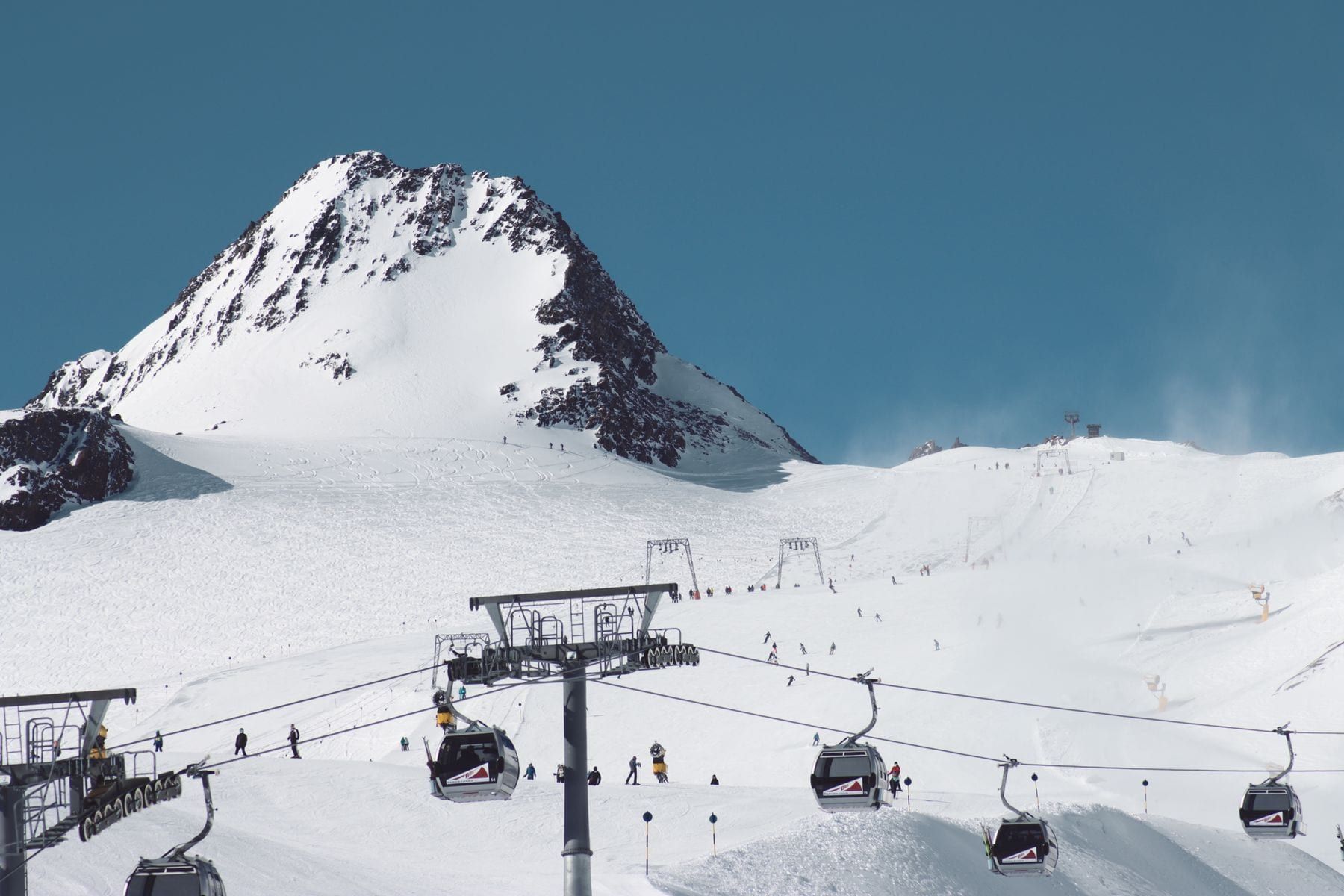
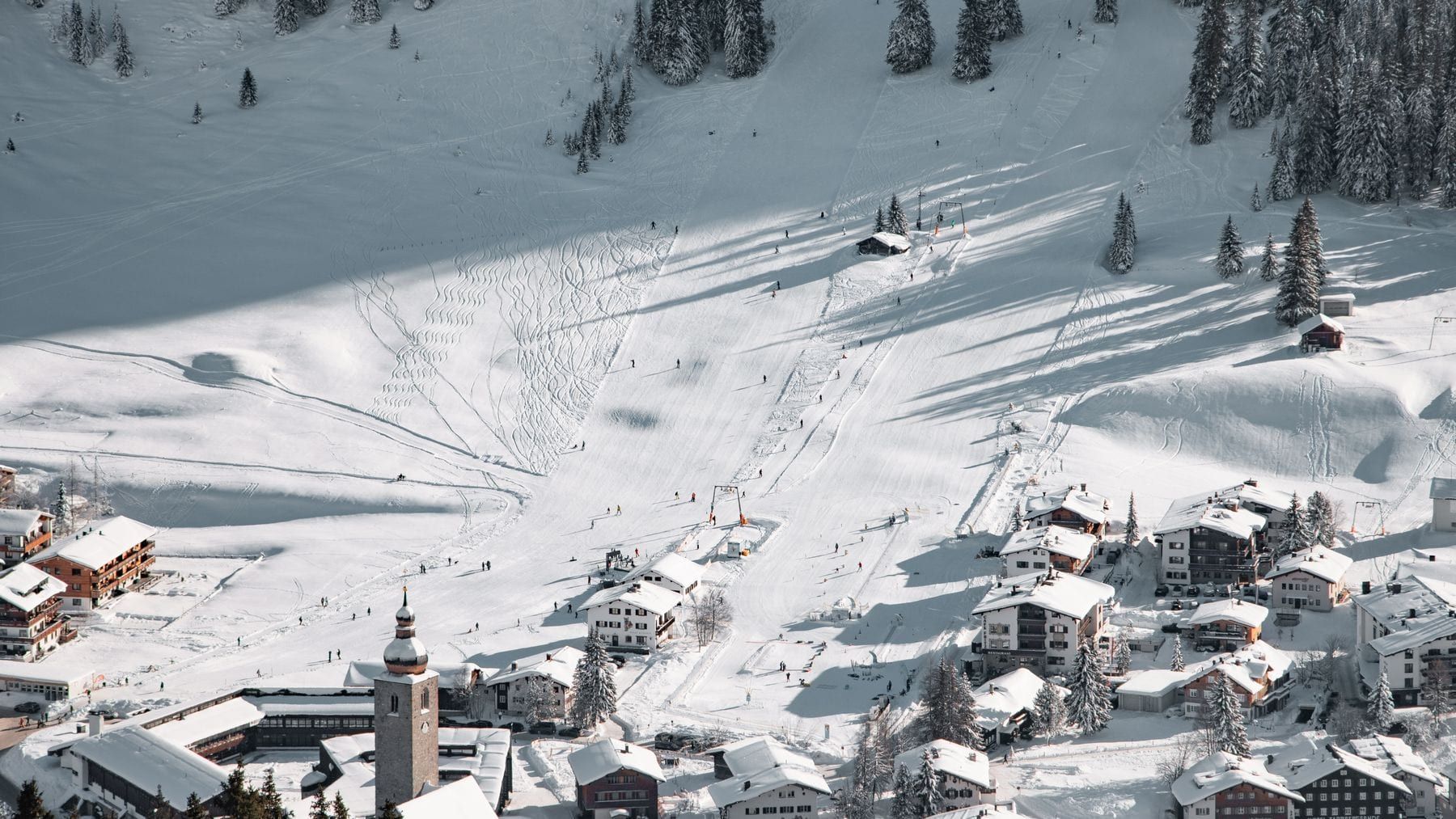
Lech Zürs with Warth-Schröcken has around 200 kilometres of pistes and, together with St. Anton, forms Ski Arlberg with 305 kilometres. The pistes of Lech are the opposite of St. Anton: wide, sunny, mostly blue and red, perfectly groomed every evening, because the municipality limits the number of skiers. At 14,000 day tickets sold it stops, which actually happens in the holidays, so buy multi-day passes or buy online beforehand. The Weisser Ring is the classic circuit: 22 kilometres of pistes and 5,500 vertical metres, up the Rüfikopfbahn from Lech, over the Monzabon to Zürs, with the Madlochjoch to Zug and via Oberlech back. A full day with an early start, with a lunch break in Zug or at the Kriegeralpe. The Rüfikopf at 2,350 metres is the viewpoint mountain overlooking Lech, in summer with a pedestrian cable car and geology trail. Zürs is higher, colder and more snow-sure, with the steepest slopes in the area on the Trittkopf and Madloch, but in the evening it is a village of a few hotels without a centre. Warth-Schröcken, reached in ten minutes via the Auenfeldjet, has the greatest snowfall of any ski resort in Europe (an average of more than ten metres per winter), north-facing powder slopes and no celebrities. Freeriders find their terrain there and on the Madloch, and the variants are less tracked out than in St. Anton. Snowboarders take note: Lech has a few traverses that are tiresome on a board.

Where to stay: Lech, Oberlech, Zürs, Zug or the cheaper neighbours

Honestly: Lech is the most expensive ski resort in Austria. There are practically no hostels, hardly any three-star houses, and even the guesthouses charge CHF 180 to 260 (about EUR 193 to 278) for a double room with breakfast in winter. A four-star house with half board costs CHF 400 to 600 for two in January, five stars CHF 800 to 1,500, in Oberlech and Zürs rather more. Christmas, New Year and the February holidays bring a 30 to 60 per cent surcharge, and in those weeks it is Saturday to Saturday everywhere with a minimum stay of seven nights. On top comes the local tax of around CHF 4 per person per night. Oberlech, car-free at 1,700 metres above the village, is the ski-in/ski-out hotel village with the best sun terraces and prices 20 per cent above Lech. Zürs is higher, cooler and silent in the evening. Zug, three kilometres up the valley, is the quiet farming village with good inns and somewhat lower prices. The real money saver is called Warth and Schröcken in the Bregenzerwald: the same pistes on the same pass, hotels and guesthouses from CHF 120 to 180, but less glamour and a 20-minute ride by lift or bus. Stuben on the St. Anton side of the Flexen pass is the second cheap address. Booking: for February and Christmas in the spring of the previous year, as many houses take regulars first. January and late March are the only weeks with any leeway.

Cost traps and money savers: day tickets, huts, taxis and the summer card

A day ticket for Ski Arlberg costs around CHF 75 (about EUR 80), the six-day pass CHF 390 to 420, 5 per cent less online and around 15 per cent cheaper in the pre-season up to mid-December and from April. In Lech there is no Lech-only pass; you always pay for the whole area, even if you never ski to St. Anton. Cost trap number one is the huts: a lunch at the Kriegeralpe, Balmalp or Rud-Alpe with soup, main course and a drink costs CHF 40 to 60 per person, a glass of wine CHF 8 to 12, and at the weekend you need a reservation. The self-service restaurants on the Rüfikopf and in Zürs are noticeably cheaper, and the village shop has bread and cheese for the rucksack. A taxi between Lech and Zürs in the evening costs CHF 30 to 40; the local bus is free with the guest card, but only runs until about 1 am. Ski hire costs CHF 40 to 55 a day, less if booked online. The second big money saver is summer: from one night you get the Lech Card, with which all lifts, the local bus, the swimming pool, the Skyspace and guided tours are free, and hotels then cost 40 to 60 per cent less than in winter. Thirdly: rooms without half board rarely make sense in Lech, because dinner out costs CHF 50 to 80 per person; with half board you come off better.

Timing: January and March, the February trap and the late snow

The season in Lech runs from early December to the end of April; Zürs and Warth often hold out until early May. The altitude of 1,450 to 2,800 metres and the northern barrier position make Lech one of the most snow-sure places in the Alps, with an average of seven to eight metres of fresh snow, in Warth more than ten. The most expensive weeks are Christmas to 6 January and mid-February to early March, when the Netherlands, Germany and Switzerland are on holiday at the same time; that is when the day ticket cap is actually reached on sunny days. The best weeks are mid to late January, cold and quiet with low prices, and the second half of March to mid-April with firn in the morning and sun terraces in the afternoon; at the end of March hotel prices fall by 20 to 30 per cent. In early December operations are often still limited; from the second weekend of December everything runs. Summer from late June to mid-September is Lech's quiet strength: 350 kilometres of hiking trails, the Grüner Ring as a three-day circular hike, the Lechweg downstream, the Lech Card free. July and August are pleasantly cool at 18 to 24 degrees with thunderstorms in the afternoon. From mid-April to mid-June and October to the end of November the village closes almost completely, and many hotels renovate then.

Underrated: Formarinsee, Lechweg, Skyspace, Zug and the Bregenzerwald

The Formarinsee at 1,790 metres below the Rote Wand is the loveliest spot in the area and in summer is reached by hiking bus from Lech in 30 minutes (free with the Lech Card). From there begins the Lechweg, which follows the river for 125 kilometres to Füssen in the Allgäu; the first stage back to Lech takes four hours, mostly downhill, with the Freiburger Hütte as a stop. The Grüner Ring is the summer counterpart to the Weisser Ring: three day stages around Lech with art installations and hut overnights, also doable individually. The Skyspace Lech by James Turrell in Oberlech is a walk-in light room with an open roof that turns the sky into colours at sunrise and sunset; access on foot in 30 minutes from Oberlech, free, with a guided tour CHF 20 (about EUR 21). Zug is the village that shows what Lech looked like before tourism, with the church, the Zugerbach and the best inns for dinner, in winter reached from Lech by horse-drawn sleigh (CHF 60 to 80 per sleigh). And if you want a day without skis: the Bregenzerwald lies an hour away over the Hochtannberg pass, with the timber villages of Schoppernau and Schwarzenberg, the cheese cellar in Lingenau and the architecture of the Bregenzerwald Umgang. In winter take the bus 40 to Schröcken and continue with the Landbus.

Frequently asked questions about Lech Zürs

How do I get from Zurich to Lech, and do I need a car?

Take the Railjet from Zurich to Langen am Arlberg in 2 hours 20 minutes (CHF 20 to 40 each way with a Half Fare Card and a Supersaver ticket, about EUR 21 to 43), then 35 minutes on the bus 91 over the Flexen pass to Lech. Hotels will also collect you. By car 2 hours 15 minutes via Bludenz, vignette CHF 12, no tunnel. Once there, the local bus and lifts are free with a ski pass or guest card, Oberlech is car-free, and parking costs CHF 15 to 25 a day. You do not need a car.

What does a ski week in Lech cost, honestly?

For two people in January in a four-star house with half board: seven nights CHF 2,800 to 4,200 (about EUR 2,996 to 4,494), six-day passes CHF 800, lunch at the huts CHF 500 to 700, ski hire CHF 500, travel CHF 160. That is around CHF 2,400 to 3,200 per person, in the February holidays approaching CHF 4,000. That is the level of St. Moritz and Zermatt. In Warth or Schröcken on the same ski pass you halve the hotel bill.

Is Lech worth its money?

For wide, sunny, perfectly groomed pistes without queues, quiet instead of après-ski, service and guaranteed snow: yes. For nightlife, freeride terrain right by the village and value for money: no, St. Anton and Warth are better there. Lech is ideal for families with the budget, couples and connoisseurs who want to eat well in the evening. If you simply want to ski a lot, you get the same area for half the price in Warth, Schröcken or Stuben.

What is the Weisser Ring, and can I manage it?

A marked ski circuit over 22 kilometres of pistes and 5,500 vertical metres: Rüfikopf, Zürs, Madloch, Zug, Oberlech and back to Lech. With red pistes and a longer traverse at the Madloch it is comfortably doable for experienced skiers in four to five hours with breaks; beginners will find it too much. Start early, because the Madlochbahn is closed in wind. The race takes place in January, when the route is closed for a day.

Is Lech worth it in summer?

Yes, and it is a different price level then: hotels cost 40 to 60 per cent less, the Lech Card is included from one night and makes lifts, hiking bus, swimming pool and guided tours free. The Formarinsee, Lechweg, Grüner Ring, Rüfikopf and the Skyspace are the reasons. It is cool, quiet and without crowds, and the inns in Zug have room. Best time: early July to mid-September; before and after, much is closed.

Warth and Schröcken, what is different?

The same pistes on the same ski pass, but villages in the Bregenzerwald instead of in Lech: fewer celebrities, simpler hotels from CHF 120 to 180 (about EUR 128 to 193), more snow (more than ten metres per winter) and north-facing slopes that hold powder into April. With the Auenfeldjet you are on the Lech pistes in ten minutes. Downsides: little choice in the evening, the access road over the Hochtannberg pass can be closed when there is avalanche danger, and the Warth valley station is not at the door of every hotel.

Itineraries with this destination

Activities in the region

More destinations in Arlberg, Ötztal & Vorarlberg