Leipzig

Germany · Saxony & Harz · Travel guide

Leipzig

What a few days in Germany's cheapest big city really cost, why Plagwitz is more exciting than the centre, and how you hear Bach without buying a concert ticket.

Photo: Sebastian Luna / Pexels

What does a trip to Leipzig cost?

Adjust the values to your trip: the calculator updates live (EUR, converted from CHF estimates).

1,423 EUR
≈ 712 EUR per person
  • Getting there 342 EUR
  • Accommodation 508 EUR
  • Food 407 EUR
  • Local transport 48 EUR
  • Gewandhaus concert (good category) 118 EUR

Estimates for orientation, not booking prices. Getting there means train or car from Switzerland, return, per person. Hotels vary strongly by season: current prices are behind the links below.

Money & payment: You pay in euros (EUR). Germany is fonder of cash than Switzerland: bakeries, kiosks and small restaurants often say "cash only", though cards work almost everywhere from about EUR 10. Tip 5 to 10 percent by rounding up and naming the total when you pay. Getting there: By train (DB), car or plane, 1 to 8 hours depending on the destination.

Recommended hotels

Nine options in three price ranges, each among the best-rated on Booking.com.

Budget

Five Elements Hostel Leipzig

Zentrum, Leipzig

Well-rated hostel right on the Ring, five minutes from the main station and the Markt. Dorms and private rooms, shared kitchen, bar. For solo travellers and anyone who wants to do Leipzig on CHF 60 a day.

from CHF 30 / night (about EUR 32) View →

Motel One Leipzig-Nikolaikirche

Zentrum, Leipzig

Design budget hotel on the Nikolaikirchhof, in the middle of the city centre, Thomaskirche and Gewandhaus five minutes on foot. Small, good rooms, bar in the lobby. The best price-to-location ratio in the city.

from CHF 75 / night (about EUR 80) View →

a&o Leipzig Hauptbahnhof

Zentrum-Ost, Leipzig

Large hostel-hotel of the a&o chain at the main station with double, family and multi-bed rooms. Sober and clean, the city centre begins across the road. For families and groups on a small budget.

from CHF 45 / night (about EUR 48) View →

Mid-range

Hotel Fregehaus

Zentrum, Leipzig

Small boutique hotel in a 16th-century merchant's house on Katharinenstrasse, behind the Markt. Individually furnished rooms, inner courtyard, good breakfast. For couples who prefer character to a chain.

from CHF 110 / night (about EUR 118) View →

Seaside Park Hotel Leipzig

Zentrum, Leipzig

Art deco hotel in a building from 1913 directly opposite the main station, with the original staircase and quiet rooms facing the courtyard. Solid four-star mid-range, ideal for arriving by train late in the evening.

from CHF 95 / night (about EUR 102) View →

Pentahotel Leipzig

Zentrum-Ost, Leipzig

Modern hotel of the Penta group on Grosse Fleischergasse, on the edge of the city centre and close to the main station. Large rooms, lounge with bar and billiards, gym. Good value for longer stays.

from CHF 95 / night (about EUR 102) View →

Luxury

Steigenberger Grandhotel Handelshof Leipzig

Zentrum, Leipzig

Grand hotel in the former Handelshof trade fair building of 1909, behind the Old Town Hall. Large, classic rooms, spa in the roof, brasserie on the ground floor. The first house in the city, with Leipzig prices that would be mid-range in Zurich.

from CHF 180 / night (about EUR 193) View →

Hotel Fürstenhof Leipzig

Zentrum, Leipzig

Town palace from 1770 on Tröndlinring, between the main station and the Thomaskirche, with a pool under vaults, a large garden and one of the best restaurants in the city. Quiet and classic, for a few days with comfort.

from CHF 190 / night (about EUR 203) View →

INNSiDE by Meliá Leipzig

Zentrum, Leipzig

Modern high-rise hotel on Gottschedstrasse, the nightlife quarter west of the Ring, with a bar and restaurant on the top floor and a view over the city. Design instead of grand hotel, for anyone who does not want to walk far in the evening.

from CHF 140 / night (about EUR 150) View →

If you book through these links we earn a small commission, at no extra cost to you.

Experiences worth your time

Thomaskirche and the Thomanerchor motet

Bach's church with his grave, free; the motet of the Thomanerchor on Fridays at 6 pm and Saturdays at 3 pm for CHF 3 (about EUR 3). 45 minutes of music, arrive an hour early, the choir pauses in the school holidays.

View & book →

Bach Museum

Opposite the Thomaskirche in the Bosehaus, with original manuscripts, instruments and a listening station for every cantata. Admission CHF 10 (about EUR 11), 90 minutes, audio guide included. Combines well with the motet.

View & book →

Völkerschlachtdenkmal

The 91-metre colossus of 1913, 500 steps to the platform, crypt with stone giants, Forum 1813 museum. Admission CHF 10 (about EUR 11), two hours, 15 minutes from the centre by tram, emptiest in the morning.

View & book →

City tour: arcades, Nikolaikirche and 1989

Two hours through the fair courtyards and arcades, to Auerbachs Keller, the Nikolaikirche and the Ring of the Monday demonstrations. CHF 12 to 20 (about EUR 13 to 21) guided; the Zeitgeschichtliches Forum on GDR history afterwards is free.

View & book →

Gewandhaus concert or an evening at the opera

The Gewandhaus Orchestra in the hall of 1981 on Augustusplatz, tickets from CHF 20 (about EUR 21) in the back rows, big concerts CHF 50 to 90. The opera opposite from CHF 15. Book directly on gewandhausorchester.de, 2 to 3 hours.

View & book →

Spinnerei and Plagwitz walk

The old cotton mill with galleries of the New Leipzig School, free, tours of the Spinnerei itself from CHF 10 (about EUR 11). Then Karl-Heine-Strasse and the canal. Half a day; the galleries are open Tuesday to Saturday.

View & book →

Canoe trip on the Karl-Heine-Kanal

By canoe, kayak or stand-up paddleboard from the Stadthafen through the industrial canal to Plagwitz or along the Weisse Elster into the riverside forest, rental from CHF 10 (about EUR 11) an hour, guided from CHF 25. Two to three hours, May to September.

View & book →

Neuseenland: Cospudener See

Flooded open-cast mine 20 minutes south with a sandy beach, lookout tower, 11-kilometre cycle circuit and beer garden on the north beach. S-Bahn or bike, swimming free, pedalo CHF 10 (about EUR 11) an hour. Half a day in summer.

View & book →

Panorama Tower and Augustusplatz

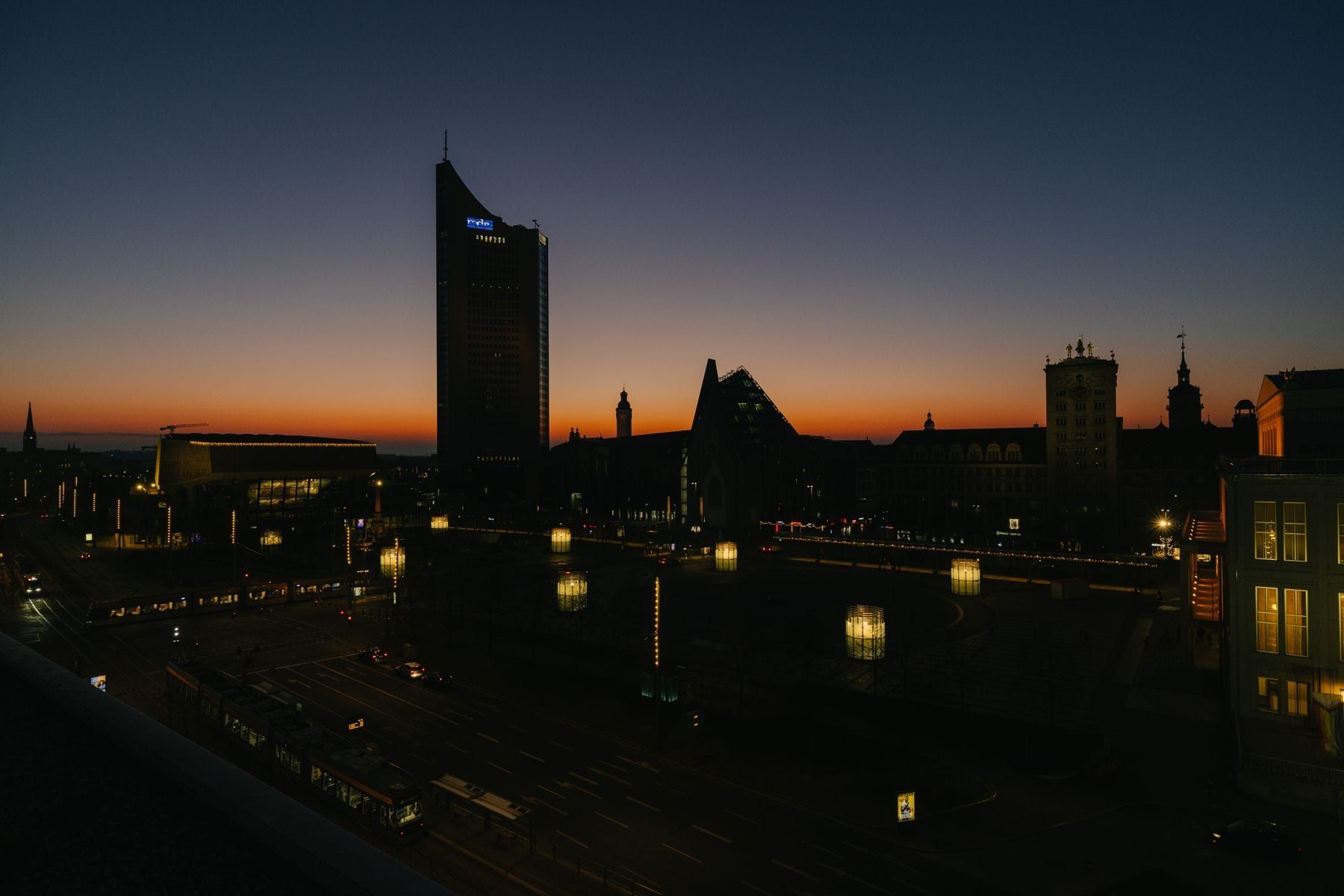
Viewing platform on the 31st floor of the university high-rise for CHF 5 (about EUR 5), with a view over the opera, Gewandhaus, city centre and Völkerschlachtdenkmal. 30 to 45 minutes, most beautiful at sunset, restaurant below expensive.

View & book →

If you book through these links we earn a small commission, at no extra cost to you.

Food & drink

Leipzig is a coffee city with coffee houses since 1711, a beer city with the idiosyncratic Gose, and a city with two famous dishes that are both misunderstood: Allerlei and Lerche. Add to that a young, cheap cuisine in the Südvorstadt and in Plagwitz where you can eat your way through half of Asia without going over CHF 15 (about EUR 16) a plate.

Leipziger Allerlei

Traditional restaurants in the city centre around the Markt and the Barfussgässchen

In the original a spring dish of young vegetables, asparagus, morels and crayfish in crayfish butter with bread dumplings, nothing to do with the tinned vegetables from the supermarket. CHF 16 to 24 (about EUR 17 to 26), best in May and June.

Tip:Ask whether there are crayfish in it. Without crayfish it is a side dish, with crayfish it is the dish.

Leipziger Lerche

Pastry shops in the city centre, for example around the Markt and Grimmaische Strasse

Shortcrust tartlet with marzipan, almonds and a dab of jam, two strips of pastry on top. Invented when baking real larks was banned in 1876. CHF 2.50 to 3.50 (about EUR 3 to 4).

Tip:With coffee, not beer, and better two small ones than one big one.

Gose

Gosenschenke Ohne Bedenken in Gohlis, Bayerischer Bahnhof on the southern edge of the city centre

Top-fermented sour beer with salt and coriander, originally from Goslar, Leipzig's beer since the 18th century. Refreshing, tart, an acquired taste, CHF 4 to 5 (about EUR 4 to 5) a glass, with caraway schnapps or syrup as an "umbrella".

Tip:Try it neat first, then with syrup. The Gosenschenke has the most beautiful beer garden in the city.

Sächsische Kartoffelsuppe

Restaurants in the Südvorstadt and at the Christmas market

Hearty Saxon potato soup with root vegetables, marjoram and sausages or bacon, the everyday Saxon dish for winter. CHF 6 to 9 (about EUR 6 to 10) as a starter or small main course.

Tip:At the Christmas market the best choice alongside mulled wine, filling and cheap.

Coffee and cake in an old coffee house

Zum Arabischen Coffe Baum, Kleine Fleischergasse, or Café Riquet, Schuhmachergässchen

Leipzig has had a coffee house tradition since 1711, and Bach wrote his Coffee Cantata here. Coffee and cake CHF 7 to 10 (about EUR 7 to 11), at the Coffe Baum with the coffee museum upstairs. The pastry shops in the Südvorstadt do it for half the price.

Tip:3 pm is coffee time, when both are full; at 11 am they are not.

Vietnamese and kebab on Eisenbahnstrasse

Eisenbahnstrasse, Leipzig-Volkmarsdorf, during the day

Eisenbahnstrasse in the east is considered a rough patch and has the cheapest and most honest food in the city: pho, bánh mì, kebab, Syrian pastries for CHF 5 to 10 (about EUR 5 to 11).

Tip:Go during the day, take cash, lunch menus from CHF 8.

Farmhouse bread and cheese from the weekly market

Weekly market on the Markt, Tuesday and Friday 9 am to 5 pm

The market in front of the Old Town Hall has stalls on Tuesdays and Fridays with bread, cheese from the Erzgebirge, sausage and fruit from the surrounding countryside; a picnic for two costs CHF 12 to 15 (about EUR 13 to 16).

Tip:Shop here for the afternoon at the Cospudener See, where the choice is small and expensive.

Book a food tour: Leipzig

Through markets and eateries with a guide, tastings included.

View & book →

If you book through these links we earn a small commission, at no extra cost to you.

History & background

Leipzig lay at the crossing of two old trade routes, the Via Regia and the Via Imperii, and so became a market town as early as 1165. The trade fairs, with imperial privilege from 1497, made it the trading place between east and west, and the arcades and fair courtyards in the city centre are the stone legacy of that. The university was founded in 1409, one of the oldest in the German-speaking world; Goethe, Leibniz and Nietzsche studied here. In 1723 Johann Sebastian Bach took up his post as Thomaskantor, and for 27 years he wrote in Leipzig the St Matthew Passion, the Christmas Oratorio and hundreds of cantatas that the Thomanerchor still sings today. In the 18th and 19th centuries Leipzig became the city of books and music: publishers such as Brockhaus and Reclam, the Gewandhaus Orchestra with Mendelssohn as Kapellmeister, Schumann and Wagner, who was born here. In 1813 the allied armies of Russia, Prussia, Austria and Sweden defeated Napoleon at the Battle of the Nations near Leipzig, with over 600,000 soldiers the largest battle before the 20th century; the monument to it was inaugurated a hundred years later. Industrialisation brought cotton spinning and engineering to Plagwitz, and the main station of 1915 was the largest terminus station in Europe. The Second World War destroyed a third of the city, the GDR blew up the university church and expanded the trade fair. In autumn 1989 the Monday demonstrations grew out of the peace prayers in the Nikolaikirche; on 9 October 70,000 people marched peacefully around the Ring, and the Wall fell a month later. After 1990 Leipzig lost 100,000 inhabitants; since 2010 it has been growing faster than any other large German city.

Insider tips

Getting there: ICE from Frankfurt in a good three hours

Leipzig is better connected for the Swiss than you might think: from Basel or Zurich you travel to Frankfurt, and from there the ICE via Erfurt takes only a good three hours to Leipzig, 6 to 7 hours in total with one change. From Berlin it is 75 minutes. Deutsche Bahn saver fares cost from around CHF 55 (about EUR 59) each way if you book six to eight weeks ahead; the standard fare is CHF 130 and more. There are also night trains from Zurich to Berlin that run via Leipzig, arrive early in the morning and save you a hotel night. By car it is around 700 kilometres from Zurich via Nuremberg and the A9, about 7 hours, no tolls, fuel costs around CHF 160 per trip. Once there it is no help: you walk across the city centre inside the Ring in 15 minutes, the LVB trams run to every district, day ticket around CHF 9, single fare CHF 3.20. For Plagwitz, the Südvorstadt and the Neuseenland the bike is the best means of transport; Leipzig is flat, and rental bikes stand on every corner from CHF 1 per half hour. Leipzig/Halle airport has no direct flight from Switzerland, forget it.

Where to stay: centre, Südvorstadt or Plagwitz

The centre inside the Ring is small, and the hotels there are five minutes from everything, from the main station to the Thomaskirche. Expect CHF 85 to 120 (about EUR 91 to 128) for a mid-range double room, budget chains at the main station from CHF 55, and those are prices that get you a hostel bed in Zurich. If you want to go out in the evening, stay in the Südvorstadt on Karl-Liebknecht-Strasse, the "Karli", with pubs, clubs and cafés along two kilometres, or straight away in Plagwitz and Lindenau in the west, where the Spinnerei, the Karl-Heine-Kanal and the alternative bars and restaurants of Karl-Heine-Strasse are. There are fewer hotels there, but guesthouses and small houses instead. Price traps: the Book Fair in March, the Wave-Gotik-Treffen at Whitsun, the Bachfest in June and the big trade fairs on the new exhibition grounds, when prices double and the city is booked out. The Christmas market in Advent gets busy but not unaffordable. The rest of the year you can book Leipzig at short notice too, which is one of the advantages of this city.

Cost traps and savings: music almost free, museums cheap

Leipzig is one of the few cities where world-class music costs next to nothing. The motet of the Thomanerchor in the Thomaskirche on Friday at 6 pm and Saturday at 3 pm costs CHF 3 (about EUR 3) admission, 45 minutes of Bach in the place he wrote it for; come 30 minutes early. At the Gewandhaus there are concerts by the Gewandhaus Orchestra from CHF 20 in the back rows, student tickets even cheaper, and the opera opposite from CHF 15. The Bach Museum next to the Thomaskirche costs CHF 10, the Museum der bildenden Künste CHF 10, the Zeitgeschichtliches Forum on the GDR and the autumn of 1989 is free, as is the Nikolaikirche. The Völkerschlachtdenkmal costs CHF 10 including the climb and the museum; the Leipzig Card for one day at around CHF 14 including public transport only pays off from two museums. Food is cheap: lunch menu CHF 9 to 13, main course in the evening CHF 12 to 18, beer CHF 4, coffee CHF 3. The cost trap is the restaurants in the city centre arcades with a tourist mark-up; two streets further on in the Südvorstadt you pay a third less. A visit to Auerbachs Keller is history, not cooking: the beer there is fair, the food expensive.

Timing: Bachfest, summer at the lakes, Lichtfest in October

The Bachfest in the second half of June is the reason music lovers come from all over the world: ten days with over a hundred concerts in the original churches, tickets from CHF 15 (about EUR 16); book the great Passions and the Christmas Oratorio early. Summer from June to August belongs to the lakes: the Neuseenland south of the city, flooded lignite pits, offers beaches, swimming and sailing 20 minutes by S-Bahn from the main station, the Cospudener See with beach and beer garden, the Kulkwitzer See for diving. 9 October is the most important day in the city: at the Lichtfest tens of thousands with candles on the Ring commemorate the Monday demonstration of 1989, free and moving. The Christmas market on the Markt in front of the Old Town Hall is one of the big ones in Germany, less overrun than the Dresden Striezelmarkt. The Book Fair in March gets the city reading, with "Leipzig liest" and thousands of readings everywhere, but also full hotels. January and February are cold, grey and cheap, but the city has the Thomaskirche, the Gewandhaus and museums; Leipzig is a good winter destination.

Underrated: Spinnerei, Plagwitz, Karl-Heine-Kanal and Gohlis

The cotton mill in Plagwitz was once the largest in continental Europe; today over a hundred artists work in the brick halls, including Neo Rauch and the New Leipzig School, with a dozen galleries that are free to visit and open rounds for the openings in spring and autumn. From there you walk along the Karl-Heine-Kanal, a 19th-century industrial canal that you can travel by canoe or stand-up paddleboard, rental from CHF 10 (about EUR 11) an hour at the Stadthafen, right into the city centre. Plagwitz itself has Karl-Heine-Strasse with bars and restaurants, the Westwerk, allotment gardens and the Westbad complex. Allotment gardens are a Leipzig invention, Dr Schreber was a Leipzig doctor, and in the allotment museum in Lindenau you find out why. In the north lies Gohlis with the Schillerhaus and the Gohliser Schlösschen, in the Südvorstadt the Clara-Zetkin-Park with the music pavilion and beer gardens. The Panorama Tower on Augustusplatz, the former university high-rise, costs CHF 5 for the view from the 31st floor; the café below it is expensive for Leipzig, but you get the view from the platform without coffee too.

Eating: Leipziger Allerlei, Lerche and the Karli in the evening

Leipzig's cuisine has two famous names, and neither is what you think. The original Leipziger Allerlei is not tinned vegetables but a spring dish of asparagus, peas, carrots, morels and crayfish in crayfish butter, with bread dumplings, CHF 16 to 24 (about EUR 17 to 26) in the traditional restaurants, from May when it is good. The Leipziger Lerche is a shortcrust tartlet with marzipan and jam, named after the songbirds (larks) that really were baked into it until 1876, CHF 2.50 to 3.50 in every pastry shop. Then there is Gose, a top-fermented, salty sour beer with coriander that you find almost only here, CHF 4 to 5. At lunchtime you eat in the city centre in the arcades or at the Vietnamese and Turkish places around the main station, in the evening on the Karli in the Südvorstadt, where burgers, ramen, pizza and Saxon cooking stand side by side for CHF 10 to 16, or in Plagwitz on Karl-Heine-Strasse. Coffee houses with tradition are Café Riquet with the elephant heads at the entrance and Zum Arabischen Coffe Baum, one of the oldest coffee houses in Europe, with a museum upstairs. The Leipzig weekly markets on Tuesday and Friday on the Markt are cheap and good for a picnic at the lake.

Frequently asked questions about Leipzig

How do I get to Leipzig from Switzerland, and do I need a car?

By ICE via Frankfurt in 6 to 7 hours from Basel or Zurich, one change, saver fare from around CHF 55 (about EUR 59) each way if booked early, otherwise CHF 100 to 130. Night trains to Berlin stop in Leipzig. By car around 700 kilometres via Nuremberg, about 7 hours, no tolls. Once there the car is superfluous: the city centre is pedestrianised, trams and bikes take you everywhere, and parking in the centre costs CHF 15 to 20 a day.

How many days do you need for Leipzig?

Two full days are enough for the city centre, the Thomaskirche, the Nikolaikirche, the Völkerschlachtdenkmal and an evening in the Südvorstadt. With the Spinnerei, Plagwitz, the canal and an afternoon at the Cospudener See it is three. If you are visiting the Bachfest or the Book Fair, stay longer. Leipzig is also a good stop on the way to Berlin or Dresden, which is 70 minutes away by regional train.

When is the best time to visit?

May to September, with the Bachfest in June as the highlight for music lovers and the lakes in high summer. 9 October with the Lichtfest is a special date. Advent is atmospheric and less overrun than in Dresden. The Book Fair in March, Whitsun with the Wave-Gotik-Treffen and trade fair weeks are expensive if you are not coming for them. Winter is cheap and well filled with the Gewandhaus and the Thomaskirche.

Is Leipzig really that cheap?

Yes, it is the cheapest German city of this size. Mid-range double room CHF 85 to 120 (about EUR 91 to 128), main course CHF 12 to 18, beer CHF 4, coffee CHF 3, public transport CHF 9 a day, Thomaner motet CHF 3, Gewandhaus from CHF 20. With CHF 80 to 100 per person per day excluding travel you live well, and with CHF 60 you get by. Only in trade fair weeks and at the Book Fair do different rules apply.

What is the best way to hear Bach in Leipzig?

The motet of the Thomanerchor in the Thomaskirche, Fridays at 6 pm and Saturdays at 3 pm except in the school holidays, CHF 3 (about EUR 3), doors open an hour before; come early, the church is full. On Sundays the choir sings in the service at 9.30 am for free. Bach's grave lies in the chancel of the Thomaskirche. The Bach Museum opposite costs CHF 10 and can be done well in 90 minutes. The Bachfest in June brings the Passions into the original churches, tickets from CHF 15 to CHF 120.

Is the Völkerschlachtdenkmal worth it?

Yes, even if it is a colossus of Wilhelmine pathos, 91 metres high, with 500 steps to the viewing platform and a crypt with stone giants. Admission CHF 10 (about EUR 11) including the Forum 1813, the climb partly up narrow spiral staircases, at the top the view over the city to the Neuseenland. 15 minutes from the centre by tram, allow two hours, best in the morning before the groups arrive.

Itineraries with this destination

Activities in the region

More destinations in Saxony & Harz