Harz

Germany · Saxony & Harz · Travel guide

Harz

What a week in Germany's northernmost mountain range really costs, whether the Brockenbahn is worth its CHF 50, and why Quedlinburg is the most beautiful town you have never heard of.

Photo: Mark Moormann / Pexels

What does a trip to Harz cost?

Adjust the values to your trip: the calculator updates live (EUR, converted from CHF estimates).

1,455 EUR
≈ 728 EUR per person
  • Getting there 385 EUR
  • Accommodation 508 EUR
  • Food 375 EUR
  • Local transport 80 EUR
  • Brockenbahn return trip 107 EUR

Estimates for orientation, not booking prices. Getting there means train or car from Switzerland, return, per person. Hotels vary strongly by season: current prices are behind the links below.

Money & payment: You pay in euros (EUR). Germany is fonder of cash than Switzerland: bakeries, kiosks and small restaurants often say "cash only", though cards work almost everywhere from about EUR 10. Tip 5 to 10 percent by rounding up and naming the total when you pay. Getting there: By train (DB), car or plane, 1 to 8 hours depending on the destination.

Recommended hotels

Nine options in three price ranges, each among the best-rated on Booking.com.

Budget

HKK Hotel Wernigerode

Pfarrstrasse, Wernigerode

Large conference hotel on the edge of the old town, five minutes' walk from the market square and ten to the Brocken railway station, with indoor pool, sauna and two restaurants. Functional rooms, prices often below those of the small old-town hotels. For Brocken hikers who want an early start.

from CHF 85 / night (about EUR 91) View →

Hotel Zum Bär Quedlinburg

Altstadt, Quedlinburg

Historic house right on the market square of Quedlinburg, an inn for centuries, with simple, clean rooms and Saxony-Anhalt cooking in the restaurant. For anyone who wants to sleep in the middle of the half-timbering without paying much.

from CHF 75 / night (about EUR 80) View →

Altstadt-Hotel Gosequell

Altstadt, Goslar

Small hotel in a half-timbered house in Goslar's old town, five minutes from the market square and the imperial palace. Plain rooms, good breakfast, parking nearby. For one or two nights in Goslar.

from CHF 75 / night (about EUR 80) View →

Mid-range

Hotel Travel Charme Gothisches Haus Wernigerode

Marktplatz, Wernigerode

Half-timbered hotel right on the market square of Wernigerode, opposite the town hall, with spa, pool and several restaurants. Rooms partly in the historic part, partly in the new building. For couples who want the Brockenbahn outside the door and comfort in the evening.

from CHF 130 / night (about EUR 139) View →

Romantik Hotel am Brühl

Altstadt, Quedlinburg

Family-run hotel on the edge of Quedlinburg's old town, by the Brühl park below the Schlossberg, with garden, sauna and one of the better restaurants in town. Quiet, five minutes to the Markt, parking at the house.

from CHF 120 / night (about EUR 128) View →

Hotel Der Achtermann

Altstadt, Goslar

Large hotel in a town wall tower and attached wings on the edge of Goslar's old town, right by the station. Pool, sauna, restaurant, many rooms with views over the rooftops. Practical for arriving by train.

from CHF 110 / night (about EUR 118) View →

Luxury

Hotel Theophano

Marktplatz, Quedlinburg

Boutique hotel in an ensemble of 16th- and 17th-century half-timbered houses right on the Markt in Quedlinburg, with a vaulted cellar restaurant and individually furnished rooms with beams and antiques. For anyone who wants to sleep inside the World Heritage Site.

from CHF 140 / night (about EUR 150) View →

Schlosshotel Blankenburg

Blankenburg (Harz)

Hotel in a wing of the castle above the half-timbered town of Blankenburg, between Wernigerode and Quedlinburg, with baroque gardens, a restaurant and views over the foreland. Quiet and stately, ideal as a base for all three towns if you have a car.

from CHF 150 / night (about EUR 161) View →

Hotel Kaiserworth Goslar

Marktplatz, Goslar

The guild house of the cloth merchants from 1494 right on the market square of Goslar, with emperor figures on the facade, historic rooms with views of the market and the carillon, restaurant and wine cellar. The most tradition-rich house in the western Harz.

from CHF 140 / night (about EUR 150) View →

If you book through these links we earn a small commission, at no extra cost to you.

Experiences worth your time

Brockenbahn up the Brocken

By steam locomotive of the Harz narrow-gauge railways from Wernigerode in 100 minutes to the highest mountain in northern Germany, CHF 50 (about EUR 54) return, from Schierke CHF 45. Only in clear weather, early in the day, otherwise there is fog at the top. Half a day.

View & book →

Hike up the Brocken

From Schierke via the Eckerlochstieg in two and a half hours or from Torfhaus via the Goetheweg in two hours, 400 to 600 metres of ascent, free, with the steam train for company. Brockenhaus museum at the top CHF 6 (about EUR 6), jacket even in summer.

View & book →

Quedlinburg: old town and Schlossberg

Guided walk through 2,000 half-timbered houses, to the collegiate church with the grave of Henry I and the cathedral treasury, CHF 6 (about EUR 6) admission, tour CHF 8 to 12, two hours. The half-timbering museum in the Ständerbau for CHF 4 afterwards, the empty lanes in the evening.

View & book →

Goslar: imperial palace and Rammelsberg mine

In the morning the imperial palace for CHF 9 (about EUR 10) and the old town with the carillon, in the afternoon the UNESCO mine with the underground tour by miners' train or through the Roeder gallery, CHF 16 to 19, two hours, 12 degrees underground.

View & book →

Wernigerode Castle

The castle of the Counts of Stolberg-Wernigerode, converted into a fairy-tale castle in the 19th century, with a view to the Brocken, admission CHF 9 (about EUR 10), 90 minutes. 20 minutes on foot from the old town or by the little tourist train for CHF 6.

View & book →

Bode valley: Rosstrappe and Hexentanzplatz

By cable car in Thale up to the Rosstrappe or by gondola to the Hexentanzplatz, CHF 10 to 14 (about EUR 11 to 15), then on foot through the gorge to Treseburg and back by bus. Four hours, the wildest gorge in northern Germany.

View & book →

Harzer Hexenstieg: one stage

One of the five to six stages of the 97-kilometre trail from Osterode to Thale, for example over the Brocken or through the Bode valley, 15 to 20 kilometres. Free, luggage transport from CHF 15 (about EUR 16) per stage, take the Harzer Wandernadel stamp booklet.

View & book →

Selketalbahn from Quedlinburg

The quiet sister of the Brockenbahn: by steam from Quedlinburg through the Selke valley to Alexisbad and Harzgerode, CHF 15 to 25 (about EUR 16 to 27) return, two to three hours, hardly any tourists. Can be combined with a walk from Alexisbad to Mägdesprung.

View & book →

Walpurgis Night on 30 April

Witch festivals in Thale, Schierke, Wernigerode and two dozen other places, with parades, fires and music until midnight, admission free to CHF 15 (about EUR 16) depending on the place. Book hotels six months ahead; Thale is the biggest, Schierke the most atmospheric.

View & book →

If you book through these links we earn a small commission, at no extra cost to you.

Food & drink

The Harz eats what miners and charcoal burners ate: game, trout, potatoes, cheese with a smell, and a herbal liqueur to go with it. Harz cooking is simple and honest; you find fine dining in the hotels of Quedlinburg and Wernigerode, the rest is inn food. In the mountain huts and the half-timbered towns you pay half what you would in a Swiss Beiz.

Harzer Roller

Inns in Wernigerode and Quedlinburg, the Harzkäserei in Hasserode

The most famous cheese in Germany with the worst reputation: sour milk cheese with a red smear rind, almost fat-free, strong in smell, mild in taste when young. "Mit Musik", that is with onions, vinegar and oil, for CHF 5 to 7 (about EUR 5 to 7) as a snack with bread.

Tip:Trying it once is part of the trip; the smell is worse than the taste. With beer, not wine.

Game goulash and roast wild boar

Inns in Schierke, Braunlage and the Bode valley, hotel restaurants in Quedlinburg

Venison and wild boar from the Harz forests, braised with juniper, mushrooms and lingonberries, with dumplings and red cabbage. CHF 16 to 24 (about EUR 17 to 26), best in the hunting lodges and mountain inns.

Tip:Fresh in autumn and winter; the game weeks in October and November are the best time.

Harz trout

Fish farms and inns in the Bode valley and the Oker valley

Brown trout from the Harz streams and ponds, fried or smoked, with potatoes and horseradish. CHF 14 to 19 (about EUR 15 to 20), smoked from the fish farms for CHF 5 to 7 per fish.

Tip:Take the smoked trout as a picnic for the Brocken hike.

Harzer Schmorwurst with fried potatoes

Inns in Goslar and Clausthal-Zellerfeld, market days in Wernigerode

Coarse bratwurst braised in onion sauce, with fried potatoes and sauerkraut, the everyday dish of the miners. CHF 10 to 14 (about EUR 11 to 15), in every inn.

Tip:The cheapest hot meal in the Harz, often CHF 9 at lunchtime.

Baumkuchen from Wernigerode

Harzer Baumkuchen show bakery in Wernigerode-Hasserode

Baumkuchen, the "tree cake" baked layer by layer on a spit, has a tradition in the Harz and in Salzwedel, and Wernigerode has a show bakery. A slice CHF 3 to 5 (about EUR 3 to 5), whole cakes from CHF 15.

Tip:Watching is free, the chocolate-coated cake keeps for two weeks, and as a souvenir it beats any plastic witch.

Schierker Feuerstein

Every inn in the Upper Harz, the old pharmacy in Schierke

Semi-bitter herbal liqueur, invented in 1908 by the pharmacist in Schierke, as a digestif after the hike or hot in winter. CHF 2.50 to 3.50 (about EUR 3 to 4) a glass, the bottle from CHF 12.

Tip:One is enough, two as well, it is 35 per cent.

Hasseröder and Harz beers

Brauhaus Goslar, Brauhaus Lüdde in Quedlinburg

Hasseröder from Wernigerode is the big Harz beer, joined by small breweries in Quedlinburg, Goslar, the birthplace of Gose, and Braunlage. A half litre CHF 3.50 to 4.50 (about EUR 4 to 5).

Tip:Gose, the sour beer that made Leipzig famous, comes from Goslar, and the brewhouse there brews it again.

Coffee and cake amid the half-timbering

Cafés around the Markt and the Schlossberg in Quedlinburg, Breite Strasse in Wernigerode

Quedlinburg and Wernigerode have pastry shops in 16th-century houses, with poppy seed, crumble and cheesecake for CHF 3 to 4 (about EUR 3 to 4) a slice, coffee CHF 3. At 3 pm they are full.

Tip:Sitting outside with a view of the half-timbering is the cheapest experience in the World Heritage Site.

Book a food tour: Harz

Through markets and eateries with a guide, tastings included.

View & book →

If you book through these links we earn a small commission, at no extra cost to you.

History & background

For over a thousand years the Harz was Germany's mine. Around 968 silver, lead and copper were discovered at the Rammelsberg near Goslar, and the ore turned the small town into an imperial city: Henry II and the Salians built the imperial palace, 23 imperial diets were held here, and in the 11th century Goslar was a centre of the empire. The Rammelsberg was only closed in 1988, after more than a thousand years of continuous operation, and together with Goslar's old town it is now a UNESCO World Heritage Site. In Quedlinburg on the northern edge, Henry I was raised to be the first German king in 919; his grave lies in the collegiate church on the Schlossberg, and the convent his widow founded made the town one of the most powerful women's religious houses in Europe until 1802. Over 2,000 half-timbered houses from eight centuries stand there; the GDR had no money for demolition, and so the most intact medieval old town in Germany survived, a UNESCO World Heritage Site since 1994. Wernigerode with its town hall and the castle of the Counts of Stolberg-Wernigerode was a summer resort in the 19th century; Heinrich Heine climbed the Brocken in 1824 and wrote the Harzreise, and Goethe had already been up in winter in 1777. The Brocken, at 1,141 metres, is the highest mountain in northern Germany, surrounded by witch legends that Goethe immortalised in the Walpurgis Night of Faust. From 1961 to 1989 the inner German border ran right through the Harz, the Brocken was a restricted zone with Soviet and Stasi listening posts, and on 3 December 1989 thousands of hikers forced it open. Since 2006 both parts have been united in the Harz National Park, and since 2018 the bark beetle has killed the spruce forests over large areas, which shapes the picture today and is the beginning of a new forest.

Insider tips

Getting there: ICE to Göttingen or Braunschweig, then regional train

For the Swiss the Harz lies conveniently on the ICE route north: from Basel or Zurich you travel via Frankfurt to Göttingen or Kassel, then on by regional train to Goslar or via Halle and Halberstadt to Wernigerode and Quedlinburg, 6 to 8 hours in total with one or two changes, saver fare from around CHF 60 (about EUR 64) each way, booked early. Alternatively you travel via Berlin, from where the regional train to Wernigerode takes three hours. By car it is around 700 kilometres from Zurich via Frankfurt and Kassel, 7 hours, no tolls, costs around CHF 160 per trip. Unlike in Saxon Switzerland, a car is worth it in the Harz: the three towns are 30 to 50 kilometres apart, the HVB buses and the HATIX network run, but rarely and even more rarely at weekends, and many hiking trailheads in the Upper Harz are hard to reach without a car. If you come without a car, stay in Wernigerode: the Brockenbahn and the Harz narrow-gauge railways start there, opening up the mountains with a 140-kilometre network, and Quedlinburg is 40 minutes away by regional train. With the HATIX guest card, which comes with the visitor tax in many places, you ride the local buses in the eastern Harz for free. Cycling in the Harz is only for the trained; the Volksbank Arena Harz routes for mountain bikers are well signposted.

Where to stay: Wernigerode or Quedlinburg, not Braunlage

Wernigerode is the most practical place: Brockenbahn, castle, half-timbered old town, restaurants, and cheap at CHF 85 to 120 (about EUR 91 to 128) for a mid-range double room. Quedlinburg is the most beautiful, an open-air museum of half-timbering with 2,000 houses, where the hotels are often listed buildings themselves, from CHF 90, quiet and almost empty in the evening once the day visitors have gone. Goslar, with the imperial palace and the Rammelsberg, has the greatest history and lies in the western Harz, 50 kilometres from the other two, good as a separate stop for one or two nights. The spa resorts in the Upper Harz, Braunlage, Schierke, Sankt Andreasberg, are hiking bases with post-war architecture and guesthouses from CHF 60, but dead in the evening and too far from the towns. Price traps: Walpurgis Night on 30 April, when the whole Harz is booked out and twice as expensive, the Advent weekends in Quedlinburg and Goslar, and the autumn holidays of the north German states in October. On weekdays in May, June or September there are rooms at short notice too. The visitor tax of CHF 2 to 3 per night comes on top, but often brings free bus travel. Holiday flats are widespread and cheap in the Harz, for families from CHF 70 a night, with a minimum stay of three to seven nights.

Cost traps and savings: Brockenbahn, cable cars, admissions

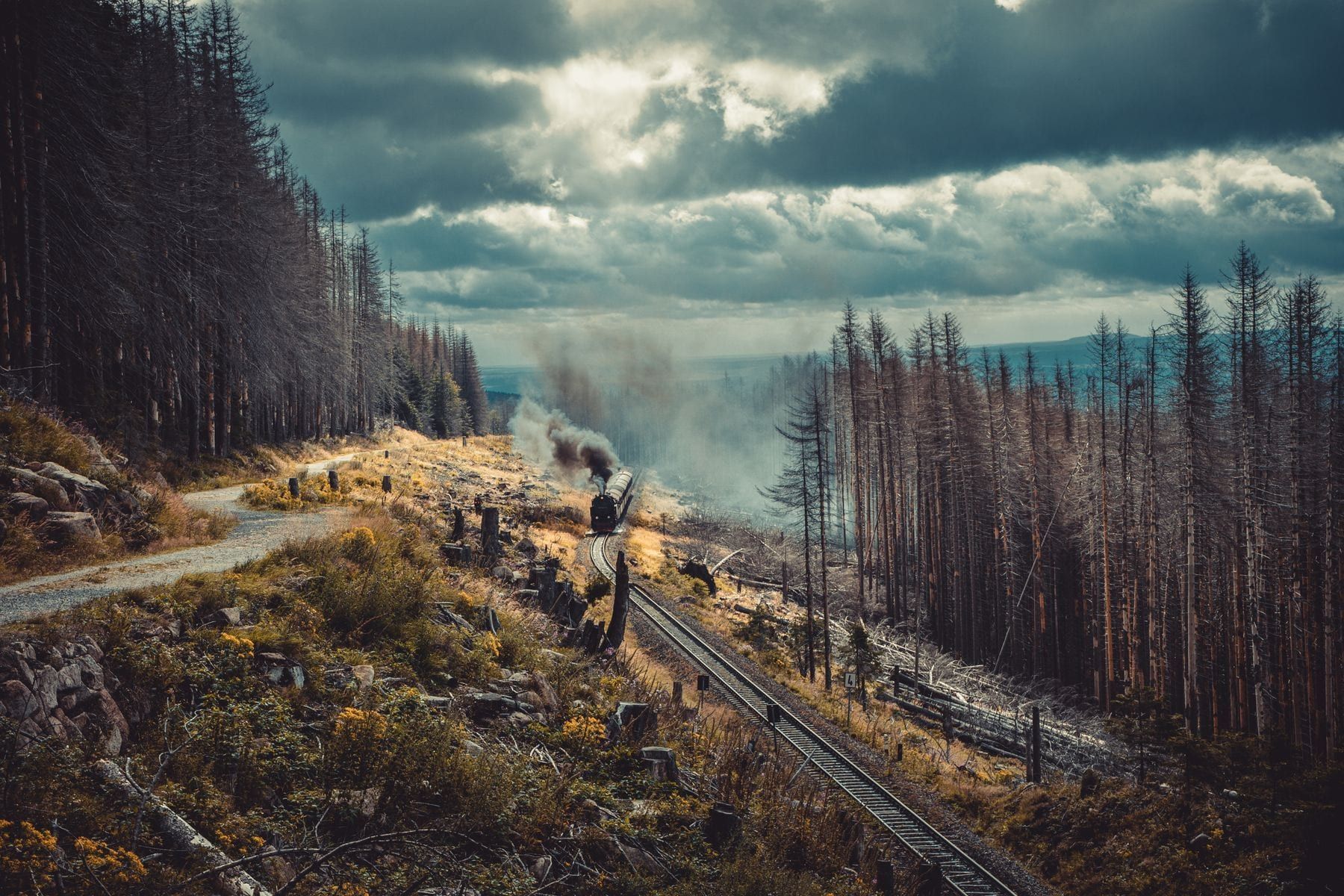
The Brockenbahn is the most expensive experience in the Harz: CHF 50 (about EUR 54) per person return from Wernigerode, CHF 45 from Drei Annen Hohne or Schierke, for a steam train ride of 100 minutes each way through the forest. It is worth it, once, for the steam locomotive and the hairpin bends above 1,000 metres, but not on a foggy day, when you see nothing at the top. Saving trick: up by train from Schierke, down on foot via the Eckerlochstieg or the Goetheweg, then you pay only the single fare of CHF 30, or walk the whole way from Schierke in two and a half hours or from Torfhaus via the Goetheweg in two hours, free. The Brocken summit itself costs nothing, the Brockenhaus museum CHF 6. The cable cars in Thale into the Bode valley and the gondola to the Hexentanzplatz cost CHF 10 to 14 return, the Wurmberg cable car in Braunlage CHF 18, both fair. Admissions: Wernigerode Castle CHF 9, the imperial palace in Goslar CHF 9, the Rammelsberg with the mine tour CHF 16 to 19, the collegiate church in Quedlinburg with the cathedral treasury CHF 6; Quedlinburg Castle is being renovated and parts are closed. The HarzCard for four days costs around CHF 60 and pays off from three major admissions plus one railway. Food is cheap: main course CHF 12 to 18, lunch menu CHF 10, coffee and cake CHF 6, beer CHF 4.

Timing: Walpurgis, summer, autumn and a winter with a question mark

Walpurgis Night on 30 April is the Harz festival par excellence: in Thale, Schierke, Wernigerode and two dozen other places, witches and devils dance, with fires, parades and music, in Thale on the Hexentanzplatz with ten thousand visitors. Lovely and loud, book six months ahead. May to June is the best hiking time, fresh green in the deciduous forests of the Harz foreland, the Bode valley at its best, few visitors on weekdays. July and August are family time, the Harz is full but never overrun like Saxon Switzerland, and up on the Brocken it is pleasant at 15 degrees in summer; the mountain has a climate like Iceland with 300 foggy days a year, so always take a jacket. Autumn in October, with the foliage in Quedlinburg and the Bode valley, is the most beautiful time, the autumn holidays excepted. Winter is a question mark: the Harz was a ski area, Braunlage on the Wurmberg and Schierke have lifts, but snow now lies for only a few weeks and mostly on artificial snow, no reason for the Swiss to come. The Brocken in hoarfrost with the steam train in the snow, on the other hand, is an experience, and the Christmas markets in Quedlinburg with the "Adventshöfe" courtyards and in Goslar with the Christmas forest are among the most beautiful in Germany, but the hotels are then full at weekends.

Underrated: Bode valley, Hexenstieg, Stolberg and the narrow-gauge railways

The Bode valley between Thale and Treseburg is the wildest gorge in northern Germany, ten kilometres of rock, river and forest, with the Rosstrappe and the Hexentanzplatz on the cliffs above, three to four hours on a path that is easy but needs boots, up by cable car to the Rosstrappe and down on foot. The Harzer Hexenstieg, 97 kilometres from Osterode over the Brocken to Thale, is the great long-distance trail, in five to six stages; you can walk it in parts, stage 3 over the Brocken and stage 5 through the Bode valley are the best, luggage transport from CHF 15 (about EUR 16) per stage. The Harz narrow-gauge railways do not only run up the Brocken: the Selketalbahn from Quedlinburg via Alexisbad to Harzgerode and Stiege is the quiet sister, with steam through a silent valley, CHF 15 to 25, hardly any tourists. Stolberg in the southern Harz is a half-timbered town like Quedlinburg, only tiny and unknown, with a castle and the birthplace of Thomas Müntzer, 40 minutes from Quedlinburg. The Teufelsmauer near Blankenburg and Weddersleben is a kilometres-long sandstone cliff with a circular path, one hour, free. In the western Harz the Oberharzer Wasserregal is worth a visit, a UNESCO system of ponds built by the miners from the 16th century, with hiking paths around the ponds near Clausthal-Zellerfeld, as is the Oker dam. Bad Harzburg has a treetop walk for CHF 10, good for families, not a must for people from the Alps.

Three UNESCO towns and how to divide them up

Quedlinburg is the town for a whole day and an evening: the Schlossberg with the collegiate church and the grave of Henry I, the cathedral treasury, the Münzenberg opposite with the smallest houses, then the lanes around the Markt, Word and Finkenherd, where the half-timbering is oldest. The half-timbering museum in the Ständerbau of 1346 costs CHF 4 (about EUR 4) and explains what you are looking at. In the evening, once the buses have gone, the town is yours. Goslar needs a day: the imperial palace with its Wilhelmine history paintings, the market square with the carillon at 9 am, 12 noon, 3 pm and 6 pm, the lanes of slate and half-timbering, and in the afternoon the Rammelsberg mine with the underground tour by miners' train or on foot through the Roeder gallery, three hours, cold, take a jacket. Wernigerode is the liveliest of the three and needs half a day: the town hall of 1498, Breite Strasse with the Krummelsches Haus, then 20 minutes up to the castle or by the little tourist train for CHF 6; the castle is a Neuschwanstein of the north from the 19th century, with a view to the Brocken. All three have markets on Wednesdays and Saturdays. If you can only manage one: Quedlinburg.

Frequently asked questions about Harz

How do I get to the Harz from Switzerland, and do I need a car?

By ICE via Frankfurt to Göttingen or Kassel, then regional train to Goslar or Wernigerode, 6 to 8 hours with one or two changes, saver fare from around CHF 60 (about EUR 64) each way if booked early. By car around 700 kilometres, 7 hours, no tolls. Once there a car makes sense, because the three towns are 30 to 50 kilometres apart and buses are rare. Without a car you stay in Wernigerode and use the narrow-gauge railway, regional trains and the guest card for buses.

How many days for the Harz?

Four to five days for the three UNESCO towns and the Brocken with a hike. A week if you take in the Bode valley, the Selketalbahn and Stolberg or walk two stages of the Hexenstieg. A weekend is enough for Quedlinburg and Wernigerode with the Brockenbahn, but then you miss Goslar. The Harz is also a good stop between southern Germany and Hamburg or Berlin.

Is the Brockenbahn worth CHF 50?

Once, yes, in clear weather. The steam locomotive takes 100 minutes for 34 kilometres and 900 metres of ascent from Wernigerode, with hairpin bends and views of the Brocken, which is an experience for railway fans and children. In fog, and the Brocken has 300 days of it a year, you see nothing at the top. Saving option: single fare from Schierke for CHF 30 (about EUR 32) up, down on foot, two hours. Or entirely on foot from Torfhaus via the Goetheweg, two hours, free, with the train as a photo motif.

What does the Harz cost compared with Switzerland?

About half of a Swiss mountain destination. Mid-range double room CHF 85 to 120 (about EUR 91 to 128), holiday flat from CHF 70, main course CHF 12 to 18, beer CHF 4, coffee and cake CHF 6. Only the Brockenbahn at CHF 50 is expensive; the cable cars cost CHF 10 to 18, admissions CHF 6 to 19. With CHF 80 to 100 per person per day excluding travel you are doing well; with a car add fuel and parking fees of CHF 5 to 8 a day in the towns.

Why does the forest on the Brocken look so dead?

Since 2018 drought, storms and the bark beetle have killed the spruce monocultures in the Upper Harz over large areas; on the Brocken and around Schierke grey trunks stand for kilometres. The national park leaves them standing, and underneath a new mixed forest of rowan and birch is already growing. It looks different from the old photos, but the views have become wider, and the deciduous forests in the Bode valley, the Selke valley and the Harz foreland are not affected. A visit to the Harz is also a lesson in climate change.

Is the Harz suitable for families?

Yes, more than most other destinations here. Steam train, witches, cable cars, the Bode valley, the treetop walk, summer toboggan runs in Thale and Braunlage, dripstone caves in Rübeland, the caves of the Rosstrappe. Holiday flats are cheap, distances short, the mountains small enough for children from six. Walpurgis Night is a spectacle for children, and the Hexentanzplatz in Thale has a zoo and a toboggan run. Reserve early in the summer and autumn holidays.

Itineraries with this destination

Activities in the region

More destinations in Saxony & Harz