History & background
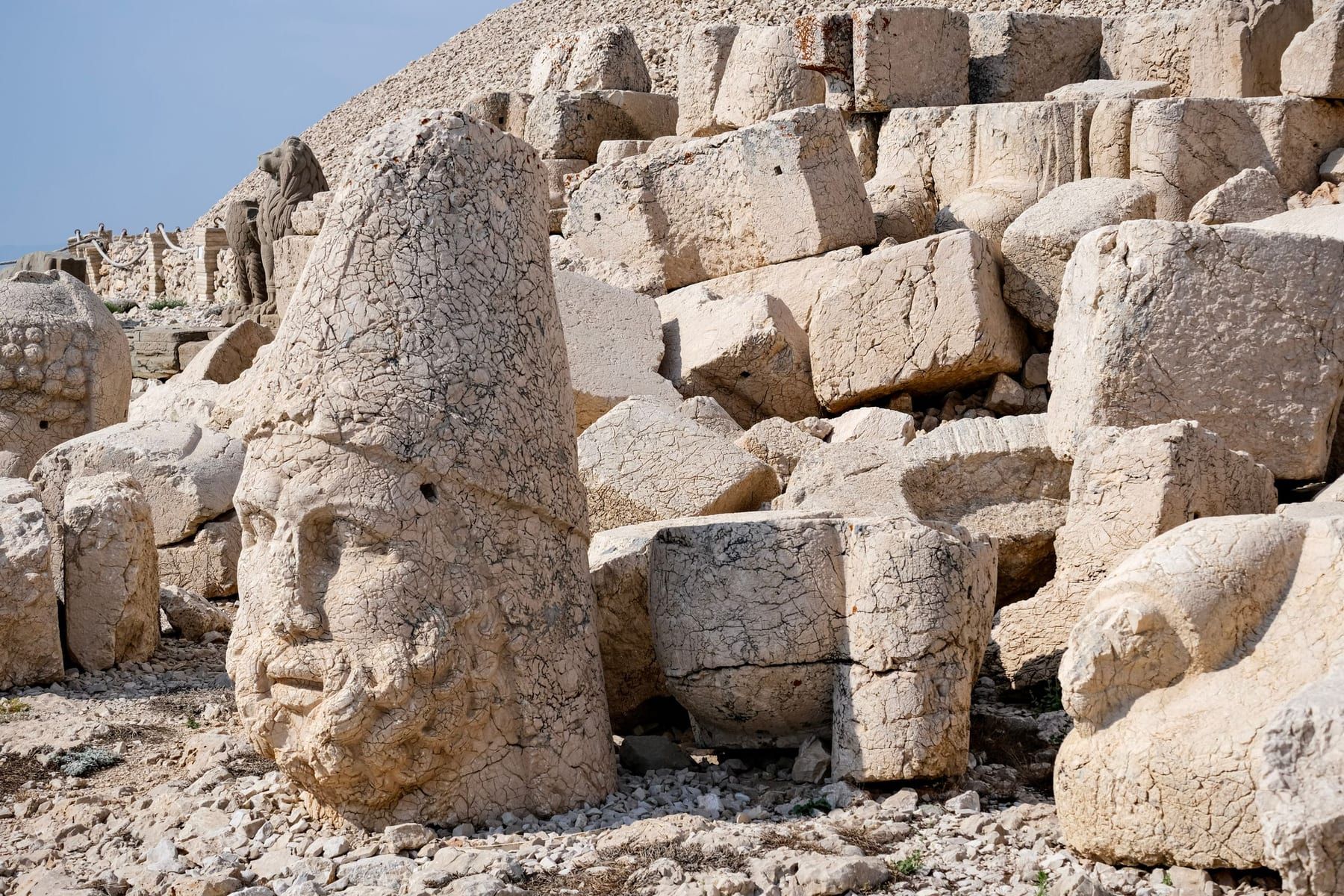
On the summit of Nemrut Dağı, 2,150 metres up in the eastern Taurus, King Antiochus I of Commagene had a tomb sanctuary built in the 1st century BC that has no equal. Commagene was a small kingdom between the Roman Empire and the Parthians, and Antiochus simply declared himself a descendant of both worlds: of the Persian kings on his father's side, of Alexander the Great on his mother's. On two terraces, facing east and west, he had himself set up beside Zeus, Apollo, Heracles and the goddess Commagene as colossal statues eight to ten metres tall, with a 50-metre burial mound of crushed stone between them, under which his tomb is presumed to lie and has never been found. Earthquakes knocked the heads off the statues; they now stand on the ground and make up the most famous image of eastern Anatolia. Forgotten for almost 2,000 years, the site was rediscovered in 1881 by a German road engineer and became a UNESCO World Heritage Site in 1987. In the valley below lie further witnesses to Commagene: the Karakuş tumulus, the Roman Cendere Bridge and the summer residence of Arsameia with the longest Greek inscription in Anatolia.