Sylt

Germany · Berlin & the North · Travel guide

Sylt

What a week on the most expensive island in Germany really costs, how to get there by car train or rail, and why October beats July if you want Sylt for the wind, the mudflats and the dunes rather than the champagne.

Photo: Timos Blickfang / Pexels

What does a trip to Sylt cost?

Adjust the values to your trip: the calculator updates live (EUR, converted from CHF estimates).

2,284 EUR
≈ 1,142 EUR per person
  • Getting there 428 EUR
  • Accommodation 1,070 EUR
  • Food 589 EUR
  • Local transport 80 EUR
  • Car train from Niebüll, return (share per person) 118 EUR

Estimates for orientation, not booking prices. Getting there means train or car from Switzerland, return, per person. Hotels vary strongly by season: current prices are behind the links below.

Money & payment: You pay in euros (EUR). Germany is fonder of cash than Switzerland: bakeries, kiosks and small restaurants often say "cash only", though cards work almost everywhere from about EUR 10. Tip 5 to 10 percent by rounding up and naming the total when you pay. Getting there: By train (DB), car or plane, 1 to 8 hours depending on the destination.

Recommended hotels

Nine options in three price ranges, each among the best-rated on Booking.com.

Budget

Hotel Niedersachsen

Westerland, Sylt

Traditional hotel in Westerland, 300 metres from the beach and five minutes from the station, with a restaurant, small spa and breakfast included. Rooms solid, not modern. For rail travellers the most practical address at a fair Sylt price.

from CHF 120 / night (about EUR 128) View →

Hotel Wiking Sylt

Westerland, Sylt

Family-run hotel on a quiet street in Westerland, beach and promenade five minutes on foot, bike hire, breakfast included. Simple rooms, some with a balcony. For anyone who wants Sylt for the beach and not the hotel.

from CHF 140 / night (about EUR 150) View →

Hotel Roth am Strande

Westerland, Sylt

Right on the Westerland promenade with views of the North Sea, a pool and a restaurant, the cheapest beachfront location on the island. Rooms on the sea side cost more and are worth it; those facing the town are plain. For the promenade, sunsets and short distances.

from CHF 140 / night (about EUR 150) View →

Mid-range

Dorint Strandresort & Spa Westerland/Sylt

Westerland, Sylt

Large resort behind the dunes on the southern edge of Westerland with a two-storey spa, pool and restaurants, beach in three minutes. Book a room with a dune view. For bad-weather days and families, the solid mid-range with everything under one roof.

from CHF 200 / night (about EUR 214) View →

Lindner Hotel Sylt

Wenningstedt, Sylt

Hotel in the village of Wenningstedt between Westerland and Kampen, with a spa, pool and restaurant, beach in five minutes over the dune. Quieter than Westerland, cheaper than Kampen, ten minutes by bike to either. For couples who want the middle of the island.

from CHF 190 / night (about EUR 203) View →

Long Island House Sylt

Westerland, Sylt

Small Hamptons-style hotel with white wooden furniture, a garden and a terrace, on a residential street between the station and the beach. Personally run, good breakfast, no spa. For anyone who finds the resorts too big.

from CHF 180 / night (about EUR 193) View →

Luxury

Hotel Stadt Hamburg

Westerland, Sylt

The island's grand hotel since 1869 in the middle of Westerland, with a garden, spa, library and the Michelin-starred Bistro Stadt Hamburg. Classic, Hanseatic, with staff who have known their guests for decades. For Sylt in its traditional form, beach in five minutes.

from CHF 350 / night (about EUR 375) View →

Severin*s Resort & Spa

Keitum, Sylt

Thatched resort on the edge of Keitum with views of the mudflats, a large spa, pool and two restaurants. Quiet, on the Wadden Sea side, sunset from the dyke. For anyone who wants Sylt for Keitum and nature, not for Kampen.

from CHF 450 / night (about EUR 482) View →

Budersand Hotel Golf & Spa Sylt

Hörnum, Sylt

Modern hotel at the southern tip of the island between the golf course, dunes and Hörnum harbour, with a spa, pool and the Michelin-starred restaurant KAI3. Far from the bustle, Odde and lighthouse on foot. For golfers and those seeking quiet; 30 minutes to Westerland by car or bus.

from CHF 400 / night (about EUR 428) View →

If you book through these links we earn a small commission, at no extra cost to you.

Experiences worth your time

Mudflat walk from Keitum or Hörnum

Two to three hours barefoot through the UNESCO World Natural Heritage Site with a guide, lugworms, crabs and tidal creeks included, CHF 10 to 15, cheaper with the guest card. Only at low tide; times depend on the tide tables, and there are no fixed schedules. Never go onto the mudflats alone.

View & book →

Rotes Kliff and Uwe-Düne in Kampen

The 30-metre red cliff at sunset and the Uwe-Düne with 110 steps and views over the whole island, both free. Afterwards a drink at the Kupferkanne, a café in an old bunker with a garden. 20 minutes by bike from Westerland.

View & book →

Oyster tour in List

Germany's only oyster farm in the List mudflats, tour with explanation and tasting CHF 15 to 20, then oysters in the oyster room for CHF 3 to 4 each. Two hours, register in advance, fewer dates in winter.

View & book →

Naturgewalten visitor centre

Exhibition in List on wind, water, climate and the Wadden Sea, interactive and good for children, CHF 16, less with the guest card. Two to three hours, packed in the rain, so better early at 10 am. Afterwards a Fischbrötchen at List harbour.

View & book →

Round-the-island bike ride

From Westerland to List via Wenningstedt and Kampen, back via Keitum on the Wadden Sea side, 50 kilometres on perfect cycle paths, flat but windy. Rental bike CHF 10 to 15, e-bike CHF 30. Allow for a headwind, usually from the west.

View & book →

Boat trip to the seal banks

From Hörnum or List by excursion boat to the seal banks off Amrum and Föhr, two to three hours, CHF 25 to 35. Bring binoculars, the animals keep their distance. In a swell, not for sensitive stomachs.

View & book →

Keitum: captains' houses and St. Severin

Walk through the most beautiful village on the island with thatched Frisian houses, the Sylter Heimatmuseum and the Altfriesisches Haus (CHF 6 each), and the church of St. Severin from 1216 with views over the mudflats. Village tour from CHF 10, then Friesentorte in a tea room.

View & book →

Hörnum-Odde and lighthouse

Two-hour circular walk around the wandering sand spit in the south, with the lighthouse, dunes and views of Amrum, free, spectacular in a storm. Lighthouse tour with weddings and viewing from CHF 8 in summer. Bus from Westerland 35 minutes.

View & book →

Day trip to Rømø by ferry

From List in 40 minutes to Denmark, CHF 15 to 20 return as a foot passenger, a little more with a bike, CHF 90 to 110 with a car. Rømø has a 12-kilometre-wide beach you can drive on, and Danish hot dogs. A whole day; check the last ferry back.

View & book →

If you book through these links we earn a small commission, at no extra cost to you.

Food & drink

Sylt eats North Sea, at a high level and at high prices: oysters from its own mudflats, hand-peeled shrimps, plaice, turbot, matjes. Alongside lives the Frisian tradition of tea, Friesentorte and kale. The art is to eat at lunchtime in the good restaurant and in the evening at the harbour.

Sylter Royal oysters

Oyster room of Dittmeyer's Austern-Compagnie in List, right on the mudflats

Pacific oysters from the only German farm, in the List mudflats, meaty, salty, with lemon or plain. CHF 3 to 4 each, six with bread and wine CHF 25 to 30.

Tip:The season is September to April; in summer they taste milkier.

Shrimp roll and shrimp scrambled eggs

Gosch at the harbour in List, or the fish stalls at Hörnum harbour

North Sea shrimps, still peeled by hand on Sylt, in a roll with remoulade for CHF 8 to 10, as scrambled eggs for breakfast CHF 14 to 18. Expensive because the peeling takes hours.

Tip:Ask whether the shrimps are hand-peeled; machine-peeled ones come back from Morocco.

Fischbrötchen with matjes or fried fish

Gosch in List, fish stalls on the Westerland promenade and at Hörnum harbour

The everyday food of the island, on Sylt one to two francs dearer than on Rügen: matjes, Bismarck herring, fried fish or salmon in a roll, CHF 6 to 9.

Tip:Eat on the mole at List harbour; the gulls know the trick with the roll.

Scholle Finkenwerder Art or sole

Fish restaurants in Westerland and Keitum, harbour restaurants in Hörnum

Whole North Sea plaice, Finkenwerder style, with bacon and shrimps for CHF 28 to 38, sole in butter for CHF 45 to 60. At lunchtime in the same restaurants often CHF 10 cheaper.

Tip:The lunch menu between 12 and 2 pm is the best deal on the island.

Friesentorte

Tea rooms in Keitum and Morsum, cafés in Kampen

Puff pastry, plum jam and lots of cream in layers, the Frisian cream gateau, with East Frisian tea with Kluntje rock sugar and a cloud of cream. A slice CHF 5 to 6, tea CHF 4.

Tip:Do not stir the tea; the cream should stay on top as a cloud, that is the Frisian rule.

Grünkohl mit Kassler und Kochwurst

Village inns in Keitum, Morsum and Tinnum

Kale with cured pork and boiling sausage, the winter dish of the north, hearty, with potatoes and mustard, on every menu from November to March and compulsory at the Biikebrennen on 21 February. CHF 18 to 26.

Tip:After the Biike bonfire everyone goes out to eat at the same time, so book a table weeks ahead.

Sylter Hopfen and Sylt rum

Sylter Brauhaus in Rantum, tea rooms and beach bars for the Pharisäer

Beer from the island brewery in Rantum for CHF 5 to 6 in a restaurant, and the Pharisäer, coffee with rum and a cap of cream, supposedly invented to hide the alcohol from the pastor, CHF 7 to 9.

Tip:Do not stir the Pharisäer, or according to legend you pay for a round.

Book a food tour: Sylt

Through markets and eateries with a guide, tastings included.

View & book →

If you book through these links we earn a small commission, at no extra cost to you.

History & background

Sylt is an island that moves. The 40-kilometre North Sea island formed from a geest core and dunes, and the storm surges of the past have repeatedly torn it apart: the "Grote Mandränke" of 1362 swept away whole stretches of coast, and in 1634 more villages disappeared. To this day the west coast loses around a metre of land a year, which is replaced with sand replenishment costing millions of euros. Sylt was settled as early as the Stone Age; the Denghoog megalithic tomb near Wenningstedt is 5,000 years old. In the Middle Ages the Frisians lived here from farming, fishing and, from the 17th century, whaling: Sylt captains sailed to Greenland for Dutch and Danish shipowners, and the captains' houses in Keitum with their thatched roofs and blue and white tiles are the legacy of that era. Until 1864 Sylt belonged to the Danish composite state, then after the Second Schleswig War it became Prussian. The seaside resort of Westerland was founded in 1855, and the rise to fashionable destination came in 1927 with the Hindenburgdamm, the causeway that linked the island to the mainland by rail. Kampen became an artists' colony in the Twenties and, after the war, the meeting place of West Germany's moneyed elite with Gunter Sachs, Brigitte Bardot and the tabloids, and the reputation as the island of the rich persists to this day. The North Sea here has been part of the Wadden Sea UNESCO World Natural Heritage Site since 2009, and the Ellenbogen on Sylt is the northernmost point of Germany. In 2022 the 9-euro ticket made headlines because punks took the train to Westerland and stayed. For decades the island has argued about second homes, the housing shortage for locals and the question of how much luxury a dune can take.

Insider tips

Getting there: rail to Westerland, car train from Niebüll, flights only seasonal

You reach Sylt only via the Hindenburgdamm, and only by rail. From Switzerland that means: ÖBB Nightjet from Zurich or Basel to Hamburg (couchette from CHF 80, about EUR 86, each way), then by regional express or IC in around three hours to Westerland, free with the Deutschlandticket, otherwise saver fare CHF 20 to 40. By day the journey from Zurich takes 11 to 12 hours with a change in Hamburg. By car you drive around 1,000 kilometres and 10 hours from Zurich to Niebüll, where the car train runs: the DB Sylt Shuttle and the blue Autozug Sylt shuttle every 30 to 60 minutes, 35 minutes across the causeway, car return around CHF 100 to 120 without a reservation, saver fares when booking online. The alternative is the ferry from Rømø in Denmark to List, 40 minutes, car return CHF 90 to 110, and more scenic. A flight from Zurich to Sylt (GWT) exists only seasonally and not every year, at CHF 300 to 500; check what is on offer for the summer, but do not count on it. On the island you do not need a car: the SVG bus runs from List to Hörnum every 20 to 30 minutes, day ticket CHF 10, cheaper with the guest card, and the cycle network is perfect, rental CHF 10 to 15 a day, e-bike CHF 30.

Where to stay: Westerland, Wenningstedt, Keitum, and what Kampen costs

Westerland is the main town with the station, promenade, high-rises from the Seventies, shops and the largest choice of hotels, including the cheap ones. Wenningstedt to the north is quieter, with beach and dunes; Kampen is the village of thatched roofs, boutiques and millionaires, with hotel prices from CHF 350 (about EUR 375). Keitum on the Wadden Sea side is the most beautiful village on the island with captains' houses and gardens, List in the north is rough and windy with the harbour, Hörnum in the south quiet with the Odde sand spit and the lighthouse. The honest prices in season: simple hotel in Westerland CHF 110 to 160, mid-range CHF 180 to 280, luxury in Kampen, Keitum and Hörnum CHF 350 to 700. On top comes the visitor's tax of CHF 3.50 to 4.50 per person per day, which you need for access to the beach. Holiday apartments dominate the island, with a minimum stay of seven nights in summer, final cleaning CHF 100 to 180 and booking a year ahead for the good locations; they pay off from five nights and for families. In October, November and March hotel prices fall by 30 to 50 per cent, and you get sea-view rooms that were fully booked in July. Book summer in January, autumn six weeks ahead. A sea view costs CHF 40 to 80 extra a night; a view of the mudflats is cheaper and, with the sunset in the evening, often more beautiful.

Cost traps and savings: visitor's tax, beach chair, Sansibar and the lunch menu

Sylt is not expensive because of the visitor's tax but because of the sum of the small items. A beach chair costs CHF 12 to 18 (about EUR 13 to 19) a day, more in Kampen, and in July is only available by advance booking; in September you get one on the spot for half the week. Car parks at the beaches cost CHF 2 to 3 an hour or CHF 10 to 15 a day, the Ellenbogen in the north charges a CHF 7 toll, and a bike parks everywhere for free. The Sansibar in Rantum is a beach hut with a wine cellar and celebrity factor, main course CHF 35 to 60, the queue in the afternoon long, and honestly: a Fischbrötchen from Gosch in List for CHF 7 with a view of the harbour makes you happier. The lunch menus of the good restaurants in Keitum and Kampen often cost half the evening menu, so eat there at lunchtime and have Fischbrötchen at the harbour in the evening. The guest card you get with the visitor's tax brings discounts on the bus, mudflat walks, museums and the Sylter Welle swimming pool in Westerland (CHF 12 to 15). The Naturgewalten visitor centre in List costs CHF 16 and is packed in the rain, while the Wadden Sea itself is free and empty in the rain. Tip 5 to 10 per cent; on Sylt cards are accepted almost everywhere, even at the fish stalls.

Timing: autumn instead of summer, wind in every season

The North Sea is 18 to 19 degrees in August, no more, and the wind blows on 300 days a year. July and August are the most expensive time, with traffic jams on the island road, crowded beaches in Westerland and prices that frighten nobody in Switzerland but count as a scandal in Germany. The honestly best time is mid-September to the end of October: the holidays are over, the light is clear, the dunes glow purple with heather, the water is still 16 degrees, hotels drop 30 to 50 per cent, and in the evening you sit by the fire. Autumn is also crane and migratory bird season on the mudflats, with tens of thousands resting off Keitum and Morsum. May and June are bright, fresh and empty, with the beach rose in bloom and pre-season prices. Winter is storm season: grey, wet, 3 to 6 degrees, but the Biikebrennen on 21 February, when a bonfire burns in every village and everyone eats kale afterwards, is the most Frisian festival of the year, and prices are at their lowest. High and low tide dictate the day: mudflat walks only at low tide with a guide, swimming at high tide with an eye on the flags, and the current on the west coast is dangerous. Tide tables are posted at every beach access. Sunset at the Rotes Kliff in Kampen is compulsory; come half an hour early, in summer a hundred people stand there, in October ten.

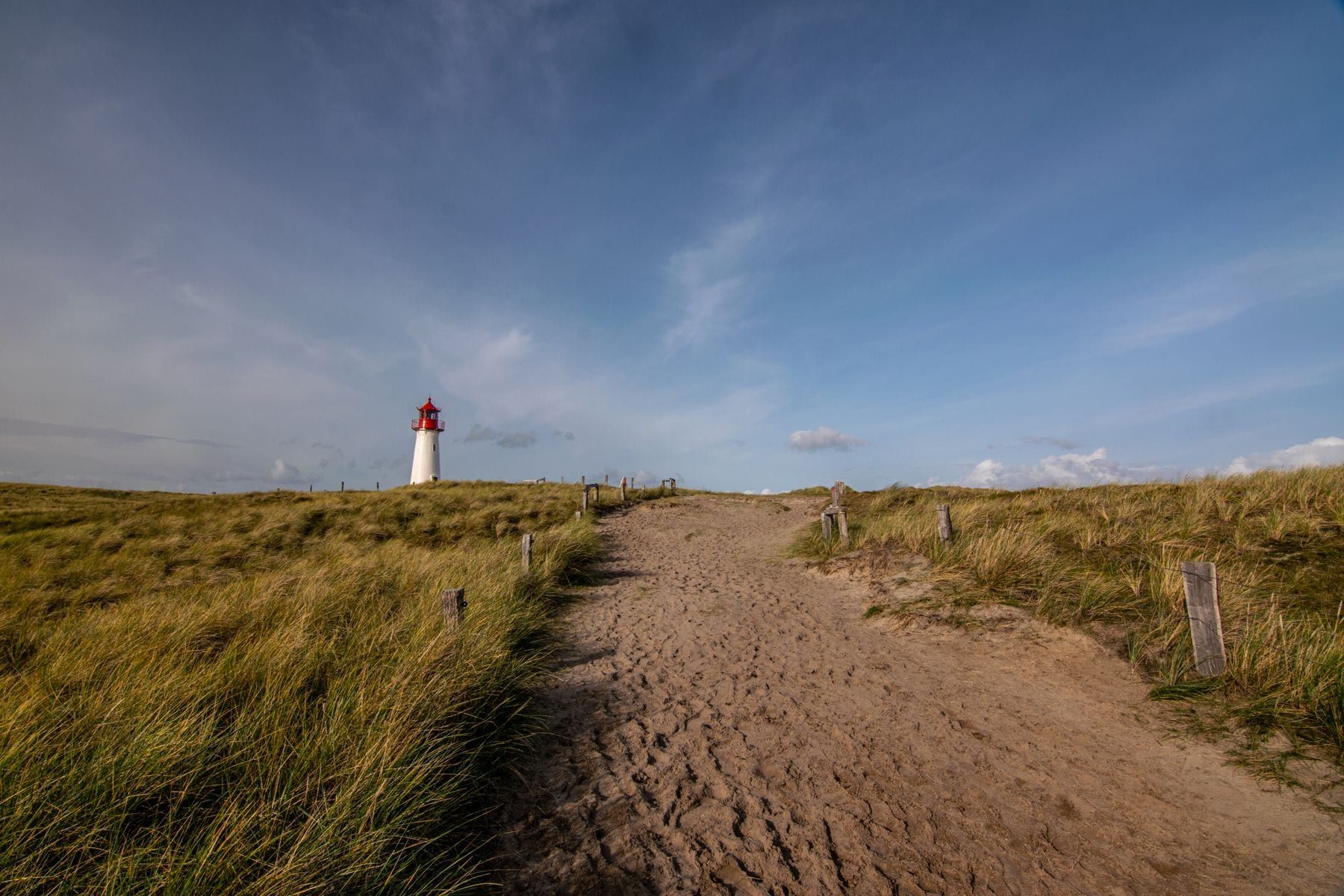
Underrated: the Wadden Sea on foot, Morsum-Kliff, Hörnum-Odde and Keitum

Most people walk the Westerland promenade, eat at Gosch in List and photograph the Rotes Kliff. Sylt gets better when you switch to the Wadden Sea side. The Wadden Sea is a UNESCO World Natural Heritage Site and walkable at low tide: guided mudflat walks from Keitum, Rantum or Hörnum take two to three hours, cost CHF 10 to 15 (about EUR 11 to 16) and show you lugworms, crabs, tidal creeks and a horizon without end; going out onto the mudflats alone is dangerous, the tide comes in faster than you can walk. The Morsum-Kliff in the east is the oldest landscape on the island, red, white and black layers of earth from millions of years, a one-hour circular walk, almost always empty. The Hörnum-Odde in the south is a wandering sand spit that gets smaller every year, a two-hour circuit around the lighthouse and dunes, dramatic in winter. Keitum is the village for a whole afternoon: captains' houses behind stone walls, the Sylter Heimatmuseum and the Altfriesisches Haus (CHF 6 each), the church of St. Severin from 1216 on the hill with views over the mudflats, tea rooms with Friesentorte. The Uwe-Düne in Kampen is the highest point at 52 metres, 110 steps, views over the whole island, free. The Ellenbogen in the north is private land with a toll road (CHF 7 for a car, bikes free), shifting dunes and the northernmost point of Germany; swimming is forbidden because of the current, but there are seals on the sandbanks.

Food: fish, oysters, Friesentorte and the prices that come with them

Sylt eats North Sea: plaice, sole, turbot, shrimps, matjes, oysters from the List mudflats. The prices are the highest in Germany and sit just below Zurich: Fischbrötchen CHF 6 to 9 (about EUR 6 to 10), main course in an ordinary restaurant CHF 25 to 40, in Kampen CHF 40 to 60, beer CHF 5, coffee CHF 4.50. Gosch in List is the fish stall that became a chain, but at the harbour it is still the right place for a shrimp roll and fish soup with a view of the cutters. You eat the Sylter Royal oysters from the farm in List in the oyster room of Dittmeyer's Austern-Compagnie right on the mudflats, CHF 3 to 4 each, with white wine; the tour of the farm costs CHF 15. North Sea shrimps are still peeled by hand on Sylt, in a roll CHF 8 to 10. Friesentorte, puff pastry with plum jam and cream, you get in the tea rooms in Keitum and Morsum for CHF 5 to 6, with East Frisian tea and Kluntje rock sugar. Kale with Kassler (cured pork) and Kochwurst is the winter dish, compulsory from Biikebrennen onwards. For the evening: the lunch menu of the same kitchen costs half, the restaurants in Westerland and Tinnum are 30 per cent cheaper than in Kampen and Keitum, and a picnic in the dunes with smoked fish, bread and a bottle of wine from the supermarket costs CHF 15 per person and beats the Sansibar.

Frequently asked questions about Sylt

How do I get from Switzerland to Sylt, and do I need a car?

With the ÖBB Nightjet from Zurich or Basel to Hamburg (couchette from CHF 80, about EUR 86, each way), then in three hours by train to Westerland, free with the Deutschlandticket. By day 11 to 12 hours. By car 1,000 kilometres to Niebüll, then the car train across the Hindenburgdamm, CHF 100 to 120 return per car, or the ferry from Rømø. Flights from Zurich exist only seasonally and not every year. On the island bus and bike are entirely sufficient; a car costs you parking fees and nerves.

How expensive is Sylt really?

Very, by German standards; for the Swiss, about like home: mid-range double room CHF 180 to 280 (about EUR 193 to 300) in season, main course CHF 25 to 40, Fischbrötchen CHF 7, beach chair CHF 15 a day, visitor's tax CHF 4 per person per day. Expect CHF 150 to 200 per person per day including hotel in summer, CHF 110 to 140 in October. Kampen and the Sansibar double the bill, Westerland and a bike halve it.

When is the best time to visit Sylt?

Mid-September to the end of October: empty beaches, clear light, heather in the dunes, migratory birds on the mudflats, hotels 30 to 50 per cent cheaper, evenings by the fire. May and June are bright and fresh with pre-season prices. July and August are crowded and the most expensive, and the water is 18 degrees then. The Biikebrennen on 21 February is the festival for winter guests. You will have wind in every month, so always carry the rain jacket.

How many days should you stay on Sylt?

Five to seven nights, because getting there from Switzerland costs a day each way and holiday apartments demand seven nights in summer anyway. In a week you manage Westerland, Kampen with the Rotes Kliff, List with the Ellenbogen, Keitum, the Hörnum-Odde, the Morsum-Kliff, a mudflat walk and a day on Rømø. For three nights Sylt is too far; Hamburg with a day trip is better then.

Can you swim on Sylt, and is the North Sea dangerous?

Swim yes, but briefly: the North Sea is 17 to 19 degrees in high summer. On the west coast there are strong currents and surf, so swim only at supervised beaches with a green flag; when it is red you stay out, even if it looks harmless. The Wadden Sea side is shallow and calm, but far away at low tide. Never go out onto the mudflats alone, the tide comes in faster than you can walk back. The beach sauna in Kampen and the Sylter Welle in Westerland are the alternatives when it is cold.

Is Sylt for families or only for the rich?

The reputation comes from Kampen and the headlines; the island itself is full of families from Hamburg and North Rhine-Westphalia in holiday apartments in Westerland, Wenningstedt and Hörnum. With a bike, the beach, a mudflat walk, the Naturgewalten centre and the Sylter Welle you need no champagne. Cheap it is not, though: for a family with two children in a holiday apartment in September, expect CHF 2,500 to 3,500 (about EUR 2,675 to 3,745) for a week including the drive there.

Itineraries with this destination

Activities in the region

More destinations in Berlin & the North