Rügen

Germany · Berlin & the North · Travel guide

Rügen

What a week on Germany's largest island really costs, why you should see the chalk cliffs from below instead of from the Königsstuhl, and when the Sellin pier is yours alone.

Photo: Horst Joachims / Pexels

What does a trip to Rügen cost?

Adjust the values to your trip: the calculator updates live (EUR, converted from CHF estimates).

1,648 EUR
≈ 824 EUR per person
  • Getting there 364 EUR
  • Accommodation 696 EUR
  • Food 428 EUR
  • Local transport 107 EUR
  • Rasender Roland steam railway (day ticket) 54 EUR

Estimates for orientation, not booking prices. Getting there means train or car from Switzerland, return, per person. Hotels vary strongly by season: current prices are behind the links below.

Money & payment: You pay in euros (EUR). Germany is fonder of cash than Switzerland: bakeries, kiosks and small restaurants often say "cash only", though cards work almost everywhere from about EUR 10. Tip 5 to 10 percent by rounding up and naming the total when you pay. Getting there: By train (DB), car or plane, 1 to 8 hours depending on the destination.

Recommended hotels

Nine options in three price ranges, each among the best-rated on Booking.com.

Budget

RÜGEN-HOTEL mit Ostseeblick

Sassnitz, Rügen

GDR-era high-rise on the slope above the harbour of Sassnitz, renovated, with a pool and the best view of the Baltic and the ferry port for the price. Simple rooms, chalk cliffs and Hochuferweg within walking distance. For hikers who do not need Binz.

from CHF 80 / night (about EUR 86) View →

Hotel Binzer Hof

Binz, Rügen

Family-run hotel two streets back from the beach, with a sauna, restaurant and rooms that are older but clean. Promenade and Binz station on foot, breakfast included. For anyone who wants Binz at the price of a guesthouse.

from CHF 100 / night (about EUR 107) View →

Hotel Gastmahl des Meeres

Promenade, Sassnitz

Simple hotel with a fish restaurant right on the Sassnitz promenade, harbour and town beach outside the door, plain rooms, some with sea views. Starting point for the Jasmund National Park, buses to the chalk cliffs stop nearby. For the budget-conscious who want fresh fish in the evening.

from CHF 85 / night (about EUR 91) View →

Mid-range

Dorint Seehotel Binz-Therme

Binz, Rügen

Large hotel at the southern end of the Binz promenade with direct access to the Binz-Therme spa, pool and sauna area included. Book a room with a balcony and sea view, the beach is outside the door. The best insurance on the island for bad-weather days.

from CHF 150 / night (about EUR 161) View →

Cliff Hotel Rügen

Sellin, Rügen

Resort on the cliffs between Sellin and Baabe with a large spa, pools, a bowling alley and views over the Baltic. The Sellin pier is 20 minutes on foot along the beach. For families and spa days; the hotel is big and correspondingly impersonal.

from CHF 140 / night (about EUR 150) View →

Precise Resort Rügen

Sagard, Rügen

Hotel and holiday houses near Sagard in the north, with a pool, spa and golf course, away from the promenades but closer to the chalk cliffs and Kap Arkona than Binz. Ideal with a car, difficult without one. For couples seeking quiet, and golfers.

from CHF 120 / night (about EUR 128) View →

Luxury

Grand Hotel Binz

Binz, Rügen

Classic grand hotel with a pool, a 1,500-square-metre spa and restaurants, at the quiet northern end of Binz, 200 metres from the beach. Rooms large and classic, breakfast excellent. For a week's holiday with everything under one roof.

from CHF 240 / night (about EUR 257) View →

Travel Charme Kurhaus Binz

Binz, Rügen

The white Kurhaus of 1908 right by the pier, the landmark of Binz and the hotel with the best location on the island. Spa, restaurant with sea view, seaside architecture inside and out. Rooms facing the sea cost more and are worth the money.

from CHF 280 / night (about EUR 300) View →

A-ROSA Collection Hotel Ceres am Meer

Binz, Rügen

Small adults-only boutique hotel on the Binz promenade with around 40 rooms, modern design, a spa with indoor pool and a restaurant with good cooking. More personal than the grand hotels, beach across the road. For couples who want calm and style.

from CHF 260 / night (about EUR 278) View →

If you book through these links we earn a small commission, at no extra cost to you.

Experiences worth your time

Hochuferweg from Sassnitz to the Königsstuhl

Nine kilometres through the beech forest of the Jasmund National Park with views of the chalk cliffs, the Wissower Klinken and the Victoria-Sicht viewpoint, free, three to four hours. Back by bus from Hagen or Lohme. Guided national park walk with a ranger from CHF 15.

View & book →

Königsstuhl National Park Centre with Skywalk

Exhibition on the chalk and the Skywalk platform opened in 2023 above the 118-metre cliff, CHF 14 to 16, CHF 25 including parking and bus. Come early at 9 am or after 4 pm; at midday it is packed. Two hours including the exhibition.

View & book →

Rasender Roland from Putbus to Göhren

Narrow-gauge steam railway since 1895 through forests and seaside resorts, 24 kilometres in 70 minutes, one way CHF 12 to 18, day ticket CHF 25. Bikes allowed. Look at the engine shed in Putbus, and ride in the open carriage when the sun is out.

View & book →

Day trip to Hiddensee

Ferry from Schaprode in 45 minutes, CHF 22 to 26 return, rent a bike on the island for CHF 10. Dornbusch lighthouse, Kloster with the Hauptmann house, the western beach. Plan the whole day and check the last ferry back. Boat excursion from Binz or Sassnitz with a circuit of the island from CHF 35.

View & book →

Kap Arkona and the fishing village of Vitt

Two lighthouses, a Slavic rampart, cliffs and thatched Vitt, 8-kilometre circular walk from the Putgarten car park (CHF 6), lighthouse climb CHF 6. The Arkona-Bahn road train for CHF 5 if you do not want to walk. Half a day; bring a jacket when it is windy.

View & book →

Sellin pier and diving gondola

The most beautiful pier on the Baltic, 394 metres, with a restaurant in the pier house, free, almost empty before 9 am. The diving gondola at the end takes you four metres below the surface for CHF 12, more film than fish. Do not miss the Himmelsleiter steps down to the beach.

View & book →

Prora: documentation centre and treetop walk

The documentation centre (CHF 8) explains the Nazi colossus and its GDR use, 90 minutes. The treetop walk at the Naturerbe Zentrum Rügen (CHF 14) ends on a 40-metre tower with views over the island. Both 20 minutes by bike from Binz.

View & book →

Störtebeker Festival in Ralswiek

Open-air theatre on the Jasmunder Bodden lagoon with ships, horses, fireworks and 150 performers, June to September, CHF 30 to 50. Starts at 8 pm, ends around 10.30 pm, bring a blanket. By car or shuttle from Bergen; buy tickets ahead in summer.

View & book →

Day trip to Stralsund with the Ozeaneum

UNESCO old town with brick Gothic, a harbour and the Gorch Fock I, 30 minutes by train from Bergen. The Ozeaneum (CHF 20) with Baltic and North Sea aquariums fills a rainy day, three hours. City tour from CHF 12.

View & book →

If you book through these links we earn a small commission, at no extra cost to you.

Food & drink

Rügen eats what the Baltic and the lagoons provide: herring, cod, pike-perch, eel, smoked at the harbour or fried with sautéed potatoes. Add sea buckthorn in every form and coffee and cake as the afternoon ritual. The good food is rarely on the promenade but in smokehouses, harbour stalls and village inns.

Fischbrötchen with Bismarck herring or matjes

Sassnitz harbour, stalls on the piers in Binz and Sellin

The staple food of the coast, best fresh at the harbour: a bread roll with herring, matjes, fried fish or shrimps, CHF 4 to 7.

Tip:The smoking boats are moored at Sassnitz harbour, and that is where the fish is freshest.

Smoked fish from the smokehouse

Smokehouses in Sassnitz, Thiessow, Gager and Breege

Mackerel, eel, halibut, sprats and trout from the beechwood smoke, sold by weight, from CHF 3 for sprats to CHF 12 for a piece of eel. With bread and horseradish, the best dinner on the island.

Tip:Buy at lunchtime when it comes out of the oven, and eat it on the beach.

Pike-perch or cod with sautéed potatoes

Village inns in the island's interior and fish restaurants down on the beach in Sellin

Lagoon pike-perch fried in butter or cod from the Baltic, with sautéed potatoes, bacon and cucumber salad. CHF 18 to 28, more on the Binz promenade.

Tip:Cod has become scarce in the Baltic; pike-perch from the lagoon is the more honest choice.

Sea buckthorn: juice, liqueur, ice cream

Farm shops and sea buckthorn stalls in Binz, Göhren and Putbus

The orange berries from the dunes, extremely sour and full of vitamin C, as juice (CHF 4 a glass), liqueur (CHF 12 to 18 a bottle), jam, cake and ice cream.

Tip:Try the sea buckthorn ice cream on the promenade; the liqueur is the souvenir.

Rügen cake for afternoon coffee

Cafés in the seaside architecture of Binz and Sellin, country cafés near Putbus

Crumble cake, plum cake, sea buckthorn gateau and Bienenstich; coffee and cake at 3 pm is the law here. A slice CHF 4 to 5, with cream.

Tip:In the rain the cafés are full; from 4.30 pm it calms down again.

Insel-Brauerei and Störtebeker beer

Insel-Brauerei in Rambin, Störtebeker Braumanufaktur in Stralsund

The Insel-Brauerei in Rambin brews speciality beers in paper-wrapped bottles, CHF 4 to 5 in the shops, tasting at the brewery from CHF 12. Störtebeker from Stralsund is the everyday beer, CHF 3.50 to 4.50 in a restaurant.

Tip:The brewery in Rambin has a beer garden, ten minutes by bike from Rambin station.

Pomeranian cooking: Schmorgurken and potato soup

Village inns in Gingst, Garz and Putbus

The interior of the island cooks down to earth: Schmorgurken (braised cucumbers) with minced meat, potato soup with sausages, Grützwurst (groats sausage). CHF 10 to 16, filling and rarely on tourist menus.

Tip:Ask for the daily specials, not the printed menu.

Book a food tour: Rügen

Through markets and eateries with a guide, tastings included.

View & book →

If you book through these links we earn a small commission, at no extra cost to you.

History & background

At 926 square kilometres Rügen is the largest island in Germany, and its history begins with the Slavs. The Rani had their temple fortress on Kap Arkona with the four-headed god Svantevit, until in 1168 the Danish king Valdemar I and Bishop Absalon conquered the fortress and Christianised the island. For four centuries Rügen was a Danish fief under its own princes, then it passed to Pomerania in 1325 and, after the Thirty Years' War, to Sweden in 1648. Swedish Pomerania lasted until 1815, which is why the churches and manor houses on the island still look Scandinavian today. Only then did Rügen become Prussian. A painter made it famous: Caspar David Friedrich, born in Greifswald, painted the Chalk Cliffs on Rügen in 1818, and the picture drew the Romantics to Stubbenkammer. The seaside resort architecture in Binz, Sellin and Göhren dates from 1880 onwards, when Berliners took the train to the sea; Putbus had already been laid out in 1810 by Prince Malte as a white residence town with a theatre and circus. From 1936 the Nazis built the "Kraft durch Freude" (Strength through Joy) resort at Prora, a 4.5-kilometre concrete block for 20,000 holidaymakers that was never finished and today partly contains private flats. The Rügendamm causeway to Stralsund opened in 1936, and the Rügen Bridge followed in 2007. In the GDR Rügen was the country's most important holiday destination, with trade union holiday homes and campsites; after 1990 came renovation, grand hotels and second homes. The Jasmund National Park with the chalk cliffs has existed since 1990, and its beech forests have been a UNESCO World Natural Heritage Site since 2011. The Rasender Roland has been steaming between Putbus and Göhren since 1895, and the Störtebeker Festival in Ralswiek has drawn 300,000 spectators every summer since 1993.

Insider tips

Getting there: train via Berlin, night train, or eleven hours by car

By train, Rügen from Switzerland is a two-day journey or a night train journey. The best option: ÖBB Nightjet from Zurich or Basel to Berlin Hauptbahnhof, arriving around 8 am, then by IC or regional express via Stralsund to Bergen auf Rügen and Binz in a good three hours, and you are on the beach by lunchtime. Nightjet couchette from CHF 80 (about EUR 86) each way, the connection from Berlin to Binz with a saver fare CHF 20 to 40, free on regional trains with the Deutschlandticket. By day the journey from Zurich takes 12 to 13 hours with two changes, which only makes sense with a stopover in Berlin or Hamburg. By car it is around 1,050 kilometres and 10 to 11 hours from Zurich via Nuremberg, Leipzig, Berlin and the A20 to Stralsund, no tolls, with petrol and wear per person for two travellers at roughly CHF 130 to 160 each way. A car is practical on Rügen but not necessary: the train runs to Binz and Sassnitz, the Rasender Roland steam railway links Putbus, Binz, Sellin, Baabe and Göhren, VVR buses run hourly to the chalk cliffs and Kap Arkona, and with the guest card many buses are included. The bike is the best way to get around: flat cycle paths from Binz to Prora and Sassnitz, rental CHF 10 to 15 a day, e-bike CHF 25 to 35.

Where to stay: Binz or Sellin, visitor's tax and the holiday apartment trap

Binz is the main resort with a promenade, seaside architecture, grand hotels and the best infrastructure; first-time visitors stay here or in Sellin with its pier. Göhren and Baabe are quieter and cheaper, Sassnitz is a harbour town with charm and a ferry to Sweden but no bathing beach in the town itself. Putbus is white and silent, and Kap Arkona and the west are for the second visit. The honest prices: guesthouse or simple hotel CHF 70 to 110 (about EUR 75 to 118), mid-range in Binz CHF 120 to 180 with breakfast, the grand hotels on the beach CHF 250 to 400. On top comes the visitor's tax, called Kurabgabe on Rügen: CHF 2.50 to 3.50 per person per day in season, in return for which you get the guest card with discounts and bus rides. The trap is the holiday apartments: Rügen has tens of thousands, many with a minimum stay of seven nights, final cleaning CHF 60 to 120 and bed linen extra, which quickly brings a bargain up to hotel level. For three to four nights the hotel is cheaper. High season is the school summer holidays from mid-June to early September, when the good hotels in Binz are gone months ahead, so book in January. In May, June and September you get the same rooms for 30 to 40 per cent less and often without a minimum stay. Rooms with a sea view cost CHF 30 to 60 more a night; in Binz the promenade is pedestrianised, so it is quiet.

Cost traps and savings: Königsstuhl, guest card, Hiddensee by car

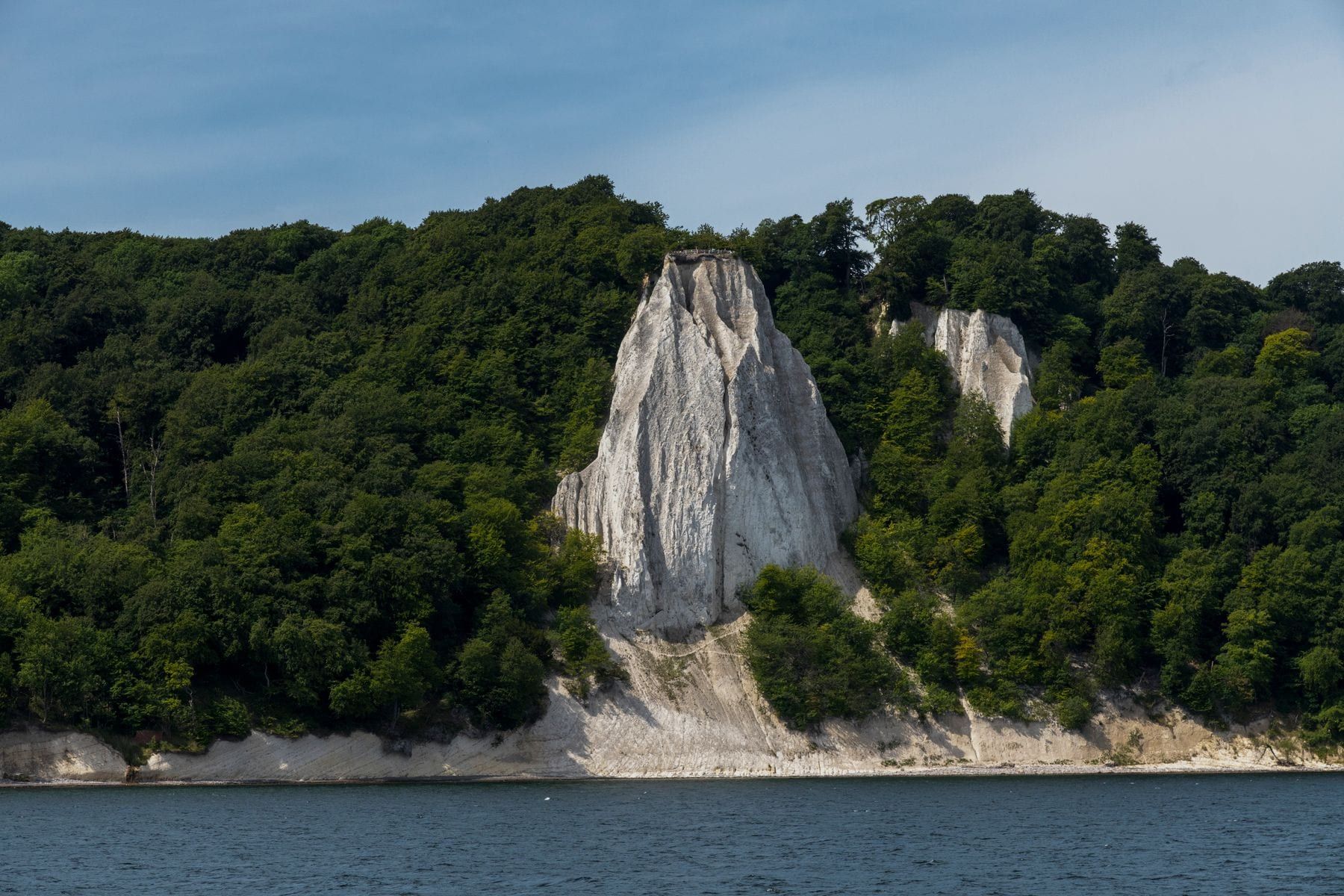
Rügen is cheap until you pay for the attractions. The Königsstuhl National Park Centre with the Skywalk above the chalk cliff costs CHF 14 to 16 (about EUR 15 to 17) per person, parking in Hagen CHF 8, shuttle bus CHF 3, so a family pays CHF 60 for a view you get for free 500 metres further on from the Victoria-Sicht viewpoint. Even better: the Hochuferweg clifftop path from Sassnitz to Lohme runs nine kilometres through the beech forest with views of the chalk, free, or at Sassnitz you take the steps down to the beach and walk along the foot of the cliffs, hunting for flints and fossil belemnites as you go. That is the Caspar David Friedrich experience, not the viewing platform. The Sellin pier is free, the diving gondola at the end CHF 12. The Rasender Roland costs CHF 12 to 18 one way depending on the route, day ticket CHF 25, and is more of an experience than a means of transport. The guest card brings reduced admissions and free bus rides on many lines, so ask when you check in. Hiddensee: ferry from Schaprode CHF 22 to 26 return, bike CHF 8 extra, or rent one on the island for CHF 10; the island is car-free. Kap Arkona is also car-free, parking in Putgarten CHF 6, then 2 kilometres on foot or the Arkona-Bahn road train for CHF 5. The Störtebeker Festival in Ralswiek costs CHF 30 to 50, June to September, with ships and fireworks; the food on the grounds is overpriced, so eat beforehand.

Timing and season: June, September and the chalk in spring

The Baltic is 16 degrees in June and only reaches 19 to 20 degrees at the end of July; this is not a swimming holiday in the Swiss sense, but it is a beach holiday. July and August are high season with 22 to 26 degrees, crowded promenades, traffic jams on the Rügen Bridge and beach chairs that cost CHF 12 to 15 (about EUR 13 to 16) a day in Binz. The honestly best time is June, when rapeseed and poppies bloom, the days are 17 hours long and the hotels still charge pre-season rates, and September, when the Baltic is at its warmest, the holiday families have gone and the light on the chalk is at its most beautiful. May is fresh, but the beech forests of Jasmund glow light green. October brings storms and autumn colours, and many restaurants close at the end of October. Winter is empty, grey and for walkers with a thermos flask; the hotels that stay open cost half, and the chalk cliffs in fog are an experience of their own. Two dates shape the summer: the Störtebeker Festival from mid-June and the pier festivals in Binz and Sellin in July and August with fireworks. On Sundays and in the rain everyone pours into the National Park Centre and the Ozeaneum in Stralsund; on such days walk the Hochuferweg instead, where you will have room. Sunrise over the Baltic is the moment you travel to Rügen for: Binz, promenade, 5 am in June, alone.

Underrated: Hiddensee, Kap Arkona, the west and Stralsund

Hiddensee is the island off the island: 17 kilometres long, car-free, with a lighthouse on the Dornbusch, heathland, a sandy beach in the west and the village of Kloster, where Gerhart Hauptmann is buried. Ferry from Schaprode 45 minutes, check the last return crossing at 7 pm, rent a bike in Vitte, plan the whole day; anyone who stays a night has the island to themselves from 6 pm. Kap Arkona in the north has two lighthouses (climb CHF 6, about EUR 6), the Slavic rampart, the chalk cliffs and the fishing village of Vitt with its thatched houses, which looks the way it did 200 years ago. From the car park in Putgarten you walk a loop of 8 kilometres across the cape and Vitt. The west of Rügen around Gingst, Schaprode and the Ummanz peninsula is flat, quiet and full of cranes in autumn: in October tens of thousands rest on the fields, there are observation platforms near Ummanz, it costs nothing and is one of the great natural spectacles of Germany. Prora, the Nazi colossus between Binz and Sassnitz, is an important place with its documentation centre (CHF 8) and a beautiful one with the treetop walk at the Naturerbe Zentrum (CHF 14), whose 40-metre tower gives the best view over the island. Putbus with the Circus, the white circular plaza, and the palace park is worth an afternoon, and the Rasender Roland starts here. Stralsund on the mainland is a UNESCO World Heritage Site with brick Gothic, a harbour and the Ozeaneum (CHF 20), 30 minutes by train from Bergen.

Food: fish, sea buckthorn and what the promenade costs

The food on Rügen is simple and good if you eat it in the right place. Fischbrötchen at the harbour in Sassnitz or on the pier cost CHF 4 to 7 (about EUR 4 to 7), smoked fish from the smokehouses in Sassnitz, Thiessow and Gager is sold by weight, mackerel, eel and sprats from CHF 3 to 8 a piece. The restaurants on the Binz promenade, at CHF 22 to 32 for a fish dish, are expensive for Rügen and mediocre; one street back, down on the beach in Sellin or in the villages of the interior you pay CHF 15 to 22 and eat better. Sea buckthorn is the fruit of the island, orange, sour, in juice, liqueur, jam and ice cream, and the liqueur is the souvenir to take home. The island has its own brewery in Rambin (Insel-Brauerei) with bottled beers for CHF 4 to 5 in the shops. Hotel breakfast is usually included and generous, lunch is worth making your main meal in the fish restaurants, and in the evening smoked fish with bread from the harbour is often enough. Störtebeker beer from Stralsund is everywhere, and coffee and cake in the afternoon is an institution on Rügen, a slice of cake CHF 4 to 5. You need to book for the evening in Binz in July and August, otherwise never. Cards work in hotels and larger restaurants; fish stalls, smokehouses and farm shops want cash.

Frequently asked questions about Rügen

How do I get from Switzerland to Rügen, and is the car worth it?

Best with the ÖBB Nightjet from Zurich or Basel to Berlin (couchette from CHF 80, about EUR 86, each way), then in a good three hours by IC or regional express via Stralsund to Binz, connection CHF 20 to 40. By day the train takes 12 to 13 hours. By car it is 1,050 kilometres and 10 to 11 hours, no tolls. On the island the car is practical for Kap Arkona and the west, but in Binz in summer more of a problem. Train, bus, the Rasender Roland and a bike are enough for a week.

How many days do you need for Rügen?

Five to seven days. Getting there eats a day each way, and the island is big: Binz and Prora, the chalk cliffs with the Hochuferweg, Sellin and Göhren with the Rasender Roland, Kap Arkona and Vitt, a day on Hiddensee, a day in Stralsund or western Rügen. For a long weekend Rügen is too far from Switzerland; Berlin or Hamburg are better then.

When is the best time to visit Rügen?

June and September. In June the island is in bloom, the days are endless and prices are still pre-season. In September the Baltic is at its warmest at 18 to 19 degrees, the holiday families have gone and the light on the chalk is at its best. July and August are crowded and expensive, with traffic jams on the Rügen Bridge. October is crane season in the west, and many restaurants close afterwards until Easter.

What is the best way to see the chalk cliffs?

Not from the Königsstuhl, which is a paid platform with a crowd. Walk the Hochuferweg from Sassnitz to Lohme (9 kilometres, free, through World Heritage beech forest) with the Victoria-Sicht viewpoint on the way, or take the steps down to the beach at Sassnitz and walk along the foot of the chalk. Before 9 am or after 5 pm the path is almost empty. In rain and after storms the chalk crumbles, so take the barriers seriously.

What does a week on Rügen cost for two people?

With the night train there, a mid-range hotel in Binz with breakfast (CHF 130, about EUR 139, a night), food (CHF 40 per person per day), visitor's tax, bus, the Rasender Roland, the ferry to Hiddensee and two or three admissions, expect CHF 2,000 to 2,400 for two people and seven nights. With a guesthouse and a bike instead of a hotel and car, CHF 1,500 is possible. The grand hotels on the beach double the bill.

Is Rügen suitable for families, and for people who do not want to swim?

For both. Families have shallow sandy beaches in Binz, Baabe and Göhren, the Rasender Roland, the treetop walk, beach chairs and Störtebeker. Those who do not swim hike in Jasmund and on the Zickersches Höft, cycle through the flat west, watch cranes and visit Stralsund and Hiddensee. The Baltic rarely gets warmer than 20 degrees, so swimming here is a short pleasure anyway.

Itineraries with this destination

Activities in the region

More destinations in Berlin & the North