Wachau

Austria · Vienna, Danube & Burgenland · Travel guide

Wachau

What two or three days between Melk and Krems really cost, why you take the cycle path and not the car, and how to see Dürnstein before the boats tie up.

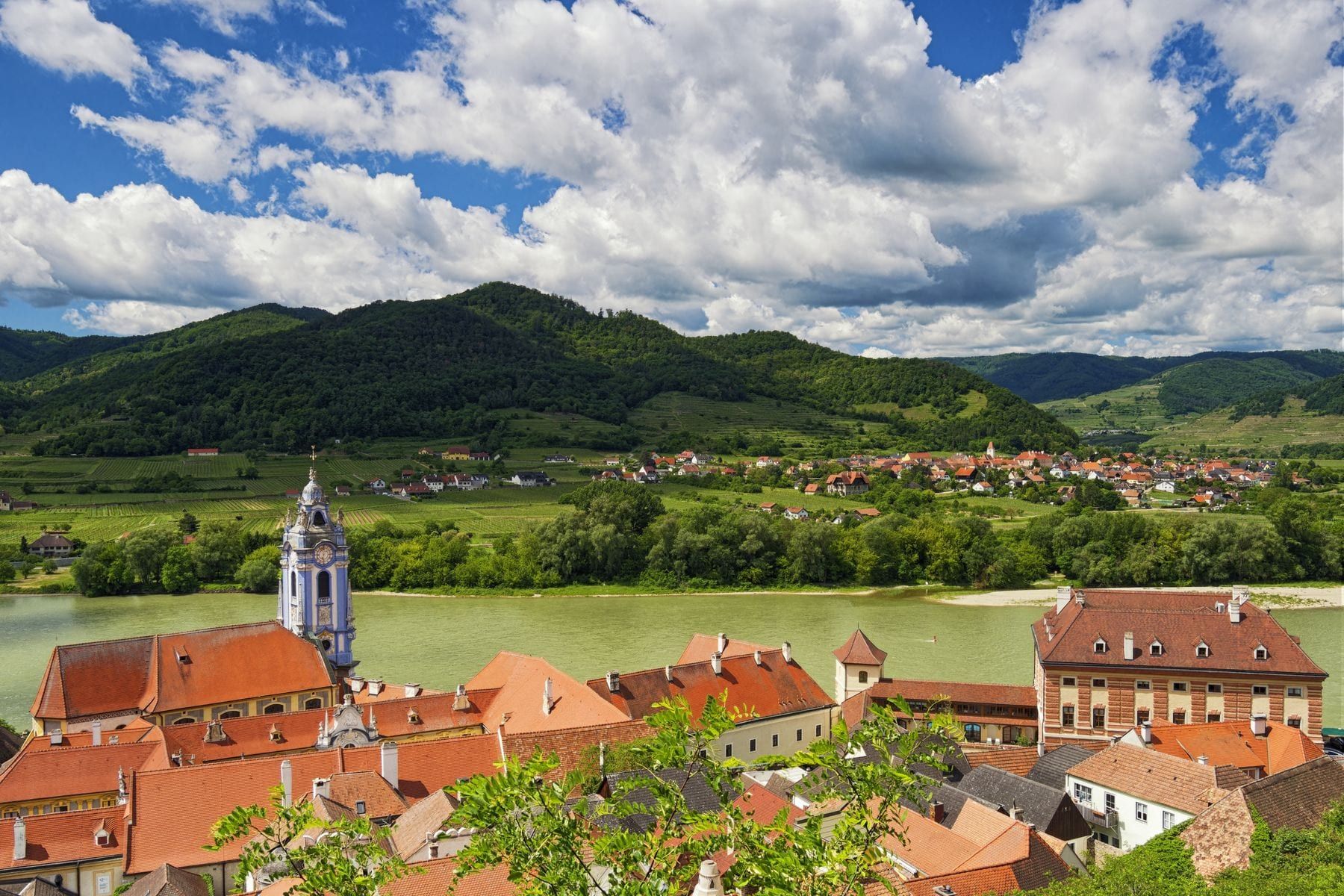
Photo: Carsten Ruthemann / Pexels

What does a trip to Wachau cost?

Adjust the values to your trip: the calculator updates live (EUR, converted from CHF estimates).

1,807 EUR
≈ 904 EUR per person
  • Getting there 321 EUR
  • Accommodation 749 EUR
  • Food 535 EUR
  • Local transport 134 EUR
  • Boat trip Melk to Krems (one way) 68 EUR

Estimates for orientation, not booking prices. Getting there means train or car from Switzerland, return, per person. Hotels vary strongly by season: current prices are behind the links below.

Money & payment: You pay in euros (EUR). Cards work almost everywhere; mountain huts and sausage stands often want cash. Tipping is expected: 5 to 10 percent, by naming the rounded total when you pay. In ski resorts a visitor tax of EUR 2 to 4 per night is added to the hotel price. Getting there: By train (ÖBB Railjet), car or a flight to Vienna, 2 to 8 hours.

Recommended hotels

Nine options in three price ranges, each among the best-rated on Booking.com.

Budget

Gästehaus Turm Wachau

Burg, Weissenkirchen

Guesthouse in the old village core of Weissenkirchen, a few steps from the fortified church, simple, clean rooms, breakfast with apricot jam from the Wachau. For cyclists and anyone who wants to sit at the Heuriger in the evening and look out at the vines in the morning.

from CHF 90 / night (about EUR 96) View →

Hotel Restaurant zur Post

Old town, Melk

Family-run inn on Linzer Strasse by the Rathausplatz, five minutes on foot from the abbey and the station. Solid rooms, sauna, a good restaurant with Wachau cooking, vinotheque, free bike hire. A practical base for arriving by train and setting off on the cycle path.

from CHF 95 / night (about EUR 102) View →

Hotel Unter den Linden

Stein, Krems an der Donau

Traditional house in the old town of Stein, right on the cycle path and close to the Landesgalerie. Simple, generous rooms, a quiet inner courtyard, breakfast with regional produce. A good choice for travellers who want to combine town and Wachau.

from CHF 95 / night (about EUR 102) View →

Mid-range

Hotel Richard Löwenherz

Dürnstein, Wachau

Former convent of the Poor Clares right on the Danube with a terrace above the river, a pool in the garden and rooms with old vaults. During the day Dürnstein is full; in the evening the terrace belongs to the hotel guests. For couples who want one night in the postcard village.

from CHF 190 / night (about EUR 203) View →

Hotel Garni Weinquadrat

Weissenkirchen, Wachau

Small design hotel in a winegrower's house in the middle of Weissenkirchen, modern rooms, breakfast with Wachau produce, its own wines to try. For anyone who finds inns too rustic and castle hotels too stiff.

from CHF 150 / night (about EUR 161) View →

Steigenberger Hotel & Spa Krems

Am Goldberg, Krems an der Donau

Large hotel on the slope above Krems with a spa, an outdoor pool and a view over the Danube to Göttweig. Rooms modern and spacious, restaurant with regional cooking. For families and anyone who wants to get into the water after a day on the bike; the centre is 15 minutes downhill on foot.

from CHF 170 / night (about EUR 182) View →

Luxury

Hotel Schloss Dürnstein

Dürnstein, Wachau

Baroque castle from 1630 above the Danube, family-owned for generations, a member of Relais & Châteaux. A terrace with the most famous view in the Wachau, indoor and outdoor pools, a kitchen with toques. The classic Wachau hotel, with a price to match.

from CHF 320 / night (about EUR 342) View →

Landhaus Bacher

Mautern an der Donau, Wachau

One of the best restaurants in Austria with rooms attached, on the south bank opposite Krems. Large garden, quiet setting, cooking by Thomas Dorfer with several toques. For anyone who comes for the food and then does not want to drive anywhere.

from CHF 280 / night (about EUR 300) View →

LOISIUM Wine & Spa Hotel Langenlois

Langenlois, Kamptal

Design hotel by Steven Holl in the middle of the vineyards of Langenlois in the Kamptal, ten kilometres north of Krems, with a large spa, wine bar and the Loisium wine world next door. For couples who want to combine architecture, wine and quiet; Dürnstein is 20 minutes away by car.

from CHF 260 / night (about EUR 278) View →

If you book through these links we earn a small commission, at no extra cost to you.

Experiences worth your time

Melk Abbey with library and abbey church

The baroque Benedictine abbey above the Danube, admission around CHF 15 (about EUR 16), CHF 18 with a guided tour, abbey park CHF 5 extra. The library, the Marble Hall and the church are the core, 90 minutes to two hours. Come at opening time at 9 am, before the boat groups arrive.

View & book →

Boat trip from Melk to Krems

The classic trip downstream through the whole valley, around 3 hours for CHF 32 one way, several times a day from April to October with Brandner or DDSG. Upper deck on the right-hand side in the direction of travel for Dürnstein. Bikes can come along (CHF 3 to 4); food on board is expensive.

View & book →

Danube Cycle Path from Melk to Krems

38 flat kilometres on the best-known cycle path in Europe, with ferries between the banks. Bike from CHF 20, e-bike from CHF 40 a day from hire shops in Melk, Spitz and Krems, one-way return usually possible. With stops in Spitz, Weissenkirchen and Dürnstein it is a full day.

View & book →

Dürnstein with castle ruin and abbey church

The blue church tower on the river, the main lane with its apricot shops and the climb to the ruin where Richard the Lionheart was held: 30 minutes steeply uphill, free, with the best view over the bend in the Danube. Before 10 am or after 5 pm; in between Dürnstein is a coach park.

View & book →

Wine tasting with a Wachau winegrower

Five to eight wines with an explanation of the categories Steinfeder, Federspiel and Smaragd, CHF 10 to 20 per person, often waived if you buy; the Domäne Wachau in Dürnstein offers cellar tours for around CHF 15. Guided wine tours with several estates and a driver cost CHF 90 to 150 per person.

View & book →

Welterbesteig: the Spitz to Weissenkirchen stage

The most beautiful stage of the 180-kilometre trail leads across terraces and dry-stone walls with views of the Danube, around 12 kilometres and 4 hours, free, with a stop in Joching or Wösendorf. Sturdy shoes, and in summer start before 9 am.

View & book →

Göttweig Abbey

The "Austrian Montecassino" on the hill south of Krems, baroque staircase, church and museum for around CHF 10, abbey terrace with restaurant and a view over the Danube valley. By bus from Krems or 90 minutes uphill on foot. Half a day, with far fewer visitors than Melk.

View & book →

Krems and Stein with the Kunstmeile

Two old towns and, between them, the Kunstmeile with the Kunsthalle Krems, the Caricature Museum and the Landesgalerie Niederösterreich in its tilted cube, combined ticket around CHF 15. Town tours from CHF 10 per person. Good for a rainy day or for the evening after a day on the bike, with student bars in the Untere Landstrasse.

View & book →

Aggstein castle ruin

The most defiant castle in the Wachau, on a rock 300 metres above the south bank, admission around CHF 8, with a knights' hall, a tavern and a view that reaches further than the one from Dürnstein. From Melk by bike or bus, then a 45-minute climb. Allow two to three hours; closed in winter.

View & book →

If you book through these links we earn a small commission, at no extra cost to you.

Food & drink

In the Wachau you eat what the river, the terraces and the farms provide: Danube catfish and pikeperch, roast pork and Blunzn at the Heuriger, apricots in dumplings, jars and bottles, and with it the best white wine in Austria. There is fine dining too, and the Landhaus Bacher in Mautern is among the best houses in the country, but the heart of the region beats in the Heuriger with a Brettljause and a Federspiel.

Wachauer Marillenknödel

Inns in Spitz and Weissenkirchen, stalls along the Donaustrasse at harvest time

Apricot dumplings: a whole apricot with a sugar cube inside quark or potato dough, rolled in buttered breadcrumbs, two pieces CHF 10 to 12 (about EUR 11 to 13) in a Gasthaus, one at a roadside stall CHF 4. In July with fresh apricots, otherwise from the freezer, which the restaurants say honestly.

Tip:Order them as a main course, not as dessert after the roast pork; three dumplings are a meal.

Brettljause at the Heuriger

Heurigen with the "Ausg'steckt" sign in Joching, Wösendorf, Weissenkirchen and Rossatz

A wooden board with bacon, dripping, Liptauer, brawn, cheese, gherkins and farmhouse bread, CHF 10 to 14 per person, usually plenty for two. With it a quarter litre of Federspiel for CHF 4 to 5.

Tip:Heurigen are open for only a few weeks a year; the dates are on the municipal websites, and they are loveliest in the evening from 6 pm.

Grüner Veltliner Federspiel and Riesling Smaragd

Domäne Wachau in Dürnstein, wine estates in Weissenkirchen, Spitz and Joching

The Federspiel is the fresh everyday wine with its peppery note, CHF 10 to 14 a bottle at the estate; the Smaragd is powerful, mineral and will age, CHF 20 to 40. A tasting of five to eight wines CHF 10 to 20.

Tip:Smaragd is named after the lizard on the walls, not after the gemstone, and a good Federspiel is often the better buy.

Donauwaller and Zander

Inns on the river in Spitz, Rossatz and Mautern

Danube catfish and pikeperch from the river and the ponds, fried with potatoes or as catfish cheeks, CHF 22 to 30 in a Gasthaus. The catfish is firmer, the pikeperch finer, and both are better than any imported sea fish on offer.

Tip:Ask for the fish of the day, not the menu; whatever has just come out of the net is cheaper.

Wachauer Laberl

Bäckerei Schmidl in Dürnstein, the original

A small, crusty wheat roll with a share of rye, invented in 1905 by the baker Schmidl in Dürnstein and now copied all over Austria. CHF 0.60 to 0.80 each, for breakfast or as the base of any Jause.

Tip:Fresh from the oven before 9 am in the morning; buy apricot jam to go with it and sit down on the riverbank.

Marillenschnaps and Marillennektar

Farm-gate sales in Rossatz, Arnsdorf and Spitz, distilleries in Dürnstein

The schnapps made from Wachau apricots is mild and fruity, a half-litre bottle from the farm CHF 25 to 40, a small glass in a restaurant CHF 4 to 6. The nectar for children and drivers CHF 3 a glass, CHF 6 to 8 a bottle.

Tip:Only buy bottles labelled "Wachauer Marille"; the rest is often imported apricot with a regional label.

Schweinsbraten with dumpling and cabbage salad

Prandtauerhof in Joching, inns in Melk and Spitz

Roast pork with crackling, caraway, its own juices, bread dumplings and warm bacon cabbage salad, the Sunday roast of every Wachau kitchen, CHF 16 to 20. At the Heuriger it comes as cold slices on the board.

Tip:Sunday lunch without a reservation does not work in the Wachau; the Lower Austrians are quicker.

Book a food tour: Wachau

Through markets and eateries with a guide, tastings included.

View & book →

If you book through these links we earn a small commission, at no extra cost to you.

History & background

The Wachau is the 36-kilometre stretch where the Danube breaks through the hills between Melk and Krems, and it has been settled since the Stone Age: the Venus of Willendorf, a 30,000-year-old female figure in limestone, was found here on the riverbank in 1908, and the original now stands in the Natural History Museum in Vienna. The Romans secured the river as a frontier, and under the Babenbergs Melk was briefly the residence of the margraves in the 10th century before they handed the castle to the Benedictines in 1089. That became Melk Abbey, whose baroque rebuilding by Jakob Prandtauer between 1702 and 1736 still towers over the Danube valley today. Dürnstein is famous for a prisoner: Richard the Lionheart was held in 1192 and 1193 in the castle above the village after insulting Duke Leopold V on his way back from the crusade; the ransom of 150,000 marks of silver financed the founding of the town of Wiener Neustadt. Winegrowing came with the monasteries; Bavarian and Salzburg abbeys owned the best sites for centuries and built the terraces of dry-stone walls that give the Wachau its face. The Marille, the apricot, probably arrived with the Romans and became the second speciality in the 20th century. In 1955 winegrowers and conservationists prevented the construction of a Danube power station near Rührsdorf, and in 1983 a second project, which is why the Danube flows freely here on one of its last stretches in Austria. Since 2000 the Wachau has been a UNESCO World Heritage Site, and the winegrowers' association Vinea Wachau, with its categories Steinfeder, Federspiel and Smaragd, has made the Grüner Veltliner and Riesling from here famous around the world.

Insider tips

Getting there: Railjet to St. Pölten or Melk, then boat, bike or regional train

From Switzerland you take the Railjet from Zurich to St. Pölten (around 7 hours) or change in Linz or Amstetten onto the regional train to Melk, 7 to 8 hours in all; Sparschiene tickets from CHF 30 to 40 (about EUR 32 to 43) one way, standard fare around CHF 110. From Vienna it is a hop: Railjet to St. Pölten in 25 minutes, regional train to Melk in an hour, or the Franz-Josefs-Bahn to Krems in a good hour, CHF 15 to 20. Between Melk and Krems, since the Wachaubahn stopped running as a regular service on the north bank, there is only the bus (WL1, hourly, included in the Wachau Card) and, from April to October, the boats of Brandner Schifffahrt and the DDSG, Melk to Krems around 3 hours downstream for CHF 32, longer upstream. The Wachaubahn runs in summer as an excursion train between Krems and Emmersdorf. By car it is 650 kilometres from Zurich via Salzburg and Linz, 7 hours plus the vignette; once there, the car is more of a problem at weekends, because the car parks in Dürnstein and Spitz are full by 10 am and cost CHF 6 to 10 a day. Our advice: take the train to Melk, hire a bike (nextbike stations or local hire shops from CHF 20 a day, e-bike from CHF 40) and ride downstream on the Danube Cycle Path.

Where to stay: a winegrower's room rather than a Dürnstein castle hotel

The Wachau is a region of inns and winegrowers' guesthouses, and that is a good thing. A double room at a winegrower's with breakfast costs CHF 80 to 120 (about EUR 86 to 128), an inn on the river CHF 120 to 180, the well-known houses in Dürnstein (Schloss Dürnstein, Richard Löwenherz) CHF 250 to 400. Dürnstein is overrun by boat passengers during the day and deserted and beautiful in the evening from 6 pm, which argues for one night there, but not for three. Weissenkirchen is the prettiest village with the best mix of Heurigen and quiet, Spitz has the Wachaubahn station and the Tausendeimerberg, Joching and Wösendorf are the winegrowing villages in between. Krems and Stein at the eastern end have a town feel, student bars and cheaper rooms from CHF 90, and you can get away without a boat. Melk at the western end is shaped by the abbey and quiet in the evening. Booking: for weekends in May, for the apricot blossom in early April and for the harvest in October, two to three months ahead; during the week a week is often enough. Many businesses close from November to March, which you should check before a winter trip.

Cost traps and savings: the Wachau Card, combined tickets and the north bank trick

The Wachau is cheap if you do it the way the Lower Austrians do, and expensive if you do it like a river cruise. Many hosts give you the Wachau Card free with your stay, or you buy it for a few francs; it includes the WL1 bus and discounts for the boat, the abbey and museums. Melk Abbey costs around CHF 15 (about EUR 16) without a guided tour, CHF 18 with one, plus the abbey park at CHF 5; if all you want is the library and the church, take the ticket without the tour and you are through in 90 minutes. The combined ticket for boat plus abbey is available from Melk and saves around CHF 5. On the boat, food and drink cost one and a half times the price on shore, so buy an apricot loaf and a bottle of Veltliner in Melk for the trip. The biggest saving is the ferry: between Spitz and Arnsdorf, and between Weissenkirchen and St. Lorenz, cable ferries cross for CHF 2 to 3 per person with a bike, so you switch banks and avoid the bus road. Wine tastings at the winegrowers cost CHF 10 to 20 for five to eight wines and are often waived if you buy two bottles; a good Federspiel costs CHF 10 to 14 at the estate, the same wine twice that in Zurich. The castle ruin at Dürnstein and the climb up to it cost nothing.

Timing: apricot blossom, summer crowds, harvest and the empty November

The Wachau has four faces. In early to mid-April around 100,000 apricot trees blossom, for ten days the whole valley is white and pink, and the Lower Austrians know it; if you want the blossom you have to come during the week and can only plan the date with any certainty two weeks ahead. May and June are green, mild and full at weekends, ideal from Monday to Thursday. July is the apricot harvest with stalls on every road, plus 30 degrees in the valley and the summer festival in Spitz. High summer brings heat, many cyclists and up to ten cruise ships a day at the landing stages of Dürnstein and Melk; if you come then, see the villages before 10 am and after 5 pm and spend the day in the vineyards. September and October are the best time: harvest, Sturm in the Heurigen, warm light, wine autumn events, coloured vines and morning mist over the river. All Saints' Day is the last full day, then the boats and many restaurants close until Easter, and from November to March the Wachau belongs to the locals, a few Heurigen and an abbey that stays open. For walkers the Welterbesteig, 180 kilometres in 14 stages, can be walked between April and October; the most beautiful stage is Spitz to Weissenkirchen across the terraces.

Underrated: south bank, Göttweig, Krems-Stein and Willendorf

The coaches drive the north bank with Dürnstein, Weissenkirchen and Spitz. The south bank between Melk and Mautern is quieter and has the better walks: from Rossatz or Rührsdorf you look across to Dürnstein, in Arnsdorf and Rossatz there are apricot and wine farms without boat passengers, and the Aggstein ruin on the rock above the river (admission CHF 8, about EUR 9) is the more impressive castle. Göttweig Abbey sits enthroned on a hill south of Krems, baroque like Melk, with half as many visitors, admission around CHF 10, and the abbey terrace is a good place for lunch with a view. Krems and Stein are two towns that have grown together, with medieval lanes, the Kunsthalle Krems, the Caricature Museum and the Landesgalerie Niederösterreich, which opened in 2019 as a tilted cube on the Danube bank (combined ticket around CHF 15). Willendorf has a small Venus show cave at the find site, Spitz the shipping museum, and in Melk, besides the abbey, the old town with the Rathausplatz is worth it, where after 5 pm the people of Melk have the place to themselves again. For the view from above: the Seekopf above Dürnstein (an hour's climb) or the Tausendeimerberg above Spitz, both free and better than any viewing terrace.

Heuriger, apricot, Veltliner: what you should eat and drink

Wachau cooking is winegrowers' cooking: roast pork, Blunzengröstl (fried black pudding with potatoes), Danube fish, apricots in every form and above all wine. The Heuriger is more genuine here than in Vienna because it often opens for only three weeks a year, when the winegrower has time; the sign "Ausg'steckt" and a bunch of pine branches over the door show it, and the dates are on the municipal websites. A Brettljause with bacon, dripping, Liptauer and bread costs CHF 10 to 14 (about EUR 11 to 15), a quarter litre of Federspiel CHF 4 to 5. The three Wachau categories are easy to remember: Steinfeder is light and up to 11.5 per cent, Federspiel is the everyday wine up to 12.5 per cent, Smaragd is powerful, late-harvested and from 12.5 per cent, named after the emerald lizard that suns itself on the terrace walls. Grüner Veltliner and Riesling are the grape varieties; everything else is a side issue. The apricot comes as dumplings, jam, schnapps and nectar, and the name "Wachauer Marille" is protected; buy it at the farm or at a roadside stall in July, not as a box in the souvenir shop. The winegrowers of the Domäne Wachau in Dürnstein sell from the winery, and the inns Prandtauerhof in Joching and Jamek in Joching are institutions that have been there for decades. At weekends you should reserve everywhere.

Frequently asked questions about Wachau

How do I get from Switzerland to the Wachau, and do I need a car?

By Railjet from Zurich to St. Pölten or with a change to Melk, 7 to 8 hours, Sparschiene from CHF 30 to 40 (about EUR 32 to 43) one way, standard fare around CHF 110. From Vienna you are in Melk or Krems in an hour. You do not need a car: the Danube Cycle Path, the WL1 bus, the boats from April to October and the cable ferries connect all the villages. With a car (650 kilometres, 7 hours) you will be annoyed by full car parks at weekends.

How many days do you need for the Wachau?

It works as a day trip from Vienna, but then you only see Dürnstein and Melk Abbey along with everyone else. Two nights is right: one day for Melk and the boat or bike to Spitz, one day for Weissenkirchen, Dürnstein and Krems with a Heuriger in the evening. If you walk or want to take in Göttweig and the south bank, stay three to four nights. The Wachau combines well with Vienna or Linz.

Boat or bike: which is better?

Both, in this order: downstream by bike from Melk to Krems is 38 flat kilometres, three to four hours with breaks; the cycle path runs along both banks of the river and is suitable for children. The boat (Melk to Krems CHF 32, about EUR 34, around 3 hours) is relaxed, but you are on board with many others and only see the villages from the water. The best combination: there by bike, back by train, or put the bike on the boat (CHF 3 to 4 surcharge) and let it carry you for one stretch.

When is the best time to go?

Mid-September to mid-October for the harvest, Sturm, Heurigen and autumn colours, May and June for the green valley and long evenings, in each case during the week. The apricot blossom in early to mid-April is spectacular but short and hard to hit. July and August are hot and full of cruise ships, but it is apricot harvest time. From November to March the boats, many restaurants and hotels are closed; Melk Abbey is open.

What does the Wachau cost per day?

Less than most people think. A double room at a winegrower's with breakfast costs CHF 80 to 120 (about EUR 86 to 128), an inn on the river CHF 120 to 180, lunch CHF 15 to 22, a Heuriger evening with a Jause and two quarter litres CHF 25 per person, the bike CHF 20 a day, Melk Abbey CHF 15, the boat CHF 32. Expect CHF 100 to 130 per person per day excluding travel, and correspondingly more in Dürnstein's castle hotels.

Is Melk Abbey worth it, or is the view from outside enough?

It is worth it, because of the library with 100,000 volumes and the abbey church, one of the most magnificent baroque churches in Europe. Admission around CHF 15 (about EUR 16), with a guided tour CHF 18; the abbey is open all year (in winter only with a tour). Come at opening time at 9 am or after 3 pm, when the boat groups have gone. The view from the balcony over the Danube is the best in the valley, and the abbey park with its baroque garden pavilion costs CHF 5 extra.

Itineraries with this destination

Activities in the region

More destinations in Vienna, Danube & Burgenland