History & background
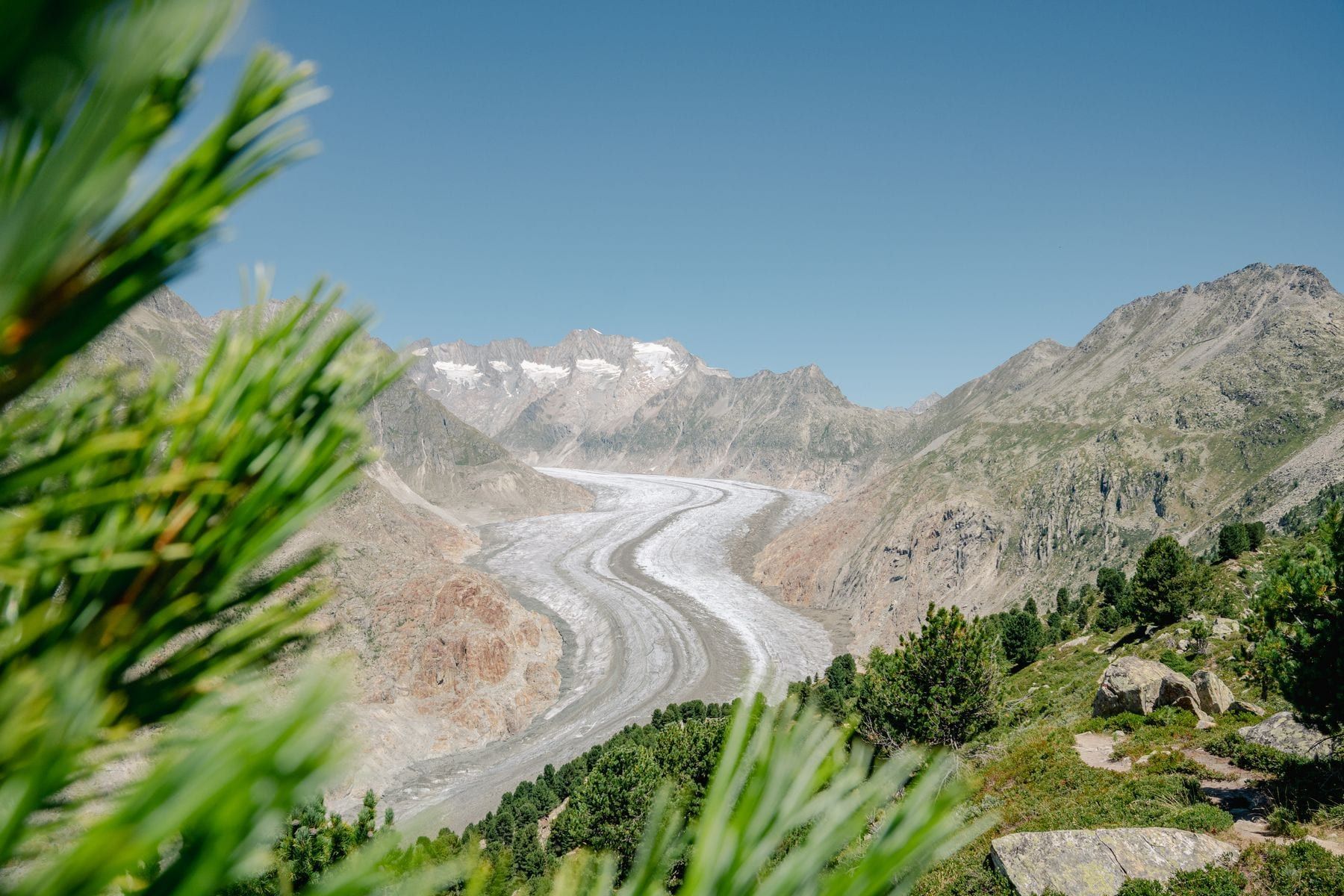
The Great Aletsch Glacier, around 20 kilometres long and holding 10 billion tonnes of ice, is the largest glacier in the Alps. It forms at the Konkordiaplatz below the Jungfrau and Mönch, where three firn streams merge and the ice is up to 800 metres thick, and sweeps in a wide arc south to the Massa Gorge above the Rhone valley. Its two dark medial moraines, which look like tyre tracks from the air, make it the best-known glacier in the world. The sun terrace above it, Riederalp, Bettmeralp and Fiescheralp at 1,900 to 2,200 metres, was purely a summer pasture for the villages in the valley until the 20th century: in June the farmers from Ried, Betten and Fiesch drove the cattle up, in September back down. The Aletsch Forest on the glacier's edge, with its Swiss stone pines up to 1,000 years old, was placed under protection in 1933 after a hotel project had been fought off; the Villa Cassel on the Riederfurka, built in 1902 by the English banker Ernest Cassel and where Winston Churchill holidayed as a young man, is now the Pro Natura Centre. The first cable cars reached Riederalp and Bettmeralp in 1951, and the villages decided early to remain car-free. In 2001 the Jungfrau-Aletsch region became the first natural heritage site in the Alps to be added to the UNESCO World Heritage list. The glacier now loses around 50 metres of length a year and has shrunk by more than three kilometres since 1870; forecasts predict the loss of most of it by 2100. If you want to see it, do not wait.