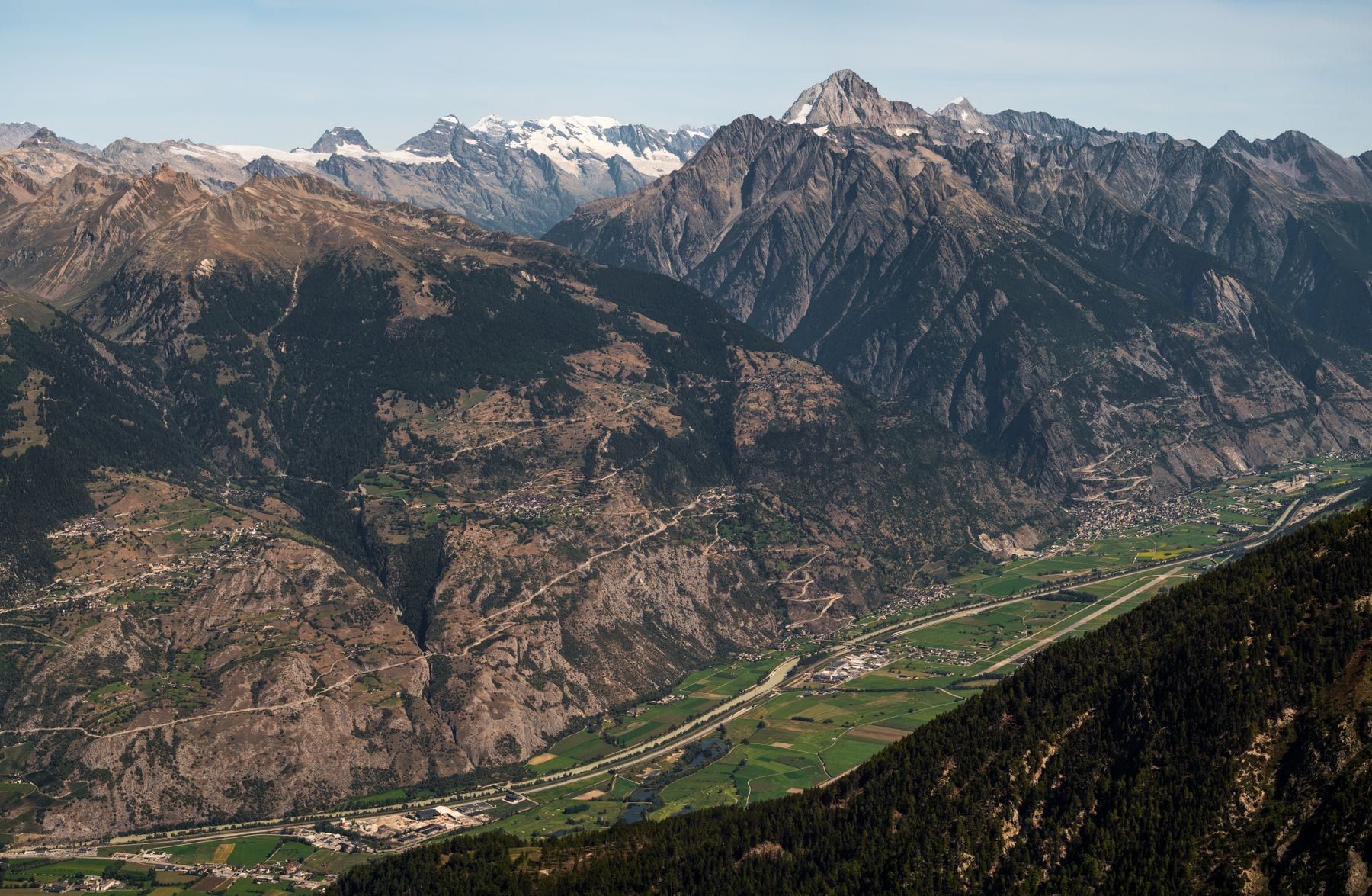
Zermatt

Switzerland · Lake Geneva & Valais · Travel guide

Zermatt

What a few days beneath the Matterhorn really cost, why you should ride the Gornergrat before 8 am, and how the Half Fare Card, the Peak Pass and the right month save you a third.

Photo: Ilia Bronskiy / Pexels

What does a trip to Zermatt cost?

Adjust the values to your trip: the calculator updates live (EUR, converted from CHF estimates).

2,923 EUR
≈ 1,462 EUR per person
  • Getting there 321 EUR
  • Accommodation 1,391 EUR
  • Food 749 EUR
  • Local transport 321 EUR
  • Gornergrat railway return (with Half Fare Card) 141 EUR

Estimates for orientation, not booking prices. Getting there means train or car from Switzerland, return, per person. Hotels vary strongly by season: current prices are behind the links below.

Money & payment: You pay in Swiss francs (CHF). Cards and the Twint app work practically everywhere, even on alpine pastures. Many shops accept euros but give change in francs at a poor rate. Service is included in prices; rounding up is customary. Getting there: By train (SBB) or car, 1 to 4 hours from Zurich.

Recommended hotels

Nine options in three price ranges, each among the best-rated on Booking.com.

Budget

Zermatt Youth Hostel

Winkelmatten, Zermatt

The youth hostel above the village in Winkelmatten, with a Matterhorn view from the breakfast room and many of the rooms. Half board included, family rooms, bus to the centre outside the door. The cheapest bed in Zermatt and one of the best located.

from CHF 65 / night (about EUR 70) View →

Hotel Bahnhof Zermatt

Station, Zermatt

The Biner family's mountaineers' lodge directly opposite the station, the address for alpinists for generations. Dorms and simple rooms, shared kitchen, drying room. For anyone who wants to be out early and up the mountain, and cook for themselves in the evening.

from CHF 90 / night (about EUR 96) View →

Typically Swiss Hotel Täscherhof

Täsch

Solid three-star hotel in Täsch next to the station and the Matterhorn Terminal, with free parking and the shuttle to Zermatt every 20 minutes. Chalet-style rooms, restaurant with Valais cuisine. For drivers and skiers to whom the village atmosphere in the evening matters less than the price.

from CHF 140 / night (about EUR 150) View →

Mid-range

Hotel Alpenblick Zermatt

Winkelmatten, Zermatt

Family-run chalet hotel in Winkelmatten with balconies facing the Matterhorn, a small spa and a restaurant whose half board is worth it. Electric bus to the centre in five minutes, Glacier Paradise valley station within walking distance. For couples and families who want the mountain from the balcony.

from CHF 240 / night (about EUR 257) View →

Hotel Bristol Zermatt

Centre, Zermatt

Classic three-star superior hotel a few steps from the station and the Gornergrat railway, rooms in light wood, some with a Matterhorn view, sauna and gym. Practical for short stays where you want to reach every railway on foot.

from CHF 230 / night (about EUR 246) View →

Hotel Butterfly, BW Signature Collection

Centre, Zermatt

Four-star hotel behind the Bahnhofstrasse, quietly located yet three minutes from the station, with a wellness area, sauna and good breakfast. Rooms vary in size, the south side has the Matterhorn view. Reliable mid-range at Zermatt prices.

from CHF 260 / night (about EUR 278) View →

Luxury

Mont Cervin Palace

Bahnhofstrasse, Zermatt

The Seiler family's grand hotel of 1852 on the Bahnhofstrasse, with a large spa, indoor pool, several restaurants and a horse-drawn carriage from the station. Classic alpine luxury, Matterhorn-facing rooms in the new Residence wing. For the occasion when Zermatt should be exactly as you imagine it.

from CHF 600 / night (about EUR 642) View →

The Omnia

Rock above the village, Zermatt

Design hotel on a rock above the village centre, reached by a lift through the mountain, 30 rooms in wood, leather and stone, spa with an outdoor pool and a view of the Matterhorn. The most modern luxury in the village, quiet and without cowbell folklore.

from CHF 650 / night (about EUR 696) View →

Riffelalp Resort 2222m

Riffelalp, Zermatt

The highest five-star hotel in Europe at 2,222 metres on the Gornergrat railway, with its own tram from the station, an outdoor pool with a Matterhorn view and ski-in ski-out in winter. In the evening, when the railway stops running, you have the mountain to yourself. Expensive, but an experience no village hotel offers.

from CHF 700 / night (about EUR 749) View →

If you book through these links we earn a small commission, at no extra cost to you.

Experiences worth your time

Gornergrat railway and Riffelsee

By the rack railway of 1898 in 33 minutes up to 3,089 metres, return CHF 132 (about EUR 141), CHF 66 with a Half Fare Card, with the Kulm hotel, observatory and a view of 29 four-thousand-metre peaks. Take the first train at 7 am, walk from Rotenboden to the Riffelsee and ride back from Riffelberg. Half a day.

View & book →

Matterhorn Glacier Paradise

The highest cable car station in Europe at 3,883 metres, return around CHF 120 (about EUR 128), with a glacier palace in the ice, viewing platform and views as far as Mont Blanc. Thin air, sunglasses and a warm jacket even in August, two to three hours from the valley station. In summer you can continue to Cervinia.

View & book →

Five Lakes Walk from Sunnegga

From Blauherd via the Stellisee, Grindjisee, Grünsee, Moosjisee and Leisee to Sunnegga, two and a half hours, mostly downhill, with the Matterhorn reflected in three of the lakes. Sunnegga and Blauherd lifts return around CHF 45 (about EUR 48) with a Half Fare Card. The best family walk in Zermatt, July to October.

View & book →

Rothorn with Blauherd

Funicular, gondola and cable car in 25 minutes up to 3,103 metres, return around CHF 90 (about EUR 96), Half Fare Card valid. The quietest of the three viewpoint railways, with the most beautiful view of the Matterhorn east face and a glacier trail across the Gorner Glacier for experienced walkers. Half a day.

View & book →

Matterhorn Museum Zermatlantis

Underground museum on the church square on the history of the village and the first ascent, with the broken rope of 1865 and a reconstructed village. CHF 12 (about EUR 13), one to one and a half hours, ideal for a bad-weather afternoon. Afterwards visit the mountaineers' cemetery next door.

View & book →

Gorner Gorge

Wooden walkways through a narrow gorge with the roaring glacial Vispa on the southern edge of the village, CHF 6 (about EUR 6), 30 minutes through the gorge, a good hour with the return walk. An adventure for children, open June to October, slippery in rain.

View & book →

Zermatt and Cervinia ski pass

360 kilometres of pistes across two countries, the highest ski area in the Alps, snow-sure from November to May. Day pass CHF 95 to 110 (about EUR 102 to 118), cheaper online in advance, International supplement for Cervinia around CHF 10. Children under 9 free with the Wolli Card.

View & book →

Walk to Zmutt

An hour and a half from the village to the 400-year-old hamlet of Zmutt with a view of the Matterhorn north face, a stop at the simple inn, back via the reservoir or the same way. Free, no railway needed, June to October. Guided walks with a mountain guide from CHF 80 (about EUR 86).

View & book →

Glacier Express from Zermatt

The panoramic train from Zermatt to St. Moritz, 8 hours over 291 bridges and through 91 tunnels, ticket with a Half Fare Card around CHF 80 (about EUR 86) plus CHF 49 reservation. As a departure instead of the return via Visp, the most beautiful way out of the valley. Window seat on the right in the direction of travel as far as Andermatt.

View & book →

If you book through these links we earn a small commission, at no extra cost to you.

Food & drink

Zermatt eats Valais cuisine in its most expensive form: raclette from the open fire, dried meat, rye bread and Fendant, plus a density of gourmet restaurants that no other mountain resort has. The famous hut restaurants in Findeln are magnificent and cost as much as a dinner in Zurich. It gets affordable with the lunch menu in the village, half board at the hotel and the Coop on the Bahnhofstrasse.

Raclette from the half wheel

Walliserkanne and the stube along the Bahnhofstrasse, Walliserstube in the village centre

Valais raclette cheese melted over an open fire or under the grill and scraped onto the plate portion by portion, with Gschwellti (boiled potatoes in their skins), gherkins and pickled onions. CHF 8 to 10 (about EUR 9 to 11) per portion, all you can eat CHF 32 to 40.

Tip:The cheese must come from Valais (Raclette du Valais AOP), Bagnes and Gomser are the classic varieties; ask.

Walliser Teller

Hut restaurants in Findeln, Zmutt and on the Riffelalp, in the village in every Valais stube

Dried meat, raw ham, house sausage, shaved cheese and rye bread on a wooden board, the Valais aperitif platter. CHF 24 to 32 (about EUR 26 to 34) for a portion that is enough for two.

Tip:Share one between two on the mountain, then the price is right.

Cholera

Traditional restaurants in the village and mountain restaurants such as the Riffelhaus on Riffelberg

Covered pie from the Goms with potatoes, leek, apples, cheese and bacon, said to have originated in the cholera epidemic of 1830, when nobody wanted to leave the house. CHF 18 to 24 (about EUR 19 to 26) as a main course.

Valais dried meat

Butchers on the Bahnhofstrasse, Coop and Migros for the cheaper version

Beef dried and pressed for months in mountain air, sliced wafer-thin. CHF 8 to 12 (about EUR 9 to 13) per 100 grams at the butcher, the best souvenir from Valais.

Tip:Vacuum-packed it keeps for weeks, and on the mountain it is the perfect picnic with rye bread.

Rösti with fried egg

Mountain restaurants on all pistes and hiking trails, Riffelberg, Sunnegga, Furi

The Zermatt hut meal: a cake of fried potatoes topped with a fried egg, bacon or melted cheese. On the mountain CHF 26 to 30 (about EUR 28 to 32), in the village at lunchtime CHF 20 to 24.

Tip:On the mountain order one rösti and one Walliser Teller between two, it is enough and saves CHF 20.

Fendant and Petite Arvine

Every Valais stube, wine bar in the village centre

Fendant, the Valais Chasselas, is the wine for raclette; Petite Arvine is the true Valais grape variety, mineral and salty on the finish. Fendant CHF 6 to 8 (about EUR 6 to 9) per decilitre, Petite Arvine CHF 9 to 12.

Tip:In a restaurant order the Fendant by the decilitre in a glass, not by the bottle, then you get to try more.

Rye bread and alpine cheese

Bakeries in the village, Coop and Migros on the Bahnhofstrasse, alpine cheese direct in Findeln and Zmutt

Valais rye bread AOP, dark, dense and keeps for days, with alpine cheese from the Zermatt alps. A loaf CHF 5 to 7 (about EUR 5 to 7), the cheese CHF 3 to 4 per 100 grams.

Apple strudel or apricot tart at the hut

Findlerhof and Chez Vrony in Findeln, mountain restaurants on Riffelalp and Sunnegga

Valais apricots from the Rhone valley in a cake or as a tart, in summer on almost every mountain terrace. CHF 8 to 12 (about EUR 9 to 13) a slice with cream.

Tip:In July and August you can also buy the apricots fresh by the kilo at stalls in the Rhone valley, in Zermatt only in the shop.

Book a food tour: Zermatt

Through markets and eateries with a guide, tastings included.

View & book →

If you book through these links we earn a small commission, at no extra cost to you.

History & background

Until the 19th century Zermatt was a mountain farming village at the end of the Mattertal, 1,600 metres up, whose inhabitants worked the alpine pastures in summer and had hardly any contact with the outside world in winter. The first outsiders were naturalists: Horace-Bénédict de Saussure surveyed the Matterhorn in 1792, and from 1838 the village doctor Josef Lauber took in the first guests in three beds. Alexander Seiler, a candlemaker from the Goms, took over a small inn in 1853 and turned it into the Hotel Monte Rosa, the beginning of the Seiler dynasty that shapes the village to this day. The golden age of alpinism came with the English: on 14 July 1865 Edward Whymper and six companions were the first to stand on the Matterhorn; on the descent the rope broke and four men fell to their deaths down the north face. The tragedy made Zermatt world-famous, and the graves lie in the mountaineers' cemetery next to the church. The railway from Visp arrived in 1891, the Gornergrat railway in 1898 as the first electric rack railway in Switzerland, and from 1927 the trains ran in winter too, which is when ski tourism began. The village decided against the car early: since 1931 only electric vehicles and horse-drawn carriages have been allowed, and cars stay in Täsch. Today Zermatt has 5,800 inhabitants, 2 million overnight stays a year, with 3,883 metres the highest ski area in Europe, and the Matterhorn is the most photographed logo in Switzerland, from the Toblerone box to the flag at the village entrance.

Insider tips

Getting there: train into the village, car as far as Täsch

You can only reach Zermatt by train or on foot. From Zurich you travel via Bern to Visp (2 hours) and then up through the Mattertal on the Matterhorn Gotthard Bahn in 65 minutes, a good 3 hours 15 minutes in all; from Bern it is 2 hours 15 minutes, from Basel 3 hours, all with one change in Visp. With a Half Fare Card, Zurich return costs around CHF 130 (about EUR 139), of which CHF 40 is for the Visp to Zermatt section, where the GA is also valid. Supersaver tickets are available to Visp, rarely to Zermatt. By car you drive as far as Täsch, five kilometres before Zermatt: the Matterhorn Terminal has 2,100 covered parking spaces for CHF 16 a day, and from there the shuttle train runs every 20 minutes, taking 12 minutes to Zermatt, CHF 8.80 one way, half with a Half Fare Card. From Zurich that is 3 hours 30 minutes of driving via Bern and the Lötschberg car shuttle (CHF 29 per car) or over the Furka in summer. Electric taxis and hotel buses collect you at Zermatt station, most hotels do this free of charge, and on foot you cross the village in 15 minutes. The Glacier Express terminates in Zermatt; if you want to ride it, take it as your departure to St. Moritz, 8 hours, reservation CHF 49 plus ticket.

The mountain railways: Gornergrat, Glacier Paradise, Rothorn, and what the Peak Pass gives you

Three mountain railways bring you close to the Matterhorn, and together, without discounts, they cost more than the hotel. The Gornergrat railway climbs to 3,089 metres in 33 minutes, return CHF 132 (about EUR 141) in summer, CHF 66 with a Half Fare Card; from the top you see the Matterhorn, the Gorner Glacier and 29 four-thousand-metre peaks. Take the first train at 7 am, then you have light, quiet and space, and walk down from Rotenboden to the Riffelsee, where the Matterhorn is reflected, 20 minutes. The Matterhorn Glacier Paradise at 3,883 metres is the highest cable car station in Europe, return CHF 120 in summer, Half Fare Card valid, with a glacier palace and views as far as Mont Blanc. The Rothorn (3,103 metres, return around CHF 90) is the quietest of the three and has the view in which the Matterhorn is most beautifully shaped. The Peak Pass bundles all the railways: two days from around CHF 200, considerably less with a Half Fare Card, and it pays off from two mountains on two days. In winter everything is included in the ski pass, which at CHF 95 to 110 a day is the most expensive in Switzerland, 10 to 20 per cent cheaper online in advance. The money saver: if you only want to see the Matterhorn, take the Sunnegga funicular (CHF 20 return) up to 2,288 metres in three minutes and you have the mountain in front of you.

Where to stay: village centre, Winkelmatten or Täsch, and the question of season

A mid-range double room in Zermatt costs CHF 250 to 350 (about EUR 268 to 375) between Christmas and Easter and in July and August, CHF 180 to 220 in the shoulder season, and there are two shoulder seasons: mid-April to mid-June and mid-October to mid-December, when many hotels and railways close for two to four weeks. Location also decides the price. The Bahnhofstrasse and the centre are practical but noisy and without a Matterhorn view; Winkelmatten on the southern edge of the village has the view and is ten minutes away by electric bus; the slopes above the village (towards Sunnegga) have balconies with postcard views, but you walk uphill in the evening. The youth hostel in Winkelmatten, at CHF 60 to 80 per person including half board, is the cheapest bed in the village and has rooms with a Matterhorn view. Holiday apartments are the rule in Zermatt, not the exception: for four people from CHF 200 a night in the low season, which per head is cheaper than any hotel, and you save on food. Täsch has hotels for 30 to 40 per cent less and the shuttle every 20 minutes until 11 pm; for skiers with a car an honest option, for the village atmosphere in the evening not. And: book for Christmas, New Year and February to Easter by October at the latest, for summer by May.

Cost traps and money savers: huts, lunch, drinking water, Coop

The mountain restaurants on the pistes and hiking trails are Zermatt's biggest cost block after the railways: rösti CHF 26 to 30 (about EUR 28 to 32), cheese toast CHF 24, a beer CHF 8, water CHF 7. The well-known houses (Chez Vrony, Findlerhof, Zum See) in Findeln are excellent and honestly expensive at CHF 50 to 80 per person for lunch, and a reservation is necessary in high season. The rucksack is the answer: the Coop and Migros on the Bahnhofstrasse have bread, cheese and dried meat, and a picnic by the Riffelsee is no worse than the terrace. Every fountain in the village carries drinking water, so take a bottle. At lunchtime in the village there are menus for CHF 22 to 28, in the evening the same restaurant costs CHF 50 to 70 with wine; so eat your hot meal at lunchtime and have a fondue in one of the simpler stube in the evening. Half board in the hotels is often a good deal in Zermatt, CHF 40 to 60 extra for a three-course menu that would cost CHF 80 à la carte. For families: children under 9 ride all the railways free with the Wolli Card (CHF 5 per season, in the guest card), and children and teenagers up to 16 get the ski pass at half price in winter. And the visitor's tax of CHF 3 to 4 per night is added at all accommodation, but in return you get the village bus and discounts.

Timing: summer hiking, skiing into May, shoulder season with closed doors

Zermatt has two high seasons and two gaps. Winter runs from the end of November to the end of April with 360 kilometres of pistes stretching over to Cervinia in Italy, snow-sure into May thanks to the altitude; Christmas to New Year and the February sports holidays are the most expensive and busiest weeks, January after the 6th and the second half of March are cheaper and often sunnier. On the Theodul Glacier people ski all year round, in summer until 1 pm. The summer season from mid-June to mid-October is hiking time: 400 kilometres of trails, from the Five Lakes Walk (two and a half hours, flat, with reflections of the Matterhorn in three lakes) to the high-level walk from the Hörnli hut; July and August are the safest months for weather but also the fullest, and September is for us the best month, with clear air, larches turning yellow and half-empty railways. The shoulder seasons from mid-April to mid-June and from mid-October to the end of November are tricky: the Gornergrat railway always runs, but Glacier Paradise and Rothorn have maintenance weeks, half the restaurants are closed, and many hiking trails are under snow until June. In return, the hotels that are open are up to 40 per cent cheaper, and the Matterhorn is the same. Before booking, check on the Zermatt Bergbahnen website which railway runs when.

Underrated: Findeln, Zmutt, Riffelsee, Gorner Gorge and the village itself

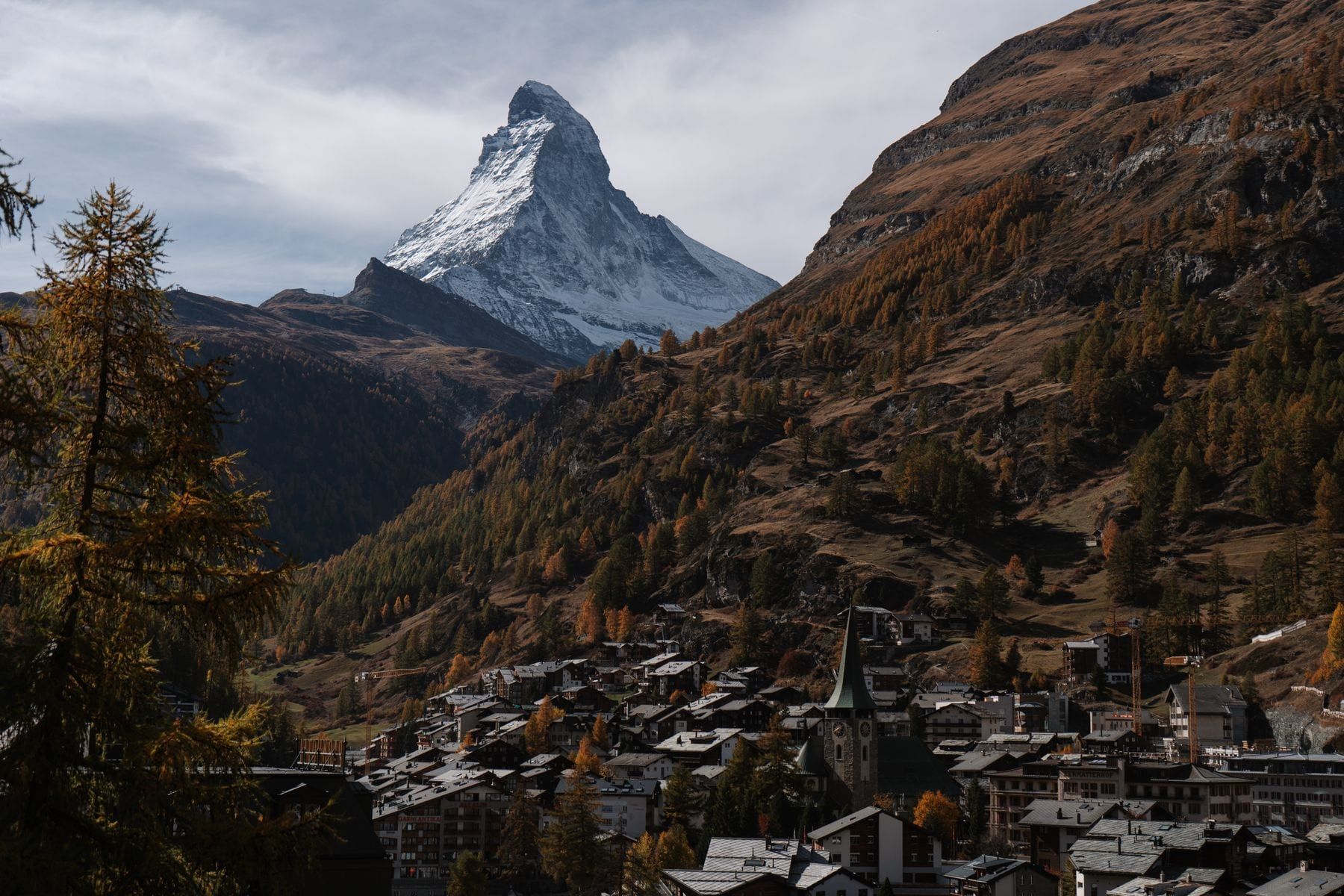
Between the big railways lies what makes Zermatt. Findeln is a hamlet at 2,100 metres below Sunnegga with black larch-wood barns on stone pillars, a chapel and the famous restaurants; the walk down from Sunnegga takes 20 minutes, from Findeln to the village an hour through the larch forest. Zmutt is its counterpart in the west: a hamlet with 400-year-old houses, an hour and a half on foot from the village, with a view of the Matterhorn north face that you get from no railway, and a simple inn. The Riffelsee below the Gornergrat station Rotenboden is the postcard motif with the reflected Matterhorn, best in the morning before 9 am when there is no wind; walking on to Riffelberg saves one railway station and CHF 15 (about EUR 16). The Gorner Gorge at the southern end of the village is a wooden walkway through a narrow gorge with roaring glacier water, CHF 6, an hour, an adventure for children. In the village itself, go to the Hinterdorf, the lane with the oldest barns from the 16th century, visit the Matterhorn Museum beneath the church square (CHF 12, with the broken rope of 1865) and the mountaineers' cemetery, where the dead of the Matterhorn lie. And at night: Zermatt has little light, the Matterhorn stands white above the village at full moon, and in summer you photograph it from the Kirchbrücke viewpoint on the Vispa with the river in the foreground.

Frequently asked questions about Zermatt

How do I get to Zermatt, and what do I do with the car?

By train from Zurich in a good 3 hours 15 minutes via Visp, from Bern in 2 hours 15 minutes, from Basel in 3 hours, with a Half Fare Card around CHF 130 (about EUR 139) return from Zurich. Zermatt is car-free: the car stays at the Matterhorn Terminal in Täsch (CHF 16 a day), and the shuttle train runs every 20 minutes, taking 12 minutes to the village. Once there, you have electric buses, electric taxis and hotel buses, and most hotels collect you free of charge at the station. You will not miss a car for a single second in Zermatt.

How many days do you need for Zermatt?

Three days is the guideline: one day Gornergrat with the Riffelsee walk, one day Matterhorn Glacier Paradise or Rothorn, one day Sunnegga with the Five Lakes Walk and Findeln. That also makes the Peak Pass worthwhile. With a fourth day you can add Zmutt or a hut walk. In winter a week is normal, because the ski area with Cervinia is huge. A day trip from Zurich is doable, but with seven hours on the train and CHF 200 (about EUR 214) not a good deal.

What does Zermatt honestly cost per day?

With a mid-range hotel for two, one mountain railway a day with a Half Fare Card, lunch on the mountain and dinner in the village, expect CHF 280 to 350 (about EUR 300 to 375) per person per day, CHF 220 to 260 in the shoulder season. On a budget with the youth hostel, picnics, Sunnegga instead of Gornergrat and fondue in the evening, CHF 140 to 170 is possible. In winter the ski pass adds CHF 95 to 110 a day. Zermatt is around 30 per cent more expensive than Grindelwald and 50 per cent more expensive than the Aletsch Arena.

Can you always see the Matterhorn?

No, and you should plan for that. The mountain makes its own weather: the famous banner, a cloud at the summit, comes with a westerly wind, and on around a third of days it is completely in cloud. Statistically visibility is best in the morning, hence the early train. Allow three days, then you are almost certain to see it. The Zermatt Bergbahnen webcams show you live whether the trip is worth it, and you can buy the Gornergrat ticket on the morning itself rather than in advance.

Is Zermatt worth it in summer without skiing?

Yes, for many people summer is the better season: 400 kilometres of hiking trails from flat to alpine, the Five Lakes Walk, the hamlets of Findeln and Zmutt, via ferratas, bike trails and the summer ski area on the glacier. The railways cost about the same in summer as in winter, but you need no ski pass and no equipment. July and August are full, September is the best month. You need warm clothing in summer too, it is often below zero at the top.

Can I cross over to Italy from Zermatt?

Yes. In winter you ski over the Theodul Pass to Cervinia with the International ski pass and eat pasta there for half the price, but you must be back before the last lift, otherwise the taxi around the mountain costs CHF 400 (about EUR 428). Since 2023 the Matterhorn Alpine Crossing has linked the two resorts by cable car in summer via Glacier Paradise and Testa Grigia, one way around CHF 120, bring your passport. For a day trip that is expensive, as a route to Italy with luggage an experience.

Itineraries with this destination

Activities in the region

More destinations in Lake Geneva & Valais