History & background
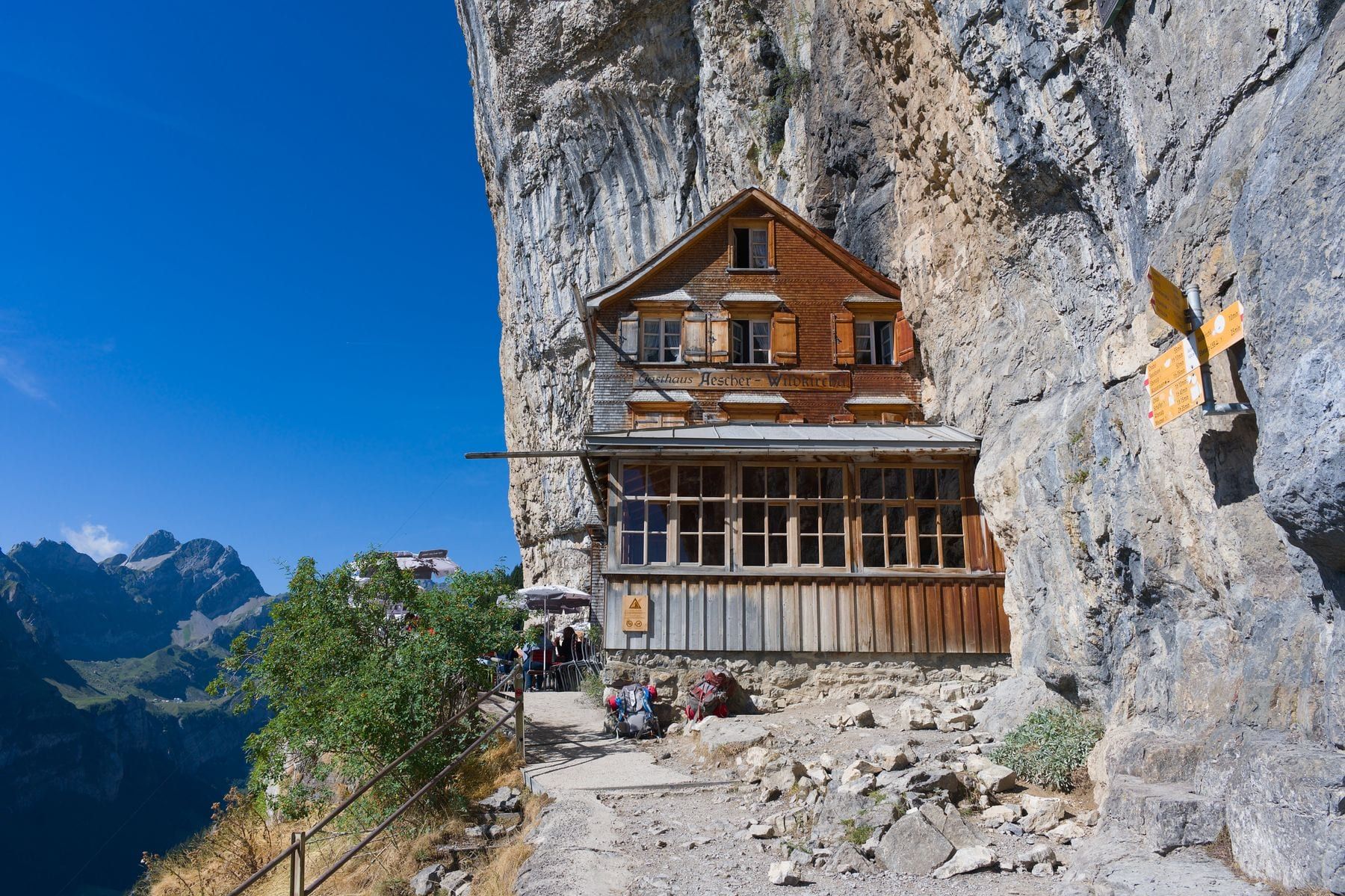
Appenzell means "Abbatis Cella", the abbot's cell, and the abbot was the one of St. Gallen, who from the 11th century had the land between Lake Constance and the Säntis settled and taxed. At some point the farmers had had enough: in 1403 they beat the abbot's army at the Stoss and at Vögelinsegg, and again in 1405 with support from Schwyz, and out of that came the land of Appenzell, which in 1513 joined the old confederation of 13 cantons as the last of them. In 1597 the land split along confessional lines: Innerrhoden with its capital Appenzell stayed Catholic, Ausserrhoden with Herisau and Trogen adopted the Reformation, and the border still runs right through meadows and villages today. Innerrhoden, with 16,000 inhabitants, is the smallest canton in Switzerland and the one that has resisted time the longest: the Landsgemeinde, at which voters decide in the open air with a raised hand, takes place every last Sunday in April on the Landsgemeindeplatz, and men carry a sword as proof of their right to vote. Women's suffrage was forced through by the Federal Supreme Court in 1990, the last canton to adopt it. Appenzell culture survives for the same reason: the painted facades on the Hauptgasse, the naive farm painting with its processions of cattle up to the Alps, coin spinning, the Zäuerli as a wordless natural yodel, the Silvesterchlaus in Urnäsch with its enormous headdresses, and the cheese whose herbal brine has stayed secret for centuries. The Alpstein, with the 2,502-metre Säntis as its local mountain, has been hiking country since the 19th century; the Berggasthaus Äscher in the rock face below the Ebenalp has existed since 1846 and in 2015 became one of the most photographed inns in the world thanks to a National Geographic cover. What that has done to the village you can see at the Wasserauen valley station on any summer Saturday.