Switzerland · Road trip · 6 days

Eastern Switzerland and Rhine Falls

The Switzerland that lies between Zurich and the mountains and that most people only drive through: the biggest waterfall in Europe, a small town with painted facades, the hill country of the Appenzellers and finally the gorge the Rhine has carved through the Flims rockslide. Short stages, plenty of time in each place.

The route, day by day

  1. Day 1

    Zurich: A Day of City before the Country

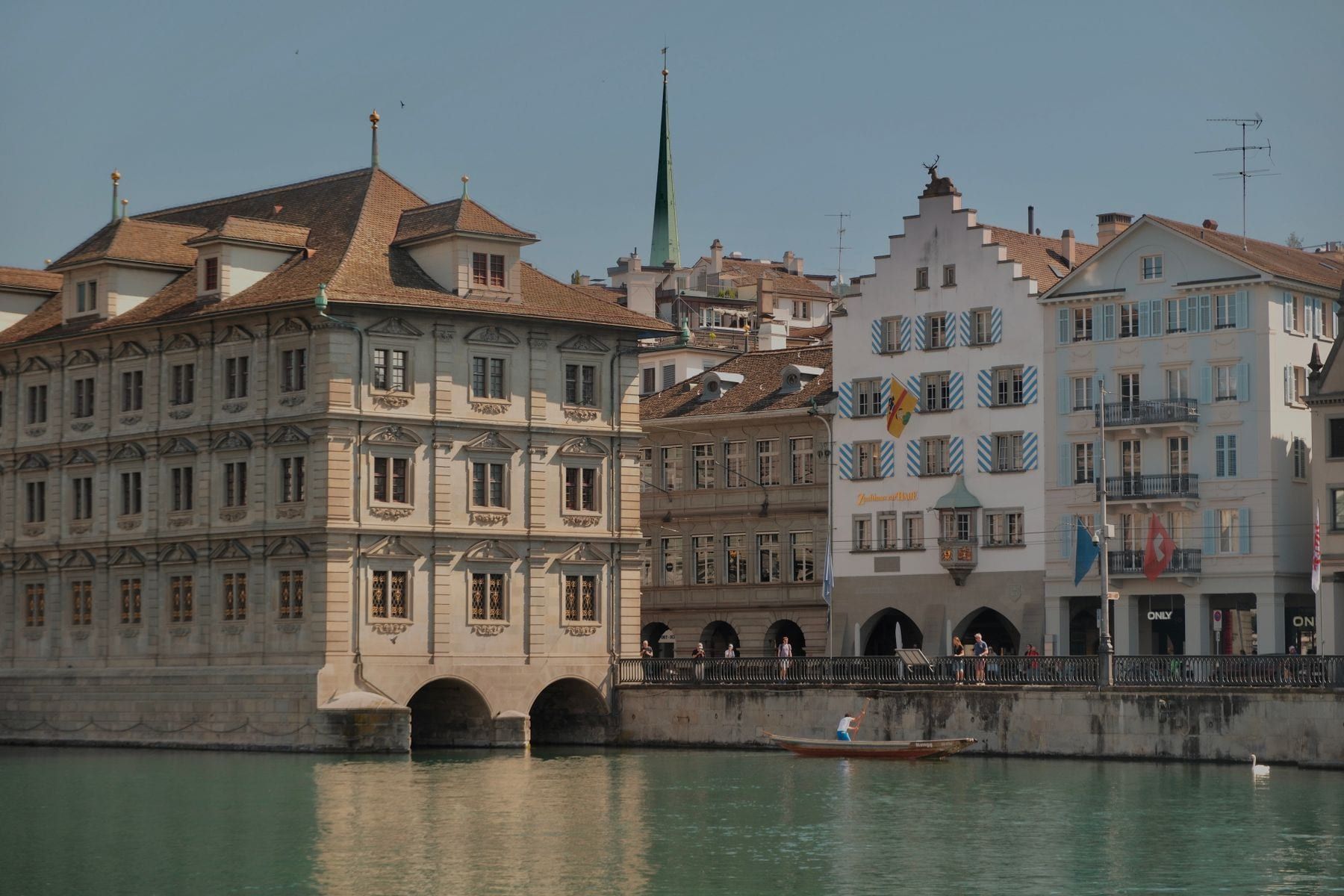
    You begin in Zurich without a car: main station, day pass, and a day that swings between old town and lake. In the morning Lindenhof, Grossmünster and Niederdorf, at lunchtime a daily menu in Kreis 4 for CHF 20 to 25 (about EUR 21 to 27), in the afternoon depending on the weather the Badi Utoquai, the Kunsthaus or the Landesmuseum next to the station, which explains Swiss history in two hours and is a good prelude to eastern Switzerland. In the evening Kreis 5, the Markthalle in the Viadukt, a beer at the Oberer Letten. Sleep in a mid-range hotel near the main station or in Zürich West, CHF 180 to 240, cheaper at weekends. Reserve the hire car for the next morning at the main station or the airport, where the choice is bigger and the exit northwards easier. On to Schaffhausen: A4 via Bülach and the Rafzerfeld, 50 kilometres, 50 minutes, a good hour with a stop in Eglisau at the Rhine bridge.

    Tours at this stop: Zurich old town walking tour ↗Landesmuseum Zurich ↗

    Open the Zurich travel guide →
  2. Day 2 to 3

    Schaffhausen: Rhine Falls from the North Bank, Stein am Rhein by Boat

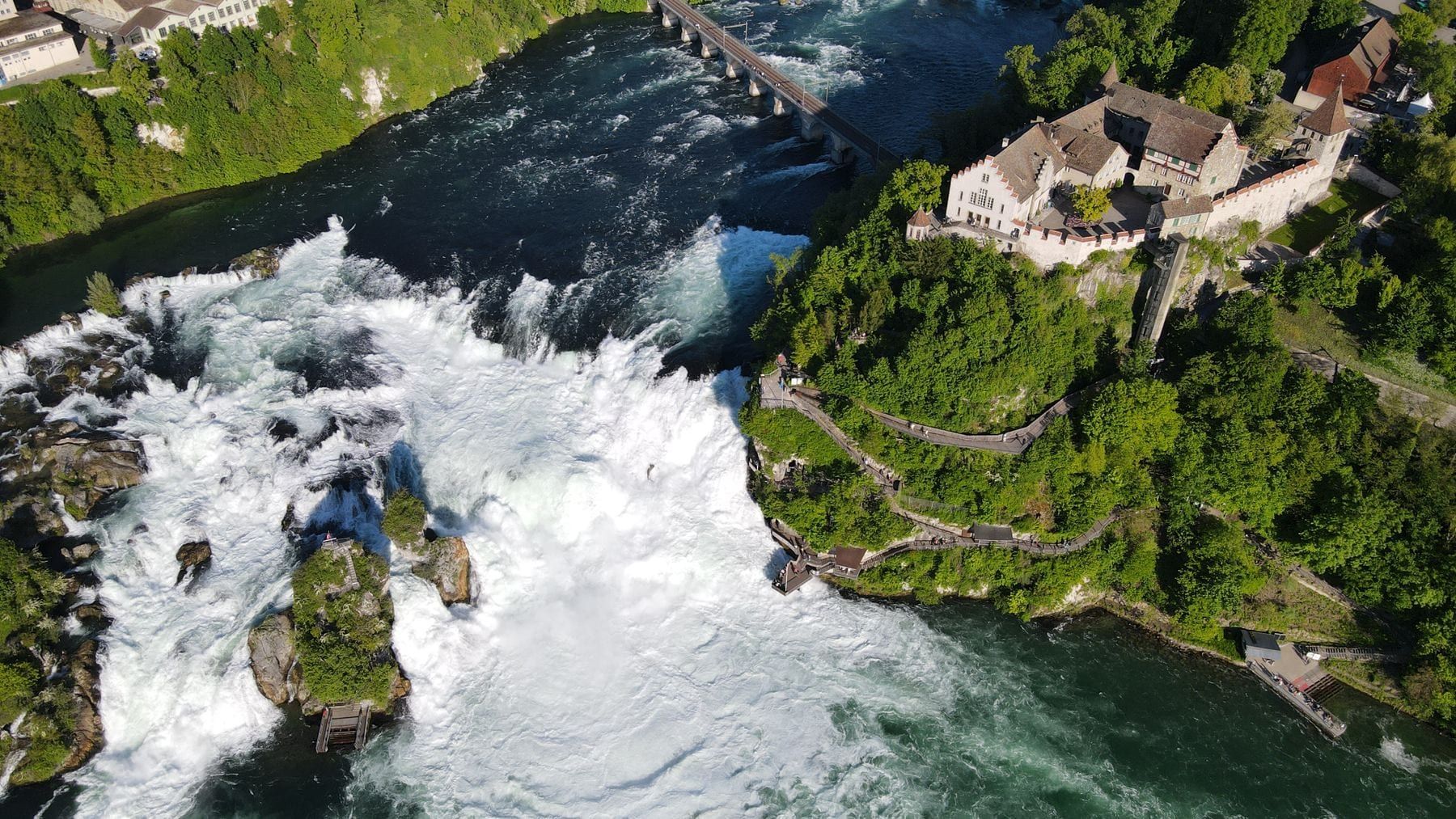
    At the Rhine Falls you do not drive to the coach park at Schloss Laufen but to Neuhausen on the north bank: car park above, path down to the water, free, and from there the boat to the rock amid the falls for CHF 20 (about EUR 21), or the crossing to the south bank and the Känzeli, where the spray soaks you. Morning light is better on the north bank and the crowd smaller. In the afternoon Schaffhausen itself: the Munot with its spiral ramp, oriel houses on Vordergasse, in the evening a Schaffhausen Pinot Noir in a wine tavern. Day two belongs to Stein am Rhein, without the car: boat from Schaffhausen up the Rhine, two hours upstream, around CHF 18 with a Half Fare Card, the painted facades on Rathausplatz, St. Georgen monastery, Hohenklingen castle above the town, back by train in 25 minutes. Sleep in the old town of Schaffhausen, mid-range CHF 150 to 190, not at the Rhine Falls. On to Appenzell: via Stein am Rhein and along the Untersee to Konstanz, or via Frauenfeld, Wil and St. Gallen, 110 kilometres, two hours, three with a stop in Arbon on Lake Constance.

    Tours at this stop: Rhine Falls boat trip to the rock ↗Boat trip Schaffhausen to Stein am Rhein ↗Schaffhausen old town tour ↗

    Open the Schaffhausen and the Rhine Falls travel guide →
  3. Day 4 to 5

    Appenzell: Ebenalp in the Morning, Säntis in Clear Weather

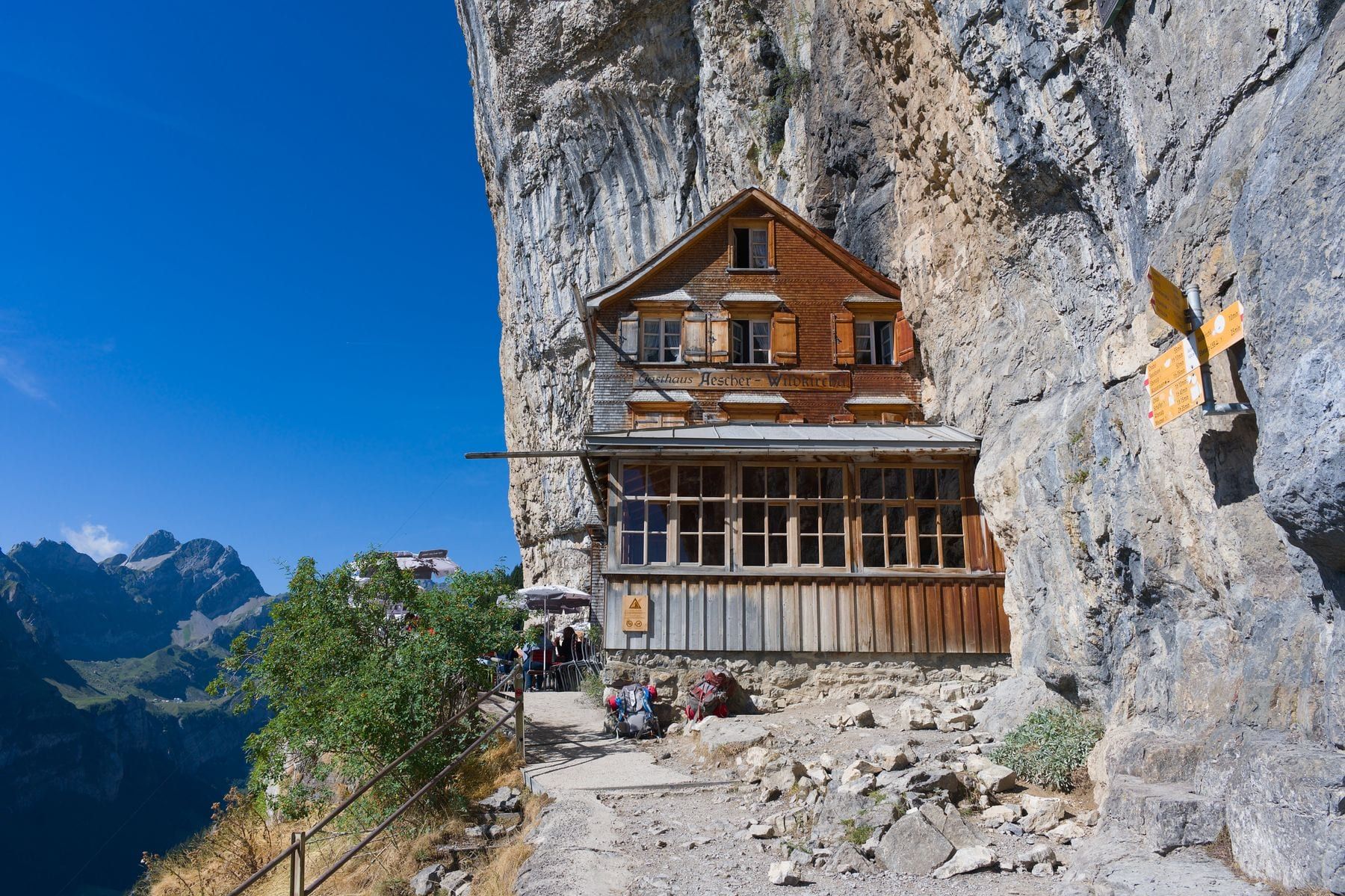
    Appenzell is a village with painted houses, a main street and a Landsgemeinde square, and you stay right in the middle, in an inn with wood panelling and tiled stove, mid-range CHF 150 to 200 (about EUR 161 to 214) with an Appenzell breakfast. You need the car for the valleys, not the village. Day four: at eight to Wasserauen, ten minutes, the Ebenalp cable car up, around CHF 18 return with a Half Fare Card, through the Wildkirchli caves to the Berggasthaus Äscher on the cliff face, which you have almost to yourself before ten, then down to the Seealpsee, an hour and steep, round the lake and back to Wasserauen, four hours in all. Day five: in clear weather to Schwägalp and the cable car up the Säntis, around CHF 70 return, half with a Half Fare Card, with six countries in view; under cloud instead the show dairy in Stein, the Locher brewery in the village and the Kronberg with its toboggan run. In the evening Siedwurst with Chäshörnli and an Alpenbitter. On to Chur: via Gais and Altstätten into the Rhine valley, A13 to Chur, 100 kilometres, an hour and a half.

    Tours at this stop: Säntis cable car ↗Ebenalp and Äscher hike ↗Appenzell show dairy ↗

    Open the Appenzell travel guide →
  4. Day 6

    Chur: Rhine Gorge and the Oldest Town in Switzerland

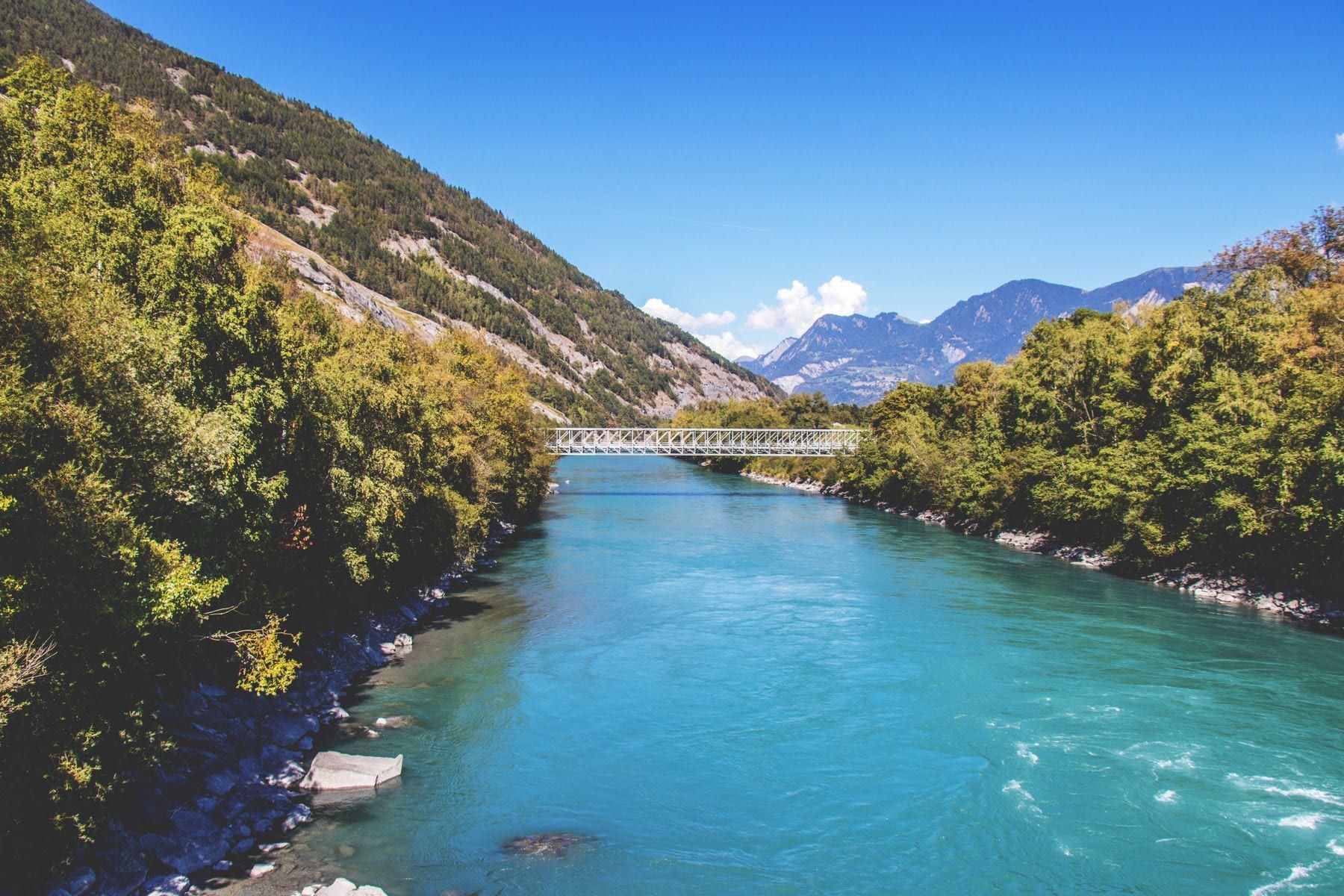
    The last day begins early in Chur, the oldest town in Switzerland, and leads into the Rhine Gorge, which the Grisons call the Ruinaulta: 10,000 years ago the Flims mountain collapsed into the valley, and the Rhine has since cut 300 metres down through the debris, its walls glowing white. By car you drive to Flims, park at the Caumasee or in Conn and walk 45 minutes to the Il Spir platform hanging above the river. If you want the gorge from below, take the Rhaetian Railway from Chur to Versam-Safien or Ilanz and walk between stations along the Rhine, or book a rafting trip from Ilanz in summer for around CHF 100 to 130 (about EUR 107 to 139). Back in Chur an hour in the old town: the Bishop's Court with the cathedral, Arcas square, Capuns in a Beiz in the Welschdörfli. Getting home: return the hire car in Chur, then IC to Zurich in 75 minutes, around CHF 20 with a Half Fare Card, or drive the A13 and A3 along the Walensee yourself, 120 kilometres, an hour and a half, nearer two in Sunday evening traffic. To Basel it is 2 hours 20 by train.

    Tours at this stop: Rhine Gorge rafting ↗Chur city tour ↗

    Open the Chur travel guide →

If you book through these links we earn a small commission, at no extra cost to you.

What the route costs

Rough total per person for the whole route, mid-range, travelling as a pair. Flights and hotels vary by season; details are on the destination pages.

  • Getting there 43 EUR
  • Accommodation 460 EUR
  • Food 353 EUR
  • Local mobility 385 EUR
1,241 EUR
Total per person · 6 days

Money & payment: You pay in Swiss francs (CHF). Cards and the Twint app work practically everywhere, even on alpine pastures. Many shops accept euros but give change in francs at a poor rate. Service is included in prices; rounding up is customary.

Rental car for this route

A rental comparison link will follow once the partner programme is live. Until then, compare directly with the rental companies or at your arrival airport.

Tips for the route

In reverse from Chur the route is just as good: you collect the car in Chur, drive via Appenzell to the Rhine Falls and return it in Zurich. That suits visitors coming from Graubünden or a Grisons ski holiday. From Zurich the advantage of the current direction is that you only need the car from day two and see the city without a car park.

A mid-range hire car costs CHF 60 to 90 (about EUR 64 to 96) a day, five days with return in Chur around CHF 400 to 450, domestic one-way hire usually with no or a small surcharge, vignette included with Swiss vehicles. Parking: Schaffhausen and Appenzell have cheap car parks for CHF 10 to 20 a day, on the north bank of the Rhine Falls you pay a few francs, and in Stein am Rhein you stay outside, the old town is closed to cars.

The mountain railways are the dearest single item of the day: Säntis around CHF 70 (about EUR 75) return, Ebenalp around CHF 35, both half with a Half Fare Card. Without a Half Fare Card, look at the eastern Switzerland day passes and the offers of the Appenzeller Bahnen. The Säntis is only worth the money in clear weather; check the Säntisbahn webcam in the morning, because in fog you see the transmitter mast at the top and nothing else.

The Äscher is the Instagram motif of eastern Switzerland, and you notice it from ten o'clock: then the queue at the Ebenalp cable car is half an hour and the terrace is full. Take the first car at eight, walk down to the Seealpsee ahead of the crowd and eat there or picnic on the shore. Alternatively stay overnight at the Berggasthaus Äscher or on the Ebenalp itself, and you have the evening and the morning without day visitors.

Food is cheaper in eastern Switzerland than in Zurich: lunch menu CHF 18 to 22 (about EUR 19 to 24), dinner with a drink CHF 35 to 45, Appenzeller cheese straight from the dairy at half the supermarket price. On Sundays many shops are closed and the restaurants in Appenzell full, so reserve for the evening. The Locher brewery has a shop in the village, and Alpenbitter is sold everywhere.

May to October is the season: June for the Rhine Falls at their highest flow after the snowmelt, September and October for the Alpstein with clear views and the cattle descents with decorated cows in Appenzell country. In winter the Rhine Falls run too, smaller and without boats, the Ebenalp has a sledge run, and the Säntis operates weather permitting, so the road trip becomes a winter tour.

Frequently asked questions about Eastern Switzerland and Rhine Falls

How long do you need for the eastern Switzerland road trip?

Six days with two nights each in Schaffhausen and Appenzell, one in Zurich and a day in Chur is relaxed; no driving day is longer than two hours. In four days the Rhine Falls and Appenzell work without Chur and without the city day. With eight days you add Lake Constance and Bregenz or two days in Flims with the Caumasee and the Rhine Gorge.

When is the best time for the Rhine Falls and Appenzell?

May to October. The Rhine Falls have the most force in June and July after the snowmelt, the Alpstein is snow-free up to the Säntis from June to October, and the cattle descents in September are the finest Appenzell spectacle. July and August are crowded at the Äscher and the Rhine Falls, so set off early. October is clear, empty and cheap.

Can you do the route without a car?

Yes, almost entirely: S-Bahn from Zurich to Schaffhausen in 40 minutes, boat to Stein am Rhein, train via St. Gallen to Appenzell, Appenzeller Bahnen to Wasserauen, PostBus to Schwägalp, train to Chur and the Rhaetian Railway through the Rhine Gorge. With a Half Fare Card all of that costs less than the hire car. The car only saves you connection times and gets you to Wasserauen before the cable cars in the morning.

What does the road trip cost per person?

Budget around CHF 1,160 (about EUR 1,241) per person for two in mid-range comfort: travel to Zurich and back from Chur 40, five hotel nights 430, food 330, hire car, fuel, car parks, boat and mountain railways with a Half Fare Card 360. Rafting in the Rhine Gorge adds CHF 100 to 130. Eastern Switzerland is cheaper than central Switzerland, which is what sets it apart from other Swiss routes.

What is driving in eastern Switzerland like?

Easy. Motorway to Schaffhausen and into the Rhine valley, country roads through hills at 80 in between, no passes, no snow until November. The Appenzell roads are narrow and winding, PostBuses have right of way, tractors are slow. Speed cameras exist as everywhere, and 50 in town is strictly enforced. At the Rhine Falls and in Appenzell head straight for the car parks; searching is not worth it.

Is there a shorter or longer version?

Shorter: Schaffhausen and Appenzell as a four-day loop from Zurich, skipping Chur. Longer: after Appenzell via Bregenz and the Rhine valley, then Chur with two nights and a day in Arosa or Flims, or afterwards the Albula line into the Engadin, which brings you to nine or ten days and shows you eastern Switzerland from the Rhine Falls to the Bernina.

More itineraries through Switzerland