Zurich

Switzerland · Zurich, Basel & Lucerne · Travel guide

Zurich

What a weekend in Zurich really costs, why in summer you need a badi rather than a museum, and how the Half Fare Card and a day pass get you the city and the Uetliberg at half price.

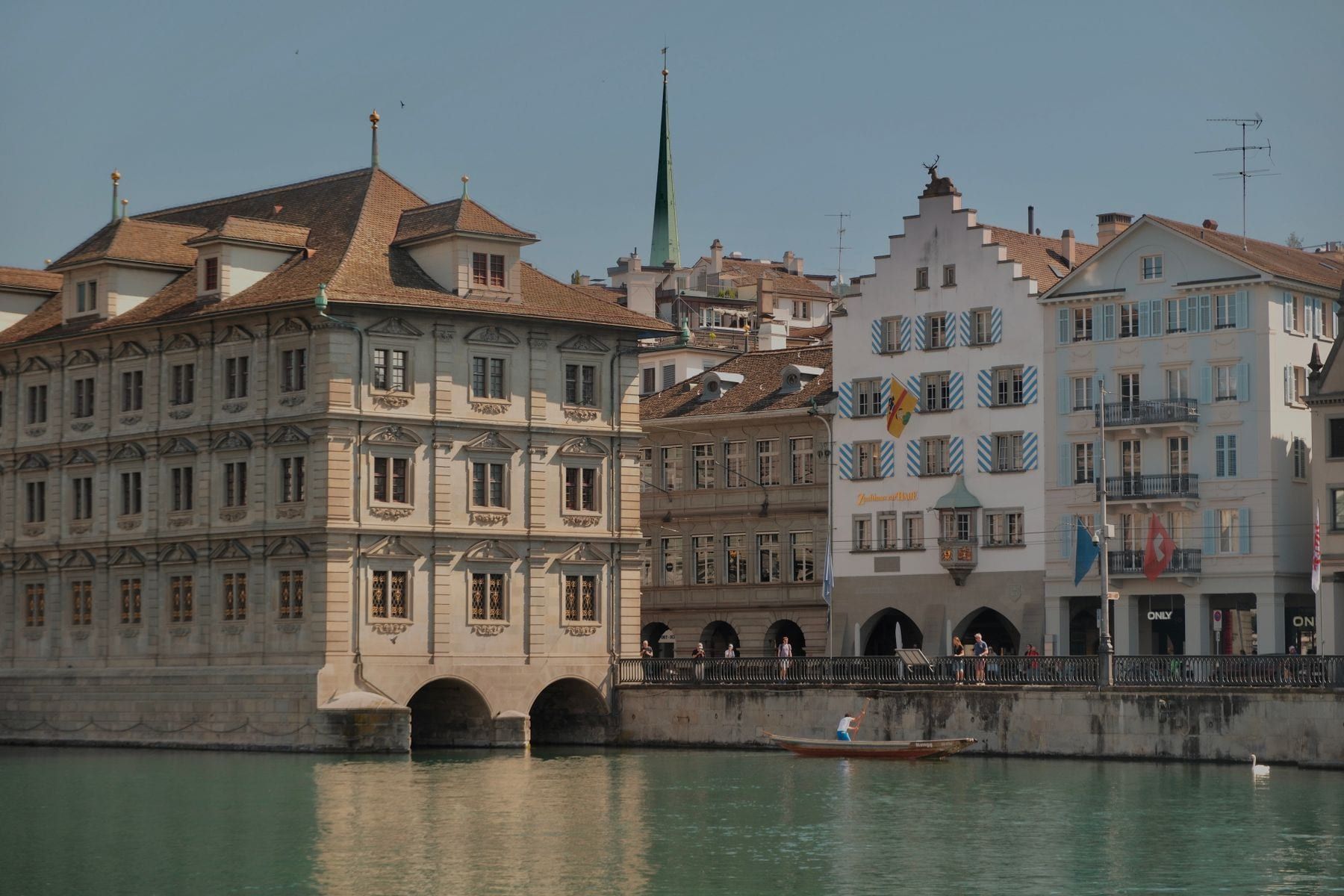
Photo: Marija Piliskic / Pexels

What does a trip to Zurich cost?

Adjust the values to your trip: the calculator updates live (EUR, converted from CHF estimates).

1,937 EUR
≈ 968 EUR per person
  • Getting there 86 EUR
  • Accommodation 1,070 EUR
  • Food 642 EUR
  • Local transport 75 EUR
  • Uetliberg plus boat trip (zone 110 day pass and round trip) 64 EUR

Estimates for orientation, not booking prices. Getting there means train or car from Switzerland, return, per person. Hotels vary strongly by season: current prices are behind the links below.

Money & payment: You pay in Swiss francs (CHF). Cards and the Twint app work practically everywhere, even on alpine pastures. Many shops accept euros but give change in francs at a poor rate. Service is included in prices; rounding up is customary. Getting there: By train (SBB) or car, 1 to 4 hours from Zurich.

Recommended hotels

Nine options in three price ranges, each among the best-rated on Booking.com.

Budget

Zürich Youth Hostel

Wollishofen, Zurich

Large, modern youth hostel with double and family rooms, breakfast buffet included. Tram 7 takes you to Paradeplatz in 15 minutes, and the lake is within walking distance. The best address in the city for families and budget travellers.

from CHF 130 / night (about EUR 139) View →

ibis budget Zürich City West

Altstetten, Zurich

Simple, clean rooms from the budget chain, right on the tram line to Zurich West and the main station. No charm, but the cheapest fixed bed in the city with a private bathroom. For anyone who just wants to sleep.

from CHF 95 / night (about EUR 102) View →

B&B HOTEL Zürich Airport

Rümlang, near Zurich

Plain chain hotel in Rümlang near the airport, with a shuttle to the terminal and air-conditioned rooms. About 20 minutes to the centre by S-Bahn or bus. Makes sense for early departures and travellers on a small budget, a little far out for a city weekend.

from CHF 90 / night (about EUR 96) View →

Mid-range

25hours Hotel Zürich West

Zurich West, Zurich

Colourful design hotel in Kreis 5, three minutes from Hardbrücke station and the Viadukt. Generous rooms, a sauna with city views, and the restaurant Neni with Israeli cuisine on the ground floor. For anyone who wants the young Zurich.

from CHF 170 / night (about EUR 182) View →

Motel One Zürich

Enge, Zurich

The well-known chain within walking distance of the main station and the lake, with the usual standard: good beds, small rooms, a big lounge. Price-wise one of the fairest houses in the centre. For city travellers without special demands.

from CHF 160 / night (about EUR 171) View →

Sorell Hotel Seefeld

Seefeld, Zurich

Solid hotel from the Zurich-based Sorell group in quiet Seefeld, five minutes on foot from the lakeshore and the opera house. Good breakfast, trams 2 and 4 right outside the door. For anyone who wants to stay central without sleeping in the Niederdorf noise.

from CHF 190 / night (about EUR 203) View →

Luxury

Baur au Lac

Bahnhofstrasse, Zurich

Family-owned since 1844, with its own park on the lake at the end of Bahnhofstrasse. The classic Zurich grand hotel with two restaurants, of which the Pavillon holds two Michelin stars. For the one special occasion where price does not matter.

from CHF 750 / night (about EUR 803) View →

The Dolder Grand

Adlisberg, Zurich

Palace hotel above the city with a large spa, its own art collection and views of the lake and the Alps. Six minutes up with the Dolderbahn from Römerhof. For a rest at a distance from the city, less so for an old-town weekend.

from CHF 650 / night (about EUR 696) View →

Hotel Storchen Zürich

Old town, Zurich

Right on the Limmat at Weinplatz, an inn on this spot for more than 650 years. Rooms with river views, a terrace above the water, the old town on the doorstep. For the most central location Zurich has to offer.

from CHF 550 / night (about EUR 589) View →

If you book through these links we earn a small commission, at no extra cost to you.

Experiences worth your time

Old town walk with Grossmünster and Lindenhof

Two hours through the Niederdorf, the Grossmünster (tower climb CHF 5, about EUR 5), the Fraumünster with its Chagall windows (CHF 5) and the Lindenhof. A guided tour costs CHF 25 to 35; on your own you only need the two church admissions.

View & book →

Uetliberg and ridge walk to Felsenegg

Up Zurich's local mountain in 20 minutes on the S10, with a lookout tower at the top (CHF 2, about EUR 2) and views of the Alps and the lake. The ridge walk to Felsenegg takes 90 minutes, back down by cable car to Adliswil. Fully included in the zone 110 day pass.

View & book →

Boat trip on Lake Zurich

The short round trip from Bürkliplatz takes 90 minutes and is included in the ZVV zone 110 day pass. The long round trip to Rapperswil costs CHF 30 (about EUR 32) with the Half Fare Card and takes four hours. Several times a day from April to October.

View & book →

Kunsthaus Zürich

The largest art collection in Switzerland, with the Chipperfield extension of 2021: Giacometti, Munch, Monet, and the Bührle collection with its controversial history. Admission CHF 24 (about EUR 26), collection free on Wednesdays. Two to three hours.

View & book →

Lindt Home of Chocolate

In Kilchberg, 15 minutes by S-Bahn or boat: the largest chocolate fountain in the world, an exhibition and unlimited tasting. Admission CHF 17 (about EUR 18), workshops from CHF 40. Two hours, book ahead at weekends.

View & book →

Landesmuseum Zürich

Swiss history from the lake-dwelling era to today in the castle next to the main station, with the new wing by Christ and Gantenbein. Admission CHF 13 (about EUR 14), free up to age 16. The best rainy-day plan in Zurich, two hours.

View & book →

Food tour through Kreis 4 and 5

Three hours with five to six stops between Langstrasse and the Viadukt market hall, from CHF 90 (about EUR 96) per person including food. More expensive than going alone, but you get to know places you would otherwise walk past. Evenings or Saturdays.

View & book →

Museum Rietberg and park

Non-European art in two villas in the Rieterpark in Enge, with the glass Smaragd extension. Admission CHF 18 (about EUR 19); the park with its lake view is free and one of the most beautiful spots in the city. An hour and a half.

View & book →

Day trip to the Rhine Falls

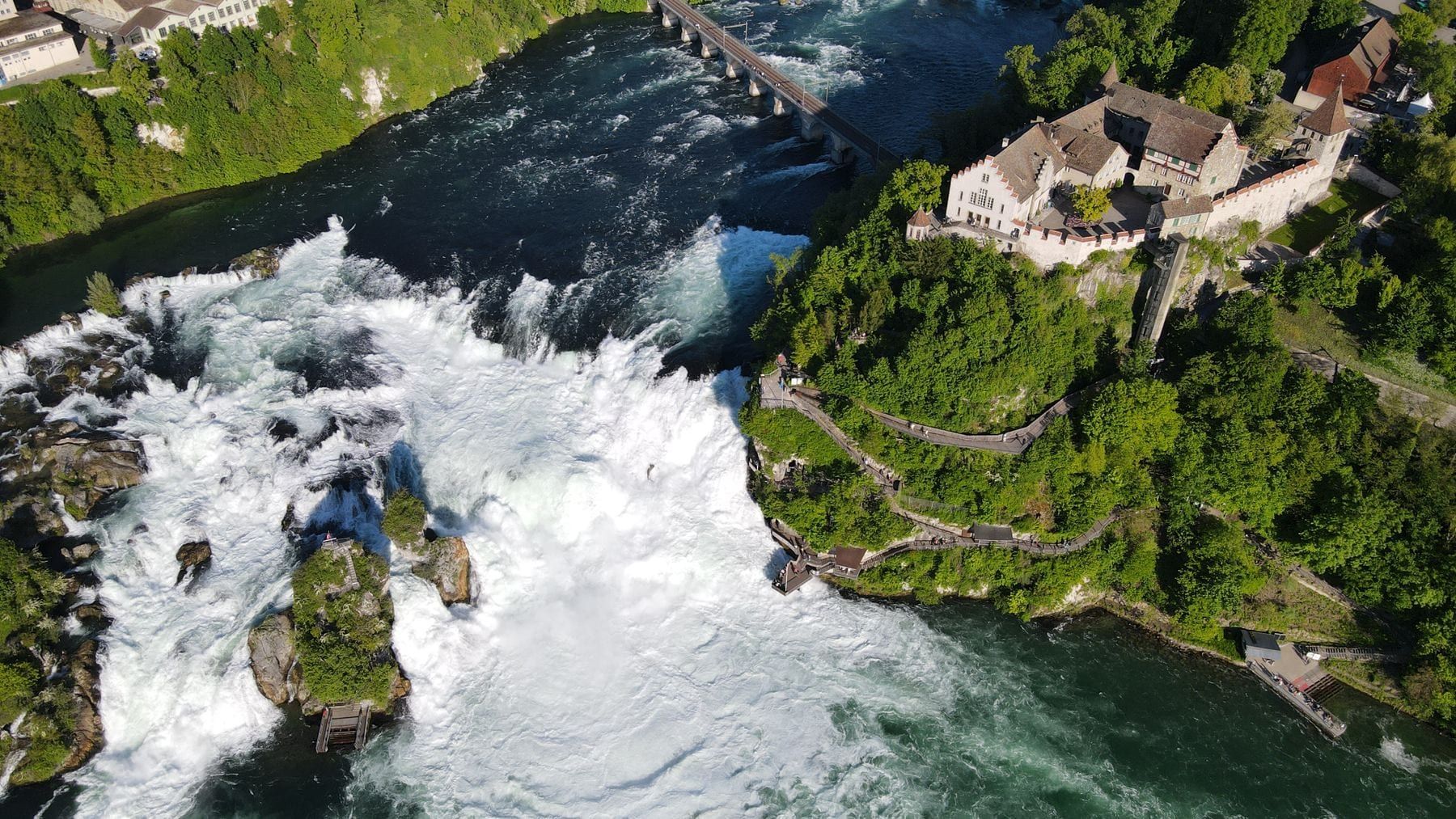
An hour by S-Bahn to Schloss Laufen at the largest waterfall in Europe, platform admission CHF 5 (about EUR 5), boat trip to the rock CHF 20. Half a day is enough, most beautiful in June when the water is high.

View & book →

If you book through these links we earn a small commission, at no extra cost to you.

Food & drink

Zurich eats the Zwinglian way: solid, not excessive, but noticeably better than it was twenty years ago. The classics are Geschnetzeltes, Rösti and grilled sausage, plus a pub culture of wooden tables and lunch menus. It is expensive everywhere; you eat well in the neighbourhoods, not on the lake.

Zürcher Geschnetzeltes mit Rösti

Zeughauskeller on Paradeplatz or Zunfthaus zur Waag

Sliced veal in a white wine cream sauce with mushrooms, served with golden-brown Rösti, the hash-brown potato cake. The Zurich dish, CHF 38 to 48 (about EUR 41 to 51) in a pub, CHF 55 and up in the guild houses.

Tip:At lunchtime it is often available as the dish of the day for CHF 28 to 32, same kitchen.

St. Galler Bratwurst from the grill

Sternen Grill at Bellevue

Veal sausage, crisp on the outside, with a Bürli roll and, if you ask, mustard, which people from eastern Switzerland reject. CHF 7 to 9 (about EUR 7 to 10) at the stand, Zurich's most honest fast food.

Tip:The golden-yellow version with hot mustard belongs to the Sternen Grill, whatever the St. Gallen people say.

Luxemburgerli

Confiserie Sprüngli on Paradeplatz

Small, airy macarons with buttercream, the Zurich sweet since 1957. Eight pieces cost around CHF 10 (about EUR 11), and the box just about survives the train journey.

Tip:The café on the first floor is less crowded than the shop downstairs.

Tibits buffet

Tibits in Seefeld or at the main station

Vegetarian buffet charged by weight, a Zurich invention from 2000, with 40 dishes ranging from curry to salad and dessert. 100 grams cost around CHF 4.50 (about EUR 5), a plate CHF 18 to 25.

Tip:Go easy on heavy things like potatoes and rice, they push up the weight.

Fondue and raclette

Raclette Factory in the Niederdorf or Chäsalp on the Adlisberg

Everywhere in winter, in summer only in tourist places. Fondue moitié-moitié CHF 30 to 38 (about EUR 32 to 41) per person, all-you-can-eat raclette CHF 35 to 45.

Tip:Never drink cold water or beer with it, have white wine or tea instead, otherwise the cheese sits heavily.

Tirggel and Hüppen

Bakeries in the old town and the Christmas market in the Niederdorf

Tirggel are thin, hard honey biscuits with embossed pictures, Hüppen are rolled wafers with a chocolate filling. Both are old Zurich Christmas bakes, CHF 5 to 10 (about EUR 5 to 11) a packet.

Tip:Tirggel are available all year round and are the lightest souvenir from Zurich.

Kebab on Langstrasse

Langstrasse and Helvetiaplatz, Kreis 4

Zurich's after-midnight dinner, döner kebab or dürüm for CHF 11 to 14 (about EUR 12 to 15), also with beef or veal. More expensive than in Berlin, but the quality is good.

Tip:Ask for hot sauce, in Zurich it is dosed cautiously by default.

Bürli and Butterzopf

Bäckerei Kleiner or Bäckerei Buchmann, several branches

The Zurich breakfast: a crusty Bürli roll with butter and jam, and on Sundays the plaited Butterzopf loaf. Zopf CHF 5 to 8 (about EUR 5 to 9), Bürli under CHF 2.

Tip:A Gipfeli croissant with coffee at the counter costs CHF 6 to 7, at a café table twice that.

Book a food tour: Zurich

Through markets and eateries with a guide, tastings included.

View & book →

If you book through these links we earn a small commission, at no extra cost to you.

History & background

Zurich begins as the Roman customs post Turicum at the point where the Limmat leaves the lake, and the Lindenhof above the old town is still the hill the Romans stood on. In the Middle Ages the town grows around the Grossmünster and the Fraumünster, in 1218 it becomes a free imperial city, in 1351 it joins the Swiss Confederation. The guilds take power in 1336 under Rudolf Brun, and their guild houses on the Limmatquai are still standing. In 1519 Huldrych Zwingli begins preaching at the Grossmünster and Zurich becomes the city of the Reformation: sober, sparing with images and hard-working. Out of that grows the 19th-century Zurich of Alfred Escher: the Gotthard railway, Credit Suisse, ETH, the main station of 1871 as a cathedral of progress. During the First World War Lenin lives on Spiegelgasse, and a few houses further on Hugo Ball and Emmy Hennings found Dadaism at the Cabaret Voltaire. After 1945 Zurich becomes the banking city and Bahnhofstrasse the most expensive shopping street in the country. In the eighties a different kind of fire breaks out: the youth riots around the autonomous youth centre change the city, and from the nineties onwards the industrial sites in Zurich West turn into clubs, theatres and the Viadukt with its shops. Langstrasse in Kreis 4 was the red-light strip for decades and is now the nightlife district where everything exists side by side. With around 440,000 inhabitants Zurich is the largest city in Switzerland, and for a good twenty years it has come top of every quality-of-life survey. The prices are the proof.

Insider tips

Getting there and around: main station, day pass, no car

Zurich is the hub of the Swiss rail network and you can get here from every corner of the country without changing: from Bern in 56 minutes, from Basel in 53 minutes, from Lucerne in 41 minutes, from Geneva in 2 hours 40. With the Half Fare Card a return ticket from Bern costs around CHF 50 (about EUR 54), with supersaver tickets from CHF 20. From Germany, ICE trains run direct into the main station from Stuttgart (3 hours) and Munich (3 hours 30), from Vienna the Railjet takes 8 hours or the Nightjet runs overnight. You do not need a car in the city, and you do not want one either: car parks cost CHF 3 to 5 an hour, the blue zone is practically unusable for visitors, and traffic in Kreis 1 has been deliberately slowed down for years. Buy a ZVV day pass for zone 110 (CHF 9.20, CHF 6.60 with the Half Fare Card): it covers tram, bus, S-Bahn and the Lake Zurich boats within the city, including the Uetliberg railway. The Zürich Card (CHF 29 for 24 hours) only pays off if you visit at least two big museums. From the airport the S-Bahn takes 10 minutes into the city and the ticket costs CHF 7.

Where to stay: why Zurich is so expensive and where you sleep anyway

Zurich is the most expensive hotel city in Switzerland, and the reason is not tourism but trade fairs and banks. A mid-range double room costs CHF 180 to 280 (about EUR 193 to 300) during the week, often less at weekends, and double that during fair weeks (Swiss-Moto, Giardina) and the Street Parade. Do not count on breakfast being included, it costs CHF 20 to 35 extra. The honest alternatives: the budget chains in Zurich West and Oerlikon (Ibis, 25hours, Motel One, a&o) are 10 to 15 minutes from the centre by tram and cost half of what you pay in the Niederdorf. The youth hostel in Wollishofen has double rooms from CHF 130 including breakfast and is one tram ride from the lake. In the old town you pay for the location, not the room size: most of the houses in the Niederdorf are old, cramped and loud, and the nightlife runs until 2 am. For a quiet weekend, Seefeld (Kreis 8) is the best compromise: on the lake on foot, three tram stops from Bellevue, with pubs and bakeries where Zurich locals live and not just tourists. Book three to four weeks ahead and check the events calendar: a congress quickly turns CHF 180 into CHF 350.

Cost traps and saving tricks: eating, drinking, museums

Lunch is the biggest trap. A main course in a restaurant costs CHF 25 to 35 (about EUR 27 to 37) in Zurich, a beer CHF 7 to 9, a cappuccino CHF 5.50. The tricks the locals use: lunch menus in the neighbourhood pubs for CHF 20 to 25 including soup or salad, the Markthalle in the Viadukt and the Bürkliplatz market on Tuesdays and Fridays for cheese, bread and fruit, and the Coop and Migros restaurants, where a hot meal costs CHF 13 to 17 and nobody looks twice. In the evening you are better served in Kreis 4 along Langstrasse than in the Niederdorf: Thai, Eritrean, Turkish and Italian for CHF 18 to 28 per main course. Tap water is drinkable everywhere, Zurich has 1,200 fountains, so do not buy bottles. With the museums, timing pays: the Kunsthaus costs CHF 24 but the collection is free on Wednesdays, the Landesmuseum CHF 13, the Rietberg CHF 18 with a free park. Bahnhofstrasse is for looking, not for buying: the same Sprüngli chocolate costs the same in the shop on Paradeplatz as at the airport, but the confectionery café on the first floor is an honest experience for CHF 15.

Badi culture: Zurich's real attraction in summer

From May to September Zurich moves into the water, and if you do not join in you have not seen the city. The river baths on the Limmat are made of wood, 100 years old and cost CHF 8 (about EUR 9) to get in: the Frauenbadi on Stadthausquai (women only, in the evening the Barfussbar for everyone), the Männerbadi Schanzengraben (men only, in the evening the Rimini Bar), the Badi Unterer Letten, where you lie down in the current for free and climb out again 400 metres downstream. On the lake, the Seebad Utoquai and Seebad Enge are the classics, Mythenquai and Tiefenbrunnen the big lawns with a view of the Alps. You swim for free at the Werdinsel, at the Oberer Letten and anywhere along the shore between Tiefenbrunnen and Zürichhorn, where the locals sit with beer and a barbecue after work. The rules: no glass bottles at the Letten, towels do not reserve a spot, and the Limmat has a current, so swimmers only. The water temperature in July is 22 to 24 degrees. In winter three of the river baths turn into saunas with a river plunge pool, which costs CHF 30 to 40 and is one of the best Zurich experiences there is.

Kreis 4 and 5: where Zurich lives

The old town is pretty by day and a tourist backdrop in the evening. The real Zurich begins west of the main station. Kreis 4 around Langstrasse is loud, colourful and dense: bars, clubs, kebab, cinemas, Helvetiaplatz with its market, the Bäckeranlage as the neighbourhood park, the Zwinglikirche. At the weekend there are more people on the street here than on Paradeplatz, and nobody wears a suit. Kreis 5, Zurich West, was industrial until the nineties and is now the district with the Viadukt (shops and market hall under the railway arches), the Schiffbau with its theatre and the Moods jazz club, the Prime Tower as the tallest building in the city (restaurant Clouds on the 35th floor, coffee for CHF 6, about EUR 6, with the best view in Zurich), Frau Gerolds Garten as a summer bar built from containers and the Freitag tower of stacked shipping containers. Between the two lies the Josefwiese, the neighbourhood park with a kiosk and a boules pitch. A good evening: aperitif at Frau Gerolds Garten, dinner on Langstrasse, then a beer at the Bar Olé-Olé or the Longstreet. Langstrasse is raw after midnight but not dangerous, and tram line 8 runs until late.

Timing, Uetliberg and day trips

The best time for Zurich is June to September for the badis and May or October for the prices. In July the city is full (Züri Fäscht every three years, Street Parade in August with a million people), in December it is worth it for the Christmas markets at the main station and in the Niederdorf. January and February are grey, often with a lid of high fog, and that is exactly when you go up the Uetliberg: the S10 takes you from the main station to 870 metres in 20 minutes (included in the zone 110 day pass), and when there is fog below, you stand in the sun above it with a view of the whole Alpine chain. The ridge walk to Felsenegg takes 90 minutes, and from there the cable car takes you down to Adliswil (CHF 9, about EUR 10, also included in the day pass). The boat trip is the second must: a short round trip takes 90 minutes and is free with the zone 110 pass, the long round trip to Rapperswil costs CHF 30 with the Half Fare Card and takes four hours. For the Rhine Falls allow an hour by S-Bahn, for Lucerne 41 minutes, for the Rigi two hours to the cog railway. All of them are day trips for which you do not need to change hotel.

Frequently asked questions about Zurich

How do I get to Zurich, and do I need a car?

By train: Zurich is the main hub of the SBB, 56 minutes from Bern, 53 minutes from Basel, 41 minutes from Lucerne, 2 hours 40 from Geneva. A return from Bern with the Half Fare Card is around CHF 50 (about EUR 54), supersaver tickets from CHF 20. From Germany, ICE trains run direct from Stuttgart and Munich. A car is a disadvantage in the city: car parks cost CHF 3 to 5 an hour, and trams and the S-Bahn run every few minutes.

What does a weekend in Zurich cost?

For two people and two nights, count honestly on CHF 400 to 560 (about EUR 428 to 599) for a mid-range hotel, CHF 60 per person per day for food if you eat cheaply at lunchtime, and CHF 14 a day for the day pass. That comes to around CHF 700 to 900 without travel and museums. With a hostel, the market and the badi you can do it for half.

When is the best time to visit Zurich?

June to September, when the badis are open and the lake is warm, with July as the fullest and most expensive month. May and October are cheaper and quieter. In December the Christmas markets are the draw, in January and February high fog often sits over the city, and then the Uetliberg above the fog layer rescues you.

Is the Zürich Card worth it?

Only if you visit at least two big museums in one day. The card costs CHF 29 (about EUR 31) for 24 hours and includes public transport, boats and many museums. If you mainly want to walk, swim and eat, you do better with the ZVV zone 110 day pass for CHF 9.20 (CHF 6.60 with the Half Fare Card), because it also covers the boats within the city and the Uetliberg railway.

Where should you stay in Zurich?

For a weekend: Seefeld (Kreis 8) for the lake and quiet, Kreis 4 or 5 for nightlife and lower prices, the Niederdorf only if you can put up with noise and want the location. Oerlikon and Zurich West are 10 to 15 minutes from the centre by tram and noticeably cheaper. During trade fair weeks you are better off moving out to Winterthur or Baden, both 15 to 25 minutes by train.

Can you really swim in Lake Zurich and the Limmat?

Yes, both have drinking-water quality and are 20 to 24 degrees in summer. The river baths on the Limmat cost CHF 8 (about EUR 9), the Oberer and Unterer Letten are free, and so is the lakeshore from Zürichhorn to Tiefenbrunnen. The Limmat has a current, so only for confident swimmers and not after heavy rain. The season runs from mid-May to mid-September.

Itineraries with this destination

Activities in the region

Events

Apr 19

Sechseläuten Zurich

Festival

19 April 2027 Third Monday in April; 2027: 19 April, burning of the Böögg at 6 pm

Zurich's spring festival of the guilds: on Sunday the children parade through the city, on Monday afternoon the 26 guilds in historical costume, with horses and bands, march from the station to Sechseläutenplatz by the lake. At 6 pm the Böögg is set alight there, a cotton-wool snowman with firecrackers in its head, while the guildsmen ride on horseback around the pyre. The faster the head explodes, the better the summer is meant to be; it usually takes between 10 and 40 minutes. The spectator area is free but packed from 4 pm; the view is better from the grandstands (tickets from around CHF 40, about EUR 42, sold out early) or from the Utoquai. Monday afternoon is a half holiday in the city of Zurich, many shops close at noon and trams are diverted around the centre.

For travellers: Afterwards the guilds celebrate in their guild halls and from 8 pm visit each other in procession with torches and bands, which is the more atmospheric part for onlookers; if the third Monday falls on Easter Monday, the festival moves a week later.

Aug 14

Street Parade Zurich

Festival

14 August 2027 Second Saturday in August; 2027: 14 August, 1 pm to midnight

The biggest techno parade in the world: from 1 pm around 30 Love Mobiles with DJs and sound systems crawl around Zurich's lake basin, with stages at Bürkliplatz, Bellevue and Utoquai and up to a million people in glitter, fishnet and very little fabric. Entrance is free, the motto is tolerance, and until evening the mood is peaceful and colourful; after that it gets boozy, and the afterparties in the clubs last until Sunday lunchtime. The city centre is closed from midday, trams do not run around the lake, the main station is overrun in the evening and the SBB puts on extra trains. Hotels in Zurich are sold out and considerably pricier this weekend. If techno is not your thing, spend the day on the Üetliberg or on a boat; the bass can be heard as far as Wollishofen.

For travellers: Bring earplugs, sun protection and water, bags are checked and glass is banned; on Sunday morning the lake basin is a rubbish tip, and swimming is only worth it again from Monday.

Sep 23

Zurich Film Festival (ZFF)

Culture

23 September 2027 Late September to early October, eleven days; 2027 expected 23 September to 3 October

The biggest film festival in German-speaking Switzerland shows around 150 films in eleven days, many as European or world premieres, with Hollywood guests on the green carpet in front of the opera house and competitions for new feature and documentary film-makers. Screenings take place at the festival centre on Sechseläutenplatz and in the cinemas around Bellevue and Stauffacher; tickets cost around CHF 20 to 25 (EUR 21 to 27), gala premieres more, advance sales start around two weeks before the festival, and the premieres go quickly while second screenings do not. The atmosphere is more professional and less down-to-earth than in Locarno, but the ZFF slots into a Zurich visit without much effort. Hotels in Zurich are expensive in late September anyway, and the festival changes little about that.

For travellers: The programme goes online about three weeks ahead; the documentary strand and the masterclasses with directors are often the more rewarding and more easily available tickets.

Nov 19

Zurich Christmas Markets and Montreux Noël

Festival

19 November 2026 Late November to 23 or 24 December; 2026 expected from 19 November, 2027 from 18 November

Zurich has several Christmas markets at once: the Christkindlimarkt in the main station concourse with its Swarovski tree, the Wienachtsdorf on Sechseläutenplatz with fondue chalets and an ice rink, the small market in the Niederdorf, the floating lights on the Limmat and the Singing Christmas Tree on Werdmühleplatz, where choirs sing from a tree-shaped stand. Mulled wine costs CHF 6 to 8 (EUR 6.50 to 8.50), raclette or fondue in the chalets CHF 25 to 40 (EUR 27 to 42), and gifts are at Zurich price levels. Montreux Noël on Lake Geneva is the biggest Christmas market in French-speaking Switzerland: 170 chalets on the lakeside promenade, a flying Father Christmas above the market, the Christmas village in Chillon Castle and a market on the Rochers-de-Naye reached by cog railway, all against an Alpine backdrop and usually milder than in German-speaking Switzerland. On Advent weekends both places are packed and Montreux hotels add surcharges; on weekdays it is relaxed.

For travellers: In Zurich the Christkindlimarkt in the main station is ideal for a stopover with luggage, while Sechseläutenplatz has more atmosphere; for Montreux, go by train on a weekday and combine the market with Chillon Castle.

More destinations in Zurich, Basel & Lucerne