Lucerne

Switzerland · Zurich, Basel & Lucerne · Travel guide

Lucerne

What three days in Lucerne with a mountain and a boat really cost, why you do not need Pilatus, Rigi and Titlis all together, and how the Half Fare Card and Saver Day Pass halve the mountain railways.

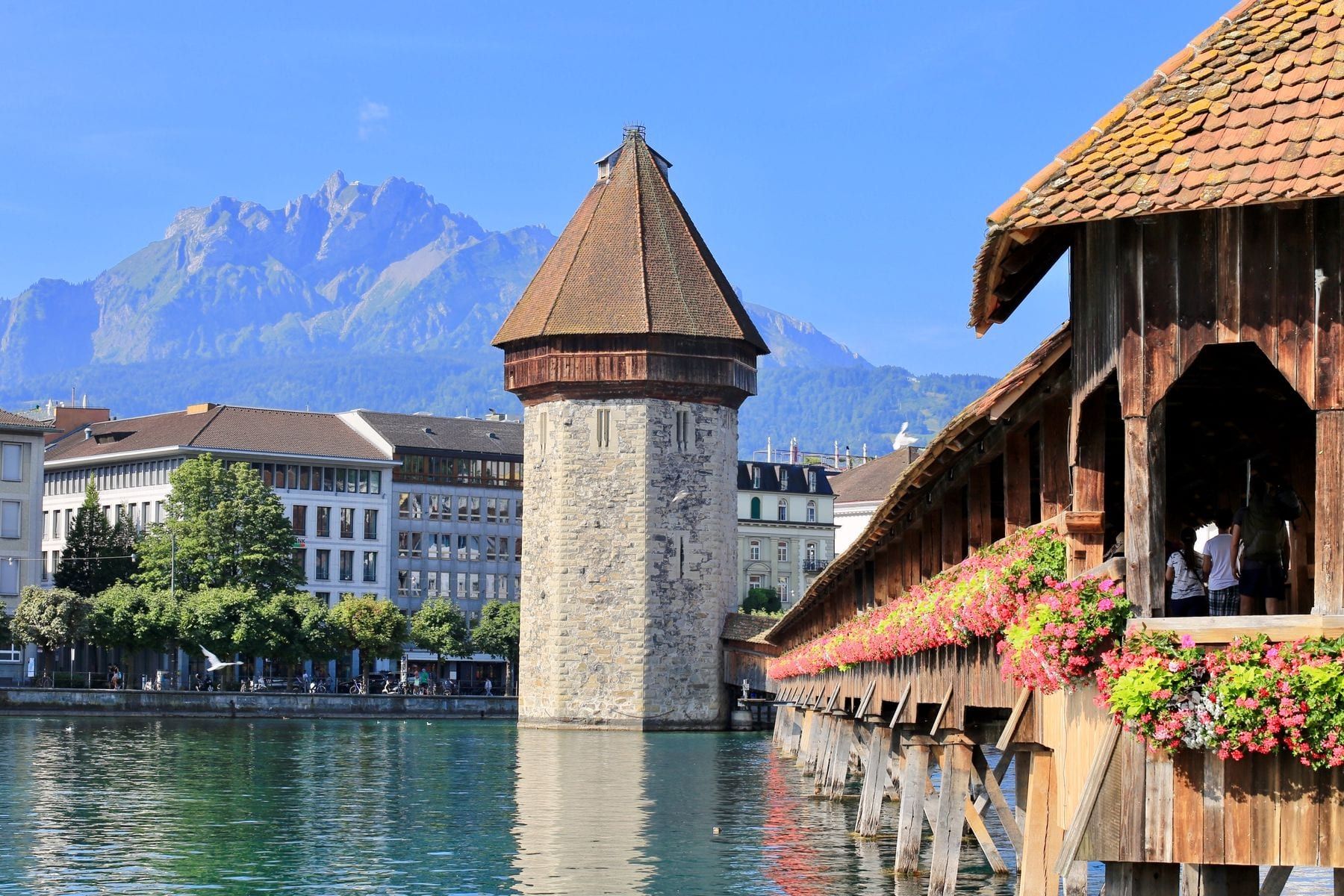
Photo: ILOVESwitzerland / Pexels

What does a trip to Lucerne cost?

Adjust the values to your trip: the calculator updates live (EUR, converted from CHF estimates).

2,022 EUR
≈ 1,011 EUR per person
  • Getting there 107 EUR
  • Accommodation 1,070 EUR
  • Food 589 EUR
  • Local transport 107 EUR
  • Mountain day (Pilatus Golden Round Trip or Rigi, with Half Fare Card) 150 EUR

Estimates for orientation, not booking prices. Getting there means train or car from Switzerland, return, per person. Hotels vary strongly by season: current prices are behind the links below.

Money & payment: You pay in Swiss francs (CHF). Cards and the Twint app work practically everywhere, even on alpine pastures. Many shops accept euros but give change in francs at a poor rate. Service is included in prices; rounding up is customary. Getting there: By train (SBB) or car, 1 to 4 hours from Zurich.

Recommended hotels

Nine options in three price ranges, each among the best-rated on Booking.com.

Budget

Luzern Youth Hostel

Rotsee, Lucerne

Youth hostel at the Rotsee with double and family rooms, breakfast included, bus 18 to the station in ten minutes. Modern and quiet, with a swimming spot on the lake outside the door. The best deal in Lucerne for families and budget travellers.

from CHF 120 / night (about EUR 128) View →

ibis budget Luzern City

Kriens, Lucerne

Budget chain by the motorway in Kriens, in the centre in ten minutes by bus and within walking distance of the Pilatus gondola. Small, clean rooms without extras. For the mountain day and for anyone who just wants to sleep and save.

from CHF 100 / night (about EUR 107) View →

Backpackers Lucerne

Tribschen, Lucerne

Small hostel on the lakeshore in Tribschen, 15 minutes on foot from the station, with double rooms, a shared kitchen and a swimming spot in front of the house. Simple and friendly, quiet rather than old town. For solo travellers and couples on a small budget.

from CHF 95 / night (about EUR 102) View →

Mid-range

Hotel des Alpes Luzern

Old town, Lucerne

Right on the Reuss with a view of the Chapel Bridge, in the thick of the old town. Rooms classic and not large, the ones facing the river are the right ones, and the restaurant has a terrace on the water. For anyone who wants the postcard from the window.

from CHF 190 / night (about EUR 203) View →

Ameron Luzern Hotel Flora

Neustadt, Lucerne

Large city hotel from the Ameron group between the station and the old town, five minutes to both. Modern rooms, good breakfast, no lake view but fair on price. For city travellers who want location and standard.

from CHF 180 / night (about EUR 193) View →

Hotel Waldstätterhof Luzern

Station, Lucerne

Traditional house opposite the station, with large, bright rooms, a restaurant and a garden. Ideal for mountain days, because train and boat are two minutes away. For families and anyone who wants an early start to the cog railway.

from CHF 200 / night (about EUR 214) View →

Luxury

Hotel Schweizerhof Luzern

Schweizerhofquai, Lucerne

Family-owned since 1845, on the quay with views of the lake and Pilatus, every room dedicated to a personality who stayed here, from Wagner to Tolstoy. Generous, personal, central. For the classic Lucerne experience.

from CHF 400 / night (about EUR 428) View →

Mandarin Oriental Palace, Luzern

Haldenstrasse, Lucerne

The belle époque palace of 1906 on the lakeshore, reopened by Mandarin Oriental in 2022, with a spa, three restaurants and rooms with lake views. Ten minutes on foot to the old town. For luxury with history and the view you come to Lucerne for.

from CHF 650 / night (about EUR 696) View →

Bürgenstock Hotel & Alpine Spa

Bürgenstock, Obbürgen

Resort on the rocky ridge 500 metres above the lake, with an infinity pool on the edge of the drop, several restaurants and its own funicular from the Kehrsiten boat pier. 30 minutes from Lucerne by boat and funicular. For the big view without the city.

from CHF 550 / night (about EUR 589) View →

If you book through these links we earn a small commission, at no extra cost to you.

Experiences worth your time

Pilatus Golden Round Trip

Boat to Alpnachstad, the steepest cog railway in the world up, gondola down to Kriens, bus back. CHF 120 (about EUR 128) without and around CHF 70 with the Half Fare Card, a full day. Only from May to November, check the webcam first.

View & book →

Rigi by boat and cog railway

Boat to Vitznau, the cog railway of 1871 up to Rigi Kulm, a hike and back via Arth-Goldau or by cable car to Weggis. CHF 40 to 45 (about EUR 43 to 48) with the Half Fare Card, free with the Saver Day Pass. A full day, also in winter.

View & book →

Titlis with the Rotair gondola

Train to Engelberg, then up to 3,020 metres in three sections, with a glacier, a suspension bridge and snow all year round. Rotair CHF 96 (about EUR 103) return, half with the Half Fare Card, plus the train from Lucerne. A full day, very busy in summer.

View & book →

Boat trip on Lake Lucerne

A one-hour round trip from the Bahnhofquai for CHF 15 (about EUR 16) with the Half Fare Card, or the whole day to Flüelen through the Urnersee for CHF 35 return. Five historic paddle steamers in summer; the timetable shows which sailings are steam-powered.

View & book →

Old town walk with Chapel Bridge and Musegg Wall

Chapel Bridge, Spreuer Bridge with its Dance of Death, Jesuit church, Weinmarkt and the climb up the Musegg Wall with four towers you can enter, all free. Guided tour from CHF 25 (about EUR 27), two hours, before 9 am or after 5 pm.

View & book →

Swiss Museum of Transport

The most visited museum in the country, on the lakeshore: locomotives, aircraft, space travel, a planetarium and a film theatre. Admission CHF 35 (about EUR 37), children CHF 15, discount with the guest card. Half to a full day, by bus 6 or boat.

View & book →

Lion Monument and Glacier Garden

The dying lion in the rock is free and surrounded by groups from 10 am, so go early. The Glacier Garden next door (CHF 22, about EUR 24) with glacial potholes, rock path and mirror maze is the underrated museum of the city, an hour and a half.

View & book →

Bürgenstock and Hammetschwand lift

Boat to Kehrsiten, funicular up to the Bürgenstock, cliff path to the highest outdoor lift in Europe (CHF 15, about EUR 16, return) with a view over the whole lake. Half a day, around CHF 30 for boat and funicular with the Half Fare Card.

View & book →

Concert at the KKL

Jean Nouvel's concert hall counts as one of the best in the world. Lucerne Festival in August from CHF 30 (about EUR 32) for short concerts, symphony concerts all year round from CHF 40. Two hours, with an aperitif on the lake terrace beforehand.

View & book →

If you book through these links we earn a small commission, at no extra cost to you.

Food & drink

Lucerne eats the central Swiss way: pastry, cheese, fish from the lake and kirsch from the Zug region. The old town is full of restaurants for tour groups; the good pubs are on the Mühlenplatz, in the Neustadt and on the opposite lakeshore. Expensive like everywhere in Switzerland, but with honest cooking if you take the right lane.

Luzerner Chügelipastete

Wirtshaus Galliker on the Kasernenplatz or Restaurant Fritschi on the Sternenplatz

Puff pastry pie filled with veal meatballs, small sausage dumplings, mushrooms and raisins in a cream sauce, the Lucerne national dish. CHF 32 to 42 (about EUR 34 to 45) in a restaurant, cheaper as a lunch plate.

Tip:At the Galliker made to the same recipe since 1856, reserve, closed on Sundays.

Egli fillets from the lake

Restaurants on the lakeshore in Weggis and Vitznau or the Wirtshaus Taube in the old town

Small perch fillets fried in butter, with boiled potatoes and tartare sauce. From Lake Lucerne when the fishermen deliver, otherwise imported, so ask. CHF 36 to 48 (about EUR 39 to 51).

Tip:If you read "Egli aus dem See" on the menu, ask where it comes from; the honest places will tell you.

Älplermagronen

Mountain restaurants on the Rigi and Pilatus or the Stadtkeller pubs in the old town

Macaroni with potatoes, cheese, cream and fried onions, served with apple sauce, the food of the Alpine herdsmen. CHF 22 to 28 (about EUR 24 to 30) in the valley, CHF 28 to 32 on Pilatus and the Rigi.

Tip:The apple sauce belongs with it, strange as it sounds; Lucerne locals mix it in.

Luzerner Lebkuchen

Bakeries in the old town, for example Confiserie Heini on the Falkenplatz

Soft, dark pear-honey gingerbread, often with a face made of sugar, the classic for Fasnacht and Christmas. CHF 6 to 12 (about EUR 6 to 13) a piece or packet.

Tip:Heini has run the café on the Falkenplatz since 1957, with a view of the Musegg Wall and the stream of Lion Monument visitors.

Zuger Kirschtorte

Cafés in the old town or Confiserie Treichler in Zug, 20 minutes by train

Sponge, japonais layers and buttercream soaked in kirsch from the Zug region, invented in Zug in 1915 and in every café in Lucerne. A slice CHF 6 to 8 (about EUR 6 to 9).

Tip:It is distinctly alcoholic, not the right choice for children.

Sbrinz from the market

Weekly market on the Reuss, Tuesdays and Saturdays, and dairies in the Entlebuch

The hard, spicy cheese of central Switzerland, older than Parmesan, broken into chunks for an aperitif or shaved over the pastry. CHF 4 to 6 (about EUR 4 to 6) per 100 grams at the market.

Tip:A vacuum-packed piece of Sbrinz is the best souvenir, it keeps for months.

Bratwurst with Bürli at the market

Weekly market on both banks of the Reuss on Saturdays

Grilled veal sausage at the Saturday market or at the sausage stand at the station, with a Bürli roll and mustard. CHF 7 to 9 (about EUR 7 to 10), the cheapest lunch in the city.

Tip:At the market you also find raclette in winter and Zopf bread, a breakfast for CHF 10 to 12.

Book a food tour: Lucerne

Through markets and eateries with a guide, tastings included.

View & book →

If you book through these links we earn a small commission, at no extra cost to you.

History & background

Lucerne begins around 750 as the monastery of St. Leodegar im Hof, at the point where the Reuss leaves Lake Lucerne. The place stays insignificant until around 1230, when the Gotthard Pass becomes passable and Lucerne suddenly finds itself on the most important north-south route in Europe. In 1332 it becomes the first city to join the alliance of Uri, Schwyz and Unterwalden, and the lake has been named after the four forest cantons ever since. The Chapel Bridge is built around 1365 as part of the city fortifications, the water tower already stands before it, and the Musegg Wall with its nine towers follows around 1400. Lucerne stays Catholic when Zurich and Bern adopt the Reformation, becomes the seat of the papal nuncio and the centre of the Catholic cantons. The Lion Monument of 1821 commemorates the Swiss Guards who died for the French king at the Tuileries in 1792; Mark Twain called it the saddest piece of stone in the world. With steamboats from 1837 and the Gotthard railway from 1882 Lucerne becomes a tourist city, the belle époque hotels on the quay go up, Queen Victoria spends a summer here in 1868, and in 1889 the steepest cog railway in the world climbs Pilatus. Richard Wagner composes the Meistersinger in Tribschen. Lucerne is spared in the Second World War; in 1993 the Chapel Bridge burns down to its foundations and is rebuilt in eight months, but most of the gable paintings have been lost since. The KKL by Jean Nouvel turns the city into a concert city from 1998. Today Lucerne has 85,000 inhabitants and, on fine summer days, what feels like just as many visitors.

Insider tips

Getting there and around: station on the lake, boat as tram

Lucerne lies in the middle of the country: 41 minutes from Zurich, an hour from Bern, an hour from Basel, 70 minutes from Zurich Airport with one change. A return with the Half Fare Card costs around CHF 26 (about EUR 28) from Zurich, CHF 40 from Bern. From Germany you come via Basel, from Austria via Zurich or on the Voralpen-Express via St. Gallen, which is the prettier, slower option. The station stands right on the lake next to the KKL, the boat piers are 50 metres away, and the old town begins behind the Seebrücke. Everything important is within 15 minutes on foot. A car is useless and expensive in the city (car park CHF 3 to 4 an hour), and you do not need it for the mountains, because cog railways, boats and buses all leave from the station. Lake Lucerne is part of the Swiss public transport network: the SGV boats are 50 per cent cheaper with the Half Fare Card and free with the GA, Swiss Travel Pass or Saver Day Pass. The guest card from your hotel gives you free city buses and small discounts. The Saver Day Pass (from CHF 52 with the Half Fare Card, book early) is the trick for a mountain day: it fully covers train, boat and many mountain railways such as the Rigi.

Where to stay: old town, lakeshore or Weggis

After Zurich and Zermatt, Lucerne is one of the most expensive hotel cities in Switzerland, and summer makes it worse: a mid-range double room costs CHF 170 (about EUR 182) in May, CHF 250 to 300 in July and August, and the houses on the quay start at CHF 400. The reason is the group tours from Asia and the USA that have Lucerne as a compulsory stop. The honest alternatives: in the old town you are right in the middle of it and hear the Reuss and the visitors until midnight, and the small houses there often have no lift. The district behind the station (Neustadt, Tribschen) is 10 minutes on foot, noticeably cheaper and has good neighbourhood pubs. The youth hostel at the Rotsee is a little out of the way, but has double rooms from CHF 120 with breakfast and a bus connection. The budget chains (Ibis, Ibis budget) sit in Kriens by the motorway, ten bus minutes from the city, for CHF 100 to 130. And then the best alternative: Weggis or Vitznau on the opposite shore, 30 to 50 minutes by boat, with hotels right on the water, a view of Pilatus and the Rigi railway on the doorstep, often for less than in the city. Book six to eight weeks ahead in summer, in winter a week is enough.

Pilatus, Rigi or Titlis: which mountain suits you

You do not need all three, and none of them is cheap. Pilatus (2,132 metres) is the local mountain directly above the city: the Golden Round Trip combines the boat to Alpnachstad, the steepest cog railway in the world (48 per cent) up, the aerial cableway and gondola down to Kriens and the bus back, CHF 120 (about EUR 128) without and around CHF 70 with the Half Fare Card, a full day. The cog railway only runs from May to November. The Rigi (1,798 metres) is the "queen of the mountains", gentler, with meadows, hiking trails and a view of 13 lakes: boat to Vitznau, cog railway up, down to Arth-Goldau or by cable car to Weggis, CHF 80 to 90 without and CHF 40 to 45 with the Half Fare Card, and with the Saver Day Pass the Rigi is free because it belongs to the public transport network. That is the best deal. Titlis (3,020 metres) in Engelberg is the only one with a glacier and snow all year round; the Rotair rotating gondola costs CHF 96 return from Engelberg, plus CHF 20 for the train from Lucerne with the Half Fare Card, a full day. At the top there are a suspension bridge, a glacier cave and a lot of groups. Our honest recommendation: Rigi for hikers and savers, Pilatus for the thrill of the railway, Titlis only if you want to see snow in summer. If there is fog in the city, check the webcams first; the mountain is often above the cloud layer.

Cost traps and saving tricks: mountain railways, souvenirs, group restaurants

The mountain railways are the biggest item: without the Half Fare Card you pay CHF 250 (about EUR 268) per person for Pilatus plus Titlis on two days. So get a Half Fare Card before the trip (CHF 190 in the first year, pays off from two trips to Switzerland) or, for foreign visitors, the Swiss Half Fare Card for a month (CHF 120). The Rigi is free with the Saver Day Pass, the Pilatus railway gives 50 per cent off, and Titlis also gives 50 per cent off the cableway. Online tickets are sometimes cheaper than at the counter, and the Pilatus early-bird ticket before 9 am saves a bit more. Second trap: the restaurants at the Chapel Bridge and on the Schwanenplatz with menus in six languages, where the schnitzel costs CHF 42. Two lanes further on, at the Mühlenplatz or behind the town hall, you eat for CHF 25 to 30. The souvenir shops on the Schwanenplatz live off watches for tour groups, commission included; if you want a Swiss watch, buy it at Bucherer or Gübelin, but not because the guide walked you there. Third trap: the KKL concerts of the Lucerne Festival in August cost CHF 80 to 320, but there are standing places and 40-minute concerts for CHF 20 to 30, and the acoustics are the same.

Timing and season: coaches at midday, Fasnacht in February

Lucerne has its high season from June to September, with full hotels and tour groups that fill the old town and the Lion Monument between 10 am and 4 pm. Your daily rhythm instead: Chapel Bridge and old town before 9 am or after 6 pm, and during the day up a mountain or on the boat. The best times are May, June and September: the mountain railways run, the weather is stable, and prices are 20 to 30 per cent below August. October brings an Indian summer with fog in the valley and sun on the Rigi. From November to March the city is empty, the Pilatus cog railway stands still (the gondola from Kriens runs), the boats run on a reduced timetable, but the hotel costs half. The Lucerne Fasnacht in February or March is the biggest in Switzerland, louder and wilder than Basel: on Schmutziger Donnerstag at 5 am the Urknall sets things off on the Kapellplatz, and then Guggenmusik bands roam the city for five days. Hotels are then full and expensive. The Lucerne Festival in August brings the best orchestras in the world to the KKL, and at the end of November the Christmas market opens on the Franziskanerplatz. At Christmas and New Year prices are back at summer levels.

Underrated: Musegg Wall, Glacier Garden, Bürgenstock, Transport Museum

The Musegg Wall is free and almost empty: four of the nine towers can be climbed from April to October, the Zytturm has the oldest city clock in Lucerne, which strikes one minute before all the others, and from the top you look over the roofs to the lake and Pilatus. The Glacier Garden next to the Lion Monument (CHF 22, about EUR 24) sounds like a tourist trap and is an honestly good museum with glacial potholes from the ice age, the new rock path inside the mountain and the mirror maze of 1896. The Swiss Museum of Transport (CHF 35, discount with the guest card) on the lakeshore is the most visited museum in the country, with locomotives, aircraft, a planetarium and half a day of programme for families. For the afternoon: boat to Kehrsiten and funicular up to the Bürgenstock, the rocky ridge above the lake where the resort stands, which you do not have to book to walk the cliff path to the Hammetschwand lift (CHF 15 return), the highest outdoor lift in Europe. The Swiss Path walk around the Urnersee and the boat trip to Flüelen through the fjord-like part of the lake past the Rütli are the most beautiful full day on the water: three hours one way from Lucerne, CHF 35 return with the Half Fare Card, back in the afternoon by train via Arth-Goldau in 50 minutes.

Frequently asked questions about Lucerne

How do I get to Lucerne, and do I need a car?

By train from Zurich in 41 minutes (return with the Half Fare Card CHF 26, about EUR 28), from Bern and Basel in an hour, from Zurich Airport in 70 minutes. From Germany via Basel, from Austria via Zurich. The station is on the lake next to the boat piers. You do not need a car: cog railways, boats and buses to Pilatus, Rigi and Titlis leave from the station, and car parks cost CHF 3 to 4 an hour.

What does a mountain day from Lucerne cost?

With the Half Fare Card: Pilatus Golden Round Trip around CHF 70 (about EUR 75), Rigi with boat and cog railway CHF 40 to 45, Titlis with the train to Engelberg and the Rotair around CHF 115. Without the Half Fare Card, double. With the Saver Day Pass (from CHF 52 with the Half Fare Card, book early) the Rigi is fully included, which is the cheapest deal. Add CHF 25 to 35 for food at the top.

When is the best time to visit Lucerne?

May, June and September: mountain railways and boats run in full, the weather is stable, and hotels are 20 to 30 per cent cheaper than in July and August, when the group tours fill the city. October brings fog in the valley and sun on the mountains. From November to March the Pilatus cog railway is closed, but hotels cost half as much. The Fasnacht in February or March is loud and special.

How many days do you need for Lucerne?

Two full days for the old town, the Chapel Bridge, the Musegg Wall, a boat trip and one mountain. Three days if you want two mountains or the Museum of Transport. Lucerne is a good base for four to five days in central Switzerland with Engelberg, Bürgenstock, the Urnersee and the Rütli, all reachable in one to two hours by boat and train.

Is a boat trip on Lake Lucerne worth it?

Yes, more than any museum. The SGV boats belong to the public transport network: the Half Fare Card halves the price, and the GA, Swiss Travel Pass and Saver Day Pass are fully valid. A one-hour round trip costs CHF 15 (about EUR 16) with the Half Fare Card, the trip to Flüelen through the Urnersee CHF 35 return. Five paddle steamers from 1901 to 1928 run on the regular summer timetable, which shows which sailings are steam-powered.

Is Lucerne too crowded in summer?

Between 10 am and 4 pm in the old town, at the Lion Monument and on the Schwanenplatz, yes, that is where the coaches stand. Before 9 am and after 6 pm you have the Chapel Bridge almost to yourself, and on the boat, on the Musegg Wall or in the districts behind the station you notice little of it. If you want peace, stay in Weggis or Vitznau and take the boat into the city.

Itineraries with this destination

Activities in the region

Events

Feb 4

Lucerne Carnival (Luzerner Fasnacht)

Festival

4 February 2027 Fat Thursday to Ash Wednesday; 2027: 4 to 10 February, Güdismontag on 8 February

Lucerne's carnival is the wilder sister of Basel's: on Fat Thursday the Urknall (big bang) goes off at 5 am on Kapellplatz, and from then on Guggenmusig bands, masks and costumed groups roam the old town until deep into the night. There is no spectator role; whoever comes dresses up and joins in, confetti and deliberately off-key brass included. The big parades take place on Thursday and Güdismontag afternoons, and on Tuesday evening it all ends with the Monstercorso. There is no entrance fee, but on the main days the old town is so packed that you will not get far with a pushchair or wheeled suitcase. Hotels are well booked this week but not sold out, and Lucerne is only an hour from Zurich.

For travellers: For the 5 am Urknall it is worth staying the night in Lucerne, as the first trains from Zurich arrive too late; bring earplugs, the bands play right in front of you.

More destinations in Zurich, Basel & Lucerne