Frankfurt

Germany · Rhineland & Moselle · Travel guide

Frankfurt

What two days in the banking city really cost, why Frankfurt is better than its reputation, where to drink apple wine and what the station district is all about.

Photo: Masood Aslami / Pexels

What does a trip to Frankfurt cost?

Adjust the values to your trip: the calculator updates live (EUR, converted from CHF estimates).

1,514 EUR
≈ 757 EUR per person
  • Getting there 214 EUR
  • Accommodation 669 EUR
  • Food 482 EUR
  • Local transport 54 EUR
  • Main Tower, two museums and an apple wine evening 96 EUR

Estimates for orientation, not booking prices. Getting there means train or car from Switzerland, return, per person. Hotels vary strongly by season: current prices are behind the links below.

Money & payment: You pay in euros (EUR). Germany is fonder of cash than Switzerland: bakeries, kiosks and small restaurants often say "cash only", though cards work almost everywhere from about EUR 10. Tip 5 to 10 percent by rounding up and naming the total when you pay. Getting there: By train (DB), car or plane, 1 to 8 hours depending on the destination.

Recommended hotels

Nine options in three price ranges, each among the best-rated on Booking.com.

Budget

Five Elements Hostel Frankfurt

Bahnhofsviertel, Frankfurt

Well-rated hostel two minutes from the Hauptbahnhof with double rooms, dorms, bar and shared kitchen. The location in the station district is practical but rough; in return the price is unbeatable for Frankfurt. For solo travellers and people passing through.

from CHF 35 / night (about EUR 37) View →

Motel One Frankfurt-Römer

Altstadt, Frankfurt

Motel One right between the Römer and the Main, standard rooms small, beds good, lobby bar with a view of the old town. Walking distance to the Museumsufer, Kleinmarkthalle and Sachsenhausen. The best value for money in the city centre, outside the fairs.

from CHF 95 / night (about EUR 102) View →

ibis Frankfurt Centrum

Sachsenhausen, Frankfurt

Ibis on the Sachsenhausen bank of the Main, right on the Museumsufer, rooms plain and clean, breakfast at extra cost. Across the bridge you are at the Römer in ten minutes, and the apple wine taverns are behind the house. For the price-conscious who want a quiet stay.

from CHF 75 / night (about EUR 80) View →

Mid-range

Ruby Louise Hotel Frankfurt

City centre, Frankfurt

Ruby house in the old Commerzbank building on Rossmarkt, with an Art Nouveau staircase, bar in the former banking hall and narrow, well-made rooms. Five minutes each to the Zeil, the Römer and the Main Tower. For couples and solo travellers who want design.

from CHF 115 / night (about EUR 123) View →

25hours Hotel The Trip

Bahnhofsviertel, Frankfurt

The travel-themed hotel from 25hours on Niddastrasse, rooms with world maps and found objects, the Bar Shuka restaurant with Levantine cooking, roof terrace. Good atmosphere; you have to like the location in the station district. For people who do not want Frankfurt polished smooth.

from CHF 120 / night (about EUR 128) View →

Lindner Hotel Frankfurt Main Plaza

Deutschherrnviertel, Frankfurt

High-rise hotel on the Sachsenhausen bank of the Main with Art Deco touches, large rooms, many with views of the skyline and the river, pool and sauna. 15 minutes on foot to the Museumsufer, 20 minutes across the bridge to the city centre. For comfort at a mid-range price at weekends.

from CHF 140 / night (about EUR 150) View →

Luxury

Steigenberger Icon Frankfurter Hof

City centre, Frankfurt

The city's grand hotel since 1876 on Kaiserplatz, between the banking district and the Römer. Classic rooms, Michelin-starred cooking, Oscar's bar, a house where contracts are signed and state guests are put up. For anyone who wants to experience the old Frankfurt.

from CHF 300 / night (about EUR 321) View →

Jumeirah Frankfurt

City centre, Frankfurt

High-rise luxury at the Thurn und Taxis Palais next to the Zeil, rooms from the 7th floor with skyline views, large spa with pool, the Max on One restaurant. Modern, big, perfectly located, with the service you expect from the brand.

from CHF 280 / night (about EUR 300) View →

Roomers Frankfurt

Gutleutviertel, Frankfurt

Dark, seductive design hotel between the Hauptbahnhof and the Main, with one of the best bars in the city, a roof terrace with spa and a restaurant. Not for families, but for couples and night owls. The location on Gutleutstrasse is quieter than the station district.

from CHF 220 / night (about EUR 235) View →

If you book through these links we earn a small commission, at no extra cost to you.

Experiences worth your time

Main Tower viewing platform

The only public platform in a Frankfurt high-rise, 200 metres, entry CHF 10 (about EUR 11), lift in 45 seconds. Come an hour before sunset and you see the city, the Taunus and the lights. Closed in strong wind, so check online beforehand.

View & book →

Städel Museum

700 years of European art from Botticelli via Vermeer, Monet and Kirchner to the present, entry CHF 16 (about EUR 17), at weekends CHF 18, included with the MuseumsuferCard. Allow three hours; the café in the garden is worth the break.

View & book →

Old town walk: Römer, cathedral and new old town

Two hours with a guide through the Römerberg, the imperial cathedral, the Paulskirche and the old town rebuilt in 2018, from CHF 15 (about EUR 16). Explains why Frankfurt built differently after the war than Cologne or Munich. Afterwards, Rindswurst in the Kleinmarkthalle.

View & book →

Apple wine tour through Sachsenhausen

Guided through three apple wine taverns with Ebbelwoi, Handkäs and Grüne Sosse, two to three hours from CHF 40 (about EUR 43). A good introduction to Frankfurt drinking culture for the first evening; after that you know the rules.

View & book →

Ebbelwei-Express

Historic tram with apple wine, juice and a pretzel on board, a one-hour loop through Sachsenhausen, the city centre and the zoo, CHF 9 (about EUR 10), weekends and public holidays only. Touristy but charming, departs from the zoo or the Römer.

View & book →

Main river cruise with skyline views

One hour on the Main with views of the skyline, the Museumsufer and the bridges, from CHF 15 (about EUR 16) with the Primus line at the Eiserner Steg. Loveliest in the evening as an illuminations cruise; the day trips into the Rheingau are long.

View & book →

Palmengarten

22 hectares of gardens and greenhouses in the Westend, Tropicarium, rose garden, pond with rowing boats, entry CHF 8 (about EUR 9). Good for a morning with children or in the rain, quiet in the low season. Ten minutes from the centre by U-Bahn.

View & book →

Goethe House and German Romanticism Museum

Goethe's birthplace on Grosser Hirschgraben with original furniture and the Romanticism Museum next door, opened in 2021, combined ticket CHF 12 (about EUR 13). One to two hours, audio guide included. For anyone who wants to hear more than banks when they hear the name Frankfurt.

View & book →

Day trip to Mainz or Wiesbaden

Mainz with its cathedral, the Gutenberg Museum and the Chagall windows in St. Stephan in 40 minutes by S-Bahn, Wiesbaden with the Kurhaus, the Neroberg and the Kaiser-Friedrich-Therme in 45 minutes. Both included in the RMV day ticket for CHF 18 (about EUR 19), guided from CHF 20.

View & book →

If you book through these links we earn a small commission, at no extra cost to you.

Food & drink

Frankfurt's cooking is apple wine cooking: sour, green, with cabbage and Rippchen, plus the Rindswurst and the Grüne Sosse that Goethe supposedly already loved. On top of that, with 180 nationalities the city has one of the most international food scenes in Germany, from a Japanese banking-district lunch to an Eritrean restaurant in the station district. You eat cheaply in the Kleinmarkthalle and in the apple wine taverns.

Grüne Sosse

Zum Gemalten Haus, Schweizer Strasse, or Apfelwein Wagner, Sachsenhausen

Cold "green sauce" of seven herbs (borage, chervil, cress, parsley, salad burnet, sorrel, chives) with yoghurt, sour cream and egg, served with boiled potatoes and hard-boiled eggs. Frankfurt's national dish, CHF 11 to 15 (about EUR 12 to 16).

Tip:On Maundy Thursday the whole city eats Grüne Sosse, and from May to September the herbs taste best.

Handkäs mit Musik

Any apple wine tavern in Sachsenhausen, especially Zum Feuerrädchen on Textorstrasse

Sour milk cheese marinated in vinegar, oil, onions and caraway, with bread and butter. The "music" is the marinade, or what comes afterwards. Sharp, tangy, perfect with apple wine, CHF 6 to 8 (about EUR 6 to 9).

Tip:Eat it with a knife, not a fork; that is the Frankfurt rule nobody explains.

Frankfurter Rindswurst

Fleischerei Schreiber in the Kleinmarkthalle or Gref-Völsing on Hanauer Landstrasse

Pure beef sausage from the water bath, invented in 1894 by the butcher Gref-Völsing, with mustard and a roll. The queue at the Kleinmarkthalle is the proof, CHF 3.50 to 4.50 (about EUR 3.75 to 4.80).

Tip:On Saturdays from 11 am you queue for 20 minutes; weekday mornings are quicker.

Rippchen mit Kraut

Adolf Wagner, Schweizer Strasse, or Dauth-Schneider, Neuer Wall

Cured, boiled pork chop on sauerkraut with bread or mashed potato, Frankfurt's main meal with apple wine. Juicy, not crispy, CHF 13 to 17 (about EUR 14 to 18).

Frankfurter Würstchen

Kleinmarkthalle or butchers in Bornheim on Berger Strasse

Thin smoked pork sausages in sheep casing, which may only carry the name in and around Frankfurt, heated in water, never boiled. A pair with bread and mustard CHF 6 to 8 (about EUR 6 to 9), in a tavern with potato salad CHF 10 to 12.

Tip:The tin from the supermarket is not the same; from the butcher they are more tender.

Apfelwein from the Bembel

Sachsenhausen around Schweizer Strasse and Textorstrasse, or the Possmann cider house in Rödelheim

Fermented apple juice, 5 to 7 per cent, sour and dry, poured from the grey stoneware jug into the Gerippte. Neat, sauergespritzt with water or sweet with lemonade. CHF 3 to 3.50 (about EUR 3.20 to 3.75) a glass, Bembel from CHF 18.

Tip:The first glass tastes odd, the third tastes right, and the next morning you know why Frankfurters dilute it.

Frankfurter Kranz

Café Laumer on Bockenheimer Landstrasse or patisseries in the Nordend

Ring-shaped buttercream cake with brittle and cherries on top, heavy, sweet, a piece of post-war Germany in perfection. A slice CHF 4 to 6 (about EUR 4 to 6) in patisseries, in cafés with coffee CHF 9.

Bethmännchen

Christmas market on the Römerberg, all year round in the Kleinmarkthalle

Small marzipan balls with three almond halves, named after the Bethmann banking family, Frankfurt's Christmas biscuit since 1838. A bag CHF 6 to 10 (about EUR 6 to 11), at every second stall at the Christmas market.

Tip:Originally they had four almonds; one was dropped when the banker's fourth son died, or so Frankfurt tells it.

Book a food tour: Frankfurt

Through markets and eateries with a guide, tastings included.

View & book →

If you book through these links we earn a small commission, at no extra cost to you.

History & background

Frankfurt owes its name to a ford of the Franks across the Main, which Charlemagne first mentioned in a document as Franconofurd in 794. In the Middle Ages the city became the political centre of the Empire: from 1356 the Golden Bull decreed that the German kings were to be elected here, and from 1562 they were also crowned in the cathedral of St. Bartholomew, ten emperors in all. The Römer town hall on the square of the same name was the setting for the coronation banquets. At the same time Frankfurt grew into a trading city thanks to its fairs, under imperial protection since 1240, where from the 16th century booksellers from all over Europe gathered, the origin of today's Book Fair. Goethe was born here in the 18th century, and in 1848 the first freely elected German National Assembly met in the Paulskirche and failed in its attempt at a constitution for a united Germany. From the Judengasse the Rothschild family built up a banking house that made Frankfurt a financial centre. In 1866 the Free City lost its independence to Prussia. The Second World War almost completely destroyed the largest half-timbered old town in Germany, and unlike other cities Frankfurt chose modernity: high-rises from the 1970s, the European Central Bank since 1998, skyline instead of reconstruction. Only in 2018 was a piece of the old town between the cathedral and the Römer rebuilt according to historical plans. Today, with 770,000 inhabitants, Frankfurt is small for a financial metropolis, but with the largest airport and the most important rail hub in Germany it is the city everyone passes through at some point.

Insider tips

Getting there and around: the hub, three hours from Basel

For travellers from Switzerland, Frankfurt is the easiest German city to reach. The ICE runs directly from Basel SBB to the Hauptbahnhof in 2 hours 50 minutes, from Zurich with a change in Basel in just under 4 hours, from Bern also around 4 hours. Saver fares from CHF 25 (about EUR 27) each way if you book early; a flexible ticket costs CHF 100. If you come by car you need 3 hours from Basel on the A5, toll-free, car parks in the city centre CHF 25 to 30 a day, and you are better off leaving the car at the hotel. You do not need to fly, but Frankfurt is the hub if you want to travel on from here: the long-distance station at the airport has ICE connections in all directions, Cologne in one hour, Berlin in four, Hamburg in three and a half. In the city you use the RMV's U-Bahn, S-Bahn and trams, single fare CHF 3.50, day ticket CHF 7, or you walk: from the Hauptbahnhof to the Römer is 20 minutes, to Sachsenhausen over the Eiserner Steg 25. The Frankfurt Card for CHF 12 a day includes public transport including the airport and museum discounts. Bikes from Nextbike or Call a Bike cost CHF 1 per half hour, and the paths along the Main are flat and lovely.

Skyline, Römer and the new old town: what is worth it

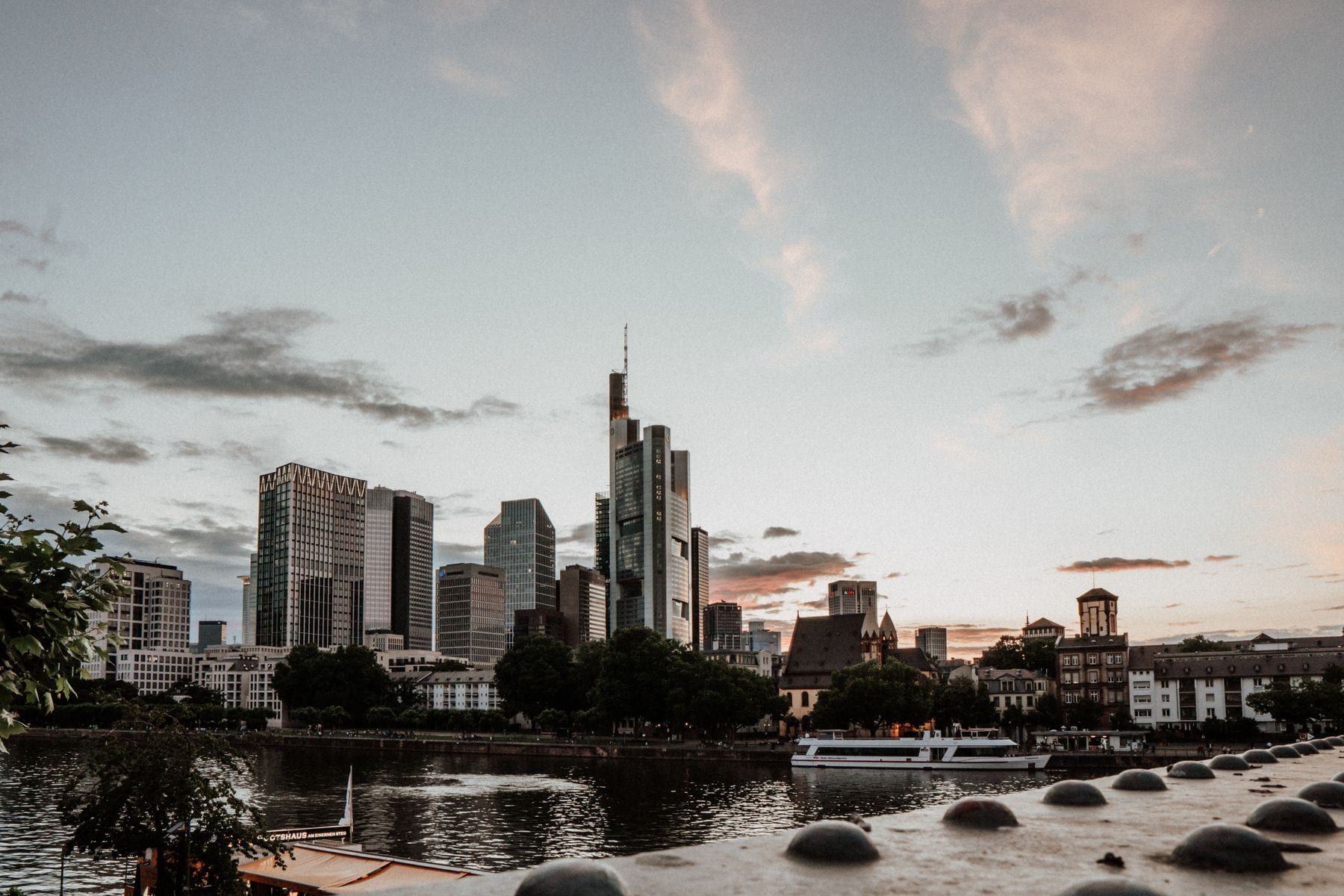
The skyline is what sets Frankfurt apart from every other German city, and the best view of it costs nothing: from the Eiserner Steg, from the Flösserbrücke or from the Sachsenhausen riverbank in the evening. If you want to go up, take the Main Tower, the only publicly accessible viewing platform, 200 metres, entry CHF 10 (about EUR 11), best an hour before sunset. The Römerberg with the town hall and the half-timbered houses is the photo spot; the Römer itself costs CHF 2 for the Kaisersaal with the portraits of the emperors. The new old town between the Römer and the cathedral, opened in 2018, is controversial but a success: 35 houses, 15 of them reconstructions, the Hühnermarkt with the Stoltze fountain, the Goldene Waage with its café. The imperial cathedral of St. Bartholomew is free, the tower with 328 steps costs CHF 3 and is cheaper than the Main Tower. The Paulskirche, cradle of German democracy, is being renovated until 2026. Less worth it: the Zeil as a shopping street, the same chains as everywhere, and the Palmengarten only if you have time. Honestly, you see the Römer, cathedral and old town in two hours; the rest of Frankfurt is the museums and the neighbourhoods.

Museumsufer: twelve museums on the Main

The Museumsufer on the Sachsenhausen bank of the Main is Frankfurt's strongest argument, and most travellers miss it. The Städel is one of the best art museums in Germany, from Vermeer via Monet to Bacon, entry CHF 16 (about EUR 17), at weekends CHF 18. Alongside it the German Film Museum (CHF 6), the Museum of Applied Arts by Richard Meier (CHF 12), the Architecture Museum, the Communication Museum, the Liebieghaus sculpture collection (CHF 12) and on the other side of the Main the Schirn Kunsthalle (varies, CHF 14), the Museum of Modern Art (CHF 14) and the Historical Museum by the Römer (CHF 8). The trick is the MuseumsuferCard: CHF 32 for two consecutive days, 39 museums, no queuing, and it pays off from the third museum. The MuseumsuferTicket for a year costs CHF 80. On the last Saturday in August it is the Museumsuferfest, three days of stalls and stages on the Main, all museums for a CHF 8 badge, but then it is crowded and hotels are expensive. Allow three hours for the Städel; it has a good café with a garden terrace. The walk along the bank between the museums is half the day in itself.

Sachsenhausen and apple wine: the cosy side

Alt-Sachsenhausen south of the Main is Frankfurt's counterpart to the brewhouse: apple wine taverns with long wooden tables, Bembel jugs of grey stoneware and ribbed glasses. Apple wine, Ebbelwoi here, costs CHF 3 to 3.50 (about EUR 3.20 to 3.75) a glass, the 2 litre Bembel around CHF 18; it is sour, dry, an acquired taste, and with Handkäs mit Musik, Grüne Sosse and Rippchen mit Kraut it is a perfect match. The pub lanes around Klappergasse and Grosse Rittergasse are loud and touristy at weekends, with stag parties and a package-holiday feel. The good taverns are a few steps further: Zum Gemalten Haus on Schweizer Strasse, Apfelwein Wagner next door, Zum Feuerrädchen on Textorstrasse, Adolf Wagner with a garden in summer. Reservations are possible in the big houses and sensible at weekends. Schweizer Strasse itself, named after the road towards Switzerland, is one of the city's loveliest shopping and café streets. Outside Sachsenhausen you find apple wine in Bornheim on Berger Strasse, which is quieter, and in the Nordend. The Ebbelwei-Express, a historic tram with apple wine and a pretzel for CHF 9, runs for an hour through the city at weekends, nice for the first afternoon.

Where to stay and cost traps: check the fairs, the station district honestly

Frankfurt has more than 50,000 hotel beds for business travellers, and that sets the prices: during the week without a fair you pay CHF 110 to 150 (about EUR 118 to 161) for a mid-range double room, at weekends often less because the bankers are gone; Frankfurt is one of the few cities where Saturday is cheaper than Tuesday. In fair weeks prices triple: the Book Fair in October, the IAA every two years in September, Ambiente in February, Light and Building, Achema. Check the Messe Frankfurt calendar before you book, or you will pay CHF 400 for an Ibis. Good locations are Sachsenhausen, the Nordend, Bornheim and the Westend, all quiet and ten minutes from the centre by U-Bahn. The Bahnhofsviertel, between the Hauptbahnhof and the city centre, is cheap and practical but, honestly, the toughest district in Germany: an open drug scene on Taunusstrasse and Niddastrasse, red light, homelessness, and all of it visible, even by day. It is rarely dangerous but often unpleasant. Kaiserstrasse itself is fine, with good restaurants and bars, and the district has the best Asian food in the city, but with children, or if that sort of thing bothers you, stay somewhere else. One cost trap is eating right on the Römerberg, the second is the airport: if you only want to get into town, take the S-Bahn for CHF 6 instead of a taxi for CHF 40.

Kleinmarkthalle, neighbourhoods and day trips: Frankfurt for the second day

The Kleinmarkthalle on Hasengasse is Frankfurt's belly and the best place for lunch: 60 stalls with cheese, sausage, fish, vegetables, Italian and Turkish delicatessens, upstairs a wine bar with a view into the hall. The queue at the Schreiber butcher's for a Frankfurter Rindswurst with mustard is legendary, CHF 3.50 (about EUR 3.75), and on Saturdays half of Frankfurt is in it. Then on to the Nordend on Oeder Weg or to Bornheim on Berger Strasse, Frankfurt's cosiest neighbourhoods with cafés, wine bars and Gründerzeit facades. The banking district is deserted in the evenings and at weekends but architecturally worth seeing; the walk from the Alte Oper via the Taunusanlage to the Main Tower takes 30 minutes. The green belt and the city forest are bigger than you expect, and the Lohrberg in the north-east has Frankfurt's only vineyard with a view of the skyline. For day trips Frankfurt is perfectly placed: Mainz with its cathedral and the Gutenberg Museum in 40 minutes by S-Bahn, Wiesbaden with the Kurhaus and thermal baths in 45 minutes, the Rheingau with Rüdesheim and Eltville in an hour, Heidelberg and Darmstadt with the Mathildenhöhe each under an hour. And the old town of Höchst in the west of Frankfurt is a half-timbered village that survived the bombs, 15 minutes by S-Bahn.

Frequently asked questions about Frankfurt

What is the best way to get from Switzerland to Frankfurt?

By ICE directly from Basel SBB in 2 hours 50 minutes, from Zurich and Bern with one change in around 4 hours. Saver fares from CHF 25 (about EUR 27), flexible CHF 100 each way. By car 3 hours from Basel on the A5 with no tolls, but parking in the city costs CHF 25 to 30 a day and you do not need the car. Flying is not worth it; the airport is only interesting as a hub for onward travel.

Is Frankfurt worth a city break, or only a stopover?

Both. As a stopover on the way to Cologne, Berlin or Hamburg, one night is enough for the Römer, the skyline and an apple wine evening. As a city break in its own right two nights are right: one day Museumsufer and Sachsenhausen, one day old town, Kleinmarkthalle and neighbourhoods. With a third day you take a trip to Mainz, Wiesbaden or the Rheingau. You do not need longer than three nights.

What does a weekend in Frankfurt cost?

Outside fair weeks reckon on CHF 130 to 160 (about EUR 139 to 171) per person per day excluding travel: mid-range double room CHF 125, food and apple wine CHF 45, public transport CHF 7, museums and Main Tower CHF 25 to 35. Two nights with the return trip from Basel for CHF 100 cost around CHF 420 per person. In a fair week add CHF 200 to 300 per night for the hotel; better to postpone.

When is the best time to visit Frankfurt?

May to July and September: warm, beer gardens and apple wine gardens open, the riverbank lively. The Museumsuferfest is at the end of August, lovely but crowded. October is the Book Fair, when hotels are unaffordable. The Christmas market on the Römerberg from late November is one of the oldest in Germany and very atmospheric. Weekends in Frankfurt are generally cheaper and quieter than weekdays.

Is the station district dangerous?

Rarely dangerous, often unpleasant. Around Taunusstrasse, Niddastrasse and Elbestrasse there is an open drug scene that you see even by day, plus red light and homelessness. Kaiserstrasse and Münchener Strasse are lively and fine, with good restaurants. If you stay there, take Kaiserstrasse in the evening and not the side streets. With children you are better off in Sachsenhausen or the Nordend.

How do you drink apple wine properly?

From the Gerippte, the glass with the diamond cut, neat or "sauergespritzt" with mineral water, which is how Frankfurters drink it too. "Süssgespritzt" with lemonade is considered a beginner's drink. You order the Bembel for the table, 2 or 4 litres; the landlord puts the lid on it, and when you want no more you do it yourself. Handkäs mit Musik or Grüne Sosse go with it. It is sour and has 5 to 7 per cent alcohol, which people underestimate.

Itineraries with this destination

Activities in the region

More destinations in Rhineland & Moselle