Moselle

Germany · Rhineland & Moselle · Travel guide

Moselle

What a week between Trier and Koblenz really costs, where to drink Riesling straight from the winegrower, why the Moselle cycle path beats the car and when the villages are yours alone.

Photo: Dani Mota / Pexels

What does a trip to Moselle cost?

Adjust the values to your trip: the calculator updates live (EUR, converted from CHF estimates).

1,509 EUR
≈ 754 EUR per person
  • Getting there 257 EUR
  • Accommodation 589 EUR
  • Food 482 EUR
  • Local transport 107 EUR
  • Wine tasting at a winegrower and Burg Eltz 75 EUR

Estimates for orientation, not booking prices. Getting there means train or car from Switzerland, return, per person. Hotels vary strongly by season: current prices are behind the links below.

Money & payment: You pay in euros (EUR). Germany is fonder of cash than Switzerland: bakeries, kiosks and small restaurants often say "cash only", though cards work almost everywhere from about EUR 10. Tip 5 to 10 percent by rounding up and naming the total when you pay. Getting there: By train (DB), car or plane, 1 to 8 hours depending on the destination.

Recommended hotels

Nine options in three price ranges, each among the best-rated on Booking.com.

Budget

Hotel Villa Vinum Cochem

Cond, Cochem

Friendly small hotel on the bank opposite Cochem, with a view of the castle and old town, which is ten minutes away across the bridge. Simple, clean rooms, breakfast included, bikes can be stored. For cyclists and the price-conscious.

from CHF 100 / night (about EUR 107) View →

ibis Styles Trier

Mitte, Trier

Ibis Styles between the Hauptbahnhof and the Porta Nigra, colourful rooms, breakfast and WiFi included, five minutes on foot to the old town. No charm, but reliable and the best budget option for Trier. Good as a first stop before the cycle path.

from CHF 80 / night (about EUR 86) View →

Moselhotel & Restaurant Zur Traube

Löf, Lower Moselle

Family-run inn right on the Moselle bank and the cycle path between Koblenz and Cochem, station in the village, Burg Eltz a day's walk away. Plain rooms, some with river views, good cooking and its own wine. For cyclists and walkers looking for peace.

from CHF 70 / night (about EUR 75) View →

Mid-range

Moselschlösschen Spa & Resort

Traben, Traben-Trarbach

Art Nouveau hotel right on the riverside promenade of Traben-Trarbach with spa, pool and restaurant, some rooms with views of the river and the Grevenburg. A good base for the Middle Moselle between Bernkastel and Zell, with the Moselweinbahn outside the door. For couples and wine travellers.

from CHF 140 / night (about EUR 150) View →

Hotel Moselpark

Kues, Bernkastel-Kues

Large holiday hotel in the spa area of Kues with indoor pool, sauna, bowling and tennis, twenty minutes on foot across the bridge to the old town of Bernkastel. Not intimate, but practical, family-friendly and with the best infrastructure in town. For families and rainy days.

from CHF 125 / night (about EUR 134) View →

Romantik Hotel Zur Glocke

Old town, Trier

Small hotel in a Baroque house behind the Hauptmarkt, with a good restaurant and wine tavern, right in the centre and still quiet. Rooms individual, some with wooden beams. For anyone who wants to experience Trier as an old town and not as a hotel chain.

from CHF 170 / night (about EUR 182) View →

Luxury

Schloss Lieser, Autograph Collection

Lieser, Middle Moselle

Neo-Renaissance palace of 1884 on the Moselle bank, three kilometres from Bernkastel-Kues, an Autograph Collection hotel since 2019 with spa, wine cellar and restaurant. Large rooms with stucco and parquet, terrace towards the river. For one or two nights of palace feeling on the Moselle.

from CHF 230 / night (about EUR 246) View →

Hotel Villa Hügel

Bergstrasse, Trier

Art Nouveau villa on the hillside above Trier with views of the city, pool in the garden, spa and one of the best restaurants in the region. Ten minutes on foot downhill to the old town; uphill you take a taxi. For bon vivants who want to combine Trier with peace and quiet.

from CHF 200 / night (about EUR 214) View →

Weinromantikhotel Richtershof

Mülheim an der Mosel, Middle Moselle

Former 17th century wine estate converted into a hotel with park, spa, vinothek and the Michelin-starred restaurant Culinarium R. Five kilometres from Bernkastel, quietly located in the village, wine tastings in house. For anyone who comes for the Riesling.

from CHF 190 / night (about EUR 203) View →

If you book through these links we earn a small commission, at no extra cost to you.

Experiences worth your time

Burg Eltz

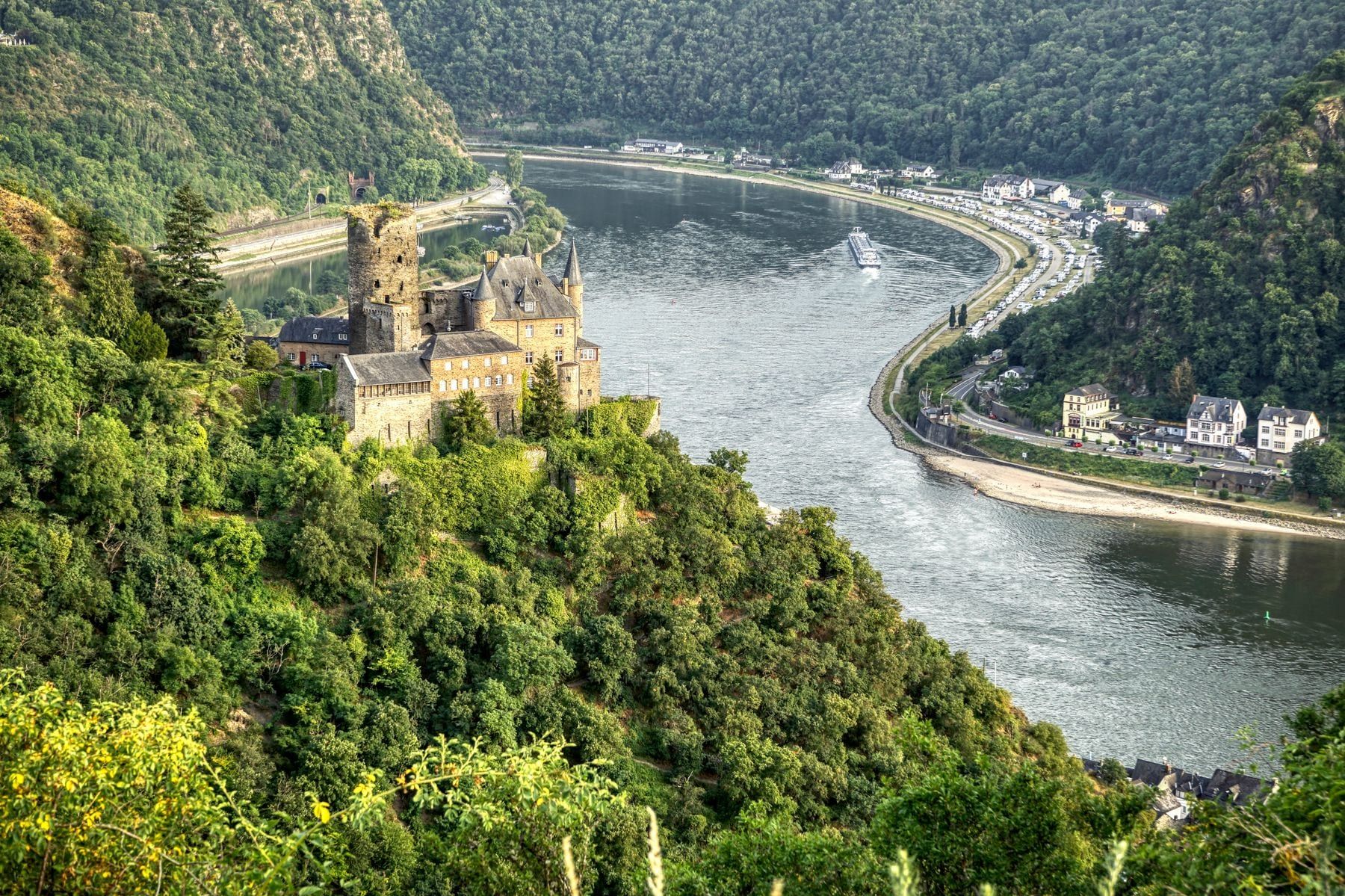
The undestroyed fairytale castle in its side valley, guided tour CHF 14 (about EUR 15) with treasury, April to early November. Walk from Moselkern station 90 minutes through the forest, or car park with shuttle. Come before 10 am or after 3 pm; at midday the coaches are there.

View & book →

Calmont via ferrata

Three kilometres through the steepest vineyard in Europe between Bremm and Ediger-Eller, with ladders and steel cables, 2 to 3 hours, free. Not in the wet, not with a fear of heights, with sturdy shoes. The view of the Moselle loop at Bremm is the best in the valley.

View & book →

Trier: Porta Nigra and Roman monuments

Antikencard for CHF 12 (about EUR 13) with the Porta Nigra, Imperial Baths, amphitheatre, Barbara Baths and the Landesmuseum. A full day, guided walks from CHF 12; the tour of the Porta Nigra with the centurion is theatrical, but children love it.

View & book →

Wine tasting at a winegrower on the Middle Moselle

Five to eight Rieslings from steep sites with explanations, 90 minutes, CHF 15 to 30 (about EUR 16 to 32), often credited if you buy. Book ahead at the big names in Wehlen, Bernkastel and Brauneberg; small estates have open vinotheks. Go in the afternoon, when the grower has time.

View & book →

Moselle cycle path from Trier to Koblenz

190 kilometres flat along the river in four days, rental bike CHF 15 to 20 (about EUR 16 to 21) a day, e-bike CHF 40, luggage transfer CHF 15 a stage. Guided and organised tours with hotels from CHF 500 for five days. The regional train carries bikes free if your legs give out.

View & book →

Boat trip from Cochem to Beilstein

Two hours on the river to the monastery village of Beilstein and back, CHF 18 (about EUR 19), with a stop to get off. Shows the Lower Moselle with the Reichsburg and vineyards; you do not need more boat than that. Several times a day from April to October.

View & book →

Reichsburg Cochem

Neo-Gothic rebuilt castle high above Cochem, tours only, CHF 9 (about EUR 10), 40 minutes, a 20 minute climb or shuttle bus. The view into the valley is the main prize; the interior is historicism. The knights' banquets in the evening are kitsch, but honest kitsch.

View & book →

Bernkastel-Kues and Burg Landshut

Market square with the Spitzhäuschen, the wine culture centre in the Cusanusstift with a vinothek of 150 Moselle wines to taste for CHF 20 (about EUR 21), and the castle ruin with its view over the loop, a 30 minute climb or little train CHF 6. With a wine tasting, half a day.

View & book →

Geierlay suspension bridge and Hunsrück

360 metre suspension bridge over the Mörsdorf valley, 100 metres high, free, car park CHF 5 (about EUR 5), 40 minutes from Cochem. Circular walk 6 kilometres, queue on the bridge at weekends. With the Ehrbachklamm gorge a good day away from the wine.

View & book →

If you book through these links we earn a small commission, at no extra cost to you.

Food & drink

Moselle cooking is winegrowers' cooking: hearty, simple, with Riesling in the sauce and Riesling in the glass. Add Trier with its student-city restaurants and the closeness of Luxembourg and France, which you notice in the pâté and the sauces. Nothing is expensive, unless you sit on the market square in Cochem, and the best meals you get in the Strausswirtschaft at the winegrower's.

Moselle Riesling

Strausswirtschaften in Ürzig, Kröv, Pünderich or Winningen, vinothek in the Cusanusstift in Bernkastel-Kues

The drink that defines everything: slate Riesling from dry to nobly sweet, 8 to 12 per cent, with the acidity that goes with everything. A quarter litre in the Strausswirtschaft CHF 3.50 to 5 (about EUR 3.75 to 5.35), a bottle at the estate CHF 8 to 15, Grosse Gewächse CHF 30 to 60.

Tip:Kabinett feinherb is the entry point, sweet Spätlese for dessert, and Federweisser in September only fresh from the barrel.

Winzerteller

Any Strausswirtschaft in the valley, especially good around Traben-Trarbach and Zell

Winegrower's board with ham, black pudding, liver sausage, homemade cheese, mustard, gherkin and farmhouse bread, the standard meal with Riesling at the grower's. CHF 10 to 14 (about EUR 11 to 15), plenty for one person.

Tip:Vesper time is from 4 pm; many Strausswirtschaften are only open a few weeks a year, so read the notices in the village.

Tresterfleisch

Winegrowers' restaurants on the Middle Moselle between Bernkastel and Piesport, September to November

Pork neck marinated overnight in Trester, the pressed grape residue from the harvest, and Riesling, then roasted, with fried potatoes. An autumn dish for harvest time, CHF 15 to 19 (about EUR 16 to 20).

Debbekooche

Inns on the Lower Moselle between Cochem and Koblenz

Potato bake with bacon and onions, baked for hours in a cast-iron pot, with apple sauce and Riesling, the Moselle winter meal. Heavy and good, CHF 11 to 14 (about EUR 12 to 15), the dish of the day in many inns on Tuesdays.

Tip:Called Dibbelabbes, Schales or Döppekooche depending on the village, but it is the same thing everywhere.

Moselle trout

Inns at the Ehrbachklamm gorge and in the Elzbach valley near Burg Eltz

Trout from the streams of the side valleys, poached blue or meunière with almonds, with boiled potatoes, the fish for dry Riesling. CHF 18 to 24 (about EUR 19 to 26).

Viez

Pubs around the Viehmarkt in Trier and Viez taverns in the Olewig valley

Trier apple wine, sourer and rougher than the Frankfurt one, drunk from a white porcelain cup called a Viezporz. CHF 2.50 to 3 (about EUR 2.70 to 3.20) a cup, the locals' drink alongside Riesling in Trier and on the Saar.

Tip:Viez with mineral water is called Viezschorle and is more refreshing than neat in summer.

Trierer Rieslingcrème

Restaurants in Trier and wine hotels on the Middle Moselle

Airy wine cream of Riesling, egg and cream, with grape compote or berries, the valley's dessert. CHF 7 to 10 (about EUR 7 to 11), in better houses with a glass of Spätlese alongside.

Vineyard peach liqueur and peach cake

Winegrowers' shops in Cochem and Beilstein, Bernkastel weekly market on Tuesdays and Fridays

The red vineyard peach grows between the vines, is small and tart and is made into liqueur, jam and cake. Liqueur from CHF 10 (about EUR 11) a bottle, a slice of cake CHF 4, harvest in September.

Tip:The liqueur is a better souvenir than a bottle of mediocre wine from the gift shop.

Book a food tour: Moselle

Through markets and eateries with a guide, tastings included.

View & book →

If you book through these links we earn a small commission, at no extra cost to you.

History & background

The Moselle rises in the Vosges, flows through Lorraine and Luxembourg and after 544 kilometres joins the Rhine at Koblenz. The German stretch between Trier and Koblenz is the famous one: 195 kilometres in tight loops through slate, so winding that the straight-line distance is only 100 kilometres. The Romans brought the wine. Trier, founded in 16 BC as Augusta Treverorum, was an imperial residence in the 4th century and with 80,000 inhabitants the largest city north of the Alps, and Constantine the Great ruled from here. The Porta Nigra, the Imperial Baths, the amphitheatre and the Basilica of Constantine still stand, as does the Igel Column, a Roman funerary monument 23 metres high. In the year 371 the poet Ausonius described vineyards, fish and villas along the river in his poem Mosella, and much of it still holds true today. In the Middle Ages the Electors of Trier ruled the valley, and castles such as the Reichsburg at Cochem, Burg Eltz and the Marksburg on the Rhine secured tolls and trade routes. Bernkastel received its town charter in 1291, and Nikolaus von Kues, born in 1401 in Kues opposite, became one of the great scholars of his age and endowed the hospital that still sells wine today. In the 19th century Moselle Riesling was more expensive than Bordeaux, and the wines from the steep sites Bernkasteler Doctor and Wehlener Sonnenuhr went to imperial courts and to London. Decline came with the mass production of sweet wines in the 1970s, the revival with a new generation of winegrowers from the 1990s onwards. Today, with 8,700 hectares, the Moselle is the largest steep-slope wine region in the world, and the Calmont near Bremm, with a 65 degree incline, is the steepest vineyard in Europe.

Insider tips

Getting there and around: train into the valley, bike in the valley

From Switzerland you reach Trier by train via Basel and Koblenz or via Mannheim and Saarbrücken, 5 to 6 hours from Basel, saver fares from CHF 40 (about EUR 43) each way. From Koblenz the DB Moselle line runs along the river to Trier, stopping at Cochem, Bullay and Wittlich, but not at Bernkastel-Kues, which has had no station since 1962; bus 300 goes there from Wittlich or Bullay. Between Bullay and Traben-Trarbach the little Moselweinbahn runs. By car it is 4 hours from Basel to Trier via Saarbrücken, 5 hours from Zurich, toll-free, and a car is genuinely practical in the valley because the villages are scattered and the buses thin out in the evening. But: the B49 and B53 along the river are packed in summer, parking in Cochem and Bernkastel costs CHF 8 to 15 a day, and if you taste wine you do not drive. The solution is the bike. The Moselle cycle path runs 240 kilometres flat along the riverbank from Perl to Koblenz; Trier to Koblenz is 190 kilometres in four leisurely days, rental bike CHF 15 to 20 a day, e-bike CHF 35 to 45, and every larger rental shop offers luggage transfer between hotels for CHF 15 a stage. The regional train carries bikes free, so you can shorten stages.

Trier: Rome north of the Alps

Trier is the oldest city in Germany and the right place to start, because here the Romans explain the valley. The Porta Nigra, the black city gate from the 2nd century, is the best-preserved Roman city gate north of the Alps, entry CHF 4 (about EUR 4), and the view from the top down Simeonstrasse is worth it. Then the Imperial Baths (CHF 4), the amphitheatre (CHF 4), the Basilica of Constantine with the largest surviving single room of antiquity, 67 metres long, free as a Protestant church, and the cathedral with the Holy Robe, the supposed garment of Christ, which is displayed every few decades. The Antikencard for CHF 12 includes four Roman buildings and the Rheinisches Landesmuseum, one of the best Roman museums in the country with the Neumagen wine ship and a hoard of 2,600 gold coins. Allow a full day for Trier, two if you take in the Karl Marx House (CHF 5) and the Igel Column. The Hauptmarkt with the market cross of 958 and the Steipe is full of tour groups at midday; the Viehmarkt and the lanes behind the cathedral are quieter. Honestly: Trier is a student city of 110,000, cosy in the evening, not smart, and the wine taverns in the Olewig valley on the edge of town are cheaper than in Cochem.

Cochem, Bernkastel-Kues and the villages in between

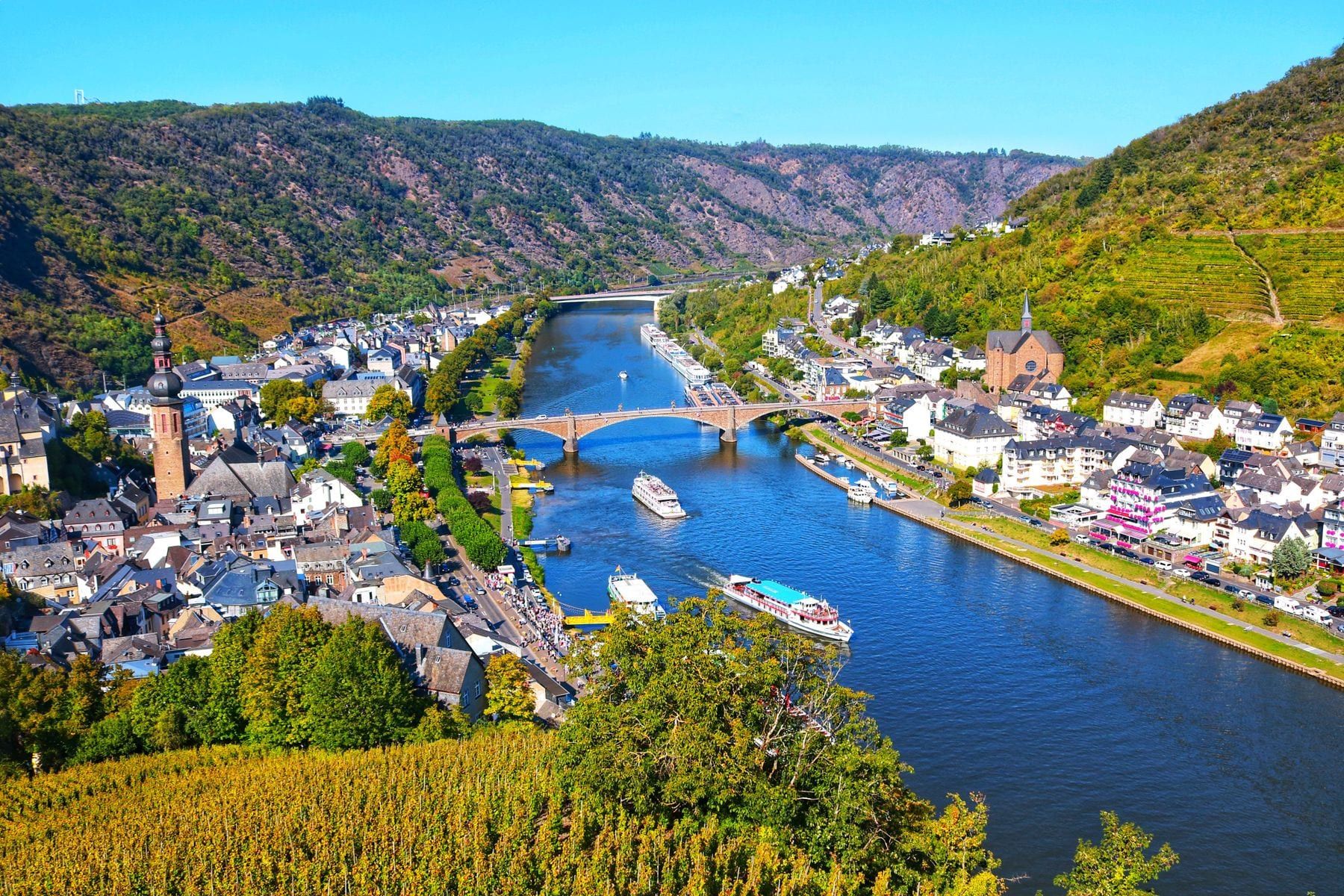
Cochem on the Lower Moselle with the Reichsburg on its rock is the postcard image and correspondingly overrun: in July and August and on autumn weekends coach groups shuffle through the three lanes, car parks are full by midday and ice cream costs CHF 2.50 (about EUR 2.70) a scoop. The castle is a neo-Gothic reconstruction from 1877, guided tour CHF 9, a 20 minute climb, and the view into the valley is better than the interior. The chairlift to the Pinnerkreuz for CHF 9 return offers the same view with less sweat. Bernkastel-Kues on the Middle Moselle is prettier: the market square with the Spitzhäuschen of 1416, the half-timbering, the Landshut castle ruin with its view over the river loop, reached by the little train for CHF 6 or on foot in 30 minutes. Bernkastel is just as crowded, but bigger. The real Moselle lies in between and alongside: Beilstein, the "Sleeping Beauty of the Moselle", a village of 140 inhabitants and a Carmelite monastery, magical in the morning before 10 am, coaches from 11 am. Traben-Trarbach with Art Nouveau villas and underground wine cellars. Zell with the Schwarze Katz. Ediger-Eller, Pünderich, Ürzig, Kröv: winegrowing villages where you sit in the Strausswirtschaft, the grower pours the wine himself and a glass of Riesling costs CHF 3 to 4.

Riesling: wine estates, Strausswirtschaften, wine festivals

Moselle Riesling is light, has 8 to 12 per cent alcohol, plenty of acidity, slate in the taste and ranges from bone dry to nobly sweet. The big names of the Middle Moselle are Joh. Jos. Prüm and S.A. Prüm in Wehlen, Dr. Loosen in Bernkastel, Markus Molitor in Wehlen, Fritz Haag in Brauneberg, Egon Müller on the Saar and Clemens Busch in Pünderich. At the famous estates you have to book a tasting in advance, CHF 15 to 30 (about EUR 16 to 32) for five to eight wines, often credited if you buy. More relaxed are the small estates with a vinothek and an open door, and the Strausswirtschaften, the growers' seasonal taverns with simple food, called Besenwirtschaften in other regions, recognisable by the bunch of flowers or the broom at the gate. A quarter litre of Riesling costs CHF 3.50 to 5 there, a Winzerteller with ham and cheese CHF 10 to 14. The wine festivals begin in June and run through every village until October: the Bernkastel wine festival in early September with fireworks, the Cochem one at the end of August, the Winningen wine festival, the oldest in Germany, at the end of August. Then hotels are full and loud, but the atmosphere is real. A bottle of good Riesling costs CHF 8 to 15 at the estate, the Grosse Gewächse CHF 30 to 60, and the estate will ship to Switzerland, but customs and shipping make it expensive from twelve bottles up; 6 bottles in the boot are simpler.

Where to stay, timing and cost traps

Hotels on the Moselle are cheap, but the season is short: from Easter to the end of October everything is open, from November to March many houses close, the boats do not run and the villages seem deserted, which has its own charm. The most expensive times are July, August and the wine festival weekends in September, when a mid-range double room costs CHF 130 to 160 (about EUR 139 to 171); in May, June and October during the week it is CHF 90 to 120. The loveliest time to travel is the second half of September to mid-October: grape harvest, golden vines, Federweisser, still warm. Winegrowers' guesthouses from CHF 60 for a double room with breakfast are the most honest accommodation, usually bookable through Booking, sometimes only by phone. The Moselle guest card, included in the room price in many places, gives discounts on boats and museums; ask at reception. Cost traps: eating right on the market square in Cochem and Bernkastel, where the schnitzel costs CHF 22 and is mediocre, three lanes further CHF 15 and better. The day cruises of the KD and Mosel-Schiffstouristik are not cheap at CHF 30 to 40 each way, and after two hours you have seen the scenery; the short trip from Cochem to Beilstein for CHF 18 is enough. The Reichsburg at Cochem can only be visited with a tour and is less spectacular inside than the view from outside.

Burg Eltz, Calmont and the quiet side valleys

Burg Eltz is the one castle you must see: owned by the same family for 850 years, never destroyed, hidden in a side valley of the Elzbach, guided tour CHF 14 (about EUR 15) including the treasury, April to early November. The car park is 1.3 kilometres away, shuttle CHF 2, but the walk from Moselkern station through the forest is lovelier, 5 kilometres, 90 minutes, easy. Come before 10 am or after 3 pm; at midday the coaches are in the valley. The Calmont via ferrata between Bremm and Ediger-Eller leads through the steepest vineyard in Europe, 3 kilometres with ladders, iron rungs and steel cables, 2 to 3 hours, free, not in the wet and not if you have a fear of heights, but the view of the Moselle loop at Bremm is the best panorama in the valley. Less wild are the Moselsteig, a 365 kilometre long-distance trail in 24 stages, and the circular walks of 10 to 15 kilometres through vineyards and forest known as Seitensprünge. The side valleys and the plateaus are underrated: the Ehrbachklamm gorge near Brodenbach, the Eifel maar lakes half an hour to the north, the Hunsrück with the Geierlay suspension bridge, 360 metres long, free, 40 minutes from Cochem by car. And the Terraced Moselle between Zell and Koblenz, with Winningen, Kobern-Gondorf and Hatzenport, is less visited than the Middle Moselle, with equal beauty and better rail connections.

Frequently asked questions about Moselle

How do I get from Switzerland to the Moselle?

By train from Basel in 5 to 6 hours to Trier or Koblenz, with a change in Mannheim or Saarbrücken, saver fares from CHF 40 (about EUR 43) each way. From Koblenz the regional train runs along the river to all the larger places except Bernkastel. By car 4 hours from Basel, 5 from Zurich, no tolls. A car is practical in the valley, but with a bike and the regional train you get everywhere and can drink wine.

How many days should you plan for the Moselle?

Five days is a good guide: one day Trier, two days Middle Moselle with Bernkastel-Kues, wine estates and Traben-Trarbach, two days Lower Moselle with Cochem, Beilstein, Burg Eltz and Calmont. If you cycle the path from Trier to Koblenz you need four cycling days plus a day for Trier. A weekend is enough for Cochem, Beilstein and Burg Eltz from Koblenz, but then without Trier.

When is the best time to visit the Moselle?

Mid-September to mid-October: grape harvest, Federweisser, golden vineyards, wine festivals and still mild weather. May and June are green, quiet and cheap. July and August are hot, crowded and the most expensive. From November to March the valley is quiet, many hotels and restaurants are closed and the boats do not run. Check the wine festival weekends in September beforehand; hotels are booked out weeks ahead then.

What does a week on the Moselle cost?

Reckon on CHF 110 to 140 (about EUR 118 to 150) per person per day excluding travel: mid-range double room CHF 110, food and wine CHF 45, bike or train CHF 10 to 20, admissions and wine tastings CHF 15 to 25. Seven days with the return trip from Basel for CHF 120 cost around CHF 950 per person. In winegrowers' guesthouses and Strausswirtschaften you get by on CHF 80 a day. The Moselle is about half the price of the Valais or the Lavaux.

Is a boat trip on the Moselle worth it?

For one or two hours yes, for the whole day no. The Cochem to Beilstein stretch for CHF 18 (about EUR 19) return shows the Lower Moselle with castle and vineyards in two hours, and the circuit around the loop at Bernkastel takes an hour for CHF 14. The KD day trips from Koblenz to Cochem take five hours upstream and are sluggish. The bike on the riverside path is faster and shows the same, with a stop in every village.

Can I take wine from Germany into Switzerland?

Yes, 5 litres per person aged 17 and over are duty-free, that is six 0.75 litre bottles; above that you pay CHF 2 (about EUR 2) per litre in duty plus VAT, which for a case is still cheaper than buying in Switzerland. From a goods value of CHF 150 per person VAT is due on everything, so declare honestly at the border. Wine estates also ship to Switzerland, but shipping and customs clearance make single cartons expensive.

Itineraries with this destination

Activities in the region

More destinations in Rhineland & Moselle