Toyoko Inn Hakata-guchi Ekimae
Three minutes from the Hakata exit of the station, small clean rooms, a simple free breakfast with onigiri and miso soup. The chain's standard formula with no surprises, but reliably cheap.
Japan · Kyushu & Okinawa · Travel guide
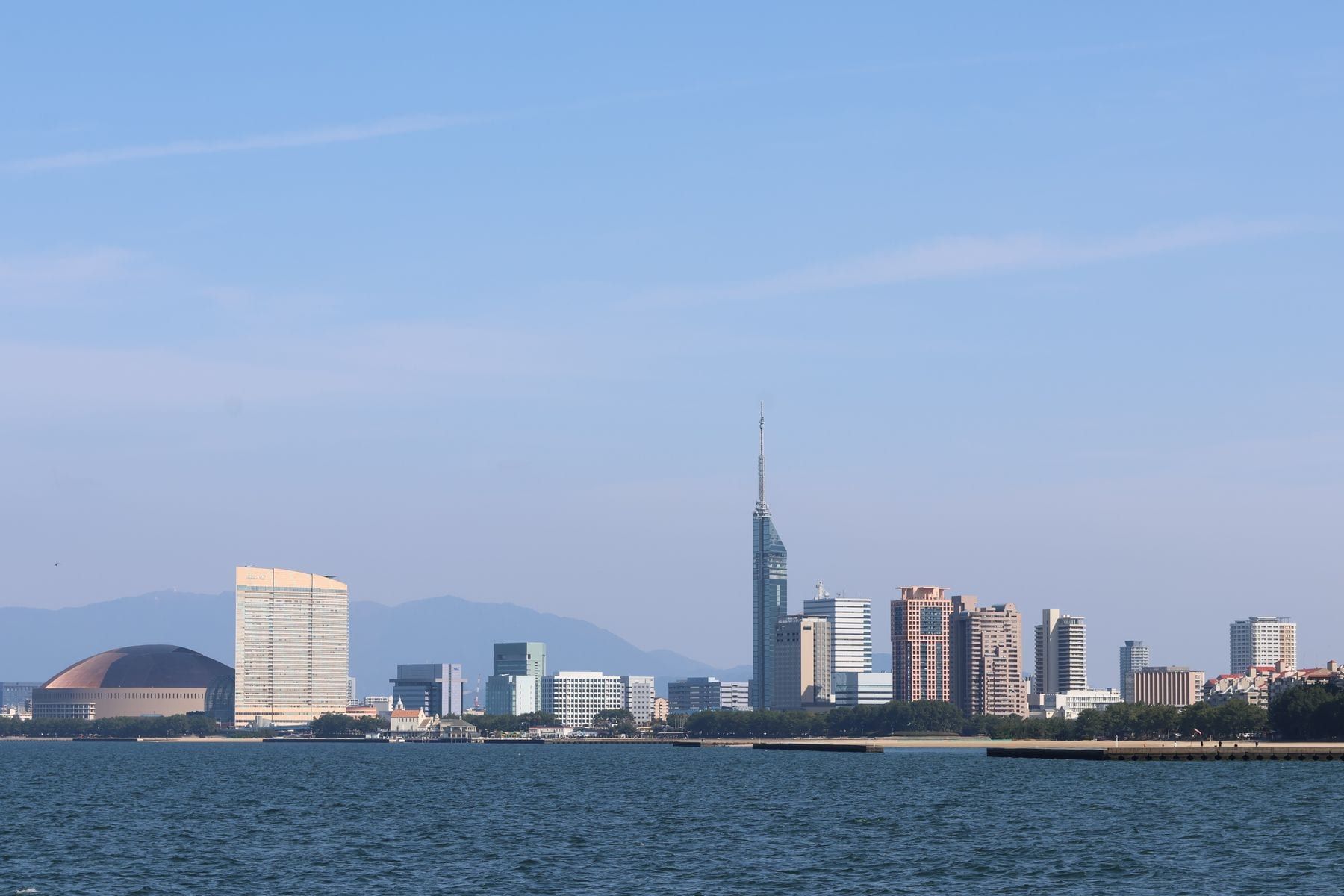
What a few days in the city of street kitchens really cost, where the ramen you know from Ichiran comes from, and why Fukuoka is the best way into Japan if you fly via Seoul.
Photo: arnaud audoin / Pexels
Adjust the values to your trip: the calculator updates live (EUR, converted from CHF estimates).
Estimates for orientation, not booking prices. Flights and hotels vary strongly by season: current prices are behind the links below.
Money & payment: You pay in yen (JPY). 1,000 yen is roughly CHF 6 or EUR 6.50. Cards work in cities and hotels; small restaurants, temples and rural stations often want cash. An IC card (Suica or ICOCA) on your phone pays for trains, buses and convenience stores. Flight time: 12 to 14 hours, usually with one stop.
Nine options in three price ranges, each among the best-rated on Booking.com.
Budget
Three minutes from the Hakata exit of the station, small clean rooms, a simple free breakfast with onigiri and miso soup. The chain's standard formula with no surprises, but reliably cheap.
Tight rooms with a big bed, a unit bathroom and the typical APA fittings. Five minutes' walk from the station and often the cheapest option in Hakata if you book early.
Business hotel in the middle of the nightlife district, three minutes from Tenjin subway station and ten from the yatai on Watanabe-dori. Plain rooms, but a little bigger than at Toyoko and APA.
Mid-range
Directly opposite Canal City, ten minutes' walk to the Nakasu yatai and the station. Rooftop onsen bath with sauna, free late-night ramen from 9.30 pm and a good breakfast with mentaiko. The best value for money in the city.
Newer hotel on the riverbank with a large communal bath on the top floor and views over Nakasu. The street kitchens are right outside, yet the rooms are quiet. A good choice for couples who want to stay central and a bit more polished.
Solid mid-range hotel on a quiet side street in Tenjin, five minutes from Daimyo with its cafes and izakaya. Rooms bigger than at a business hotel, breakfast optional. For anyone who would rather spend evenings in Tenjin than in Hakata.
Luxury
Classic grand hotel three minutes from the station, large rooms, attentive service, a good breakfast buffet. Not modern, but refined and often cheaper than the category suggests. Ideal for arriving after a long-haul flight.
Part of the Canal City complex, overlooking the canal and the fountain shows. Spacious rooms, pool, gym, several restaurants. Nakasu and the yatai five minutes' walk away, the station ten.
Since 2023 in the new Fukuoka Daimyo Garden City tower, rooms from the 18th floor up with views over the city and the bay. Spa, pool, sushi counter, the most expensive address in Kyushu. For anniversaries, not for a stopover.
If you book through these links we earn a small commission, at no extra cost to you.
With a local guide to three or four stalls, food and drinks included, for about CHF 70 to 90 (about EUR 75 to 96). Pricier than going alone, but you learn the rules and end up at stalls without queues. Afterwards you will feel confident going anywhere.
Half-day trip to the most important shrine in Kyushu, with umegae-mochi on the approach street and the museum inside the hill (CHF 4, about EUR 4.30). On your own by Nishitetsu train for CHF 2.50; guided tours often combine Dazaifu with Yanagawa.
Kushida shrine displays a Yamakasa float all year round, and Tocho-ji has an eleven-metre wooden Buddha, both free. On a walking tour you understand why Hakata and Fukuoka were two cities. Two hours, best in the morning.
A lake park modelled on a Chinese original with a two-kilometre loop path, next to the walls of the castle from 1607. Free, packed at cherry blossom time, otherwise the quietest place in the city. The Japanese garden on the south shore costs CHF 1.50 (about EUR 1.60) and is worth it.
Ferry from Meinohama in ten minutes (CHF 1.50, about EUR 1.60), then a bus to the flower park on the hilltop with views over the bay. Rapeseed fields in March, cosmos in October, admission CHF 7. A half day that almost only locals know about.
The peninsula west of the city with beaches, farm shops and the white torii in the sea. Easiest by rental car or on a guided small-group tour (CHF 60 to 80, about EUR 64 to 86), which also stops at the coffee roasters and, in winter, the oyster huts.
Tonkotsu broth takes twelve hours; in the class you learn the shortcut and pull your own noodles. Two to three hours, CHF 50 to 70 (about EUR 54 to 75), food included. A good bad-weather option and a souvenir that really sticks.
An hour south on the Nishitetsu line lies the water town of Yanagawa. The boatman poles you through the old castle moats in 70 minutes (CHF 10, about EUR 11), followed by steamed eel, the local speciality, for CHF 25.
Huge coastal park on the spit north of the bay, with rental bikes, flower fields and a beach. 20 minutes by ferry from Hakata port (CHF 6, about EUR 6.40), admission CHF 3. With children, the best day in Fukuoka.
If you book through these links we earn a small commission, at no extra cost to you.
Hakata is the ramen capital of Japan, but the city can do more: offal hotpot, collagen-rich chicken broth, spicy pollock roe and soft udon. The best part: almost everything costs under CHF 10 (about EUR 11).
Thin, firm noodles in a milky white pork bone broth simmered for twelve hours, topped with chashu, pickled ginger and sesame. The original of the ramen you know from Ichiran and Ippudo. CHF 5 to 7 (about EUR 5.35 to 7.50) a bowl.
Tip:Order the noodles 'katame' (firm) and ask for 'kaedama', a second helping of noodles for CHF 1, instead of a second bowl.
Hotpot of beef offal, cabbage, chives and garlic in soy or miso broth, cooked at the table, with champon noodles added to the broth at the end. Much milder than it sounds. From CHF 12 (about EUR 13) per person, minimum order two portions.
Tip:Book ahead or come before 6 pm; the well-known places are full in the evening.
Chicken hotpot in which bones and meat are simmered for hours into a white, collagen-rich broth. First you drink the broth on its own with salt, then the meat goes in, then vegetables, and finally rice. CHF 25 to 40 (about EUR 27 to 43) per person.
Tip:This is the city's celebration meal; allow two hours and arrive hungry.
Pollock roe marinated in chilli and dashi, invented in Hakata in 1949 after a Korean model. On rice, in onigiri, on pasta or in an omelette at the yatai. A portion with rice CHF 3 (about EUR 3.20), a gift pack CHF 10 to 25.
Tip:Yanagibashi market sells mentaiko onigiri for breakfast at CHF 2; the market closes at 6 pm.
Unlike in Kagawa, the udon here are soft and almost slurp themselves, served with gobo-ten (fried burdock) or maruten (fish cake). Japanese udon culture is said to have started in Hakata in 1241. CHF 3.50 to 5 (about EUR 3.75 to 5.35).
Tip:Gobo-ten udon is the standard order; add kashiwa onigiri (chicken rice) and you are full for CHF 6.
In Fukuoka, yakitori also means pork belly on a skewer, served on raw cabbage with ponzu sauce. The cabbage is refilled as long as you keep ordering. CHF 1 to 2 (about EUR 1.10 to 2.10) per skewer.
Tip:Order with salt (shio) instead of sauce (tare) so you can taste the meat.
Raw mackerel sashimi marinated in soy, sesame and mirin, topped with a little wasabi and nori. In Fukuoka the mackerel is fresh enough to eat raw, which is rare elsewhere in Japan. CHF 6 to 9 (about EUR 6.40 to 9.60) a portion.
Tip:Order it first with a cold beer, and pour the leftover sesame soy over rice.
Grilled rice cake filled with red bean paste and stamped with a plum blossom pattern, warm from the iron. Only found on the approach street in Dazaifu, CHF 1 to 1.50 (about EUR 1.10 to 1.60) each.
Tip:Eat it straight off the iron; once it cools it loses half its charm.
Through markets and eateries with a guide, tastings included.
If you book through these links we earn a small commission, at no extra cost to you.
Fukuoka is the city that brings Japan closest to the continent: Busan is 200 kilometres away, Tokyo more than 1,000. That position has shaped its history. As early as AD 57 a Han emperor sent a gold seal to the 'King of Na'; a farmer dug it up on the island of Shikanoshima in 1784 and it now sits in the city museum. In the 7th century the court set up its administration for all of Kyushu and for contact with China and Korea at Dazaifu, 15 kilometres to the south. In 1274 and 1281 the Mongols under Kublai Khan tried to land in Hakata Bay; both times typhoons smashed the fleets, and the word kamikaze, divine wind, dates from this time. Remains of the defensive wall still stand in Nishijin. For centuries Hakata, the port and merchant town east of the Naka river, and Fukuoka, the castle town to the west founded in 1601 by the daimyo Kuroda Nagamasa, were two separate places. They merged in 1889: the city is called Fukuoka, the station is still Hakata to this day. In June 1945 an air raid burned down a quarter of the city. Afterwards Fukuoka grew faster than any other big city in Japan and today has 1.6 million inhabitants, lots of students and a reputation as the most liveable city in the country. The Hakata Gion Yamakasa in July, when men race festival floats weighing tonnes through the streets, has been held since 1241.

No other airport in Japan is this convenient: from Fukuoka Kuko subway station you reach Hakata station in five minutes and Tenjin in eleven, for about CHF 1.60 (about EUR 1.70). There are no direct flights from Zurich; your best bet is to fly via Seoul, Taipei or Hong Kong, where Fukuoka is a short-haul destination with plenty of connections. Alternatively, land in Tokyo or Osaka and take the shinkansen: 2.5 hours from Shin-Osaka for about CHF 95, five hours from Tokyo for CHF 140, at which point a domestic flight makes more sense. Locally you pay with an IC card on the subway and buses (Suica or ICOCA from Tokyo and Osaka work; the local ones are called Hayakaken and nimoca). The three subway lines cover everything, and a day pass costs CHF 4. The Nishitetsu buses in the centre between Hakata, Nakasu and Tenjin cost a flat CHF 0.90. On foot, Hakata to Tenjin takes 25 minutes, with Nakasu halfway. Bike share (Charichari app, CHF 0.05 per minute) is the fastest way to see this flat city.
Fukuoka has two centres, and your choice shapes your stay. Around Hakata station the business hotels stand shoulder to shoulder: Toyoko Inn, APA, Dormy Inn, double rooms from CHF 50 to 80 (about EUR 54 to 86), handy for the shinkansen and the airport but rather quiet in the evening. Tenjin and neighbouring Daimyo are the nightlife district with coffee roasters, izakaya and shops; here you pay CHF 10 to 20 more for the same category. Nakasu in between is the entertainment island with the yatai, the hostess bars and some neon noise; only stay there if you want the river and the street kitchens on your doorstep. Our advice for a first visit: Hakata, because distances are short and the yatai are only a 15-minute walk anyway. A Dormy Inn pays off twice, with an onsen bath in the building and free late-night ramen from 9.30 pm. The city is fully booked and twice as expensive from 1 to 15 July (Yamakasa), during Golden Week in early May (Dontaku festival) and on weekends when the SoftBank Hawks play at home.
Around a hundred yatai, mobile street kitchens with eight to ten stools, set up every evening from 6 pm and close between midnight and 2 am. The best-known row stands on the Nakasu riverbank along Showa-dori, more touristy and with queues; the stalls on Watanabe-dori in Tenjin and in Nagahama by the fish market are quieter. Here is how it works: you sit down, order a drink first (beer CHF 3.50, about EUR 3.75; one per person is expected), then small plates: yakitori skewers CHF 1 to 2, pieces of oden CHF 1, a bowl of tonkotsu ramen CHF 5, mentaiko omelette CHF 6. An evening with food and two beers costs CHF 20 to 30 per person. Cash is the rule, though some now take PayPay. You stay an hour, not three, then make room. Prices hang on the wall or are on a menu; ask beforehand if you cannot see any. When it rains many stalls stay closed, and on Sundays too. Taking photos is fine if you ask first, and if you try a few words of Japanese your neighbour will often buy you a drink.
The Ichiran flagship in Nakasu is where the chain started in 1960. A bowl costs CHF 6 (about EUR 6.40), which is fair, but the evening queue takes an hour. Two blocks away or at the station (Hakata Issou, Shin Shin) you get better ramen without the wait for the same price. Second trap: the Nozomi shinkansen. It is the fastest, but not covered by the JR Pass; with a pass you take the Sakura or Hikari, which only takes 20 minutes longer to Osaka. Without a pass a single ticket to Kumamoto costs CHF 30 and to Kagoshima CHF 64, so the JR Kyushu Rail Pass (Northern Kyushu, three days, CHF 75) only pays off if you really travel a lot. Third trap: mentaiko gift boxes at the station for CHF 20 to 30. At Yanagibashi market the same amount costs half and tastes fresher. Free: Ohori Park, the Maizuru castle ruins, Kushida shrine and the view from the Acros building in Tenjin. Fukuoka Tower costs CHF 5 and, to be honest, offers less than an evening by the river.
Fukuoka lies far to the south, so cherry blossom starts here around 25 March, a week before Tokyo, at its most beautiful in Maizuru Park around the castle ruins and in Nishi Park above the bay. April and May are mild and dry; in early May the city celebrates Dontaku with two million visitors, and hotels cost three times as much that week. The rainy season runs from mid-June to mid-July, after which it turns humid at 33 degrees. The Yamakasa festival ends on 15 July at 4.59 am with the race of the seven city districts, an honest reason to put up with the heat. August and September bring typhoons, which can shut the airport for days at a time, so plan a buffer then. October and November are the best time: 20 degrees, clear air, autumn leaves in Dazaifu at the end of November. Winter, at eight degrees, is milder than in Switzerland with little snow, and from November to March the kaki-goya open in Itoshima: oyster huts where you grill a kilo of fresh oysters yourself for about CHF 8 (about EUR 8.50).
You reach Dazaifu on the Nishitetsu line from Tenjin in 30 minutes (change at Futsukaichi or take the direct Tabito train, CHF 2.50, about EUR 2.70). The Tenmangu shrine to the scholar Sugawara no Michizane is free; until 2027 the main hall has a temporary roof with a garden on it, one of the most unusual structures in the country. On the approach street you eat umegae-mochi, grilled rice cakes with red bean paste, CHF 1 each, and you can admire the Starbucks by Kengo Kuma without having to go in. The Kyushu National Museum right behind the shrine (CHF 4, escalator through the hill) explains the exchange with Korea and China better than any other museum. You are back by 1 pm. For the afternoon or a second day: Itoshima, the peninsula west of the city, 40 minutes by JR train or by rental car. White beaches, the wedded rocks of Sakurai Futamigaura in the sea, farm shops, surfers, coffee roasters in old farmhouses. Fukuoka locals come here at the weekend; tourists almost never do.
Two full days are enough for the city: one for Hakata with Kushida shrine, Canal City and an evening at the yatai, one for Ohori Park, Tenjin and Dazaifu. Add Itoshima, Nokonoshima or a trip to Yanagawa (boat ride through the canals, an hour from Tenjin) and it becomes three to four days. Most people use Fukuoka as a base for Kyushu, in which case a week in the region is worthwhile.
Yes, especially if you fly via Seoul, Taipei or Hong Kong. You land ten minutes from your hotel, the city is easy to get your head around, and from Hakata station the shinkansen reaches Osaka in 2.5 hours and carries on to Kyoto and Tokyo. Open-jaw tickets (into Fukuoka, back from Tokyo) usually cost no more than a return flight with the Asian airlines.
Yes. The Camellia Line ferry leaves Hakata port daily, taking six hours by day on the way out and sailing overnight on the way back, from about CHF 60 (about EUR 64) each way plus port fees. JR Kyushu's fast hydrofoil catamaran Queen Beetle was suspended in 2024 after a scandal over hull cracks, so check the current status before you book. Do not forget your passport, this is a real border, and depending on the rules at the time you may need a K-ETA for Korea.
Only if you move around a lot. The Northern Kyushu pass (Fukuoka, Nagasaki, Kumamoto, Beppu) costs about CHF 75 (about EUR 80) for three days, the all-Kyushu pass CHF 125. A single ticket from Hakata to Nagasaki costs CHF 40, to Kagoshima CHF 64. If you visit Nagasaki and Kumamoto within three days you save a little; if you stay longer and use buses too, single tickets or the SunQ bus pass often work out just as well.
Yes. Many stalls in Nakasu have English menus; in Tenjin you point at whatever your neighbour is eating. A few basic words help: 'biru hitotsu' (one beer), 'ramen kudasai', 'oishii' (delicious), 'okaikei' (the bill). Children are welcome, but the stools are cramped and the smoke from the grills is real. With children, come early at 6 pm when there is space.
Late March to mid-May (avoiding Golden Week) and October to early December. Summer is hot and humid, but you get Yamakasa and fireworks. Winter is mild and cheap, hotels cost a third less than in autumn, and the oyster huts in Itoshima are open. Typhoons are possible from August to early October.
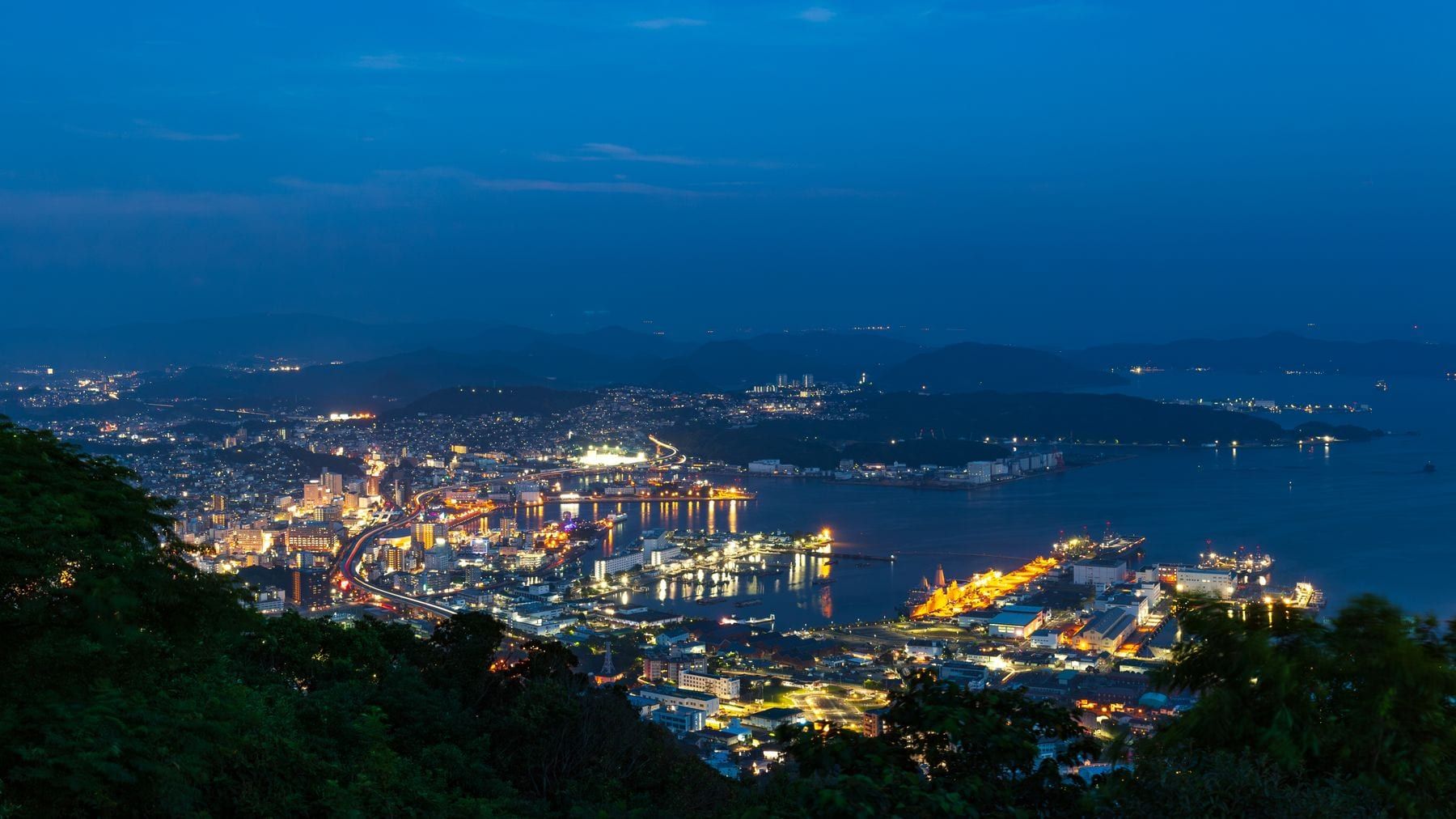
What two days in Japan's gateway to the world really cost, how to visit the Peace Park with the calm it deserves, and why the night view from Mount Inasa is worth more than any boat trip.
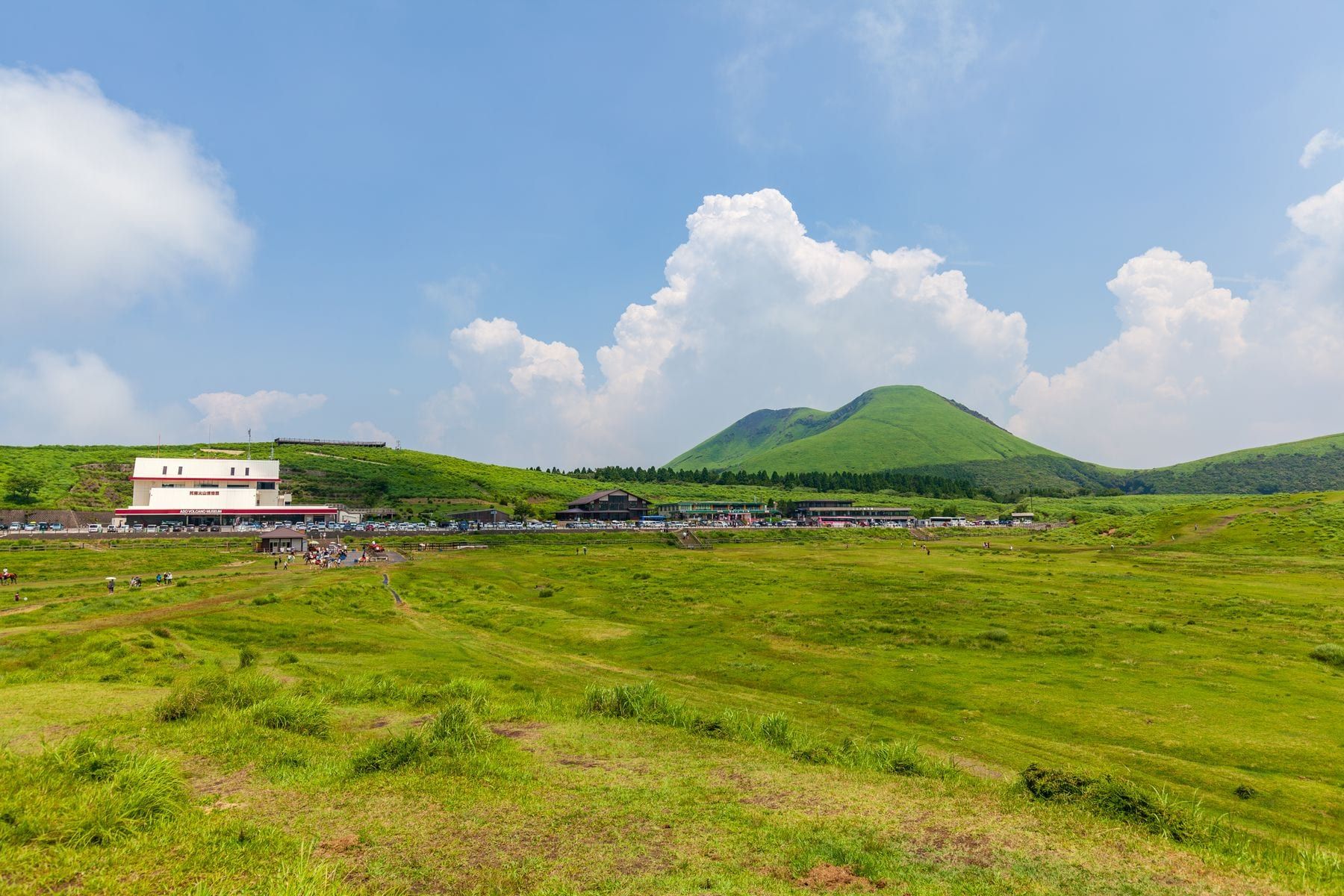
What a castle town and the world's largest inhabited caldera really cost, when you are allowed up to the crater, and why a night in Kurokawa Onsen is worth the money.
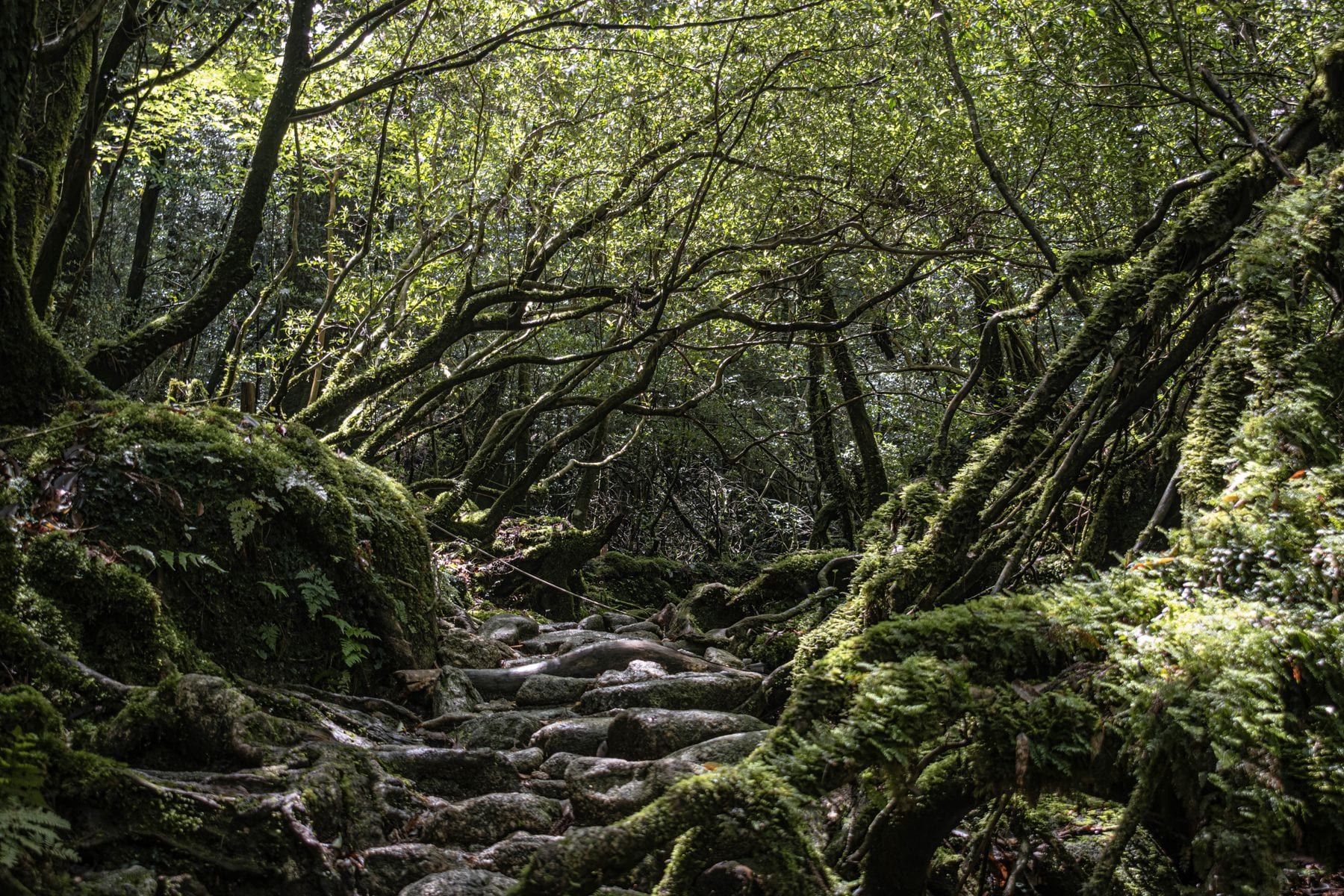
What the volcano city in the south and the rain island with its thousand-year-old cedars really cost, how to get through the ten hours to Jomon Sugi, and why the sand bath in Ibusuki is no tourist gimmick.
What a week on Japan's southern islands really costs, why without a rental car you only see half the island, and how to fit the Kerama Islands and the war history into one trip.