Okinawa & Naha

Japan · Kyushu & Okinawa · Travel guide

Okinawa & Naha

What a week on Japan's southern islands really costs, why without a rental car you only see half the island, and how to fit the Kerama Islands and the war history into one trip.

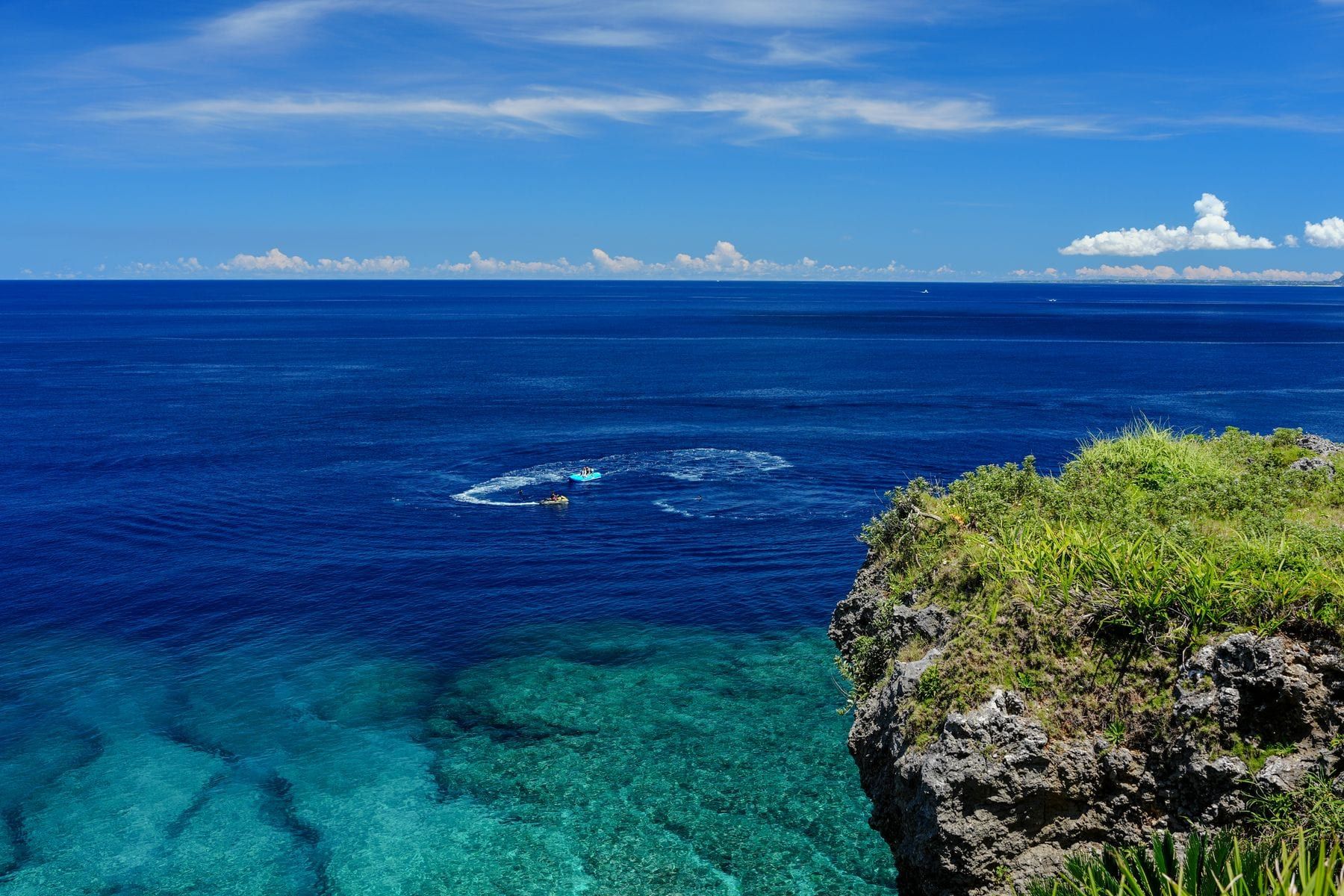
Photo: William Chen / Pexels

What does a trip to Okinawa & Naha cost?

Adjust the values to your trip: the calculator updates live (EUR, converted from CHF estimates).

3,659 EUR
≈ 1,830 EUR per person
  • Flights 2,461 EUR
  • Accommodation 508 EUR
  • Food 428 EUR
  • Local transport 134 EUR
  • Snorkelling boat trip to the Kerama Islands 128 EUR

Estimates for orientation, not booking prices. Flights and hotels vary strongly by season: current prices are behind the links below.

Money & payment: You pay in yen (JPY). 1,000 yen is roughly CHF 6 or EUR 6.50. Cards work in cities and hotels; small restaurants, temples and rural stations often want cash. An IC card (Suica or ICOCA) on your phone pays for trains, buses and convenience stores. Flight time: 12 to 14 hours, usually with one stop.

Recommended hotels

Nine options in three price ranges, each among the best-rated on Booking.com.

Budget

Toyoko Inn Naha Kokusai-dori Miebashi Eki

Kokusai-dori, Naha

Right at Miebashi monorail station at the start of Kokusai-dori, free breakfast, small rooms. Airport in 15 minutes, Makishi market ten minutes' walk. Reliable and usually the cheapest double room in the city.

from CHF 55 / night (about EUR 59) View →

APA Hotel Naha

Matsuo, Naha

Two minutes from Kokusai-dori and Kencho-mae station, compact rooms with a big bed, large communal bath. A good base for two nights in the city before heading on to the coast.

from CHF 55 / night (about EUR 59) View →

Hotel Gracery Naha

Kokusai-dori, Naha

Right on Kokusai-dori, rooms a little bigger than at the business chains, breakfast with Okinawan dishes optional. Noisy outside in the evening, but everything is on your doorstep.

from CHF 65 / night (about EUR 70) View →

Mid-range

Daiwa Roynet Hotel Naha Kokusai Dori

Kokusai-dori, Naha

Newer upper-end business hotel at the eastern end of Kokusai-dori near Makishi station, with large, quiet, well-soundproofed rooms. The market and Tsuboya five minutes away, parking for your rental car in the building.

from CHF 95 / night (about EUR 102) View →

Hotel Collective

Kokusai-dori, Naha

Since 2020 the biggest hotel right on Kokusai-dori, with a pool in the courtyard, a spa and generous rooms. Feels like a resort in the city, at prices that would be twice as high in Onna.

from CHF 140 / night (about EUR 150) View →

Hyatt Regency Naha Okinawa

Makishi, Naha

Behind Makishi market on a quiet street, rooftop pool, club lounge, rooms from the 10th floor up with views over Naha. Upper mid-range that is often available for CHF 150.

from CHF 150 / night (about EUR 161) View →

Luxury

Halekulani Okinawa

Onna, Okinawa

Sister of the hotel in Waikiki, on its own bay in Onna, with 1.7 kilometres of coastline, five pools, a spa and Japanese and French restaurants. The hotel with the best service on the island, 70 minutes from the airport.

from CHF 450 / night (about EUR 482) View →

The Busena Terrace

Nago, Okinawa

On the Busena peninsula near Nago, where the G8 summit met in 2000, with a private beach, an underwater observatory and a tropical garden. Classic grand hotel, families welcome, 30 minutes to the Churaumi Aquarium.

from CHF 350 / night (about EUR 375) View →

Hoshinoya Okinawa

Yomitan, Okinawa

Low villas behind a gusuku wall right on the reef at Yomitan, each with a sea view, an infinity pool and cooking based on Ryukyu recipes. No children under 13 in certain areas, but complete peace. The most expensive hotel on Okinawa.

from CHF 700 / night (about EUR 749) View →

If you book through these links we earn a small commission, at no extra cost to you.

Experiences worth your time

Snorkelling boat trip to the Kerama Islands

By boat from Naha or Chatan to two or three reefs in the Kerama Blue, turtles included, with gear and lunch, CHF 60 to 90 (about EUR 64 to 96) for the day. An alternative to the ferry if you only have one day.

View & book →

Diving in the Keramas or a try-dive

Two guided boat dives from CHF 90 to 120 (about EUR 96 to 128), a try-dive without certification CHF 80, visibility up to 50 metres, water 22 to 29 degrees. There are German-speaking schools in Naha and Onna. Do not dive the day before your flight home.

View & book →

Churaumi Aquarium and northern island day tour

Bus tour from Naha with Churaumi (admission CHF 13 extra or included), Kouri Bridge, the Bise avenue and Nakijin, CHF 40 to 70 (about EUR 43 to 75) for the day. For anyone without a rental car, the only sensible way to see the north.

View & book →

Shuri Castle and kingdom walking tour

Guided through the castle with its reconstruction hall, the Shureimon gate, the Tamaudun royal mausoleum (CHF 1.80) and the Kinjo-cho stone path, two to three hours, CHF 30 to 50 (about EUR 32 to 54). Also easy to do alone for CHF 2.40 admission.

View & book →

Food tour through Makishi market and Sakaemachi

With a local guide around the market, tasting sea grapes, pig's trotter and island vegetables, then in the evening into the bar lanes of Sakaemachi with awamori and sanshin. Three to four hours, CHF 70 to 100 (about EUR 75 to 107) including food.

View & book →

Peace Park, Himeyuri Museum and Navy Headquarters

Half-day tour to the south to the memorials of the 1945 battle, CHF 50 to 80 (about EUR 54 to 86) with a guide; alone with a rental car, admissions total under CHF 6. Serious and important; best in the morning, with something light afterwards.

View & book →

Whale watching (January to March)

Humpback whales pass through the Keramas in winter, with boats from Naha and Zamami, three hours, CHF 30 to 40 (about EUR 32 to 43), a success rate above 90 per cent and a money-back guarantee with most operators. Take seasickness tablets, the sea is rough.

View & book →

Sanshin or eisa workshop

An hour on the three-stringed snakeskin lute or learning the eisa drum dance, CHF 20 to 40 (about EUR 21 to 43), in Naha and Yomitan. You learn a song and afterwards understand why people sing in every bar.

View & book →

Mangrove kayaking in Yambaru

Two to three hours through the mangroves of Gesashi or Okukubi in the north, CHF 40 to 60 (about EUR 43 to 64) with a guide, suitable for beginners and children. Easy to combine with Cape Hedo and the World Heritage forest of Yambaru.

View & book →

If you book through these links we earn a small commission, at no extra cost to you.

Food & drink

Okinawa's cooking has little to do with sushi: pork from ear to trotter, bitter melon, sea grapes, rice spirit made from Thai rice and taco rice from the US era. Hearty, cheap and supposedly the reason for all the centenarians.

Okinawa soba

Shuri Soba near the castle hill, Kishimoto Shokudo in Motobu (since 1905) or the soba shops around Makishi market

Thick wheat noodles (no buckwheat, despite the name) in a clear pork and bonito broth with braised pork belly or ribs, fish cake, ginger and spring onion. Mild and filling. CHF 4 to 7 (about EUR 4.30 to 7.50).

Tip:Go for soki soba with ribs and add koregusu, chillies pickled in awamori, a drop at a time.

Goya champuru

Yunangi in Kumoji, a small restaurant serving home cooking, or the eateries on the first floor of Makishi market

Stir-fry of bitter melon, island tofu, egg and Spam or pork. Bitter, salty, and with rice the everyday meal in every family. Champuru means 'mixed up' and is the island's motto. CHF 6 to 9 (about EUR 6.40 to 9.60).

Tip:Yunangi opens at 12 noon and 5.30 pm; there is a queue outside, and it is worth it.

Rafute

Yunangi, or the Ryukyu restaurants in Shuri, where it is served as part of the court menu

Pork belly braised for hours in awamori, soy and brown sugar until fat and meat fall apart. The festive dish of the kingdom, sweet and rich. CHF 8 to 12 (about EUR 8.50 to 13) a portion.

Tip:Share one portion between two, with awamori on the rocks; the fat needs the spirit.

Taco rice

King Tacos in Kin, the original, open 24 hours; in Naha in any diner on Kokusai-dori

Taco meat, cheese, lettuce and tomatoes on rice, invented in Kin in 1984 next to the US base so that GIs could fill up quickly. Today a school canteen classic. CHF 5 to 8 (about EUR 5.35 to 8.50).

Tip:Portions at King Tacos are American-sized; the small one is enough.

Umibudo

Makishi market, ground floor, to take away, or served on the first floor

Sea grapes, a seaweed made of tiny green spheres that pop in your mouth like caviar, eaten raw with ponzu or on rice with sashimi. Salty, fresh, like nothing else. CHF 4 to 7 (about EUR 4.30 to 7.50).

Tip:Never put them in the fridge, the spheres shrink; eat them the same day.

Sata andagi

Stalls at Makishi market and in the lanes behind Kokusai-dori

Fried dough balls like heavy doughnuts, cracked and crunchy outside, dense inside, made with brown island sugar or sweet potato. The market snack, CHF 0.70 to 1.20 (about EUR 0.75 to 1.30) each.

Tip:Buy them warm from the oil; three make a breakfast.

Awamori

Zuisen distillery in Shuri for a tasting, awamori bars in Sakaemachi or any izakaya

Rice spirit made from Thai long-grain rice and black koji, 30 to 43 per cent, strong and dry; aged for three years as kusu it turns as smooth as rum. The drink of the kingdom since the 15th century. CHF 3 to 6 (about EUR 3.20 to 6.40) a glass.

Tip:Mixed with water and ice (mizuwari) to go with food, kusu neat at the end.

Blue Seal ice cream

Blue Seal on Kokusai-dori or the original Blue Seal Makiminato in Urasoe

Ice cream brand founded in 1948 for US soldiers, now with flavours such as beni-imo (purple sweet potato), shikuwasa citrus, sugar cane and salted milk. Creamier than Japanese soft-serve. CHF 2.50 to 4 (about EUR 2.70 to 4.30) a scoop.

Tip:Beni-imo is the flavour to try; shikuwasa sorbet is the refresher after the beach.

Book a food tour: Okinawa & Naha

Through markets and eateries with a guide, tastings included.

View & book →

If you book through these links we earn a small commission, at no extra cost to you.

History & background

For 450 years Okinawa was not part of Japan but a kingdom of its own. In 1429 Sho Hashi united the island's three principalities into the Kingdom of Ryukyu, with its capital at Shuri; it paid tribute to the Chinese Ming dynasty and in return ran the trade between China, Japan, Korea and Southeast Asia, with ships from Naha bringing spices from Siam, silk from Fujian and swords from Japan. In 1609 the Satsuma domain from Kagoshima invaded and made Ryukyu a vassal that continued to present itself to the outside world as Chinese, a double game that lasted 270 years. In 1879 Tokyo abolished the kingdom, the last king, Sho Tai, was taken to Tokyo, and the language was banned in schools. From 1 April to 22 June 1945 the Battle of Okinawa raged, the only land battle of the war on Japanese soil: around 200,000 dead, including more than 100,000 civilians, a quarter of the population, many through forced suicides. Shuri was wiped out. Until 15 May 1972 the United States governed the islands; people drove on the right and paid in dollars. Today 70 per cent of the US military land in Japan lies on 0.6 per cent of its territory, a dispute that shapes every election. Shuri Castle was rebuilt in 1992, became a World Heritage Site in 2000 and burned down again on the night of 31 October 2019; the main hall is due to stand again in autumn 2026. Okinawa gave the world karate, has the highest life expectancy in Japan and a culture that to this day sees itself as Uchinanchu, not Yamato.

Insider tips

Getting there and car hire: without a car you stay in Naha

From Zurich you fly via Tokyo Haneda or Osaka Kansai with a domestic connection, 17 to 20 hours in total; the domestic flight from Tokyo takes 2.5 hours and costs from CHF 60 (about EUR 64) with Peach or Jetstar, CHF 120 to 200 with ANA and JAL. Naha airport is on the edge of the city, and the Yui Rail monorail takes 20 minutes to the centre (CHF 1.80, day pass CHF 5). It is the only railway in the prefecture. Buses run north, but slowly: 2.5 hours to the Churaumi Aquarium for CHF 15 each way. So the rule is: for anything outside Naha you need a rental car, CHF 35 to 60 a day for a small car, double that in the summer holidays; book months ahead. The motorway to Nago costs CHF 6 in tolls, and traffic in and around Naha is gridlocked morning and evening. Swiss and German drivers need the JAF translation of their licence, Austrians an international driving permit under the Geneva Convention. Driving is on the left, the speed limit on country roads is 60, and parking is free almost everywhere. If you do not want to drive, book day tours from Naha (Churaumi with Kouri Island from CHF 40) and otherwise stick to the city and the ferries.

Where to stay: Naha as a base, the west coast for beaches, Kerama for the sea

Naha is the city with everything: business hotels on Kokusai-dori and around the Miebashi and Kencho-mae monorail stations from CHF 55 to 80 (about EUR 59 to 86), mid-range CHF 100 to 160. Naha has no beach worth mentioning, but it does have the market, restaurants and ferries. The resorts lie on the west coast between Yomitan, Onna and Nago, 60 to 90 minutes north, with their own bays: Halekulani, Busena Terrace, Hoshinoya and dozens of hotels in between, CHF 200 to 600 a night in season, half that in December and January. Motobu in the north is handy for Churaumi and quiet. Our honest recommendation: two to three nights in Naha, two to three on the west coast or in Motobu, then one or two on Zamami or Tokashiki in the Kerama Islands, where you stay in minshuku for CHF 60 to 90 per person with dinner and have the water right outside. Hotels on Okinawa cost double during Golden Week, in July and August and over New Year; June (rainy season) and October to November are the months with the best balance of price and weather.

Naha: Kokusai-dori, Makishi market and the Shuri building site

Kokusai-dori is 1.6 kilometres of souvenir shops, steakhouses and plastic shisa lions, and one evening is enough. The side streets are more interesting: Makishi market, rebuilt in 2023, sells fish on the ground floor in colours you have never seen, pigs' trotters and faces, sea grapes and island vegetables; for a CHF 3 to 5 (about EUR 3.20 to 5.35) preparation fee they will cook the fish you bought on the first floor. Tsuboya pottery street, with workshops dating back to 1682, is five minutes further on, and the yachimun pottery there is a souvenir that lasts. You reach Shuri Castle by monorail in 15 minutes plus a 15-minute walk. Since the 2019 fire it has been a building site, but one that is worth it: for CHF 2.40 you enter the inner area, watch the rebuilding of the main hall through windows in the construction hall, see craftsmen carving and lacquering, and learn why the castle is red and looks Chinese. The Shureimon gate, the walls and the view over Naha are intact. Allow two hours, followed by Shuri soba nearby. In the evening head to the yatai lanes of Sakaemachi near Asato station: small bars with sanshin music, where tourists are the exception.

Churaumi and the north: a day with a car

The Churaumi Aquarium in Ocean Expo Park on the Motobu peninsula is 90 minutes from Naha and the most visited sight on the island. The reason is the Kuroshio tank: 7,500 tonnes of water behind a 60-centimetre-thick acrylic panel, with three whale sharks and manta rays gliding over your head. Admission CHF 13 (about EUR 14), CHF 9 from 4 pm, by which time the crush of coach groups is over too. Outside in the park, the dolphin show, beach and replica Ryukyu village are free. Combine the day with the rest of the peninsula: Bise with its avenue of fukugi trees, which have shielded the houses from typhoon winds for 300 years; the 13th-century Nakijin castle ruins with sea views (CHF 2.40, cherry blossom in January, the earliest in Japan); the bridge to Kouri, two kilometres over turquoise water; and lunch of Okinawa soba at Kishimoto Shokudo in Motobu, open since 1905. If you have time, continue north into the Yambaru forest, a World Heritage Site since 2021, with Cape Hedo at the northern tip and mangroves for kayaking at Gesashi. The north is sparsely populated and petrol stations and konbini become rare, so fill up in Nago.

The Kerama Islands: the water you came for

The Kerama Islands lie 30 to 40 kilometres west of Naha and have been a national park since 2014. The water has a colour named after it, Kerama Blue, with 50 metres of visibility and coral right up to the beach. From Tomari port in Naha, fast boats run to Zamami and Tokashiki in 50 to 70 minutes for CHF 20 (about EUR 21) each way; the slow ferry takes twice as long for half the price. Book online: in summer the boats are full, and they are cancelled when a typhoon comes. It works as a day trip: out at 9 am, back at 4 pm, snorkelling at Furuzamami beach on Zamami or Aharen on Tokashiki, gear on the beach for CHF 10 a day, with turtles at Ama beach almost guaranteed. One or two nights are better: in the evening the islands are empty, the sky is full of stars, and the minshuku dinner costs nothing extra. Diving: two boat dives from CHF 90 to 120, snorkelling boat trips CHF 40 to 70, try-dives CHF 80. From January to March humpback whales pass through the Keramas, with whale watching from Naha or Zamami for CHF 30 to 40 and a high success rate. Swimming season is April to October, when the lifeguarded beaches put up jellyfish nets; outside the nets you swim at your own risk.

Typhoon season, war memorials and cost traps

From August to October typhoons sweep across Okinawa, and two to four per season hit the island directly. Then nothing flies for two days, the ferries stay in port, shops close, and you sit in your hotel, which is built for it. During this period book flexible fares and travel insurance that covers flight cancellations, and plan two buffer days after the island before your flight home. May and June are the rainy season, with showers rather than constant rain; April and late October to November are the best months, and December to February are mild at 18 degrees, too cool for swimming but good for driving and hiking. Set aside half a day for the south: the Peace Park in Itoman, with the names of 240,000 dead of all nations on black stones; the Himeyuri Museum about the schoolgirls who died as nurses (CHF 2.70, about EUR 2.90); and the underground Navy Headquarters in Tomigusuku. Walk through quietly, take no selfies in front of the stones, and if elderly Okinawans are there, keep your distance. Cost traps: steakhouses on Kokusai-dori with show cooking charge CHF 50 per person, while a block further on the same costs half; taxis to the resorts CHF 80 to 120; parking in Naha CHF 2 an hour, free outside the city; and the 'Blue Cave' snorkelling in Onna is nice, but on summer days there are 30 boats there.

Frequently asked questions about Okinawa & Naha

Do I really need a rental car on Okinawa?

Not for Naha, Shuri and the Kerama Islands; the monorail, your feet and the ferries are enough there. For Churaumi, the west coast, the north and the Peace Park in the south, yes: buses take twice as long and run rarely. Rental cars from CHF 35 (about EUR 37) a day, plus the JAF licence translation for Swiss and German drivers. The alternative is day tours from Naha for CHF 40 to 80.

When is the best time to visit Okinawa?

April to early May (before Golden Week) and mid-October to November: 25 degrees, swimming weather, little rain, hardly any typhoons. July and August are hot, crowded and expensive, and August to October is typhoon season. May and June are the rainy season, with showers and cheap hotels. In winter it is 18 degrees, with whales in the Keramas and cherry blossom in January at Nakijin, but no swimming weather.

What happens during a typhoon?

Flights and ferries are cancelled one to two days ahead, hotels stay open and are built to withstand it, and shops and restaurants close for one to two days. You stay inside, stock up at the konbini and wait. Book flexible flights and insurance that covers cancellations, and plan two buffer days before your flight home from Tokyo. Hotels keep you informed in good time, and the Safety Tips app sends warnings in English.

Is Shuri Castle worth it despite the building work?

Yes, precisely because of it. You watch the main hall being rebuilt through windows in the construction hall, see the craftsmen at work and get a good exhibition on the Kingdom of Ryukyu. Gates, walls and view are intact, and admission is CHF 2.40 (about EUR 2.60). The main hall is due to be finished in autumn 2026, after which prices and visitor numbers will rise noticeably again.

Kerama as a day trip or with an overnight stay?

On a day trip you manage one beach and three hours of snorkelling, with a boat out at 9 am and back at 4 pm, costing CHF 40 (about EUR 43) for the ferry plus gear. With one or two nights in a minshuku (CHF 60 to 90 per person with dinner) you have the islands to yourself in the evening, the stars and a morning on the beach before the day-trippers arrive. If you want to dive, stay overnight.

How many days for Okinawa?

Six to seven days for the main island and the Keramas: two in Naha with Shuri and the south, two to three on the west coast and in the north with Churaumi, and two on Zamami or Tokashiki. Add Ishigaki and Iriomote in the Yaeyama Islands (an hour's domestic flight from Naha) and it becomes ten days. Fewer than four days is not worth the long flight.

Activities in the region

More destinations in Kyushu & Okinawa