Japan · Van trip · 12 days

Kyushu by Van

Street stalls, a caldera of pastures and volcanoes, onsen in every village and at the end the rain island with its thousand year old cedars: Kyushu is Japan's van island.

The route, day by day

  1. Day 1 to 3

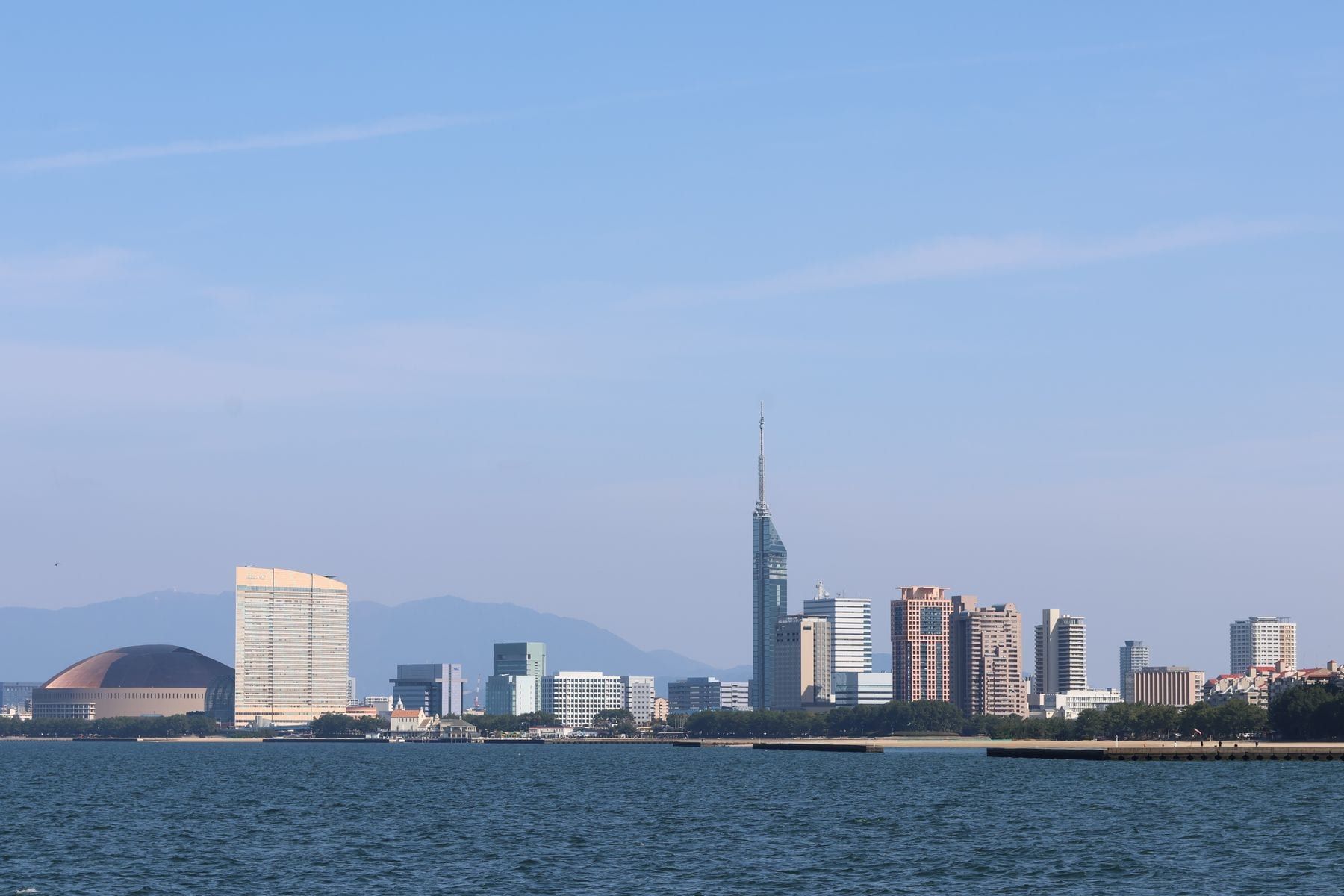
    Fukuoka: yatai, ramen and collecting the van

    Fukuoka is the most practical way into Japan: the airport is five metro minutes from Hakata station, and from Zurich you get there via Seoul, Taipei or Tokyo. The first two nights you stay without a vehicle in Tenjin, business hotel CHF 80 to 120 (about EUR 86 to 128) for two, and get to know the city on foot: day 1 in the evening to the yatai on the Nakasu riverbank, stools, oden, yakitori and a beer for CHF 15 to 25. Day 2: tonkotsu ramen in Hakata, the Kushida Shrine, in the afternoon 30 minutes on the Nishitetsu line to Dazaifu for the Tenmangu Shrine and umegae mochi, motsunabe in the evening. Day 3: collect the van from the rental company at the airport or in Hakata (compact camper with bed and stove CHF 90 to 140 a day, deposit by card, international driving permit under the Geneva Convention compulsory), shop at the supermarket, then out of the city. On to Nagasaki: 150 kilometres on the Kyushu and Nagasaki expressways, two hours, tolls around CHF 25 with the rental company's ETC card.

    Tours at this stop: Yatai food tour in Fukuoka ↗Dazaifu half day tour ↗

    Open the Fukuoka travel guide →
  2. Day 4 to 5

    Nagasaki: hillsides, harbour and the night view from Inasa

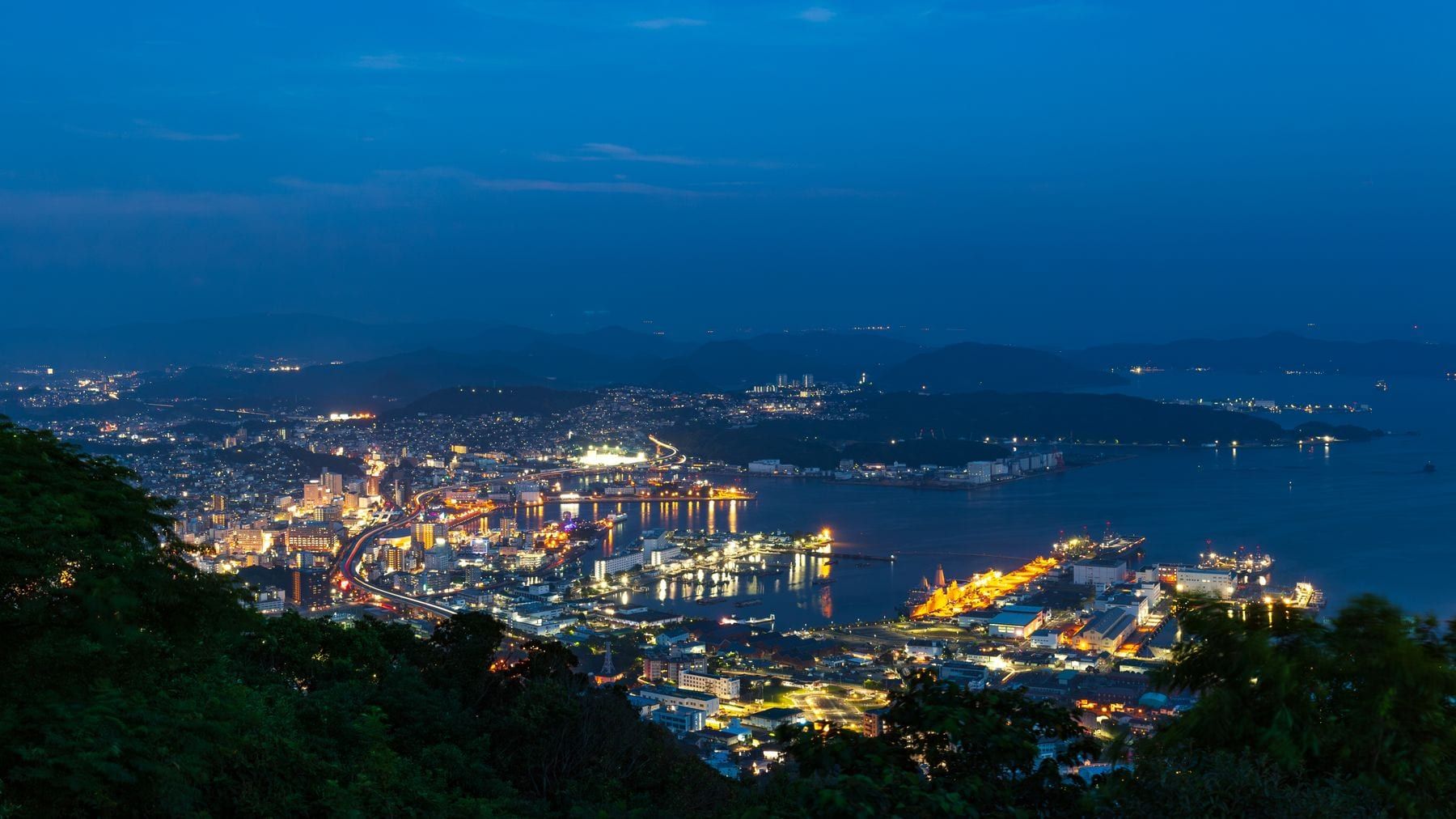
    Nagasaki is steep, narrow and impractical for a van, so you park it for two days: in a guarded car park at the harbour near Dejima (CHF 12 to 18, about EUR 13 to 19, per 24 hours; overnighting in the van is tolerated, ask the attendant) or at a michi-no-eki on the edge of town towards Unzen, and commute by tram (CHF 1 a ride). Day 4: Peace Park and Atomic Bomb Museum (CHF 1.20), allow half a day, the harbour district with Dejima and the Glover Garden in the afternoon, the ropeway up Inasa (CHF 8) in the evening for one of Japan's three great night views, then champon in Chinatown. Day 5: boat tour to the ghost island Gunkanjima (CHF 30, cancelled in swell) or the churches of Oura and Urakami, castella cake to go. On to Aso via the Shimabara peninsula: an hour to Shimabara with a stop at the hells of Unzen, ferry Shimabara to Kumamoto port (Ocean Arrow 30 minutes, around CHF 25 per person plus CHF 50 for the van, or the slow ferry for less), then 70 kilometres up into the caldera, 90 minutes, around four hours in all.

    Tours at this stop: Gunkanjima boat tour ↗Nagasaki walking tour with Dejima and Glover Garden ↗

    Open the Nagasaki travel guide →
  3. Day 6 to 8

    Aso: crater, pastures and Kurokawa Onsen

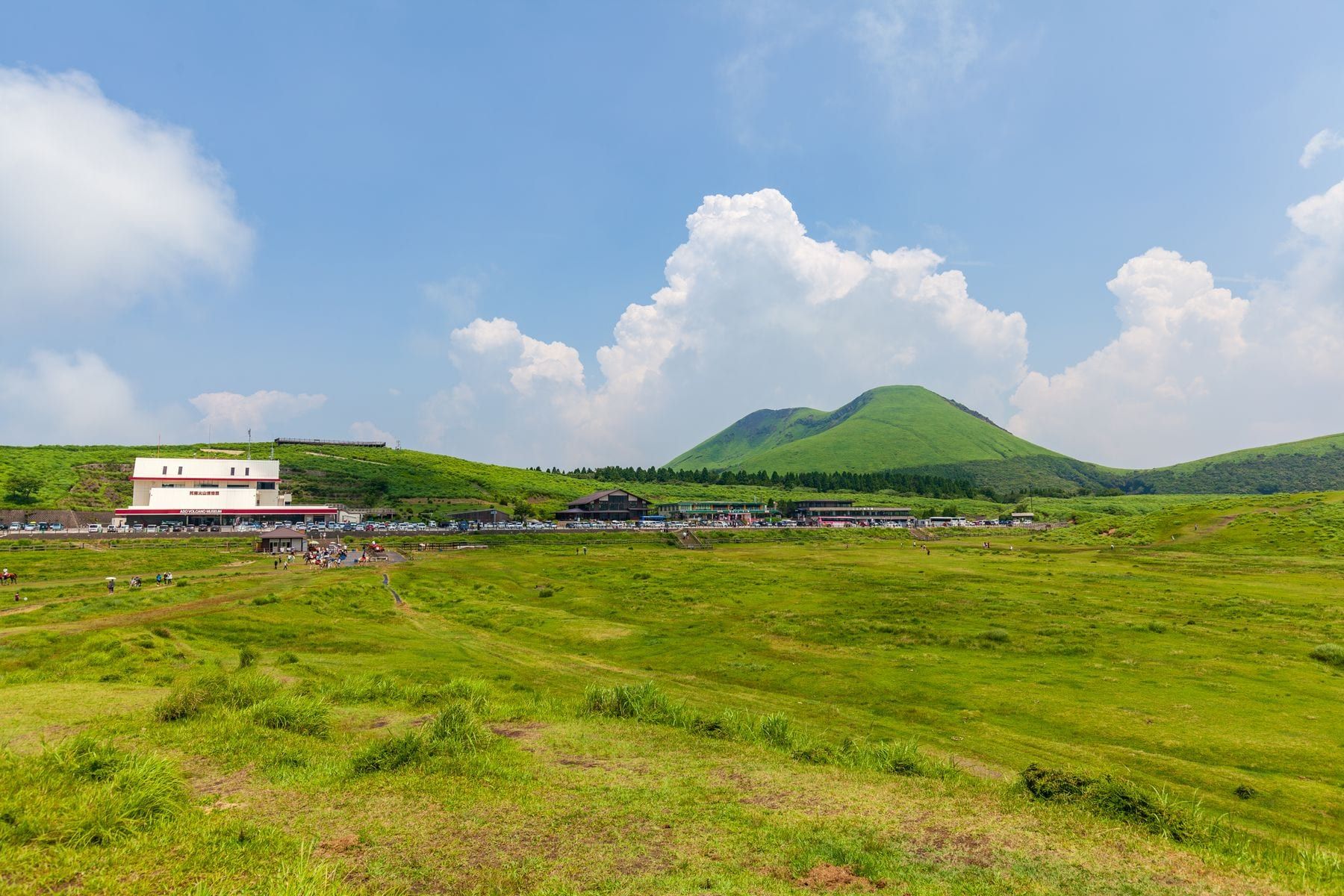
    The Aso caldera is 25 kilometres wide and inhabited, with pastures, rice fields and five peaks in the middle, and here the van is at home. Pitch at the Michi-no-Eki Aso by the station, RV park CHF 20 (about EUR 21) a night with electricity, onsen within walking distance. Day 6: Kusasenri, the grassy plain with horses, then bus or van to the Nakadake crater if the gas readings allow (check the website, entry CHF 5), akaushi beef in Uchinomaki that evening. Day 7: sunrise at the Daikanbo viewpoint on the caldera's northern rim, 5.30 am with a sea of cloud, then along the Milk Road to Kurokawa Onsen, Kyushu's loveliest spa village: the wooden pass (CHF 8) buys three rotenburo of your choice, pitch at the village car park. Day 8: Takachiho Gorge by rowing boat (CHF 25, 90 minutes' drive) or a quiet morning. On to Kagoshima: 200 kilometres on the Kyushu expressway from Kumamoto, three hours, tolls CHF 30. In the evening return the van one way at the Kagoshima branch (fee CHF 50 to 100) or park it at the harbour for four days (CHF 10 a day) and sleep in it once more.

    Tours at this stop: Aso volcano and Kusasenri tour ↗Takachiho Gorge boat trip ↗

    Open the Kumamoto & Aso travel guide →
  4. Day 9 to 12

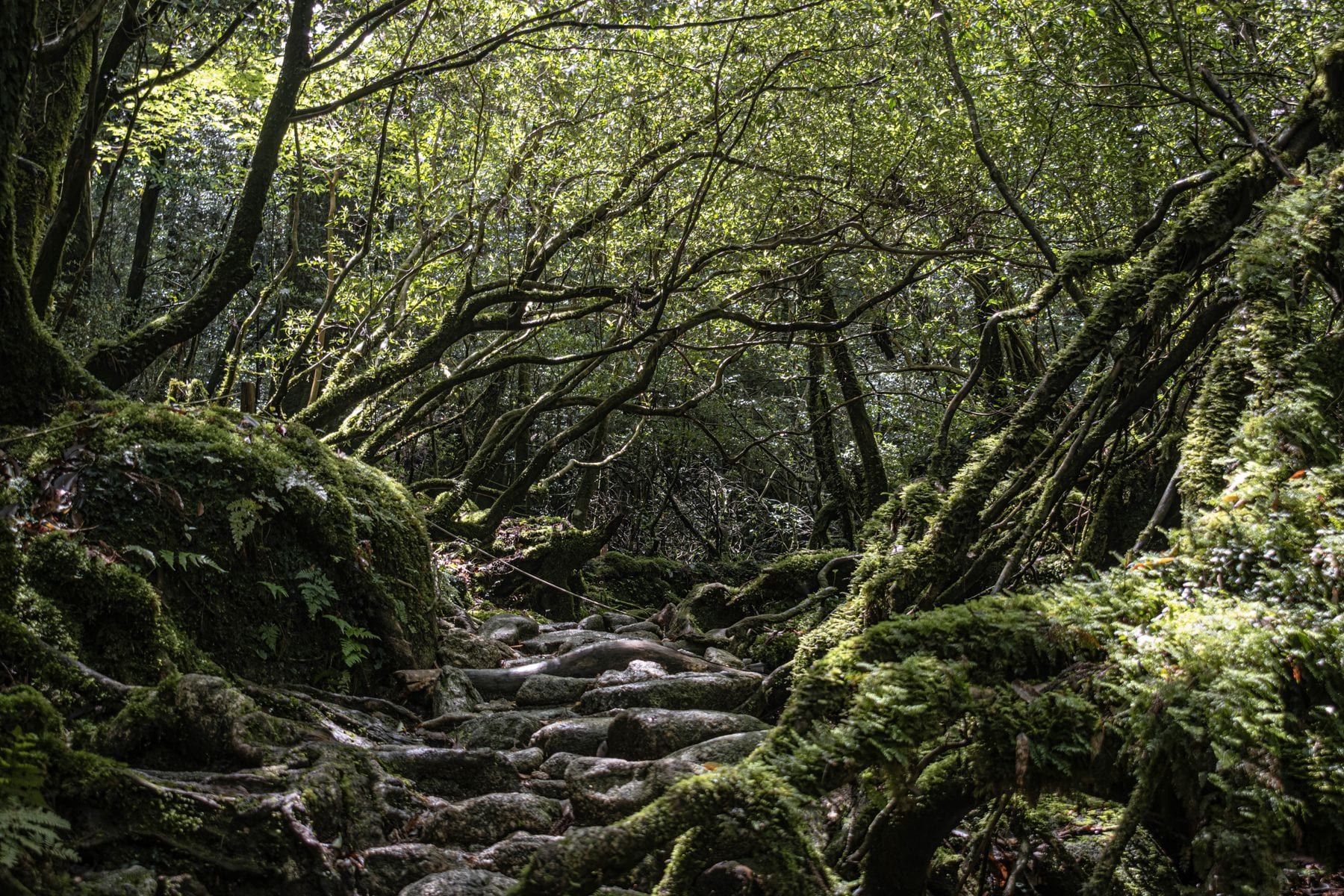
    Yakushima: moss, cedars and rain that belongs

    Yakushima is a round island with 2,000 metre mountains, moss forest and thousand year old cedars, and it rains there on 300 days a year. From Kagoshima the Toppy or Rocket hydrofoil reaches Miyanoura or Anbo in two hours (CHF 50, about EUR 54, each way, CHF 100 return, book days ahead). On the island you rent a small car (CHF 40 a day) or take the buses, and stay three nights in a minshuku with dinners of flying fish and black pork, CHF 100 to 160 for two. Day 9: arrival, in the afternoon the seaside onsen Hirauchi, accessible only at low tide (CHF 1.20). Day 10: Shiratani Unsuikyo, the moss forest that inspired Princess Mononoke, a four hour loop (CHF 3). Day 11: Jomon Sugi, the 7,000 year old giant cedar, ten hours return from the Arakawa trailhead, bus from 5 am, only for the fit with rain gear; otherwise Yakusugi Land with shorter trails. Day 12: journey home. Hydrofoil back to Kagoshima, flight to Haneda in 1 hour 50 minutes (CHF 60 to 120) or Shinkansen to Hakata in 80 minutes (CHF 64), then the flight home.

    Tours at this stop: Shiratani Unsuikyo guided hike ↗Jomon Sugi day hike with guide ↗

    Open the Kagoshima & Yakushima travel guide →

If you book through these links we earn a small commission, at no extra cost to you.

What the route costs

Rough total per person for the whole route, mid-range, travelling as a pair. Flights and hotels vary by season; details are on the destination pages.

  • Getting there 1,177 EUR
  • Accommodation 300 EUR
  • Food 514 EUR
  • Local mobility 803 EUR
2,793 EUR
Total per person · 12 days

Money & payment: You pay in yen (JPY). 1,000 yen is roughly CHF 6 or EUR 6.50. Cards work in cities and hotels; small restaurants, temples and rural stations often want cash. An IC card (Suica or ICOCA) on your phone pays for trains, buses and convenience stores.

Rental car for this route

A rental comparison link will follow once the partner programme is live. Until then, compare directly with the rental companies or at your arrival airport.

Tips for the route

Michi-no-eki are state run roadside stations on country roads with parking, toilets round the clock, a farmers' market and often an onsen next door, and sleeping in your vehicle is tolerated as long as you behave: one night, no table or chairs outside, no barbecue, engine off, buy something in the shop in the morning. If you want to stay longer or need electricity, use an RV park (CHF 20 to 35, about EUR 21 to 37, a night); there are around 40 on Kyushu, bookable via the website of the Japanese RV association.

The van in Japan is small, and that is a good thing: kei campers or compact campers on a Hiace base fit in every car park and through every village lane, large motorhomes do not. Budget CHF 90 to 140 (about EUR 96 to 150) a day including insurance, bedding and cooking set, more in high season, one way drop off in Kagoshima with a fee of CHF 50 to 100. Onboard toilets are rare; you use those at the michi-no-eki and konbini, which are always clean.

Driving the van: left hand traffic, automatic, speed limit 60 on country roads and 80 to 100 on the expressway, and the van is slower than you think. Take the rental company's ETC card for tolls and ask about the Kyushu Expressway Pass for foreign renters (around CHF 60 to 90, about EUR 64 to 96, for seven days); it covers Fukuoka to Nagasaki and Kumamoto to Kagoshima. Petrol stations in the countryside close at 7 pm, so fill up from half a tank.

The Nakadake crater is the most active volcano on Kyushu and is closed when sulphur dioxide is elevated or an eruption warning is issued, which happens several times a year and is posted each morning on the Aso Volcano Museum website. Plan the crater for the morning with a spare day. Asthmatics are not allowed to the crater rim. The caldera itself, Kusasenri and Daikanbo are always open and just as beautiful in mist.

Yakushima demands preparation: rain jacket, rain trousers, walking boots with grip and a rain cover for your rucksack, no excuses. The Jomon Sugi hike is 22 kilometres long with 700 metres of ascent, starts at 5 am with the shuttle bus (CHF 11, about EUR 12, buy the day before) and from March to November the bus is compulsory. If you do not want that, Shiratani Unsuikyo and Yakusugi Land give you two days of moss forest that are just as impressive.

Timing: April and May with azaleas on Aso and bearable rain on Yakushima, October and November with clear air and autumn colours in Kurokawa. June is the rainy season, July and August humid with over 30 degrees in the van, September typhoon season with ferry cancellations to Yakushima. In winter the van is doable on Kyushu, around zero at night, but Kurokawa in the snow is the island's finest onsen moment.

Frequently asked questions about Kyushu by Van

How many days does the Kyushu van tour take?

Twelve days is the honest minimum if Yakushima is to be included: three Fukuoka, two Nagasaki, three Aso, four Yakushima including the journeys there and back. Without Yakushima it is eight days with the van returned in Kagoshima. With two weeks you add Beppu or Kirishima and drive less per day.

When is the best time for Kyushu?

April, May, October and November. Kyushu is the south of Japan: cherry blossom arrives in late March, summer is hot and humid, and typhoons pass through in September. October is the driest on Yakushima, which there still means damp. Winter is mild, but the van gets cold at night and the ferries run less often.

Van or hire car with hotels?

The van is doable and lovely on Kyushu, but not cheaper: hire car plus business hotel cost about the same for two, with more comfort. The van wins on freedom, at sunrise on the crater rim and in Kurokawa, where hotels are full months ahead. If you have never slept in a van, book it only for Nagasaki to Kagoshima and sleep in a bed in Fukuoka and on Yakushima.

What does the van tour cost?

Around CHF 2,610 (about EUR 2,790) per person: flight CHF 1,100, accommodation CHF 280 (two hotel nights in Fukuoka, RV park fees and three minshuku nights on Yakushima), food CHF 480 and mobility CHF 750, of which the van for six days is around CHF 400 a head, plus fuel, tolls, the Shimabara ferry, the hydrofoil to Yakushima and the small car there.

Is driving a van in Japan suitable for beginners?

Yes, if you are used to an automatic. The compact campers are no wider than an estate car, traffic on Kyushu is calm, and the michi-no-eki take the search for a pitch off your hands. Unfamiliar are left hand traffic, narrow village roads with drainage ditches at the edge and reverse parking, which everyone does in Japan. Zero alcohol applies even in a parked van as long as the key is in it.

Is there a shorter or longer version?

Shorter: Fukuoka, Nagasaki, Aso and back to Fukuoka in eight days, with the van returned without a one way fee. Longer: Beppu with the hells and the sand bath, Kirishima with the crater lakes and Ibusuki with the sand bath on the beach on the way to Kagoshima, making 15 days. Okinawa as a follow-on by plane from Kagoshima is a trip of its own.

More itineraries through Japan