Kagoshima & Yakushima

Japan · Kyushu & Okinawa · Travel guide

Kagoshima & Yakushima

What the volcano city in the south and the rain island with its thousand-year-old cedars really cost, how to get through the ten hours to Jomon Sugi, and why the sand bath in Ibusuki is no tourist gimmick.

Photo: Karolina / Pexels

What does a trip to Kagoshima & Yakushima cost?

Adjust the values to your trip: the calculator updates live (EUR, converted from CHF estimates).

3,558 EUR
≈ 1,779 EUR per person
  • Flights 2,354 EUR
  • Accommodation 455 EUR
  • Food 428 EUR
  • Local transport 107 EUR
  • Hydrofoil to Yakushima (return) 214 EUR

Estimates for orientation, not booking prices. Flights and hotels vary strongly by season: current prices are behind the links below.

Money & payment: You pay in yen (JPY). 1,000 yen is roughly CHF 6 or EUR 6.50. Cards work in cities and hotels; small restaurants, temples and rural stations often want cash. An IC card (Suica or ICOCA) on your phone pays for trains, buses and convenience stores. Flight time: 12 to 14 hours, usually with one stop.

Recommended hotels

Nine options in three price ranges, each among the best-rated on Booking.com.

Budget

Toyoko Inn Kagoshima Chuo-eki Higashi-guchi

Chuo station, Kagoshima

Three minutes from the east exit of the shinkansen station, free breakfast, small rooms. Handy for an early start to the port or the airport bus; for going out, it is 15 minutes by tram to Tenmonkan.

from CHF 50 / night (about EUR 54) View →

APA Hotel Kagoshima Chuo-Ekimae

Chuo station, Kagoshima

Opposite the station, large communal bath, compact rooms with a big bed. Often the cheapest deal in the city if you book two weeks ahead.

from CHF 50 / night (about EUR 54) View →

Dormy Inn Kagoshima

Tenmonkan, Kagoshima

In the heart of Tenmonkan, five minutes from the arcades and ten from the ferry port. Rooftop onsen bath, free late-night ramen, breakfast with satsuma-age and black pork. The best budget option for a city stay.

from CHF 70 / night (about EUR 75) View →

Mid-range

Solaria Nishitetsu Hotel Kagoshima

Chuo station, Kagoshima

Directly above Chuo station, rooms from the 10th floor up with views of Sakurajima, quiet, large and modern. The most convenient choice if you arrive by shinkansen and need to catch an early ferry.

from CHF 110 / night (about EUR 118) View →

remm Kagoshima

Tenmonkan, Kagoshima

Design hotel from the Hankyu group in the middle of Tenmonkan, known for its beds and rain showers; small rooms, but well thought out. Shirokuma, black pork and the ferry all within walking distance.

from CHF 95 / night (about EUR 102) View →

Yakushima Green Hotel

Anbo, Yakushima

Island hotel at Anbo port with Western and Japanese rooms, sea views and dinner with flying fish. Close to the start of the Jomon Sugi shuttle, with breakfast bento for hikers on request.

from CHF 120 / night (about EUR 128) View →

Luxury

SHIROYAMA HOTEL kagoshima

Shiroyama, Kagoshima

On the hill above the city, with an outdoor onsen bath looking straight at Sakurajima and the best breakfast buffet in Kyushu with over 80 dishes. Free shuttle to the station and Tenmonkan every 20 minutes. Not new, but a classic.

from CHF 180 / night (about EUR 193) View →

Sankara Hotel & Spa Yakushima

Mugio, Yakushima

Small resort on the island's southern slope with villas in the forest, a pool with sea views and French-Japanese cooking with island produce. Half board included, shuttle to the port, and the hotel arranges guides for hikes. The best hotel in southern Kyushu.

from CHF 450 / night (about EUR 482) View →

Kagoshima Sunamushionsen Ibusuki Hakusuikan

Ibusuki, Kagoshima

Large ryokan on the beach at Ibusuki with its own sand bath, an Edo-period bathhouse with cedarwood pools, a Satsuma ceramics museum and kaiseki. For a night of spa cure instead of city, 50 minutes by train from Kagoshima.

from CHF 280 / night (about EUR 300) View →

If you book through these links we earn a small commission, at no extra cost to you.

Experiences worth your time

Sakurajima: ferry, viewpoints and lava trail

Half-day trip with the ferry (CHF 1.20, about EUR 1.30), the Island View bus (CHF 3) to Yunohira and the lava trail with its footbath. Guided from CHF 50 with the volcano museum and a drive to the buried torii. Go back in the evening for the glowing crater.

View & book →

Sengan-en garden and Shoko Shuseikan

The Shimazu lords' garden from 1658 uses Sakurajima as borrowed scenery, next to the industrial works from 1850, a World Heritage Site. Garden CHF 6 (about EUR 6.40), with the house CHF 10, 20 minutes by bus from Tenmonkan. Two hours; do not miss the cat shrine corner.

View & book →

Jomon Sugi trek with a guide

Ten hours, 22 kilometres, starting at 4 am, to the 2,000 to 7,000-year-old cedar in the cloud forest. Guide CHF 80 to 110 (about EUR 86 to 118) including arranging shuttle tickets, bento and rain gear to rent. Only book with a buffer day.

View & book →

Shiratani Unsuikyo moss forest hike

Three to five hours through the Princess Mononoke forest up to the Taiko-iwa rock, admission CHF 3 (about EUR 3.20), guided CHF 50 to 70 with transfer. Most beautiful after rain; hiking boots essential, poles help on the descent.

View & book →

Sea turtles in Nagata

From May to July loggerhead turtles lay their eggs at night on Nagata Inakahama beach; viewing only on a guided tour (CHF 12, about EUR 13, register via the turtle centre, no flash). An hour of silence in the dark that stays with you.

View & book →

Kayaking or snorkelling on the Yakushima coast

Kayak up the Anbo river under the tree canopy (CHF 50, about EUR 54, for three hours) or snorkel in the coral bay at Isso (CHF 45 with gear); the water is above 24 degrees from June. The rainy-day alternative when the mountains are closed.

View & book →

Sand bath in Ibusuki

At Saraku on the beach, buried up to your neck in sand at 50 degrees for 15 minutes, yukata included, CHF 7 (about EUR 7.50), then the onsen. The Ibusuki no Tamatebako train (CHF 14, reserve) makes a lovely journey along the bay.

View & book →

Chiran: samurai gardens and Peace Museum

Seven preserved gardens on a samurai lane from 1750 (CHF 3.20, about EUR 3.40) and the museum for the kamikaze pilots (CHF 3), serious and free of pathos. Bus from Kagoshima 1 hour 20 minutes; combining it with Ibusuki in a day only works by rental car.

View & book →

Shochu tasting in Kagoshima

The prefecture produces most of Japan's sweet potato shochu; distillery visits with tasting from CHF 10 (about EUR 11), and bars in Tenmonkan pour 50 varieties. Guided evenings with izakaya hopping CHF 60 to 80.

View & book →

If you book through these links we earn a small commission, at no extra cost to you.

Food & drink

Kagoshima eats pork: black Berkshire pig as tonkatsu and shabu-shabu, plus fish paste, small sardines, sweet potatoes in every form and the shaved ice the whole of Japan knows. On Yakushima, flying fish lands on the table.

Kurobuta tonkatsu

Kurokatsutei in Tenmonkan or Ajimori, both specialising in kurobuta

Breaded cutlet from black Berkshire pigs fed on sweet potatoes here: juicier and sweeter than ordinary tonkatsu, with cabbage, rice and miso soup. CHF 12 to 18 (about EUR 13 to 19) a set.

Tip:Order the 'kurobuta rosu' set with the fat edge and try it with salt instead of sauce.

Kurobuta shabu-shabu

Ajimori in Tenmonkan, which made the dish famous in Kagoshima

Wafer-thin slices of black pork that you swish through boiling dashi for a few seconds, with vegetables, ponzu and sesame sauce. The festive way to eat kurobuta. CHF 25 to 40 (about EUR 27 to 43) per person.

Tip:Book ahead, and at the end add udon to the broth; that is part of the meal.

Shirokuma

Tenmonkan Mujyaki, the 1949 flagship in the arcade

A mountain of shaved ice with condensed milk, mandarins, cherries, raisins and sweet beans that looks like a polar bear's face from above. Sweet, cold, huge. CHF 5 (about EUR 5.35) for the regular, CHF 3 for the small portion.

Tip:Share the regular portion between two; hardly anyone manages it alone.

Satsuma-age

Agetateya in Tenmonkan, straight from the fryer, or the stalls at Chuo station

Fried fish paste with sweet potato, ginger or cheese, golden outside and soft inside, the region's snack and what the rest of Japan calls 'satsuma-age'. CHF 1 to 2 (about EUR 1.10 to 2.10) each.

Tip:Eat it warm with a little soy and ginger; the cheese version is for the kids.

Kibinago

Kumaso-tei in Tenmonkan, an izakaya with all the Satsuma classics on one menu

Small silver sardines from the bay, served raw as sashimi arranged in a circle on the plate with sweet miso vinegar instead of soy, or fried as tempura. Fresh and delicate. CHF 6 to 9 (about EUR 6.40 to 9.60).

Tip:As a starter with shochu, which here is drunk with food like wine.

Kagoshima ramen

Tontoro in Tenmonkan (flagship) or Komurasaki, open since 1950

Mild tonkotsu broth with chicken and vegetables in the mix, thick noodles, wood ear mushrooms and fried onions, with a plate of pickled radish to nibble first. CHF 5 to 7 (about EUR 5.35 to 7.50).

Tip:The queue at Tontoro is long; after 9 pm it gets quieter.

Tobiuo on Yakushima

Shiosai in Anbo, or dinner at your minshuku, where it is almost always on the table

Flying fish, the island's speciality: as sashimi, as tsuke-age (fried fish paste) or fried whole with its wings spread, crunchy right down to the fins. CHF 8 to 15 (about EUR 8.50 to 16).

Tip:Order the whole fried version, 'tobiuo no karaage'; the fins are edible.

Imo shochu

Any izakaya in Tenmonkan; distilleries such as Satsuma Shuzo in Makurazaki for visits

A spirit distilled from sweet potatoes, 25 per cent, earthy and slightly sweet, the everyday drink in Kagoshima instead of sake or beer. Drunk with hot water (oyuwari) or on the rocks. CHF 3 to 5 (about EUR 3.20 to 5.35) a glass.

Tip:Order oyuwari in a ratio of six to four, the way locals drink it, with satsuma-age on the side.

Book a food tour: Kagoshima & Yakushima

Through markets and eateries with a guide, tastings included.

View & book →

If you book through these links we earn a small commission, at no extra cost to you.

History & background

For 700 years Kagoshima was Satsuma, the domain of the Shimazu family, who ruled here without interruption from 1185 to 1871, longer than any other feudal family in Japan. Its position at the southern tip of the country made Satsuma the gateway: in 1543 the Portuguese landed on Tanegashima and brought the first firearms, in 1549 Francis Xavier set foot on Japanese soil in Kagoshima, and in 1609 Satsuma conquered the Kingdom of Ryukyu and controlled trade with China via Okinawa. In 1863 the British fleet bombarded the city after samurai had killed an Englishman; Satsuma learned from it, secretly sent 19 students to Britain in 1865 and built Japan's first factories, whose remains next to Sengan-en garden are now a World Heritage Site. Kagoshima produced the men who overthrew the shogunate in 1868: Saigo Takamori and Okubo Toshimichi. Saigo later turned against his own government and died on 24 September 1877 on Shiroyama hill above the city, the last samurai. Across the bay smokes Sakurajima, which in 1914, in the biggest eruption of the century, poured out so much lava that the island fused with the Osumi peninsula; it still coughs ash over the city several times a day. 60 kilometres to the south lies Yakushima, an almost round granite island with mountains up to 1,936 metres, where cedars live for more than 1,000 years; Jomon Sugi is estimated at 2,000 to 7,000 years old. In 1993 the island became Japan's first natural World Heritage Site, and the Shiratani forest served as the model for Princess Mononoke.

Insider tips

Getting there: shinkansen to the end of the line, hydrofoil to the island

Kagoshima-Chuo is the terminus of the Kyushu shinkansen: 1 hour 20 minutes from Hakata for about CHF 64 (about EUR 68; Sakura, covered by the JR Pass), 45 minutes from Kumamoto. The airport is 40 minutes north near Kirishima, bus CHF 8; from Zurich you fly via Tokyo Haneda with a connection. In the city a tram runs for CHF 1 a trip, the City View bus links the sights, and the Cute pass for CHF 7 a day covers trams, buses and the Sakurajima ferry. There are three ways to Yakushima. The Toppy and Rocket hydrofoils from Kagoshima port take two to three hours (depending on whether they stop at Tanegashima) and cost CHF 55 each way; online booking is essential, seats are assigned, seat belts on, and they are cancelled in rough seas. The regular ferry Yakushima 2 sails once a day at 8.30 am, takes four hours for CHF 30 and carries cars. The JAC plane takes 35 minutes from Kagoshima airport for CHF 80 to 110. On the island you need a rental car (CHF 45 to 60 a day; book early, the fleet is small) or you work around the bus, which runs two to five times a day.

Sakurajima: the ferry runs around the clock

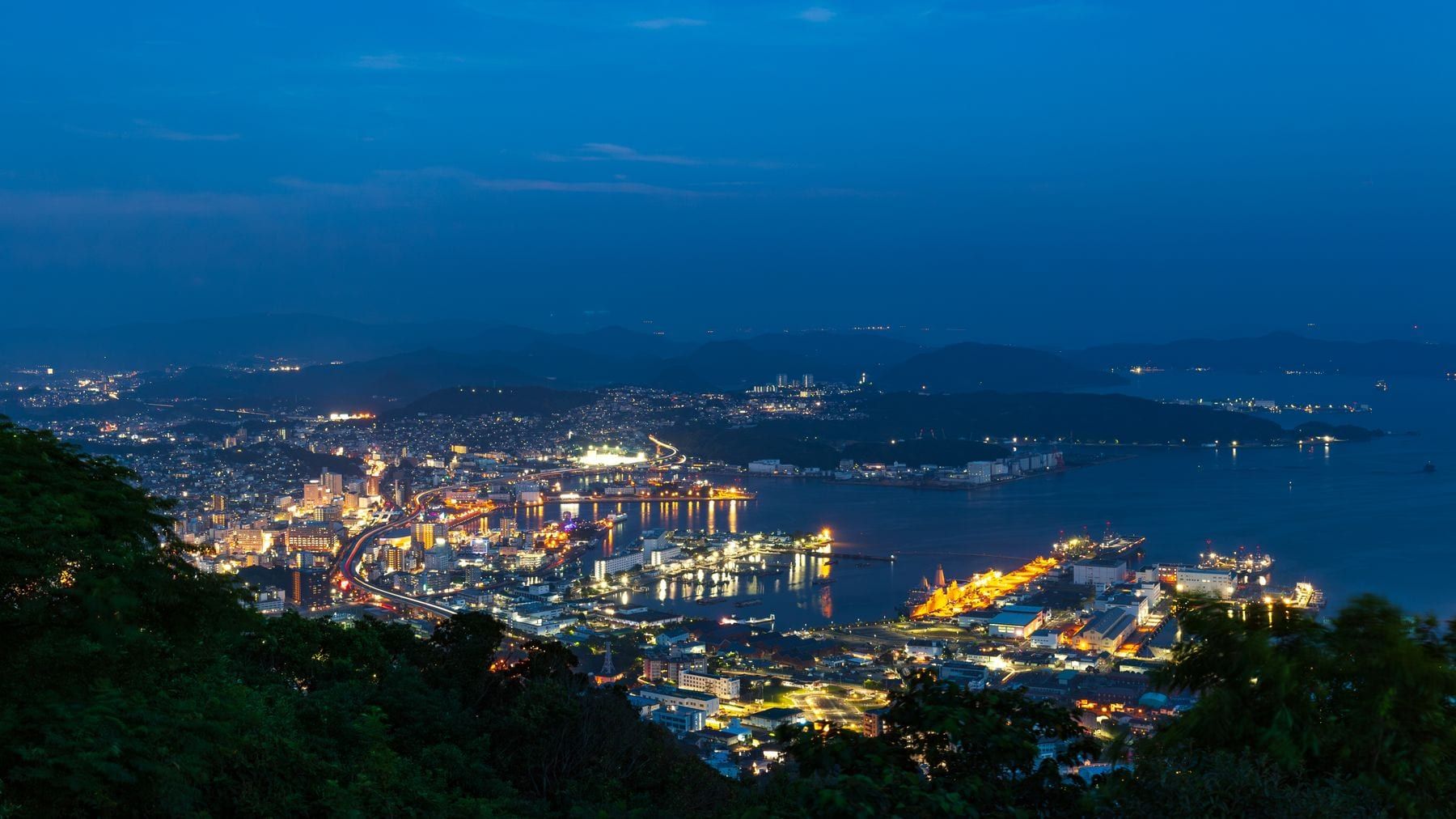
The ferry to the volcano leaves every 15 to 20 minutes, hourly at night; the crossing takes 15 minutes and costs CHF 1.20 (about EUR 1.30), and you only pay on the island. So you can still pop over after dinner and look at the glowing red crater if it happens to be active. On the island the Island View bus does a loop to the viewpoints (day pass CHF 3): Yunohira, at 373 metres, is the highest accessible point, 2.5 kilometres below the summit, and you are not allowed any closer. The Nagisa lava trail runs for an hour along the sea over the lava of 1914, with a 100-metre footbath next to it, free. The Kurokami torii now only sticks out of the ash with its crossbeam, three metres buried, a striking memorial. In the city you quickly learn why Kagoshima residents carry umbrellas against ash and why the weather forecast tells you which direction it will fall today. The ash is harmless but crunches between your teeth, and contact lenses are unpleasant on windy days. For photos, go up Shiroyama hill in the late afternoon: city, bay and volcano in one line.

Where to stay: Tenmonkan in the city, Anbo or Miyanoura on the island

In Kagoshima you stay either at Chuo station (business hotels from CHF 50, about EUR 54, handy for the shinkansen and the airport bus) or in Tenmonkan, the nightlife district with the arcades, shirokuma ice and black pork restaurants, 15 minutes by tram from the station. For a first visit choose Tenmonkan; the port for the Sakurajima ferry is ten minutes' walk away. The Shiroyama Hotel on the hill is the luxury address, with volcano views from the onsen, from CHF 180 up. Yakushima has three areas: Miyanoura in the north with the main ferry port, a supermarket and most minshuku; Anbo in the east, closer to the start of the Jomon Sugi trail and with its own port; and the south around Onoaida with hot springs by the sea and the two good hotels. Minshuku, family guesthouses with tatami rooms and dinner, cost CHF 60 to 90 per person including two meals; on the island that is the most honest choice, because there are hardly any restaurants outside the villages. In July, August and over Golden Week they are full months ahead. Two nights on the island is the minimum, three is right.

Jomon Sugi: ten hours, 22 kilometres and probably rain

The hike to the island's oldest cedar is long but technically easy: from the Arakawa trailhead you follow an old logging railway for eight kilometres, flat, counting sleepers, then three kilometres of root-covered path and steps climb 600 metres to the tree, which stands behind a viewing platform. Same way back, 22 kilometres and ten hours in total with breaks. From March to November the access road is closed to private cars, so you take the shuttle bus from the Yakusugi Museum (CHF 8 return, about EUR 8.50; buy the ticket the day before, first departure 5 am) plus a CHF 6 forest conservation fee. So you start at 4 am: order a bento from your minshuku or a konbini the evening before, and bring a head torch. A guide costs CHF 80 to 110 per person and is worth it the first time, not for navigation but for the pace, the stories and the emergency know-how. About the rain: Yakushima gets 4,000 to 10,000 millimetres a year and it rains every other day, often only for a few hours. Good rain jacket, waterproof trousers, spare clothes in a plastic bag, hiking boots with grip, no trainers. When a heavy rain warning is issued the shuttle is cancelled, leaving you with a free day and no replacement, so plan a buffer day.

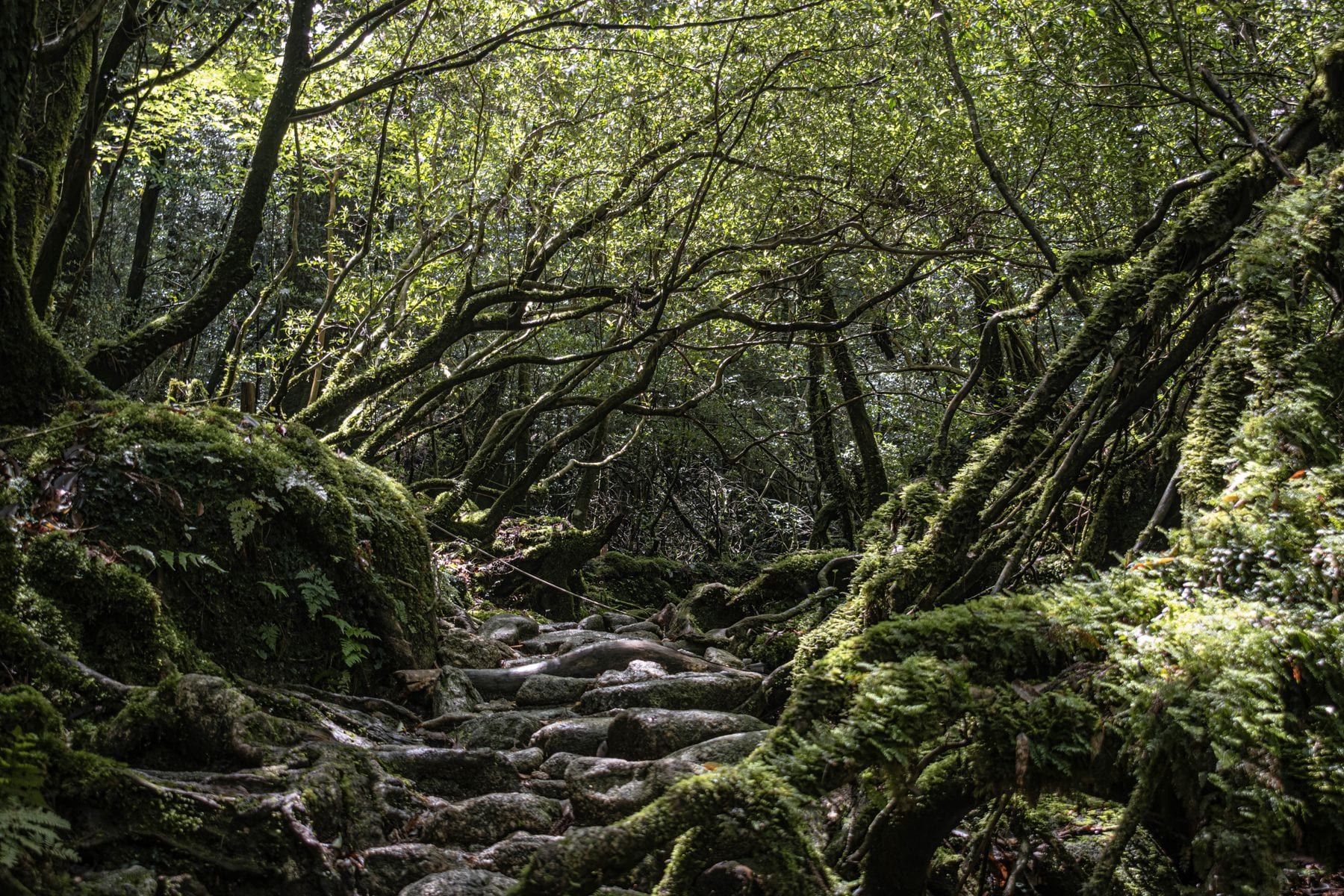
Shiratani Unsuikyo and the rest of the island: the honest plan B

If you do not want ten hours, go to Shiratani Unsuikyo, 30 minutes by bus or car above Miyanoura, admission CHF 3 (about EUR 3.20). Three routes of one to five hours lead through moss forest with cedars 1,000 to 3,000 years old, streams and granite boulders; the long version goes up to the Taiko-iwa rock with a view over the whole valley, which for many is a finer day than Jomon Sugi. This is where you find the Mononoke atmosphere, strongest after rain when the moss glows. Yakusugi Land in the south is easier, with wooden boardwalks, routes from 30 minutes to three hours, CHF 3, good with children. Then there is the coast road around the island, 100 kilometres, three hours without stopping: the 88-metre Oko-no-taki waterfall; the Hirauchi Kaichu onsen, which only appears in the rocks by the sea at low tide (CHF 1.20 in the box, mixed, naked); the mango plantations in the south; the beaches of Nagata, where sea turtles lay eggs at night from May to July (guided viewing CHF 12, registration required); and the west coast section Seibu Rindo, a single-track road through the forest with macaques and deer on the tarmac.

Day trip to Ibusuki and Chiran, plus timing and costs

Ibusuki lies an hour south, by the Ibusuki no Tamatebako train (reserve, CHF 14, about EUR 15) or the local train (CHF 6). At the Saraku sand bath you are buried up to your neck on the beach in geothermally heated sand at 50 degrees for ten to fifteen minutes, yukata included, CHF 7. It is heavy and hot, and afterwards you feel freshly cooked; not a gimmick but a centuries-old cure. On the way back, Chiran: a samurai lane with seven preserved gardens (CHF 3.20) and the Peace Museum for the kamikaze pilots who took off from here in 1945 (CHF 3). It shows farewell letters written by 17-year-olds, respectfully and without glorification, and it needs quiet. With a rental car you can do both in a day, by bus only one. Timing: in winter, at 10 degrees, Kagoshima is the mildest place in Kyushu, while Yakushima has snow on its peaks. The best months for the island are May and October to November; June is the rainy season, August hot and crowded, September typhoon season with ferry cancellations. Cost traps: Sengan-en with the house costs CHF 10, the garden alone CHF 6, and the garden is enough; book a rental car on Yakushima early, as at short notice it costs double or is gone; and bring cash for minshuku and bus fares.

Frequently asked questions about Kagoshima & Yakushima

How many days for Kagoshima and Yakushima?

Five days: one day in Kagoshima with Sakurajima, one day in Ibusuki or Chiran, and three days on Yakushima with arrival in the morning, one hiking day and one buffer day for rain or the rest of the island. If you only want to do Shiratani instead of Jomon Sugi, two nights on the island are enough. Kagoshima alone without the island is worth two days if you are passing through.

Do I need a guide for Jomon Sugi?

Not necessarily; the trail is marked and well used. A guide (CHF 80 to 110, about EUR 86 to 118) helps with pacing, knows the day's forecast, carries the first aid kit and arranges bus tickets and bento. We recommend one for first-time visitors and anyone who does not regularly walk for ten hours. You do not need one for Shiratani Unsuikyo or Yakusugi Land.

Is Sakurajima dangerous?

The volcano has small eruptions almost daily; that is everyday life, not an alarm. The zone around the crater is closed, the viewpoints are outside it, and the city has shelters and a warning system. What affects you is the ash: it settles on clothes, cameras and contact lenses. During larger eruptions the ferry is stopped, but that rarely happens.

What is shirokuma?

A mountain of shaved ice with sweetened condensed milk, fruit and sweet beans that looks like a polar bear's face from above, hence the name. It was invented in 1949 in Tenmonkan; at the Mujyaki flagship a regular portion costs CHF 5 (about EUR 5.35) and is enough for two. In summer it is what the whole of Kagoshima eats, and it also comes in a mini version at the konbini.

When is the best time for Yakushima?

May for fresh greenery and turtles, October to November for more stable weather and fewer visitors. June is the rainy season with the heaviest rainfall, July and August are hot and booked out, and September brings typhoons and ferry cancellations. Winter is quiet and cheap, but the high routes are snowbound; Shiratani is usually fine.

Do I need a rental car on Yakushima?

For Shiratani, Yakusugi Land and the Jomon Sugi shuttle the buses are enough, if you plan the timetable carefully and stay in Miyanoura or Anbo. For the coastal loop, the west with Seibu Rindo and the onsen you need a car. Small cars cost CHF 45 to 60 (about EUR 48 to 64) a day; book months ahead, and Swiss and German drivers should not forget the JAF licence translation.

Itineraries with this destination

More destinations in Kyushu & Okinawa