WeBase Kamakura
A modern hostel three minutes from Yuigahama beach, with dorms, private rooms, a yoga room and a shared kitchen. Yuigahama station on the Enoden is round the corner. Clean, bright and unusually quiet for a hostel.
Japan · Kanto · Travel guide
What a day or a night in the old shogun capital by the sea really costs, how to see the Great Buddha before the coaches arrive and why the Enoden railway is the real experience.
Photo: ofek / Pexels
Adjust the values to your trip: the calculator updates live (EUR, converted from CHF estimates).
Estimates for orientation, not booking prices. Flights and hotels vary strongly by season: current prices are behind the links below.
Money & payment: You pay in yen (JPY). 1,000 yen is roughly CHF 6 or EUR 6.50. Cards work in cities and hotels; small restaurants, temples and rural stations often want cash. An IC card (Suica or ICOCA) on your phone pays for trains, buses and convenience stores. Flight time: 12 to 14 hours, usually with one stop.
Nine options in three price ranges, each among the best-rated on Booking.com.
Budget
A modern hostel three minutes from Yuigahama beach, with dorms, private rooms, a yoga room and a shared kitchen. Yuigahama station on the Enoden is round the corner. Clean, bright and unusually quiet for a hostel.
A small guesthouse in an old wooden house a few steps from Zaimokuza beach, with a dorm and simple Japanese rooms, a shared bath and a kitchen-living room. One of the best-rated hostels in the town, relaxed and personal; the station is about a 20-minute walk away.
A business hotel at Fujisawa station, the western end of the Enoden and a JR hub towards Tokyo. Small, clean rooms, free breakfast, and prices half those in Kamakura itself. The practical base for two nights on the coast.
Mid-range
The JR hotel from 2020, right at the east exit of the station at the start of Komachi-dori. Bright rooms in wood and paper; ask for the quiet back side. The best location in town for an early start to the temples.
A resort hotel on a hill above the sea, with views of Enoshima and, in clear weather, Fuji, and a pool in summer. The rooms are a little dated, the view is not. Shichirigahama station on the Enoden is an eight-minute walk.
A small, quiet hotel on a side street, two minutes from the west exit of Kamakura station. Plain, well-kept rooms; Komachi-dori and Tsurugaoka Hachimangu are within walking distance, and Yuigahama beach is a good kilometre away. Handy for anyone who wants to set off early on the Enoden.
Luxury
A European-style hotel right on the coast road, with views across Sagami Bay and a restaurant serving French and Japanese cuisine. The Great Buddha is a 15-minute walk away. Large, refined, quiet.
A small design hotel in Koshigoe, just 50 metres from the beach and close to the Enoden station, with views of the sea and Enoshima, an in-house restaurant and breakfast with local vegetables. Central Kamakura is about 15 minutes away on the Enoden. Only a few rooms, so book early.
Right on the beach at Hayama, 20 minutes by bus from Kamakura, with rooms facing the sea or the hills, Fuji opposite in clear weather, and a shared bath. This is where the imperial family spends its summer holidays. For two quiet nights by the sea after Tokyo.
If you book through these links we earn a small commission, at no extra cost to you.
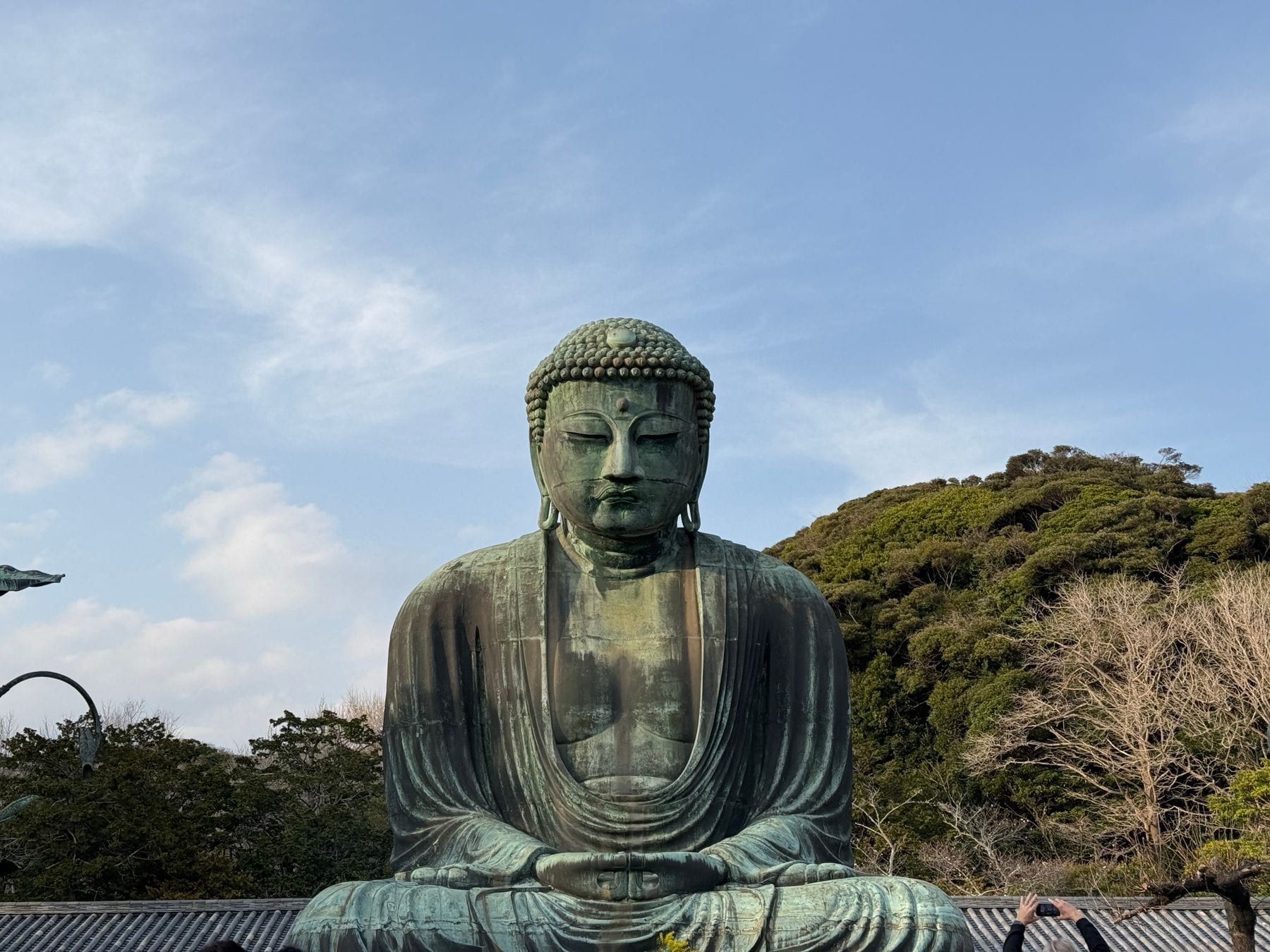
13 metres of bronze under the open sky, since 1252. Entry CHF 2 (about EUR 2), open from 8 am, when you are almost alone. Guided tours combine the Buddha with Hase-dera and explain why the hall disappeared in 1498.
An eleven-headed wooden Kannon, a cave, a garden and a view over the bay, entry CHF 2.50 (about EUR 2.70). Hydrangeas with a wait in June, relaxed the rest of the year. The logical second stop in the morning after the Buddha.
The 1902 tram line between Kamakura and Fujisawa, along the sea and through backyards. Day pass CHF 5 (about EUR 5); the window seat on the sea side is on the left heading towards Fujisawa. Ride on a weekday, at weekends it is overcrowded.
One to one and a half hours through the woods, past Zeniarai Benten, where you wash money, and Sasuke Inari with its fox figures. Free, easy, slippery after rain. With a guide you also hear the stories of the shoguns.
Matcha with a sweet in the bamboo grove for CHF 4 (about EUR 4) plus CHF 2.50 entry, no booking needed. If you want to learn the ceremony, book a class at a teahouse in town for CHF 40 to 60 with an explanation in English.
Engaku-ji and Kencho-ji offer zazen sessions for visitors, some free, some for CHF 5 (about EUR 5), early in the morning at weekends. Guided sessions with an English introduction cost CHF 30 to 50 and explain posture and breathing.
Around the station you can rent a kimono or yukata for CHF 25 to 45 (about EUR 27 to 48) a day, dressing and hair included. Less crowded than in Kyoto, and with the sea in the background. Bring flat shoes for the way back.
A stepped lane, a shrine, the Sea Candle (CHF 3, about EUR 3) and the Iwaya caves (CHF 3); two to three hours for the loop. Sunset with the silhouette of Fuji in winter. With octopus senbei for CHF 3 on the way up.
If you book through these links we earn a small commission, at no extra cost to you.
Kamakura eats what comes out of Sagami Bay: shirasu, tiny anchovies, raw on rice or crisply dried, plus vegetables from the hills and sweets dating back to the temple era. Komachi-dori is fine for snacks in passing; for a proper meal go one alley further or down to the sea.
A bowl of rice with raw (nama) or blanched (kama-age) baby anchovies, ginger, soy sauce and egg. Mild, fresh, lightly salty. CHF 8 to 14 (about EUR 9 to 15); the raw version is only available in fishing weather and outside the closed season from January to mid-March.
Tip:If a sign by the door says 'nama shirasu', the boat was out today.
Dove-shaped butter biscuits, the Kamakura souvenir since 1894, named after the doves of the Hachimangu shrine. Tastes like a good butter biscuit, CHF 1 (about EUR 1) each, a tin of ten for CHF 10.
Tip:The main shop also sells little dove figures and bags you will not find anywhere else.
Soft-serve made from purple sweet potato, nutty and not too sweet, Kamakura's signature at every stall on Komachi-dori. CHF 3 to 4 (about EUR 3 to 4), also as a swirl with matcha.
Tip:Eat it at the stall, not while walking; in this street that is explicitly frowned upon.
A whole octopus pressed between two hot plates into a thin, crisp cracker as big as a plate. Salty, tasting of the sea, CHF 3 to 4 (about EUR 3 to 4). The queue is part of the experience.
Tip:The prawn version is milder, the jellyfish one a test of nerve.
The hills supply rare varieties and colourful radishes, carrots and leafy greens, which restaurants serve as tempura, salad or in shojin ryori, the vegetarian temple cuisine. A lunch set costs CHF 15 to 25 (about EUR 16 to 27).
Tip:The small 'Rensbaba' farmers' market next to the station is open daily and shows you what is in season.
A bowl of frothy green tea with a small sweet in the bamboo grove or in a teahouse with a garden view. Bitter and sweet at once, CHF 4 to 7 (about EUR 4 to 7.50). The best break of the day.
Tip:First the sweet, then the tea, and turn the bowl slightly before drinking.
A vegetable soup with tofu, radish, carrots and burdock root, which according to tradition was invented at Kencho-ji when a monk rescued crumbled tofu. Hearty and vegan, CHF 6 to 9 (about EUR 6 to 10) as a set with rice.
Tip:The right choice on cold days after the hiking trail.
Through markets and eateries with a guide, tastings included.
If you book through these links we earn a small commission, at no extra cost to you.
From 1185 to 1333 Kamakura was the capital of Japan, even though the emperor remained in Kyoto. Minamoto no Yoritomo had defeated the Taira clan in the naval battle of Dan-no-ura and in 1192 had himself appointed shogun, Japan's first military ruler. He chose this place as his seat because it is protected by hills on three sides and by the sea on the fourth; the seven passes, the kiridoshi, were the only ways in. During this period Zen Buddhism came to Japan from China and found its followers among the samurai, and Kencho-ji was founded in 1253 as the country's first Zen temple. The Great Buddha was cast in bronze in 1252; its hall was swept away by a tsunami in 1498, and it has sat under the open sky ever since. In 1274 and 1281 the Kamakura rulers, helped by two typhoons, repelled the Mongol invasion fleets, and 'kamikaze', the divine wind, dates from this time. In 1333 the city fell to the troops of Emperor Go-Daigo, the last regent took his own life with 800 retainers at Tosho-ji temple, and Kamakura sank into insignificance for centuries. Only the railway of 1889 turned the coast into a retreat for Tokyo's writers and politicians. Today 170,000 people live here, and at weekends almost as many visitors arrive.

From Tokyo Station or Shinagawa the JR Yokosuka line takes you to Kamakura in 55 to 60 minutes for CHF 6 (about EUR 6) each way; just tap in with your Suica. From Shinjuku the Shonan-Shinjuku line runs direct. Once there, all you need is the Enoden, which since 1902 has trundled between Kamakura and Fujisawa through backyards, past gardens and along the sea. The 'Noriorikun' day pass costs CHF 5 and lets you hop on and off as often as you like; single rides cost CHF 1.20 to 2. The key stations: Hase for the Great Buddha and Hase-dera, Kamakurakokomae for the famous level crossing with a sea view, Enoshima for the island. At weekends and during cherry blossom the Enoden is so full that you often only get on the second train, so come on a weekday or start early. If you are combining it with Yokohama, take the JR Kamakura-Enoshima Pass for CHF 10. Bikes are available at the station for CHF 10 a day, but the roads are narrow and jammed at weekends; on foot and by Enoden you are just as fast.
The Daibutsu at Kotoku-in is 13.35 metres tall, weighs 121 tonnes and has sat outdoors for more than 500 years. Entry costs CHF 2 (about EUR 2), and for CHF 0.50 you can climb inside the hollow statue, which is worth it to see the casting technique. It opens at 8 am, and that is exactly when you should be there, as the coach groups arrive from 10 am. Then walk five minutes downhill to Hase-dera (entry CHF 2.50): an eleven-metre wooden Kannon statue, a viewing terrace over the bay, a cave and, in June, more than 2,000 hydrangeas in bloom, though then with an hour's wait. Only then head back to the Enoden and into the centre to Tsurugaoka Hachimangu, the shrine reached by the broad Wakamiya-oji avenue from the sea. Komachi-dori next to it is the souvenir and snack street, nice for soft-serve and senbei but overpriced for a meal. In the afternoon go to Kita-Kamakura: Engaku-ji and Kencho-ji (CHF 3 each) are the great Zen temples with gardens and ceremonial halls, quiet and largely ignored by tour groups.
Kamakura has few hotels and many visitors, which doubles prices at weekends. On weekdays a double room in a mid-range hotel by the station costs CHF 90 to 130 (about EUR 96 to 139); on Saturday the same room costs CHF 200. The budget solution is a business hotel in Fujisawa, at the other end of the Enoden, for CHF 60 to 80, or a hostel in Kamakura for CHF 30 to 45 per bed. If you want a night by the sea, stay in Hase, Yuigahama or Shichirigahama: from there you see Fuji behind Enoshima in the evening when the air is clear, most likely from November to February. Ryokan in the classic sense are rare in Kamakura, but there are old wooden guesthouses where you sleep on futons and get rice, fish and miso soup in the morning. Check-in here is also from 3 pm; leave your luggage in a locker at Kamakura station for CHF 4. The large lockers are taken until midday at weekends, in which case the luggage counter in the station hall helps.
Kamakura is so close to Tokyo that the town is overrun every sunny weekend. On weekdays it is a different world, so plan your visit for a Tuesday to Thursday. The cherry blossom arrives from late March to early April, most beautiful on the Dankazura, the raised avenue to the Hachimangu shrine, and in Genjiyama Park. In June the hydrangeas bloom: Meigetsu-in in Kita-Kamakura and Hase-dera are then the best-known places in Japan for them, with entry controls and waiting times, but it is still worth it on a rainy day, as the rain belongs with the flowers. Autumn comes late; the maples only turn from late November to mid-December, much later than in Nikko. Summer is hot and humid, and the beaches of Yuigahama and Zaimokuza are packed from July to August, with murky water and loud beach bars; for a beach day you are better off going on to Hayama or Zushi. Winter is dry, mild and empty, and the view of Fuji from the sea is at its best.
Ten minutes by bus east of the station is Hokoku-ji, the bamboo temple: a small grove of around 2,000 moso bamboo stalks, with a teahouse at the back where for CHF 4 (about EUR 4) you drink a bowl of matcha with a sweet in the shade of the canes. Entry CHF 2.50; after 3 pm it is quiet. Better still are the hiking trails over the hills that hardly any day visitor knows. The Daibutsu Hiking Trail runs in 60 to 90 minutes from Kita-Kamakura through the woods to the Great Buddha, passing the Zeniarai Benten shrine in a rock grotto, where you wash coins in spring water so that they multiply, and the Sasuke Inari shrine with hundreds of small fox figures. The Ten-en Hiking Trail links Kencho-ji with Zuisen-ji over the highest hill in the town, with views over the bay. Both are easy but slippery after rain, and trainers are fine. Bring water and something to eat, there is nothing along the way. This is where you see why the shoguns chose this place: from above you can make out the natural fortress basin.
The island of Enoshima lies at the western end of the Enoden, 25 minutes from Kamakura, linked to the mainland by a 600-metre bridge. On the island a stepped lane with shops and squid stalls leads up to the Enoshima Shrine; if you do not want to climb, pay CHF 2.20 (about EUR 2.35) for the escalators. At the top are the Sea Candle lighthouse (CHF 3) and a garden with views of the Shonan coast and, in clear weather, Fuji. On the far side of the island are the Iwaya caves (CHF 3) and rock shelves where locals look for crabs at low tide. The whole loop takes two to three hours. The food here is shirasu, tiny anchovies, raw or boiled on rice, in season from mid-March to December. The better order for a day: Kamakura with the Buddha and Hase in the morning, lunch in Hase, the Enoden to Enoshima in the afternoon and waiting there for the sunset; you then return to Tokyo from Fujisawa directly on JR in 50 minutes to Shinjuku or Shinagawa.
For the Great Buddha, Hase-dera, the Hachimangu shrine and an Enoden ride, yes, if you leave Tokyo at 7.30 am. Adding Kita-Kamakura, a hiking trail or Enoshima makes it tight. A night is worth it for the quiet morning hours and the sunset by the sea, and on weekdays it costs no more than a night in Tokyo.
On the JR Yokosuka line from Tokyo Station or Shinagawa in around an hour for CHF 6 (about EUR 6), or on the Shonan-Shinjuku line from Shinjuku or Shibuya in about the same time. Both run every 10 to 15 minutes, and you do not need a ticket, just your Suica. Get off at Kita-Kamakura if you want to start with the Zen temples, otherwise at Kamakura.
Entry to Kotoku-in costs CHF 2 (about EUR 2), and a look inside the bronze statue CHF 0.50. It is open from 8 am to 5.30 pm, in winter until 5 pm. There are no online tickets and no waiting time, just crowded paths from 10 am. The temple is a ten-minute walk from Hase station on the Enoden.
Yes, Yuigahama and Zaimokuza are officially open from early July to the end of August, with beach huts, showers and lifeguards. But the water is murky and the sand dark; it has little in common with the Mediterranean. The beach at Hayama or Zushi, 15 minutes by bus, is nicer. Surfers are in the water at Shichirigahama all year round.
Kamakura station has lockers for CHF 3 to 5 (about EUR 3 to 5), and the large ones for suitcases are often taken before 11 am at weekends. There is also a luggage counter in the station hall. The temples have no storage, and a large suitcase on the Enoden is an imposition on everyone. If you are travelling on, it is better to leave your luggage at your Tokyo hotel.
Very: short distances, the Enoden is an adventure for children, you can go inside the Buddha, and Enoshima has caves, escalators and an aquarium (CHF 16 for adults, about EUR 17). Pushchairs are a struggle at temples with lots of steps, so a carrier is better. The hiking trails are doable from about age six if the child likes being outdoors.
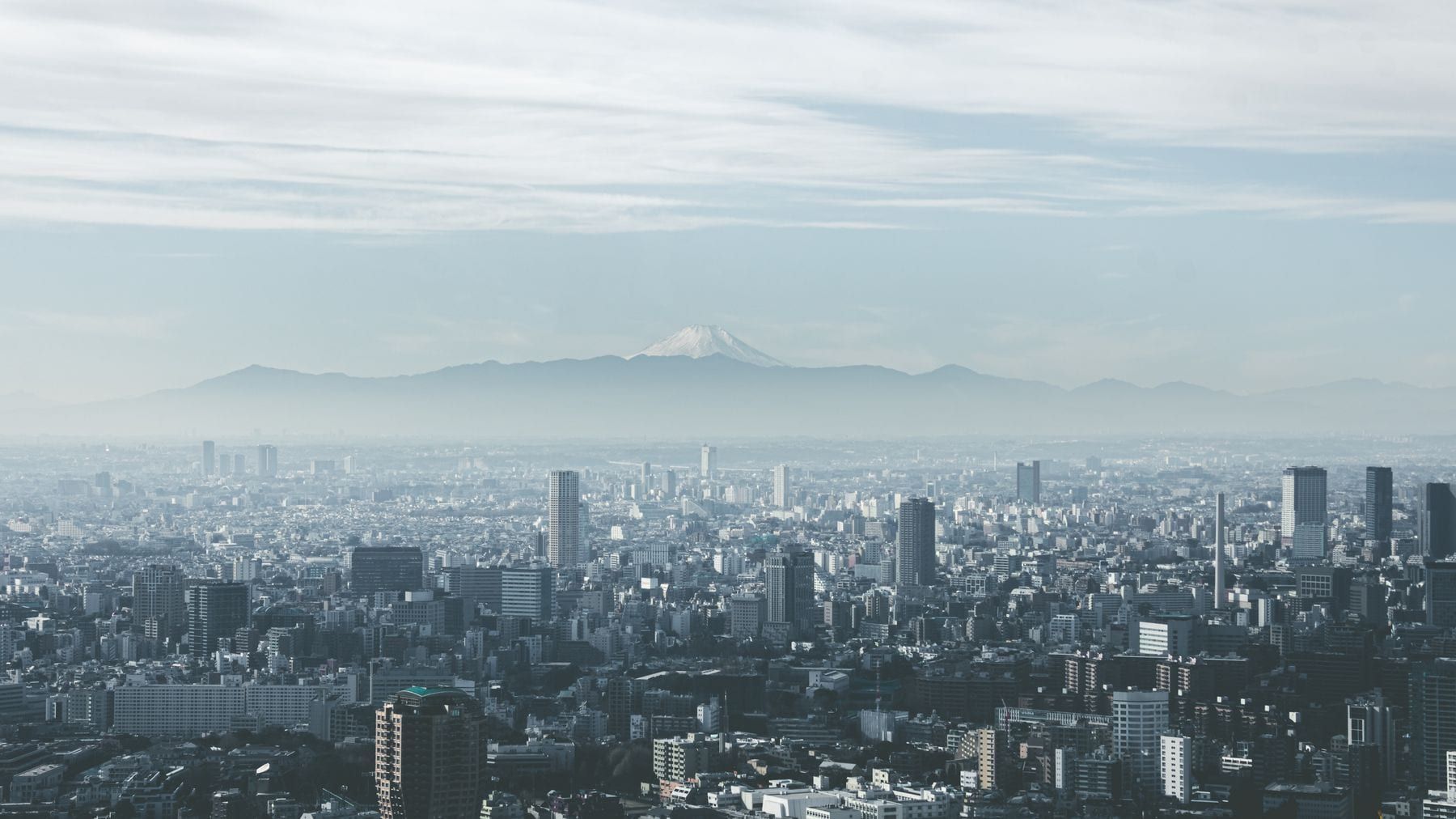
What a week in the biggest city in the world really costs, which neighbourhood you should stay in and how to get around with Suica, metro and konbini like someone who lives here.
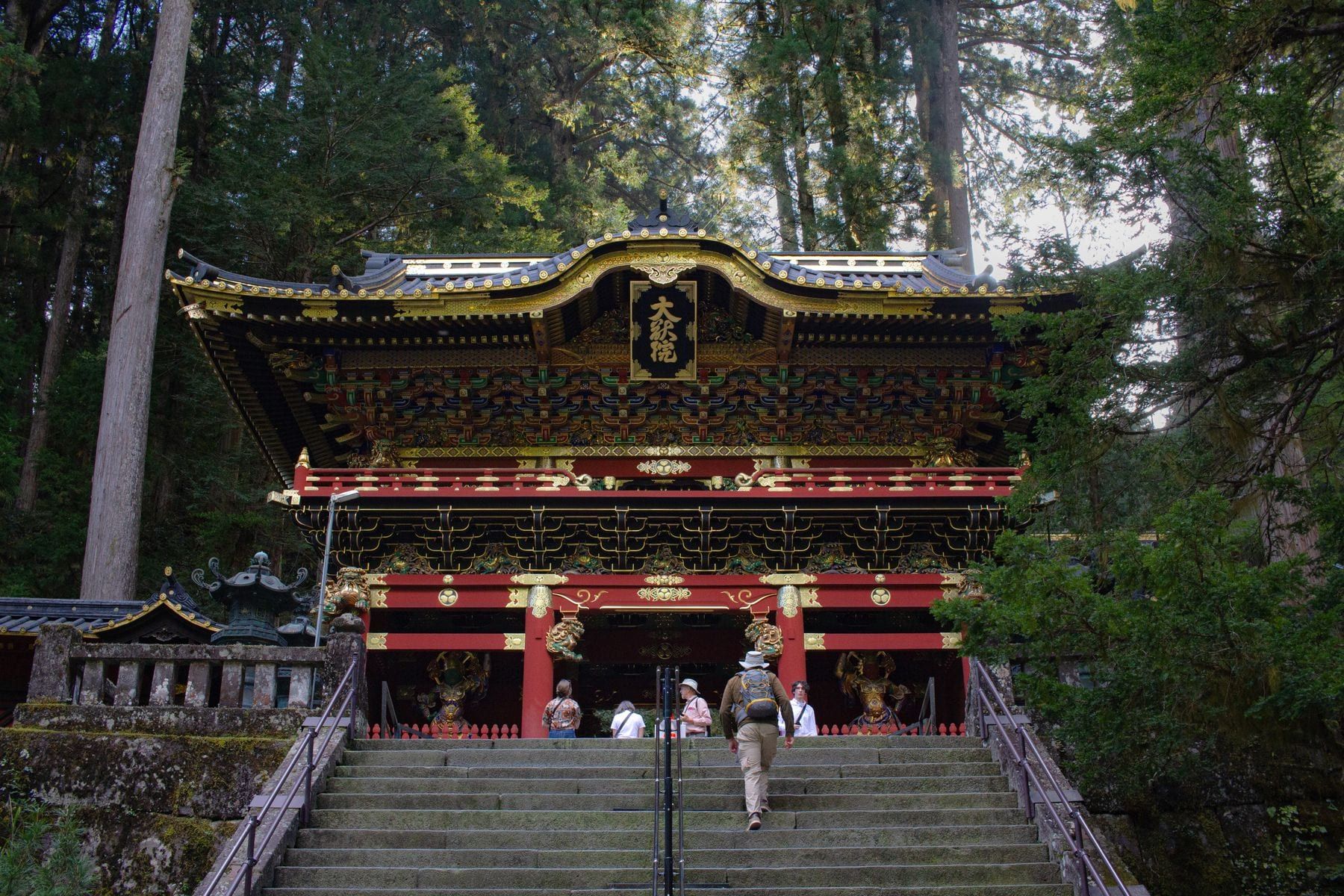
What one or two days in the forest of the shoguns really cost, how to see Toshogu before the coach groups and why the mountains behind the shrine are the better Nikko.
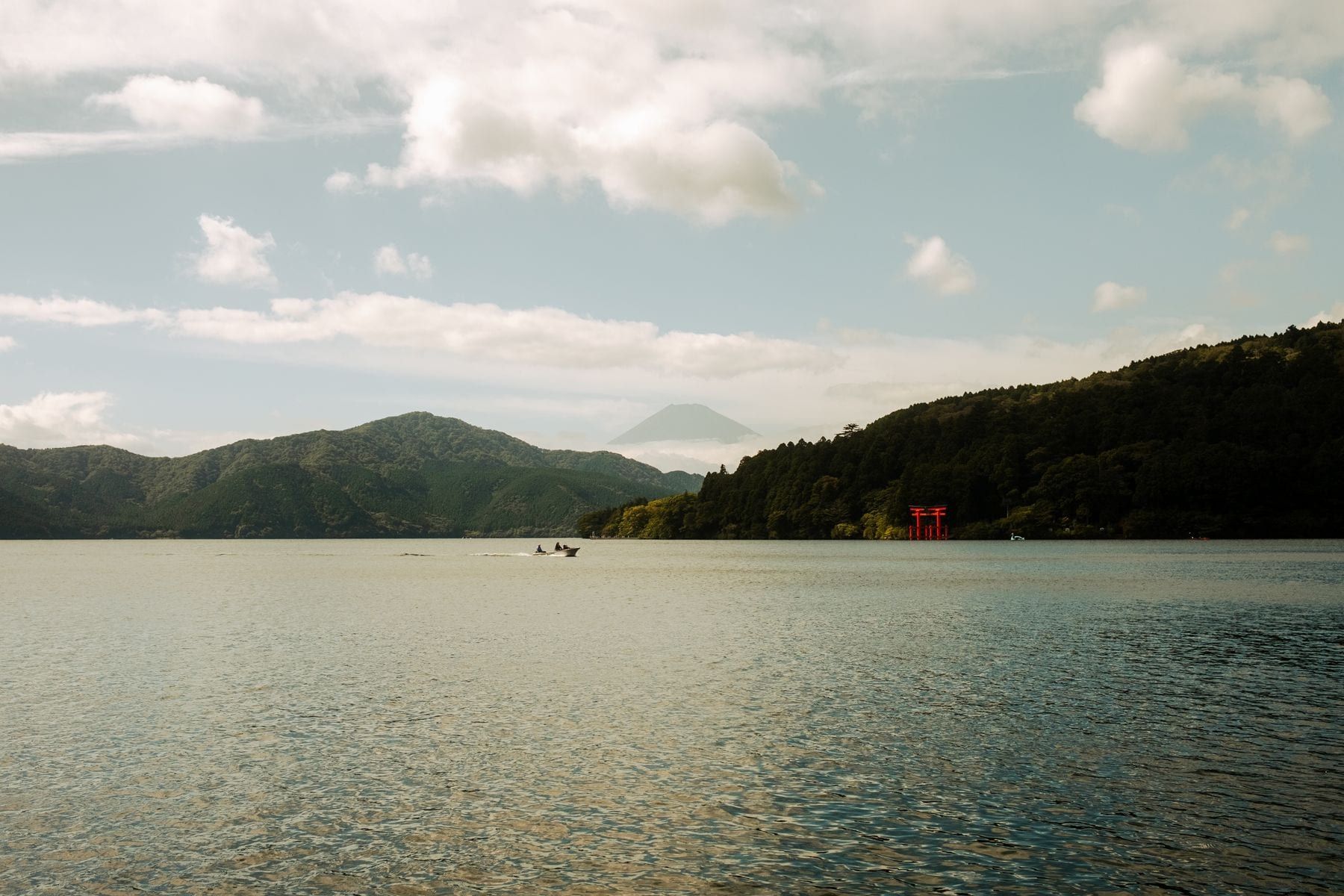
What a ryokan night with onsen and kaiseki really costs, how the Hakone Free Pass works and on which days you will actually see Fuji above Lake Ashi.
What Japan's second-largest city really costs, why it is a cheaper base than Tokyo and where to eat well in Chinatown and by the harbour without standing in the tourist queue.