History & background
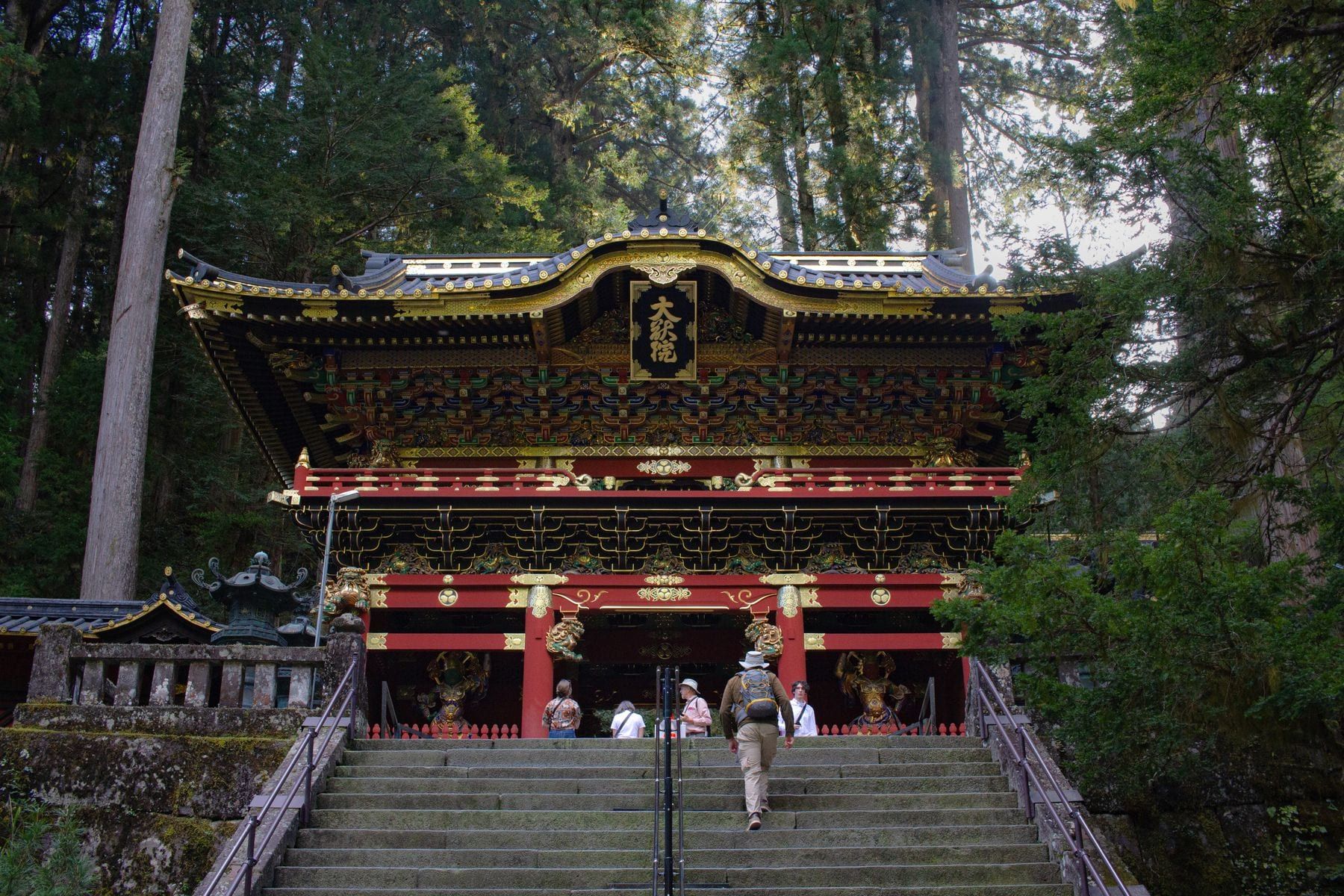
Nikko was a sacred mountain before it became a shrine: in 766 the monk Shodo Shonin founded the first temple here after, according to legend, crossing the Daiya river on two snakes, where the red Shinkyo Bridge stands today. But the place became famous because of a dead man. Tokugawa Ieyasu, founder of the shogunate, died in 1616 and had himself enshrined here as the deity Tosho Daigongen, a guardian spirit watching over Edo from the north. From 1634 his grandson Iemitsu expanded the modest tomb into Toshogu, with 15,000 craftsmen, 2.5 million sheets of gold leaf and more than 5,000 carvings, among them the three monkeys and the sleeping cat. The whole thing took only 17 months and deliberately contradicted the simplicity of Zen: here, power was meant to be visible. Daimyo from across the country had to make pilgrimages, and the 37-kilometre cedar avenue that lines the route was planted by a single retainer, Matsudaira Masatsuna, over twenty years. Iemitsu himself lies next door in Taiyuin, deliberately a little smaller than his grandfather's. The Meiji era separated shrines and temples, but the complex survived. From 1870 Western diplomats discovered Lake Chuzenji as a summer retreat, and the Kanaya Hotel opened in 1873 as Japan's first Western-style hotel. Since 1999 the shrines and temples have been a UNESCO World Heritage Site.