Hakone

Japan · Kanto · Travel guide

Hakone

What a ryokan night with onsen and kaiseki really costs, how the Hakone Free Pass works and on which days you will actually see Fuji above Lake Ashi.

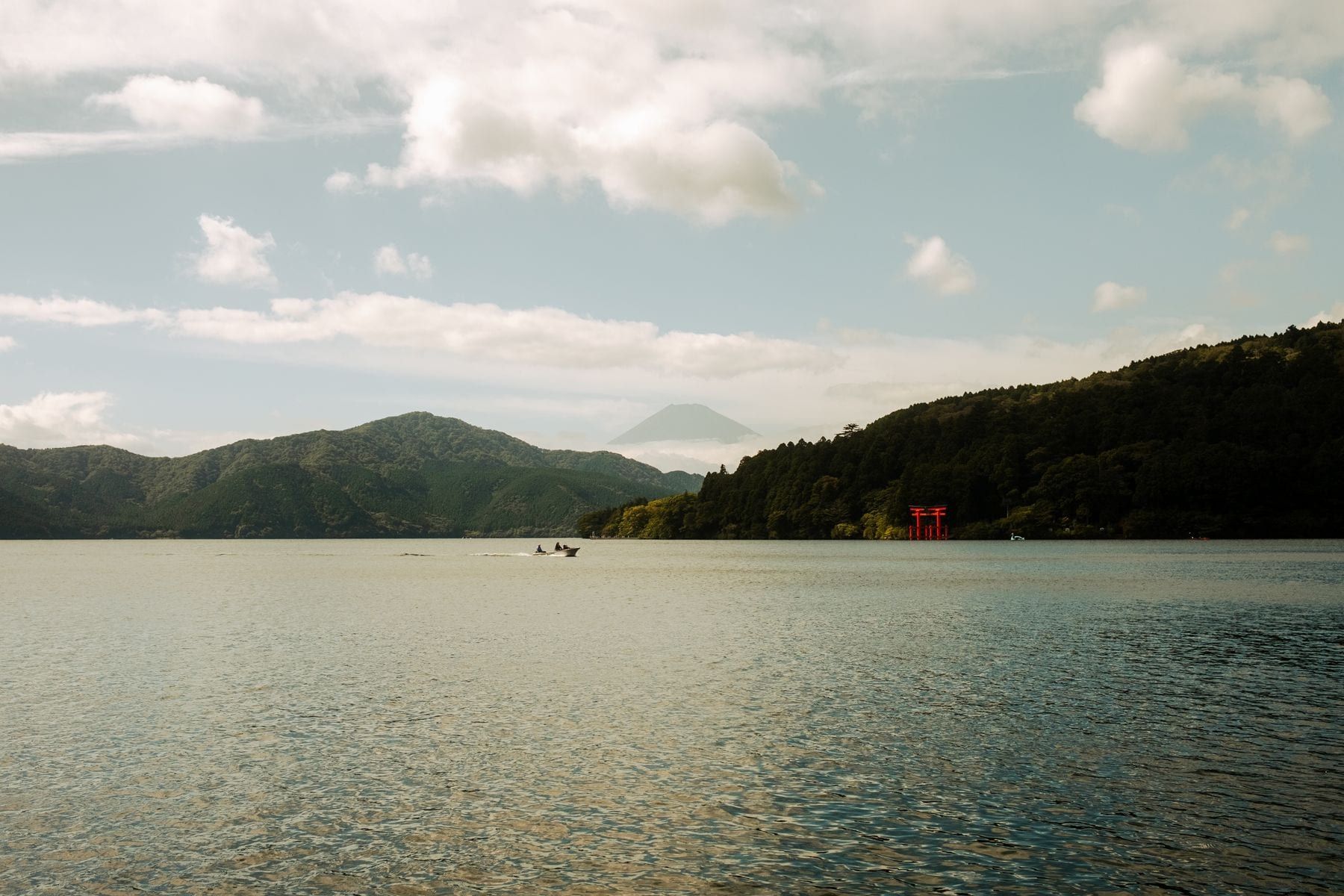
Photo: Reinaldo Simoes / Pexels

What does a trip to Hakone cost?

Adjust the values to your trip: the calculator updates live (EUR, converted from CHF estimates).

3,610 EUR
≈ 1,805 EUR per person
  • Flights 2,140 EUR
  • Accommodation 856 EUR
  • Food 428 EUR
  • Local transport 107 EUR
  • Hakone Free Pass (2 days, from Shinjuku) 79 EUR

Estimates for orientation, not booking prices. Flights and hotels vary strongly by season: current prices are behind the links below.

Money & payment: You pay in yen (JPY). 1,000 yen is roughly CHF 6 or EUR 6.50. Cards work in cities and hotels; small restaurants, temples and rural stations often want cash. An IC card (Suica or ICOCA) on your phone pays for trains, buses and convenience stores. Flight time: 12 to 14 hours, usually with one stop.

Recommended hotels

Nine options in three price ranges, each among the best-rated on Booking.com.

Budget

K's House Hostels - Hakone Yumoto Onsen

Hakone-Yumoto, Hakone

An onsen hostel in an old ryokan by the river, a 15-minute walk from Hakone-Yumoto station, with a shared kitchen, tatami rooms and two thermal baths that you can also book privately. The cheapest way to experience Hakone with an onsen.

from CHF 40 / night (about EUR 43) View →

Onsen Guesthouse HAKONE TENT

Gora, Hakone

A hostel with a bar in a converted ryokan right by Gora station on the Tozan railway, with its own spring-fed onsen, dorms and double rooms. Young, friendly, and full of travellers from all over the world in the evening. Ideal as a base for the loop.

from CHF 40 / night (about EUR 43) View →

Emblem Flow Hakone

Gora, Hakone

A modern hostel with a restaurant and bar, dorms and private rooms, one minute from Gora station, with its own onsen bath. It now goes by the name WPU Hotel Hakone locally. Clean and well organised, and day bathing is also possible for passing visitors.

from CHF 45 / night (about EUR 48) View →

Mid-range

Yumoto Fujiya Hotel

Hakone-Yumoto, Hakone

A large hotel by the river, three minutes from Hakone-Yumoto station, with Western and Japanese rooms, an onsen with outdoor pool and a breakfast buffet. Not the historic Fujiya in Miyanoshita, but its practical sister property for your first night.

from CHF 170 / night (about EUR 182) View →

Mount View Hakone

Sengokuhara, Hakone

A ryokan with a milky-white onsen fed from the Owakudani spring, tatami rooms, kaiseki half board and a private outdoor bath to rent, in a quiet spot near the pampas grass meadows and the Pola Museum. A good first ryokan at a fair price.

from CHF 260 / night incl. half board (about EUR 278) View →

Hakone Kowakien Tenyu

Kowakudani, Hakone

A large, modern onsen hotel from 2017 with an infinity outdoor bath above the valley, buffet or kaiseki dinner and a shuttle bus to the railway. Less intimate than a small ryokan, but easy with children and for onsen beginners.

from CHF 300 / night incl. half board (about EUR 321) View →

Luxury

Gora Kadan

Gora, Hakone

The former summer residence of an imperial family, now Hakone's best-known ryokan: rooms with cedarwood baths, kaiseki at the highest level, a pool and onsen in the garden, and service that anticipates every wish. For the one night you will never forget.

from CHF 900 / night incl. half board (about EUR 963) View →

Fujiya Hotel

Miyanoshita, Hakone

The grand hotel of 1878, lavishly restored in 2020: wooden buildings with pagoda roofs, a dining room with a painted ceiling, an onsen and a hillside garden. Chaplin, Einstein and John Lennon stayed here. Western beds, Japanese atmosphere.

from CHF 380 / night (about EUR 407) View →

KAI Hakone

Yumoto, Hakone

Hoshino Resorts on the Sukumo river, a little above Hakone-Yumoto, with a large onsen facing the forest, kaiseki with seafood from Sagami Bay and an exhibition on yosegi wood marquetry. A modern take on the ryokan, with flawless organisation.

from CHF 550 / night incl. half board (about EUR 589) View →

If you book through these links we earn a small commission, at no extra cost to you.

Experiences worth your time

Hakone Free Pass and the loop

Mountain railway, cable car, ropeway, pirate ship and buses for two days from Shinjuku, CHF 37 (about EUR 40). Buy it in advance as an e-ticket and start early on the second day, and you will not have to queue. This is the basis for everything else.

View & book →

Hakone Open-Air Museum

Sculptures by Moore, Miro and Rodin on a lawn with mountain views, a Picasso pavilion and a hot spring foot bath for tired legs. Entry CHF 12 (about EUR 13), CHF 10 with the Free Pass. Right by Chokoku-no-mori station on the Tozan railway.

View & book →

Owakudani: sulphur valley and black eggs

Steaming ground, the smell of sulphur and eggs boiled black in the spring, four for CHF 3 (about EUR 3). Reachable by the ropeway included in the Free Pass, closed during volcanic alerts. The nature trail requires advance registration, the viewpoint does not.

View & book →

Hakone Shrine and its torii in the lake

A red gate in the water and a cedar avenue to the shrine, free. For the photo in the torii you wait 30 to 60 minutes, while the view next to it is the same. In the morning before 9 am, with Fuji behind it, it is the best spot on the lake.

View & book →

Old Tokaido and the amazake teahouse

Two hours on Edo-period stone paving through the cedar forest from Moto-Hakone to Hatajuku, with a break at the 400-year-old teahouse for amazake and mochi, CHF 2.50 (about EUR 2.70). Free, hardly visited, slippery after rain.

View & book →

Pola Museum of Art

Monet, Renoir, Picasso and Japanese modern art in a glass building in the Sengokuhara forest, with a woodland path between sculptures. Entry CHF 11 (about EUR 12), bus from Gora included in the Free Pass. The best rainy-day option in Hakone.

View & book →

Day bath at Tenzan onsen

The finest public bath in Hakone-Yumoto, with several outdoor pools of stone and wood on the hillside, CHF 9 (about EUR 10), no reservation, no tattoos. Shuttle bus from the station. For anyone who wants hot water without a ryokan night.

View & book →

Yosegi wood marquetry workshop

Hakone's craft: patterns made from woods of different colours, turned into boxes with secret mechanisms. In Hatajuku you make a coaster in an hour for CHF 10 to 20 (about EUR 11 to 21). The trick boxes in the shop are the best souvenir.

View & book →

Fuji and Hakone day tour from Tokyo

Bus excursions for CHF 90 to 140 (about EUR 96 to 150) link Fuji's 5th station with Lake Ashi and the ropeway. Convenient for people short on time, but without an onsen and dependent on the weather. With the Free Pass you do the Hakone part yourself for a third of the price.

View & book →

If you book through these links we earn a small commission, at no extra cost to you.

Food & drink

In Hakone you eat at your ryokan: kaiseki in the evening, breakfast with grilled fish and tofu in the morning. In between there are the specialities of the region: black eggs from the sulphur valley, soba made with mountain water, fish paste from Odawara and rice cakes from Yumoto.

Kaiseki at a ryokan

At your ryokan, at the fixed time of 6 or 6.30 pm

Eight to twelve small seasonal courses: sashimi from Sagami Bay, tempura, steamed vegetables, a hotpot, rice, pickles and fruit. Every dish is composed, and you eat in your yukata. Included in half board, CHF 80 to 150 (about EUR 86 to 161) on its own.

Tip:Mention allergies and dislikes when you book; on the evening itself it is too late to change anything.

Kuro-tamago

Owakudani, at the ropeway exit

Eggs boiled in the sulphur spring of Owakudani until the shell turns black, normal inside, with a slight mineral taste. Four for CHF 3 (about EUR 3) with salt, and each one is said to give you seven years of life.

Tip:Eat them while still warm; cold, they are just black eggs.

Hakone soba

Hatsuhana Soba, Hakone-Yumoto

Buckwheat noodles made with the soft mountain water of the caldera, cold with a dip or hot with mountain herbs and duck, CHF 8 to 14 (about EUR 9 to 15). Hatsuhana by the bridge in Yumoto has served soba with grated mountain yam since 1934, with a queue at lunchtime.

Tip:Come before 11.30 am or around 2 pm; in between you wait 30 minutes.

Yumochi

Chimoto, Hakone-Yumoto

A soft rice cake with yuzu aroma and little pieces of yokan, wrapped in a bamboo leaf, so tender it melts on your tongue. CHF 2 (about EUR 2) each, a box for CHF 10, the speciality of Hakone-Yumoto for more than 70 years.

Tip:It only keeps for two days, so buy it for the train rather than as a souvenir.

Kamaboko

Suzuhiro Kamaboko, Odawara, and shops in Hakone-Yumoto

Fish paste steamed on a wooden board, firm and slightly sweet, the speciality of Odawara since the Edo period. Sliced with wasabi and soy sauce or grilled on a skewer, CHF 2 to 4 (about EUR 2 to 4) a portion, a whole board CHF 8 to 15.

Tip:At Suzuhiro's 'Kamaboko village' you can shape and steam your own, CHF 10 with booking.

Onsen manju

Hakone-Yumoto shopping street

Steamed buns with sweet bean paste, dark from brown sugar, at home in every onsen town in Japan, and still warm from the steamer in Yumoto. CHF 1 (about EUR 1) each, a box of ten CHF 10.

Tip:Buy them on the way to your ryokan; they go well with the green tea waiting for you in the room.

Amazake and grilled mochi

Amazake-chaya, old Tokaido between Moto-Hakone and Hatajuku

A warm, sweet, non-alcoholic drink made from fermented rice, with mochi from the charcoal grill with soy sauce or bean paste, together CHF 5 (about EUR 5). Served in the thatched teahouse on the old Tokaido with an open fire, as it was 400 years ago.

Tip:Reachable by bus if you do not want to hike; the stop is called Amazake-chaya.

Book a food tour: Hakone

Through markets and eateries with a guide, tastings included.

View & book →

If you book through these links we earn a small commission, at no extra cost to you.

History & background

Hakone is the caldera of a volcano that last erupted on a large scale around 3,000 years ago, creating Lake Ashi and the steaming Owakudani valley. For centuries travellers saw the place mainly as an obstacle: the Tokaido, the road between Kyoto and Edo, had to cross the pass here, and in 1619 the Tokugawa shoguns set up the Hakone Sekisho checkpoint by the lake, where every traveller was searched. They were particularly strict about 'guns coming in and women going out', because the wives of the daimyo lived in Edo as hostages and were not to escape. The cedar avenue by the lake and the stone-paved path of the old Tokaido date from this time. People had long used the hot springs, and in the Edo period the 'seven springs of Hakone' were a spa destination for samurai and merchants from Edo. With the Meiji era came the foreigners: in 1878 the Fujiya Hotel opened in Miyanoshita as one of Japan's first Western-style hotels, and Chaplin and Lennon stayed there. In 1919 came the Hakone Tozan Railway, Japan's steepest adhesion railway, built on the model of Switzerland's Bernina Railway, with which it still has a partnership today. The ropeway followed in 1959 and the Open-Air Museum in 1969, and in 2015 a phase of volcanic activity closed the Owakudani valley for months. Today 20 million visitors come each year, most of them from Tokyo for one night.

Insider tips

Hakone Free Pass: how the loop works

Odakyu's Hakone Free Pass is one of the few passes in Japan that almost always pays off. The 2-day version from Shinjuku costs CHF 37 (about EUR 40), the 3-day version CHF 40, and it covers the return journey on the regional train from Shinjuku (90 minutes to Odawara, then onwards) and everything locally: the Tozan railway, the cable car, the ropeway, the pirate ship on Lake Ashi and the buses, plus discounts at museums. The Romancecar, the panoramic train that runs directly to Hakone-Yumoto in 85 minutes, costs a CHF 7 supplement each way with a seat reservation, and it is money well spent. The classic loop goes anticlockwise: from Hakone-Yumoto on the Tozan railway via three switchbacks to Gora (40 minutes), the cable car to Sounzan, the ropeway over steaming Owakudani to Togendai on the lake, the boat to Moto-Hakone or Hakone-machi, and the bus back to Yumoto. Without stops it takes three hours; with the Open-Air Museum, Owakudani and the shrine it fills a full day. From 10 am you queue 20 to 40 minutes at every station, especially at weekends. If you stay at a ryokan, do the loop on the second morning from 9 am, when it is half as busy. In strong winds the ropeway stops and replacement buses run.

Ryokan: what a night costs and what to watch out for

A ryokan in Hakone costs between CHF 250 and 400 (about EUR 268 to 428) for two with dinner and breakfast in the mid-range, and CHF 500 to 900 in the best houses such as Gora Kadan or Hakone Ginyu. That sounds like a lot, but the kaiseki dinner of eight to twelve courses would cost CHF 80 to 150 per person on its own, and the onsen is included. What to watch out for: the price on Booking is often per room for two, but sometimes per person, so read the small print. 'With meals' is what you want; without food you miss half the experience. Rooms with a private outdoor bath ('open-air bath in room') cost CHF 100 to 200 more and are worth it for couples and for anyone with tattoos, who are often not welcome in shared baths. Dinner starts at 6 or 6.30 pm, check-in from 3 pm, and before that nobody has time for you. Location: Gora is central on the loop, Miyanoshita has the old grand hotels, Sengokuhara is quiet with museums and pampas grass meadows, Hakone-Yumoto by the station is practical and the loudest, and Lake Ashi is beautiful and cut off in the evening. For CHF 120 to 180 you get a hotel room with onsen but no dinner, which is enough if your budget is tight.

Seeing Fuji: the honest odds

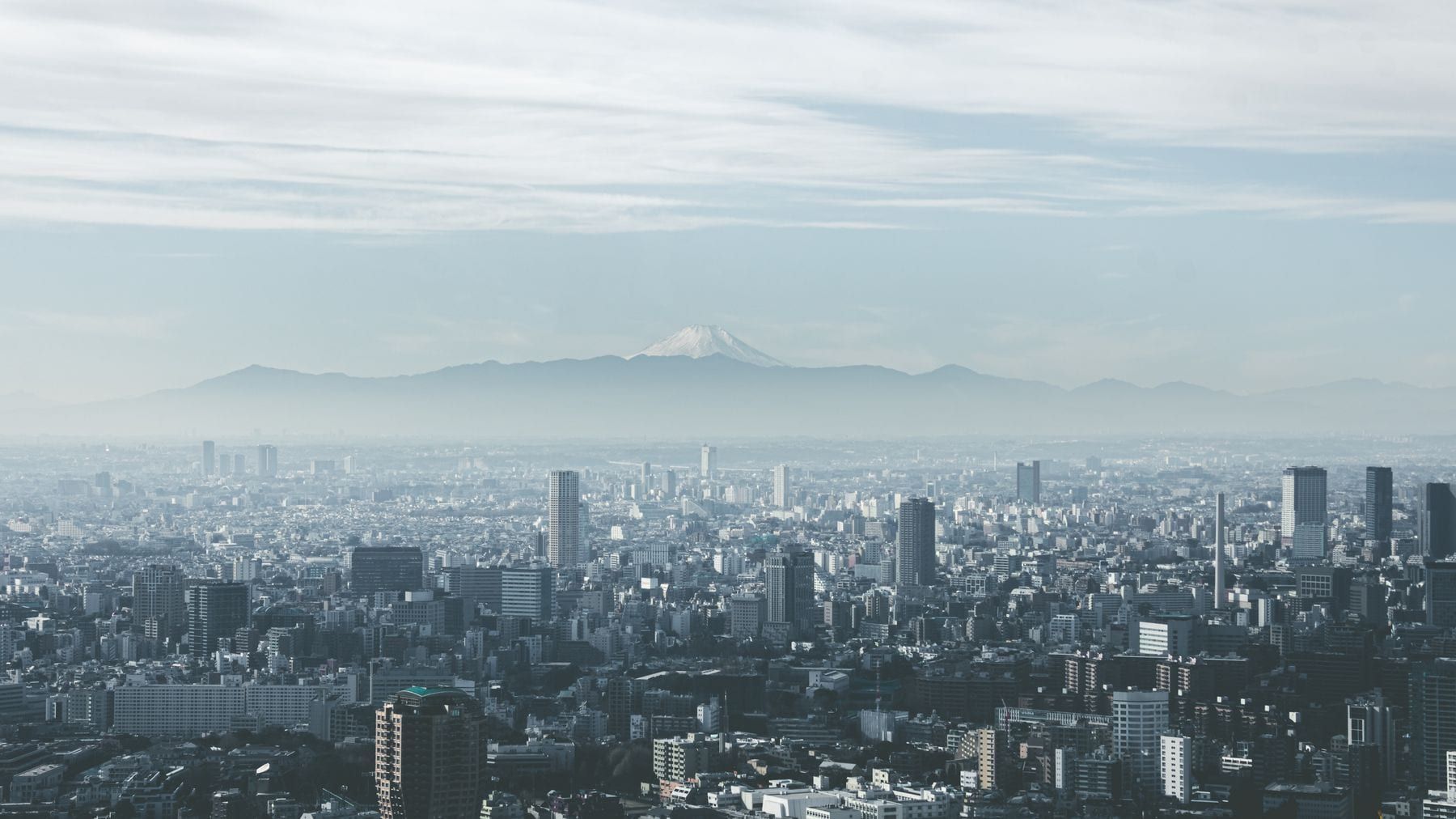
Fuji is 30 kilometres from Lake Ashi and visible on around 40 percent of days, much less often in summer, and on most mornings from November to February. Your best chance is between 7 and 10 am; after that clouds almost always build up. That means anyone who arrives in the afternoon and starts the loop the next morning is more likely to see the mountain than the day visitor standing by the lake at midday. The classic viewpoints are the red torii of Hakone Shrine in the water at Moto-Hakone (where you queue 30 to 60 minutes for the photo, while the view from the lakeside promenade 50 metres further on is the same without the wait), the ropeway ride between Owakudani and Togendai, and the deck of the boat. Check the live webcam in the morning before you make a detour for Fuji. And if it does not show: the Hakone Open-Air Museum (CHF 12, about EUR 13), the Pola Museum of Art in Sengokuhara with Monet and Picasso (CHF 11) and the Venetian Glass Museum are good rainy-day options. The sulphur valley of Owakudani with its black eggs (CHF 3 for four, each supposedly adding seven years to your life) is impressive in any weather, but closed during volcanic alerts.

Cost traps and what you do not need

The first trap is luggage: taking two suitcases onto the Tozan railway and the ropeway is torture. Send your big luggage by takkyubin from your Tokyo hotel directly to your next destination (CHF 12 to 18, about EUR 13 to 19, per suitcase, next-day delivery) or use the luggage service at Hakone-Yumoto station, which takes suitcases to your ryokan for CHF 6 if you drop them off before 12.30 pm. Second, food along the way: at Owakudani and the boat piers you pay CHF 12 for mediocre curry, so you are better off eating in Hakone-Yumoto or Gora or bringing a bento from a depachika in Shinjuku. Third, private transfers and Fuji day tours from Tokyo for CHF 120 to 180: with the Free Pass you do the same for a quarter of the price. Fourth, taxis: Hakone is spread out, a ride from Yumoto to Sengokuhara costs CHF 30, and the buses in the pass run every 15 to 20 minutes. Fifth, the Owakudani egg as a souvenir, since it keeps for two days. What does make sense: a day bath at an onsen house such as Tenzan in Yumoto for CHF 9 if you are not sleeping at a ryokan, and lunch at the Fujiya Hotel to see the building without staying the night.

Timing: pampas grass in October, momiji in November, holidays never

Hakone is the weekend destination for 37 million Tokyo residents, so the rule is: come on a weekday. A Tuesday in May or June and a Wednesday in November are the difference between relaxed and mass processing. The cherry blossom arrives in early to mid-April, a week after Tokyo, most beautiful at Lake Ashi and along the Tozan railway. June and July are the rainy season, when 10,000 hydrangeas bloom along the railway line and are lit up in the evening; mist on the ropeway comes with this time of year. Summer is three to four degrees cooler than Tokyo but humid, and Fuji is almost never visible. From late September the pampas grass in Sengokuhara turns golden, a hillside full of silvery stalks, until early November. The autumn colours reach Hakone from early to late November, earlier at the lake, later in Yumoto. December to February is dry and clear with the best Fuji views, the ryokan cost less, and sitting in the onsen while it is zero degrees outside is the reason ryokan exist. Avoid: Golden Week, Obon in mid-August, New Year from 29 December to 3 January and every weekend in November, when ryokan are booked out months ahead and cost twice as much.

The old Tokaido and Hakone-Yumoto: on foot instead of in traffic

Between Moto-Hakone and Hatajuku the old Tokaido road runs over its original Edo-period stone paving through the cedar forest, two hours uphill, free and almost empty. Along the way is Amazake-chaya, a thatched teahouse that has served travellers for 400 years with amazake, a sweet, warm, non-alcoholic rice drink for CHF 2.50 (about EUR 2.70), and grilled mochi. Take the bus back. By the lake itself the Hakone Sekisho checkpoint has been reconstructed (CHF 3), with the cedar avenue next to it, where you walk for half an hour under 400-year-old trees while the buses sit in traffic on the road. Hakone-Yumoto, where everyone arrives and most people move straight on, has a shopping street with kamaboko fish paste, pickled vegetables and yumochi, a soft rice cake, and several day baths on the Haya river. If you have a second day, take the bus to Odawara (20 minutes): the reconstructed castle (CHF 3) and the fish market at the harbour are a good finale before the Shinkansen from Odawara takes you to Tokyo in 35 minutes or to Kyoto in two hours, so you do not need to go back via Shinjuku at all.

Frequently asked questions about Hakone

Is a day trip from Tokyo to Hakone enough?

For the loop with train, ropeway and boat, yes, if you leave Shinjuku at 7 am. But you then miss what Hakone stands for: the onsen in the evening, the kaiseki and Fuji in the early morning, which usually hides by midday. A night at a ryokan with half board from CHF 250 (about EUR 268) for two is the better plan, and the Free Pass is valid for two days anyway.

Where do I buy the Hakone Free Pass?

At the Odakyu counter in Shinjuku station (west exit, Sightseeing Service Center), online from Odakyu or as an e-ticket on your phone, including via GetYourGuide. The 2-day version costs CHF 37 (about EUR 40), the 3-day version CHF 40, and children pay half. If you are already in Odawara, buy the cheaper version without the journey from Tokyo for CHF 30. The Romancecar supplement is bought separately.

Can I go into an onsen with tattoos?

Officially not in the shared baths of most ryokan and day baths; small tattoos covered with a plaster are tolerated, large ones are not. The solution is a room with a private outdoor bath or a private family bath ('kashikiri'), which many places rent out for CHF 15 to 30 (about EUR 16 to 32) per 45 minutes. Ask when you book, the answers are honest.

What does a night at a ryokan cost?

Mid-range with dinner and breakfast for two: CHF 250 to 400 (about EUR 268 to 428). Simple places and onsen hostels from CHF 150 for two with meals, or CHF 40 per bed without. The top houses cost CHF 600 to 1,200. On weekdays and from December to February prices are 20 to 40 percent lower than at autumn weekends.

How likely am I to see Fuji?

On about four days in ten, much more often in winter, rarely in summer. Your chance is best in the morning between 7 and 10 am; clouds come in the afternoon. Check the Lake Ashi webcams in the morning. If you absolutely want to see the mountain, plan an extra day at the Fuji Five Lakes, where it stands right in front of you.

Can I travel on from Hakone directly to Kyoto?

Yes, and it is the most sensible route. Take the bus or the Tozan railway to Odawara, where the Hikari or Kodama Shinkansen stops, and you are in Kyoto in a little over two hours for CHF 75 (about EUR 80). The Nozomi does not stop at Odawara. Have your luggage sent by takkyubin from your Tokyo hotel directly to Kyoto, and travel with a daypack.

Itineraries with this destination

Activities in the region

More destinations in Kanto