Toyoko Inn Okayama-eki Nishiguchi-hiroba
Right at the west exit of the station, three minutes to the Shinkansen. The chain's standard rooms, breakfast included, reliable and cheap. Ideal for early trains to Uno or Shikoku.
Japan · Chugoku & Shikoku · Travel guide
What two to three days among canal houses, jeans workshops and one of Japan's three finest gardens cost, and why Okayama is the best hub for the Inland Sea.
Photo: Derek Tsai / Pexels
Adjust the values to your trip: the calculator updates live (EUR, converted from CHF estimates).
Estimates for orientation, not booking prices. Flights and hotels vary strongly by season: current prices are behind the links below.
Money & payment: You pay in yen (JPY). 1,000 yen is roughly CHF 6 or EUR 6.50. Cards work in cities and hotels; small restaurants, temples and rural stations often want cash. An IC card (Suica or ICOCA) on your phone pays for trains, buses and convenience stores. Flight time: 12 to 14 hours, usually with one stop.
Nine options in three price ranges, each among the best-rated on Booking.com.
Budget
Right at the west exit of the station, three minutes to the Shinkansen. The chain's standard rooms, breakfast included, reliable and cheap. Ideal for early trains to Uno or Shikoku.
Business hotel right at Kurashiki station, ten minutes' walk to the Bikan district. Small, clean rooms, good beds, vending machines in the corridor. Not for long stays, perfect for one or two nights.
A few minutes' walk from the east exit of the station, with its own natural hot spring bath and breakfast included. The chain's small, clean rooms; a solid choice when Toyoko Inn and APA are full.
Mid-range
The ivy-covered cotton mill from 1889, right in the Bikan district, with a courtyard, museum and pottery workshop. The rooms are plain and a little dated, but staying in the empty district in the evening is priceless.
Between the station and the Bikan district, five minutes from each, with an onsen bath on the roof, a sauna and the usual free ramen in the evening. Modern, quiet, as reliable as the whole chain.
Right on the edge of the Bikan district, a classic city hotel with large rooms, art in the corridors and a restaurant. Well kept, with English-speaking staff who will store your luggage.
Luxury
Right on the canal in an 18th-century merchant's house and three storehouses, only a few suites, kaiseki with fish from the Inland Sea. The house where you understand Kurashiki. Book early.
The JR hotel right at the station with a pool, several restaurants and rooms with a view over the city. Not intimate, but the most comfortable base for trips to Kurashiki, Naoshima and Shikoku.
High-rise right next to the station with a club lounge, a restaurant on the 19th floor and large beds. Upscale business-hotel comfort, often with good deals on weekdays.
If you book through these links we earn a small commission, at no extra cost to you.
The first museum of Western art in Japan (1930), with El Greco, Monet, Gauguin and a mingei section. Admission around CHF 12 (about EUR 13), two hours. Closed on Mondays.
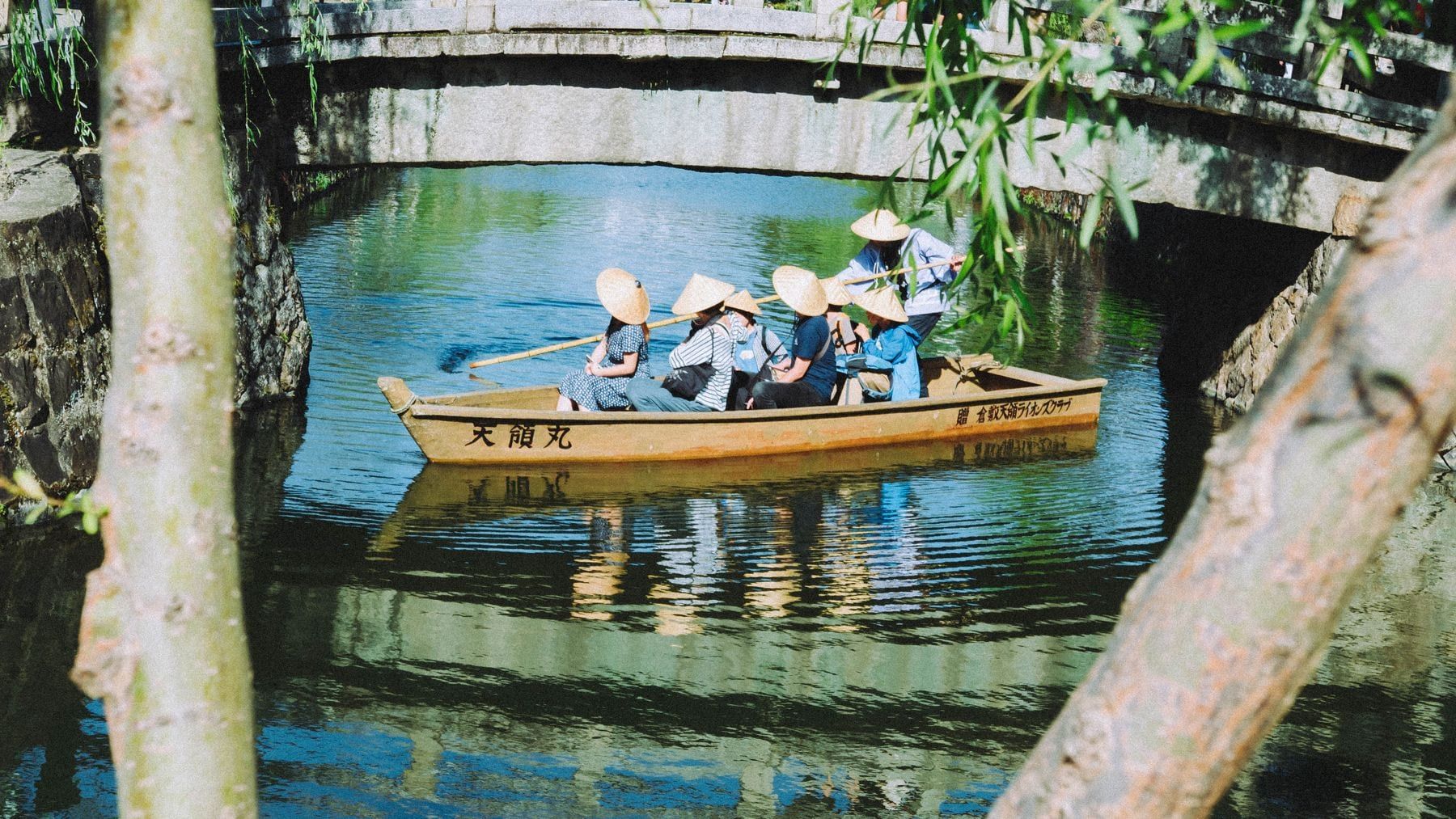
Twenty minutes in a flat wooden boat under the willows through the Bikan district, around CHF 4 (about EUR 4). Get tickets at the tourist office in the morning, as they sell out by the afternoon.
Kimono hire from CHF 25 (about EUR 27) for the day, with hair styling from CHF 35. With the canal and storehouses of the Bikan district it feels more fitting than in the overcrowded lanes of Kyoto.
Combined ticket around CHF 4.50 (about EUR 4.80). The garden at 7.30 am when it opens, then the castle with its exhibition and Bizen pottery workshop. Three hours in total; tram from the station to Shiroshita.
17 flat kilometres from Bizen-Ichinomiya to Soja: shrines, burial mounds, a pagoda, rice fields. Bike hire around CHF 6 (about EUR 6) with drop-off at the end, three to four hours. Not in the rain.
At Betty Smith on Jeans Street you set rivets, buttons and the label on your own jeans, around CHF 60 (about EUR 64) including the jeans, two hours. Booking recommended; partly closed on Sundays.
Cycle across the islands and bridges of the Inland Sea, bike hire around CHF 18 (about EUR 19) per day. One day to Setoda with lemon gelato and the high-speed boat back, or the full 70 kilometres to Imabari.
In the potteries of Imbe village you throw a cup on the wheel; firing and shipping home take months. Classes from CHF 25 (about EUR 27). One hour by train from Okayama.
Okayama is home to the Omachi rice variety, and breweries in the city and surroundings offer tastings from CHF 3 (about EUR 3). Some tours combine a brewery, a garden and dinner, from CHF 60.
If you book through these links we earn a small commission, at no extra cost to you.
Okayama is fruit country: white peaches in summer, Muscat grapes in autumn, and parfaits made from them that are famous across Japan. Add fish from the Inland Sea, Okayama-style sushi and lemons from the Shimanami islands. Kurashiki has the prettier cafes, Okayama the better izakayas.
Rice in a bowl topped with sawara mackerel, prawns, eel, lotus root and egg. It arose as a way round a lord's austerity edict. CHF 12 to 20 (about EUR 13 to 21).
Tip:In spring with fresh sawara, otherwise with eel.
White peach (July, August) or Shine Muscat grapes (September, October) on ice cream and cream. Around CHF 8 to 15 (about EUR 9 to 16), and the fruit is worth it.
Tip:A single peach costs CHF 4 to 8 at the market and is also a common gift.
A small sardine-like fish from the Inland Sea, pickled in vinegar or grilled. The name means 'borrowing rice from the neighbours', because you cannot stop eating. CHF 5 to 8 (about EUR 5 to 9) as a starter.
Tip:Order a sake made from Omachi rice with it.
Soft rice-flour dumplings with millet, sweet and small, the souvenir of the Momotaro legend. A box from CHF 4 (about EUR 4).
Tip:They come in peach and grape flavours too, but the classic is the best.
Lemons from Setoda on the Shimanami islands as gelato, cake, lemonade or lemon butter. Gelato around CHF 3 (about EUR 3).
Tip:Lemon butter in a jar survives the flight home.
Fried noodles with chicken and cabbage in a miso sauce from the Hiruzen highlands, now a city dish in Okayama. Around CHF 6 to 8 (about EUR 6 to 9).
Tip:Do not confuse it with Hiroshima yakisoba; here it is miso instead of sauce.
Kurashiki has an old coffee culture: filter coffee in wooden storehouses with jazz, and cheesecake or peach tarts on the side. Coffee around CHF 4 (about EUR 4), cake CHF 4 to 6.
Tip:Smoke-free is not guaranteed everywhere, so look in first.
Clear soy and chicken broth with floating cubes of pork fat and flat noodles, the speciality of the Shimanami port town. Around CHF 5 to 7 (about EUR 5 to 7).
Tip:Queues at lunchtime, so come before 11.30 am.
Through markets and eateries with a guide, tastings included.
If you book through these links we earn a small commission, at no extra cost to you.
Kurashiki means 'village of storehouses', and that explains the town. From 1642 the shogunate administered the place directly, without a feudal lord, as a port through which rice, cotton and oil from the fertile plain were shipped to Osaka. The merchants built white-plastered storehouses with black tile patterns along the canal, and these form today's Bikan district. In 1888 Ohara Koshiro founded the Kurabo cotton mill here, whose brick halls are now the Ivy Square hotel, and in 1930 his son Ohara Magosaburo opened the first museum of Western art in Japan: El Greco, Monet and Gauguin, bought in Europe by the painter Kojima Torajiro. Because Kurashiki was not bombed in the war, the district survived, and it has been protected since 1979. Okayama, 15 kilometres to the east, was the castle town of the Ikeda lords, whose black 'Crow Castle' was built in 1597 and whose Koraku-en garden was laid out from 1687. The city centre burned down in 1945, and the castle and garden were reconstructed. In the Kojima district, Big John sewed the first Japanese jeans in 1965, and today the region is a global name for selvedge denim. Okayama calls itself the 'Land of Sunshine' because of its few rainy days, is home to the legend of Momotaro the peach boy, and since the opening of the Seto Ohashi Bridge in 1988 has been the hub between Honshu and Shikoku.

Okayama is on the Sanyo Shinkansen: from Shin-Osaka it takes 45 minutes for around CHF 36 (about EUR 39), from Hiroshima 35 minutes for CHF 35, from Tokyo 3 hours 20 minutes for about CHF 105. Every Nozomi stops here. To Kurashiki you take the JR Sanyo line, 17 minutes for CHF 2; Kurashiki station is ten minutes' walk from the Bikan district. Okayama is also where the trains to Shikoku over the Seto Ohashi Bridge start, as does the line to Uno for the ferry to Naoshima. In Okayama the tram costs CHF 0.75 to 0.85 per ride, and Koraku-en and the castle are on the Higashiyama line. In Kurashiki you walk or hire a bike at the station for CHF 3 to 6 per day. Both cities work with ICOCA. Okayama airport has flights from Tokyo Haneda and Sapporo and is 30 minutes from town by bus, but for most people the Shinkansen from Osaka is the logical way in.
The Bikan district is small, 300 metres of canal with willows, stone bridges and white storehouses, and it is packed between 10 am and 4 pm. The shops only open at 10, but the lanes are empty at 8 in the morning, and from 6 pm, when the lanterns come on, the canal is yours. That is why staying in the district itself pays off, in an old storehouse, a machiya or Ivy Square. The Ohara Museum of Art (admission around CHF 12, about EUR 13) is the must-see: El Greco's Annunciation, Monet, Gauguin, plus Japanese folk craft in the mingei section. Plan two hours. The boat ride on the canal costs CHF 4 and lasts 20 minutes; get tickets at the tourist office in the morning, as they are gone by the afternoon. Kurashiki Denim Street in a side lane sells blue soft-serve and jeans souvenirs, fun for a photo; the real jeans you buy in Kojima. In the evening after the shops close, Ivy Square with its ivy and courtyard is the quietest spot.
Kojima is 25 minutes by train south of Kurashiki (line towards Shikoku, around CHF 3, about EUR 3). From the station it is a 15-minute walk to Jeans Street, an old shopping street where the factory outlets have moved in: Momotaro Jeans, Japan Blue, Big John, Kapital, Betty Smith and a dozen smaller ones. Prices are fair for what you get: a selvedge pair in 14-ounce denim from CHF 150, hand-woven pieces up to CHF 1,000. In Switzerland you pay double for the same brands. At Betty Smith you can finish your own pair of jeans for around CHF 60, setting rivets and buttons and choosing the label, in two hours. The shops are small, the staff take their time, trying things on is normal, haggling is not. Come on a weekday, as some shops are closed on Sundays. The bus from the station to Jeans Street has denim seat covers but runs rarely. Tax-free from around CHF 30 with your passport.
Together with Kenroku-en in Kanazawa and Kairaku-en in Mito, Koraku-en counts as one of Japan's three great gardens, and it is the most spacious: lawns, tea houses, a pond with islands, a rice field and a tea plantation, with the black castle behind as borrowed scenery. Admission is about CHF 3 (about EUR 3), a combined ticket with the castle CHF 4.50. The garden opens at 7.30 am (April to September), and at that hour you see cranes in the aviary, gardeners at work and no groups. In summer there are light installations in the evening. Okayama Castle was rebuilt in concrete in 1966 and redesigned inside in 2022, with an exhibition and a pottery workshop for Bizen ware. Impressive from the outside, a museum inside; an hour is enough. Between the garden and the castle runs the Asahi river with a bridge, and you are better off sitting on the bank with a konbini coffee than in any cafe. From the station take the tram to Shiroshita, then walk ten minutes.
The Kibi cycling route is the thing that features in no Japan itinerary and that everyone who has done it raves about: a flat, paved path from Bizen-Ichinomiya to Soja, 17 kilometres through rice fields, past Kibitsu shrine with its 400-metre wooden corridor, Kibitsuhiko shrine, the Tsukuriyama burial mound (5th century, 350 metres long) and the five-storey pagoda of Bitchu-Kokubunji. This is said to be the setting of the Momotaro legend, the peach boy who defeated the demon. At Bizen-Ichinomiya station (two stops from Okayama, CHF 1.20, about EUR 1.30) you hire a bike for around CHF 6 and drop it off in Soja, from where the train takes you back to Okayama or Kurashiki. With breaks you need three to four hours. No climbs, hardly any traffic, few tourists. In May the fields are flooded and reflect the sky, in October they are golden. For lunch there is Soja, or take a bento. Rainy days are unsuitable, as there is hardly any shelter.
From Kurashiki you are in Onomichi in an hour on the Sanyo line (CHF 7, about EUR 7), the port town with the cats, hillside temples and the start of the Shimanami Kaido: 70 kilometres of cycle route over six islands and seven bridges to Imabari on Shikoku. You do not have to ride the whole thing. A rental bike costs around CHF 18 per day (plus a CHF 6 deposit, which you lose if you return it at a different station); e-bikes and road bikes cost more. Bridge tolls for bikes were free until March 2026 and now come to a few francs in total. A good day: ferry from Onomichi to Mukaishima (CHF 0.70), ride to Ikuchijima with Kosanji temple and the lemon groves of Setoda (around 30 kilometres), have a lemon gelato there, and return to Onomichi by high-speed boat (CHF 7). If you want the whole route, stay overnight in Imabari or Setoda and take the train back. Onomichi itself, with the ropeway up to Senko-ji and its cat lanes, is worth half a day.
Kurashiki, in or near the Bikan district, for the evenings by the canal. Okayama is more practical for train connections and has more business hotels and restaurants, but as a city it is plain. A good solution: two nights in Kurashiki, trips to Okayama (17 minutes) and Kojima, and on departure day put your luggage in a locker at Okayama station before the Shinkansen leaves.
Two full days for the Bikan district, the Ohara Museum, Koraku-en and the castle. A third day for Kojima or the Kibi cycling route, a fourth for the Shimanami Kaido. As a stopover between Osaka and Hiroshima, one night in Kurashiki is enough if you arrive in the afternoon and leave the next afternoon; then you see the district in the evening and morning without groups.
Entry-level models in the factory outlets from CHF 100 to 150 (about EUR 107 to 161), the classic selvedge jeans from Momotaro or Japan Blue CHF 150 to 250, special pieces with a hand-woven selvedge up to CHF 1,000. Shirts and jackets from CHF 120. With your passport you get tax-free shopping, so just under 10 percent less. Bring your passport; cards are accepted in all the factory outlets.
March to May and October to November. Cherry blossom in early April along the canal in Kurashiki and at Koraku-en, red leaves at the end of November. Okayama has the fewest rainy days in Japan, so even the rainy season in June is more bearable here. Summer is hot, but it brings peaches and grapes. Avoid Golden Week in early May, when Koraku-en is overcrowded.
Yes, Okayama is the classic gateway: by train to Uno (50 minutes with a change at Chayamachi, CHF 3.50, about EUR 3.75), then 20 minutes by ferry to Naoshima for CHF 1.80. A day trip from Kurashiki works, but a night on the island is more comfortable. Ferries run roughly hourly, and the last one back leaves around 8 pm.
Unglazed, reddish-brown stoneware from the village of Imbe, 40 minutes east of Okayama, one of Japan's six ancient kiln traditions. Every piece is unique thanks to flying ash and flames. Cups from CHF 15 (about EUR 16), vases from CHF 60, directly from the potters in Imbe or in the shop at Okayama Castle. Pottery market in Imbe in October.
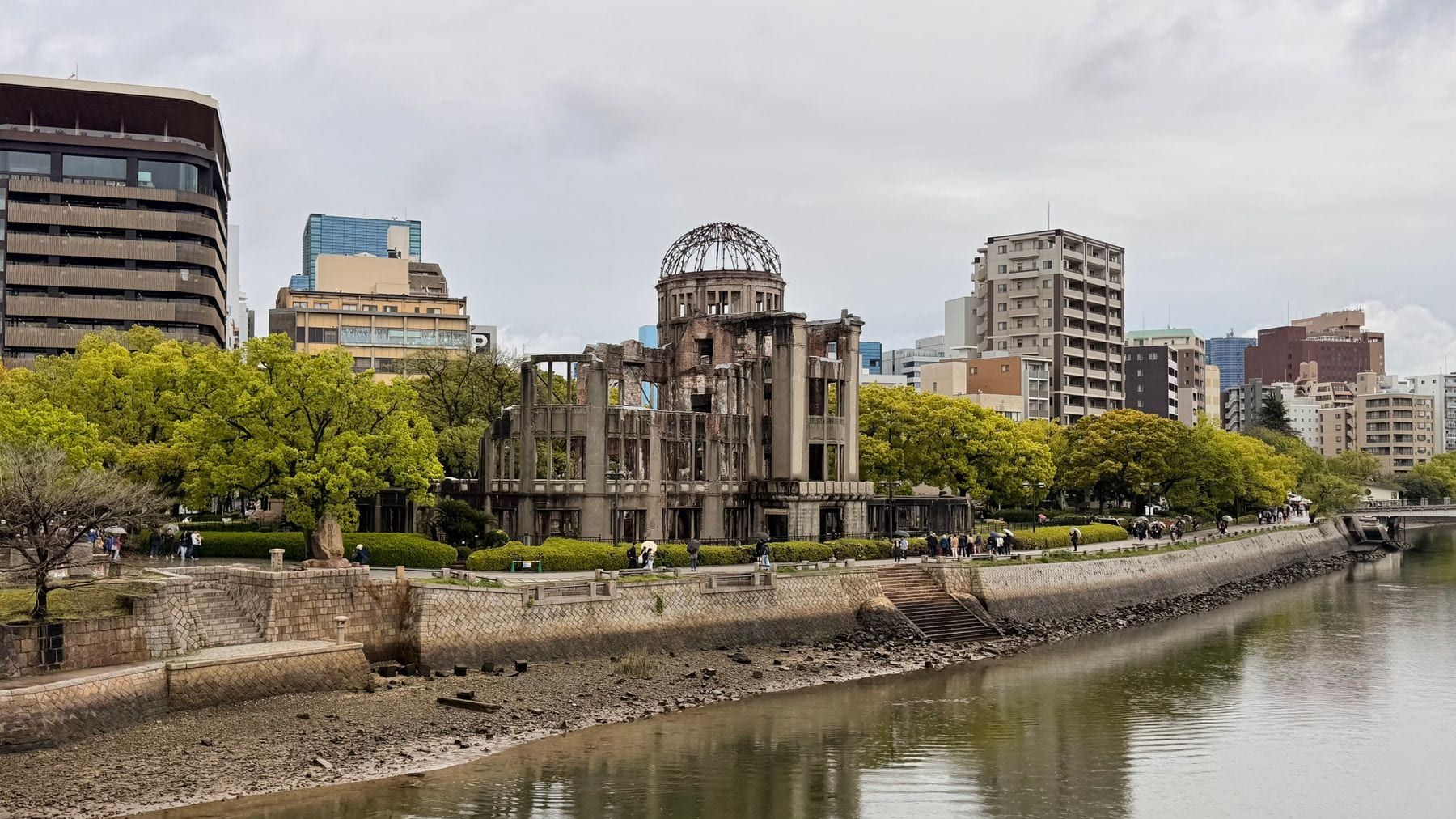
What two to three days in Hiroshima really cost, why the Peace Memorial Museum needs half a day rather than an hour, and where the city comes alive in the evening.
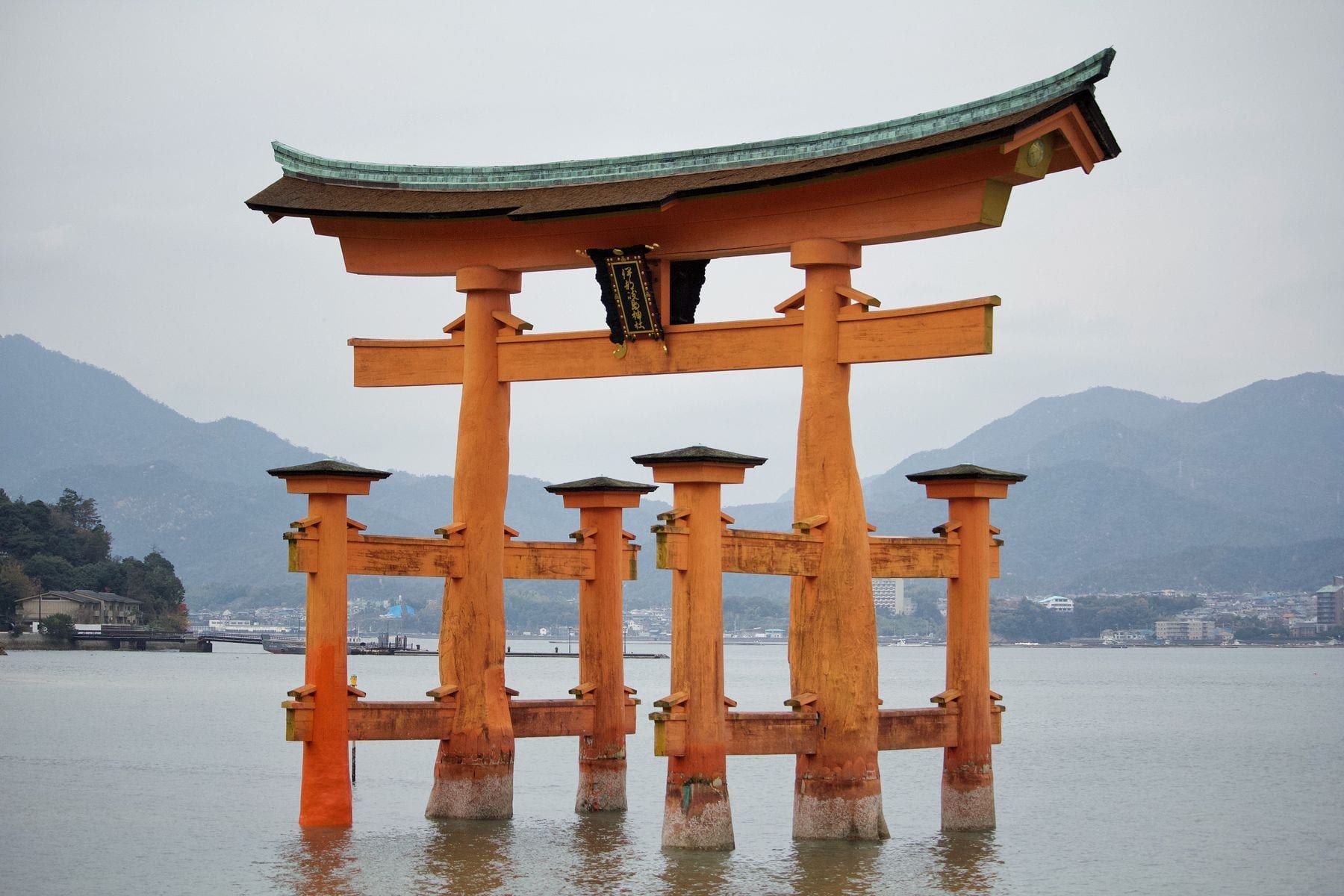
What a night on the shrine island really costs, when the torii stands in the water and when you can walk out to it, and why the island is a different place after 5 pm.
What three days in Shikoku's largest city really cost, how to bathe at Dogo Onsen Honkan without queuing, and why Matsuyama is the best way into Shikoku.
What two days on the art island really cost, why you book Chichu weeks ahead, where to sleep when Benesse House is full, and which neighbouring island is worth it.