Japan · Cities & culture · 10 days

Setouchi & Shikoku

Ferries between hundreds of islands, art in concrete bunkers, a 19th century bathhouse and a cycle bridge across the sea: western Japan without the Shinkansen rush.

The route, day by day

  1. Day 1 to 2

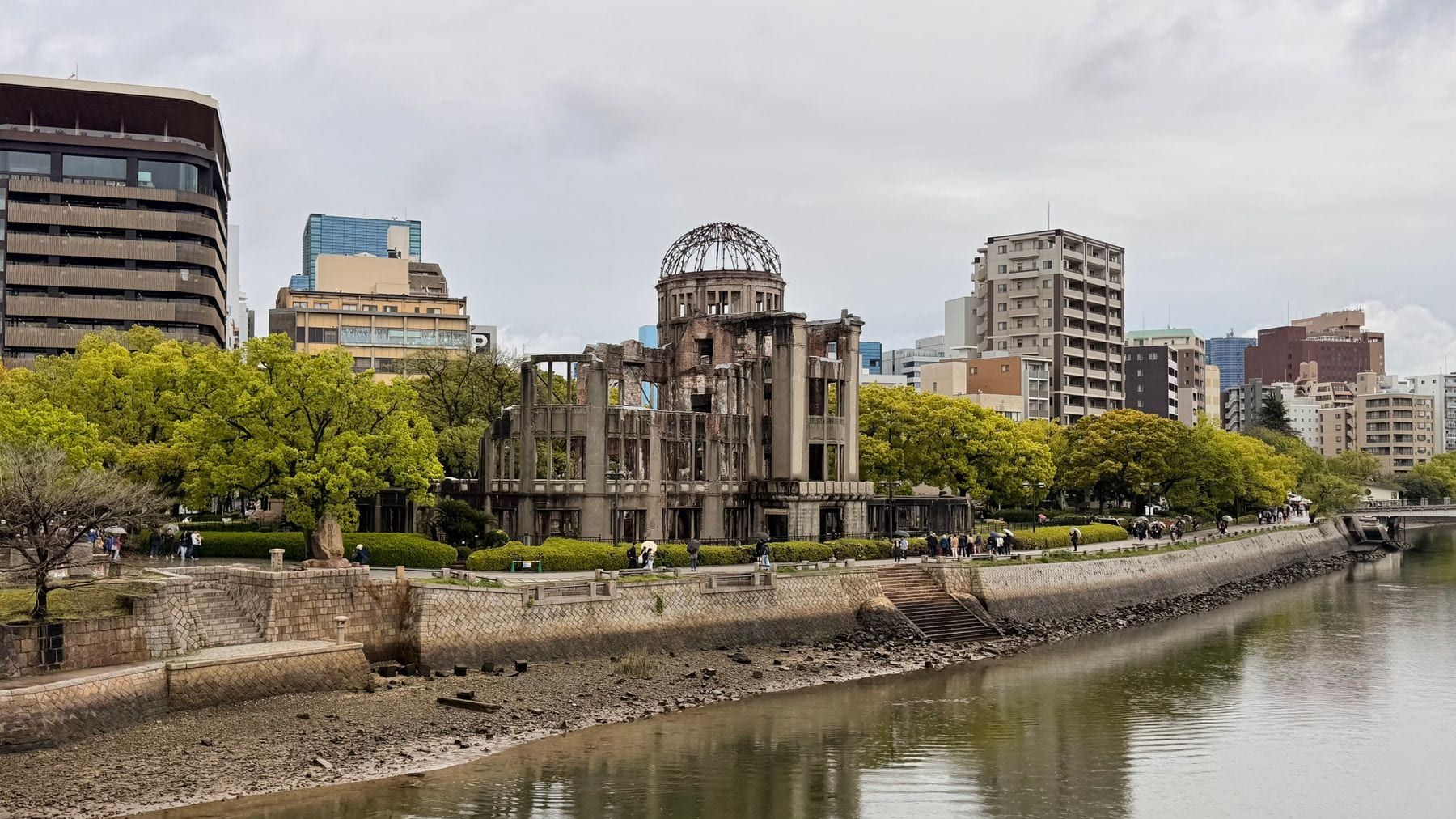
    Hiroshima: Peace Park without time pressure

    You fly to Osaka Kansai and take the Haruka to Shin-Osaka, there onto the Nozomi Shinkansen, 85 minutes to Hiroshima for CHF 64 (about EUR 68), or via Tokyo with just under four hours on the Shinkansen. Stay two nights in Hatchobori or on Hondori, right in the centre, business hotel with onsen bath CHF 90 to 120 for two. Day 1: arrive in the afternoon, stroll to the Atomic Bomb Dome in the evening light, okonomiyaki in Okonomimura, a building with 25 stalls (CHF 8 to 12). Day 2: the Peace Memorial Museum at 8.30 am opening (CHF 1.20), allow three hours, then the park and the Children's Peace Monument, the Shukkei-en garden (CHF 2) in the afternoon or, if the Carp are playing, a baseball game at the Mazda Stadium (CHF 15 to 30). On to Miyajima: JR Sanyo line 25 minutes to Miyajimaguchi (CHF 2.50), ferry ten minutes (CHF 1.20 plus CHF 0.60 island fee); leave your big luggage in a locker in Hiroshima or send it to Kurashiki.

    Tours at this stop: Peace Park guided walk ↗Okonomiyaki cooking class ↗

    Open the Hiroshima travel guide →
  2. Day 3

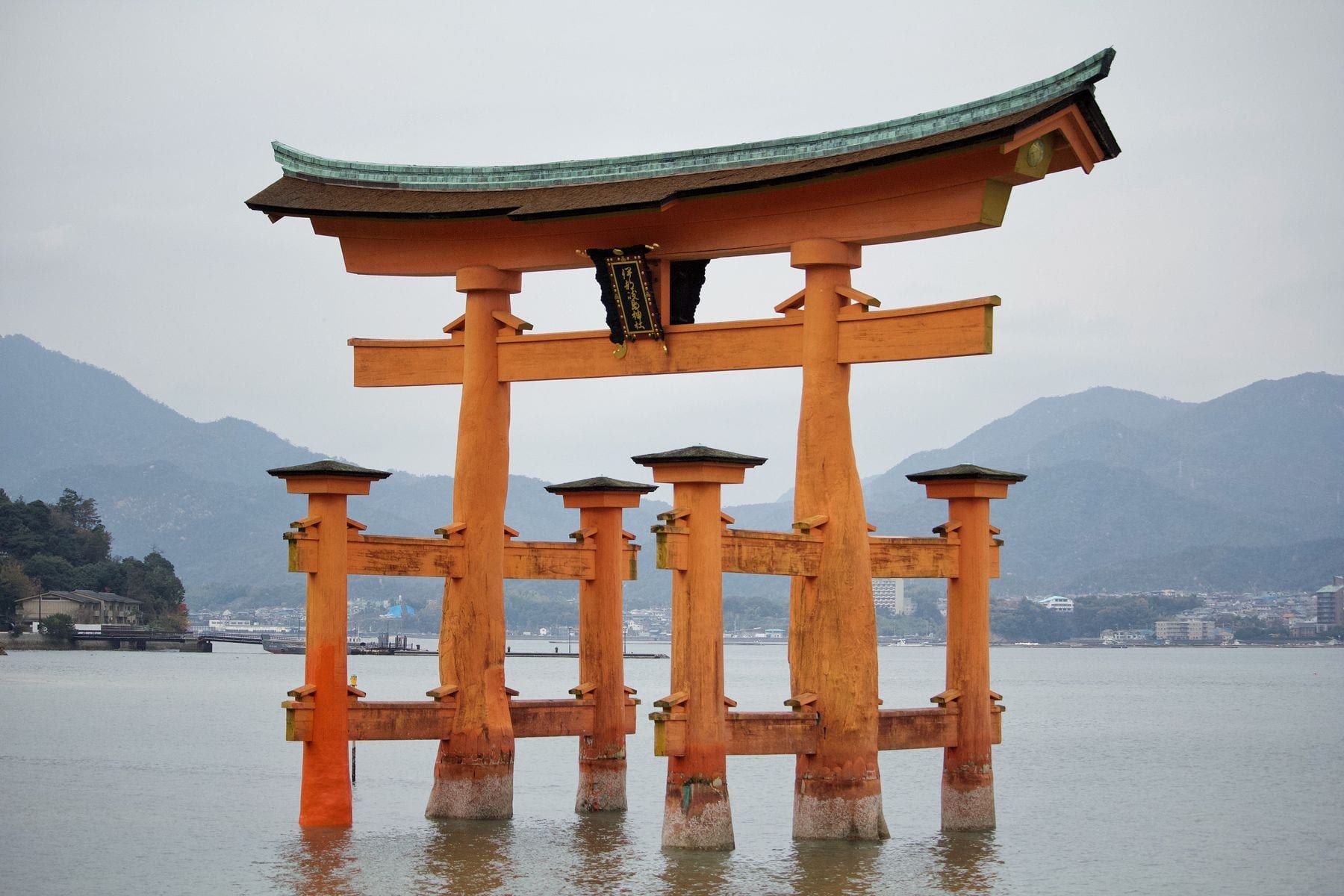
    Miyajima: the torii after 5 pm

    Miyajima between 10 am and 4 pm is one torii and many backs of heads; Miyajima after 5 pm is yours. So spend a night in a ryokan on the island, CHF 250 to 400 (about EUR 270 to 430) for two with a dinner of oysters and conger eel, or more simply in a minshuku from CHF 130. After arriving in the morning go to the Itsukushima Shrine (CHF 2) and watch the tides: at high tide the torii stands in the water, at low tide you walk out and touch it, and both are possible in one day. Grilled oysters on Omotesando for lunch (two for CHF 4), then the ropeway up Mount Misen (CHF 12 return) and on foot back down via the Daisho-in temple, two hours downhill. In the evening the torii is lit until 11 pm, and the deer lie down in front of the shrine. On to Kurashiki: ferry and JR back to Hiroshima, Shinkansen to Okayama (35 minutes, CHF 35), JR Sanyo line 17 minutes to Kurashiki, a good two hours in all.

    Tours at this stop: Miyajima kayak tour to the torii ↗

    Open the Miyajima travel guide →
  3. Day 4 to 5

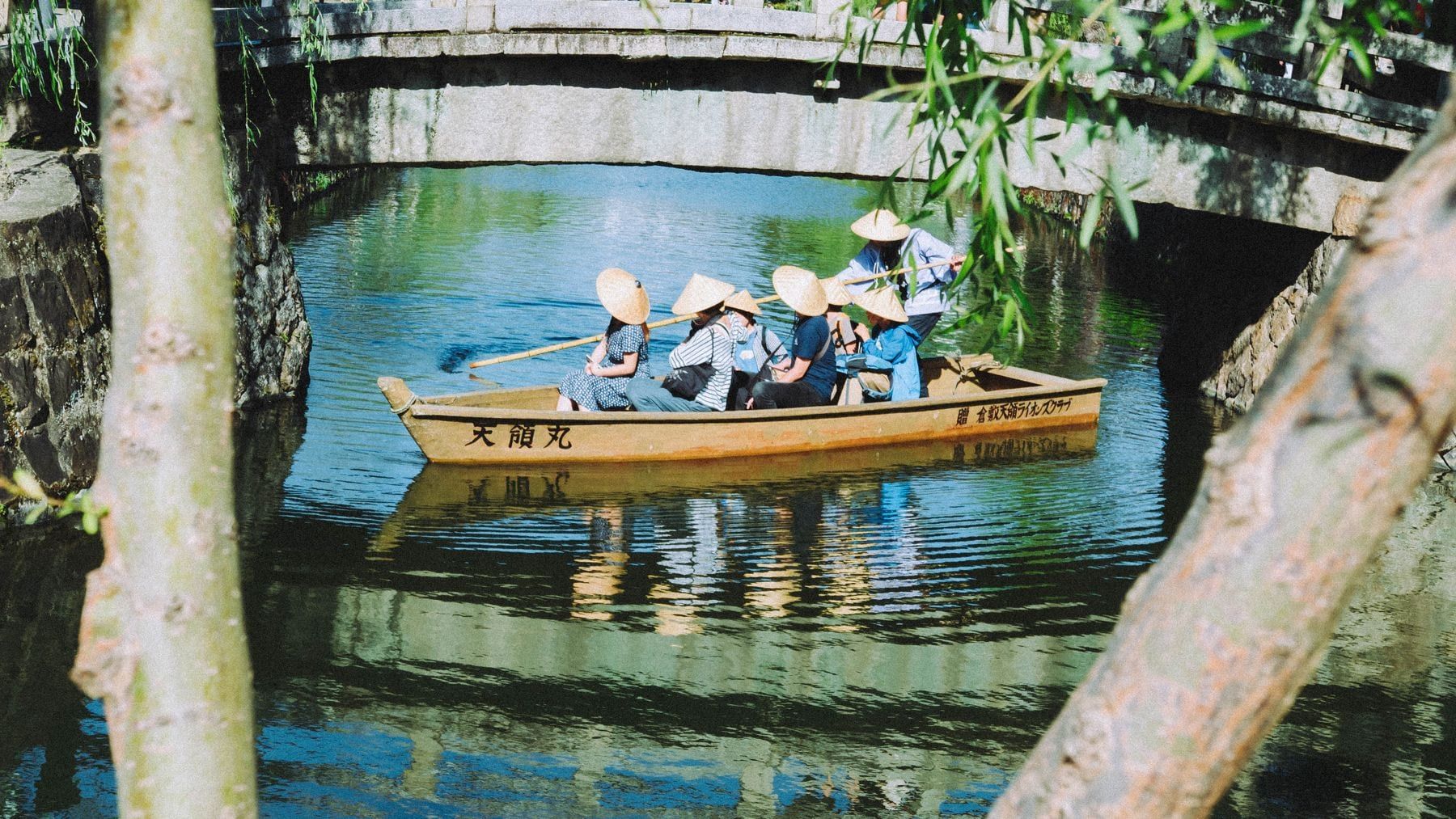
    Kurashiki and Okayama: canal, denim and the Korakuen

    Kurashiki is 300 metres of canal with willows, white storehouses and a museum showing Monet, El Greco and Gauguin, and between 10 am and 4 pm it is full. You stay two nights in the Bikan quarter itself, in a converted storehouse or a small ryokan, CHF 100 to 160 (about EUR 107 to 171) for two, and have the lanes empty morning and evening. Day 4: arrival, Ohara Museum (CHF 12), sawara fish and Okayama sake in an izakaya by the canal in the evening. Day 5: to Kojima and Jeans Street, 25 minutes by train, where Momotaro, Japan Blue and Big John have their factory shops, jeans from CHF 120, then back via Okayama to the Korakuen garden (CHF 3), one of the three great gardens of Japan, with the black castle next to it. Do not reserve tomorrow's ferry this evening, it needs no reservation, but check the departures. On to Naoshima: train from Okayama to Uno, 50 minutes with a change at Chayamachi (CHF 3.50), ferry 20 minutes to Miyanoura (CHF 1.80), roughly hourly.

    Tours at this stop: Kurashiki Bikan quarter walking tour ↗Kojima denim workshop ↗

    Open the Kurashiki & Okayama travel guide →
  4. Day 6 to 7

    Naoshima: art in concrete and a fishing village

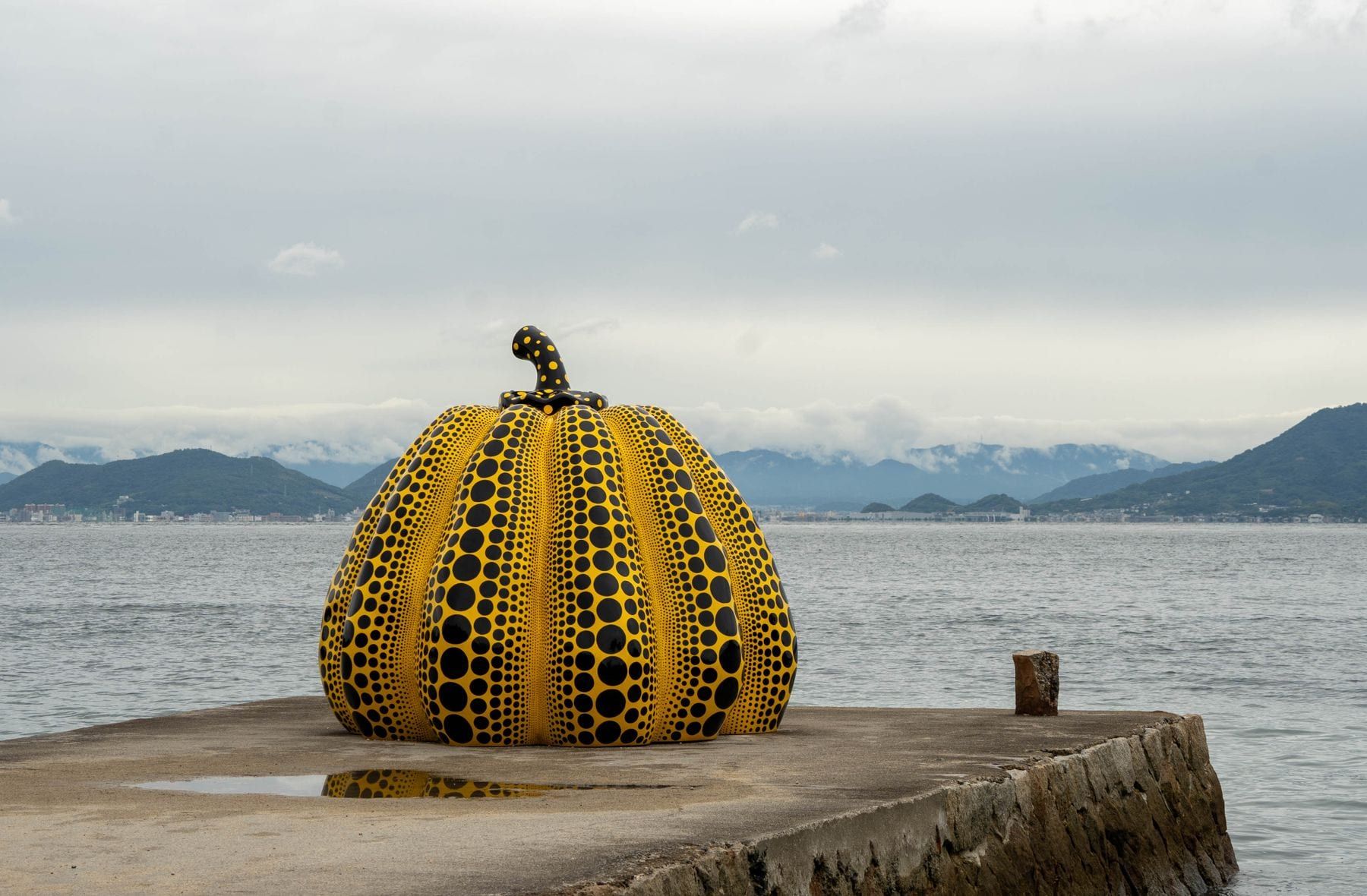
    Naoshima is not an island with a museum but a fishing village into which Tadao Ando brought concrete and James Turrell light. Two nights, because the ferries cut the day in half: either at Benesse House with the artworks outside your room door (from CHF 350, about EUR 375, for two, months ahead) or in a minshuku in Honmura from CHF 120. Rent an e-bike at Miyanoura harbour (CHF 10 a day); the buses are infrequent and full. Day 6: the Chichu Art Museum at your reserved time slot (CHF 13, online weeks ahead, no ticket desk on site), then the Lee Ufan Museum and Benesse House Museum along the south coast, Yayoi Kusama's yellow pumpkin at sunset in the evening. Day 7: the Art House Project in Honmura (CHF 6.50 for six houses), Minamidera is a must, then the I Love Yu bathhouse (CHF 4). If you have time, take the morning ferry to Teshima for the Teshima Art Museum. On to Matsuyama: ferry Miyanoura to Takamatsu, 50 minutes (CHF 3.10), udon at the station, then Limited Express Ishizuchi to Matsuyama, 2 hours 30 minutes, CHF 40.

    Tours at this stop: Naoshima art island tour ↗

    Open the Naoshima travel guide →
  5. Day 8 to 10

    Matsuyama: Dogo Onsen, castle and the cycle bridge across the sea

    Matsuyama is the best way into Shikoku: an original castle, the most famous bathhouse in Japan and a tram that links it all. Stay three nights in the Dogo district, so you walk to the bath in a yukata in the evening, mid range hotel CHF 90 to 140 (about EUR 96 to 150) for two. Day 8: arrive in the afternoon, Dogo Onsen Honkan, the wooden bathhouse of 1894; the simple Kami no Yu bath costs CHF 4.20, come after 8 pm when the queue has gone, or try the new Asuka no Yu next door. Day 9: the Shimanami Kaido, the 70 kilometre cycle route over six island bridges to Onomichi. Limited Express 40 minutes to Imabari, bike hire CHF 20 a day, one way to Onomichi with a CHF 7 drop off fee, back by bus or train; if you want less, ride to Oshima and back. Day 10: Matsuyama Castle by chairlift (CHF 6 combined), the Botchan train, then the journey home: Superjet fast ferry 70 minutes to Hiroshima (CHF 47) and Shinkansen to Osaka, or a flight from Matsuyama to Haneda in 90 minutes (CHF 60 to 120) and onwards home.

    Tours at this stop: Shimanami Kaido cycling tour ↗Dogo Onsen and Matsuyama Castle walking tour ↗

    Open the Matsuyama & Dogo Onsen travel guide →

If you book through these links we earn a small commission, at no extra cost to you.

What the route costs

Rough total per person for the whole route, mid-range, travelling as a pair. Flights and hotels vary by season; details are on the destination pages.

  • Getting there 1,124 EUR
  • Accommodation 663 EUR
  • Food 407 EUR
  • Local mobility 385 EUR
2,579 EUR
Total per person · 10 days

Money & payment: You pay in yen (JPY). 1,000 yen is roughly CHF 6 or EUR 6.50. Cards work in cities and hotels; small restaurants, temples and rural stations often want cash. An IC card (Suica or ICOCA) on your phone pays for trains, buses and convenience stores.

Tips for the route

Reserve in this order: Chichu Art Museum (time slot, online, two to four weeks ahead, earlier still at weekends and during the Setouchi Triennale), then the beds on Naoshima, then the ryokan on Miyajima, then the rest. The ferries need no reservation, and you buy Shinkansen seats the day before. Without a Chichu ticket Naoshima is still good, but you miss the best room on the island.

The route also runs in reverse: fly to Matsuyama via Tokyo, then Shikoku, the islands, Kurashiki, Hiroshima and home from Osaka. Forwards has the advantage that the ryokan night on Miyajima comes early and you end with three quiet days in Matsuyama. If you are coming from Kyoto, attach the route directly: Kyoto to Hiroshima is 1 hour 40 minutes by Shinkansen.

The Japan Rail Pass does not pay off here either, but the Setouchi Area Pass does: it costs around CHF 120 (about EUR 128) for seven days and covers the Sanyo Shinkansen between Osaka and Hiroshima, the JR ferry to Miyajima, the train to Uno, the JR lines on Shikoku and even the fast ferry from Hiroshima to Matsuyama. Individually you pay around CHF 250 for the same legs. Buy it online before the trip and collect it at Kansai Airport.

Check the ferries the evening before: Uno to Naoshima runs roughly hourly with the last at 8 pm, Naoshima to Takamatsu five times a day, the fast ferry Matsuyama to Hiroshima every one to two hours. During typhoons in September ferries are cancelled, and then you are stuck for a day. The timetables are on the ferry companies' websites in English; Google Maps knows the ferries only in part.

The best time is March to May and October to November: mild, clear, with cherry blossom on Miyajima in early April and autumn leaves in Momijidani Park in mid November. In summer the Inland Sea is humid and the Shimanami bridge at 35 degrees is torture. Every three years the Setouchi Triennale runs (last in 2025, next in 2028); the islands are then full and beds twice the price, but there is three times as much art.

Shimanami Kaido honestly: 70 kilometres with six bridge ramps take experienced cyclists five to six hours, and casual riders a long day. The hire company's e-bikes are limited and cannot be dropped off one way, so with one you ride to Oshima or Omishima and back. The cycle path is marked in blue, the bridges have their own lanes and cost CHF 3 (about EUR 3) in tolls for a bike in total, and a helmet is compulsory.

Frequently asked questions about Setouchi & Shikoku

How many days do you need for the Seto Inland Sea?

Ten days is good: two Hiroshima, one night Miyajima, two Kurashiki and Okayama, two Naoshima, three Matsuyama. With eight days you cut Kurashiki and go from Miyajima via Okayama straight to Uno. With seven days you leave out Matsuyama and return from Naoshima to Osaka.

When is the best time to go?

April and May as well as October and November, with clear views of the islands and pleasant temperatures for cycling. Winter is mild and empty, but the ferries run less often and Benesse House has closing days. June is the rainy season, July and August humid, September typhoon season with possible ferry cancellations.

Can the route be done by car?

Possible, but unnecessary: the ferries only take cars at a high price, on Naoshima a bike is better, and in Hiroshima and Matsuyama the tram runs. If you want to continue through Shikoku after Matsuyama, hire a car there and drive the Iya Valley and the coast, for which you need the international driving permit under the Geneva Convention.

What does the route cost?

Around CHF 2,410 (about EUR 2,580) per person: flight CHF 1,050, nine nights as a couple CHF 620 including the ryokan night on Miyajima, food CHF 380 and trains, ferries and fast ferry CHF 360, more like CHF 250 with the Setouchi Area Pass. Add museum entries of around CHF 50 on Naoshima and in Kurashiki.

Is the route suitable for solo travellers and families?

For solo travellers very much so: Naoshima and Matsuyama attract many individual travellers, and minshuku are cheap. For families Miyajima with deer and ropeway, the cycling day on the Shimanami Kaido and the ferries are a win; the Peace Memorial Museum makes sense from about twelve years old. Art on Naoshima works better with children than expected, because almost everything can be walked into.

How can the route be extended?

With a day in Himeji on the way from Osaka to Hiroshima (the white castle, a Shinkansen stop), two nights in Onomichi at the end of the Shimanami Kaido, or three days through Shikoku from Matsuyama: Uchiko, the Iya Valley with its vine bridges and Kotohira. That turns it into a two week trip with the flight home from Takamatsu or Osaka.

More itineraries through Japan