
Uno Port Inn
Small hotel run by art lovers right at the ferry pier in Uno, with a cafe and bar, simple rooms and good tips for all the islands. The first ferry leaves at 6.10 am outside the door.
from CHF 60 / night (about EUR 64) View →
Japan · Chugoku & Shikoku · Travel guide
What two days on the art island really cost, why you book Chichu weeks ahead, where to sleep when Benesse House is full, and which neighbouring island is worth it.
Photo: Mateusz Walendzik / Pexels
Adjust the values to your trip: the calculator updates live (EUR, converted from CHF estimates).
Estimates for orientation, not booking prices. Flights and hotels vary strongly by season: current prices are behind the links below.
Money & payment: You pay in yen (JPY). 1,000 yen is roughly CHF 6 or EUR 6.50. Cards work in cities and hotels; small restaurants, temples and rural stations often want cash. An IC card (Suica or ICOCA) on your phone pays for trains, buses and convenience stores. Flight time: 12 to 14 hours, usually with one stop.
Nine options in three price ranges, each among the best-rated on Booking.com.
Budget
Small hotel run by art lovers right at the ferry pier in Uno, with a cafe and bar, simple rooms and good tips for all the islands. The first ferry leaves at 6.10 am outside the door.
The chain's standard, ten minutes' walk from Takamatsu port and the shopping arcade. Breakfast included, high-speed boat to Naoshima in 25 minutes. The most economical base for several island days.
Minshuku in the village of Honmura, run by a fisherman and his family, tatami rooms, futons, shared bath, dinner with the catch of the day on request. Little English, lots of heart, pay in cash.
Mid-range
Opened in 2021, ten minutes' walk from Miyanoura port: bright rooms with sea views, a terrace, a restaurant serving dinner and bikes to borrow. The reliable middle ground between minshuku and Benesse House.
Onsen bath on the roof, sauna, free ramen in the evening and a breakfast with sanuki udon, 15 minutes' walk from the port. The comfortable mainland base for Naoshima, Teshima and Shodoshima.
Classic city hotel on the arcade, large rooms of Western standard, restaurants in house, ten minutes to the port. A good choice if Dormy Inn is full or you want a quiet room.
Luxury
Museum and hotel in one, by Tadao Ando, four buildings on the hillside and the beach. As a guest you walk through the museum at night, eat at the Terrace restaurant and ride the monorail up to the Oval. Book from six months ahead.
Eleven rooms in a ryokan from 2022 on the edge of Honmura village, with a courtyard, private baths and a kaiseki of Inland Sea fish and island vegetables. The quiet alternative to Benesse House.
High-rise right between the station and the ferry pier, rooms on the upper floors looking out over the Inland Sea and the islands. Club floors, several restaurants, and you are on the high-speed boat in three minutes.
If you book through these links we earn a small commission, at no extra cost to you.
Underground museum by Tadao Ando for Monet, Turrell and De Maria, only with an online timed ticket, around CHF 13 (about EUR 14). Book as early as possible; there is no ticket desk. One hour, whispering, no photos.
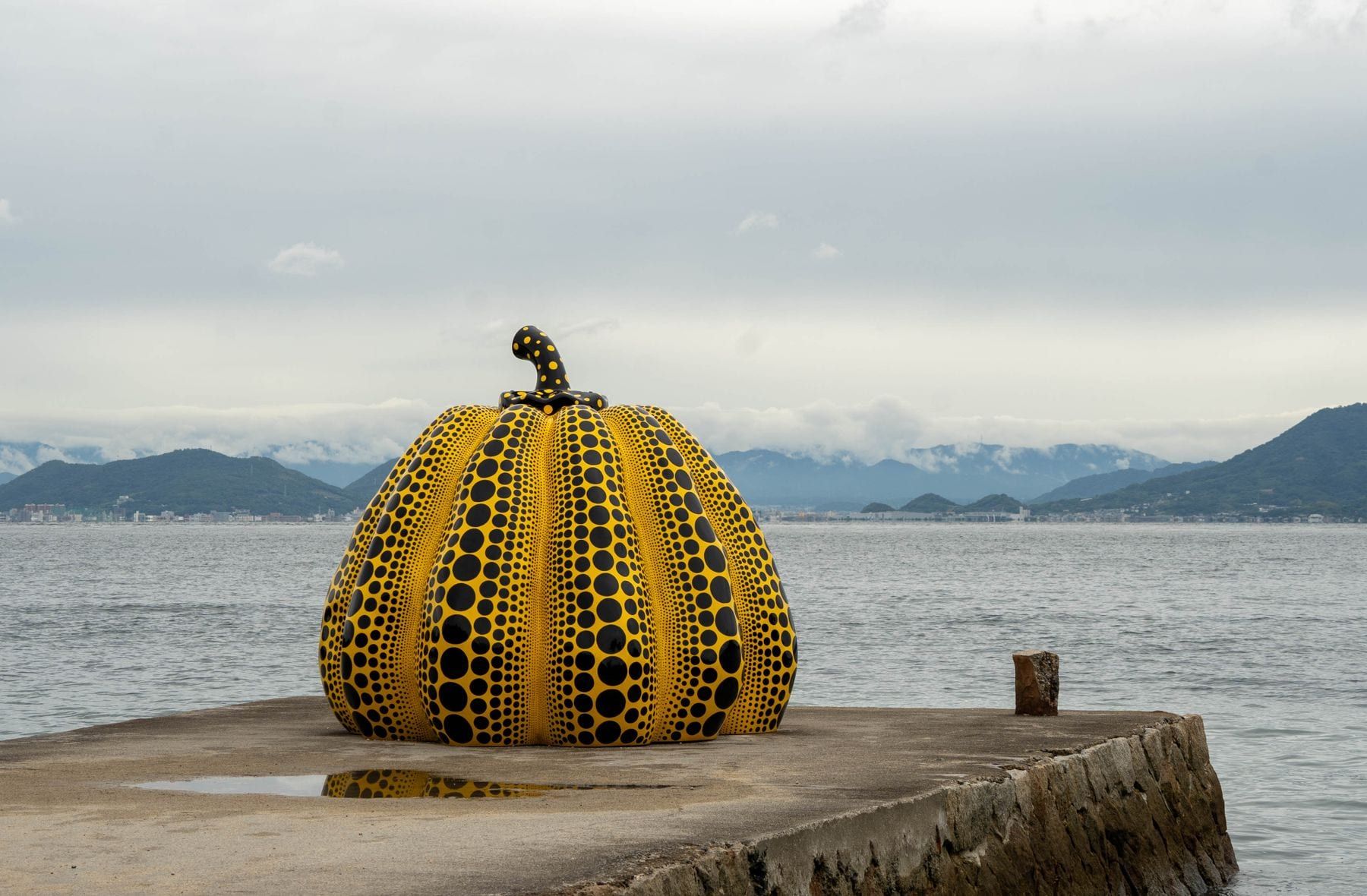
Museum with Hockney, Warhol and site-specific works, around CHF 8 (about EUR 9), then the beach path to the yellow pumpkin. Come at sunset, when the day visitors are on the ferry.
Six converted houses for around CHF 6.50 (about EUR 7), plus Minamidera with a timed ticket (collect it on site in the morning). Two to three hours on foot through the village, with coffee in between.
Bike around CHF 6 (about EUR 6), e-bike CHF 10 to 12 at Miyanoura port. It makes you independent of the bus, which runs rarely and full. Between Honmura and Chichu the hill is more pleasant with an e-bike.
Day tours from Okayama or Takamatsu with ferries, Chichu ticket and guide, from CHF 150 (about EUR 161). Expensive, but someone else handles the bookings and timetables. For solo travellers short on time.
A concrete shell above rice terraces with wandering droplets of water, 20 minutes by ferry from Naoshima, online booking required, around CHF 11 (about EUR 12). Hire an e-bike at Ieura port; ferries are scarce.
Museum in the ruins of a copper refinery from 1909, self-climatising, plus art houses in the village, around CHF 13 (about EUR 14). From Teshima or from Hoden near Okayama; two hours on the island is enough.
A working sento by Shinro Ohtake with an elephant, mosaics and collages, around CHF 4 (about EUR 4), open until 9 pm. A finale before the last ferry; bring a towel or buy one.
Art on twelve islands every three years in three seasonal blocks, passport around CHF 30 (about EUR 32) for all works. More works and ferries, but also queues. Book accommodation a year ahead.
If you book through these links we earn a small commission, at no extra cost to you.
On Naoshima you eat simply: the fishermen's fish, the island's vegetables, coffee in converted houses. The big food scene is across the water in Takamatsu, the capital of sanuki udon. Plan your mealtimes; the island knows no cooking after 2 pm and before 5 pm.
Thick, chewy wheat noodles from Kagawa, cold with soy sauce and ginger or hot in broth, self-service with tempura from the tray. CHF 2 to 4 (about EUR 2 to 4) a bowl, honest food.
Tip:Many shops open at 6 am and close when the dough runs out, often at 2 pm.
Rice, miso soup, seasonal fish or vegetables and small side dishes, the lunch in Honmura's cafes. CHF 8 to 12 (about EUR 9 to 13).
Tip:Come before 1 pm; after that the daily set is often sold out.
Yellowtail from Inland Sea fish farms, firm and rich, Kagawa's fish speciality. A plate CHF 8 to 14 (about EUR 9 to 15).
Tip:Best in autumn and winter, when it is called kanburi.
French-inspired menu or Japanese kaiseki with Inland Sea fish at the Terrace or Issen restaurant, with views of the sea and art. CHF 60 to 120 (about EUR 64 to 128) per person.
Tip:Possible without staying overnight if you book, but check the taxi or shuttle back.
From Shodoshima, the olive island next door: olive oil, pickled olives, olive soft-serve and fish fed on olive leaves. Soft-serve CHF 3 (about EUR 3), oil from CHF 15.
Tip:The oil is a souvenir nobody else brings back from Japan.
Filter coffee and homemade cake in converted old houses with gardens, the island's rhythm. Coffee CHF 4 (about EUR 4), cake CHF 4 to 5.
Tip:Pay cash; many cafes do not take cards.
A whole chicken leg on the bone, roasted in the oven with pepper and garlic, the speciality of Marugame and found all over Takamatsu. CHF 6 to 9 (about EUR 6 to 10).
Tip:Hinadori (young) is tender, oyadori (old) is chewy and full of flavour; try both.
Through markets and eateries with a guide, tastings included.
If you book through these links we earn a small commission, at no extra cost to you.
Until the 1980s Naoshima was an industrial island: since 1917 Mitsubishi has run a copper smelter in the north whose fumes stripped the hills bare, and the population shrank from 8,000 to around 3,000 today. In 1985 the mayor, Chikatsugu Miyake, met Tetsuhiko Fukutake, founder of the education company Fukutake Shoten (now Benesse), with the idea of using the south of the island for children and culture. Fukutake died in 1986; his son Soichiro carried the plan forward and brought in the architect Tadao Ando. In 1992 Benesse House opened, museum and hotel in one, built in concrete into the hillside. In 1994 Yayoi Kusama placed her yellow pumpkin on the pier, and in 1998 the Art House Project began, in which artists turned empty houses in the fishing village of Honmura into artworks. In 2004 came the Chichu Art Museum, which lies entirely underground and was built for three artists: Monet, Walter De Maria and James Turrell. The first Setouchi Triennale took place in 2010 and has been held every three years since, most recently in 2025 with around a million visitors across twelve islands; the next one follows in 2028. Teshima got its museum by Ryue Nishizawa and Rei Naito in 2010, and Inujima its art space in the old copper refinery in 2008. In May 2025 Ando's new art museum opened on Naoshima above the village of Honmura. A typhoon swept the Kusama pumpkin into the sea in 2021, and a new one has stood there since October 2022.
Two ports lead to Naoshima. From Okayama you take the train to Uno, 50 minutes with a change at Chayamachi (around CHF 3.50, about EUR 3.75), then a 20-minute ferry to Miyanoura for CHF 1.80, roughly hourly, the last at 8 pm. From Takamatsu on Shikoku the ferry takes 50 minutes (CHF 3.10) or the high-speed boat 25 minutes (CHF 7.30). Takamatsu has the airport (TAK, flights from Tokyo) and is 55 minutes from Okayama by train. On the island the municipal bus runs between Miyanoura, Honmura and Tsutsujiso for CHF 0.60 per ride, but only every 30 to 60 minutes and often full. From Tsutsujiso the free Benesse shuttle takes you to the museums and hotel. You are better off hiring a bike at Miyanoura port (CHF 6 per day) or an e-bike (CHF 10 to 12); the island has hills, and the road climbs properly between Honmura and Chichu. The museum area is closed to bikes, so you park and walk. Leave your luggage in a locker at the port or at Okayama station.
The Chichu Art Museum only sells timed tickets online, around CHF 13 (about EUR 14), and at weekends, in the holidays and during the Triennale they are gone weeks in advance. Book as soon as your dates are fixed; there is no ticket desk on site. Inside are five of Monet's water lily paintings in a white room you enter in slippers, Turrell's light room, which you walk into, and De Maria's granite sphere under the sky. No photography; take your time, an hour. The Benesse House Museum (CHF 8) is more open and shows Hockney, Warhol, Basquiat and site-specific works by Sugimoto and Richard Long, and it comes with the walk along the beach to the yellow pumpkin. The Lee Ufan Museum (CHF 6.50) between the two is quiet and small. Since May 2025 there is also the Naoshima New Museum of Art above Honmura, again by Ando, with contemporary Asian art (CHF 9). The museums are on one road, so do them from top to bottom: Chichu, Lee Ufan, Benesse, then the pumpkin on the pier at sunset. Most venues are closed on Mondays, when the Benesse area is your rescue.
The fishing village of Honmura in the east is the other half of the island: seven old houses, a shrine and a dentist's house have been transformed by artists. The combined ticket for six houses costs around CHF 6.50 (about EUR 7) and is sold at the Honmura Lounge and Archive. The must-see is Minamidera: Ando built a black timber building for James Turrell where you feel your way in total darkness to a bench and, after ten minutes, see what is there. For this you need a timed ticket that you collect on site in the morning, and it is often gone by noon. Kadoya with its light numbers in the water and Go'o Shrine with its glass staircase into the underground chamber are the other two that stay with you. At Miyanoura port stands I Love Yu, a working bathhouse by Shinro Ohtake with an elephant above the pool, admission CHF 4, open until 9 pm, ideal as a finale before the last ferry. Honmura has the better cafes, several minshuku and a bakery, but the shops close early, and on Mondays almost everything is shut.
Naoshima has perhaps 300 beds. Benesse House is the place where you can wander the museum at night, with four buildings: Museum, Oval (only by monorail, with a courtyard pond), Park and Beach. Rooms start at CHF 350 (about EUR 375) for a double without meals, Oval and Beach considerably more, and they are gone six months ahead. Roka, a ryokan from 2022 in Honmura, is the new luxury address, with kaiseki, from CHF 300 per person. In between there is My Lodge Naoshima in Miyanoura from CHF 150 and a good dozen minshuku and guesthouses in Honmura and Miyanoura from CHF 60 to 100 for a double room, mostly with futons, shared baths and no English, but warm-hearted. These small places can often only be booked through Booking or by email and take cash. The alternative is Takamatsu: business hotels from CHF 55, Dormy Inn with an onsen from CHF 85, and the 8 am high-speed boat gets you to the island in 25 minutes. For Teshima and Inujima, Takamatsu or Uno is the better base anyway. During the Triennale expect prices to double.
Naoshima is expensive for Japan, but manageable: return ferry CHF 4 (about EUR 4), bike CHF 6, Chichu CHF 13, Benesse House CHF 8, Lee Ufan CHF 6.50, Art House CHF 6.50, bath CHF 4, lunch CHF 10, around CHF 60 per day in total without accommodation. Children under 15 go free in the Benesse museums. Food is the problem: there are few restaurants, they close between 2 and 5 pm, and in the evening almost only the accommodation cooks. Bring a bento from a konbini in Uno or Takamatsu, as there is none on the island. The best times are April, May, October and November; summer is hot and the island offers little shade, and the June rainy season is mild. The Setouchi Triennale returns in 2028, in three blocks in spring, summer and autumn: more art across twelve islands, but also queues and full ferries. If you want peace, come in the years in between on a weekday; a Tuesday in November is Naoshima as it was meant to be.
Teshima is 20 minutes by ferry east of Miyanoura (CHF 3.70, about EUR 4), and for many people the Teshima Art Museum is the stronger experience: a concrete shell by Ryue Nishizawa on a hill above rice terraces, with no supports and two openings to the sky, in which Rei Naito lets droplets of water wander across the floor. No pictures, only light, wind and water; online booking required, CHF 11. Add Christian Boltanski's heartbeat archive on the beach and a dozen scattered works. The island is hilly, so hire an e-bike at Ieura port (CHF 12 for four hours), and check the ferry timetable beforehand, as there are only a few a day. Inujima, the smallest of the three, is reached from Teshima or from Hoden on Honshu (bus and ferry from Okayama, 90 minutes in total): 40 inhabitants, the ruins of a copper refinery from 1909 that Hiroshi Sambuichi turned into a museum that climate-controls itself with sun and geothermal heat, plus small art houses in the village, CHF 13. All three islands in one day does not work, two does if you start early.
For Chichu, Benesse House and the pumpkin, yes, if you come on the first ferry and have booked Chichu. Honmura and the Art House Project then get short shrift. With one night you see both halves of the island without rushing and have the beach to yourself in the evening. For Teshima you need another day.
Tickets go on sale online two months ahead. On weekdays outside the holidays, one to two weeks is enough; at weekends, during cherry blossom, in Golden Week and during the Triennale, book on the first day of sale. There is no ticket desk. The Teshima Art Museum works on the same system.
Yes, more than you might think: pumpkins you can touch, a beach, bikes, the bathhouse with the elephant, and children under 15 go free in the Benesse museums. Minamidera in the dark and the quiet rooms at Chichu require patience, and whispering is the rule there. Pushchairs are hard work on the island because of the hills; a baby carrier is better.
At lunchtime in the cafes in Honmura and Miyanoura, with simple daily dishes for CHF 8 to 12 (about EUR 9 to 13), or in the Benesse House cafe with a sea view for a bit more. Between 2 and 5 pm almost everything is closed; in the evening the accommodation cooks, along with two or three izakayas in Miyanoura. There is no konbini, so a bento from Uno or Takamatsu saves the evening.
Teshima. The Teshima Art Museum is a space you will not forget, the island is greener than Naoshima, and the ferry from Miyanoura takes only 20 minutes. Inujima with its copper refinery is impressive, but more awkward to reach and seen in two hours. Shodoshima, with olive groves and a gorge, is a completely different, bigger trip.
Yes, Okayama is the hub: 1 hour by Shinkansen from Kyoto, 35 minutes from Hiroshima, then 50 minutes to Uno and 20 minutes by ferry. From Kyoto you are on the island by 10 am. A good route: Kyoto, one night in Kurashiki, one night on Naoshima, then on to Takamatsu and Matsuyama or back to Hiroshima.
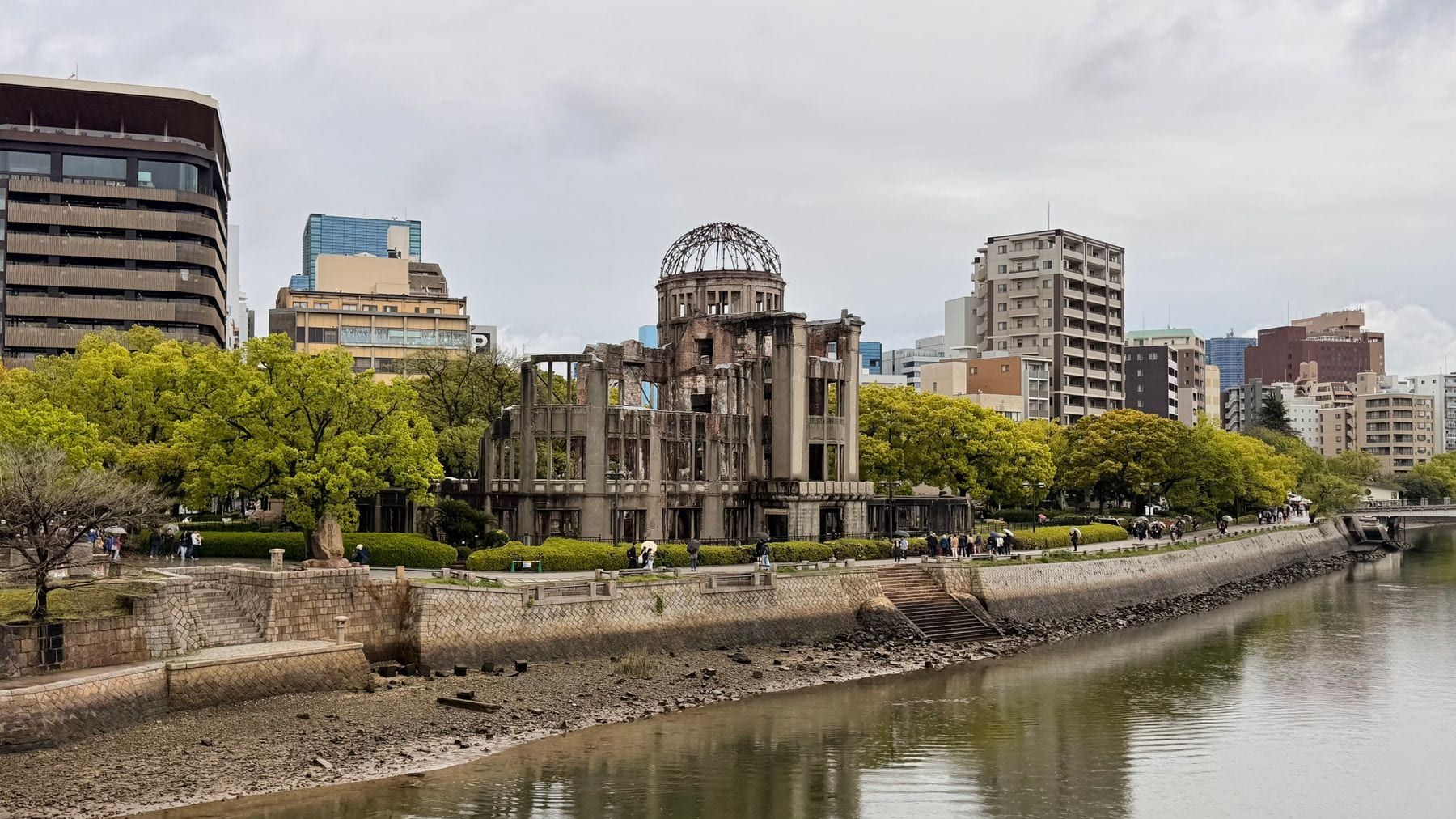
What two to three days in Hiroshima really cost, why the Peace Memorial Museum needs half a day rather than an hour, and where the city comes alive in the evening.
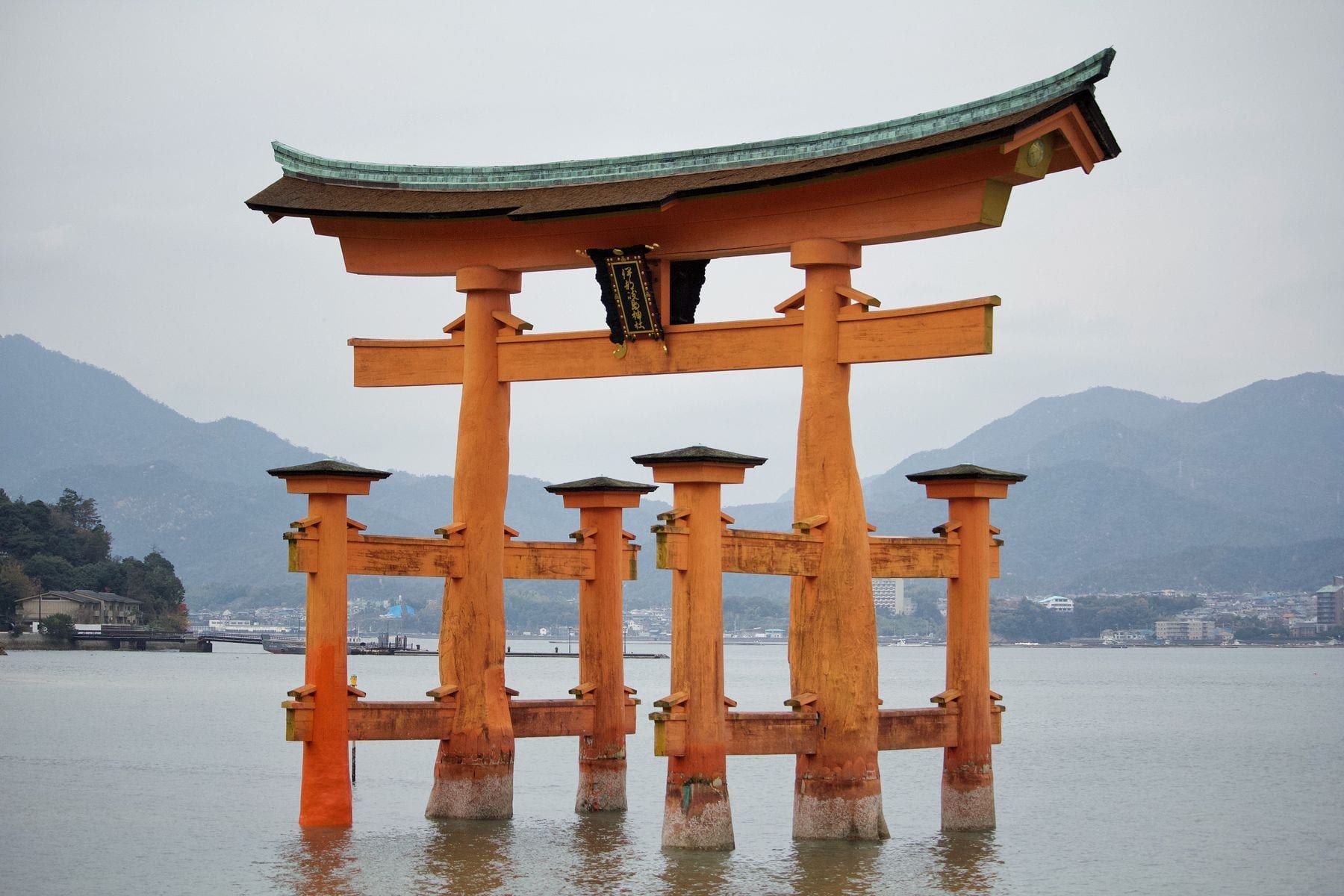
What a night on the shrine island really costs, when the torii stands in the water and when you can walk out to it, and why the island is a different place after 5 pm.
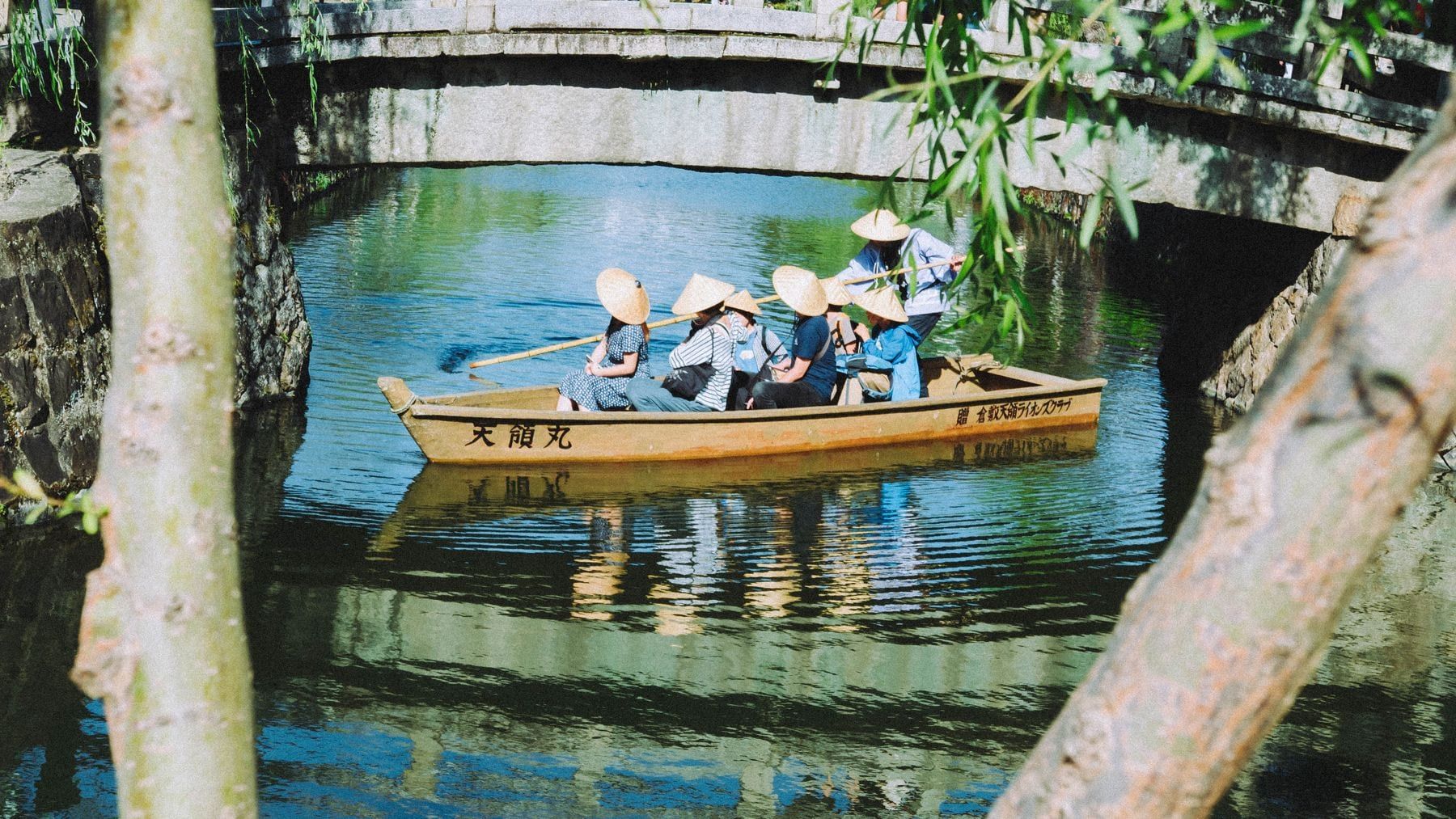
What two to three days among canal houses, jeans workshops and one of Japan's three finest gardens cost, and why Okayama is the best hub for the Inland Sea.
What three days in Shikoku's largest city really cost, how to bathe at Dogo Onsen Honkan without queuing, and why Matsuyama is the best way into Shikoku.