Toyoko Inn Nagoya-eki Sakuradori-guchi Shinkan
Classic business hotel five minutes on foot from the Shinkansen exit. Small, clean rooms, simple breakfast included. Ideal for one or two nights before moving on to Takayama.
Japan · Chubu · Travel guide
What a few days in Japan's industrial capital really cost, why the food here is more idiosyncratic than in Tokyo, and how to use Nagoya as a base for Takayama and Ise.
Photo: Heather Mallon / Pexels
Adjust the values to your trip: the calculator updates live (EUR, converted from CHF estimates).
Estimates for orientation, not booking prices. Flights and hotels vary strongly by season: current prices are behind the links below.
Money & payment: You pay in yen (JPY). 1,000 yen is roughly CHF 6 or EUR 6.50. Cards work in cities and hotels; small restaurants, temples and rural stations often want cash. An IC card (Suica or ICOCA) on your phone pays for trains, buses and convenience stores. Flight time: 12 to 14 hours, usually with one stop.
Nine options in three price ranges, each among the best-rated on Booking.com.
Budget
Classic business hotel five minutes on foot from the Shinkansen exit. Small, clean rooms, simple breakfast included. Ideal for one or two nights before moving on to Takayama.
Business hotel with a rooftop onsen bath and free ramen late in the evening, a speciality of the chain. Located right in the Sakae nightlife district. Rooms are tight, beds are good.
Design capsule hotel right by the station, separate floors for women and men, very clean. For solo travellers who just want to sleep and catch an early train. No double rooms.
Mid-range
On the upper floors of a skyscraper by the station, with a large bath and city view on the 18th floor. Quiet, tasteful rooms and a good breakfast buffet with Nagoya dishes.
Younger brand of the Okura Nikko group, opened in 2020, with a coffee roastery in the lobby and bright rooms. Ten minutes on foot south of the station, but quiet and fairly priced.
Between Sakae and Fushimi, within walking distance of restaurants and the castle. Larger rooms than a business hotel, reliable standard. A good choice if you want to go out in the evening.
Luxury
Directly above the station in the JR Central Towers, rooms from the 20th floor up with views over the city. From your room to the Shinkansen in five minutes without stepping outside. Classic rather than modern.
Large European-style hotel on the edge of Sakae, in a quiet spot by the park, with several restaurants. Spacious rooms, an older but well-kept building. For travellers who would rather stay in the nightlife district than at the station.
The city's oldest grand hotel, opened in 1936 and completely renovated in 2023. Between the station and Sakae, close to the castle and art museums. Generous rooms, service with a sense of tradition, breakfast of kaiseki quality.
If you book through these links we earn a small commission, at no extra cost to you.
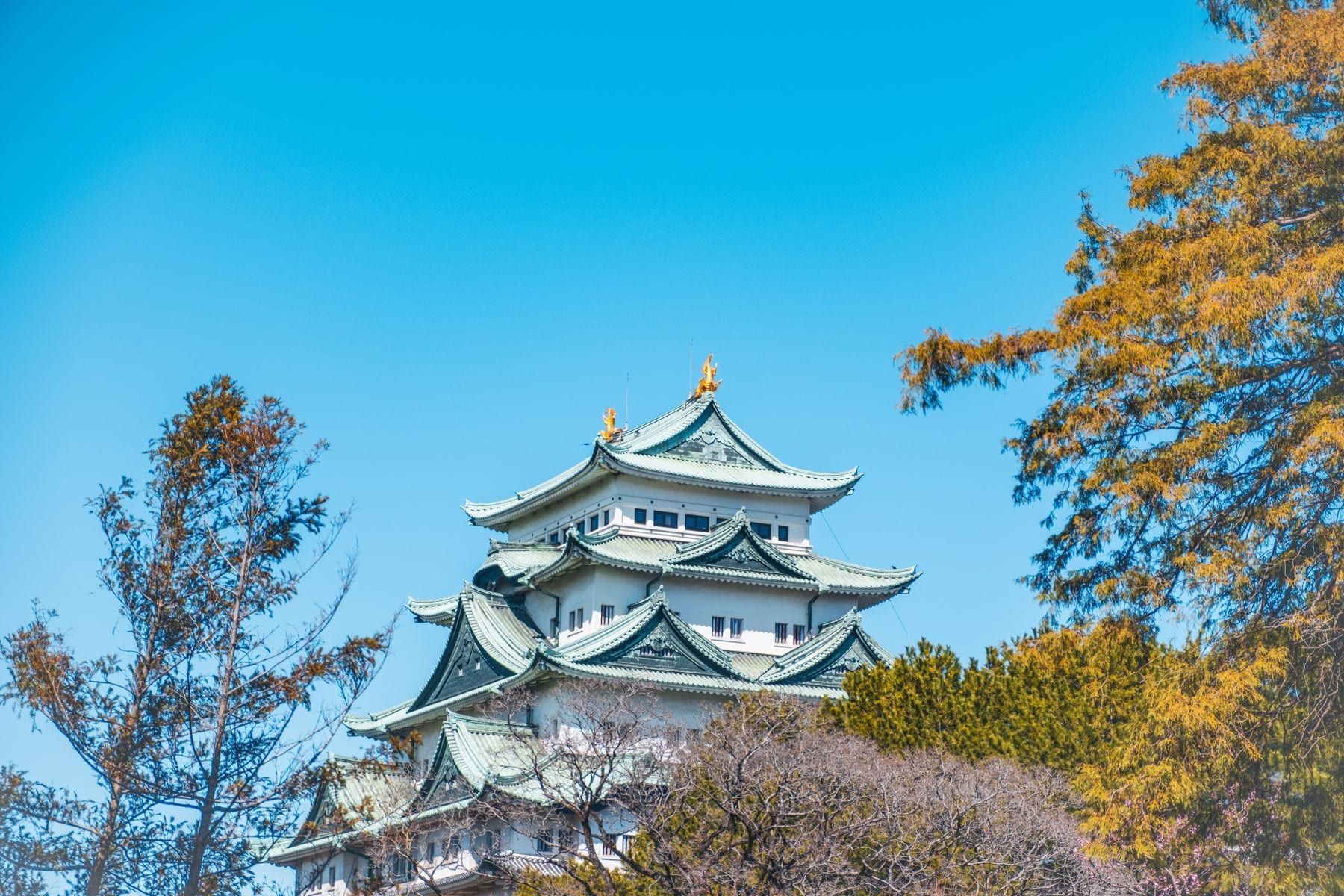
The main keep is closed, but the Honmaru Palace, reconstructed in 2018 with gold walls and tiger paintings, is the real reason to visit. Admission CHF 3 (about EUR 3), with performances by the 'samurai troupe' in the grounds at weekends.
From loom to hybrid car in an old brick factory, with working machines and robot demonstrations. Admission CHF 3 (about EUR 3), allow 2 to 3 hours. Closed on Mondays.
Japan's second most important Shinto shrine, set in an ancient camphor forest, free admission. Almost deserted before nine in the morning. Afterwards, kishimen noodles in the shrine grounds for CHF 5 (about EUR 5).
Nagoya's liveliest district: covered lanes with second-hand fashion, retro games, street food and coffee houses. Flea market at the temple on the 18th and 28th of the month. Free, unless you buy something.
Swords, armour and the Genji scroll from the collection of the Owari Tokugawa, admission CHF 10 (about EUR 11) including the garden. Autumn leaves by the pond in November. Few tourists.
JR Central's railway museum at the port, with generations of Shinkansen and the maglev prototype. Admission CHF 7 (about EUR 7), Shinkansen simulator by lottery. Half a day for children and railway fans.
Japan's oldest original surviving castle above the Kiso river, 30 minutes from Nagoya. Admission CHF 3.50 (about EUR 3.75), plus the Jo-an teahouse in the Urakuen garden. Cormorant fishing in the evenings from June to October.
Japan's holiest shrine, 1 hour 25 minutes away by Kintetsu train. Inner shrine, cedar forest, the Okage Yokocho lane with Ise udon. Leave early, the Naiku is crowded from 10 am.
Make miso katsu, tebasaki and tenmusu yourself, in small groups in local homes. Around CHF 60 to 80 (about EUR 64 to 86) per person including the meal, 3 hours. Vegetarian versions on request.
If you book through these links we earn a small commission, at no extra cost to you.
The local cuisine is called Nagoya meshi, and it is the opposite of refined Kyoto cooking: dark Hatcho miso from Okazaki, lots of sauce, hearty portions. If you associate Japan only with sushi and delicate broth, you are in for a surprise. On top of that there is a coffee house culture you will not find anywhere else in the country.
Grilled eel in tare sauce on rice, eaten in three rounds: plain, with wasabi and spring onions, and finally as a soup with dashi. Smoky, sweet, crisp at the edges. CHF 25 to 35 (about EUR 27 to 37).
Tip:At Horaiken put your name on the list from 10.30 am; the wait is one to two hours.
Breaded pork cutlet smothered in a thick, dark sauce made from red Hatcho miso. Stronger and sweeter than ordinary tonkatsu. CHF 10 to 15 (about EUR 11 to 16) as a set with rice and cabbage.
Tip:You will spot the sumo pig mascot at the entrance straight away; the station branch has the shortest queue.
Crispy deep-fried chicken wings with pepper and a sweet and salty glaze, Nagoya's food for drinking beer. Five pieces cost CHF 3 to 4 (about EUR 3 to 4). Eat with your fingers, bones on the plate.
Tip:Yamachan is more peppery, Furaibo milder; ask about the trick for pulling the wing off the bone in one go.
Flat, wide wheat noodles in a clear dashi broth with bonito flakes, spinach and fish cake. Simple and quick, CHF 5 to 7 (about EUR 5 to 7). The city's everyday dish.
Tip:On the platform for CHF 4 before your train leaves, just like the commuters do.
Small rice balls with a deep-fried prawn, wrapped in nori. Handy, crisp, lightly salted. Five in a pack for CHF 5 (about EUR 5), ideal for the train journey.
Tip:Senju makes nothing but tenmusu and is often sold out before 3 pm.
Firm udon noodles cooked in a clay pot in dark miso broth, with egg, chicken and leek. Arrives bubbling at the table, and the lid doubles as your plate. CHF 9 to 13 (about EUR 10 to 14).
Tip:The noodles are deliberately very firm; that is not a cooking mistake.
Not a dish but a ritual: until 11 am, with a coffee for CHF 3 to 4 (about EUR 3 to 4) you get thick buttered toast, a hard-boiled egg and often ogura toast with sweet red bean paste for free.
Tip:Order ogura toast: sweet bean paste on buttered toast sounds odd and tastes very good.
Beef tendon and offal, braised for hours in Hatcho miso and mirin until everything is soft and dark. With beer or sake, CHF 4 to 6 (about EUR 4 to 6) a bowl. Not for squeamish eaters.
Tip:Order it on rice (dote meshi) and it becomes a full meal.
Through markets and eateries with a guide, tastings included.
If you book through these links we earn a small commission, at no extra cost to you.
Nagoya owes its existence to a calculated show of power: in 1610 Tokugawa Ieyasu, founder of the shogunate, had the castle built to control the road between Edo and Kyoto. The Owari branch of the Tokugawa family resided here for 260 years, and the two golden shachihoko on the roof of the main keep, mythical creatures that are half tiger and half fish, became the city's emblem. Japan's three great unifiers, Oda Nobunaga, Toyotomi Hideyoshi and Tokugawa Ieyasu, all came from this area, something Nagoya is proud of to this day. In the 19th century an industry grew out of weaving looms: Sakichi Toyoda invented an automatic loom in 1896, and from 1937 his son Kiichiro turned the business into the carmaker Toyota, which is based in Toyota City east of Nagoya. In May 1945 American bombs destroyed the castle and large parts of the city. The main keep was rebuilt in concrete in 1959, while the Honmaru Palace next to it was reconstructed in traditional timber from 2009 and opened in 2018. Today Nagoya, with 2.3 million inhabitants, is Japan's fourth-largest city, home to Toyota, Mitsubishi Heavy Industries and Brother, and to Atsuta Shrine, where legend says one of the three imperial regalia, the sword Kusanagi, is kept. Most tourists just pass through on the Shinkansen. That is exactly what makes the city pleasant.

Nagoya is on the Tokaido line, the busiest Shinkansen corridor. From Tokyo the Nozomi gets you here in 1 hour 40 minutes, from Kyoto in 35 minutes. A single ticket from Tokyo costs around CHF 68 (about EUR 73) with a reserved seat, from Kyoto CHF 35. Since the 2023 price rise (7 days around CHF 310) the Japan Rail Pass only pays off if you really travel a lot. Work out single tickets instead. From Chubu Centrair airport (NGO) the Meitetsu express train µSKY takes you to Nagoya station in 28 minutes for around CHF 8. There are no direct flights from Zurich; you fly with one change, for example via Helsinki, Istanbul or Doha. In the city two subway lines are enough, the Higashiyama line and the Meijo loop line. A ride costs CHF 1.30 to 2.00. Load an IC card onto your phone (Suica works here too, the local one is called manaca) and use it for the subway, buses and konbini. The Me-guru tourist bus covers the castle, the Tokugawa Art Museum and the Toyota museum on a CHF 3 day ticket.
Nagoya is not a ryokan city. Here you stay in a business hotel, and that is perfectly fine. Two areas make sense. Around Nagoya station (Meieki) you are closest to the Shinkansen and the airport train, the JR Central Towers and Midland Square skyscrapers have restaurants with a view, and it is quieter in the evening. Sakae, two subway stops east, is the nightlife and shopping district with the TV tower, Oasis 21 and most of the restaurants. For two nights I would pick Meieki, for longer stays Sakae. A double room in a business hotel (Toyoko Inn, APA, Dormy Inn) costs CHF 60 to 95 (about EUR 64 to 102), mid-range such as Mitsui Garden or Nikko Style CHF 110 to 160, luxury at the Marriott Associa directly above the station from CHF 250. Nagoya is usually 20 to 30 percent cheaper than Tokyo for the same chain. Prices only climb during big events (the sumo tournament in July, motorsport events at Suzuka).
Nagoya is cheap, but there are three places where money disappears. First: the castle's main keep has been closed since 2018 for earthquake safety, and you pay CHF 3 (about EUR 3) admission for the grounds and the Honmaru Palace. Do not let anyone sell you a 'castle climb', there is none. Second: taxis. The city is spread out, and the ride from the station to the Toyota Automobile Museum in Nagakute costs CHF 40, by Linimo train CHF 5. Third: Legoland Japan at the port costs around CHF 45 admission per adult and, for Swiss families who know Gunzburg, is no reason for the detour. What is genuinely cheap: coffee. Until about 11 am Nagoya's cafes serve 'morning service': with a coffee for CHF 3 to 4 you get toast, a boiled egg and sometimes a salad for free. The Komeda chain comes from here, but the small family cafes in Osu and Imaike do it better. At CHF 25 to 35 a hitsumabushi meal is the most expensive item of the day; plan it as lunch, in the evening it costs more.
Nagoya is notorious for its summers. July and August bring 35 degrees at 80 percent humidity, and the city sits on a plain with no sea breeze. You can only bear it in air-conditioned underworlds like the shopping arcade beneath the station. The best time is late October to early December: dry air, 15 to 20 degrees, autumn leaves in the Tokugawa Garden and in the Korankei valley an hour outside the city, one of the most famous momiji spots in Japan. Cherry blossom in Nagoya usually falls between late March and early April; the castle grounds and Tsuruma Park are full, but less overrun than Kyoto. Avoid Golden Week (29 April to 5 May) and Obon (mid-August), when the Shinkansen is booked out and hotels cost twice as much. The Nagoya sumo tournament takes place in July, tickets from CHF 25 (about EUR 27) for the back rows; if you can handle the heat, it is a great experience. October also brings the Nagoya Festival with its parade of the three unifiers.
The Osu district around Osu Kannon temple is the closest thing Nagoya has to an old town: covered shopping streets with second-hand shops, small electronics dealers, takoyaki stalls and old coffee houses. On the 18th and 28th of every month there is a flea market in the temple grounds. From there it is 15 minutes on the Meijo line to Atsuta Shrine, the second most important Shinto shrine in the country after Ise. The forest of thousand-year-old camphor trees is free to enter, the treasure hall costs CHF 3 (about EUR 3). In the shrine grounds is Miya Kishimen, where you eat the flat kishimen noodles for CHF 5. My real tip is the Tokugawa Art Museum in the east of the city, admission CHF 10: armour, swords, tea utensils and fragments of the oldest surviving illustrated scroll of the Tale of Genji from the 12th century, all from the collection of the Owari Tokugawa. Next to it is the Tokugawa Garden, a strolling garden with a pond and autumn leaves in November. Hardly any Western tourists find their way here.
Two day trips are particularly worthwhile. Inuyama, 30 minutes north by Meitetsu (CHF 4, about EUR 4), has one of Japan's twelve original surviving castles; its main keep from 1537 is considered the oldest in the country. Admission CHF 3.50, view over the Kiso river included. Add the Urakuen garden with the Jo-an teahouse, a National Treasure, and the little old-town street with dango stalls. From June to October you can watch cormorant fishing on the Kiso in the evening, a boat seat costs around CHF 20. The second trip goes to Ise in Mie prefecture: the Kintetsu express gets you there in 1 hour 25 minutes for around CHF 17. Ise Jingu is the holiest shrine in Japan; the inner shrine, Naiku, is completely rebuilt every 20 years, most recently in 2013 and next in 2033. The Okage Yokocho lane in front of it is touristy, but the Ise udon with its dark sauce and the akafuku mochi are the real thing. Allow the whole day for Ise and start early.
For a first trip to Japan lasting ten days: pass through and give the time to Kyoto. For anyone coming for the second time or heading towards Takayama, Ise or the Kiso Valley: plan two nights. Food, the Toyota museum, Atsuta Shrine and Osu fill two days without rushing, and hotels are noticeably cheaper than in the big tourist cities.
There are no direct flights from Switzerland. The usual route involves a change in Helsinki (Finnair), Istanbul (Turkish Airlines) or Doha (Qatar Airways), total travel time 14 to 17 hours, price in the low season from CHF 950 to 1,050 (about EUR 1,017 to 1,124). Alternatively fly to Tokyo and continue by Shinkansen: that adds 1 hour 40 minutes and around CHF 68, but the flight is often cheaper.
Grilled eel in sweet soy sauce on rice, eaten in three rounds: plain, then with spring onions and wasabi, then as a rice soup with dashi poured over it. The best-known places are Atsuta Horaiken near Atsuta Shrine (waiting time 1 to 2 hours) and Maruya Honten with branches in the station. Expect CHF 25 to 35 (about EUR 27 to 37) per portion; eel has become expensive in Japan.
Yes, especially the Toyota Commemorative Museum of Industry and Technology near Sako station. Set in an old factory hall, it shows how looms turned into cars, with working machines and demonstrations. Admission CHF 3 (about EUR 3). The actual automobile museum with classic cars is out in Nagakute and is more for car fans, admission CHF 7.
Swiss, German and Austrian citizens do not need a visa for stays of up to 90 days, just a valid passport. Since 2025 online entry registration via Visit Japan Web has been recommended; it saves time at the airport. You pay in yen. Cards work in hotels, department stores and most restaurants, while small eateries and temples want cash. You can withdraw money at any 7-Eleven ATM.
The best. The Limited Express Hida runs from Nagoya through the Hida gorge to Takayama in 2 hours 30 minutes, single fare around CHF 36 (about EUR 39), one of the most beautiful train routes in Japan. To Shirakawa-go the Gifu bus goes direct from Nagoya in just under 3 hours for CHF 25, reservation required. From Tokyo each journey would take you twice as long.
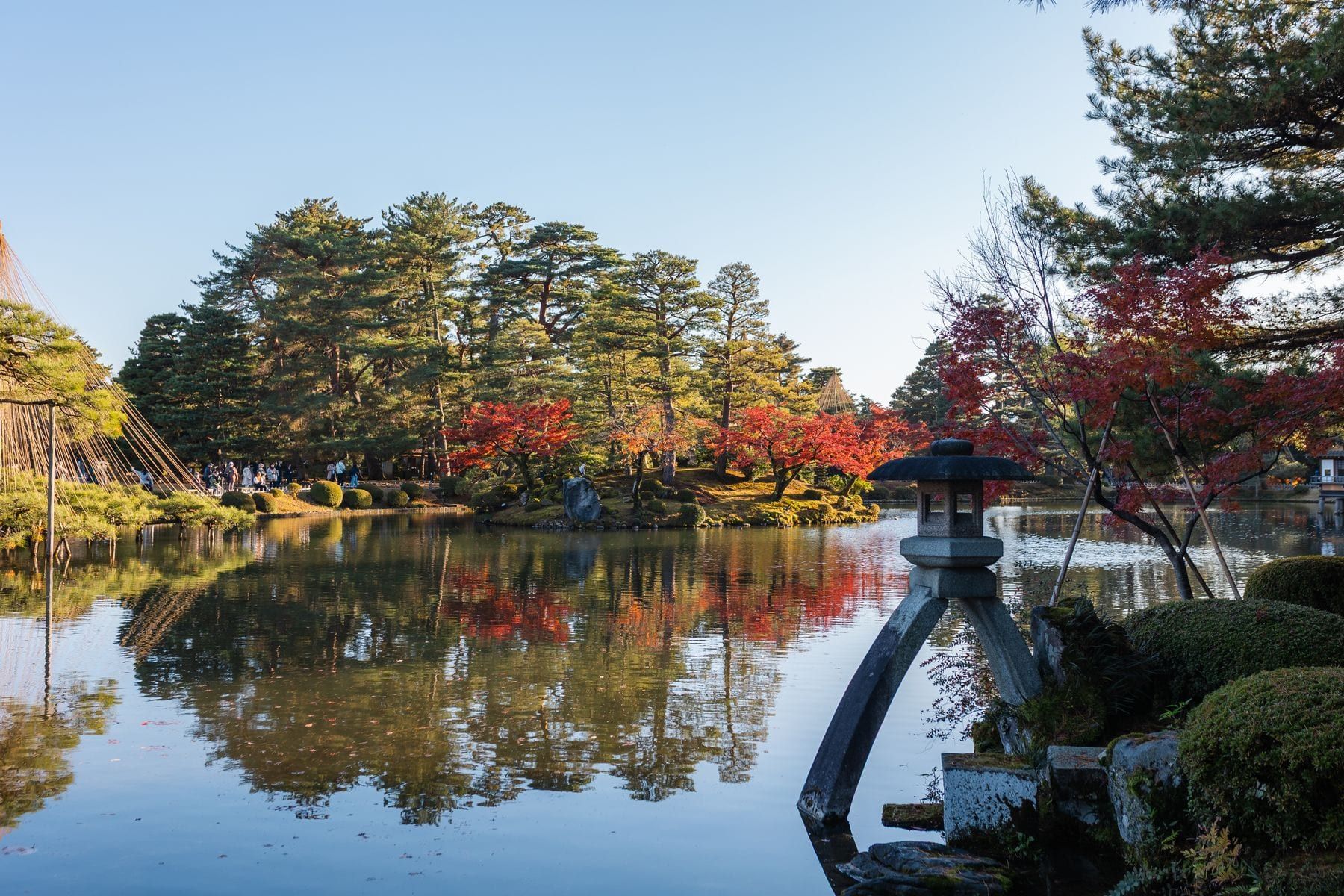
What a few days in the samurai and gold leaf city on the Sea of Japan really cost, where to eat the best fish in the country and how to see Kenroku-en without the coach groups.
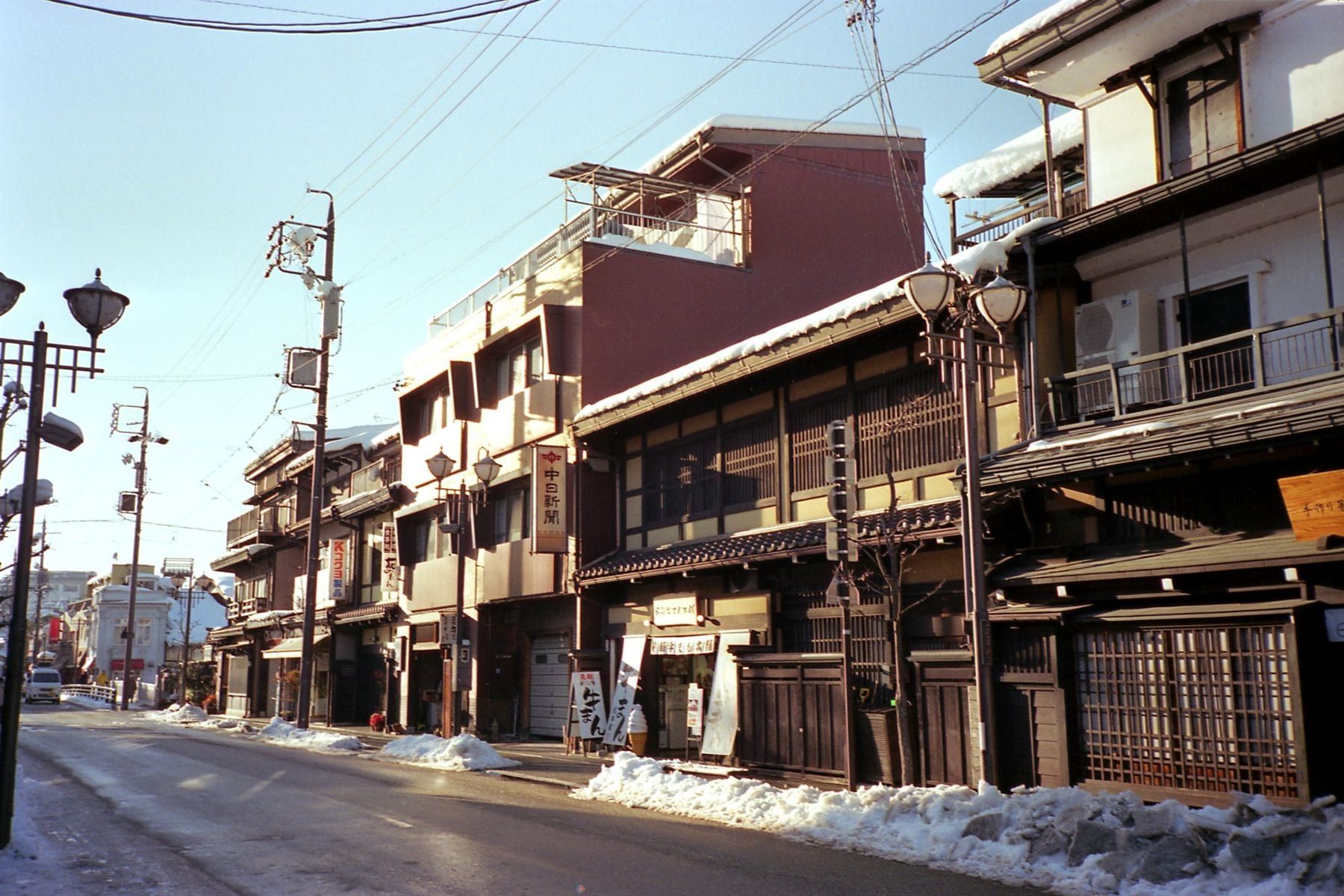
What a few days in the timber town of the Japanese Alps really cost, when the old town is empty, where Hida beef stays affordable and how to continue from here to Shirakawa-go.
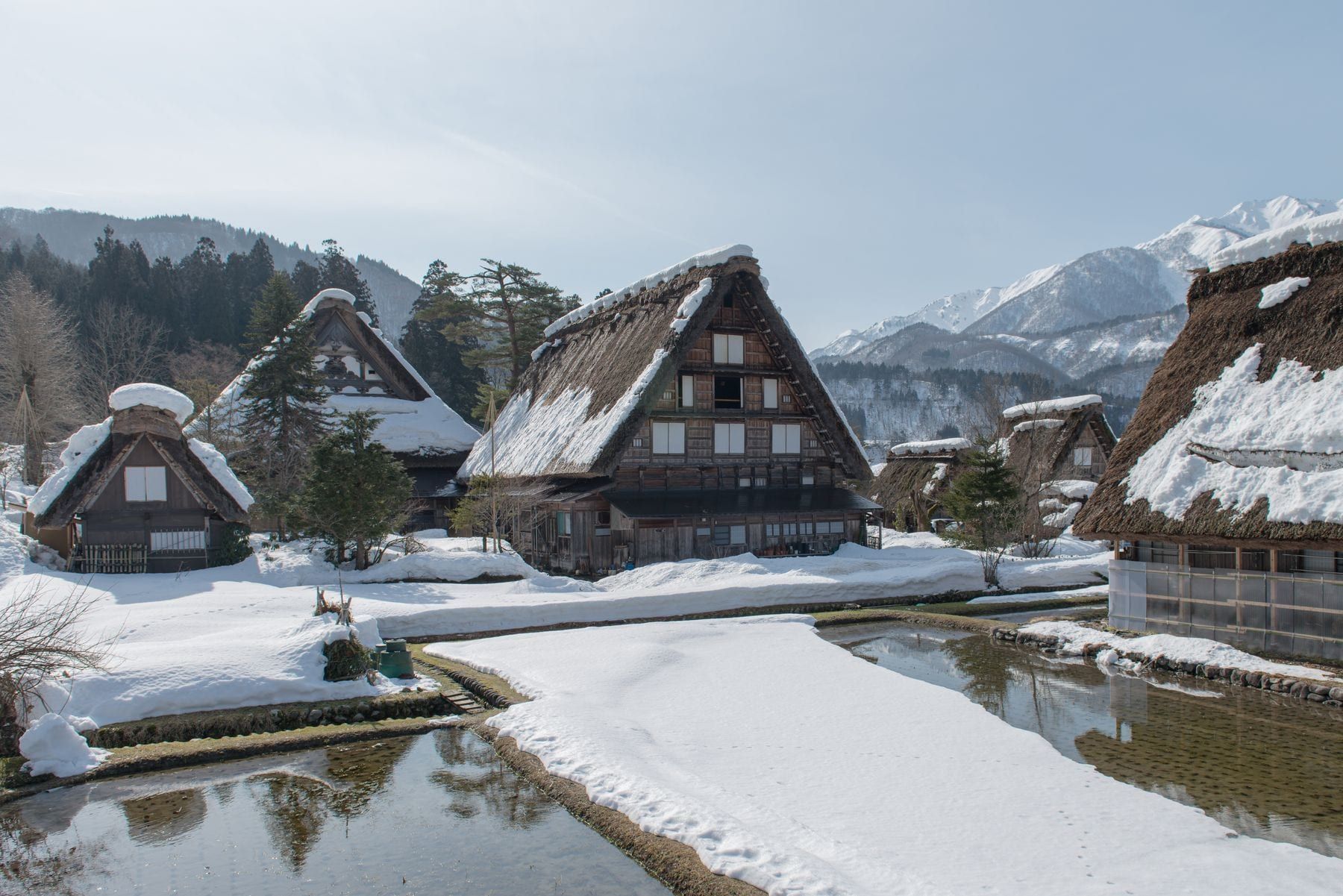
What the village of steep thatched roofs really costs, why a night in a gassho house makes all the difference, how to book the buses from Takayama and Kanazawa properly and when the winter illumination takes place.
What a few days in the city with the black castle really cost, how to manage Kamikochi as a day trip, where the soba is best and whether the Alpine Route is worth it.
What two days at the foot of Mount Fuji really cost, why you need to stay a night to see the mountain, how the highway bus from Shinjuku works and what a summer climb involves.