Dormy Inn Kanazawa
Business hotel three minutes from the station with a rooftop onsen bath and free late-night ramen. Small rooms, good beds, reliable value. Handy for arriving by Shinkansen.
from CHF 70 / night (about EUR 75) View →
Japan · Chubu · Travel guide
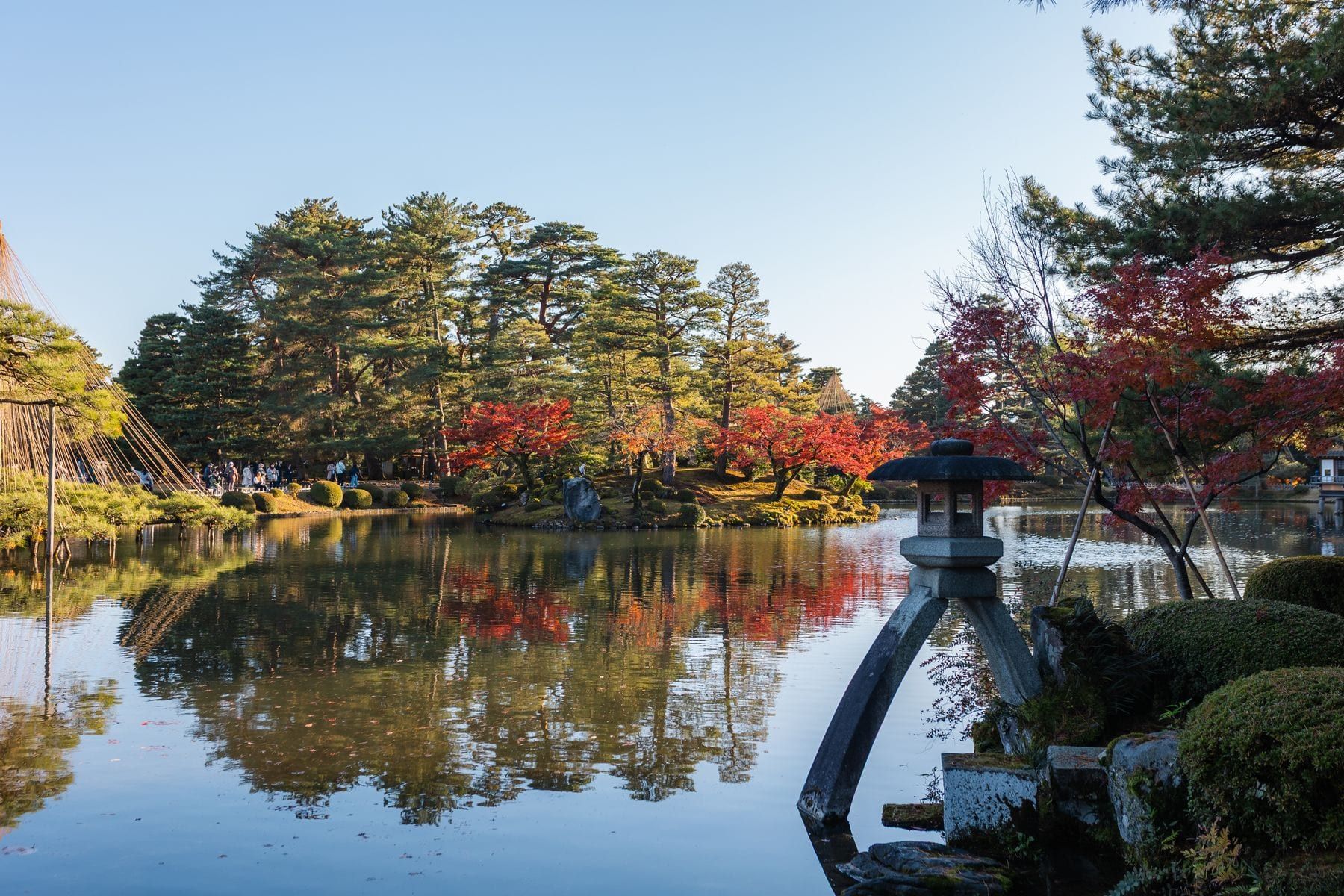
What a few days in the samurai and gold leaf city on the Sea of Japan really cost, where to eat the best fish in the country and how to see Kenroku-en without the coach groups.
Photo: Lorenzo Castellino / Pexels
Adjust the values to your trip: the calculator updates live (EUR, converted from CHF estimates).
Estimates for orientation, not booking prices. Flights and hotels vary strongly by season: current prices are behind the links below.
Money & payment: You pay in yen (JPY). 1,000 yen is roughly CHF 6 or EUR 6.50. Cards work in cities and hotels; small restaurants, temples and rural stations often want cash. An IC card (Suica or ICOCA) on your phone pays for trains, buses and convenience stores. Flight time: 12 to 14 hours, usually with one stop.
Nine options in three price ranges, each among the best-rated on Booking.com.
Budget
Business hotel three minutes from the station with a rooftop onsen bath and free late-night ramen. Small rooms, good beds, reliable value. Handy for arriving by Shinkansen.
The cheapest place in the best location: ten minutes on foot to Kenroku-en, Nagamachi and the market. Simple rooms, breakfast included. If you only sleep there, you need nothing more.
Small hotel run by young people in a renovated old building with a cafe on the ground floor, between Omicho market and Kenroku-en. Plain rooms, personal atmosphere.
Mid-range
Two minutes from the station, large bath on the top floor, quiet rooms with more space than a business hotel. Breakfast with local fish. A good choice if you are only staying two nights.
Family-run city ryokan since 1916, two minutes from Omicho market. Tatami rooms, shared bath, friendly hosts, kaiseki dinner on request. The real ryokan feeling without the luxury price.
The tower right by the station, rooms from the 17th floor up with views across the city to the sea. Classic city hotel with several restaurants, often cheaper than its standard would suggest.
Luxury
Modern design hotel from 2020 right by the station, with art from Kanazawa in the rooms and a restaurant overlooking the Tsuzumi gate. For anyone who wants comfort without tatami.
Large hotel in the centre of Korinbo, renovated in 2022, five minutes on foot to Kenroku-en and Nagamachi. Spacious rooms, good breakfast, the best location among the bigger hotels.
Ryokan since 1867 with only five rooms, one of the most respected kaiseki houses in the city. Private service, dinner and breakfast in your room, prices per person. For that one special evening.
If you book through these links we earn a small commission, at no extra cost to you.
One of Japan's three great landscape gardens, 11 hectares of ponds, stone lanterns and the two-legged Kotoji lantern. Admission CHF 2 (about EUR 2). At 7 am (summer) or 8 am (winter) you are almost alone.
Around 170 stalls with crab, oysters and yellowtail since 1721. Kaisendon in the market restaurants CHF 20 to 35 (about EUR 21 to 37), grilled scallops at the stalls for CHF 4. Come before 10 am, many close in the afternoon.
The largest teahouse district, with wooden lattice facades from the Edo period. Shima (CHF 3, about EUR 3) shows what geiko evenings looked like; Kaikaro next door has a tea room with gold tatami. Come before 9 am or after 5 pm.
Circular glass building by SANAA with Leandro Erlich's 'Swimming Pool', where you seem to be standing under water. The outdoor area and some parts are free, special exhibitions CHF 8 to 12 (about EUR 9 to 13). Closed on Mondays.
At Hakuza or Sakuda you gild a lacquer box, chopsticks or a mirror yourself, 30 to 60 minutes, CHF 10 to 25 (about EUR 11 to 27). Along the way you learn why Kanazawa produces 99 percent of Japanese gold leaf.
Clay walls, canals and the restored house of the Nomura family with a small garden, admission CHF 4 (about EUR 4). Afterwards matcha for CHF 2 in the tea room on the first floor. In the evening, the lanes without the groups.
Temple from 1643 with hidden staircases, trapdoors and 23 rooms on what seem to be two floors, built as a refuge for the Maeda. Only with a reservation by phone or through your hotel, CHF 7 (about EUR 7), tour in Japanese with an English booklet.
Two crafts from the Maeda era to try yourself: dye a handkerchief in Yuzen style or paint a Kutani bowl, CHF 15 to 30 (about EUR 16 to 32), 1 to 2 hours. The piece is fired and sent on to you.
Head temple of Soto Zen in a cedar forest, founded in 1244, with more than 100 monks in training. Shinkansen to Fukui 20 minutes, bus 30 minutes, admission CHF 4 (about EUR 4). Combines well with the dinosaur museum.
If you book through these links we earn a small commission, at no extra cost to you.
Kanazawa has the richest cuisine in the region: fish from the cold Sea of Japan, Kaga vegetables with protected origin, 350-year-old confectioners rooted in the Maeda tea culture, and sake from the surrounding rice plains. The city has more sushi shops per head than Tokyo, and the cheap ones are often the best.
A bowl of rice topped with raw seasonal fish: prawns, salmon roe, sea urchin, yellowtail, and crab meat in winter. CHF 15 to 35 (about EUR 16 to 37) depending on the topping. It does not get fresher; the fish comes from the stall next door.
Tip:The restaurants with a queue at 11 am are no better than the ones without one at 9 am.
Blackthroat seaperch, red-scaled, rich and tender, the luxury catch of the coast. Grilled with salt or as sushi. One piece of nigiri CHF 5 to 8 (about EUR 5 to 9), the whole grilled fish CHF 25 to 40.
Tip:Order it aburi (briefly seared) and the fat comes through.
From November to March. The male kano-gani with a blue tag costs CHF 60 to 200 (about EUR 64 to 214); the small female kobako-gani with roe and innards costs CHF 10 to 15 and is the real treat for connoisseurs.
Tip:Kobako-gani is eaten cold; the orange roe on the shell is the best part.
The Kaga dish: duck dusted in flour, braised in dashi and soy with wheat gluten (sudare-fu), shiitake and Kaga vegetables, with a dab of wasabi. Velvety and mild. CHF 12 to 20 (about EUR 13 to 21) as a dish.
Tip:Considerably cheaper as a lunch set for CHF 15 to 20 than in the evening.
Fifteen protected vegetable varieties from the region, including the Gorojima kintoki sweet potato, Kaga lotus root and the thick Kaga cucumber. As tempura or nimono in every set menu for CHF 10 to 18 (about EUR 11 to 19).
Tip:Ask for renkon manju: a steamed lotus root dumpling in dashi, a local speciality.
Along with Kyoto and Matsue, Kanazawa counts as a capital of tea sweets. Nerikiri in seasonal shapes, fukusa mochi and rakugan made from powdered sugar. One piece CHF 2 to 4 (about EUR 2 to 4), with matcha in a teahouse CHF 5 to 8.
Tip:At Morihachi you can press rakugan yourself in the back workshop.
Vanilla soft-serve topped with a whole sheet of gold. Tastes like soft-serve, the gold has no flavour, but the photo is compulsory. CHF 6 to 8 (about EUR 6 to 9).
Tip:Eat it straight away if it is windy, or the gold blows off.
Thick, dark, almost black curry with tonkatsu, served on a stainless steel plate with a fork and shredded cabbage on the side. Hearty and sweet. CHF 7 to 10 (about EUR 7 to 11). The city's fast food.
Tip:The 'S' portion is enough; you will not manage an 'L' after the market.
Through markets and eateries with a guide, tastings included.
If you book through these links we earn a small commission, at no extra cost to you.
Kanazawa means 'marsh of gold', after a legend in which a farmer found flakes of gold while washing potatoes. The city really became rich from 1583, when Maeda Toshiie took over the castle. The Maeda ruled the province of Kaga for almost 300 years and, with a rice yield of one million koku, were the wealthiest daimyo clan in Japan after the Tokugawa themselves. Because they did not want to look dangerous to the shogun in Edo, they put their money into art rather than weapons: Kutani porcelain, Kaga Yuzen silk dyeing, lacquerware, Noh theatre, the tea ceremony and gold leaf production, which still accounts for 99 percent of Japan's output today. The Kenroku-en garden was begun in 1676 as the castle's outer garden and was extended by several lords over 170 years. In the Second World War Kanazawa was one of the few large cities spared from bombing, which is why the samurai houses in Nagamachi and the teahouse districts of Higashi and Nishi Chaya are still original. In 2004 the 21st Century Museum of Contemporary Art, with its circular glass building, added a counterpoint, and since 2015 the Hokuriku Shinkansen has brought Tokyo within 2 hours 30 minutes. Visitor numbers have multiplied since then, and in 2024 the line was extended to Tsuruga. The earthquake on the Noto Peninsula on 1 January 2024 only lightly affected the city itself, but hit the region to the north hard.
The Hokuriku Shinkansen Kagayaki runs direct from Tokyo to Kanazawa in 2 hours 30 minutes; a single ticket with a seat reservation costs around CHF 85 (about EUR 91). From Kyoto or Osaka you take the Thunderbird express to Tsuruga and change to the Shinkansen there, around 2 hours 15 minutes in total from Kyoto for CHF 45. So if you are planning the round trip Tokyo, Kanazawa, Kyoto, you travel in a triangle and do not need a rail pass; the regional Hokuriku Arch Pass (7 days, around CHF 150) only pays off on exactly this route with airport transfers. Komatsu airport (KMQ) is 40 minutes south-west by bus (CHF 8), but it has almost only domestic flights from Tokyo Haneda, so the train from Tokyo is usually the more direct option for you. There is no subway in the city. The Kanazawa Loop Bus runs past all the sights every 15 minutes, single ride CHF 1.30, day ticket CHF 5. Much of it is walkable anyway: from the station to Kenroku-en takes 25 minutes. Rental bikes (Machi-nori) are available at 70 stations, CHF 1 per half hour, and the city is flat.
The station with its wooden Tsuzumi-mon gate is spectacular, but it is an awkward place to stay: 25 minutes on foot to everything you want to see. You are better off in Korinbo or Katamachi, the centre between Kenroku-en, Nagamachi and Omicho market. From there everything is 10 to 15 minutes away, and in the evening the izakaya lanes are on your doorstep. Business hotels such as Dormy Inn, Daiwa Roynet or Mitsui Garden cost CHF 80 to 130 (about EUR 86 to 139) for a double room in Korinbo. If you want to sleep in a ryokan once in Japan, this is a good opportunity, and cheaper than Kyoto: a simple city ryokan such as Sumiyoshiya or Murataya costs CHF 90 to 140 without meals, while the kaiseki houses in Higashi Chaya or out in Yuwaku Onsen (30 minutes by bus) cost CHF 300 to 500 per person with dinner and breakfast. The tatami and futon room is not the point; the dinner is. Book early for cherry blossom and the autumn leaves in November, as the city has fewer beds than visitors.
Kanazawa is cheaper than Kyoto, but it has its tricks. The famous soft-serve ice cream with a whole square of gold leaf costs CHF 6 to 8 (about EUR 6 to 9) and tastes like soft-serve; the gold has no flavour. Once for the photo, no more. Fish is where it gets expensive: from November to March it is crab season, and the snow crab from the bay is sold as kano-gani with a blue tag for CHF 60 to 200 per crab at Omicho market. The female kobako-gani, at CHF 10 to 15, is the cheaper option and for many the better one. At the market itself the restaurants on the first floor charge CHF 20 to 35 for kaisendon (a seafood bowl); two streets away the same costs CHF 12 to 18. The souvenir shops in Higashi Chaya sell gold leaf cosmetics and gold sake for a lot of money; you will find genuine craft at Hakuza or Sakuda, where you can gild a little box yourself (CHF 10 to 25). Kenroku-en costs CHF 2 admission, the combined pass with the castle palace CHF 3, and you need nothing more. At CHF 5 to 8 for trips around town taxis are fair, but the Loop Bus does the job too.
Kanazawa is on the Sea of Japan and has weather like Bergen in Norway: it rains or snows on 180 days a year, and locals say you might forget your lunch but never your umbrella. Even so, the classic time to visit is winter: from November to March it is crab season, the fish is at its fattest, and in Kenroku-en the yukitsuri stand in place, the conical rope frames that protect the pines from the weight of snow. The garden is at its most beautiful under snow, and January and February often bring 20 to 40 centimetres. Cherry blossom falls in early to mid-April, when the garden is lit up in the evening and free for a week. Autumn leaves come late, mid to late November. Avoid Golden Week, when Kanazawa has been as busy as Kyoto since the Shinkansen arrived. Summer is humid and not very rewarding, with the exception of the Hyakumangoku Festival on the first weekend of June, when Maeda Toshiie's entry into the city in 1583 is re-enacted by a thousand people in costume. Kenroku-en opens at 7 am in summer and 8 am in winter: come at opening time and you will have it almost to yourself until 9.
Everyone goes to Higashi Chaya, the largest of the three teahouse districts with its dark wooden lattices and the gilded Shima teahouse (admission CHF 3, about EUR 3). It is beautiful, but from 10 am it is a photo backdrop. Nishi Chaya in the south-west is a single lane, smaller, with almost the same houses and a tenth of the visitors. Between the two lies Myoryuji, the so-called Ninja Temple, with 23 rooms, hidden staircases and trapdoors, only with a guided tour and reservation (CHF 7); it is worth it even without Japanese. My favourite place is the D.T. Suzuki Museum, dedicated to the Zen philosopher Daisetsu Suzuki, who brought Zen to the West: a concrete water courtyard by Taniguchi Yoshio where you simply sit and do nothing, admission CHF 2. And Nagamachi, the samurai district with its clay walls and canals, is best visited after 5 pm, when the Nomura House has closed and the tour groups have gone. Then all you hear is the water in the canals, and the lanes look like 1800.
Two directions suggest themselves. The Noto Peninsula to the north was the classic until the January 2024 earthquake; Wajima with its morning market was badly destroyed and is slowly rebuilding. As of 2026 a day trip to the west coast is possible and welcome, as tourism helps the region: Chirihama Beach, the only beach in Japan you can drive on, the Shiroyone Senmaida rice terraces and the Keta Taisha shrine. Without a rental car (CHF 60 to 80 per day, about EUR 64 to 86) it is hard work; coach tours from Kanazawa cost CHF 50 to 80. Check before you go which roads are open. The second option is more relaxed: Eiheiji, the head temple of the Soto Zen school, founded by Dogen in 1244, set in a cedar forest near Fukui. Take the Shinkansen to Fukui (20 minutes, CHF 20) and then a bus for another 30 minutes. More than 100 monks live and train there; as a visitor you walk in socks through the connected wooden corridors, admission CHF 4. If you like, book an overnight stay with zazen at 4 am in the affiliated Hakujukan (CHF 120 to 160). It combines well with Fukui's dinosaur museum, one of the best in the world.
Two full days for the city: Kenroku-en, the castle park, Higashi Chaya, Omicho market and Nagamachi on the first; Nishi Chaya, the Ninja Temple, the 21st Century Museum and the D.T. Suzuki Museum on the second. A third day for Noto or Eiheiji. As a stopover between Tokyo and Kyoto two nights are enough, and with left luggage at the station even one long day.
For your first trip to Japan, Kyoto: its density of World Heritage sites is unmatched. For everyone else, honestly: Kanazawa. You get a garden, teahouses, a samurai district and crafts within walking distance, you eat better and cheaper, and you never queue. Best of all, do both: Kanazawa lies between Tokyo and Kyoto and adds hardly any detour to a round trip.
The bay off the city is cold and rich in nutrients, and fish from the Sea of Japan is considered the best in Japan itself. In winter there is snow crab, buri (yellowtail) and nodoguro, the red-scaled blackthroat seaperch that counts as a luxury here. A sushi lunch at a conveyor belt place costs CHF 15 to 25 (about EUR 16 to 27) and is on a par with expensive Tokyo restaurants.
Kanazawa itself was back to normal within a few days; Kenroku-en, the museums and the station had no significant damage. The Noto Peninsula to the north was badly hit, and Wajima and Suzu are still rebuilding. The west coast and the south of Noto have been easily accessible again since 2025. Check the state of the roads shortly before you leave, and if you go, spend money locally.
Tokyo to Kanazawa costs around CHF 85 (about EUR 91) one way, Kyoto to Kanazawa with a change in Tsuruga around CHF 45. The Kagayaki is reserved seating only, so you need a seat, bookable online via SmartEX or Eki-net or at a ticket machine. The slower Hakutaka trains also have unreserved cars. At weekends and on public holidays book early from Tokyo; window seats on the mountain side (right) are in demand.
Yes, at the Shigure-tei teahouse in the garden for around CHF 5 (about EUR 5) including matcha and a sweet, without reservation and with a view of the garden. It is more formal at Gyokusen-an in the Gyokusen-in-maru garden right next to the castle, where matcha with wagashi costs CHF 5 to 8. For a full ceremony with explanations, book an hour at a teahouse in Higashi Chaya for CHF 25 to 40.
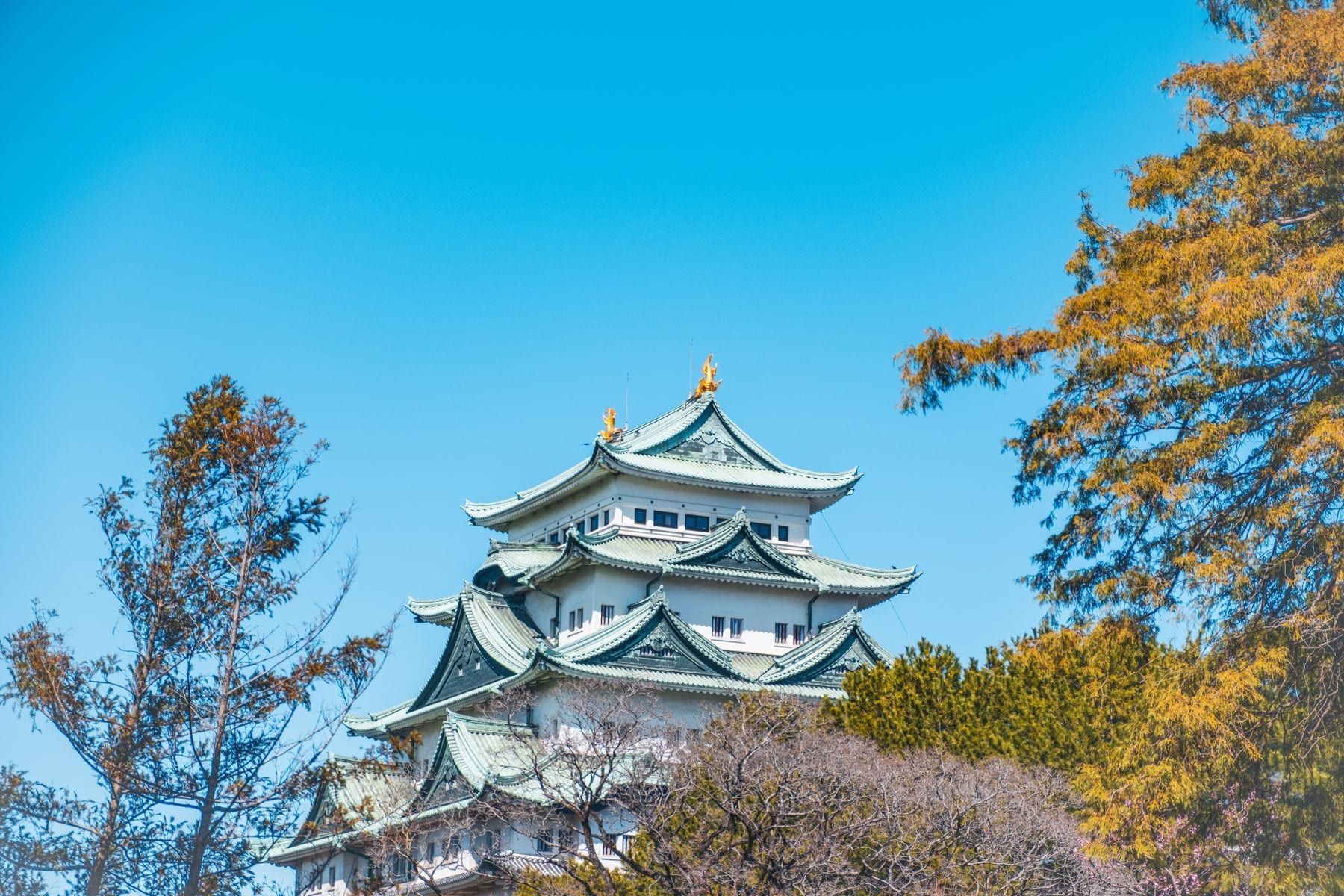
What a few days in Japan's industrial capital really cost, why the food here is more idiosyncratic than in Tokyo, and how to use Nagoya as a base for Takayama and Ise.
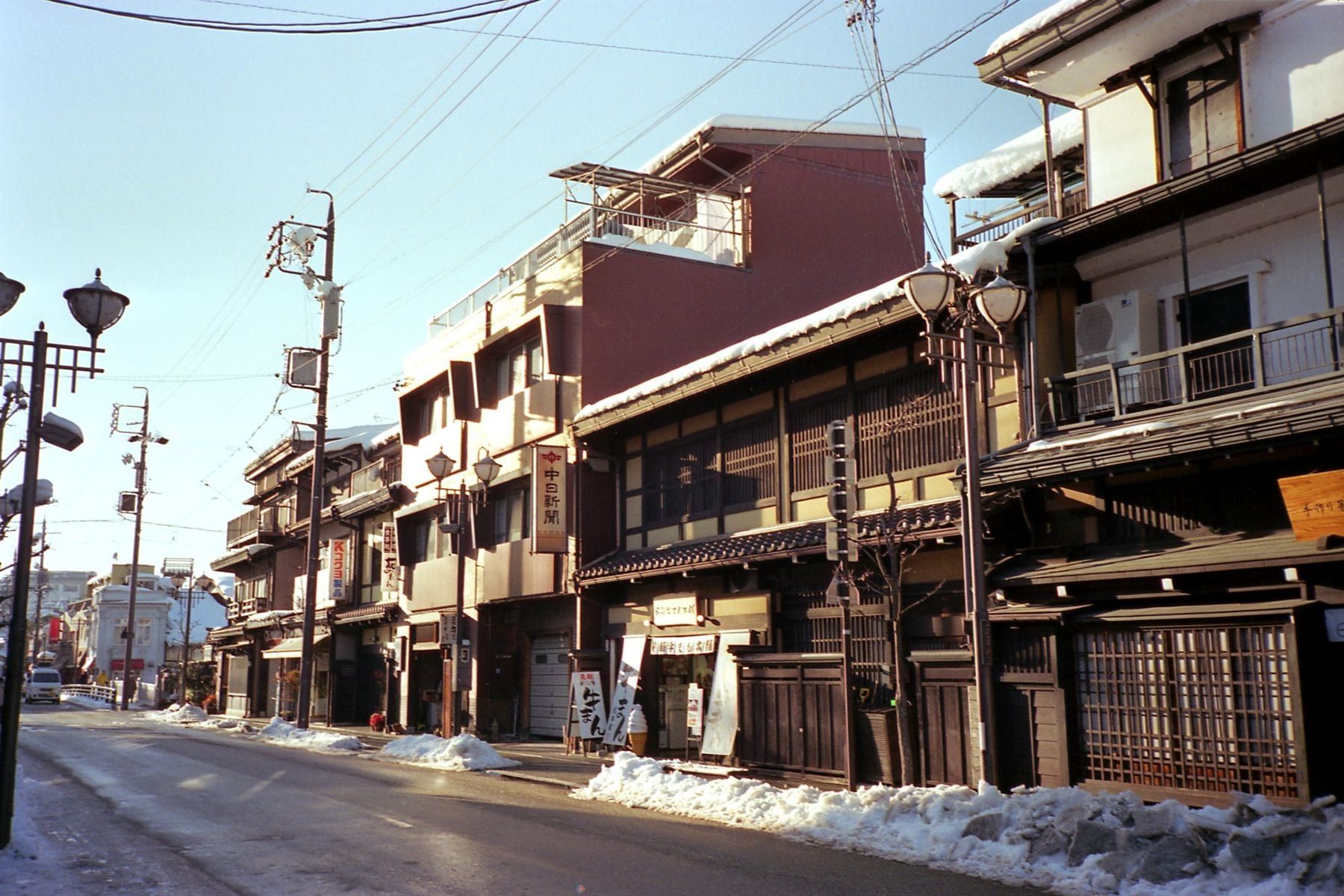
What a few days in the timber town of the Japanese Alps really cost, when the old town is empty, where Hida beef stays affordable and how to continue from here to Shirakawa-go.
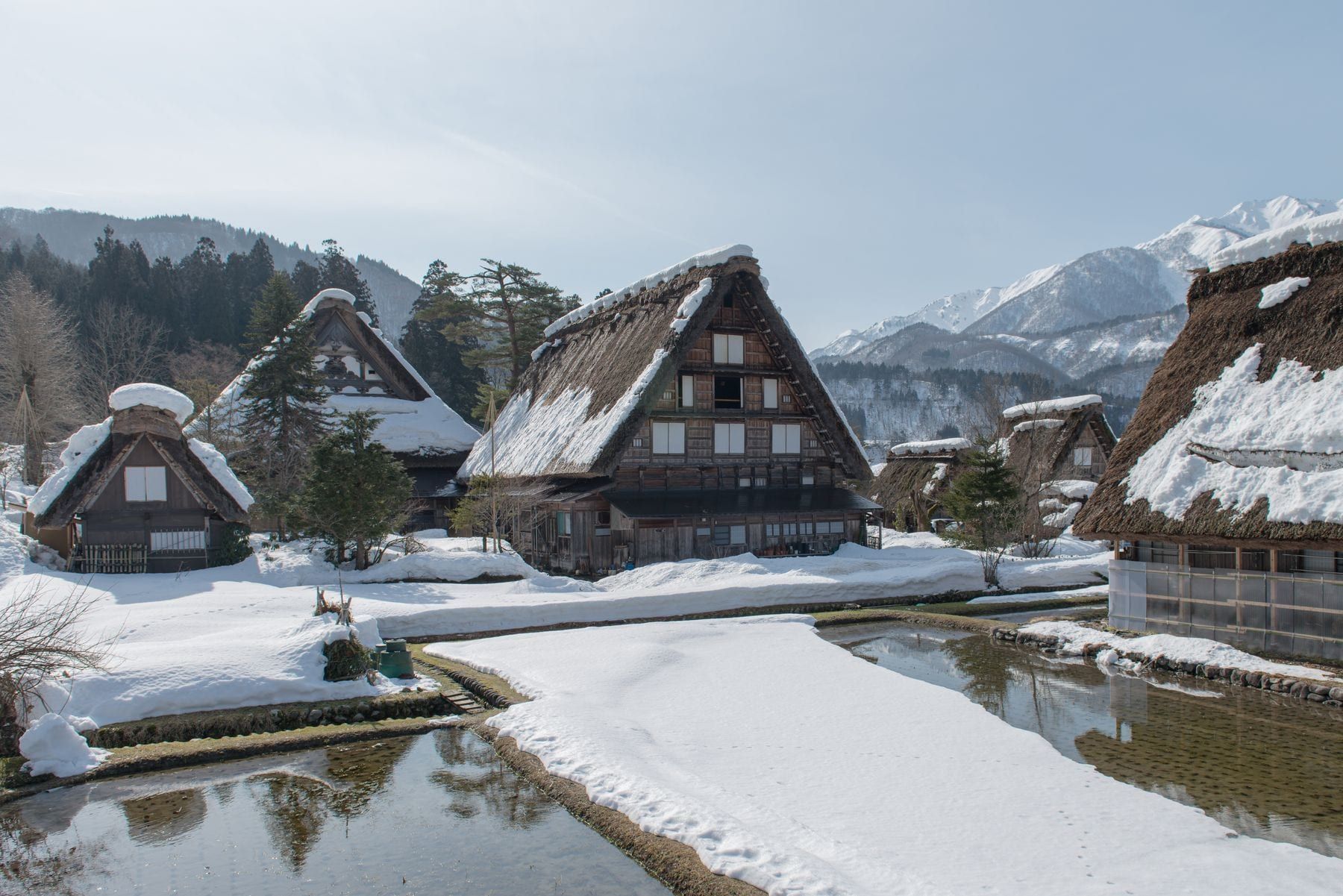
What the village of steep thatched roofs really costs, why a night in a gassho house makes all the difference, how to book the buses from Takayama and Kanazawa properly and when the winter illumination takes place.
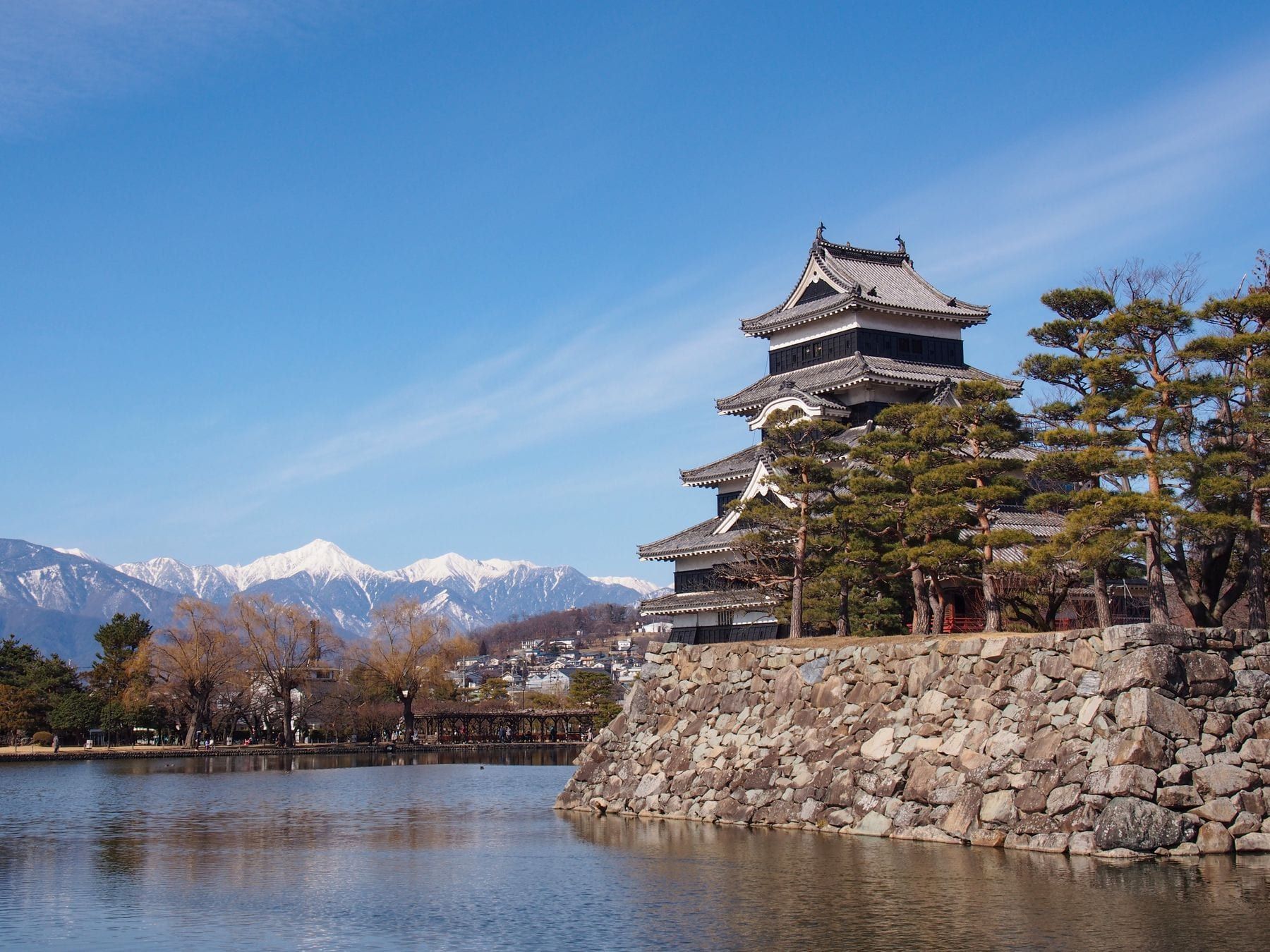
What a few days in the city with the black castle really cost, how to manage Kamikochi as a day trip, where the soba is best and whether the Alpine Route is worth it.
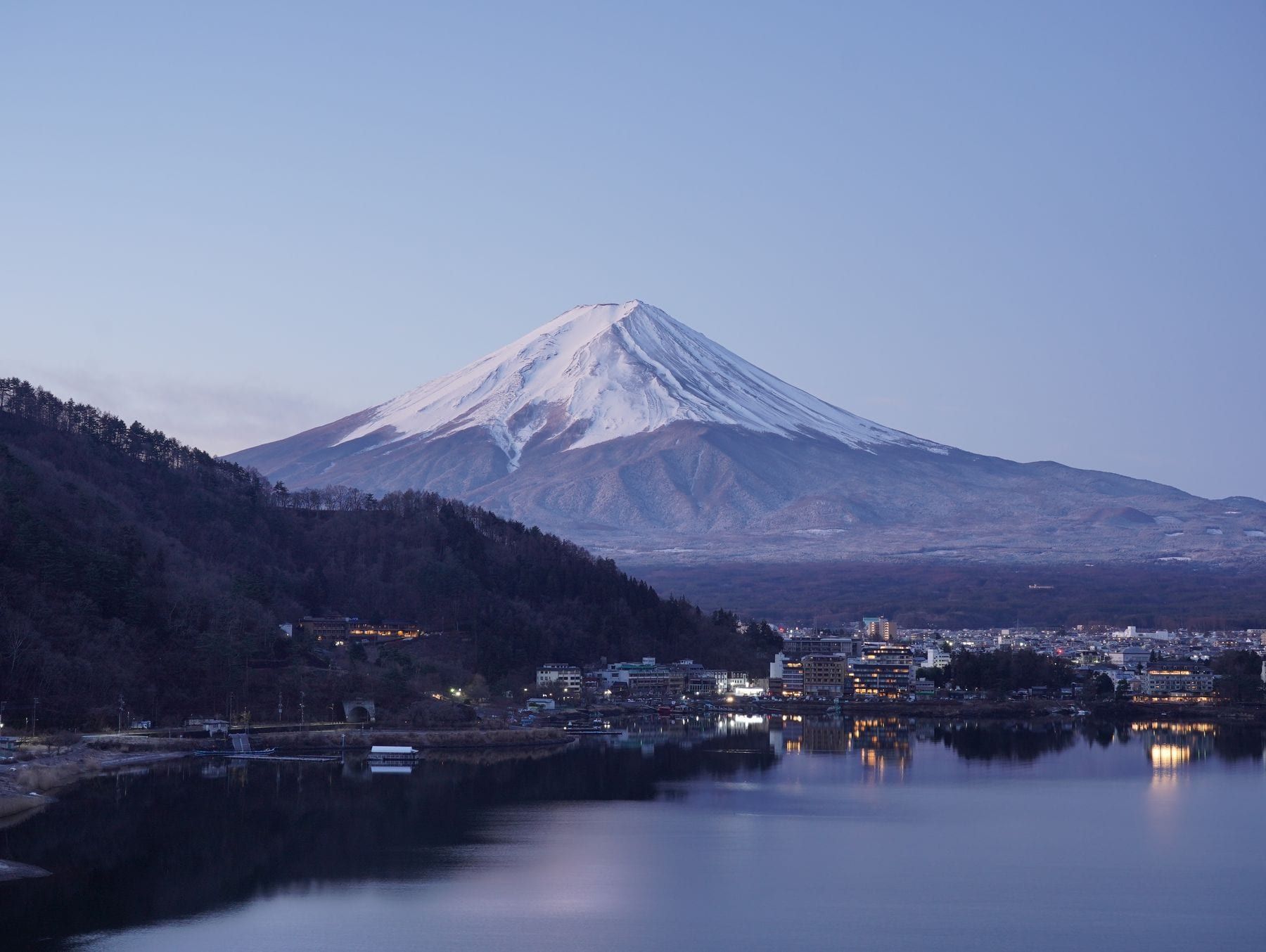
What two days at the foot of Mount Fuji really cost, why you need to stay a night to see the mountain, how the highway bus from Shinjuku works and what a summer climb involves.