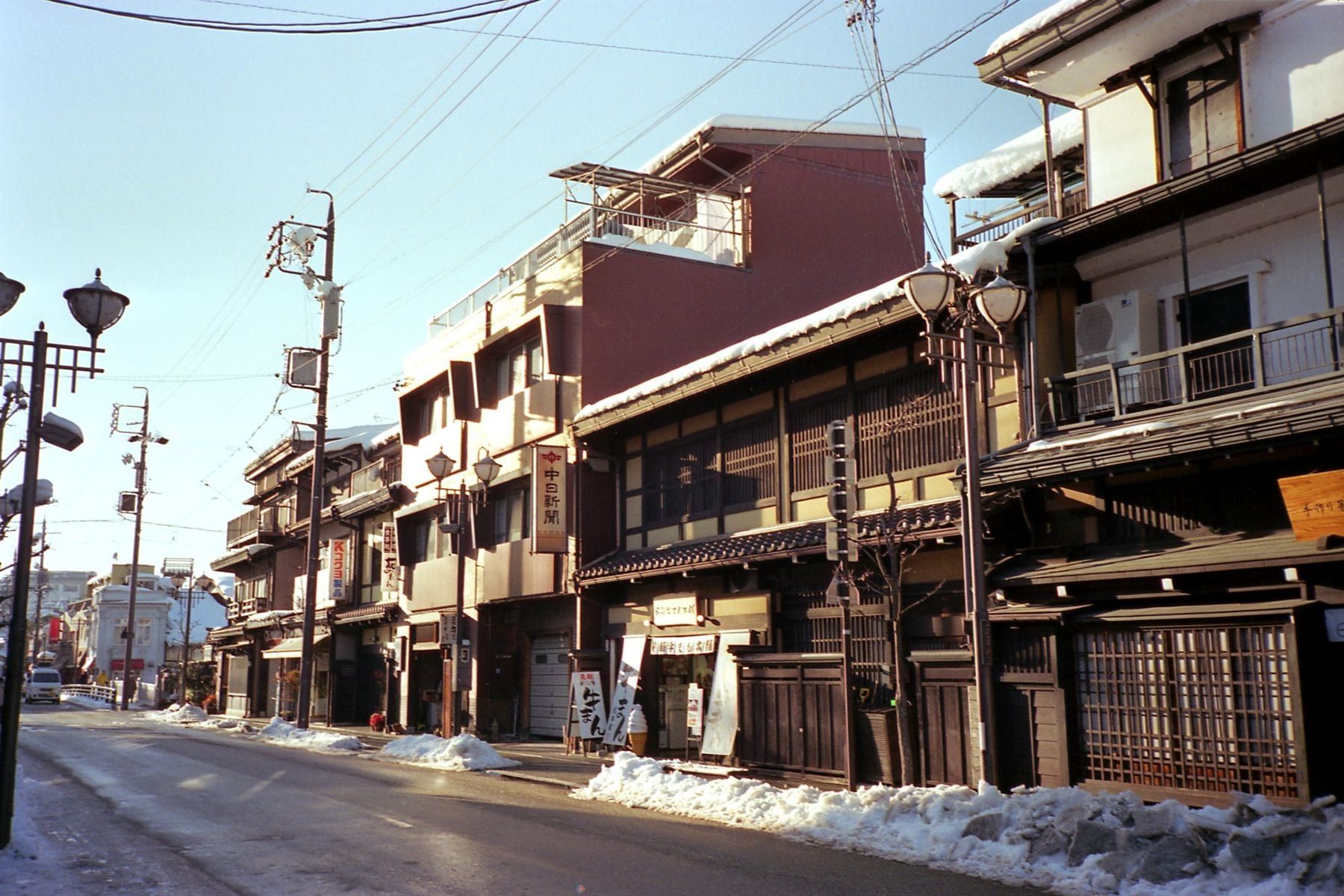
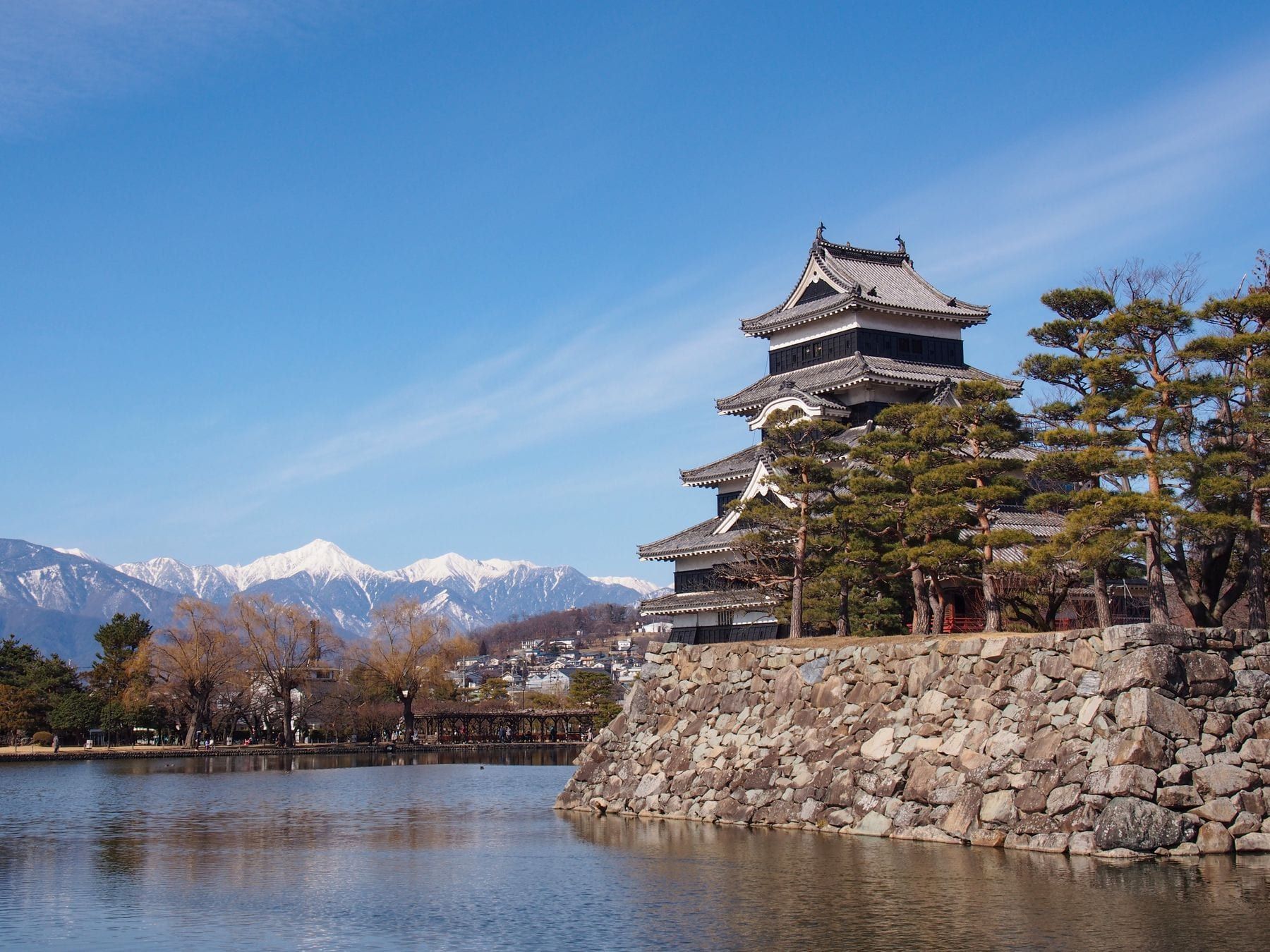
K's House Takayama
Hostel five minutes from the Takayama bus terminal, where the buses to Shirakawa-go leave. Private rooms and dorms, shared kitchen, English-speaking. The cheapest base for the morning bus.
Japan · Chubu · Travel guide
What the village of steep thatched roofs really costs, why a night in a gassho house makes all the difference, how to book the buses from Takayama and Kanazawa properly and when the winter illumination takes place.
Photo: Pitipat Usanakornkul / Pexels
Adjust the values to your trip: the calculator updates live (EUR, converted from CHF estimates).
Estimates for orientation, not booking prices. Flights and hotels vary strongly by season: current prices are behind the links below.
Money & payment: You pay in yen (JPY). 1,000 yen is roughly CHF 6 or EUR 6.50. Cards work in cities and hotels; small restaurants, temples and rural stations often want cash. An IC card (Suica or ICOCA) on your phone pays for trains, buses and convenience stores. Flight time: 12 to 14 hours, usually with one stop.
Nine options in three price ranges, each among the best-rated on Booking.com.
Budget
Hostel five minutes from the Takayama bus terminal, where the buses to Shirakawa-go leave. Private rooms and dorms, shared kitchen, English-speaking. The cheapest base for the morning bus.
Business hotel right by the Kanazawa east bus terminal, the departure point for buses to Shirakawa-go. Simple rooms, breakfast included, for the night before or after the trip.
Guesthouse with hotel rooms and a cafe five minutes' drive from the village, without a thatched roof, but cheaper and without full board. For anyone who wants to sleep nearby but could not get a minshuku. Shuttle on request.
Mid-range
Ryokan at the foot of the viewpoint in the village, not a gassho house, but with a bath, tatami rooms and dinner with Hida beef. Easier to book than the gassho minshuku, same location, same empty mornings.
Family-run minshuku in the Hatogaya district, about ten minutes on foot from the bus terminal, with tatami rooms, dinner from the region and free parking. Easier to get than the gassho houses in the village centre. Book early.
Small, English-speaking ryokan in Takayama with private onsen baths, two minutes on foot to the bus terminal. For anyone combining the ryokan experience in Takayama with a day trip to Shirakawa-go.
Luxury
The riverside ryokan in Takayama with onsen and Hida beef kaiseki, shuttle to the bus terminal. The comfortable base if you do Shirakawa-go as a morning trip and want to end the day in luxury.
Old farmhouse ryokan on the Miya river south of Takayama, with a Michelin Key, only a few rooms, an irori hearth and kaiseki from river and mountains. The gassho feeling with luxury, free shuttle from Takayama station with reservation.
Design hotel right by Kanazawa station, two minutes to the bus terminal for Shirakawa-go. For anyone visiting the village from Kanazawa who wants Western comfort and a good restaurant in the evening.
If you book through these links we earn a small commission, at no extra cost to you.
The view over all 60 gassho houses that every photo comes from. 15 minutes uphill on foot behind Wada House, or the shuttle for CHF 1.30 (about EUR 1.40). The second platform to the left has the same view without a queue.
The village's largest gassho house, over 300 years old, home of the village headman's family, with an attic full of silkworm equipment. Admission CHF 2.50 (about EUR 2.70), view over the fields from the roof window.
An Edo-period house with a hearth where you are served tea, and four floors of attic up to the gable. Admission CHF 2.50 (about EUR 2.70). The most personal of the houses open to the public.
25 gassho houses relocated when the dam was built, on the other side of the river, with a soba restaurant and craft demonstrations. Admission CHF 4 (about EUR 4). If you want to see the houses without the crowds, come here.
Six evenings, 5.30 to 7.30 pm, access only with an overnight stay, a parking reservation or a registered bus tour from Takayama or Kanazawa, CHF 60 to 100 (about EUR 64 to 107). Booking from September, places go fast.
The two smaller UNESCO villages 20 minutes north, with washi papermaking and a tenth of the visitors. Continue on the Kanazawa bus for CHF 5 to 9 (about EUR 5 to 10), stopovers possible.
Buddhist temple with a thatched bell tower and a gassho-style priests' residence, built in 1748, with a small museum on village life. Admission CHF 2.50 (about EUR 2.70). Plus the 200-year-old yew in the courtyard.
For anyone who can't get a bus seat: guided half-day and full-day coach tours from Takayama (from CHF 60, about EUR 64) or from Kanazawa (from CHF 80), some combined with Gokayama or Hida Furukawa.
If you book through these links we earn a small commission, at no extra cost to you.
Shirakawa-go eats what the mountains and the river provide: river trout and char on skewers over the hearth, wild vegetables in spring, mushrooms in autumn, hoba miso and rice from the village's own fields. The best food in the village is not in a restaurant but at the irori of a minshuku in the evening.
Char, salted, threaded on a skewer and stuck at an angle into the irori fire until the skin is crisp. Eaten head and tail. CHF 5 to 8 (about EUR 5 to 9) at a stall, part of dinner in a minshuku.
Tip:At dinner in the minshuku ask if you can put the fish by the fire yourself; most hosts will let you.
Pounded rice pressed flat onto a wooden paddle, brushed with walnut and sesame miso and grilled. Sweet, salty, nutty. CHF 3 to 4 (about EUR 3 to 4) a piece.
Tip:Eat it hot; once cold the rice goes hard.
Miso with leek and mushrooms grilled on a magnolia leaf, served with rice. In the village often with sansai wild vegetables instead of meat. CHF 8 to 12 (about EUR 9 to 13), standard at a minshuku breakfast.
Tip:Dip the rice straight into the bubbling miso; leave the leaf.
Potato croquettes with minced Hida beef, deep-fried and handed over in paper. The snack for your walk. CHF 2.50 to 4 (about EUR 2.70 to 4).
Tip:There is also Hida beef man, steamed buns, for the same price: the warmer choice in winter.
Buckwheat noodles in warm broth with wild mountain vegetables (fern shoots, bamboo, fuki). Light and earthy. CHF 9 to 13 (about EUR 10 to 14) for lunch.
Tip:At noon the restaurants are full; at 11 am or 2 pm there is no wait.
Cloudy, unfiltered rice wine brewed by the shrines themselves, sour and milky, 14 to 17 percent. Poured for free at the Doburoku Festival in October, otherwise in bottles for CHF 8 to 15 (about EUR 9 to 16) or as soft-serve ice cream.
Tip:The museum shows the festival on film and pours you a glass with admission (CHF 2).
Through markets and eateries with a guide, tastings included.
If you book through these links we earn a small commission, at no extra cost to you.
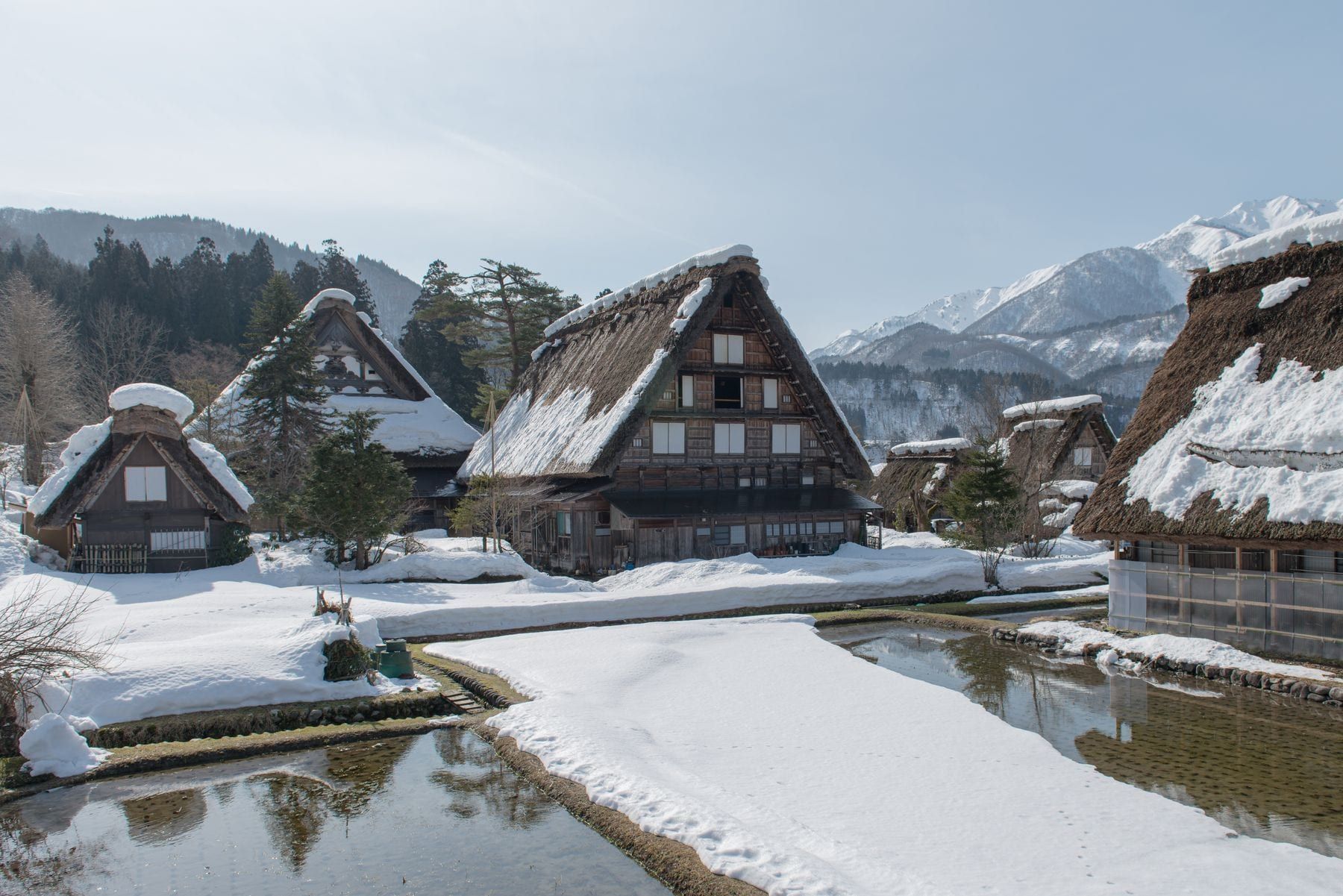
Shirakawa-go lies in the valley of the Sho river among the mountains of Gifu prefecture, one of the snowiest inhabited areas in the world, with two to three metres of snow in winter. Until roads were built in the 20th century the valley was cut off for much of the year, and that isolation is exactly what explains the houses. The gassho-zukuri, named after hands folded in prayer, have roofs pitched at 60 degrees so the snow slides off, and are built without a single nail, using only ropes and wooden joints that give way in an earthquake. In the huge attics, three to four storeys high, families raised silkworms, and in the cellar they produced saltpetre for gunpowder, which they sold to the lords of Kaga. Up to 40 people lived under one roof as an extended family. The oldest houses in the main village of Ogimachi date from the 17th century. Every 30 to 40 years a roof is rethatched, and the whole village helps in a single day, a system of neighbourly help called yui that still works today. The construction of the Miboro dam in 1961 flooded several villages, and many gassho houses were demolished or sold. In 1971 the residents of Ogimachi founded a preservation society with three rules: do not sell, do not rent out, do not destroy. In 1995 Shirakawa-go and neighbouring Gokayama became a UNESCO World Heritage Site. Today around 1,500 people live in the village, and more than two million visitors come each year.
There is no train station. You come by bus or by car. From Takayama the Nohi bus takes 50 minutes, CHF 16 (about EUR 17) one way, CHF 28 return, roughly hourly from 7.50 am to 5 pm. From Kanazawa the same bus takes 75 to 85 minutes for CHF 14 one way. From Toyama 85 minutes, CHF 12. From Nagoya the Gifu bus runs direct in just under 3 hours for CHF 25. All these buses require a reservation and can be booked online (Nohi bus website or Japan Bus Online), and the morning buses from Takayama are often fully booked two to three weeks ahead at weekends and in October. Book as soon as your dates are fixed. Combining Takayama, Shirakawa-go and Kanazawa in one line is the best routing: leave your luggage in lockers at the Shirakawa-go bus terminal (CHF 3 to 6) or send it on with a luggage service for CHF 8 to 10 per piece to your hotel in Kanazawa or Takayama, which you can arrange at the counter in the terminal until about 1 pm. A rental car (from Takayama CHF 60 to 80 per day) only pays off if you also want to drive to Gokayama; in winter you need winter tyres and steady nerves. In the village itself you walk: it is 20 minutes from one end to the other, and 15 minutes uphill to the Shiroyama viewpoint or CHF 1.30 by shuttle.
Around 20 families in Ogimachi rent out rooms in their gassho houses as minshuku, perhaps 100 beds in total for two million visitors a year. You sleep on a futon in a tatami room with paper sliding doors, the bath is shared, and dinner is served at the irori hearth: river fish on skewers, hoba miso, wild vegetables, Hida beef in small amounts, rice from the family's own field. Price CHF 130 to 200 (about EUR 139 to 214) per person with dinner and breakfast, based on two sharing. You book through the website of the Shirakawa-go tourist association, which runs a central reservation office, or with individual houses via Booking and Japanican. Booking windows usually open three to six months ahead, and for October, the winter illumination and Golden Week the rooms are gone within days. There is no wifi in every room, no minibar, rooms are separated only by sliding walls, and at 9 pm it is quiet time. That is the deal. If you do not want that, sleep in Takayama or Kanazawa and come as a day visitor, or take one of the small guesthouses on the edge of the village without a thatched roof from CHF 80. In neighbouring Gokayama (Ainokura, Suganuma) there are more minshuku with a fraction of the visitors.
The village has no admission fee, only the houses open to the public: Wada House (the largest, home of the village headman's family), Kanda House and Nagase House cost CHF 2.50 (about EUR 2.70) each, Myozenji temple with its thatched bell tower CHF 2.50, and the Gassho-zukuri Minkaen open-air museum on the other side of the river with 25 relocated houses CHF 4. Two houses are enough, ideally Wada and Kanda; the latter includes tea by the fire. The trap is organised day tours from Nagoya or Kanazawa for CHF 80 to 150, which drop you in the village for two hours at midday when it is at its busiest, often with a shopping stop on the way. With the regular bus you are your own master for CHF 28. Lunch along the main street costs CHF 12 to 20 for soba or Hida beef curry, which is fine but not good; better to buy a bento in Takayama in the morning and eat it on a bench by the river. The souvenir shops sell sarubobo and sake just like in Takayama, only more expensive. In winter the shuttle to the viewpoint costs CHF 1.30; the footpath is often icy, so that small extra is money well spent.
The famous pictures of illuminated houses in the snow are taken on six evenings in January and February, usually Sundays plus one other day each time, from 5.30 to 7.30 pm. Since 2019 access has been strictly regulated: on those evenings only overnight guests, participants in registered bus tours and holders of a pre-booked parking space may enter the village. Minshuku rooms are allocated by lottery, and you register in the summer via the tourist association's website. Realistically you get in on a bus tour from Takayama or Kanazawa, CHF 60 to 100 (about EUR 64 to 107), booked in the autumn. Outside the illumination evenings winter is still the best time: January and February bring two metres of snow and half as many visitors as in autumn. The second-best time is mid to late October, with autumn leaves on the slopes and the Doburoku Festival (14 to 19 October), when the shrines serve their own home-brewed cloudy rice wine. At the end of May the rice fields are flooded and reflect the houses, and planting begins in early June. During Golden Week and at weekends in October the village is overwhelmed. Whatever the season: before 9 am and after 4 pm the day buses have gone.
Twenty minutes' drive north, already in Toyama prefecture, are the two UNESCO villages of Gokayama: Suganuma with nine and Ainokura with twenty gassho houses. They are smaller, steeper and quieter, and the residents still make washi paper and play the Kokiriko, Japan's oldest folk song, on wooden clappers. The Kanazawa bus stops in both villages, so you can continue from Shirakawa-go for CHF 5 to 9 (about EUR 5 to 10), stay an hour or two and take the next bus. Ainokura has five minshuku, which are easier to book than those in Ogimachi. Second tip: to reach the Shiroyama viewpoint, where all the postcard photos come from, do not take the shuttle but the footpath behind Wada House, 15 minutes uphill through the forest. At the top, to the left of the main spot, there is a second platform with the same view and no queue. Third tip, which is really the first: stay until after 5 pm. The souvenir shops close, the car park empties, families come out of their houses, children ride bikes along the main street, and smoke rises from the roofs as the irori are lit. Then it is a village.

There are three ways to see the village. First, as a day trip from Takayama: bus there at 7.50 or 8.50 am, 3 to 4 hours on site, bus back at 1 or 2 pm. You arrive before the groups, who turn up from 10 am from Kanazawa and Nagoya, and you are gone again by midday. Cost CHF 28 (about EUR 30) for the bus plus CHF 5 in admission fees. Second, as a stopover on the way from Takayama to Kanazawa or vice versa: send your luggage ahead by courier or put it in a locker, 3 hours in the village, then onward with the afternoon bus. For most round trips this is the most efficient option, and you do not lose a day. Third, with an overnight stay: afternoon bus there, evening and morning in the empty village, midday bus onward. More expensive (CHF 130 to 200 per person for the night), but the only experience that really stays with you. If you only have one day in the region and must choose between Shirakawa-go and Takayama: Takayama. If you have two days: Takayama with Shirakawa-go as a morning trip. If you have three: a night in a minshuku.
As a day visitor 3 to 4 hours: the viewpoint, two houses open to the public, a walk through the rice fields, Myozenji temple and the suspension bridge over the river. Staying longer is only worth it if you spend the night. With an overnight stay you plan an afternoon, the evening and a morning, around 20 hours in all, of which the best are before 9 am and after 5 pm.
Through the central reservation page of the Shirakawa-go tourist association, three to six months ahead, or individual houses via Booking and Japanican. Most only take bookings with half board, at CHF 130 to 200 (about EUR 139 to 214) per person. Payment in cash on site, as not all accept cards. For the winter illumination evenings rooms are allocated by lottery, with registration in the summer.
Yes, the Nohi bus takes 75 to 85 minutes and costs CHF 14 (about EUR 15) one way, with reservation. The first bus leaves Kanazawa at 8.10 am, arriving just before 10, and returns at 2.30 or 3.50 pm. You will be there at the busiest time, but the trip works. As a triangle Kanazawa, Shirakawa-go, Takayama with onward travel it makes more sense.
On six evenings in January and February; the dates are announced the summer before, usually Sundays and a few weekdays, from 5.30 to 7.30 pm. Access only with an overnight stay in the village (by lottery), a registered bus tour (CHF 60 to 100, about EUR 64 to 107, from Takayama or Kanazawa, bookable from September) or a reserved parking space. Without one of these you cannot enter the village on those evenings. On all other winter days the village is open as normal and just as beautiful in the snow, only without the floodlights.
Yes, the buses run all year, roads are cleared and the bus companies use winter equipment. Bring waterproof shoes with a good tread, as the paths in the village are often icy, and gloves for the camera. Heavy snowfall can cause delays, so do not plan a Shinkansen connection with less than an hour's buffer. Only rent a car in winter if you have experience driving on snow.
The same as in Takayama, in simpler form: hoba miso, soba, river fish (iwana or ayu) on skewers over the fire, Hida beef croquettes and gohei mochi, grilled rice cakes with walnut miso. Lunch at the places on the main street costs CHF 10 to 20 (about EUR 11 to 21), snacks at the stalls CHF 2 to 5. Dinner at the irori in a minshuku is the best food in the village and included in the room price.
What a few days in Japan's industrial capital really cost, why the food here is more idiosyncratic than in Tokyo, and how to use Nagoya as a base for Takayama and Ise.
What a few days in the samurai and gold leaf city on the Sea of Japan really cost, where to eat the best fish in the country and how to see Kenroku-en without the coach groups.
What a few days in the timber town of the Japanese Alps really cost, when the old town is empty, where Hida beef stays affordable and how to continue from here to Shirakawa-go.
What a few days in the city with the black castle really cost, how to manage Kamikochi as a day trip, where the soba is best and whether the Alpine Route is worth it.
What two days at the foot of Mount Fuji really cost, why you need to stay a night to see the mountain, how the highway bus from Shinjuku works and what a summer climb involves.