Takayama

Japan · Chubu · Travel guide

Takayama

What a few days in the timber town of the Japanese Alps really cost, when the old town is empty, where Hida beef stays affordable and how to continue from here to Shirakawa-go.

Photo: Alan Wang / Pexels

What does a trip to Takayama cost?

Adjust the values to your trip: the calculator updates live (EUR, converted from CHF estimates).

3,364 EUR
≈ 1,682 EUR per person
  • Flights 2,140 EUR
  • Accommodation 535 EUR
  • Food 482 EUR
  • Local transport 54 EUR
  • Limited Express Hida from Nagoya (return) 154 EUR

Estimates for orientation, not booking prices. Flights and hotels vary strongly by season: current prices are behind the links below.

Money & payment: You pay in yen (JPY). 1,000 yen is roughly CHF 6 or EUR 6.50. Cards work in cities and hotels; small restaurants, temples and rural stations often want cash. An IC card (Suica or ICOCA) on your phone pays for trains, buses and convenience stores. Flight time: 12 to 14 hours, usually with one stop.

Recommended hotels

Nine options in three price ranges, each among the best-rated on Booking.com.

Budget

Dormy Inn Takayama

Takayama station, Takayama

Business hotel by the station with an onsen bath, sauna and free ramen in the evening, the chain's standard. Small rooms, perfect location for buses to Shirakawa-go, ten minutes on foot to the old town.

from CHF 85 / night (about EUR 91) View →

Country Hotel Takayama

Takayama station, Takayama

Simple, cheap hotel directly opposite the station, nothing more, but clean and with bike rental. For one night before the early bus to Shirakawa-go, the most practical address.

from CHF 60 / night (about EUR 64) View →

K's House Takayama Oasis

Hanasato-machi, Takayama

Hostel of the well-known chain in a converted ryokan, with an onsen-style shared bath and a kitchen. Five minutes from the station, private tatami rooms and dorms. Good for solo travellers.

from CHF 35 / night per person (about EUR 37) View →

Mid-range

Oyado Koto No Yume

Hanasato-machi, Takayama

Small ryokan with 23 rooms two minutes on foot from the station, English-speaking, with two private onsen baths you can reserve for free. Dinner with Hida beef optional. Friendly and uncomplicated.

from CHF 160 / night (about EUR 171) View →

Hida Hotel Plaza

Hanaoka-machi, Takayama

Large city hotel with a rooftop onsen bath, Western and Japanese rooms, five minutes from the station. Not charming, but reliable, with a good breakfast buffet and prices below ryokan level.

from CHF 130 / night (about EUR 139) View →

HOTEL WOOD TAKAYAMA

Kami-Ninomachi, Takayama

Newer design hotel built from Hida timber on the edge of the Sanmachi old town, with an onsen bath and a lounge with free drinks in the evening. Quiet and modern, for anyone who does not need tatami but appreciates wood and a good bath.

from CHF 150 / night (about EUR 161) View →

Luxury

Honjin Hiranoya Kachoan

Honmachi, Takayama

The ryokan on the river opposite the Jinya, with an onsen bath on the top floor and Hida beef kaiseki in your room. Very personal service, right next to the old town. Prices per person with half board.

from CHF 320 / night per person with half board (about EUR 342) View →

Hoshino Resorts KAI Okuhida

Hirayu Onsen, Okuhida, Takayama

Onsen ryokan of the Hoshino group in the mountain village of Hirayu, opened in September 2024, around an hour by bus from Takayama. Rooms with Hida crafts, kaiseki with Hida beef, onsen and a cultural programme in the evening. Ideal combined with the Shinhotaka Ropeway.

from CHF 380 / night per person with half board (about EUR 407) View →

Wanosato

Ichinomiya-machi, Takayama

A 160-year-old farmhouse on the Miya river, 20 minutes out of town, with only eight rooms, an irori hearth and kaiseki from river and mountains. Free shuttle from the station. For the one night you will never forget.

from CHF 450 / night per person with half board (about EUR 482) View →

If you book through these links we earn a small commission, at no extra cost to you.

Experiences worth your time

Sanmachi old town before 9 am

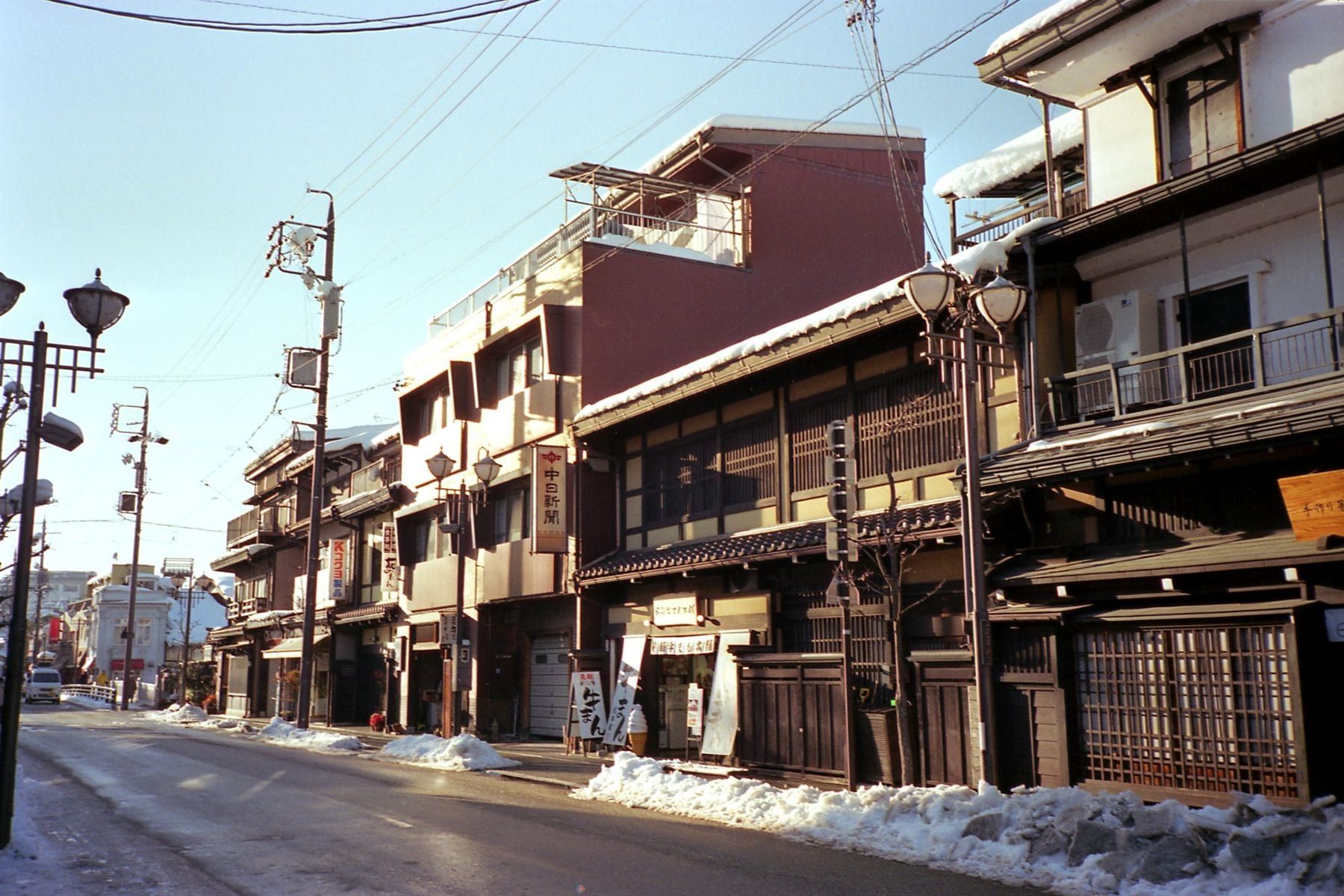
Three lanes of dark wooden houses, sake breweries and canals from the Edo period. Free, but only without groups early in the morning or after 5 pm. Sake tasting in the breweries CHF 2 to 4 (about EUR 2 to 4).

View & book →

Jinya-mae and Miyagawa morning markets

Daily 7 am to noon, farmers with pickles, apples, flowers and sarubobo dolls. Grilled mitarashi dango CHF 1 (about EUR 1), pickled Hida turnips CHF 3 to 5. The Jinya market is the more authentic one.

View & book →

Takayama Jinya

The only surviving administrative seat of the Tokugawa shogunate in Japan, with offices, an interrogation room and the country's largest rice storehouse. Admission CHF 3 (about EUR 3), free English tour on request at the entrance.

View & book →

Yatai Kaikan festival float hall

Four of the eleven autumn festival floats on rotating display, gilded, lacquered and fitted with karakuri puppets, admission CHF 6 (about EUR 6) including the Nikko model hall. If you can't come for the matsuri, this is where you see the floats.

View & book →

Hida no Sato open-air museum

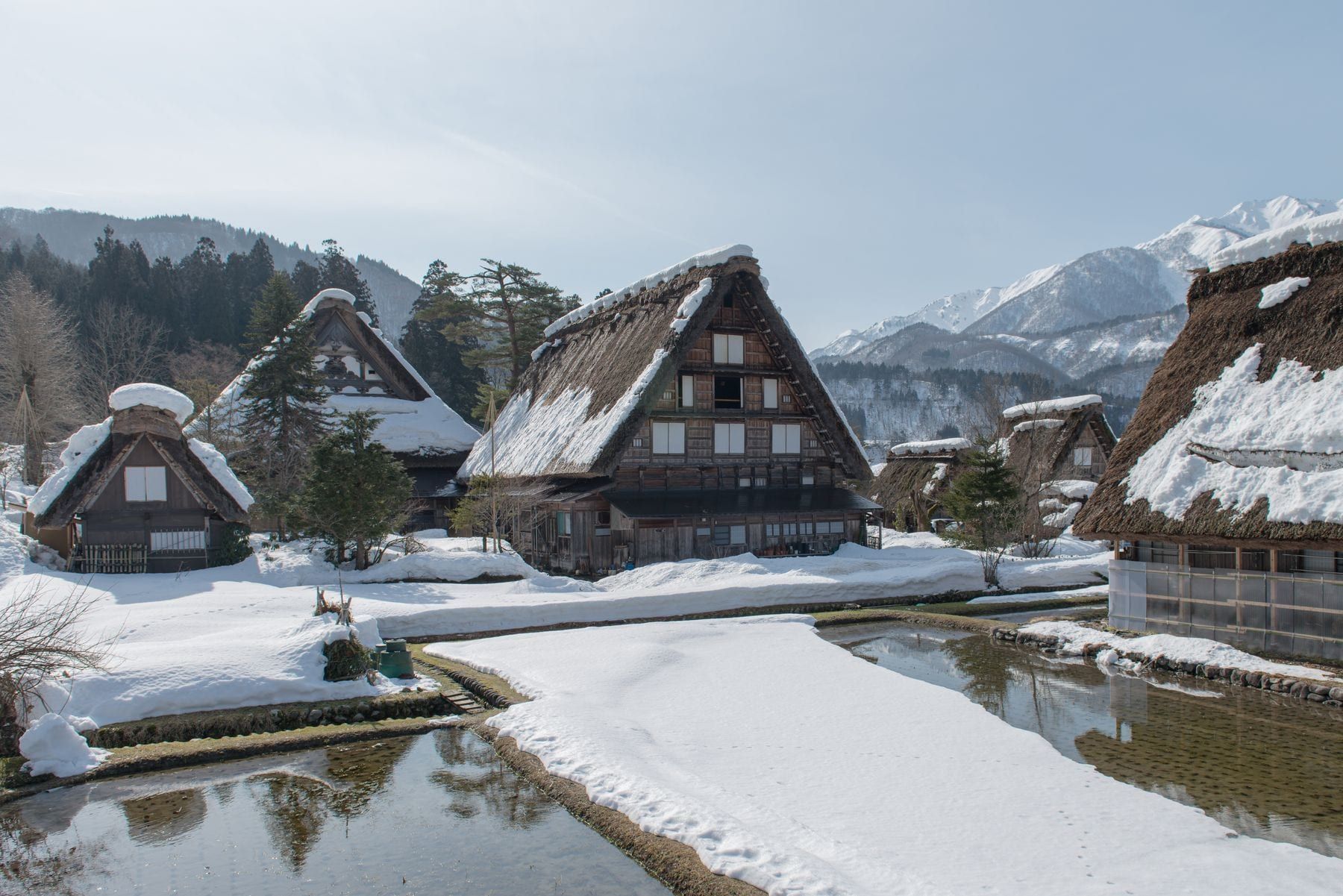
Thirty old farmhouses from the region around a pond, including gassho houses, with craft demonstrations. Admission CHF 4 (about EUR 4), 10 minutes by bus from the station. The quiet alternative to Shirakawa-go.

View & book →

Hida beef cooking class or yakiniku experience

Grill hoba miso with Hida beef on a magnolia leaf yourself, or book a Hida beef yakiniku evening, CHF 50 to 90 (about EUR 54 to 96) per person. The easiest way to eat the meat properly.

View & book →

Higashiyama temple trail

A good 3 kilometres past a dozen temples on the hillside behind the old town to the castle park, free and almost deserted. Takes 1.5 to 2 hours, wear good shoes, slippery in winter.

View & book →

Day trip to Shirakawa-go

The gassho village in 50 minutes by Nohi bus, CHF 28 (about EUR 30) return, reservation compulsory. Organised half-day tours from CHF 60 including the bus; otherwise bus seats go quickly.

View & book →

Shinhotaka Ropeway and Okuhida Onsen

Japan's only double-decker gondola, up to 2,156 metres with views of the Northern Alps, CHF 20 (about EUR 21) return, 90 minutes by bus from Takayama. Afterwards an open-air bath in Hirayu Onsen for CHF 4 to 8.

View & book →

If you book through these links we earn a small commission, at no extra cost to you.

Food & drink

Hida cuisine is mountain cooking: beef from small farms, river fish, wild vegetables, miso on a magnolia leaf and sake from seven breweries within three lanes. Plus breakfast at the morning market for a few francs. Takayama eats heartier than Kyoto and more honestly than Tokyo.

Hida beef (Hida-gyu)

Maruaki (with its own butcher) or Kyoya in the old town, skewers at the stalls in Sanmachi

Marbled wagyu from Gifu prefecture, A4 and A5 grade, melts like butter. As a skewer at a stall CHF 4 to 8 (about EUR 4 to 9), as a lunch set with yakiniku or sukiyaki CHF 20 to 35, as a steak in the evening from CHF 50.

Tip:Eat it at lunchtime; the same set often costs double in the evening.

Hoba miso

Kyoya in the old town, or at almost any ryokan breakfast

Miso with leek and mushrooms, grilled on a dried magnolia leaf over charcoal until it bubbles. Served with rice. Savoury and smoky. CHF 8 to 12 (about EUR 9 to 13), with strips of Hida beef CHF 15 to 20.

Tip:Do not eat the leaf; dip your rice in the miso.

Takayama ramen (chuka soba)

Masagosoba (since 1938) or Menya Shirakawa, both near the old town

Thin, wavy noodles in a clear soy broth made from chicken and fish, with chashu and leek. Light and old-fashioned; the broth is cooked together with the sauce. CHF 5 to 8 (about EUR 5 to 9).

Tip:At Menya Shirakawa come before 11.30 am; the queue is famous.

Mitarashi dango

Stalls at the morning markets and by the Nakabashi bridge

Rice dumplings on a skewer, grilled over charcoal and turned in soy sauce. Unlike in Kyoto they are not sweet but salty and crisp. One skewer CHF 1 to 1.50 (about EUR 1 to 1.60).

Tip:Get it fresh off the grill; a skewer that has been sitting around is chewy.

Sake from Sanmachi

Funasaka, Harada or Hirase in Sanmachi, all with tasting cups

Seven breweries in the old town, recognisable by the cedar ball (sugidama) above the entrance. Hida sake is dry and clear, made from cold mountain water. A tasting of three to five varieties CHF 2 to 4 (about EUR 2 to 4), a bottle from CHF 10.

Tip:In January and February the breweries take turns opening their cellars for tours.

Hida soba

Soba restaurants around the old town, such as Ebisu Honten (since 1898), or in Hida Furukawa

Handmade noodles from mountain buckwheat, cold as zaru soba with a dipping sauce or warm in broth with wild vegetables. Hearty and nutty. CHF 7 to 12 (about EUR 7 to 13).

Tip:At the end pour the hot noodle cooking water (sobayu) into the dip and drink it.

Keichan

Izakaya around the station and in Hida Furukawa

Chicken marinated in miso or soy, fried with cabbage on an iron plate. The everyday dish of the Hida region, hearty, good with beer. CHF 8 to 12 (about EUR 9 to 13) as a dish, often in izakaya.

Tip:Order it with rice; the sauce is the reason for the dish.

Book a food tour: Takayama

Through markets and eateries with a guide, tastings included.

View & book →

If you book through these links we earn a small commission, at no extra cost to you.

History & background

Takayama lies at 570 metres in a high valley of the Hida mountains that for centuries could only be reached over passes. Because the land yielded little rice, from the 8th century the province of Hida paid its taxes to the imperial court in Nara and Kyoto in the form of labour: the Hida no Takumi, the carpenters of Hida, built temples and palaces in the capitals and brought their skills back home. This became a tradition that still shapes the town today. In 1586 Kanamori Nagachika built a castle and laid out the town on a grid modelled on Kyoto. In 1692 the Tokugawa shogunate took the province under direct administration because of its forests and ore deposits, and razed the castle. Takayama Jinya, the seat of the shogunate's governor, still stands and is the only surviving building of its kind in Japan. In the 18th and 19th centuries the wealthy timber and sake merchants of Sanmachi built the dark wooden houses with lattice windows that make up the old town today. The Takayama Matsuri with its gilded festival floats, first mentioned around 1650, is considered one of the three most beautiful festivals in Japan. The railway arrived through the Hida gorge in 1934, the enlarged pine-wood station in 1979 and the current one in 2016. Since the town began systematically courting foreign guests in the 1980s, Takayama, with around 60 percent international overnight stays, has become the small Japanese town most geared towards foreigners.

Insider tips

Getting there: the Hida express from Nagoya is the journey, not just the way

From Nagoya the Limited Express Hida runs through the Hida gorge to Takayama in 2 hours 30 minutes; a single ticket with a seat costs around CHF 36 (about EUR 39). Sit on the left from Nagoya (after Gifu the river switches sides, then sit on the right): the route along the emerald-green Hida river is one of the most beautiful in Japan, with a viewing stop at the Nakayama Shichiri rocks. Since 2023 the new HC85 hybrid trains with panoramic windows have been running. From Tokyo, via Shinkansen to Nagoya and then the Hida, the trip takes 4 hours 15 minutes in total for around CHF 105, or you take the Hokuriku Shinkansen to Toyama (2 hours 10 minutes) and the Hida from the north (another 90 minutes), around CHF 100 altogether, which is the route if you want to go on to Kanazawa afterwards. The Nohi bus runs direct to Takayama from Nagoya, Kanazawa, Toyama, Matsumoto and Shinjuku in Tokyo, CHF 20 to 45 each, reservation online. In town you need no transport; everything is within a 20-minute walk of the station. For Hida no Sato or the temples in the east there is the Sarubobo bus (CHF 1.30 per ride) or rental bikes for CHF 6 to 10 a day.

Where to stay: a ryokan, yes, but east of the river

Takayama is one of the best towns in Japan for a first night in a ryokan: lots of options, English-speaking hosts, prices below Kyoto level. The question is which side of the Miyagawa river you stay on. To the west are the station, the business hotels and the big ryokan operations with coaches out front; to the east are the Sanmachi old town, the small ryokan and the temples along the Higashiyama trail. If you can, stay on the east side or right by the river, and you will be in the old town before the groups come out of their hotels at 9. A business hotel (Dormy Inn, Toyoko Inn, Country Hotel) costs CHF 70 to 100 (about EUR 75 to 107), a simple ryokan without meals CHF 90 to 150, and with dinner and breakfast CHF 150 to 250 per person. The Hida beef kaiseki in the ryokan is usually better and cheaper than the same thing in a restaurant. The luxury ryokan on the edge of town and in Okuhida Onsen, 50 minutes by bus towards Norikura, cost CHF 300 to 600 per person, but have outdoor baths with mountain views. For the Takayama Matsuri (14 and 15 April, 9 and 10 October) every room is gone months in advance and costs double.

Cost traps: Hida beef skewers, sarubobo and the group lunch

Hida beef is the town's big theme, and the traps revolve around it. The skewers (kushiyaki) at the stalls in Sanmachi cost CHF 4 to 8 (about EUR 4 to 9) for two small cubes, and Hida beef sushi on a rice cracker CHF 5 to 6 for two pieces. Fine as a snack, expensive as a meal. A proper Hida beef steak in a restaurant starts at CHF 50 and goes up to CHF 120. The honest way: at lunchtime a Hida beef set at a yakiniku or sukiyaki restaurant for CHF 20 to 35, or hoba miso with strips of beef for CHF 12 to 18. Second trap: sarubobo, the faceless red monkey dolls, cost CHF 5 to 30 in souvenir shops, and often less hand-sewn at the morning market. Third trap: the restaurants along the main lane in Sanmachi between 11.30 am and 1.30 pm, when the coach groups eat. Two lanes further on it is empty and cheaper. The sake breweries in Sanmachi (recognisable by the cedar ball above the door) let you try three to five varieties for CHF 2 to 4, one of the fairest deals in town. Admission prices are moderate: Jinya CHF 3, the festival float hall CHF 6, Hida no Sato CHF 4.

Timing: matsuri or peace and quiet, you can't have both

Takayama has two faces. At the spring festival, Sanno Matsuri (14 and 15 April), and the autumn festival, Hachiman Matsuri (9 and 10 October), eleven or twelve yatai parade through town, gilded festival floats from the 17th to 19th centuries fitted with lacquerwork and karakuri mechanical puppets, lit with lanterns in the evening. It is one of Japan's great festivals and worth planning for, but then there are 200,000 people in a town of 85,000, and without booking a room six months ahead you will be sleeping in Gero or Toyama. Outside the festivals the rhythm is simple: late October to mid-November brings autumn leaves in the surrounding mountains, then mist over the river in the mornings. December to February brings snow, often a metre of it; the old town under white roofs is the town's most beautiful sight, and visitor numbers drop sharply. Cherry blossom comes late, mid to late April, often together with the spring festival. Summer is more pleasant than in the cities (25 to 30 degrees), but busy in August during Obon week. Avoid Golden Week. Whatever the season: the old town is almost empty before 9 am and after 5 pm, and a procession in between.

Underrated: the Higashiyama trail, Hida Furukawa and the Jinya kitchen

Behind the old town the Higashiyama temple trail begins, a 3.5 kilometre walk past a dozen temples and shrines on the hillside, laid out on the model of Kyoto's Higashiyama. It is free, there are no souvenirs, and you meet cats, monks and nobody else. At the top in Shiroyama Park are the foundations of the razed castle. Second tip: Hida Furukawa, 15 minutes north by train (CHF 1.50, about EUR 1.60). The same architecture, white storehouse walls along a canal with a thousand carp, a candle maker that has been hand-dipping wax candles since 1782, and not a single tour bus. The town became known as a setting in the anime 'Your Name', which draws a few young Japanese but hardly any foreigners. Third tip: at Takayama Jinya, do not just look at the offices and the interrogation room, but at the huge kitchen with its hearths and the rice storehouse from 1600, the largest surviving rice storehouse in Japan. There you understand what administration was about: rice as currency. And if you have been to the morning market in front of the Jinya, go on to the second one by the Miyagawa river; it is longer and has more vegetable stalls than souvenirs.

Day trip: Shirakawa-go, Okuhida or Gero Onsen

The classic trip is Shirakawa-go: the Nohi bus takes 50 minutes for CHF 16 (about EUR 17) one way (CHF 28 return); online reservation is compulsory and the morning buses at 8 and 9 am are gone weeks in advance. You need 3 to 4 hours there; more on that on its own page. Second option: Okuhida Onsen, the five hot spring villages to the north in the valley towards Norikura. By bus in 60 to 90 minutes (CHF 15 to 20) to the Shinhotaka Ropeway, Japan's only double-decker gondola, which takes you up to 2,156 metres for CHF 20 with views of the Hotaka peaks. Afterwards a soak in the open-air onsen at Hirayu (CHF 4 to 8) and back. Third option, for rainy days: Gero Onsen, 45 minutes on the Hida express towards Nagoya (CHF 12), one of Japan's three famous hot spring resorts since the Edo period. With the Yumeguri Tegata, a wooden token for CHF 8, you can use three hotel baths of your choice. The spring is alkaline and your skin feels soapy afterwards; that is the point. All three trips can also be fitted in as a stopover on your onward journey, with left luggage at the station or bus terminal.

Frequently asked questions about Takayama

How many nights in Takayama?

Two nights is the minimum, so you get one morning in the empty old town and one evening in a ryokan. With Shirakawa-go as a day trip, three nights. If you only stay one night, you see the town exactly when everyone else is there too, and that is a shame after such a long journey.

When are the morning markets, and are they worth it?

Daily from about 7 am to noon, from 8 am in winter, in front of the Jinya and on the east bank of the Miyagawa. The Jinya market is smaller and has more vegetables and pickles from farmers' wives; the Miyagawa market is longer and more touristy. Yes, they are worth it, but before 9 am. Pickled Hida turnips, grilled mitarashi dango and apple slices cost CHF 1 to 3 (about EUR 1 to 3) each.

What does Hida beef really cost?

As a skewer at a street stall CHF 4 to 8 (about EUR 4 to 9) for two cubes, as nigiri on a rice cracker CHF 5 to 6, as a lunch set with yakiniku or sukiyaki CHF 20 to 35, as a steak in the evening CHF 50 to 120. My advice: have it as a lunch set, or in a ryokan kaiseki where it is included. The meat is marbled like Kobe beef, A5 grade, and tastes of butter.

Can I manage Takayama without Japanese?

More easily than almost any other small Japanese town. The town has been courting foreigners for 40 years, menus are in English, the tourist office at the station speaks several languages and signs are bilingual. In the ryokan they patiently explain onsen rules and the yukata. A few words of Japanese, such as 'oishii' for delicious, still earn you a smile.

Do I need a rail pass for the route Tokyo, Takayama, Kanazawa, Kyoto?

Do the maths. Tokyo to Nagoya CHF 68 (about EUR 73), Nagoya to Takayama CHF 36, Takayama to Kanazawa by bus CHF 25 or by train via Toyama CHF 50, Kanazawa to Kyoto CHF 45. Together roughly CHF 175 to 200 for single tickets, while the 7-day Rail Pass costs around CHF 310. The pass only pays off if you also travel to Hiroshima or back to Tokyo. The Takayama-Hokuriku Area Pass (5 days, around CHF 110) covers exactly this route from Nagoya or Osaka and is usually the better choice.

How does a first night in a ryokan work?

You arrive between 3 and 5 pm, take off your shoes at the entrance, get tea in your room and a yukata you can wear throughout the building. Before dinner you go to the bath: wash thoroughly first, then get into the tub, without a swimsuit. Dinner is at 6 or 7 pm, often in your room or the dining room, and the futons are laid out afterwards. Breakfast at 7.30 or 8 am, check-out by 10. There is no tipping.

Itineraries with this destination

Activities in the region

Events

Apr 14

Takayama Matsuri (Spring and Autumn Festival)

Festival

14 April 2027 14 and 15 April (Sanno Matsuri) and 9 and 10 October (Hachiman Matsuri), every year

One of the three most beautiful festivals in Japan and UNESCO heritage: richly gilded festival floats (yatai) from the 17th to 19th centuries, twelve in spring and eleven in autumn, are pulled through the old town, and on some of them mechanical puppets (karakuri) perform short plays. In spring the festival belongs to the Hie Shrine in the south of the old town, in autumn to the Hachiman Shrine in the north. The highlight each time is the evening procession on the first day with a hundred lanterns per float. In rain the floats stay in their storehouses, where you can still see them. Watching is free, with a few paid seats.

For travellers: Takayama has few beds and is booked a year ahead on festival days; stay in Gero Onsen or Hida-Furukawa instead, or do a day trip from Nagoya on the Hida express (two and a half hours).

More destinations in Chubu