Hotel Spitzweg
Small hotel in a patrician house from 1536 on Paradeisgasse, with antiques, wooden floors and a host who knows the town's history. Simple, quiet, with a garden. For travellers who want atmosphere and can do without a lift.
Germany · Bavaria & the Alps · Travel guide
What a night in Germany's best-known half-timbered town really costs, why you should definitely stay overnight instead of just passing through, and how you simply sit out the coach crowds from 10 am to 4 pm.
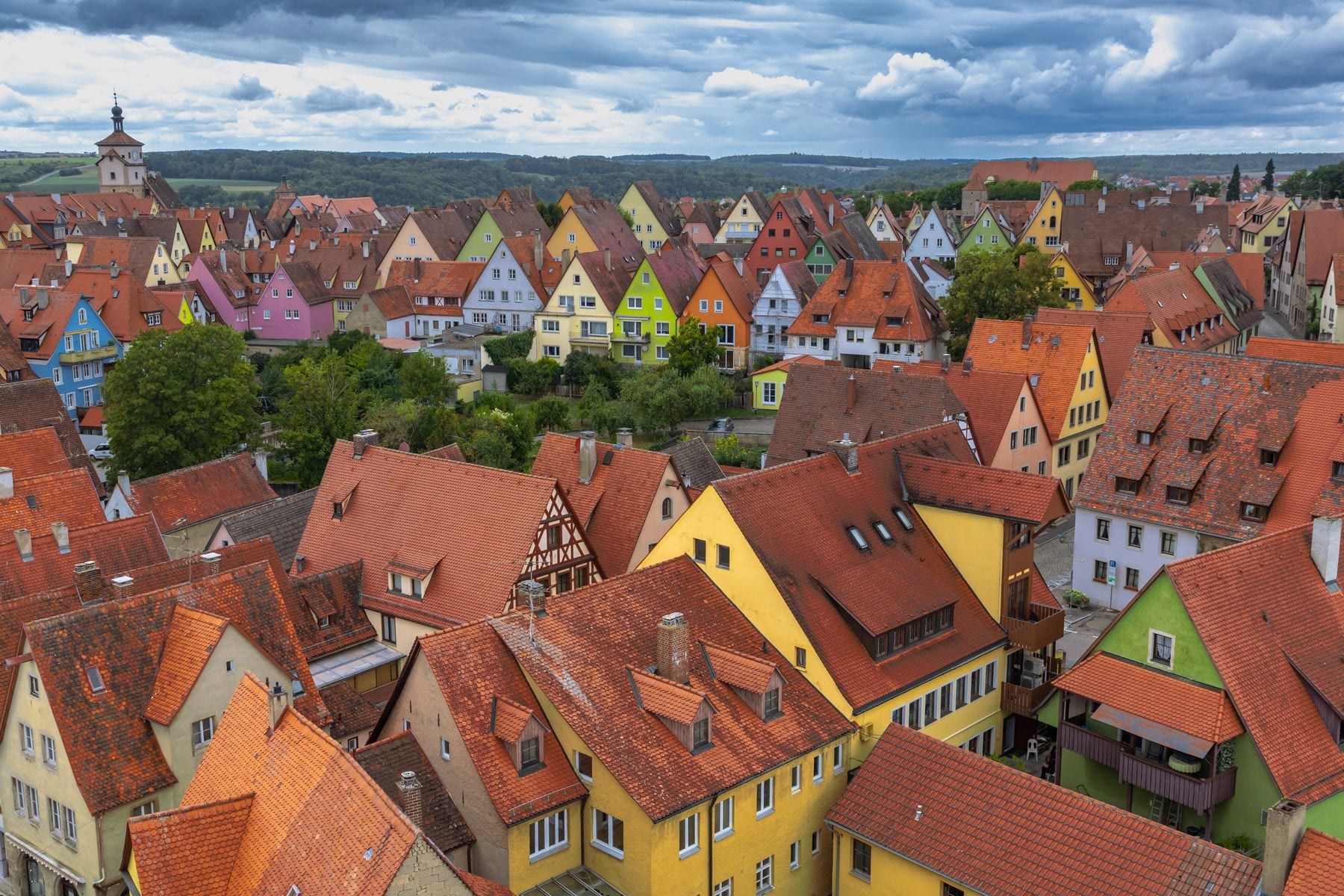
Photo: Sergey Guk / Pexels
Adjust the values to your trip: the calculator updates live (EUR, converted from CHF estimates).
Estimates for orientation, not booking prices. Getting there means train or car from Switzerland, return, per person. Hotels vary strongly by season: current prices are behind the links below.
Money & payment: You pay in euros (EUR). Germany is fonder of cash than Switzerland: bakeries, kiosks and small restaurants often say "cash only", though cards work almost everywhere from about EUR 10. Tip 5 to 10 percent by rounding up and naming the total when you pay. Getting there: By train (DB), car or plane, 1 to 8 hours depending on the destination.
Nine options in three price ranges, each among the best-rated on Booking.com.
Budget
Small hotel in a patrician house from 1536 on Paradeisgasse, with antiques, wooden floors and a host who knows the town's history. Simple, quiet, with a garden. For travellers who want atmosphere and can do without a lift.
Larger house right at the Würzburger Tor with rooms in several buildings, parking and a restaurant with Franconian cooking. Not romantic, but practical and for groups and families one of the cheapest addresses by the wall.
Former tannery on Spitalgasse in the quiet south of the old town, with a garden by the city wall and a very good breakfast. Rooms plain and clean, family-run. For couples who want to sleep in peace five minutes from the Plönlein.
Mid-range
Traditional house opposite St. Jakob with a restaurant, wine tavern and a small spa, family-owned for generations. Rooms solid, some with a view of the church, garden with terrace. For travellers who want everything within walking distance and a good dinner in the evening.
Inn from 1264 by the Markusturm, one of the oldest town gates, with rooms full of antiques and a restaurant with Franconian cooking. Every room different, some with four-poster beds. For couples who want the Middle Ages with a modern bathroom.
Large historic hotel between the Marktplatz and the Plönlein with a restaurant and a terrace looking straight into the Tauber valley. Rooms classic, some renovated, some with patina. For anyone who wants the valley view at breakfast.
Luxury
The leading house in town for over a hundred years, grown together from four patrician houses on Herrngasse, with the Rittersaal restaurant, a garden towards the Tauber valley and heavy wooden furniture. A grand hotel in miniature. For anyone who wants Rothenburg in style and with service.
Boutique hotel with only eight rooms in one of the oldest houses in town, baroque garden, gourmet restaurant and design that joins half-timbering and the present. Personal, quiet, expensive. For couples marking a special occasion.
Small hotel right by the city wall at the Burggarten, with rooms looking out over the Tauber valley, antiques, a grand piano in the lounge and a small spa. No groups, no restaurant, but breakfast with a view. For couples seeking peace and quiet.
If you book through these links we earn a small commission, at no extra cost to you.
Every evening from March to December, 8 pm in English, 9.30 pm in German, meeting point Marktplatz, one hour, CHF 10 cash at the end, children free. The best hour in Rothenburg, no booking needed.
2.5 kilometres of covered sentry walk around the old town, free and always open, 60 to 90 minutes. The donor stones carry the names of those who paid for the rebuilding. Guided with towers and gates from CHF 12.
The tourist information's guided walk starts daily at 2 pm on the Marktplatz, 90 minutes, around CHF 9. Private walks with the Riemenschneider altar and the Burggarten from CHF 90 per group. Before 9 am you photograph the Plönlein without people.
Tree decorations, Advent calendars and Father Christmases from 150 years, above the Käthe Wohlfahrt shop on Herrngasse, CHF 5, 45 minutes. Open all year, long hours in Advent; the shop in front is free and curious.
A thousand years of legal history with shame masks, pillory, instruments of torture and witch trial records, CHF 9.50, 90 minutes. More serious and better than the name promises, exciting for teenagers too.
220 steps, the last ones up steep ladders, at the top the best panorama over roofs, wall and Tauber valley for CHF 4.50. Only a few people at a time, shortest wait in the morning, nothing for anyone with a fear of heights.
From the Burggarten down to the double bridge, the Topplerschlösschen and the church of Detwang with its Riemenschneider altar, two hours there and back, free. The quietest part of Rothenburg; the way back is steeply uphill.
Shape and fry the town's pastry yourself, in a bakery or pastry shop in the old town, 60 to 90 minutes from CHF 15 including your own Schneeballen. A nice programme for families and rainy days.
The two other fully walled towns of the Romantic Road, 45 minutes and 1 hour 15 by car, both emptier than Rothenburg. Guided day trips from Rothenburg are rare, from CHF 80; better on your own with a hire car.
If you book through these links we earn a small commission, at no extra cost to you.
Rothenburg eats Franconian and drinks Tauber valley wine, even if Herrngasse gives the impression that the town lives on Schneeballen and bratwurst in a roll. Step one block off the group routes and you find wine taverns with low ceilings where the Schäufele has tasted the same for decades.
Strips of shortcrust pastry formed into a ball and fried in lard, classically with icing sugar, today also with chocolate, nougat or marzipan. Small CHF 2 to 3, large CHF 4 to 5. Dry, crumbly, trying one is enough.
Tip:Take the small version with icing sugar and crush it on the plate first, that is how the locals eat it.
Pork shoulder on the bone, roasted crisp, with a potato dumpling and red cabbage or cabbage salad. The Franconian Sunday meal, CHF 16 to 20.
Tip:The Goldener Greifen was the house of mayor Toppler, and the portions are historically large to match.
Coarser, longer and less spiced than the Nuremberg kind, usually three with sauerkraut and bread, CHF 11 to 14. On the street as a bratwurst in a roll for CHF 4.
Tip:Compared with Nuremberg: here size counts, there it is the number.
Tauberschwarz is a rare red grape that grows almost only in the Tauber valley, pale, fruity, light. Alongside it dry Silvaner in the Bocksbeutel. Glass CHF 4.50 to 6, bottle from CHF 10 at the winery.
Tip:The Zur Höll is the oldest house in town, open from 5 pm, reserve.
In the months with an R, meaning September to April, carp from the ponds of the Aischgrund comes to the table, halved, fried in batter, with potato salad. CHF 16 to 19.
Tip:Fried is better for beginners than blau (poached), and carp has bones, take your time.
In September and October there is onion tart baked on a tray with bacon, served with Federweisser, the still-fermenting young wine. A slice with a glass CHF 8 to 10.
Tip:Federweisser keeps fermenting, never transport the bottle lying down.
Beef braised in a vinegar marinade, with gingerbread sauce, dumplings and red cabbage. CHF 17 to 21, the dish for cold evenings after the night watchman.
Tip:Ask whether the sauce is thickened with gingerbread, otherwise it is not Franconian.
Through markets and eateries with a guide, tastings included.
If you book through these links we earn a small commission, at no extra cost to you.
Rothenburg owes its condition to a misfortune: the town was rich in the Middle Ages and afterwards so poor that nobody had the money to tear down the old houses. Around 1170 the Hohenstaufen founded a castle and a town on the spur above the Tauber; in 1274 Rothenburg became a Free Imperial City and, with its territory of 400 square kilometres, grew into one of the largest city republics in the Empire. At the end of the 14th century mayor Heinrich Toppler built the second city wall that you walk along today, and the town hall, and died in the dungeon in 1408 because he had allied himself with the wrong king. In 1525 the town joined the Peasants' War; Tilman Riemenschneider, whose Holy Blood Altar stands in St. Jakob, was tortured for it in neighbouring Würzburg. The Thirty Years' War brought the legend of the Meistertrunk in 1631: the imperial general Tilly is said to have promised to spare the town if a councillor could drain a tankard holding three and a quarter litres of wine in one go, and former mayor Nusch is said to have managed it. There is no historical proof, but it has been performed every year at Whitsun since 1881. After that Rothenburg became insignificant, lost its imperial freedom to Bavaria in 1802 and slept for a hundred years, until the painters and writers of Romanticism discovered the unchanged town; by 1900 it was already a tourist destination. Under National Socialism Rothenburg was appropriated as the "most German of all towns", and in March 1945 American bombs destroyed around 40 per cent of the old town, above all the east. That the rest remained standing the town owes to US Assistant Secretary of War John McCloy, whose mother had owned a picture of Rothenburg and who had the shelling stopped. The rebuilding was paid for with donations from all over the world, and the donors' names are on stones in the city wall. Today 11,000 people live in Rothenburg, and up to two million visitors a year walk through the lanes.
Rothenburg lies on a branch line, and you notice that on the way in: from Zurich you travel via Stuttgart and Ansbach (or via Munich and Ansbach) to Steinach bei Rothenburg and there change to the little regional train that climbs the hill in 15 minutes, 5 hours 30 to 6 hours in total with two or three changes. Saver tickets start at CHF 40 (about EUR 43), the full fare with the Half Fare Card is around CHF 75 each way. From Basel it takes about as long via Karlsruhe and Würzburg. The regional train from Steinach runs hourly; the connection in Steinach is tight but usually reliable. By car it is around 380 kilometres from Zurich via Stuttgart and Heilbronn, just under 4 hours, no toll and no vignette; from Basel 4 hours 30. A car really is practical for Rothenburg, because it lets you drive the Romantic Road and the Tauber valley. You may only drive into the old town to load and unload at your hotel; the car parks P1 to P5 outside the wall cost CHF 1 an hour, at most CHF 8 a day, and are all within ten minutes' walk of the Marktplatz. Hotel guests often get a transit permit and a space in the courtyard. In the town itself you need nothing but shoes with good soles: the cobblestones are real and uneven.
The whole point of a night in Rothenburg is the town after 5 pm, so you stay inside the wall, even if the hotels on the arterial road are CHF 20 (about EUR 21) cheaper. The old town has around 50 hotels and guesthouses in half-timbered buildings, many family-owned for generations, with creaking stairs and sloping floors; if you need a lift and large bathrooms, ask before booking. A mid-range double room costs CHF 100 to 140, a simple guesthouse CHF 70 to 90, the well-known traditional houses on the Marktplatz CHF 180 to 250. The location is good everywhere, the town is crossed from wall to wall in 15 minutes; you sleep most quietly in the south around Spitalgasse and in the west by the Burggarten, most lively on the Marktplatz. Rothenburg is booked out at three times: at Whitsun for the Meistertrunk festival play, in September for the Reichsstadt-Festtage and at the Advent weekends for the Reiterlesmarkt. Then you book three to four months ahead; otherwise two weeks are enough, on weekdays even less. Breakfast is usually included in the inns and good. In winter some small houses are closed from January to March, but those that are open are then very cheap and the town is yours.
The coaches from Munich, Frankfurt and the river cruises in Würzburg arrive between 10 and 11 am and leave between 3 and 4 pm, and in between the route from the Marktplatz to the Plönlein is a column. So you turn the day round: before 9 am photograph the Marktplatz, the town hall tower and the Plönlein, then from 10 am to 4 pm do the things groups do not do. That includes the walk along the city wall, 2.5 kilometres of covered sentry walk, free, 60 to 90 minutes, loveliest from the Klingentor in the north via the Galgentor to the Spitaltor in the south, with views into the gardens and over the roofs. It includes the descent into the Tauber valley to the double bridge, the Topplerschlösschen (the mayor's little tower house) and the church in Detwang with another Riemenschneider altar, two hours there and back, almost deserted. And it includes the museums: the Medieval Crime Museum with legal history, shame masks and instruments of torture (CHF 9.50, about EUR 10, 90 minutes, better than it sounds) and the Reichsstadtmuseum in the Dominican convent with the original Meistertrunk tankard (CHF 6). From 5 pm the town is yours again: Burggarten at sunset with a view into the Tauber valley, dinner, and at 8 pm the night watchman is standing on the Marktplatz.
The night watchman tour is the best investment in town: every evening from March to December, at 8 pm in English and 9.30 pm in German, a man with a halberd, a lantern and dry humour leads you for an hour through the dark lanes and tells the town's history in a way that even teenagers listen to. No booking, you simply stand on the Marktplatz and pay CHF 10 (about EUR 11) into his hand at the end, children free. The town hall tower (CHF 4.50, 220 steps, a platform at the top for only a few people, opening hours by season) gives the best view over the roofs, but if you have a fear of heights, stay below, the last ladder is steep. The German Christmas Museum in the Käthe Wohlfahrt building on Herrngasse (CHF 5) shows tree decorations and Advent calendars from 150 years, is lovingly done and takes 45 minutes; the huge shop in front is Christmas all year round and pricey, a bauble costs CHF 10 to 30, but looking costs nothing. What you can skip: the carriage ride for CHF 10 per person through lanes you can walk in the same time, the souvenir shops with beer steins from China, and a second Schneeball. St. Jakob with the Holy Blood Altar by Riemenschneider (CHF 3.50), on the other hand, you should not miss: the Last Supper in limewood from 1505 is one of the great works of German late Gothic.
Rothenburg is the midpoint of the Romantic Road, the 460-kilometre holiday route from Würzburg to Füssen, and with a car at least one day on it is worthwhile. To the south lies Dinkelsbühl (45 minutes), also completely preserved, less known and therefore almost empty on weekdays, with colourful gabled houses and the minster of St. Georg; Nördlingen in the meteorite crater (1 hour 15) is the third of the three walled towns, and here too you can walk all the way round the wall. To the north through the Tauber valley you drive via Creglingen with Riemenschneider's Altar of the Virgin in the Herrgottskirche (CHF 4, about EUR 4) and Weikersheim with its palace and baroque garden (CHF 7) to Bad Mergentheim, a day with many short stops. You can also do the Tauber valley by bike: the "Liebliches Taubertal" cycle path is flat, runs along the river and reaches Weikersheim in 40 kilometres, return by train from Weikersheim; bikes are rented in Rothenburg for CHF 15 to 20 a day. Without a car, Dinkelsbühl stays hard to reach (bus via Dombühl, two hours), but Würzburg with its Residenz and fortress is 1 hour 15 away by train, Nuremberg the same. From the end of April to the beginning of October the Europabus of the Romantic Road runs the whole route once a day in each direction; Rothenburg to Füssen costs around CHF 50 and takes a day.
The Schneeball (snowball) is the town's pastry, strips of shortcrust formed into a ball, fried in lard and dusted with icing sugar, originally a festive bake that kept for weeks. Honestly: it is dry, crumbles everywhere and tastes best in the small version with icing sugar, not the one with chocolate and nuts for CHF 5 (about EUR 5) from the shops on Herrngasse. One per visit is enough, from a bakery. The real cooking is Franconian: Schäufele, bratwurst with sauerkraut, Sauerbraten, carp in the months with an R from the ponds of the Aischgrund, with wine from the slopes of the Tauber valley, above all the rare red Tauberschwarz and dry Silvaner. Rothenburg has its own winery, Glocke, with a wine tavern at the Plönlein, and the Zur Höll on Burggasse, with a core from the 10th century, is the oldest house in town and a wine tavern with Franconian cooking. Prices: main course CHF 15 to 22, glass of wine CHF 4.50 to 6, beer CHF 4. The places directly on the Marktplatz and Herrngasse are not bad, but geared to groups; you eat better in the side lanes around Klingengasse, in Spitalgasse and in the inns with an attached hotel, where locals sit in the evening. Reserve at weekends and in Advent.

By train from Zurich via Stuttgart and Ansbach to Steinach bei Rothenburg, there change to the regional train, 5 hours 30 to 6 hours in total, saver ticket from CHF 40 (about EUR 43), full fare with the Half Fare Card around CHF 75 each way. By car it is 380 kilometres from Zurich via Stuttgart, just under 4 hours with no toll or vignette, and a car is worth it here because you can use it for the Tauber valley and the Romantic Road. Car parks outside the city wall cost at most CHF 8 a day. Flying makes no sense.
No, and that is the most important answer on this page. Between 10 am and 4 pm you share the town with coaches and see a stage set. Stay at least one night: then you have the evening with the night watchman, the Burggarten at sunset and the early morning with empty lanes. Two nights are ideal if you want to do the city wall, the Tauber valley and an excursion to Dinkelsbühl or Würzburg. Rothenburg combines well with Nuremberg (1 hour 15 by train) or Würzburg.
May, June and September to mid-October: mild weather, long evenings on the wall, manageable groups on weekdays. July and August bring the most coaches and heat on the cobbles. Advent with the Reiterlesmarkt and snow on the gables is the Rothenburg of the postcards, but the weekends are bursting full and expensive; the Advent weekdays are wonderful. Whitsun (Meistertrunk festival play) and the Reichsstadt-Festtage in early September are folk festivals with parades, camp life and fireworks, for which you book months ahead. January to March: empty, cold, some of the restaurants closed.
Considerably less, despite the tourism. A mid-range double room in a half-timbered house costs CHF 100 to 140 (about EUR 107 to 150), a main course CHF 15 to 22, a glass of Franconian wine CHF 5, the night watchman CHF 10, the city wall nothing. Admissions are between CHF 3.50 and 9.50, and there is no city card that would be worth it. With CHF 80 to 100 per day and person including hotel you are doing well. It only gets expensive in the souvenir shops on Herrngasse and at the hotels on Advent weekends.
For children, yes: the sentry walk on the city wall, the night watchman (children free), the Crime Museum with shame masks and pillory, the Christmas Museum and the Tauber valley to run around in. The town hall tower is doable from about eight years. For people with walking difficulties the town is strenuous: cobblestones everywhere, stairs in the hotels, the sentry walk reachable only by steep steps, the descent into the Tauber valley steep. Walking is easy on the Marktplatz, Herrngasse and in the Burggarten, which are level.
As an idea yes, as a full route only with time. The 460 kilometres from Würzburg to Füssen need at least three days, and honestly the highlights are unevenly spread: Würzburg, Rothenburg, Dinkelsbühl, Nördlingen and the end at the edge of the Alps are worth it, in between you drive through flat country. Most sensible for the Swiss: two nights in Rothenburg with a day trip to Dinkelsbühl and Nördlingen, then on to Nuremberg or back home. The Europabus runs the route once a day from the end of April to the beginning of October, but it is a long day on a bus with short stops.
What a long weekend in the Bavarian capital really costs, why you come by train and leave the car at home, and where you eat Weisswurst without sitting in a tourist trap.
What a weekend in the city of emperors, gingerbread and the Nuremberg trials really costs, why the old town is smaller than you think, and where the Rostbratwürste are still grilled over beechwood.
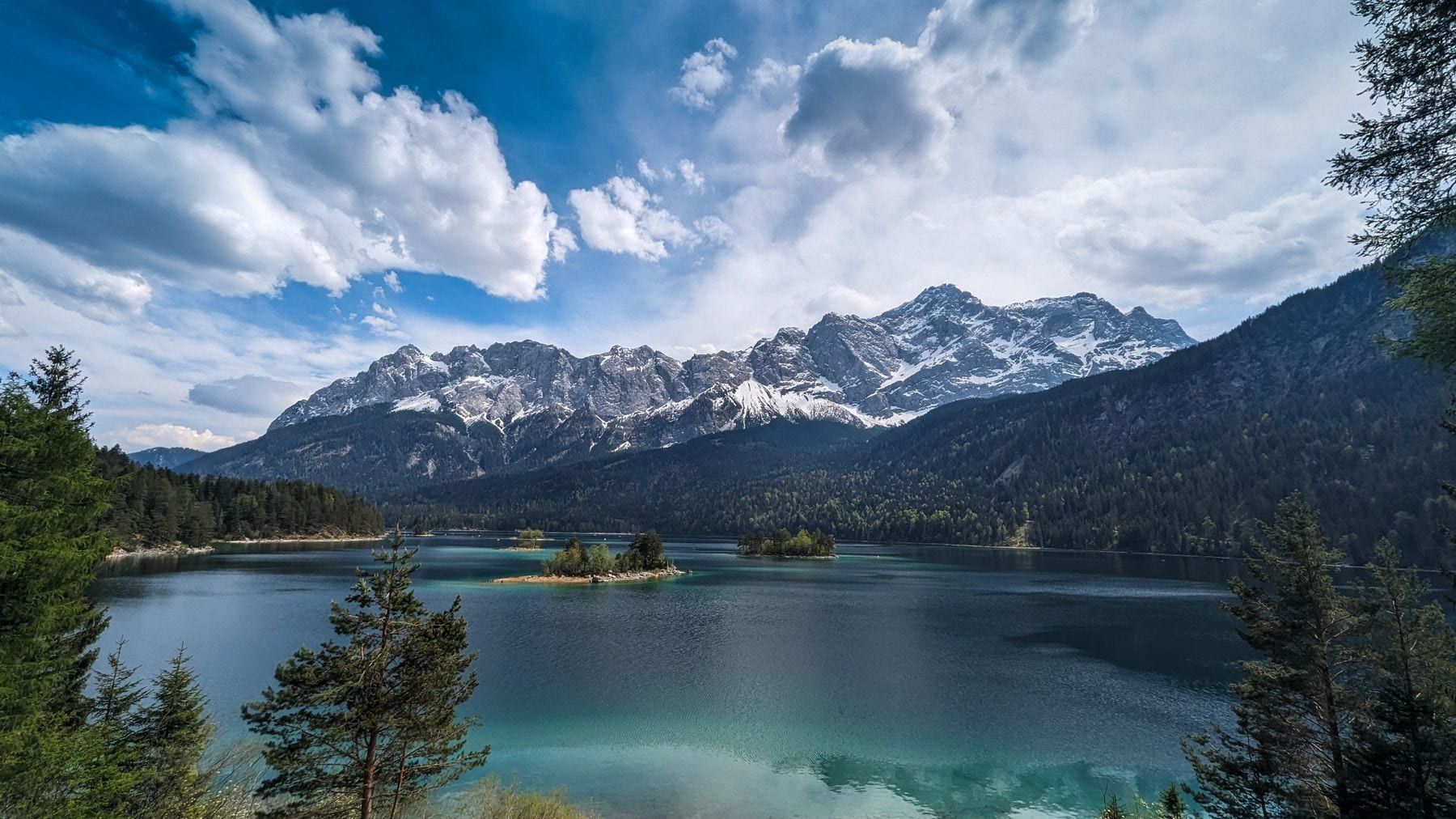
What Germany's highest mountain really costs, why the Partnachklamm and the Wank save the day when the summit is in cloud, and whether the trip to Neuschwanstein is worth the stress.
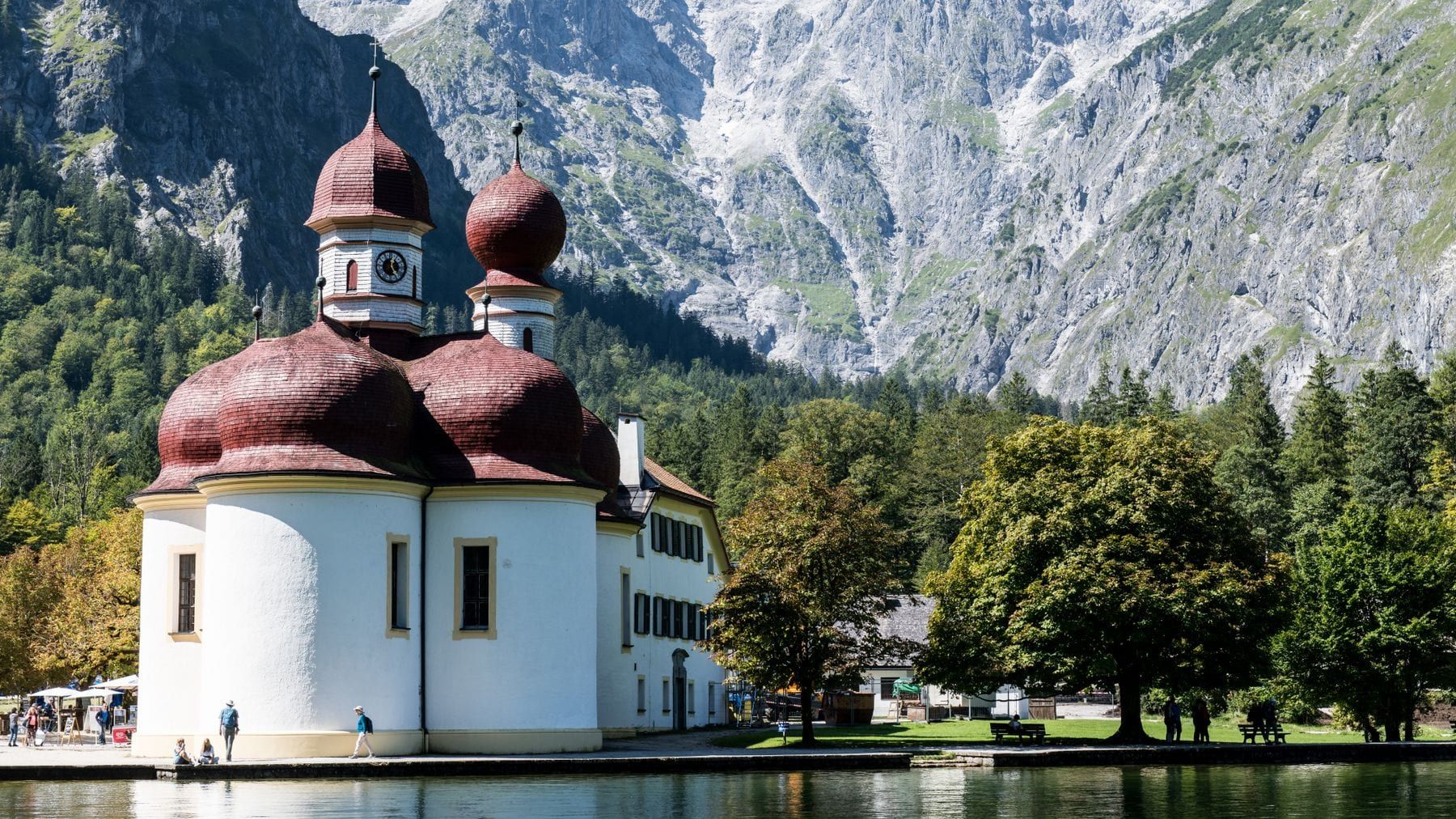
What a few days in the south-easternmost corner of Germany really cost, why you have to take the first boat across the Königssee, and how to place the Eagle's Nest and the Obersalzberg without it turning into a Hitler tour.