Sendai & Matsushima

Japan · Tohoku · Travel guide

Sendai & Matsushima

What a few days in the big city of the north really cost, why you eat beef tongue here and how to see the 260 islands of Matsushima without a tour group.

Photo: Mateusz Walendzik / Pexels

What does a trip to Sendai & Matsushima cost?

Adjust the values to your trip: the calculator updates live (EUR, converted from CHF estimates).

3,483 EUR
≈ 1,741 EUR per person
  • Flights 2,247 EUR
  • Accommodation 455 EUR
  • Food 428 EUR
  • Local transport 64 EUR
  • Shinkansen from Tokyo (return) 289 EUR

Estimates for orientation, not booking prices. Flights and hotels vary strongly by season: current prices are behind the links below.

Money & payment: You pay in yen (JPY). 1,000 yen is roughly CHF 6 or EUR 6.50. Cards work in cities and hotels; small restaurants, temples and rural stations often want cash. An IC card (Suica or ICOCA) on your phone pays for trains, buses and convenience stores. Flight time: 12 to 14 hours, usually with one stop.

Recommended hotels

Nine options in three price ranges, each among the best-rated on Booking.com.

Budget

Dormy Inn Sendai Ekimae

Chuo, Sendai

Two minutes from the station's west exit, small rooms, but with an onsen bath on the top floor, a sauna and the well-known free late-night ramen. Hard to beat for the price in Sendai.

from CHF 60 / night (about EUR 64) View →

Toyoko Inn Sendai Nishi-guchi Hirose-dori

Hirose-dori, Sendai

The chain's standard business hotel: clean double rooms from 14 square metres, simple breakfast included, five minutes' walk to the arcades and Kokubuncho. No charm, but reliable and cheap.

from CHF 50 / night (about EUR 54) View →

Super Hotel Sendai Hirose-dori

Hirose-dori, Sendai

Budget chain with firm beds, a choice of pillows and a breakfast buffet included. Right at Hirose-dori subway station, quiet enough to sleep, close enough to the gyutan restaurants.

from CHF 55 / night (about EUR 59) View →

Mid-range

Daiwa Roynet Hotel Sendai

Chuo, Sendai

Bigger rooms than the budget chains, good beds, an ironing station, five minutes to the station and on the Clis Road arcade. The solid choice if you are staying three nights and want a bit of space.

from CHF 90 / night (about EUR 96) View →

Mitsui Garden Hotel Sendai

Honcho, Sendai

Quietly located in the business district near Jozenji-dori, with a large communal bath on the top floor and a very good breakfast. Ten minutes' walk from the station, but right on the zelkova boulevard and close to Kokubuncho.

from CHF 100 / night (about EUR 107) View →

Richmond Hotel Premier Sendai Ekimae

Chuo, Sendai

Directly opposite the station, rooms of 20 square metres and more, muted colours, a good breakfast with zunda mochi. Often the best value for money among the station hotels.

from CHF 105 / night (about EUR 112) View →

Luxury

The Westin Sendai

Ichibancho, Sendai

The city's highest hotel, on floors 25 to 36 of the Trust Tower, with views over the city to the Pacific. Large rooms, a club lounge, an excellent breakfast. Sendai's top address for international hotel standards.

from CHF 220 / night (about EUR 235) View →

Hotel Metropolitan Sendai

Station, Sendai

The JR hotel right at the west exit: classic, with two buildings (the newer "East" wing is more modern), several restaurants and the advantage of being on the Shinkansen with your suitcase in three minutes. Ideal for a round trip through Tohoku.

from CHF 170 / night (about EUR 182) View →

Matsushima Ichinobo

Takagi, Matsushima

A large resort ryokan above the bay with a panoramic onsen and a pool on the terrace that mirrors the islands. Kaiseki with oysters and fish from Sanriku, rooms with bay views. A night here is the reason to go to Matsushima.

from CHF 320 / night (about EUR 342) View →

If you book through these links we earn a small commission, at no extra cost to you.

Experiences worth your time

Boat trip through Matsushima Bay

The cruise from Matsushima harbour takes 50 minutes and passes the best-known pine islands, 1,500 yen (CHF 9). Take the standard deck; the upper-deck supplement gets you nothing. Departures hourly, and the light is better in the morning.

View & book →

Zuihoden: mausoleum of Date Masamune

The black lacquer and gold tomb of the city's founder in the cedar forest, faithfully rebuilt in 1979, with a small museum on the finds from the grave. Admission 570 yen (CHF 3.50), reachable on the Loople bus, framed by red maples in autumn.

View & book →

Aoba Castle ruins and the Masamune equestrian statue

Only the walls of the castle remain, but the hill gives the best view over Sendai to the sea, and the equestrian statue of the "One-Eyed Dragon" is the city's landmark. Free, the museum next door 700 yen, most beautiful in the late afternoon.

View & book →

Zuiganji and Entsuin temples in Matsushima

The most important Zen temple in Tohoku, with golden sliding doors and rock caves along the approach, admission 700 yen. The neighbouring Entsuin temple has a moss garden and, in November, an autumn leaf illumination that rescues your evening in Matsushima.

View & book →

Day trip to Yamadera

1,015 steps through cedar forest to the mountain temple of Risshaku-ji, with the viewing hall over the valley at the top. One hour from Sendai on the Senzan line, admission 300 yen; bring good shoes and allow three hours.

View & book →

Gyutan cooking class or izakaya tour in Kokubuncho

Kokubuncho is the biggest nightlife district in the north, with hundreds of izakaya in narrow alleys. A guided tour (CHF 60 to 90 with food and drinks) takes you to places you would not find on your own; alternatively, just sit down at the counter of a gyutan restaurant.

View & book →

Tanabata Matsuri (6 to 8 August)

For three days the shopping arcades are hung with metre-long paper decorations, and on the eve there are fireworks by the river. Free, but hotels are booked out months ahead and twice the price. If you are coming, book in January.

View & book →

Nikka Miyagikyo whisky distillery

Nikka's second distillery sits in a valley 40 minutes west of Sendai; the tour with tasting is free (reserve online in advance), and the bar afterwards sells bottlings you can only get here. Take the Senzan line to Sakunami, then the shuttle bus.

View & book →

Arahama tsunami memorial

The preserved primary school on the coast uses photos and markings to show how high the water rose in 2011. Free, respectfully done, about two hours including the journey (subway to Arai, then bus). Not a fun outing, but part of this region.

View & book →

If you book through these links we earn a small commission, at no extra cost to you.

Food & drink

Sendai eats hearty and with confidence: beef tongue from the charcoal grill, green soybean paste on rice cakes, oysters from the bay and sasa kamaboko, the grilled fish cake shaped like a bamboo leaf. Add sake from Miyagi, one of the best rice wine prefectures in Japan.

Gyutan (grilled beef tongue)

Aji Tasuke (the original since 1948) in Ichibancho or the Rikyu chain

Thick slices of beef tongue, salted and grilled over charcoal, served as a set with barley rice, oxtail soup and pickles. Tender with bite, smoky, nothing like offal. Set CHF 12 to 20 (about EUR 13 to 21).

Tip:At the station, "Gyutan-dori" on the third floor has four restaurants side by side; the queues are shortest at 11.30.

Zunda mochi

Zunda Saryo at Sendai station (zunda shake) or Murakamiya Mochiten in Kitame-machi

Puréed green edamame with sugar on soft rice cake, slightly salty-sweet and bright green. The dessert of the region, also as a shake (CHF 3, about EUR 3) or on soft-serve ice cream.

Tip:You can get the zunda shake right in the station, perfect before the Shinkansen.

Matsushima oysters (kaki)

The harbour promenade at Matsushima-Kaigan and the oyster huts near Shiogama

From October to March the oysters come from the bay: raw, grilled or breaded as kaki fry. Small, dense and sweetish. A plate of kaki fry CHF 8 to 12 (about EUR 9 to 13), the oyster huts with a time limit CHF 20 to 25.

Tip:Out of season the oysters are frozen, so go for anago (conger eel) from Shiogama instead.

Sasa kamaboko

Abe Kamaboko-ten in the Chuo-dori arcade (grill it yourself) or Kanezaki

Fish cake made from white fish, grilled in the shape of a bamboo leaf, mild and slightly springy. Warm as a snack for CHF 1.50 (about EUR 1.60) a piece, as a gift box from CHF 8.

Tip:At Abe you can grill your own kamaboko over the flame for 300 yen.

Sushi in Shiogama

Shiogama fish market (Shiogama Suisanbutsu Nakaoroshi Ichiba) and the sushi restaurants around Hon-Shiogama station

Shiogama is said to have the highest density of sushi restaurants in Japan, right by the fishing port, with tuna from the Pacific. A ten-piece lunch set costs CHF 15 to 25 (about EUR 16 to 27); in Tokyo you would pay double.

Tip:At the market you buy pieces of sashimi and put together your own rice bowl for 300 yen.

Seri nabe

Izakaya in Kokubuncho, for example Sendai Seri Nabe Izakaya on Hirose-dori

A winter hotpot with seri, a water parsley eaten here roots and all, in duck or chicken broth. Crunchy, bitter and fresh, only from November to March. A portion CHF 15 to 20 (about EUR 16 to 21).

Tip:The roots are the best part, do not pick them out.

Hiyashi chuka (cold ramen)

Ryutei in Ichibancho, the restaurant that claims the invention

Cold noodles with cucumber, egg, ham and a vinegar and soy sauce, said to have been invented in Sendai in 1937. A lifesaver in summer at 30 degrees, CHF 6 to 9 (about EUR 6 to 10).

Tip:In July and August hiyashi chuka is on every ramen menu; order it at the ticket machine with the blue button.

Sake from Miyagi

Urakasumi brewery in Shiogama (shop with tasting) or the sake bar in Sendai station

Dry, clear and made for fish: Urakasumi from Shiogama, Ichinokura, Hakurakusei. A glass costs CHF 3 to 5 (about EUR 3 to 5) in an izakaya, a tasting at the brewery 300 to 500 yen.

Tip:Order "jizake" and you get the local sake instead of the big brand.

Book a food tour: Sendai & Matsushima

Through markets and eateries with a guide, tastings included.

View & book →

If you book through these links we earn a small commission, at no extra cost to you.

History & background

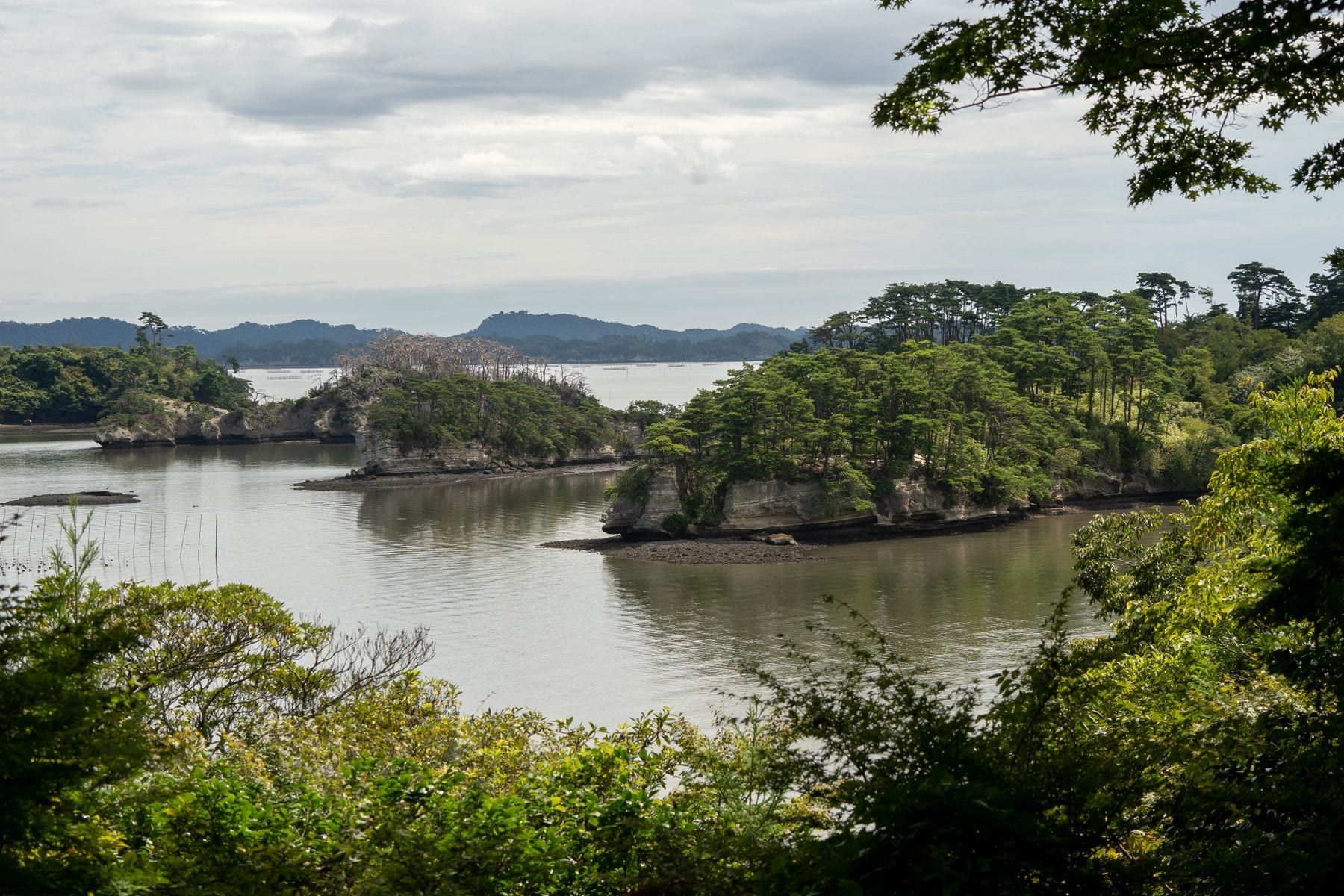
By Japanese standards Sendai is a young city. In 1600 the lord Date Masamune sided with the Tokugawa at the Battle of Sekigahara and was rewarded with a fief in the northeast. In 1601 he had a castle built on Aoba hill and a city laid out below it, with wide streets and zelkova trees that still give it the nickname "City of Trees". Masamune, called the "One-Eyed Dragon" because he lost his right eye, was a warrior but also a man of vision: in 1613 he sent his own embassy across the Pacific to Mexico, Spain and Rome, decades before Japan closed itself off. His mausoleum, Zuihoden, black lacquer and gold, still stands in the cedar forest above the Hirose river. The castle itself is gone; in the 1945 air raid almost the entire city centre burned down. Sendai was rebuilt as the economic centre of the north, with Tohoku University and broad boulevards. 11 March 2011 remains the deepest break: the magnitude 9.0 earthquake struck off the Miyagi coast, and the tsunami hit Sendai's coastal districts and destroyed the airport. The city has recovered, and on the Arahama coastal strip a preserved school ruin recalls the day. Matsushima, 30 minutes to the northeast, was largely spared thanks to the islands lying offshore. The bay with its roughly 260 pine-covered islands has counted among the "Three Views of Japan" since the 17th century, and the poet Basho is said to have stood here speechless with wonder in 1689.

Insider tips

Getting there: Shinkansen from Tokyo and the Loople bus pass

From Switzerland you fly to Tokyo Haneda or Narita; Sendai airport only has Asian connections, although with a change in Seoul or Taipei you can fly straight there. From Tokyo the Tohoku Shinkansen (Hayabusa) takes about 90 minutes to Sendai; a single ticket with a seat reservation costs around 11,400 yen, so CHF 68 (about EUR 73) each way. If you are heading on to Aomori, Yamagata or Akita, take the JR East Tohoku Area Pass: five days for 30,000 yen (CHF 180), also valid for Matsushima and Yamadera, and it pays for itself with Tokyo, Sendai and back plus one day trip. In the city, Suica on your phone and the Loople Sendai bus are all you need: a loop line to Zuihoden, the castle ruins and the museum, day pass 630 yen (CHF 4). You will hardly need the subway (two lines); the centre between the station and Kotodai Park is a 20-minute walk end to end. A day of transport realistically costs you CHF 10 to 15.

Where to stay: the station, not the bay, with one exception

Sendai is a business hotel city, and that works in your favour: around the station you will find Dormy Inn, Toyoko Inn, Daiwa Roynet and Richmond for CHF 55 to 110 (about EUR 59 to 118) per double room, often with an onsen bath in the building and breakfast. Pick the west side (Nishi-guchi): the shopping arcades, the izakaya alleys of Kokubuncho and the gyutan restaurants are all within walking distance. A ryokan in the city is not worth it. Matsushima is different: a night in a ryokan overlooking the bay, with a kaiseki dinner and bath, costs CHF 250 to 400 for two and is the experience you will remember from Tohoku. Do the honest maths: the dinner alone would cost CHF 60 to 80 per person in a restaurant. Our suggestion for four nights: three in a business hotel in Sendai, one in Matsushima, and book Matsushima early, especially at weekends and in autumn.

Cost traps: Matsushima boats, Tanabata and dinner

The big trap in Matsushima is the boat trips: the standard cruise (50 minutes) costs 1,500 yen (CHF 9, about EUR 10), but at the counter they like to sell you the "Green Seat" upper deck for a 600 yen supplement. You see the same thing from below. You do not need the small private boats for CHF 60 and up. The second item is oysters: in season (October to March) a plate of deep-fried kaki fry costs CHF 8 to 12, and the all-you-can-eat oyster huts charge CHF 20 to 25 for 45 minutes, which only makes sense if you really eat a lot. During Tanabata (6 to 8 August) hotel prices in Sendai double and rooms are gone months in advance; if you are not coming specifically for the festival, come a week later. And: the gyutan restaurants on the station's third floor ("Gyutan-dori") are good, but come with a queue and CHF 15 to 20 per set; the branches in Kokubuncho are just as good and often emptier.

Timing: Tanabata in August, momiji in November, winter with lights

Sendai has four distinct seasons, and none of them is wrong. Cherry blossom peaks around 10 April, a week after Tokyo, and is loveliest along the Hirose river and in Tsutsujigaoka Park, with far fewer people than in Kyoto. The Tanabata Matsuri from 6 to 8 August fills the arcades with huge paper streamers; it is one of the three great summer festivals of Tohoku and a real reason to make the trip, if you can handle the heat (30 degrees and humid) and the crowds. Autumn leaves are at their best in early to mid November, which is also the best time for Matsushima: clear air, red maples on the islands. In December the "Pageant of Starlight" turns Jozenji-dori into a tunnel of 600,000 lights. Avoid Golden Week (29 April to 5 May) and Obon (mid August): packed trains, expensive rooms. Sendai gets little snow; winter is cold but clear and cheap.

Underrated: Fukuura Island and the Ojima peninsula on foot

Most visitors to Matsushima take the boat, photograph the red bridge, eat an oyster and head back. Yet the best part is right in front of you on foot: the 252-metre red bridge takes you to Fukuura Island (admission 200 yen), a nature park with pine forest and small coves where you can wander for 45 minutes and see the bay up close without engine noise. At the other end of town lies Oshima, a tiny island with meditation caves used by Zen monks in the Middle Ages, free and usually empty. In between is Zuiganji, the most important Zen temple in Tohoku (700 yen), rebuilt by Date Masamune in 1609, with golden sliding doors and an avenue of cedars. If you want more height, walk to the Saigyo Modoshi no Matsu viewpoint, 15 minutes uphill behind Matsushima-Kaigan station: the classic view over all the islands, unbeatable during cherry blossom season.

Day trip: Yamadera, the mountain temple with 1,015 steps

Yamadera is the one day trip you should not skip. The JR Senzan line runs from Sendai in about an hour (860 yen, CHF 5, about EUR 5) to the village by the river, with the Risshaku-ji temple clinging to a cliff above it. The climb costs 300 yen and leads up 1,015 stone steps through cedar forest, past grave niches and moss; allow 40 minutes up, an hour with photo stops. At the top the Godaido hall juts out like a balcony over the valley, and the view is the reason for the trip. Basho wrote his most famous haiku here in 1689, about the stillness and the cicadas, and the stone marker stands beside the path. In winter the steps are icy and partly closed, so May to November is better; autumn is the busiest. Down in the village there is soba and "chikara konnyaku", konjac balls in soy broth for 100 yen. To make the most of the day, carry on along the same line to Yamagata (another 20 minutes) and eat imoni there.

Frequently asked questions about Sendai & Matsushima

How many days do I need for Sendai and Matsushima?

Three full days is a good frame: one day in Sendai (Zuihoden, the castle ruins, gyutan, Kokubuncho in the evening), one day in Matsushima with the boat, Zuiganji and Fukuura Island, and one day for Yamadera. If you stay in a ryokan in Matsushima, add a night there. As a stopover on the way to Aomori or Hokkaido, two nights are enough.

Is the detour from Tokyo to Sendai actually worth it?

Yes, if you want to see Japan away from the Golden Route. Ninety minutes on the Shinkansen and you are in a city without tourist crowds, with its own cuisine, one of the three most famous landscapes in Japan on its doorstep and prices 20 to 30 percent below Tokyo. As a pure day trip from Tokyo it is too tight; plan at least two nights.

What is gyutan and why do people eat it in Sendai?

Gyutan is grilled beef tongue: thickly sliced, salted, grilled over charcoal and served with barley rice, oxtail soup and pickles. It was invented in 1948 by Keishiro Sano, who in post-war Sendai made use of the tongues the Americans left over. It tastes tender, slightly crisp and not at all like offal. A set costs CHF 12 to 20 (about EUR 13 to 21); the Rikyu chain is everywhere, Aji Tasuke is the original.

What is the best way to get to Matsushima?

Take the JR Senseki line from Sendai (platform at the east end of the station, towards Ishinomaki) to Matsushima-Kaigan: 40 minutes, 420 yen (CHF 2.50, about EUR 2.70), with Suica or a JR Pass. Do not get off at "Matsushima" station on the Tohoku main line, which is a 20-minute walk from the harbour. Alternatively, a sightseeing boat runs from Shiogama to Matsushima (50 minutes, 1,500 yen), a nice option for the way there.

Can you still see traces of the 2011 tsunami in Sendai?

Not in the city centre. On the coast, 10 kilometres east, you will see the new sea walls and the abandoned settlement of Arahama, where the preserved primary school is open as a memorial (free, by bus from Arai station). The visit is powerful, respectfully done and shows why the region has put so much energy into rebuilding. Matsushima itself was protected by the islands and has been completely back to normal for years.

Can I travel further north from Sendai?

Sendai is the ideal hub: the Shinkansen reaches Shin-Aomori in 90 minutes and Hakodate on Hokkaido in just over two hours, and the Senzan line runs to Yamagata (one hour). With the JR East Tohoku Area Pass (five days, CHF 180, about EUR 193) you can do a round trip from Tokyo via Sendai, Matsushima, Yamadera, Ginzan Onsen and Aomori and back without buying another ticket.

Itineraries with this destination

Activities in the region

More destinations in Tohoku