Davos Youth Hostel
The youth hostel in a former sanatorium above Davos Platz, with double and family rooms, half board and a view of the Jakobshorn. Honestly the cheapest way to sleep in Davos, and the bus stops at the door.
Switzerland · Graubünden & Ticino · Travel guide
What a week in the highest town in Europe really costs, which mountain suits you, why Klosters is often the better base and when you should on no account book Davos.
Photo: Ollie Craig / Pexels
Adjust the values to your trip: the calculator updates live (EUR, converted from CHF estimates).
Estimates for orientation, not booking prices. Getting there means train or car from Switzerland, return, per person. Hotels vary strongly by season: current prices are behind the links below.
Money & payment: You pay in Swiss francs (CHF). Cards and the Twint app work practically everywhere, even on alpine pastures. Many shops accept euros but give change in francs at a poor rate. Service is included in prices; rounding up is customary. Getting there: By train (SBB) or car, 1 to 4 hours from Zurich.
Nine options in three price ranges, each among the best-rated on Booking.com.
Budget
The youth hostel in a former sanatorium above Davos Platz, with double and family rooms, half board and a view of the Jakobshorn. Honestly the cheapest way to sleep in Davos, and the bus stops at the door.
Simple hotel on the Talstrasse in Davos Platz, five minutes from the station and the Jakobshorn cable car, with a restaurant and fair prices. For skiers who only need a clean bed in the evening.
Family-run three-star house on the Landstrasse halfway between Klosters Platz and Klosters Dorf, the free bus stops outside the door, with an indoor pool, sauna and simple, good cooking. The affordable village alternative to Davos with the same ski pass.
Mid-range
Traditional house directly opposite the Parsenn funicular in Davos Dorf, with spa, good breakfast and rooms with balconies. The most convenient location for Parsenn skiers, and in summer the lake is five minutes away.
Modern four-star house right by Davos Platz station with several restaurants, a sauna and rooms in wood and stone. A good choice if you arrive by train and want to reach everything on foot.
Chalet-style four-star house in the middle of Klosters, with indoor pool, spa and a view of the Silvretta. Cosier than the Davos hotels, Gotschna cable car three minutes' walk away.
Luxury
The art nouveau sanatorium from 1900 at 1,861 metres, reachable only by funicular, the model for Thomas Mann's Magic Mountain. Not five stars in the classic sense, but an experience with its rest terrace, park and peace above the valley.
The white grand hotel on the Promenade, the first house of Davos since 1875 and the centre of the WEF while it is on. Large spa, indoor pool, classic rooms with south-facing balconies. Fairly priced outside January.
The golden egg above Lake Davos, formerly the InterContinental, with a large spa, pool and a view over the whole valley. Modern and a little out of the way, with a shuttle to the Parsenn funicular. For anyone who puts design and views above village charm.
If you book through these links we earn a small commission, at no extra cost to you.
The funicular from 1931 climbs from Davos Dorf to 2,663 metres, then the cable car continues to the Weissfluh summit. Around CHF 55 (about EUR 59) return, free with the guest card in summer, two to three hours with the circular trail at the top. In winter the heart of the ski area.
Funicular from Davos Platz to the Magic Mountain hotel, in summer with the alpine garden (CHF 6), in winter with the 2.8-kilometre toboggan run down. Funicular around CHF 18 return, sledge hire CHF 12, two hours. Stay on the terrace in the afternoon.
By PostBus or on foot into the loveliest side valley of Davos, which ends in a Walser village with a white church in front of the rock faces. PostBus free with the guest card, walk 2 to 3 hours, flat. Another hour on to the Sertig waterfall.
Cable car from Davos Platz to 2,590 metres, the sun and snowboard mountain with views of Piz Kesch and the Landwasser valley. Summer around CHF 45 return, free with the guest card, circular trail at the top 90 minutes. In winter the freestyle park and the Jatzhütte.
The largest collection of Ernst Ludwig Kirchner in the world in a light-flooded building in Davos Platz, with the Davos mountain paintings and the story of his final years. Admission CHF 12, 90 minutes, the best rainy day in Davos. Closed on Mondays.
Around 100 kilometres of trails leading flat from the centre into the side valleys, day pass CHF 10, equipment from CHF 30 a day, beginners' course from CHF 60. The cross-country centre by the golf course is the starting point, Dischma to Teufi the loveliest loop.
The oldest club tournament in ice hockey, every year from 26 to 31 December, with HC Davos and Team Canada. Tickets CHF 50 to 120, on sale from autumn, a game lasts two and a half hours. The atmosphere with alphorn and standing terrace is unique.
By hire bike or e-bike along the Landwasser and down over Wolfgang to Klosters, 15 kilometres, back on the RhB (guest card). Bike hire from CHF 35, e-bike from CHF 55, guided trail tours from CHF 90. For experts, the freeride trails from the Jakobshorn.
Gondola from Klosters Dorf up to Madrisa with a children's area, slides, petting zoo and flat walking trails at 1,900 metres. Free with the guest card in summer, otherwise around CHF 40 return, half a day. In winter the quietest family area.
If you book through these links we earn a small commission, at no extra cost to you.
Davos eats Graubünden and Walser style: Capuns, Pizokel, barley soup and Bündnerfleisch in the village inns, plus a surprising amount of international food along the Promenade that lives off the congress crowd. The best plates are in the side valleys and in Klosters, not on the main street. It is expensive everywhere, a little more so on the mountain.
Chard parcels filled with Spätzli dough, Salsiz and Bündnerfleisch, cooked in cream and stock and gratinated with mountain cheese. The dish you have to have eaten once in Graubünden, CHF 24 to 32 (about EUR 26 to 34).
Tip:Order a half portion with the barley soup and you get both for the price of one main course.
Buckwheat or white flour dumplings with bacon, savoy cabbage and cheese, hearty and filling. CHF 22 to 28, often as a pan for two.
Tip:In Sertig after the walk, not before.
Pearl barley, smoked meat, leek, carrots and cream, slowly cooked, the number one hut meal (Graubünden barley soup). CHF 12 to 16 with bread, up to CHF 18 on the mountain.
Tip:The cheapest hot lunch on the slopes, and with a piece of bread it lasts until the evening.
Air-dried beef and the small cured sausages of Graubünden, served as a platter with mountain cheese, gherkins and bread. CHF 22 to 30, meant as an afternoon snack for two.
Tip:Buy a Salsiz for your rucksack at the butcher, CHF 6 to 9 apiece.
Grated potatoes roasted in butter into crumbs, served with apple sauce and mountain cheese, an old Graubünden poor man's dish. CHF 20 to 26, heavier than it sounds.
Tip:Not on every menu, so ask for it if you want Graubünden cooking.
Walnut caramel in shortcrust pastry, the Engadin nut tart, which comes from the Engadin but is sold in every Davos bakery. A slice CHF 5 to 7, a whole tart from CHF 22.
Tip:Take the small tart as a souvenir, it keeps for weeks.
The highest brewery in Europe, in the Walser village of Monstein, brews Bündner Hell, Wätterguoge and a dark beer, a glass CHF 6 to 8, the brewery tour with tasting around CHF 25.
Tip:Book the tour in advance, then have a barley soup in the village afterwards.
Through markets and eateries with a guide, tastings included.
If you book through these links we earn a small commission, at no extra cost to you.
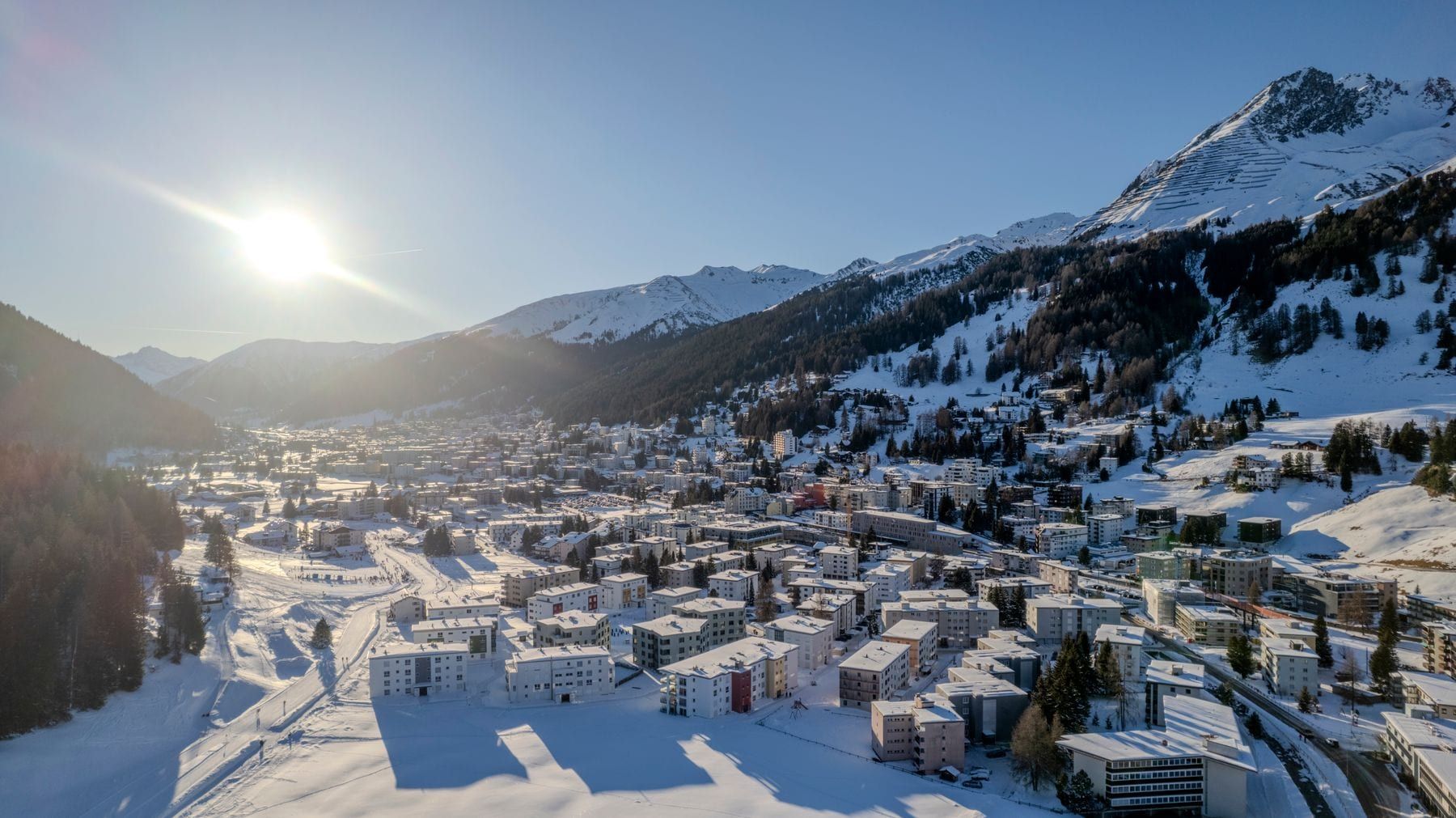
Davos lies at 1,560 metres in a broad high valley open to the north-east and until the mid-19th century was a farming village of the Walser, who had migrated from the Valais in the 13th century. In 1865 the German doctor Alexander Spengler had the idea of treating tuberculosis patients in the dry mountain air, and within thirty years the village grew into one of the largest health resorts in Europe. Dozens of sanatoria with south-facing rest halls were built, Robert Louis Stevenson worked on "Treasure Island" here, and in 1912 Thomas Mann visited his wife in the Waldsanatorium, which became "The Magic Mountain". The Schatzalp, opened in 1900 as a luxury sanatorium, is now a hotel and the model for Mann's Berghof. Ernst Ludwig Kirchner moved to Davos in 1917 and painted the mountains until he took his own life in 1938; the Kirchner Museum shows his work. With the discovery of antibiotics the sanatoria lost their purpose, and Davos reinvented itself as a sports resort: the Parsenn funicular ran from 1931, the world's first T-bar ski lift stood at the Bolgen in 1934, and the HCD ice hockey club and the Spengler Cup have been part of Christmas since 1923. Since 1971 the World Economic Forum has met in the congress centre every January, which makes Davos famous worldwide and turns the village into a fortress for a week. Today Davos, with around 11,000 inhabitants, is a real town with high-rise blocks from the seventies, not pretty, but with six ski areas and 700 kilometres of walking trails.
From Zurich you take the IC to Landquart and change to the Rhaetian Railway, which runs through the Prättigau via Klosters to Davos Dorf and Davos Platz. 2 hours 30 minutes in total, full fare one way around CHF 60 (about EUR 64), with the Half Fare Card CHF 30, supersaver tickets from CHF 19. From Basel and Bern an hour more, from Stuttgart and Munich via Zurich or Lindau in 4 to 5 hours. The alternative runs via Chur and Filisur, takes longer, but takes in the Landwasser Viaduct. By car it is 2 hours from Zurich on the A3 and A13 to Landquart, then up the Prättigau road, vignette CHF 40. In winter the stretch between Klosters and Davos can be closed briefly after snowfall. You do not need a car once you are there: the local buses (VBD) run every ten minutes along the whole valley axis, and with your accommodation's Davos Klosters Card the buses and the RhB between Klosters and Filisur are free, in summer plus all the mountain railways. Parking in Davos costs CHF 1.50 to 3 an hour, and hotels charge CHF 10 to 25 a night.
Davos Klosters has six ski areas that are not linked, but the ski pass is valid in all of them. Parsenn is the big classic area from Davos Dorf: wide pistes up to the Weissfluhjoch at 2,693 metres, the twelve-kilometre run down to Küblis and a direct link across to Klosters via the Gotschna cable car. The first choice for cruisers and families, full at weekends. Jakobshorn from Davos Platz is the snowboard and freestyle mountain with a park, the Jatzhütte and loud music; the pistes are steeper and sunnier, the mood younger. Rinerhorn in Glaris and Madrisa in Klosters are the family mountains, quiet, cheap, with children's areas. Pischa is a freeride and snowshoe area with almost no lifts. In summer the same pattern applies: Parsenn for high-level trails, Jakobshorn for the view of the mountains of the Landwasser valley, Rinerhorn for alp walks with children. The Weissfluhjoch railway costs around CHF 55 (about EUR 59) return in summer without the guest card; with the Davos Klosters Card it is included, and that goes for all the railways from the first night.
The Davos Klosters day ski pass costs around CHF 80 to 95 (about EUR 86 to 102) in high winter, dynamically priced, cheaper online in advance than at the ticket desk. The six-day pass is CHF 400 to 450. Children up to five ski free, up to twelve at half price. Ski hire costs CHF 40 to 55 a day, lunch on the mountain CHF 25 to 40, with the Jatzhütte and the Parsennhütte restaurant at the upper end. Expect CHF 140 to 180 per ski day and person before you have slept anywhere. Saving: many hotels offer packages with ski pass in January after the WEF and in March that cut the total by a quarter. If you sleep in Klosters or Davos Glaris, you pay less for the bed for the same pistes. Non-skiers need no pass: the winter walking trails to Sertig and Dischma, the toboggan runs at Rinerhorn (CHF 35 day ticket) and Schatzalp and the cross-country trails (day pass CHF 10) cost a fraction. The ice rink at the sports centre is free with the guest card.
Davos Platz is the centre with the station, congress centre, Jakobshorn cable car and most of the restaurants. Davos Dorf lies two kilometres north by the lake with the Parsenn funicular, quieter, but dead in the evening. Between them hotels line three kilometres of the Promenade, and the bus makes the location almost irrelevant. Mid-range double rooms cost CHF 180 to 260 (about EUR 193 to 278) in winter and CHF 140 to 200 in summer; the youth hostel and the Youthpalace are the budget anchors from CHF 50 per person. Klosters, 25 minutes by train or 15 by car, is a real village with chalets, ten degrees cosier and often CHF 30 to 50 a night cheaper, with the Gotschna cable car straight into the Parsenn area. WEF week (usually the third week of January) is not an option for tourists: hotels charge three to five times the normal rate or are completely booked out, the Promenade is closed, there are police and fences everywhere, and restaurants are rented out to companies. The week before and after is expensive too. Over Christmas and New Year with the Spengler Cup almost everything is full as well, so book six months ahead for that.
The Schatzalp is the Davos that appears in books: a funicular from 1899 from Davos Platz, at the top the art nouveau sanatorium as a hotel, an alpine garden with 5,000 plant species (summer, CHF 6) and in winter a 2.8-kilometre toboggan run down, the funicular around CHF 18 (about EUR 19) return, included with the guest card. Sitting on the terrace in the afternoon, where the patients once lay, is the quietest spot above Davos. Cross-country skiing: 100 kilometres of trails, classic and skating, flat through the valley and into the side valleys, centred on the cross-country centre by the golf course, hire CHF 30 a day. The three side valleys are the real reason for Davos: Sertig ends in a Walser village with a white church in front of a rock face, Dischma leads to Dürrboden, Flüela up to the pass. You reach all three by PostBus (guest card) or by bike on flat paths in 90 minutes; on foot it is 2 to 3 hours. In Sertig the garden of the Walserhuus is the best lunch stop, Rösti with fried egg for around CHF 22. In winter all three valleys are groomed and almost free of mountain railway noise.
Summer is the cheaper and often better season in Davos: from the first night, the Davos Klosters Card includes all the mountain railways, buses and the RhB as far as Filisur, easily CHF 50 to 80 (about EUR 54 to 86) a day that you do not spend. Add the ice rink, the open-air pool and Lake Davos with its lido, which reaches 20 degrees in August. High season is mid-July to mid-August, when the hotels are three-quarters full, but never as crowded as in winter. September is the best month: settled weather, empty high-level trails, the larches begin to turn at the end of the month, hotels CHF 30 to 40 cheaper. The railways usually run until the middle, in some cases the end, of October. Off-season here means mid-April to early June and late October to early December: many hotels and restaurants are closed, the railways stand still. Davos is cheap then, but empty too; only the Kirchner Museum (CHF 12), the ice rink and the indoor pool remain. In winter March is the smartest month: there is still snow, the days are long, prices fall after the school sports holidays, and the Jakobshorn has sun until 5 pm.

By train from Zurich in 2 hours 30 minutes via Landquart and Klosters, around CHF 60 (about EUR 64) return with the Half Fare Card, supersaver tickets from CHF 38. By car from Zurich 2 hours via Landquart through the Prättigau, vignette CHF 40. You do not need a car once you are there: buses, the RhB and in summer all the mountain railways are included with your accommodation's Davos Klosters Card. In winter parking in Davos is scarce, and hotels charge up to CHF 25 a night.
In summer, as a couple in a mid-range hotel with all mountain railways included, lunch from your rucksack and dinner at a local inn: CHF 1,500 to 1,900 (about EUR 1,605 to 2,033) for seven nights. In winter with a six-day pass, ski hire and food on the slopes it is realistically CHF 2,600 to 3,200 for two, a little less in Klosters. Youth hostel with half board and winter walking instead of skiing: under CHF 1,200.
The World Economic Forum takes place every year, usually in the third week of January, Monday to Friday. The hotels are booked months ahead by delegations and companies, the remaining prices are three to five times the norm, the Promenade is cordoned off, restaurants and shops are rented out to corporations, and there are police and checks everywhere. You can still ski, but the village is unusable. Count the days before and after as well.
Klosters if you want a village with chalets, peace and direct access to Parsenn via the Gotschna cable car, and visit Davos only for dinner or the hockey. Davos Platz if you need restaurants, shops, the congress centre and the Jakobshorn on your doorstep, or want maximum flexibility without a car in winter. Davos Dorf only for the Parsenn funicular and the lake. Price-wise Klosters is usually CHF 30 to 50 (about EUR 32 to 54) a night cheaper.
Yes, for walkers and cyclists more than in winter. With the Davos Klosters Card all the mountain railways are free, and hardly any other Swiss resort offers that from the first night in this form. The side valleys Sertig, Dischma and Flüela, the Strela high-level trail to the Schatzalp, Lake Davos for swimming and the bike trails to Klosters easily fill a week. The townscape remains sober, the mountains do not.
The oldest club ice hockey tournament in the world, held every year since 1923 between Christmas and New Year in the Davos ice stadium, with HC Davos, Team Canada and three or four guest clubs. Tickets cost CHF 50 to 120 (about EUR 54 to 128), go on sale from autumn and sell out quickly for the evening games. The atmosphere with alphorn players and standing terrace is unique, but you have to book hotel rooms for that week six months ahead.
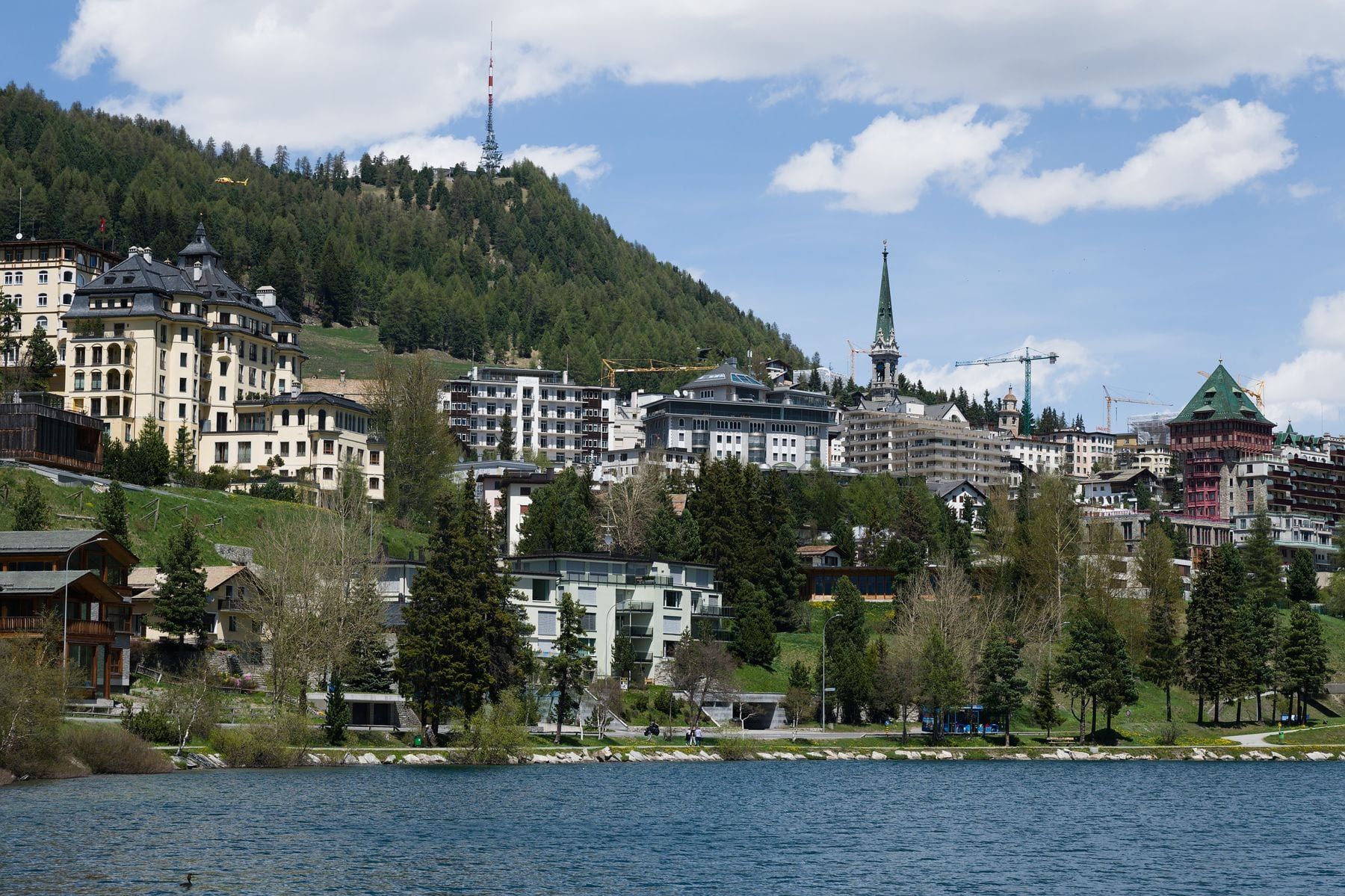
What a week in the Upper Engadin really costs, why you do not have to sleep in St. Moritz itself, and how to pay for Diavolezza, the lake walk and the mountain railways without getting annoyed.
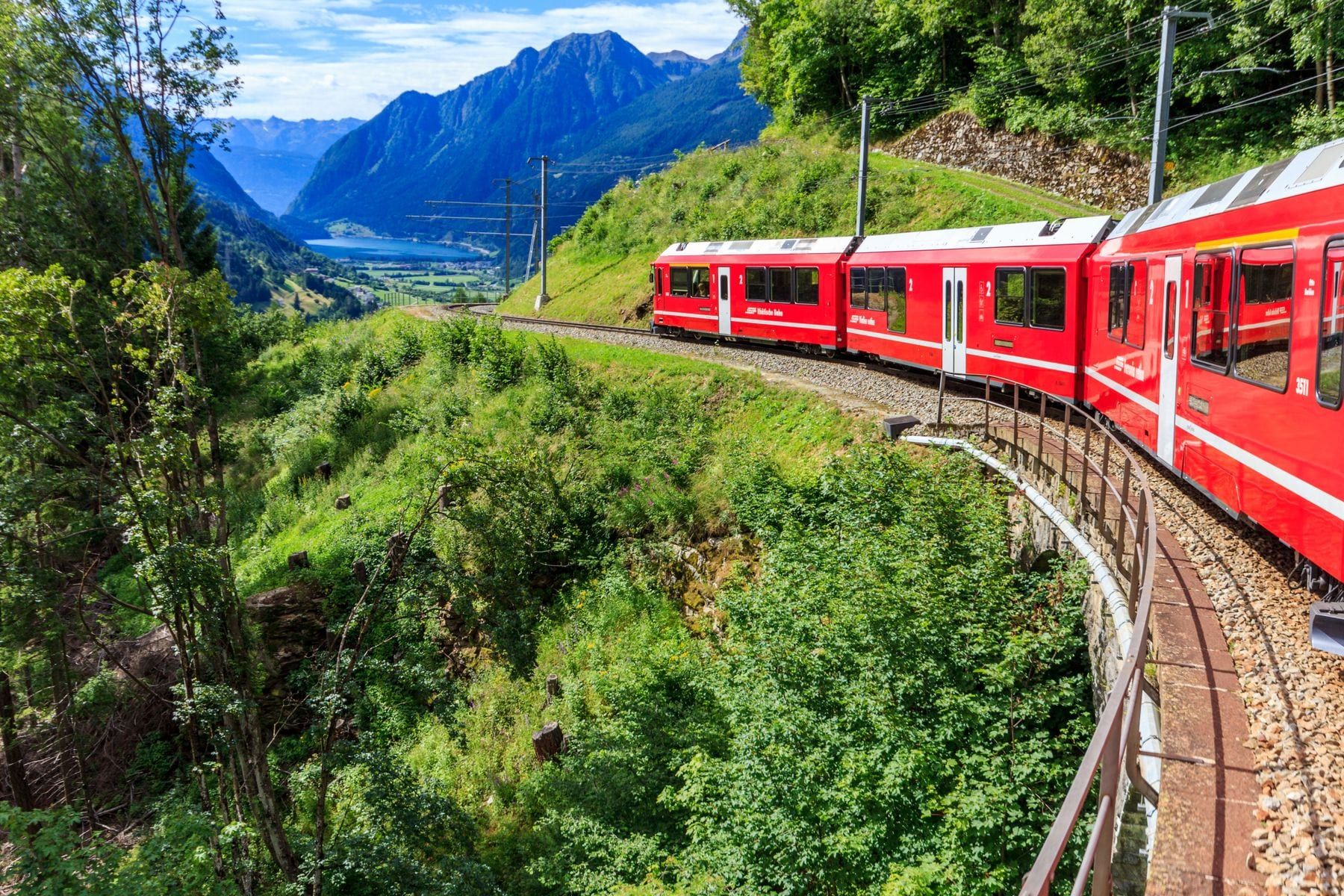
What the most famous railway journey in the Alps really costs, why the regional train with an open window is often better than the panorama coach and why you should spend a night in Val Poschiavo instead of just passing through.
What two or three days in the oldest town in Switzerland cost, why Chur is the smartest base for the Rhine Gorge, Arosa and the Bernina Railway, and where you eat Capuns that do not come out of the freezer.
What a long weekend on Lake Lugano really costs, which of the two home mountains suits you, how to reach Gandria and Morcote by boat and PostBus, and where a grotto is still a grotto.