St. Moritz and the Engadin

Switzerland · Graubünden & Ticino · Travel guide

St. Moritz and the Engadin

What a week in the Upper Engadin really costs, why you do not have to sleep in St. Moritz itself, and how to pay for Diavolezza, the lake walk and the mountain railways without getting annoyed.

Photo: Jean-Paul Wettstein / Pexels

What does a trip to St. Moritz and the Engadin cost?

Adjust the values to your trip: the calculator updates live (EUR, converted from CHF estimates).

2,605 EUR
≈ 1,303 EUR per person
  • Getting there 235 EUR
  • Accommodation 1,177 EUR
  • Food 696 EUR
  • Local transport 241 EUR
  • Mountain railways (Corviglia and Diavolezza, 2 days) 257 EUR

Estimates for orientation, not booking prices. Getting there means train or car from Switzerland, return, per person. Hotels vary strongly by season: current prices are behind the links below.

Money & payment: You pay in Swiss francs (CHF). Cards and the Twint app work practically everywhere, even on alpine pastures. Many shops accept euros but give change in francs at a poor rate. Service is included in prices; rounding up is customary. Getting there: By train (SBB) or car, 1 to 4 hours from Zurich.

Recommended hotels

Nine options in three price ranges, each among the best-rated on Booking.com.

Budget

St. Moritz Youth Hostel

St. Moritz Bad, St. Moritz

The youth hostel on the edge of the woods in St. Moritz Bad, double and family rooms with private bathroom, half board included. For families and walkers by far the cheapest way to sleep in the Engadin.

from CHF 60 / night (about EUR 64) View →

Hotel Chesa Rosatsch

Celerina, Engadin

Engadin house on the Inn in Celerina, ten minutes by bus or train from St. Moritz, with good cooking and a garden by the river. Noticeably cheaper than the village in summer, ideal as a base for walks.

from CHF 140 / night (about EUR 150) View →

Hotel Station Pontresina

Station, Pontresina

Simple, clean hotel right by Pontresina station, the starting point for Diavolezza, Morteratsch and the Bernina Pass. Small rooms, fair prices, and a restaurant with a set lunch downstairs.

from CHF 120 / night (about EUR 128) View →

Mid-range

Hotel Saratz Pontresina

Village, Pontresina

Large house with a park, indoor pool and a view into the Roseg valley, part art nouveau, part modern. Good cooking, more relaxed than the St. Moritz hotels, and for families and walkers one of the best addresses in the valley.

from CHF 220 / night (about EUR 235) View →

Hotel Waldhaus Sils

Sils Maria, Engadin

The castle-like hotel above Sils Maria, family-owned since 1908, with reading rooms, a pool and larch forest at the door. Officially five stars, but with half board in summer fair and deliberately unpretentious. For peace and lakes the first choice.

from CHF 280 / night (about EUR 300) View →

Hotel Laudinella

St. Moritz Bad, St. Moritz

Large cultural hotel in St. Moritz Bad with several restaurants, concerts and courses, five minutes from the lake. The cheapest solid mid-range option in St. Moritz itself, with many rooms looking out on Corvatsch.

from CHF 190 / night (about EUR 203) View →

Luxury

Badrutt's Palace Hotel

Village, St. Moritz

The castle hotel above the lake, the landmark of St. Moritz since 1896, with its tower, indoor pool and bars where half the village meets. If you are looking for the St. Moritz myth, you will find it here, at a price with no upper limit.

from CHF 700 / night (about EUR 749) View →

Kulm Hotel St. Moritz

Village, St. Moritz

This is where winter tourism began in 1864, and where the first electric light in Switzerland burned in 1878. Large spa, its own golf course, ice rink and the Cresta Run at the door. A little more classic and quieter than the Palace.

from CHF 600 / night (about EUR 642) View →

Grand Hotel Kronenhof

Village, Pontresina

Neo-baroque grand hotel from 1848 in Pontresina with painted halls, a large spa and a view of the Roseg glacier. Luxury without the St. Moritz bustle, with a children's programme in summer and its own ice rink in winter.

from CHF 500 / night (about EUR 535) View →

If you book through these links we earn a small commission, at no extra cost to you.

Experiences worth your time

Diavolezza and the Piz Palü panorama

Eight minutes up to 2,978 metres, right in front of Piz Palü, Piz Bernina and the Pers glacier. Ascent around CHF 45 (about EUR 48), half with the Half Fare Card, two hours with the circular trail at the top. Go up early, clouds roll in during the afternoon.

View & book →

Morteratsch glacier walk

Guided with rope and crampons from Diavolezza across the Pers glacier to Morteratsch, around 4 hours, from CHF 90 per person including equipment. Without a guide you still have the glacier trail in the valley, free and with panels showing the retreat.

View & book →

Muottas Muragl at sunset

The funicular from 1907 climbs to 2,456 metres for the best view of the chain of lakes. Around CHF 40 return, evening ride with dinner in the panorama restaurant from CHF 80. In winter with the toboggan run down, 4.2 kilometres.

View & book →

Lake walk from Sils to Maloja

Along Lake Sils over the Chastè peninsula to Maloja, 2 to 3 hours, almost flat, free. Back by scheduled boat (June to October, around CHF 20) or PostBus. The Maloja wind blows in the afternoon, so start in the morning.

View & book →

Segantini Museum

The round domed building from 1908 shows the Alpine triptych "Becoming, Being, Passing" in the light it was painted for. Admission CHF 15, one hour, the best rainy day in St. Moritz. Closed on Mondays, and entirely in the off-season.

View & book →

Nietzsche House in Sils Maria

The house where Nietzsche lived and wrote for seven summers, with his original room and changing exhibitions. Admission CHF 10, 45 minutes, open in the afternoons. Afterwards walk to the Nietzsche Stone on Lake Silvaplana.

View & book →

Corviglia and Piz Nair

Funicular from St. Moritz Dorf up to Corviglia, cable car on to Piz Nair (3,057 metres). Included with the guest card in summer, otherwise around CHF 70 return. High-level trails and mountain bike trails at the top, the main ski area in winter.

View & book →

White Turf horse races

On three Sundays in February horses gallop across frozen Lake St. Moritz, with skijoring as the highlight. Admission around CHF 20, grandstand from CHF 70, half a day. Come early and dress warmly, the lake lies in the shade.

View & book →

E-bike tour through the Upper Engadin

From Maloja along the Inn to Zuoz, 35 kilometres gently downhill on cycle paths, back by train. E-bike hire from CHF 50 a day, guided tours from CHF 90. The best way to see all the villages and lakes in one day.

View & book →

If you book through these links we earn a small commission, at no extra cost to you.

Food & drink

The Engadin eats Graubünden style with a dash of Italy from nearby Valtellina and Val Poschiavo: Capuns, Pizokel and Bündnerfleisch alongside pizzoccheri and polenta. In St. Moritz you pay for the setting, in Pontresina, Samedan and Sils for the food. The Nusstorte actually comes from the Engadin, not from Chur, and is good everywhere.

Capuns

Village inns in Pontresina and Samedan

Spätzli dough with pieces of Salsiz sausage and Bündnerfleisch, wrapped in chard leaves, cooked in stock and cream and gratinated with cheese. The national dish of Graubünden, CHF 24 to 32 (about EUR 26 to 34) as a main course.

Tip:Every family has its own recipe; ask whether they are homemade, with frozen ones you can tell by the wrapping.

Pizokel

Mountain restaurants such as Alp Languard or Morteratsch

Thick, irregular dumplings of buckwheat or white flour, tossed in the pan with bacon, cabbage and mountain cheese. Heartier than Capuns, CHF 22 to 28.

Tip:The right portion after a walk, rather too heavy in the evening at the hotel.

Bündnerfleisch and Bündner Teller

Butchers and inns in Samedan, Zuoz and Sils

Air-dried beef, sliced wafer-thin, served as a platter with Salsiz, raw ham, mountain cheese and gherkins (the Bündner Teller, or Graubünden platter). CHF 22 to 30 as a starter for two or a light dinner.

Tip:Real Bündnerfleisch is not cheap; at CHF 12 a platter it is not the real thing.

Engadiner Nusstorte

Konditorei Hanselmann, St. Moritz Dorf, or Hauser in St. Moritz

Shortcrust pastry filled with caramelised walnuts and cream, heavy and long-lasting, originally the travel provisions of the Engadin confectioners (the Engadin nut tart). A slice CHF 5 to 7, a whole tart from CHF 25.

Tip:The small tart survives the journey home without trouble and keeps for weeks, the best souvenir from the valley.

Pizzoccheri

Italian-influenced places in St. Moritz Bad and Pontresina

Short buckwheat noodles with savoy cabbage, potatoes, cheese and brown sage butter, which came over the Bernina Pass from Valtellina. CHF 22 to 28.

Tip:Even better in Val Poschiavo itself, if you ride the Bernina Express.

Gerstensuppe

Every alp and mountain inn, for example on Muottas Muragl

Graubünden barley soup with smoked meat, root vegetables and cream, the standard lunch in the mountain huts. CHF 12 to 16, filling with bread.

Tip:The cheapest hot meal on the mountain, often the better choice than the expensive main courses.

Venison and game in autumn

Restaurants in Zuoz, Pontresina and S-chanf

From September, Hirschpfeffer (venison stew), roe deer escalope or chamois ragout with Spätzli, red cabbage and chestnuts; the game comes from the Graubünden high hunt. CHF 38 to 55 as a main course, not cheap, but honestly local.

Tip:Ask for local game, not every "game menu" comes from the valley.

Book a food tour: St. Moritz and the Engadin

Through markets and eateries with a guide, tastings included.

View & book →

If you book through these links we earn a small commission, at no extra cost to you.

History & background

The Upper Engadin lies at around 1,800 metres, higher than most Alpine passes, which is why until the 19th century it was a remote high valley where Romansh was spoken, and still is today. The springs of St. Moritz were known in the Bronze Age, Paracelsus praised them in 1535, and in the 19th century the first spa guests came for the iron-rich water. The real turning point was the winter of 1864/65: hotelier Johannes Badrutt bet his English summer guests that they could sit on his terrace in shirtsleeves in winter, or he would pay for their journey. The English came, stayed until Easter and invented winter tourism along the way. The Cresta Run (1885) followed, the first bobsleigh run in the world, the first electric light in Switzerland at the Kulm Hotel (1878) and two Winter Olympics, in 1928 and 1948. Pontresina and Sils were summer retreats for artists and thinkers at the same time: Friedrich Nietzsche spent seven summers in Sils Maria and wrote large parts of "Thus Spoke Zarathustra" there, and Giovanni Segantini painted the light of the Engadin until he died on the Schafberg in 1899. The Rhaetian Railway reached St. Moritz in 1904 via the Albula line, followed in 1910 by the Bernina line to Tirano, both UNESCO World Heritage today. Today the valley lives on contrast: grand hotels and private jets in St. Moritz, and three hundred metres further on Engadin houses with sgraffito facades, larch forests and lakes where horse races are held on the ice in winter.

Insider tips

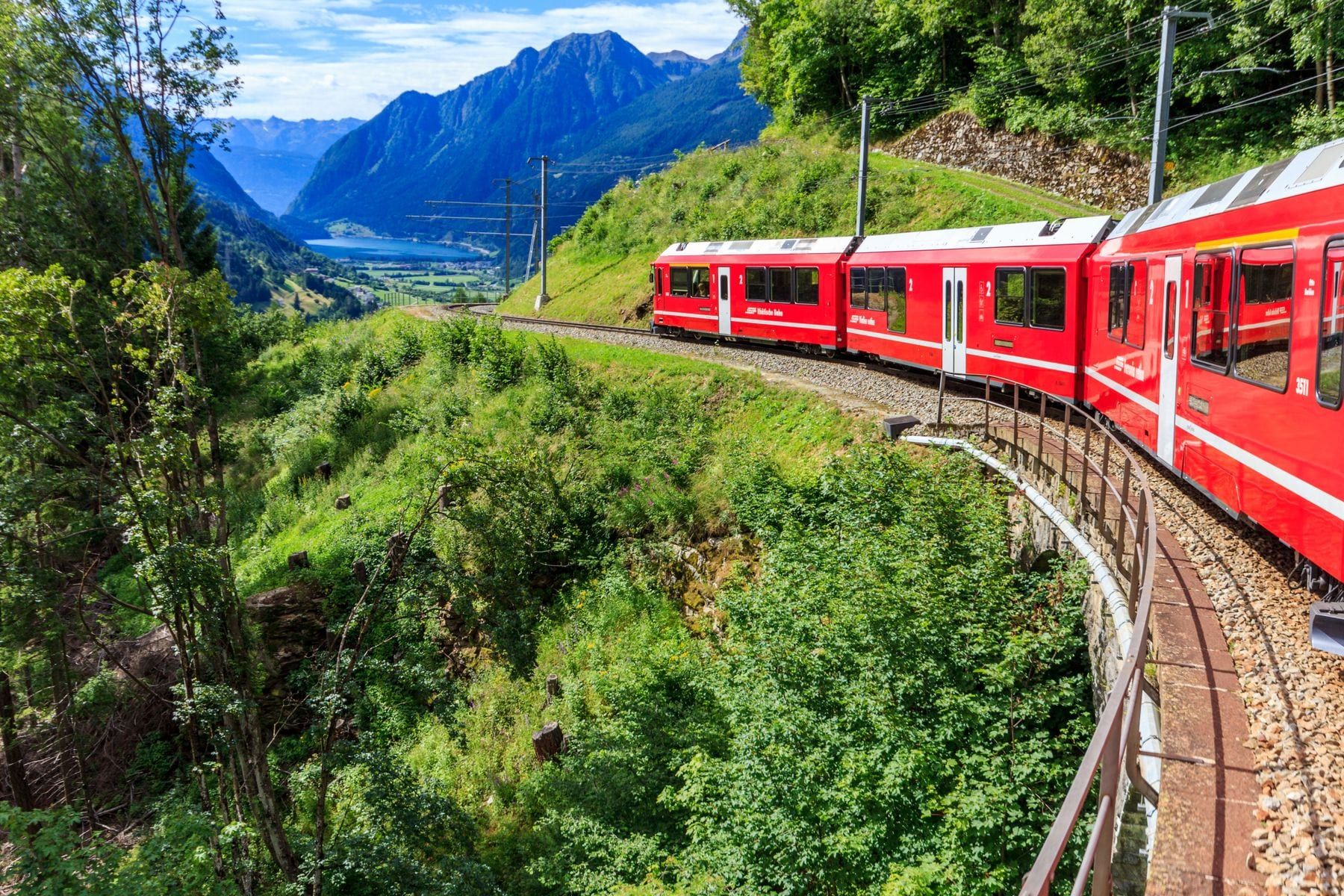
Getting there: the Albula line instead of the motorway

From Zurich you take the IC to Chur and change there to the Rhaetian Railway, over the Albula line with the Landwasser Viaduct and spiral tunnels to St. Moritz. 3 hours 20 minutes in total, full fare one way around CHF 80 (about EUR 86), with the Half Fare Card CHF 40, supersaver tickets from CHF 25 if you book two to three weeks ahead. From Basel and Bern add an hour, from Munich you travel via Lindau and Landquart in around 5 hours. The stretch from Thusis is UNESCO World Heritage, so sit on the right in the direction of travel. By car it is 2 hours 45 minutes from Zurich over the Julier Pass (open all year) or through the Vereina Tunnel with the car shuttle train from Klosters (CHF 32 to 44 per car), plus the CHF 40 motorway vignette. You do not need the car once you are there: the Engadin Bus lines and the RhB connect all the villages every half hour, and with your accommodation's guest card you travel free from the second night, and in summer even the mountain railways are included. Parking in St. Moritz costs CHF 2 to 4 an hour.

Where to stay: Pontresina, Sils and Samedan instead of the village

St. Moritz Dorf has hardly any beds under CHF 300 (about EUR 321) in winter. Three hundred metres lower in St. Moritz Bad it gets a little cheaper, but the smarter bases are next door. Pontresina is 10 minutes away by train, has a real village centre, direct access to Diavolezza and Morteratsch and mid-range double rooms from CHF 180 in winter, from CHF 150 in summer. Sils Maria at the other end of the lakes is quiet, the best location for walkers and cross-country skiers, with rooms from CHF 160. Samedan and Celerina are the price breakers with guesthouses from CHF 120, and the youth hostel in St. Moritz Bad charges from CHF 60 per person including breakfast and dinner. Booking: for Christmas to New Year and February to early March at least four months ahead, and many houses then demand a seven-night minimum stay. January after the 6th and the second half of March are noticeably cheaper and often sunnier. In summer a month's lead time is enough, except in the second half of August.

Winter prices, honestly calculated

A day ski pass for Corviglia, Corvatsch and Diavolezza together costs around CHF 90 to 100 (about EUR 96 to 107) in high winter, dynamically priced, and sometimes CHF 65 when bought online in advance or on quiet days. The six-day pass is CHF 450 to 500. Add ski hire (CHF 45 to 60 a day) and lunch on the slopes, which on Corviglia quickly reaches CHF 35 to 50. A winter ski day in the Engadin therefore realistically costs CHF 150 to 200 per person before you have slept anywhere. Here is how it gets cheaper: with the guest card, many hotels offer the ski pass for CHF 45 a day from the second night (the hotel ski pass, ask when booking, it is the most important money-saving tip in the valley). Pack your lunch or go down into the valley: in Pontresina or St. Moritz Bad a set lunch costs CHF 22 to 28. If you do not ski, you do not need a pass: the winter walking trails around the lakes, the cross-country trails (CHF 10 a day, season pass CHF 70) and the Muottas Muragl toboggan run are the honestly cheap winter experiences.

Corviglia, Diavolezza, Muottas Muragl: which railway for what

Corviglia is St. Moritz's home mountain, funicular from the village, up and down around CHF 50 (about EUR 54) without discount. The main ski area in winter, in summer good high-level trails and the view over the chain of lakes. Diavolezza near Pontresina is the glacier railway: eight minutes up to 2,978 metres, right in front of Piz Palü and Piz Bernina, ascent around CHF 40 to 45, half with the Half Fare Card. In summer there are guided glacier walks to Morteratsch for about CHF 90, in winter the ten-kilometre glacier descent. Muottas Muragl, a funicular between Samedan and Pontresina, is the finest view over the whole valley, especially at sunset from the restaurant, around CHF 40 return. Corvatsch near Silvaplana is the highest railway at 3,303 metres and in winter has the longest floodlit night run in Switzerland (Fridays). Money-saving tip: in summer, with the guest card from the second night, all of these railways are included, and the Engadin mountain railway summer is the best deal for walkers in the Swiss Alps. In winter bring your Half Fare Card, it is valid on the mountain railways too.

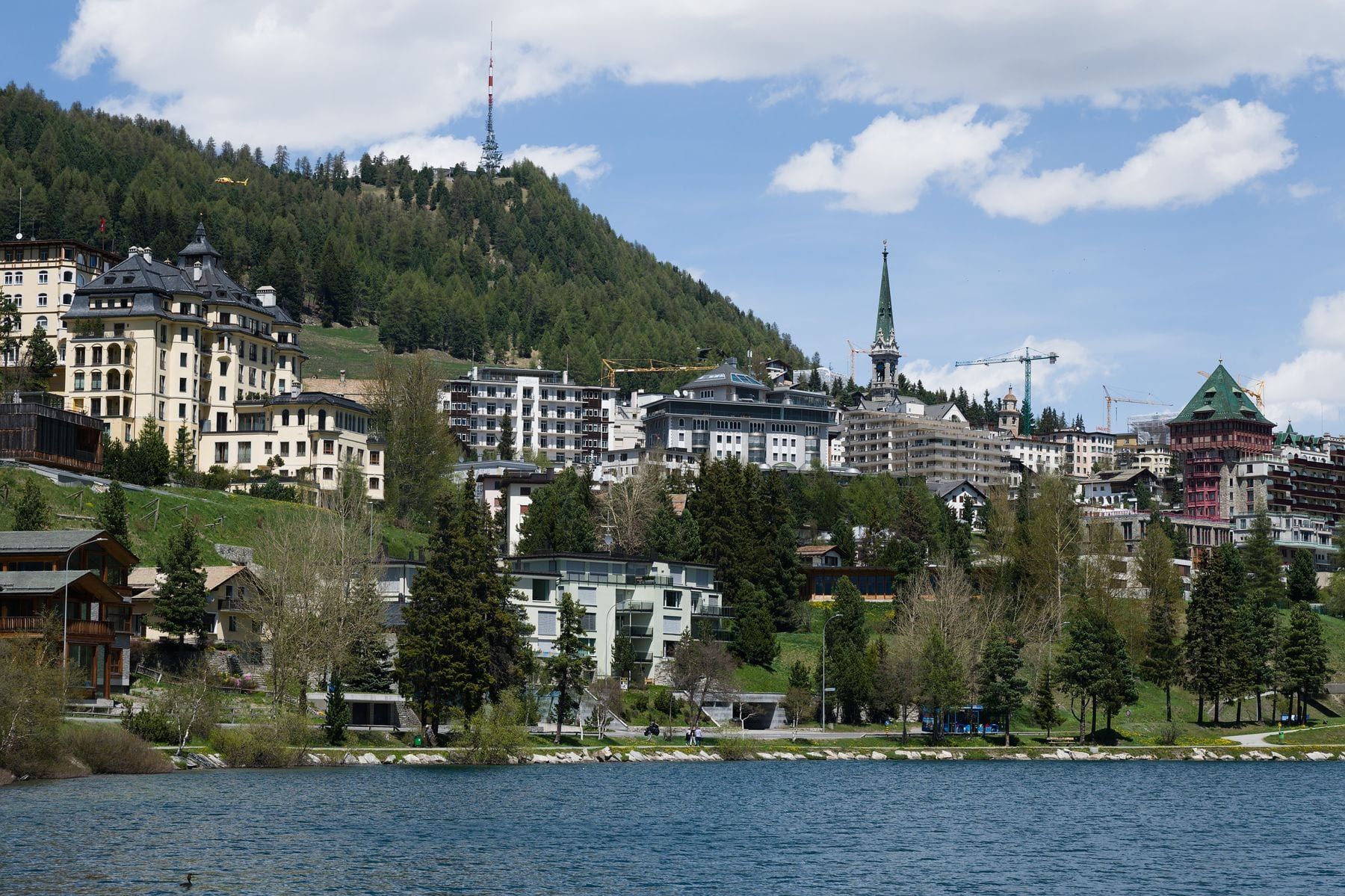
The lakes: Lake Sils, Lake Silvaplana, Lake Staz

Without the lakes the Engadin would be just a high valley with expensive hotels. Lake Sils is the largest; walking around it is 16 kilometres in 4 hours, almost flat, with the Chastè peninsula where Nietzsche used to sit. Shorter: the scheduled boat from Sils to Maloja runs from June to October, one way around CHF 20 (about EUR 21), and you walk back along the shore. In summer Lake Silvaplana is the kitesurfing arena because of the Maloja wind, which blows every afternoon from 1 pm, and for you that means: swim or walk in the morning, watch in the afternoon. Lake Staz near Pontresina is the smallest and warmest, up to 22 degrees in July, with a sunbathing lawn and a restaurant in the woods, 40 minutes on foot from St. Moritz. In winter everything freezes: the White Turf horse races on Lake St. Moritz on three Sundays in February, admission around CHF 20, and cross-country skiing on Lake Sils. The Engadin Skimarathon in March crosses all three lakes, and then the beds are full.

Summer and autumn: when the valley is empty and golden

High season in summer is the second half of July to mid-August, when hotels charge almost winter prices and the lake paths are full. The better time is September to mid-October: the larches turn yellow from the end of September, the light is Segantini's, prices drop by a quarter, and the mountain railways still run until the middle, in some cases the end, of October. An autumn day on Muottas Muragl with the high-level trail to Alp Languard above Pontresina is the best walk in the valley: 3 hours, hardly any climbing, marmots, and the chairlift down at the end. June is green and quiet, but some railways only start in mid-June and there is still snow up top. Off-season here means mid-April to early June and late October to early December: many hotels close completely, the mountain railways stand still, restaurants take their holidays. Do not come then, unless all you want is peace and cross-country skiing or walking without a railway. The Segantini Museum in St. Moritz (CHF 15, about EUR 16) and the Nietzsche House in Sils (CHF 10) are the two rainy-day programmes; there is no more culture than that, and that is the honest truth.

Frequently asked questions about St. Moritz and the Engadin

What is the best way to get to St. Moritz, and do I need a car?

By train: from Zurich 3 hours 20 minutes via Chur and the Albula line, around CHF 80 (about EUR 86) return with the Half Fare Card, with supersaver tickets from CHF 50. By car from Zurich 2 hours 45 minutes over the Julier Pass, which is open all year. You do not need a car once you are there: with your accommodation's guest card you ride the bus and the RhB free throughout the valley, and in summer the mountain railways too. Parking in St. Moritz is expensive and scarce.

What does a week in the Engadin really cost?

In summer, as a couple in a mid-range hotel in Pontresina with mountain railways included, lunch from your rucksack and dinner at a local inn, you will spend CHF 1,600 to 2,000 (about EUR 1,712 to 2,140) for seven nights. In winter with ski pass, ski hire and food on the slopes it is realistically CHF 2,800 to 3,500 for two, in St. Moritz Dorf with no upper limit. The youth hostel with half board pushes summer below CHF 1,000.

Is St. Moritz worth it even if I do not ski?

Yes, winter without skis is actually more relaxed: 150 kilometres of groomed winter walking trails, cross-country skiing across the frozen lakes, the toboggan run from Muottas Muragl, ice rinks and the horse races on the lake in February. You pay no ski pass, only a cross-country pass or individual mountain rides. In summer the valley is a walking and lake destination anyway, and skiing plays no part.

Pontresina, Sils or St. Moritz: where should I stay?

Pontresina if you have Diavolezza, Morteratsch and the Bernina Pass in mind and want a real village. Sils Maria if you are after peace, lakes and walking and need nothing more in the evening. St. Moritz Dorf only if you want the grand hotel experience and can afford it. St. Moritz Bad sits in between: cheaper, with the youth hostel, the spa, and the lake on your doorstep.

How expensive is food in the Engadin, and where do you save?

A set lunch costs CHF 22 to 30 (about EUR 24 to 32), dinner with a main course and a drink CHF 40 to 60, considerably more on Corviglia and in the St. Moritz hotel restaurants. You save with half board at the hotel (usually a CHF 35 to 50 supplement, cheaper than eating out), with the Coop in St. Moritz Bad and Pontresina for picnics, and with the mountain restaurants on the alps (Alp Languard, Morteratsch), where soup and sausage still cost CHF 15 to 20.

Is Romansh spoken in the Engadin?

In St. Moritz you will mostly hear German, Italian and English, but in Pontresina, Samedan, Sils and Zuoz Romansh (Puter) is still the everyday language, and the place-name signs are bilingual. "Allegra" is the greeting, "grazcha fich" means thank you very much. Nobody expects you to speak it, but an "Allegra" as you enter the inn is well received. Everyone understands and speaks German.

Itineraries with this destination

Activities in the region

Events

Mar 14

Engadin Ski Marathon

Sport

14 March 2027 Second Sunday in March; 2027: 14 March

Switzerland's biggest cross-country skiing event: around 14,000 skiers start in Maloja and skate 42 kilometres across the frozen lakes of Sils and Silvaplana, past St. Moritz to S-chanf. The mass start on the frozen Lake Sils at sunrise is a sight worth seeing even if you are not racing, and the course is easily reached from the railway and the villages. Entries cost around CHF 130 to 160 (EUR 135 to 170) and are gone within a few weeks of registration opening in autumn; the half marathon from Maloja runs the day before, the women's race the Wednesday before. The Engadin is sold out this weekend and hotels demand minimum stays, even for non-skiers. The weather can be anything from minus 20 degrees to slush.

For travellers: As a spectator, take the train to Pontresina or Zuoz, where the track runs right past the station; the valley road is closed to cars on race day.

More destinations in Graubünden & Ticino