Chur Youth Hostel
Youth hostel in the former Hotel Rosenhügel at the foot of Brambrüesch, ten minutes from the station, with double and family rooms and a garden. For train excursions and bikers the cheapest base in Graubünden.
Switzerland · Graubünden & Ticino · Travel guide
What two or three days in the oldest town in Switzerland cost, why Chur is the smartest base for the Rhine Gorge, Arosa and the Bernina Railway, and where you eat Capuns that do not come out of the freezer.
Photo: Visuals by FB / Pexels
Adjust the values to your trip: the calculator updates live (EUR, converted from CHF estimates).
Estimates for orientation, not booking prices. Getting there means train or car from Switzerland, return, per person. Hotels vary strongly by season: current prices are behind the links below.
Money & payment: You pay in Swiss francs (CHF). Cards and the Twint app work practically everywhere, even on alpine pastures. Many shops accept euros but give change in francs at a poor rate. Service is included in prices; rounding up is customary. Getting there: By train (SBB) or car, 1 to 4 hours from Zurich.
Nine options in three price ranges, each among the best-rated on Booking.com.
Budget
Youth hostel in the former Hotel Rosenhügel at the foot of Brambrüesch, ten minutes from the station, with double and family rooms and a garden. For train excursions and bikers the cheapest base in Graubünden.
Standard Ibis five minutes from the station towards the Rhine, clean small rooms, parking, 24-hour reception. Nothing special, but reliably cheap and practical for early trains into the Engadin.
Traditional house in the middle of the old town on the Reichsgässli, with simple rooms and a dining room where the people of Chur eat. For anyone who wants to stay in the old town in the evening without paying a lot.
Mid-range
Three-star house on the Kupfergasse in the middle of the old town, plain, clean rooms above the Franziskaner restaurant, breakfast buffet. No roof terrace, but a fair price ten minutes on foot from the station and right in the maze of lanes.
Guild house from 1483 on Pfisterplatz in the middle of the old town, with restaurant, bar and rooms from single to family, ten minutes on foot from the station. Central between Postplatz and Martinsplatz, and the breakfast gets praise.
Four-star house in old townhouses on the Reichsgasse, with modern rooms, lounge, bar, roof terrace and quiet inner courtyard, breakfast in the vaulted cellar. A good choice if you want an old town location but do not need a pine-panelled parlour.
Luxury
Historic hotel from 1677 on the edge of the old town with Swiss pine rooms, a roof terrace and a restaurant regarded as the best address for Graubünden cooking in Chur: Capuns, Pizokel, Maluns. Guests can be collected from the station in the vintage car on request. The most upmarket address with tradition in Chur, and prices remain comparatively humane.
Modern four-star house right by the old town at Postplatz with generous rooms, a restaurant and a bar. For business travellers and couples who want to sleep next to the old town without creaking floors.
Four-star house right on the station square with modern rooms, a sauna and a view of the Arosa railway, which leaves from the door. For anyone using Chur as a hub for train excursions and wanting comfort.
If you book through these links we earn a small commission, at no extra cost to you.
Guided walk from Postplatz via the Arcas and Martinsplatz to the Bischofshof with the cathedral and its winged altar, 90 minutes, from CHF 15 (about EUR 16) through Chur Tourism, public tours on Saturdays. Free on your own, cathedral treasury CHF 8.
Gondola from the old town up to 1,600 metres in 20 minutes, around CHF 28 return, CHF 14 with the Half Fare Card. 90-minute circular trail at the top, mountain restaurant, bike trails in summer, toboggan run to Chur in winter. Does not run in the off-season.
Segantini, Giacometti, Kauffmann and Kirchner in the Villa Planta and the concrete cube by Barozzi Veiga. Admission CHF 15, 90 minutes, closed on Mondays. The best rainy day in Chur, with a café in the garden.
Take the RhB 25 minutes to Versam-Safien, walk along the Vorderrhein to Valendas-Sagogn, 2 hours, flat, train around CHF 14 return with the Half Fare Card. Sit on the right in the direction of Ilanz. The Il Spir viewing platform from Flims as an extra.
From Ilanz to Reichenau through the Swiss Grand Canyon, 4 hours on the water, grade two to three, from CHF 130 per person including equipment, May to October. Manageable for beginners and families with children from twelve, bring swimwear.
From the station square in Chur in an hour through the Schanfigg to Arosa, around CHF 18 return with the Half Fare Card, lakes and Bärenland free, Weisshorn cable car around CHF 45. A full day with the loop around the Obersee and Untersee; sit on the left on the way up.
By train to Thusis, PostBus to the Viamala, 321 steps down into the 300-metre-deep gorge, admission CHF 8, an hour. Then on to Zillis for the Romanesque church ceiling from 1109 with its 153 painted panels, CHF 6. Half to a full day.
By train 15 minutes to Maienfeld, then through the vineyards via Jenins and Malans with Pinot Noir from Graubünden, 2 to 3 hours, tastings in the Torkel wine cellars from CHF 15. Heidi village on the way (CHF 14), loveliest at harvest time in autumn.
The finest part of the Glacier Express starts in Chur: Rhine Gorge, Disentis, Oberalp Pass, 2 hours 30 minutes, reservation CHF 44 plus ticket, around CHF 75 one way in total with the Half Fare Card. Cheaper on the regional train to Disentis and change, with no supplement.
If you book through these links we earn a small commission, at no extra cost to you.
Chur is the town where Graubünden cooking arrives at the table without the ski resort mark-up: Capuns, Pizokel, Maluns, Bündnerfleisch and barley soup in parlours that have been cooking for centuries, plus Pinot Noir from the Bündner Herrschaft 15 minutes to the north. The old town has more good inns in a small space than St. Moritz, and a set lunch still costs CHF 20 to 26.
Spätzli dough with Salsiz, Bündnerfleisch and herbs, wrapped in chard, cooked in stock and cream and gratinated with mountain cheese. Homemade in the traditional parlours of Chur, CHF 24 to 30 (about EUR 26 to 32).
Tip:Order it as a starter with two parcels, then there is room left for Pizokel.
Irregular dumplings with bacon, cabbage and cheese from the pan, sometimes sweet with apple sauce too. CHF 22 to 26, a Chur lunch portion for the hungry.
Tip:Eat up on Brambrüesch, it is one of the few mountain inns with town prices.
The air-dried beef, sliced wafer-thin, with gherkins, pearl onions and bread, or as a Bündner Teller with Salsiz and raw ham. CHF 20 to 28 as a starter, CHF 9 to 12 per 100 g at the butcher.
Tip:Bündnerfleisch from a Chur butcher is the most sensible souvenir; vacuum-packed it keeps for weeks.
Grated potatoes with flour roasted in butter until crumbly, with apple sauce and mountain cheese. The old Graubünden poor man's dish, still on many menus in Chur, CHF 20 to 25.
Tip:Take the cheese separately and dose it yourself, otherwise it gets heavy.
Pearl barley with smoked meat, bacon, carrots, leek and cream, slowly cooked (Graubünden barley soup). CHF 11 to 15, a complete meal as a lunch plate with bread in the old town.
Tip:The cheapest hot meal in town, especially in winter before the train into the Engadin.
Röteli is the cherry liqueur with cinnamon and cloves that the people of Chur drink at New Year, a glass CHF 5, a bottle from CHF 25. The Pinot Noir from Fläsch, Maienfeld, Jenins and Malans is among the best in Switzerland, a glass CHF 7 to 10.
Tip:At harvest time in autumn visit the Torkel taverns in Malans, open on Saturdays.
The walnut tart that comes from the Engadin and sits in every bakery in Chur. A slice CHF 5 to 6, a whole tart from CHF 20, cheaper than in St. Moritz.
Tip:As provisions for the Bernina Railway, it does not crumble.
Through markets and eateries with a guide, tastings included.
If you book through these links we earn a small commission, at no extra cost to you.
Chur calls itself the oldest town in Switzerland, and the archaeologists agree: beneath the Welschdörfli lie traces of settlement from around 3,900 BC, so 5,000 years of continuous habitation. Around 15 BC the Romans made the place the administrative seat of the province of Raetia Prima, Curia Raetorum, because the Julier, Septimer and Splügen passes all come down into the Rhine valley here. A bishop is first mentioned around 450, the oldest bishopric north of the Alps, and the Bischofshof up on the hill is to this day a world of its own with cathedral, walls and gates. The cathedral of St. Mary of the Assumption was built between 1151 and 1272, Romanesque with a Gothic choir, and inside stands the largest late Gothic winged altar in Switzerland, by Jakob Russ. In the Middle Ages the townspeople and the bishop wrestled for power; in 1464 the town burned down and was rebuilt with the help of German craftsmen, who brought German with them and pushed Romansh out of the town. In 1524 the citizens joined the Reformation, the bishop stayed Catholic, and the two have lived side by side in a small space ever since. Chur was a transit town for muleteers, mail coaches and, from 1858, the railway from Zurich, and from 1889 the starting point of the Rhaetian Railway, whose network today covers 384 kilometres. Angelika Kauffmann was born here in 1741, H.R. Giger, the creator of the Alien, in 1940. Today Chur has around 40,000 inhabitants, is the capital of the trilingual canton of Graubünden and for most travellers merely the station where they change on the way to the Engadin, Davos or Arosa. That is a mistake, but a forgivable one.

The IC from Zurich main station runs every half hour and takes 75 minutes to Chur, full fare one way around CHF 40 (about EUR 43), CHF 20 with the Half Fare Card, supersaver tickets from CHF 12. From Basel you are there in 2 hours 20 minutes, from Bern in 2 hours 30 minutes, from St. Gallen via Sargans in 70 minutes, from Munich via Lindau and Bregenz in around 3 hours 30 minutes, from Innsbruck over the Arlberg in 2 hours 45 minutes. By car it is 90 minutes from Zurich on the A3 and A13, vignette CHF 40, car parks in Chur cost CHF 1.50 to 2.50 an hour, and the old town is car-free. Chur is the hub of the Rhaetian Railway: from here the trains run into the Engadin and to St. Moritz, to Davos, to Arosa, to Disentis and on to Andermatt and Zermatt (Glacier Express), as well as into the Rheinwald and to Bellinzona by PostBus. That is why a car is not worth it here: everything you do from Chur is easier to reach by train and PostBus, and the guest card that hotels in Chur hand out includes the town bus. From the station to the old town you walk ten minutes up Bahnhofstrasse; with luggage take the bus to Postplatz.
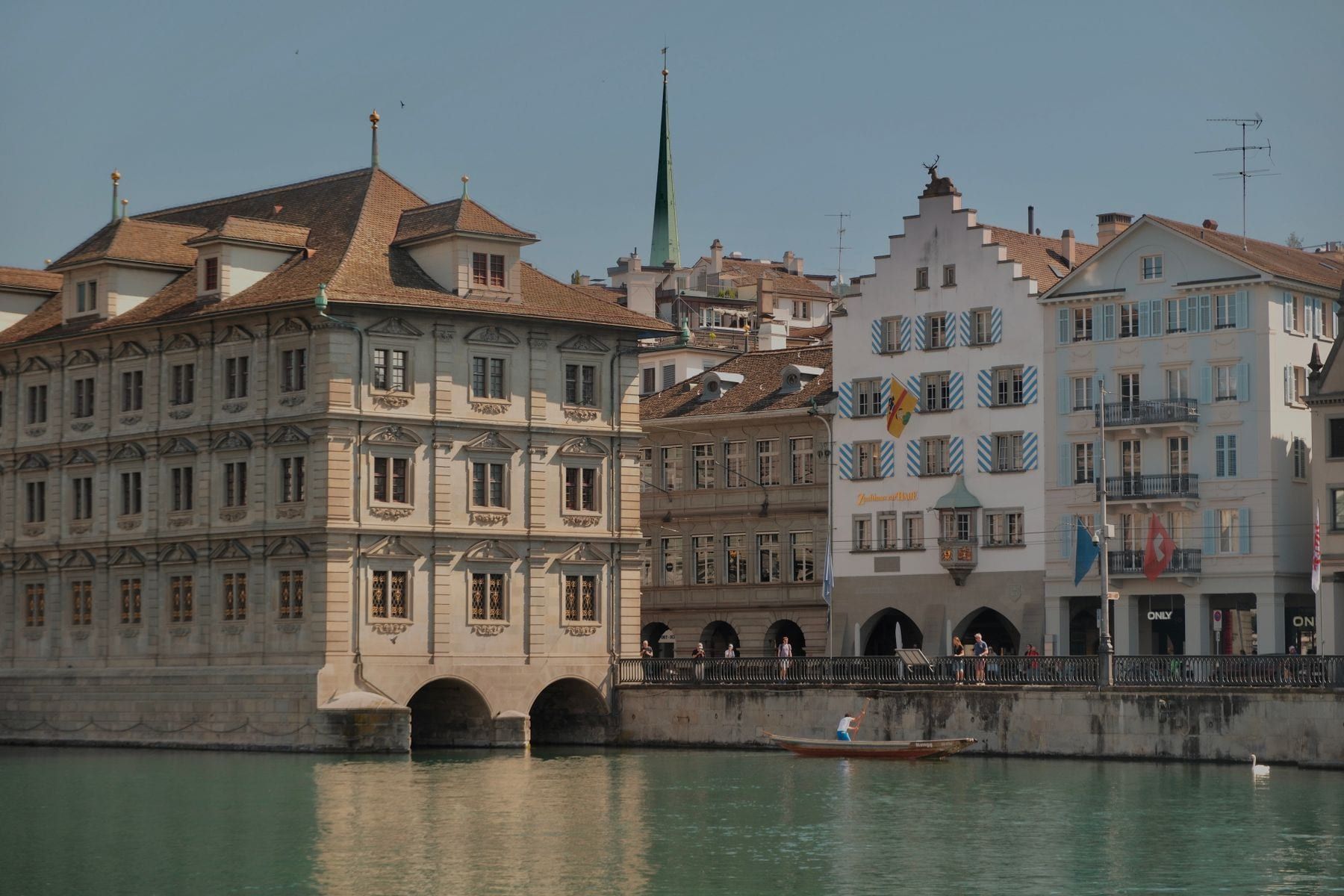
The old town lies between Postplatz and the Hof and can be walked through in an hour, but not exhausted in two days. At the top the Bischofshof with the cathedral (free, cathedral treasury CHF 8, about EUR 9) and the Rätisches Museum (CHF 6) in the Haus Buol, which shows the 5,000 years of Chur's history. Below it the Arcas, a triangular square with colourful houses where the people of Chur gather in the evening, and the lanes to Martinsplatz with the Reformed church of St. Martin and three windows by Augusto Giacometti. The Bündner Kunstmuseum (CHF 15) in the Villa Planta and the new building by Barozzi Veiga shows Segantini, Giovanni and Alberto Giacometti, Angelika Kauffmann and Kirchner, 90 minutes, closed on Mondays. The Welschdörfli down the slope is the old entertainment quarter with bars and clubs, where the Roman town was excavated; the protective structures by Peter Zumthor display the foundations, and the key is available at the museum. Zumthor's studio is in Haldenstein next door, but you cannot visit it. On Saturday mornings there is a weekly market on Bahnhofstrasse with Graubünden farmers, May to October. The townscape is overlooked by the Mittenberg and the Pizokel; Chur's home mountain Brambrüesch is on the other side.
Chur is the only Swiss town with a mountain railway straight out of the centre: the gondola starts at Kasernenplatz below the old town and takes you in two stages via Känzeli up to Brambrüesch at 1,600 metres. Around CHF 28 (about EUR 30) return, CHF 14 with the Half Fare Card, discounted with the Chur guest card. At the top there is a 90-minute circular trail with views over the Rhine valley, the Calanda and as far as the Säntis, a mountain restaurant with Capuns for around CHF 26, and in summer the bike trails for which Brambrüesch is known among mountain bikers (bike transport CHF 10). Walkers take the path over the Dreibündenstein panorama to Feldis, 3 hours 30 minutes, and ride the cable car down to Rhäzüns and the train back. In winter Brambrüesch is a small ski area with a day ticket around CHF 45, nothing for experts, but fine for families from the town, and the toboggan run down to Chur is six kilometres long. The railway runs from May to October and December to March, and stands still in the off-season. For half a day without a train ride, Brambrüesch is the most honest attraction in Chur.
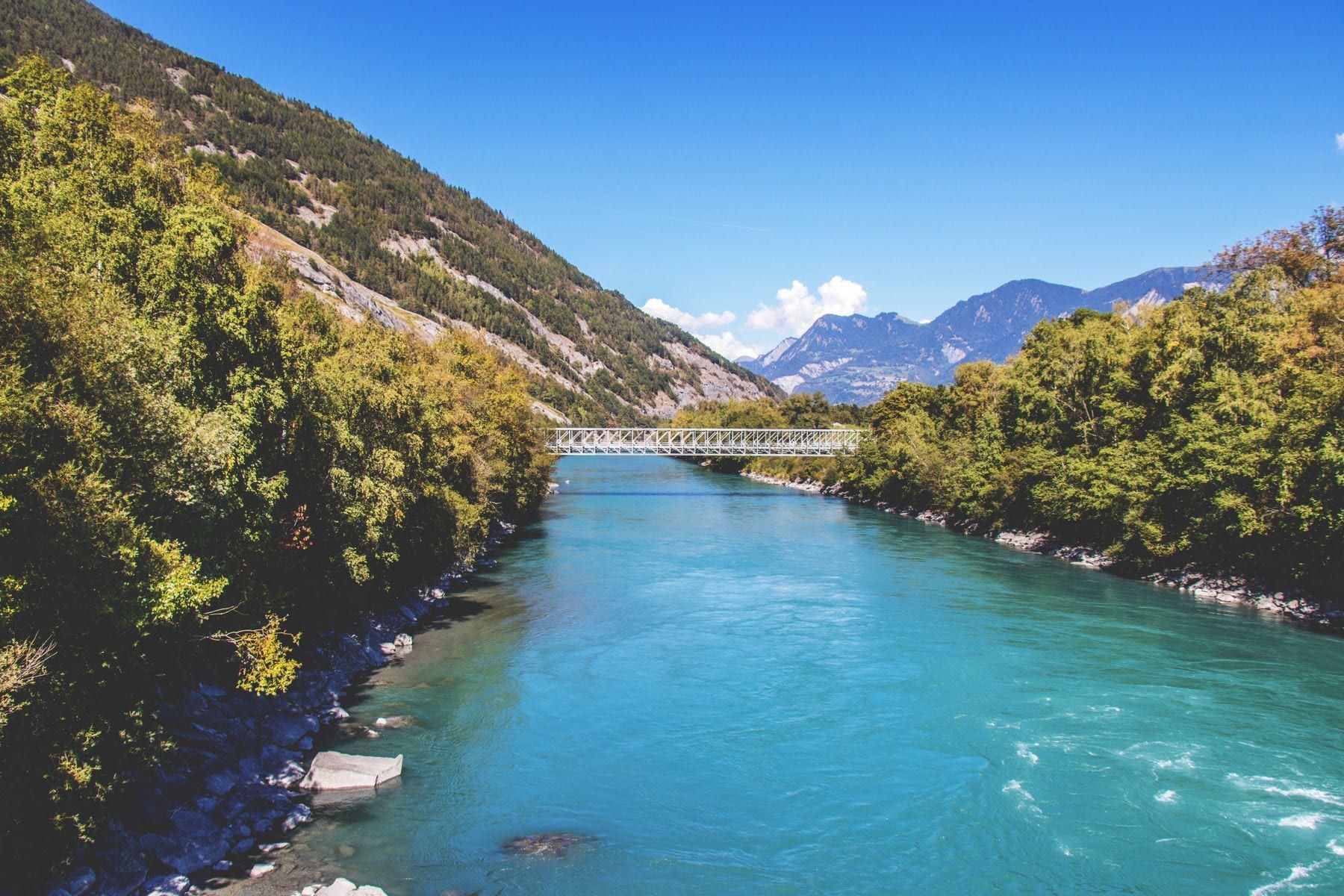
Between Ilanz and Reichenau the Vorderrhein has carved its way through the debris of the Flims rockslide, 400 metres deep, with white rock walls, riparian forest and a railway that runs along the bottom. From Chur you take the RhB in 25 minutes to Versam-Safien or Valendas-Sagogn in the middle of the gorge, around CHF 7 (about EUR 7) one way with the Half Fare Card. The train itself is the cheapest view: sit on the right in the direction of Ilanz, the train runs through the gorge for 20 minutes, and the Glacier Express covers the same stretch with a supplement. On foot: from Versam-Safien along the Rhine to Valendas-Sagogn, 2 hours, flat, or up to the Il Spir viewing platform at Conn above Flims, which floats above the drop, an hour from Flims, free. By boat: rafting from Ilanz to Reichenau, 4 hours on the water, from CHF 130 per person, May to October, grade two to three, so manageable for beginners. If you want it quieter, hire an inflatable in Ilanz or take the guided canoe tour from CHF 90. With the Graubünden day pass (CHF 50 with the Half Fare Card) or a Saver Day Pass, the Rhine Gorge, Flims and the return trip fit into one day, PostBus from Valendas to Flims included.
The Arosa railway starts right in front of Chur station, runs through the town like a tram and then in an hour through the Schanfigg over 40 bridges up to Arosa at 1,740 metres, 1,200 metres of climbing, around CHF 9 (about EUR 10) one way with the Half Fare Card. At the top the Obersee and Untersee lakes, the Bärenland with rescued bears (free, cable car up CHF 20 to 30), the Weisshorn summit at 2,653 metres with its all-round view (cable car around CHF 45 return, free in summer with the Arosa guest card, not as a day visitor). For walkers the loop around the lakes (an hour) or the high-level trail to Lenzerheide over the Urdenfürggli (Arosa Lenzerheide cable car link, 3 hours), back by PostBus via Lenzerheide to Chur. You ride the Bernina Railway from Chur on the Bernina Express or the regional train over the Albula line to Pontresina and Alp Grüm; as a day trip it is 2 hours 30 minutes one way to Pontresina, around CHF 25 with the Half Fare Card; to Tirano and back is too much for one day, so better a night in the Engadin. The third excursion: by train to Thusis and on foot through the Viamala gorge (admission CHF 8, 321 steps, an hour), on to Zillis for the painted church ceiling of 1109, back by PostBus. All three excursions are covered by the Graubünden day pass at CHF 50 with the Half Fare Card.
Chur has no high season in the tourist sense, but trade fairs, congresses and the Churer Fest in August, when the hotels are full and dearer. Mid-range double rooms cost CHF 140 to 190 (about EUR 150 to 203), the youth hostel from CHF 45 per person, the Ibis from CHF 100. The old town is the best location for eating and strolling, the station the best for excursions, and ten minutes on foot lie between them. You can book at short notice, except in the autumn school holidays and during the Churer Fest. Food: a set lunch in the old town costs CHF 20 to 26, dinner with a main course and a glass of wine CHF 40 to 55; Chur is noticeably cheaper than St. Moritz or Davos. Best time: May to October for Brambrüesch, the Rhine Gorge and the market, autumn with larches in the Schanfigg and the grape harvest in the Bündner Herrschaft 15 minutes to the north. In winter Chur is a base for the ski areas of Arosa Lenzerheide (ski pass around CHF 80, train one hour), Flims Laax (PostBus 50 minutes) and Brambrüesch, with hotel prices a third below those of the ski resorts. December brings the Christmas market in the old town. Two nights are enough for the town, Brambrüesch and one excursion, three for all three.
From Zurich every half hour by IC in 75 minutes, around CHF 40 (about EUR 43) return with the Half Fare Card, supersaver tickets from CHF 24. From Basel 2 hours 20 minutes, from Bern 2 hours 30 minutes, from Munich 3 hours 30 minutes. By car 90 minutes from Zurich, but you do not need it: Chur is the hub of the Rhaetian Railway, you reach Arosa, the Rhine Gorge, the Engadin and Davos directly from the station, the old town is car-free, and car parks cost CHF 1.50 to 2.50 an hour.
Two nights is the guideline: half a day for the old town, cathedral and art museum, half a day for Brambrüesch, a full day for the Rhine Gorge or Arosa. With three nights you take in both excursions and the Viamala. As a pure stopover on the way to the Engadin, two hours are enough for the old town and lunch, with your luggage in a locker at the station for CHF 6 to 9 (about EUR 6 to 10).
As a couple with two nights in a mid-range hotel, the train from Zurich with the Half Fare Card, an excursion to the Rhine Gorge, Brambrüesch, museums and meals in the old town, you will spend CHF 700 to 900 (about EUR 749 to 963). With the youth hostel and a picnic on the mountain it is under CHF 500. That makes Chur one of the cheapest weekend destinations in the Swiss mountains, partly because the train excursions rarely cost more than CHF 20 with the Half Fare Card.
In good weather Arosa: an hour of spectacular railway, lakes, the Bärenland and, if you like, the Weisshorn, the better choice for families. The Rhine Gorge if you want to walk or raft and prefer rock to summits; it works in mixed weather too, and the train ride through the gorge costs only CHF 7 (about EUR 7) with the Half Fare Card. In autumn both, when the Schanfigg is golden and the gorge is empty.
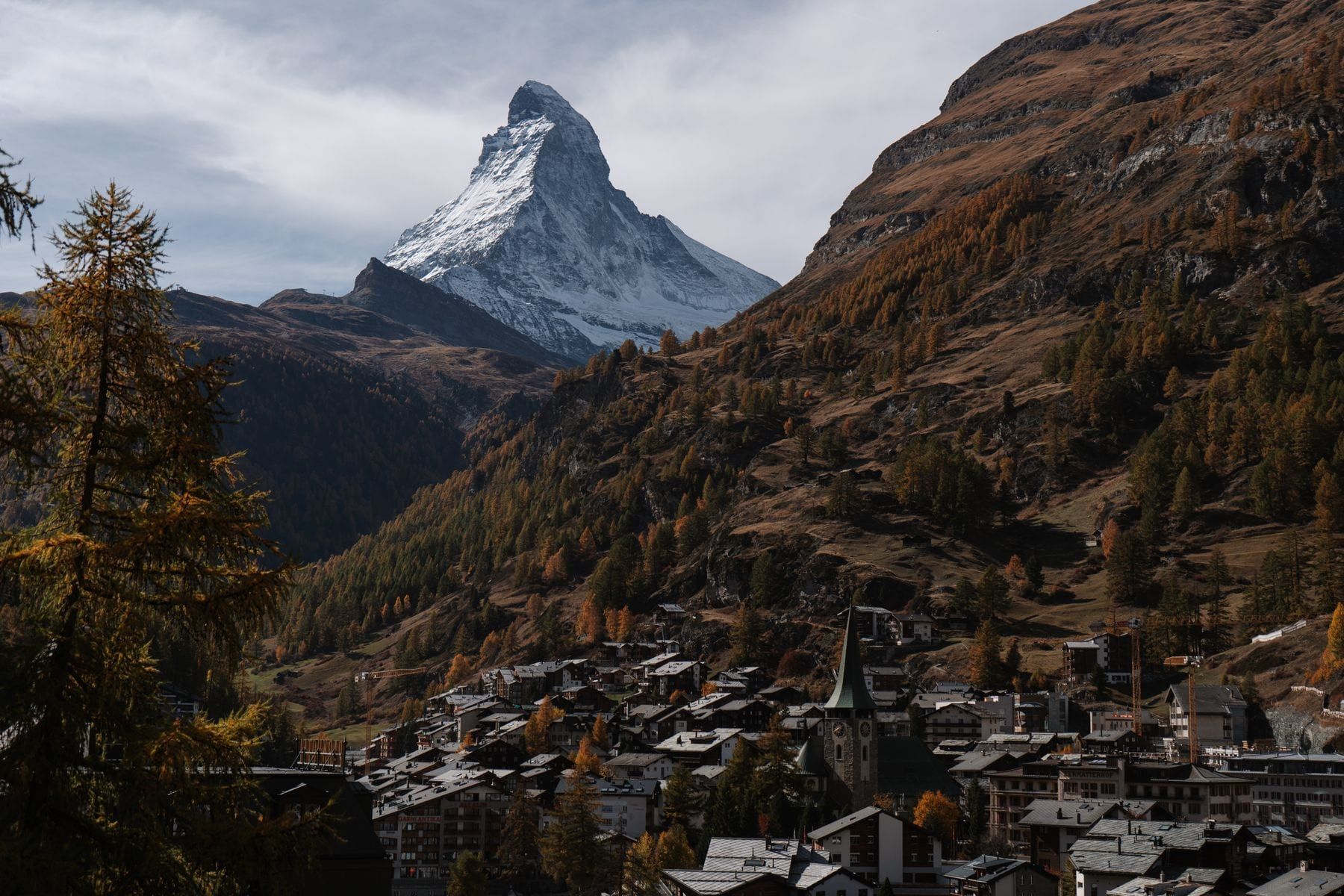
Chur is the point where the Glacier Express, coming from St. Moritz, turns towards Zermatt. The stretch from Chur to Andermatt through the Rhine Gorge and over the Oberalp Pass is the finest part of the first half, 2 hours 30 minutes, reservation CHF 44 (about EUR 47) in summer plus the ticket. If you only want the view, take the same route on the regional train to Disentis and the Matterhorn Gotthard Railway onwards, with no supplement and windows that open.
Hardly at all in everyday life; Chur has been German-speaking since the 15th century, but the town is the capital of a trilingual canton: street signs, authorities and the radio are also in Romansh and Italian, and many people in Chur understand one of the two. In the inns you will hear Graubünden German with its rolled R. You experience everyday Romansh in the Surselva from Ilanz onwards, 30 minutes further on, and in the Engadin.
Zermatt · Chur · St. Moritz · Bernina · Lugano
The two most famous railway lines in the Alps in one loop: from the Matterhorn over the Oberalp Pass into the Engadin, over the Bernina to Tirano and back through the Gotthard. No car, no changing trains with a suitcase in the rain, and you sleep where the panoramic trains only pass through.
Zurich · Schaffhausen · Appenzell · Chur
The Switzerland that lies between Zurich and the mountains and that most people only drive through: the biggest waterfall in Europe, a small town with painted facades, the hill country of the Appenzellers and finally the gorge the Rhine has carved through the Flims rockslide. Short stages, plenty of time in each place.
Chur · Davos · St. Moritz · Bernina
Graubünden in winter without a car and without a compulsory ski pass: you ride the Rhaetian Railway from Chur to Davos, over the Albula into the Engadin and over the Bernina into the Poschiavo valley, sledge six kilometres from Preda to Bergün and cross-country ski on the frozen Lake Sils. A ski day is possible, but not a must.
What a week in the Upper Engadin really costs, why you do not have to sleep in St. Moritz itself, and how to pay for Diavolezza, the lake walk and the mountain railways without getting annoyed.
What a week in the highest town in Europe really costs, which mountain suits you, why Klosters is often the better base and when you should on no account book Davos.
What the most famous railway journey in the Alps really costs, why the regional train with an open window is often better than the panorama coach and why you should spend a night in Val Poschiavo instead of just passing through.
What a long weekend on Lake Lugano really costs, which of the two home mountains suits you, how to reach Gandria and Morcote by boat and PostBus, and where a grotto is still a grotto.