Switzerland · Rail trip · 7 days

Engadin in Winter by Train

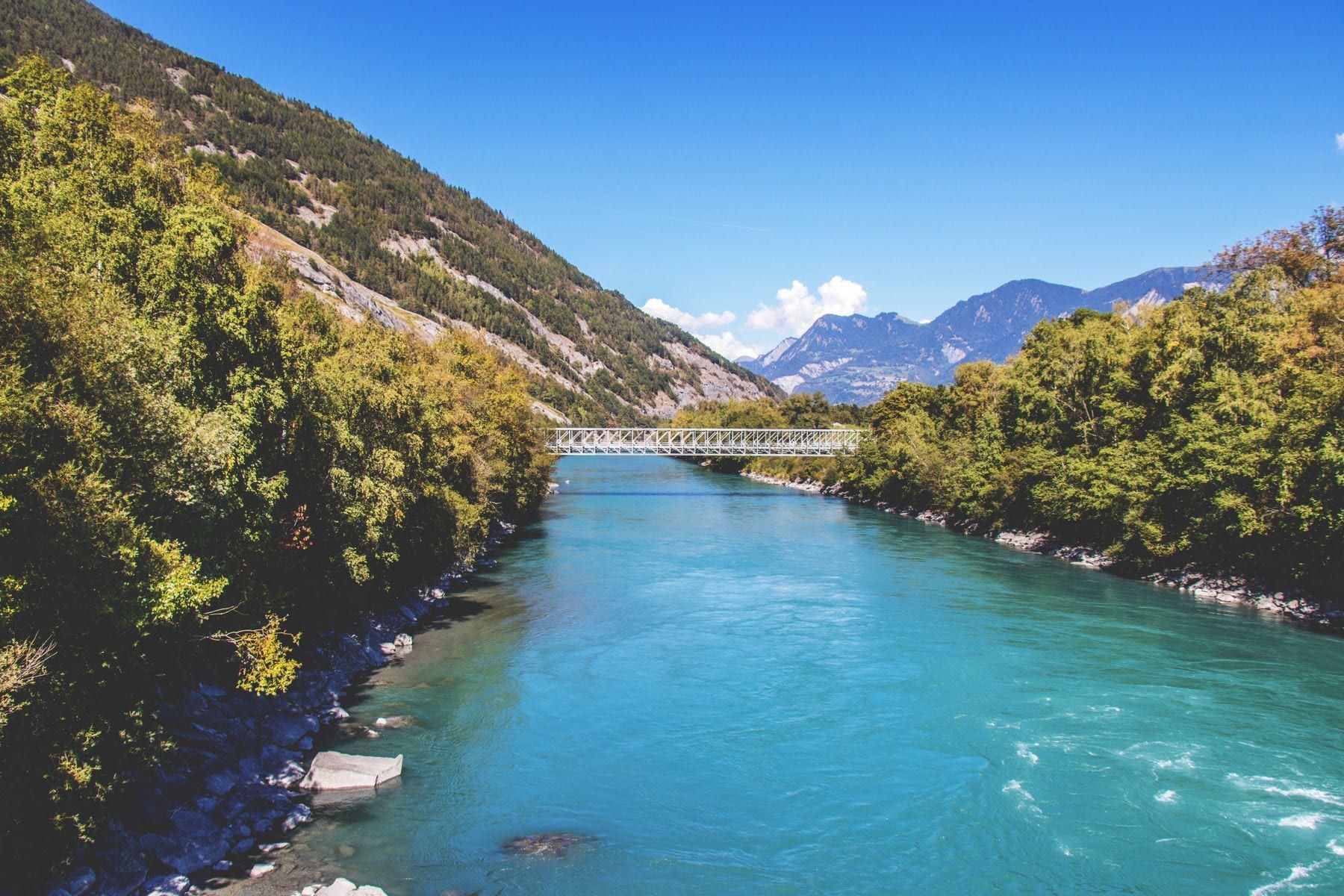
Graubünden in winter without a car and without a compulsory ski pass: you ride the Rhaetian Railway from Chur to Davos, over the Albula into the Engadin and over the Bernina into the Poschiavo valley, sledge six kilometres from Preda to Bergün and cross-country ski on the frozen Lake Sils. A ski day is possible, but not a must.

The route, day by day

  1. Day 1

    Chur: Arriving in the Old Town, Sledging on Brambrüesch

    From Zurich the IC gets you to Chur in 75 minutes, around CHF 20 (about EUR 21) with a Half Fare Card, from Basel in 2 hours 20, from Munich via Lindau in a good three and a half hours. The old town is ten minutes from the station and quiet in winter: the Bishop's Court with the cathedral, Arcas square, the Rätisches Museum, then coffee in the Welschdörfli. In the afternoon Chur's speciality, the only mountain railway in Switzerland that leaves from a city centre: gondola from Kasernenplatz to Brambrüesch, around CHF 15 return with a Half Fare Card, with a small ski area at the top, a winter walking trail and the sledge run down to Känzeli, sledge hire at the top. When the city is in fog it is often sunny up there. In the evening Capuns or Pizokel in a Beiz, CHF 25 to 35. Sleep in a small hotel in the old town, mid-range CHF 140 to 170, cheaper in winter than in summer. On to Davos: Rhaetian Railway via Landquart and Klosters, 1 hour 20, or more scenically via Filisur in 1 hour 40, around CHF 15 with a Half Fare Card.

    Tours at this stop: Brambrüesch gondola ↗Chur city tour ↗

    Open the Chur travel guide →
  2. Day 2 to 3

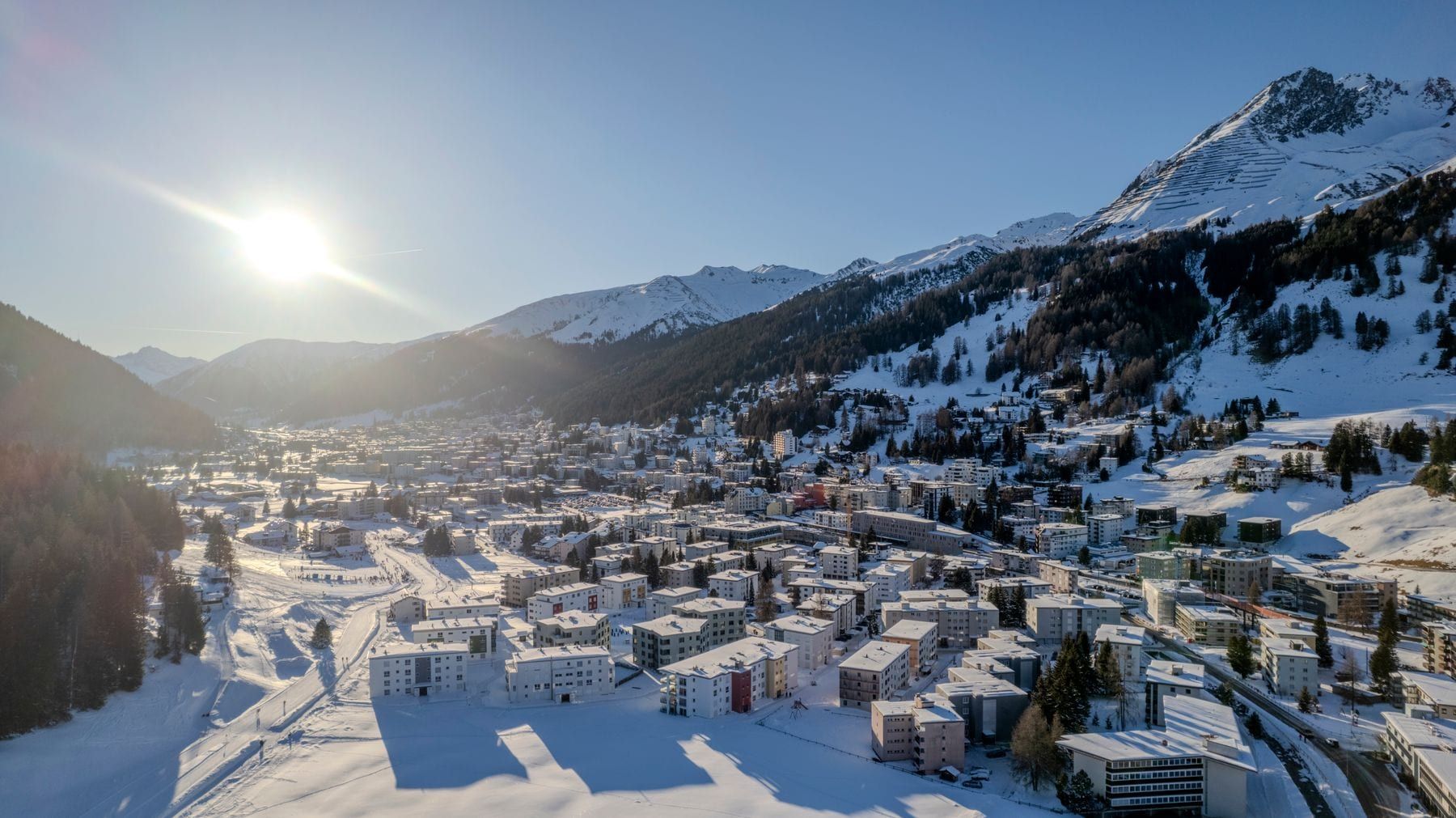
    Davos: Cross-Country in the Flüela Valley, Schatzalp and a Ski Day on Parsenn

    Davos is a town at 1,560 metres, not pretty, but with enough for two days and a guest card that makes the local bus free. Day two is the non-ski day: hire cross-country gear for CHF 30 to 40 (about EUR 32 to 43), ski the trail from Davos Platz through the Flüela valley towards Tschuggen, flat and sunny, trail pass around CHF 12 a day. In the afternoon the funicular to the Schatzalp, Thomas Mann's Magic Mountain hotel, tea on the terrace and the 2.8 kilometre sledge run back down, sledge hire at the top. Day three is the ski day if you want one: Parsenn from Davos Dorf by funicular to the Weissfluhjoch, broad pistes, the twelve kilometre run to Küblis, day pass around CHF 80 to 95, dynamic, cheaper online, ski hire CHF 40 to 55. Alternatively a snowshoe tour in the Sertig valley, reached by PostBus. Sleep in Davos Platz or Klosters, mid-range CHF 180 to 220, WEF week in January excluded. On to St. Moritz: Rhaetian Railway to Filisur, change towards the Albula, sledging stop in Bergün, 1 hour 50 without stops, around CHF 15 with a Half Fare Card.

    Tours at this stop: Cross-country skiing lesson Davos ↗Snowshoe tour Davos ↗Davos Klosters ski pass ↗

    Open the Davos travel guide →
  3. Day 4 to 5

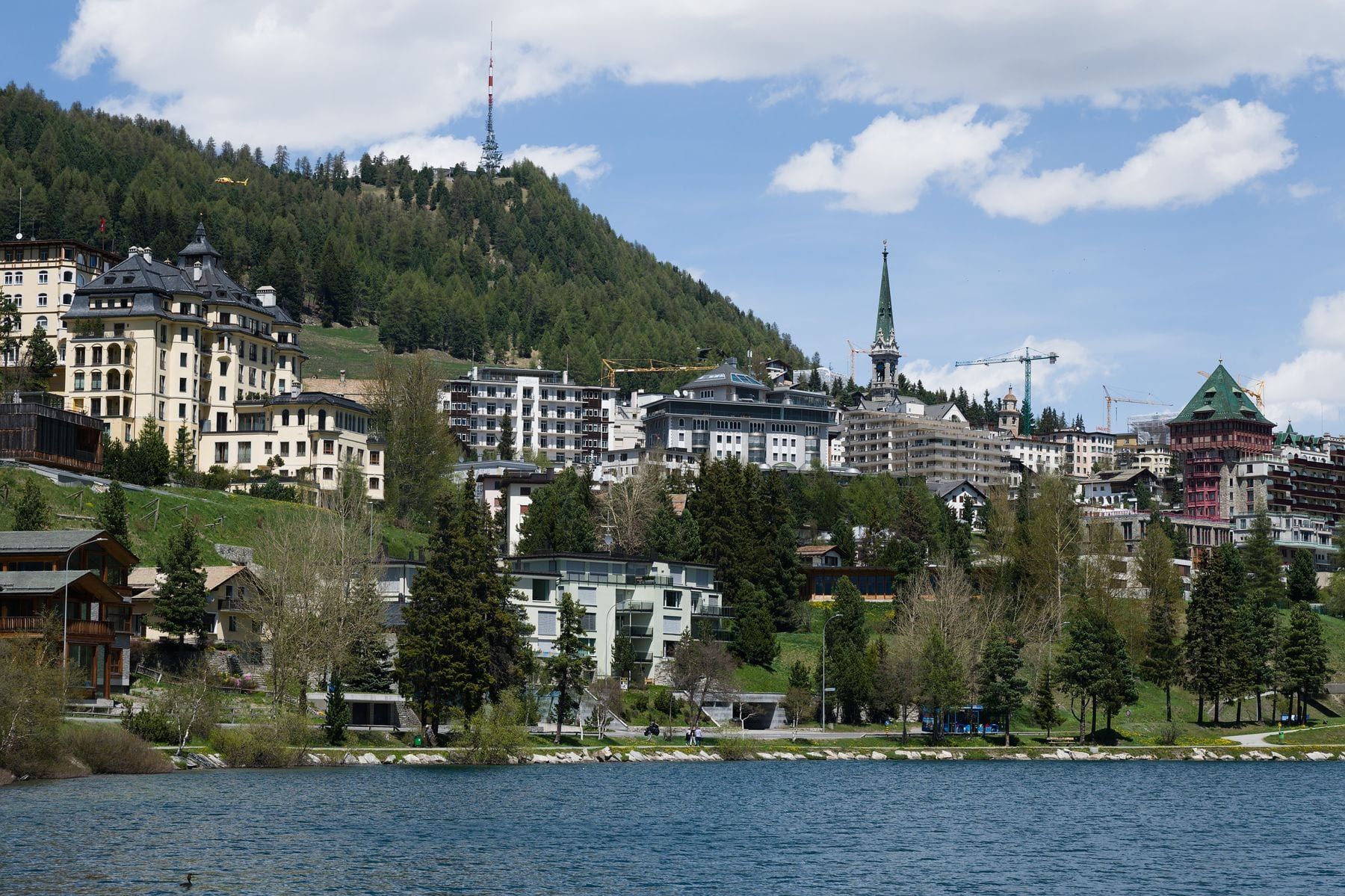
    St. Moritz: Preda Sledge Run, Cross-Country and Muottas Muragl

    Moving day is the best of the week: from Filisur you ride the Albula line up to Bergün, hire a sledge for around CHF 15 (about EUR 16), take the train through the spiral tunnels to Preda and sledge the closed pass road six kilometres back to Bergün, 20 minutes a run, as often as you like; the Bergün to Preda day pass costs around CHF 30 to 35, and the run is floodlit in the evening. Take the afternoon train through the Albula tunnel into the Engadin and sleep in Pontresina, ten train minutes before St. Moritz, mid-range CHF 190 to 240 instead of 300 in the resort. Day five belongs to the lakes: cross-country from Sils across frozen Lake Sils and Lake Silvaplana to St. Moritz, twelve flat kilometres, trail pass around CHF 10 a day, gear CHF 30 to 40, or winter walking the same way. In the afternoon the funicular up Muottas Muragl, sunset over the valley, 4.2 kilometres down by sledge. Skiers have Corviglia and Diavolezza, day pass CHF 90 to 100. On into the Poschiavo valley: Bernina line from Pontresina to Poschiavo, 1 hour 40, around CHF 12 with a Half Fare Card.

    Tours at this stop: Preda to Bergün sledge run ↗Muottas Muragl funicular ↗Cross-country skiing lesson Engadin ↗

    Open the St. Moritz and the Engadin travel guide →
  4. Day 6 to 7

    Bernina: Snowshoes at the Pass, Pizzoccheri in Poschiavo

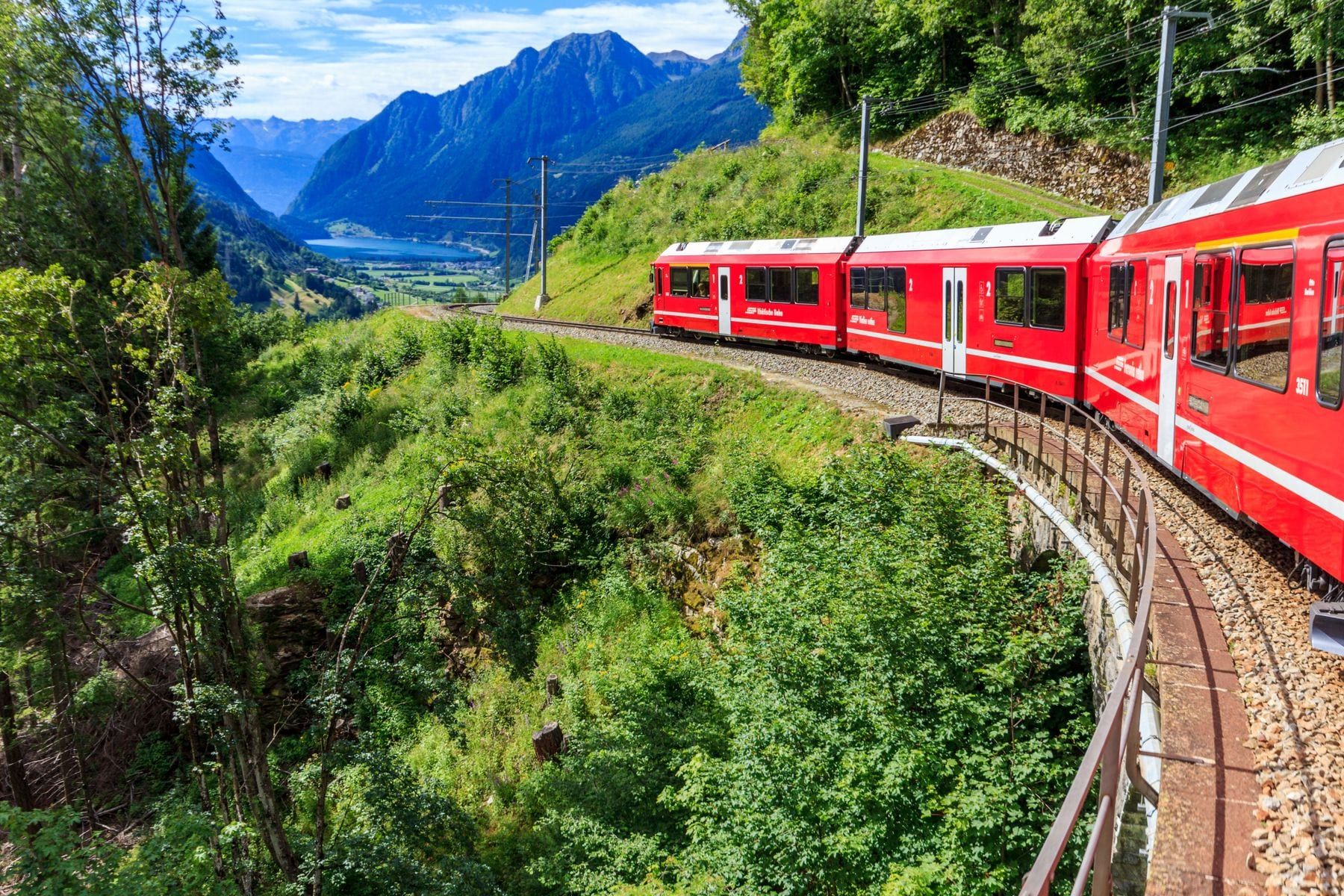
    In winter the Bernina is the most beautiful stretch of the Rhaetian Railway, because the train is the only Alpine crossing without a tunnel at 2,253 metres and the snow blowers ahead of it keep the tracks clear. Take the regional train, not the Bernina Express, which runs from St. Moritz in winter and costs CHF 32 (about EUR 34) to reserve, get off at Ospizio Bernina and follow the groomed winter trail above the frozen Lago Bianco to Alp Grüm, an hour and a half; snowshoes for the side trails cost CHF 25 to hire in Pontresina. Lunch on Alp Grüm facing the Palü Glacier, then the train down to Poschiavo, where Italian is suddenly spoken and palazzi line the square. You sleep here, mid-range CHF 130 to 160, and eat pizzoccheri, buckwheat noodles with cheese and savoy cabbage, for CHF 25. On the last morning the town and the Lago di Poschiavo, in sunshine the Brusio spiral viaduct by train. Getting home: regional train over the Bernina to Pontresina, Albula line to Chur, IC to Zurich, around five hours, around CHF 50 with a Half Fare Card; Chur to Basel 2 hours 20.

    Tours at this stop: Bernina Express in winter ↗Snowshoe tour Bernina ↗

    Open the Bernina Express and Val Poschiavo travel guide →

If you book through these links we earn a small commission, at no extra cost to you.

What the route costs

Rough total per person for the whole route, mid-range, travelling as a pair. Flights and hotels vary by season; details are on the destination pages.

  • Getting there 75 EUR
  • Accommodation 589 EUR
  • Food 449 EUR
  • Local mobility 268 EUR
1,380 EUR
Total per person · 7 days

Money & payment: You pay in Swiss francs (CHF). Cards and the Twint app work practically everywhere, even on alpine pastures. Many shops accept euros but give change in francs at a poor rate. Service is included in prices; rounding up is customary.

Tips for the route

In reverse you start in the Poschiavo valley and end in Chur, which makes sense if you arrive from Ticino or Milan: Trenord to Tirano, up the Bernina, then Engadin, Albula, Davos. From Zurich the current direction is better, because the Bernina comes as the finale and the return from Poschiavo, though it takes five hours, shows you the whole line once more.

Ski passes are the most expensive item of the Grisons winter: Davos Klosters CHF 80 to 95 (about EUR 86 to 102) a day, Engadin St. Moritz CHF 90 to 100, both with dynamic pricing, 15 to 30 percent cheaper online in advance than at the desk, and with ski hire and a meal on the piste CHF 150 to 200 per ski day. This route budgets no ski day. Cross-country, sledging and winter walking cost CHF 10 to 40 a day including hire by comparison.

The Half Fare Card logic applies across the whole Rhaetian Railway, including the mountain railways of Chur, Davos and the Engadin; only ski passes are excluded. With a Half Fare Card the complete loop from Zurich costs around CHF 130 (about EUR 139) in tickets, and Supersaver tickets from 60 days ahead push that down further. Visitors from abroad should look at the eight-day Swiss Travel Pass, around CHF 420, which also includes the Chur mountain railway and Muottas Muragl.

Dates you need to know: between Christmas and 6 January the Engadin and Davos are booked out and twice as expensive. WEF week in Davos, mid to late January, turns the town into a security zone with hotel prices from CHF 500 (about EUR 535). The Engadin Skimarathon on the second Sunday in March fills the valley with 14,000 runners. The best time is early December, mid-January and March outside the marathon.

Luggage: sledging in Preda and snowshoeing on the Bernina you do with a rucksack; the suitcase you hand in the day before at SBB luggage forwarding for CHF 12 (about EUR 13) to Pontresina or Poschiavo, and the RhB stations accept it. Winter boots with grip, gloves and sunglasses are essential; at 2,000 metres the sun burns even in January, and the Lago Bianco is windy.

Food in the Grisons winter: lunch on the piste or at Alp Grüm CHF 25 to 40 (about EUR 27 to 43), dinner in Pontresina and Davos CHF 40 to 60 per person, in Poschiavo and Chur CHF 25 to 40. Half board at the hotel is almost always cheaper than eating out in the Engadin. Coop in Davos Platz, St. Moritz Bad and Pontresina for picnics; Bündnerfleisch and Nusstorte as gifts from the bakery, not the souvenir shop.

Frequently asked questions about Engadin in Winter by Train

How long do you need for the winter rail loop?

Seven days with one night in Chur, two in Davos, two in the Engadin and one in the Poschiavo valley make a rounded week with four moves, all of them train journeys of under two hours. Five days works without Davos, going straight over the Albula. With ten days you add ski days in Davos or the Engadin or stay two nights in Poschiavo.

When is the best time for the winter route?

Mid-January to mid-March, when the lakes and trails are frozen and the sledge runs are open, except for WEF week in Davos and the Engadin Skimarathon. Early December is cheap, but trail and sledge run depend on snow. The period between Christmas and Epiphany is booked out and expensive. Late March has sun, but the lakes no longer bear weight.

Do you need a car or winter tyres?

No, the route is built for the train: the Rhaetian Railway runs hourly, often half-hourly, and the Preda to Bergün sledge run only works with the train. A car would have to go over the Julier or through the Vereina car train, would pay CHF 20 to 30 (about EUR 21 to 32) a day to park in Davos and St. Moritz, and winter tyres are effectively compulsory everywhere. Leave it at home.

What does the week cost per person?

Budget around CHF 1,290 (about EUR 1,380) per person for two in mid-range comfort: travel from Zurich with a Half Fare Card 70, six hotel nights 550, food 420, Rhaetian Railway tickets, sledge runs, cross-country hire and mountain railways 250. Each ski day adds CHF 150 to 200. Between Christmas and New Year the hotel item doubles.

Does the train run reliably over the Bernina in winter?

Yes, the Bernina line has operated all year since 1910, with snow blowers and avalanche barriers; interruptions of a few hours only happen after extreme snowfall. The Albula line runs through the tunnel and is independent of the weather. In avalanche danger the winter trail and snowshoe routes at the pass may be closed, in which case you stay on the train to Alp Grüm and enjoy the terrace.

Is there a shorter or longer version?

Shorter: Chur, Bergün with sledging and the Engadin in four days, without Davos and the Poschiavo valley. Longer: from Davos through the Vereina tunnel to Scuol with its mineral baths and two nights in the Lower Engadin, then via Zernez to Pontresina, or continue from Poschiavo to Tirano and by train to Milan, which turns the week into ten days with an Italian finale.

More itineraries through Switzerland